Episode 4: Milano-Sanremo 2015 Pre-race Show The Recon Ride takes on the first Monument Classic of 2015.
[powerpress]
The first WorldTour one-day event on the calendar and the first “Monument” of the season, Sunday’s 293-kilometer ride from Milan to San Remo gives the Recon Ride podcast plenty to discuss. Will Alexander Kristoff defend his title? Can Peter Sagan finally get that marquee victory? Will an Italian rider show up to contend in a major Italian Classic? VeloHuman and Cyclocosm team up to cover all the major storylines.
The 50th running of Tirreno-Adriatico offers the cycling world a double dose of WorldTour racing for a few days in March as it overlaps with Paris-Nice in France. The Italian stage race boasts a startlist that includes three of the top four Tour de France favorites (Chris Froome was on the startlist but has withdrawn with a chest infection), elite sprinters, and a bevy of Classics stars tuning up for the one-day races around the corner. Recent history would suggest that this race is an important test for those stars hoping to stand at cycling’s center stage. After winning here last season, Alberto Contador went on to nab quite a collection of results over the course of the rest of his year. In fact, the last six editions in a row have been won by riders who either already had or would go on to add Grand Tour victories to their palmares. No other one-week stage race can boast such a consistent correlation between its winners and the winners of the sport’s biggest events.
The Route
With chrono mileage, sprint stages, bumpier days, and a brutal summit finish all along the route, Tirreno-Adriatico has all the makings of a mini-Grand Tour. Stage 1 is a flat, 5.7-kilometer individual time trial that replaced a TTT at the last moment. Something this short isn’t likely to shake up the GC all that much but it can’t be overlooked either. Meanwhile, some of the more powerful sprinters on the startlist will appreciate the chance to get a rare chrono victory. They will have another chance to shine on the short and flat Stage 2, which will almost certainly end in a bunch gallop.
Things get a bit more interesting on Stage 3, where the peloton will overcome cobbles and some short climbs in the second half of the day likely to favor the punchier riders. Stage 4 poses several challenges, with climbs of the Poggio San Romualdo and Monte San Vicino followed by back-back ascents of the short but steep Crispiero climb, almost certain to launch late attacks.
Stage 5 of Tirreno-Adriatico will put the peloton to the test with a summit finish on the Terminillo climb. 16.1 kilometers at 7.3%, it’s a long slog to the top that will put serious pain into the legs of anyone coming into this race out of shape.
Stage 5: Esanatoglia › Terminillo (197 km) – The long Terminillo climb on the fifth stage of Tirreno Adriatico will be a difficult test of uphill power.
Bauke Mollema told the Recon Ride that this was going to be a climb for the “strong guys” where long-term wattage would be key, and it’s easy to see why.
Stage 6 brings the riders back down towards sea level and should end in a bunch sprint. The seventh and final stage is a flat, 10 kilometer ITT, one final chance for GC action on the last day of the race. From start to finish, it is a balanced route that will require a complete skillset to win. Bonus seconds of 10-6-4 at finishes (and 3-2-1 at intermediate sprints) will benefit those with some punch.
General Classification Contenders
For weeks this was set up to be a clash of cycling’s “Big Four,” the four top favorites for the Tour de France, but Chris Froome withdrew from the startlist with a chest infection, leaving only three of those Grand Tour stars to battle it out with the rest of the contenders. It should still be quite a show.
Defending champion Alberto Contador will enter the race as the top favorite, with his combination of strong time trialing and elite climbing legs, and having shown great form in the Ruta del Sol, where only Froome could beat him. He dominated this race last year and it given his abilities it’s easy to see him head and shoulders above the competition again. Roman Kreuziger, who seems to be in excellent shape right now, will make for a strong support rider or a deadly alternative.
The alteration of Stage 1 from a TTT to an ITT helps Contador even more: his biggest rival looks to be last year’s runner-up Nairo Quintana, who rides for a Movistar team that would have likely put in an excellent performance in the group chrono; now, Quintana must go against the clock by himself, twice. That said, Quintana will have his opportunities to strike for glory on the challenging slopes that await in Tirreno-Adriatico, and he did show some form in January at the Tour de San Luis, where he was 3rd and even put in a decent ride in a mostly flat ITT. Quintana gets better every year (he just turned 25 in February), and he will relish the opportunity to climb one step higher on the podium than he did in the 2014 edition of the race.
Vincenzo Nibali has won here twice, and in top shape he would merit more consideration as the top overall favorite, but has not shown a great deal of form so far this season. He may be following a pattern similar to the one he followed last year, slowly building to his Tour de France peak; it certainly worked out for him in 2014. Furthermore, the route isn’t ideal for him, with its double helping of ITT days. Still, Nibali has gone from showing little form to riding at an elite level very quickly in the past. If that is what he has in mind for Tirreno-Adriatico, watch for him to try to take an early advantage on Stage 3, where short steep climbs will provide launching pads and late descents could help Nibali, a brilliant descender, escape from the peloton if he makes the attempt. A powerful team that includes Dario Cataldo, Michele Scarponi, and Lieuwe Westra will give Astana options.
The form of Joaquim Rodríguez, who typically merits inclusion among the top favorites in a stage race, is a major unknown after quiet starts in Dubai and Oman. The course doesn’t suit him particularly well either, though Purito can never be counted out. Daniel Moreno is here for Katusha as well. Unlike Rodríguez, Moreno has put in decent rides in San Luis and Oman already this season.
New Colombian ITT champ Rigoberto Urán flashed some form in Strade Bianche, where he was 7th, and this is an excellent parcours for him. Tirreno-Adriatico has difficult climbs, but nothing of the incredibly steep variety that might put him into difficulty against the likes of Contador. For Urán, the time trials and potential for bonus seconds (his finishing kick is impressive) on a few stages will be a golden opportunity to challenge the defending champion, as well as the only two riders who have finished the Giro ahead of him the past two season, Nibali and Quintana.
Bauke Mollema will lead the charge for Trek Factory Racing, and he says that he’s feeling good after an offseason with his new team, which a string of good results in early season races seems to confirm. Julián Arredondo gives Trek another dangerous option on the climbs.
Despite the absence of Chris Froome, Sky will still have a strong presence in Tirreno-Adriatico. Leopold König sports a strong time trial and can climb with the best on a good day and Mikel Nieve was 4th in the Ruta del Sol in February. Both riders should be motivated to take advantage of the opportunity to ride for their own results.
AG2R’s Domenico Pozzovivo would probably prefer more mountains, but he can’t be ignored here. He was 6th last year, and is coming off a nice ride in the Tour Down Under. Teammate Carlos Betancur is a bit of a wildcard, brilliant at his best but not having shown any form since this time last year. Cannondale-Garmin will have the weapons to make for an interesting race with Ryder Hesjedal, Davide Formolo, and Daniel Martin. FDJ’s Thibaut Pinot would prefer less chrono mileage but he has improved in that discipline over the past few seasons and will hope to make up any time he loses in the ITTs on the climbs in the middle of the race. New teammate Steve Morabito is VeloHuman’s Under-the-radar rider for Tirreno-Adriatico. After several years at BMC working as a reliable support rider, Morabito joined FDJ over the offseason. He’s a great climber and decent in the time trials, but he did not get many opportunities to ride for himself at BMC. It should be clear pretty early on in this race whether he is being given a chance to get his own results; if he is, he should surprise some people. Jurgen Van Den Broeck, Pierre Rolland, and Louis Meintjes are other outsiders with a shot.
Stagehunters
Much like Froome among the GC contenders, a sick Marcel Kittel withdrew from the race and the sprinters conversation, leaving Mark Cavendish looking like the top rider for the sprints. He will still have competition, however, especially as he and leadout man Mark Renshaw are both overcoming illness. Sky’s new acquisition Elia Viviani has beaten Cavendish more than once in the past and will hope to do so here. IAM’s Matteo Pelucchi is in great shape right now and should be in the mix. Bora-Argon 18’s Sam Bennett won a hotly contested sprint stage in Qatar and will be dangerous in the fast finishes. Peter Sagan will likely be involved in the bunch sprints as well, and will be especially dangerous on Stage 3, which finishes in Arezzo, where he won last year. Lampre’s Sacha Modolo, Giant’s Luka Mezgec, and Tyler Farrar and Matt Goss of MTN-Qhubeka are other fast men to watch out for.
With two chrono stages, the time trial talents merit a mention as well: Adriano Malori, Fabian Cancellara, Ian Stannard, and Niki Terpstra should all appreciate the pair of opportunities to pick up WorldTour stage wins against the clock at the open and close of the race.
VeloHuman Top 10 GC Favorites
Winner: Alberto Contador Podium: Nairo Quintana, Rigoberto Urán Other Top Contenders: Vincenzo Nibali, Bauke Mollema, Domenico Pozzovivo, Roman Kreuziger, Thibaut Pinot, Joaquim Rodríguez, Leopold König
For daily stage predictions and more Tirreno-Adriatico commentary, be sure to follow @VeloHuman on Twitter. And of course, don’t miss the Recon Ride for Tirreno-Adriatico 2015, which covers all the big storylines of the race and even includes a bit of insider insight from GC contender Bauke Mollema.
Episode 3: Tirreno-Adriatico 2015 Pre-race Show The Recon Ride talks route, favorites, and more for the Race of the Two Seas, with a guest appearance by Trek’s Bauke Mollema.
[powerpress]
While some of the peloton’s big names are in France for Paris-Nice, Grand Tour favorites and top sprinters and classics riders alike will take on Tirreno-Adriatico this week. VeloHuman and Cosmo Catalano of Cyclocosm.com delve into the roadbook, discuss the riders to watch, and even talk to GC contender Bauke Mollema of Trek Factory Racing about what to expect in Italy.
Update: this show was recorded and published before a flurry of late changes to the race narrative, among them the withdrawals of Chris Froome and Marcel Kittel, and the modification of Stage 1 from a team time trial into an individual time trial. However, the Recon Ride covers so many aspects of this race that there should still be plenty here to get you prepared for Tirreno-Adriatico.
After a February break, WorldTour racing is upon us again. The 73rd running of Paris-Nice brings time trials and high mountains back into play after a year without them. The 2014 edition of the race favored punchy opportunists with a talent for nabbing bonus seconds, but this year’s event will put the more prototypical General Classification contenders in the best position to challenge for the overall victory. While Tirreno-Adriatico may have drawn the “big four” Grand Tour contenders, there are still plenty of elite talents headed to France this weekend to contest the Race to the Sun. As the European WorldTour opener, and the season-opener for many big names, and with another shakeup of the parcours, Paris-Nice offers plenty of storylines to make for an interesting race (storylines also investigated in further detail in the Recon Ride’s Paris-Nice pre-race show, which you should check out if you haven’t already).
The Route
Paris-Nice opens with a short, flat prologue of 6.7 kilometers. It’s hardly long enough to open big gaps on GC but this should be a close race so the riders hoping to fight for the overall victory here will be on their toes. A flat Stage 1 should go to the pure sprinters, and the fast men will likely get another chance on the similarly flat Stage 2. A very slightly inclined finish on Stage 3 could at least give the lighter sprinters an advantage to mix things up, but it should again be large group that reaches the line together in Saint-Pourçain-sur-Sioule.
The mountains arrive quite suddenly on Stage 4. Early climbs in the profile could prove a nice launching pad, and late climbs and winding roads a nice buffer, for a strong breakaway, but whether stage honors are on the line or not, the GC battle will be fierce.
Stage 4: Varennes-sur-Allier › Croix de Chaubouret (204 km) – After several day of flat profiles, a summit finish on Stage 4 will suddenly put the GC contenders to the test.
The Cat. 1 closing climb of the Croix de Chauboret doesn’t compare to some of the more grueling climbs these riders will face in the Grand Tours later this season but at the end of a day of constant climb, and this early in the season, it will very likely catch a number of contenders out. It’s a mostly gradual ascent to the summit finish but a high tempo from one of the powerhouse teams is sure to leave big names off the back before the line.
A few bumps along the road to Rasteau and an uphill drag to the line will make Stage 5 an interesting battleground on which sprinters, aggressors, and punchier climbers will all have a chance. The more explosive GC riders could be on the lookout for bonus seconds.
Bonus seconds could also be hotly contested on Stage 6, which is up and down all day long with a total of three Category 2 climbs and three Category 1 climbs. After the last (Cat. 1) climb it’s a long downhill run to the line. If the climbs don’t give the uphill purists room to get separation, a small group could descend the Côte de Peille together, which will guarantee an exciting final few minutes.
Paris-Nice ends with a 9.6-kilometer time trial up the Col d’Éze, also the final battleground for both the 2012 and 2013 editions of the race. The 4.7% average gradient may not look like much but past editions has proven that this is a chrono for the elite climbers.
Stage 7 (ITT): Nice › Col d’Éze (9.6 km) – Past editions of the race have proven that this climb is not to be taken lightly.
Under 10 kilometers though it may be, the Col d’Éze climb is going to open up gaps in the General Classification fight, guaranteeing that Paris-Nice will come down to the very last day.
All told, there’s something for everyone in Paris-Nice. Those battling for overall supremacy will need to battle through a variety of different challenges, against gravity and against the clock, to emerge victorious. Meanwhile, those hoping to come away from Europe first WorldTour race of the year with stage wins will face stiff competition with the long list of strong sprinters.
The General Classification Contenders
More so than the 2014 edition, the 2015 Paris-Nice route is especially favorable to the big engine riders who can fend for themselves in the time trials and long vertical drags. Coming off of a strong performance in the Tour Down Under (where his inability to consolidate bonus seconds left him just off the top step of the podium) Richie Porte is clearly in terrific shape for the year, and Paris-Nice offers him a a golden opportunity to put his National Championship-winning ITT skills on display. His great climbing legs put him in the lead a few stages prior in the 2013 Paris-Nice, and he clinched the overall win on that year’s run up the Col d’Éze, where no one was faster. Two years since then, with that challenging finale returning to the route, Porte’s GC bid will be difficult to overcome in 2015, especially backed by the powerhouse Sky powerhouse lineup that includes Geraint Thomas and Nicolas Roche as dangerous support riders or potential alternatives.
BMC’s Tejay van Garderen is another rider capable of battling with the very best in both the climbs and the time trial. Fresh from the Tour of Oman, where he was a close runner-up, van Garderen looks lean and on-form. In fact, he has a history of performing very well early in the season. The steady gradient of the Stage 4 finishing climb suits him well, both time trials should be opportunities for him to advance on the GC leaderboard, and he even has a bit more explosiveness than many realize should he find himself in a small group with bonus seconds on the line at any point. With Cadel Evans in retirement, now is the time for van Garderen to prove that he can be the sole GC leader of this team, and his combination of skills puts him in an excellent spot to do so here. Van Garderen also has an excellent team around him, with Rohan Dennis, climbing better than ever, as a very strong second.
Rui Costa was 2nd in last year’s race (and in fact racked up a pair of 2nd-place stage finishes along the way) but he has the skill set to thrive on the updated parcours as well, combining great climbing legs with time trialing chops that can’t be overlooked (though they often are) and the explosiveness and aggressiveness to win battles for bonus seconds. With Rafael Valls, fresh off a Tour of Oman victory, here as well, Lampre should be able to hold their own.
Multi-talented Michal Kwiatkowski will look to attack the GC leaderboard early even from the first day of racing, with prologues a particularly forte of his, and he should be in the mix for bonus seconds here and there throughout the race. At times, he has flashed brilliance even on the tough mountain climbs, but he has had a tendency to suffer a bad day in the mountains here and there in his career. If he can avoid that sort of off-day in Paris-Nice and stay close to the best climbers, he will have a great shot at the overall win.
Dutch rising star Wilco Kelderman had a very impressive 2014 and he will look to continue to develop as LottoNL’s GC star this season. Interestingly, he did not quite perform to (high) expectations in the chronos last year, but a 2nd-place ITT finish in Andalucia last month has him looking sharp and ready to race against the clock this year. Ever-improving climbing skills and a fierce finishing kick for the bonus seconds make him a strong competitor.
Rafal Majka of Tinkoff-Saxo will likely do a lot of work for Alberto Contador this season, but the 25-year-old Polish climber, 4th overall in Oman last month, is in great shape at the moment and won’t pass up an opportunity to mix it up in a WorldTour race. He is an excellent uphill time trialist who should perform well on the final stage. Fabio Aru of Astana also knows about being the second of two elite GC riders on one team, and with clouds of uncertainty hanging over Astana, now would be a good time for him to make a statement as the featured GC rider while Vincenzo Nibali is leading the squad in Tirreno-Adriatico. At his best, Aru would rival Porte as a pre-race favorite but his completely unknown form makes him more of a question mark. Teammate Jakob Fuglsang will be an excellent second, 5th here last year on a parcours that did not suit him particularly well. 7th in Oman in February, Fuglsang is the in-form rider. With Lieuwe Westra and Luis Leon Sanchez (two riders with results in Paris-Nice in the past) here as well, Astana will almost certainly be on the move at every opportunity.
Andrew Talansky is a question mark for form at the moment, not having raced at all in 2015, but Paris-Nice was something of a coming out party for him in 2013, and with a similar course he has the skillset to thrive again. Jean-Christophe Péraud was on the podium that year as well, but his form is dubious right now. Teammate Romain Bardet looks like the better option for AG2R. Mathias Frank is a massive talent in the one-week events for IAM Cycling. Warren Barguil isn’t much for the time trials, but with the uphill nature of Stage 7, that may not hurt him too much. He should fight for a Top 10. Katusha’s Tiago Machado, Simon Spilak, and Sergey Chernetskiy should be in the mix on the climbs and with their combined firepower, they have the ability to attack the GC leaderboard from several angles.
Simon Yates of Orica-GreenEdge, Movistar’s trio of Rubén Fernández, Beñat Intxausti, and Ion Izaguirre, and Trek’s Bob Jungels (who has a great shot at winning the prologue) will also hope to get involved in the GC conversation. VeloHuman’s Under-the-radar rider for Paris-Nice is Eduardo Sepúlveda of Bretagne-Séché Environnement. 4th overall in San Luis in January and the winner of the recent Classic Sud Ardèche, Sepúlveda is the complete GC package and sporting great form right now. For his team, motivation to put on a show at the WorldTour level will be high, and the 23-year-old Argentinian has the skillset to take up the charge.
The Stagehunters
The list of top sprinting talents making the start in Paris-Nice seems to go on forever. Though Mark Cavendish and Marcel Kittel won’t set out from Maurepas, the startlist does include André Greipel, Nacer Bouhanni, Alexander Kristoff, Arnaud Démare, Giacomo Nizzolo, and John Degenkolb as the riders likeliest to contend for the sprint finishes. Michael Matthews, Heinrich Haussler, and Ben Swift will hope to get involved on the slightly bumpier days.
Punchy Arthur Vichot, Michael Albasini, Tony Gallopin, Philippe Gilbert, and Tom-Jelte Slagter will look to get into the mix when the road is too hard for the sprinting powerhouses, as may be the case in the finale of the hard-to-predict Stage 5.
The startlist is also overflowing with elite time trailing specialists. In addition to those mentioned as GC contenders, Bradley Wiggins, Tony Martin, Tom Dumoulin, and Thomas De Gendt are among the many in attendance who excel against the clock.
VeloHuman Top 10 GC Favorites
Winner: Tejay van Garderen Podium: Richie Porte, Rui Costa Other Top Contenders: Michal Kwiatkowski, Wilco Kelderman, Rafal Majka, Andrew Talansky, Fabio Aru, Beñat Intxausti, Romain Bardet
Be sure to follow @VeloHuman on Twitter for more Paris-Nice commentary and daily stage predictions, and check back soon for plenty of Tirreno-Adriatico pre-race analysis.
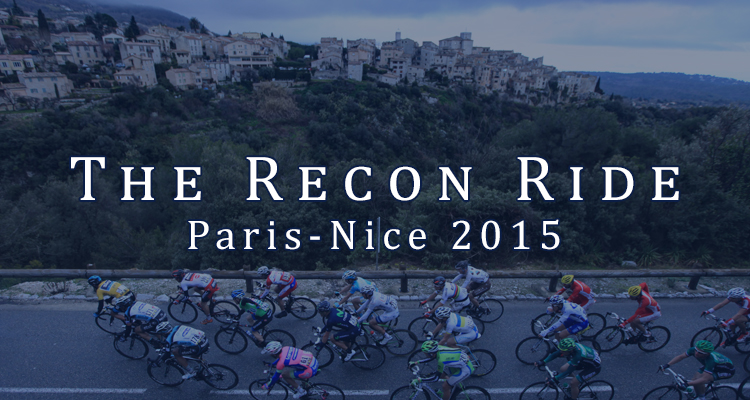
Episode 2: Paris-Nice 2015 Pre-race Show The WorldTour returns, and so does the Recon Ride, previewing the Race to the Sun.
[powerpress]
The WorldTour arrives in Europe this Sunday at the 73rd edition of Paris-Nice. After a 2014 parcours that eschewed the time trials and high mountain finishes, the event is returning to a more familiar route. VeloHuman and Cyclocosm join forces to dig deeper into the storylines of the race.
Back in 2012, Janez Brajkovič began his second stint at Astana with a bang, nabbing a stage win in the Volta a Catalunya and Top 10s in the Tour de Romandie and Critérium du Dauphiné before picking up an overall win in the Tour de Slovénie and then taking one the biggest results of his career, 9th overall in the Tour de France. It was a big year for the Slovenian all-rounder, 28 years old at the time, but in the two seasons that followed, Brajkovič spent more and more time playing a support role for the Kazakh outfit, as the likes of Vincenzo Nibali and Fabio Aru rose to the fore within the team.
At the end of the 2014 season, with his Astana contract expiring, Brajkovič found himself back on the open market, but he was not without a plan. Having spent a good part of his career riding for American teams, he was hoping to return to that familiar atmosphere, and, as it turned out, there was an American team looking to add a few major talents with high-level racing experience to its roster. Brajkovič signed a two-year deal with UnitedHealthcare in October, and with the agreement in place, the team suddenly found itself with a veteran GC rider for the stage races on its calendar, and Brajkovič suddenly found himself back in a leadership role. It didn’t take long for him to get comfortable with his new surroundings.
“I think I settled in already in December,” Brajkovič told VeloHuman. “It’s just the right fit for me. I get along with everybody. The way I think and others think are pretty much the same. We’re a good group of guys, and also the staff and the management, they’re so awesome. I feel really happy to be here. Happy to be here on this team, and I think this team will continue to grow, and I’ll be a part of this team growing, and hopefully in a year or two we’ll be on a higher level, racing ProTour, with the best teams in the world.”
Currently at the Pro Continental level, UnitedHealthcare made a concerted effort over the offseason to add firepower to the roster, bringing in Brajkovič as well as versatile Italians Marco Canola and Daniele Ratto, from Bardiani-CSF and Cannondale, respectively. For Brajkovič, the opportunity for a fresh start on a team with similar values was a major draw.
“I know for myself, last year in August, it was pretty clear I was not going to stay at Astana, and what I wanted was to sign for an American team. . . . Actually I wanted to sign with UnitedHealthcare, that was the team I thought would be the best for me, just to go back and start all over again, and I think it was a good choice, and I’m happy here,” Brajkovič said. “I’m happy to be racing again, and that’s one of the most important things for myself because even if you have good condition, coming to the race and being depressed is not going to get you results.”
An English-language environment played a significant role in giving Brajkovič an immediate morale boost after a few difficult years at Astana.
“Obviously in Astana there was a language barrier. And this American mentality suits me very well. Spending a lot of time in America is also something I like and so far it’s been great,” he said.
His preparation for the major goals of 2015 is coming around now, but the offseason wasn’t perfect for Brajkovič.
“Actually . . . it was a pretty hard offseason. The weather was pretty bad all the time [in Slovenia where he spent time in December]. Training hasn’t been as I would like it to be, but the training I’ve done, I’m pretty happy with the result. I know that there is a lot of reserves still, and once I start training seriously for Tour of California, and also I think Critérium [International] is a pretty important race for us, I think there’s going to be a lot of improvement as well,” he said.
Decent climbing results in the Tour de San Luis would suggest that his form is trending in the right direction, and Brajkovič is hoping that he’ll be closer to his peak by the time the aforementioned Critérium International and Tour of California arrive. The 2.HC events are major objectives for the American squad this season. Having brought on a few big European names over the winter, there was hope among the team that an invite to this year’s Giro d’Italia might be possible as well, but the race organizers opted to look elsewhere for wildcard invites. While it wasn’t an ideal turn of events, Brajkovič notes that UHC will have their hands full as it is.
“For UnitedHealthcare it’s pretty important to have a result in the Tour of California as well. And yeah, it would be nice to race the Giro but then for the Giro you have to have a team, and that would leave Tour of California with . . . I wouldn’t say bad riders, but probably not the best possible combination of riders, not the best team. So I think we just have to focus on Tour of California and race well there. I think that’s the goal for now, and hopefully we’ll get a Vuelta invitation,” he explained.
The USA Pro Challenge and the Tour of Utah are also in Brajkovič’s sights this season, though he is hoping to lead the team in Spain if a wildcard invite to the Vuelta is indeed in the cards, a possibility that will be more likely if the team can deliver results in stage races in the spring and early summer. For the one-week races in particular, podium performances are both the aim and also the expectation for Brajkovič. And although he has only one GC Top 10 result in his palmares over the last two seasons (he was 3rd in the 2014 Vuelta a Burgos), he remains confident that he still possesses the all-rounder skillset necessary to compete as a featured rider at the highest level in the major stage races on the UnitedHealthcare calendar.
“I still think—actually, I know—that I can race for GC, and that’s the focus. For me, and for the team as well,” he said.
After spending some time playing a support role with Astana, one might expect Brajkovič to feel a bit nervous about carrying the weight of his own and the team’s hopes for the season, but he isn’t showing any signs of that right now, with the positive outlook from joining a new, more comfortable environment taking some of the stress out of his return to the role of team GC leader.
“I don’t feel like a team leader,” Brajkovič said. “We’re like a bunch of guys who get along really well. And yeah, they help me a lot, and it’s amazing to see what they do for me, how much energy they spend for me, so I’m really grateful for that. And pretty soon, I think, we’ll start getting those results we need. But I don’t feel any pressure. Of course there’s expectations but I think if I stay healthy and everything goes to plan, we’ll have results as well, so there’s nothing to be worried about.”