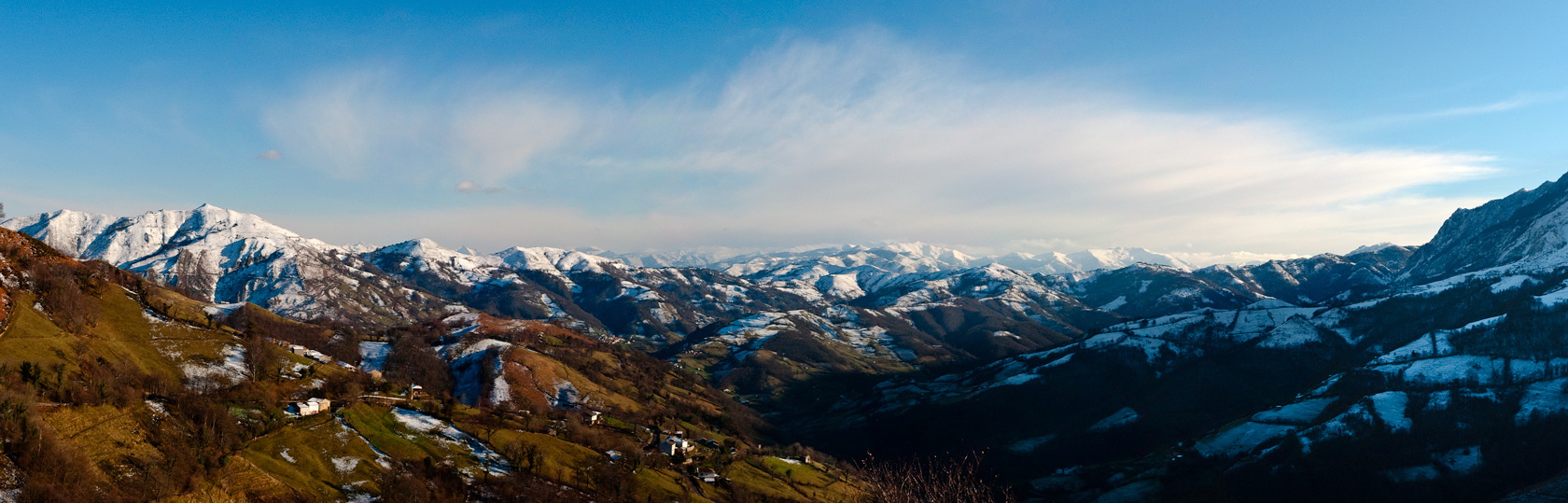
Tag: 2013

  • Vuelta a España 2013 Day 7: Where We Stand After Seven Stages, and Looking Ahead to Stages 8-10

    VueltaPT

    Day 7: Fast Men Have Their Chances, Mountains Await

    Stages 4-7, while not particularly mountainous, still managed to offer plenty of excitement, with no repeat winners and no shortage of drama, even if General Classification did not see much of a real shakeup; however, at the time of this writing, Dan Martin has reportedly been taken to the hospital for injuries suffered in a crash today, a crash that dropped him a little bit after he did not make it back to the peloton quite in time. Keep an eye on that.

    A “punchy, Ardennes-style GC type” (see the previous post) did, in fact, nab stage 4: 2013 La Fleche Wallone winner Daniel Moreno attacked on the uphill finish and crossed the line ahead of an aggressive Fabian Cancellara and a pack of sprinters. The red jersey went back to Nibali after a tiny gap formed on the hill, but there was little to speak of in the way of substantial time differences for any of the big contenders, a theme that continued through today’s stage. Stage 5 went, as predicted, to Michael Matthews, who has officially arrived as a name to know. Specializing in sprints after hard days of riding, particualrly with slight uphill finishes, Matthews capitalized on Stage 5’s perfect profile to power ahead of Maximiliano Richeze and Gianni Meersman, leaving Tyler Farrar and Edvald Boasson Hagen a disappointed 5th and 6th. Stage 6, which looked set to be innocuous, saw Tony Martin attack early and ride solo ahead of the peloton basically all day, exceeding everyone’s expectations and generating real belief that he might manage, somehow, to stay ahead of the chasers for the victory, before getting caught just seconds from the finish line by a hard charging bunch of sprinters led by Danish track star turned road cyclist Michael Morkov. Richeze was again 2nd, with Cancellara 3rd and Farrar 4th. The even flatter Stage 7 had enough twists and turns toward the finish to allow a very late jump by world champion Philippe Gilbert and recent Eneco Tour champion Zdenek Stybar. They somehow held their advantage to the end, and Stybar pipped Gilbert to the line in a photo finish, with the bunch just behind, led by Belkin’s Robert Wagner. Four different days, four different winners, none of them Gianni Meersman, Edvald Boasson Hagen, or Tyler Farrar. Now that the sprinters have had their shot to make a mark on this Vuelta, the road goes up.

    Stage 8: Jerez de la Frontera > Alto de Peñas Blancas | 166.6km | High Mountains (Summit Finish)

    VS8

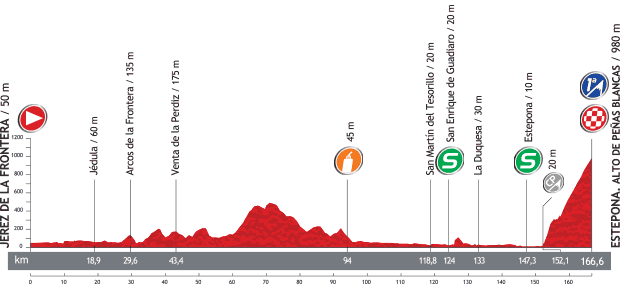
    The peloton takes on a single categorized climb in Stage 8, but it’s a Cat. 1, 960 meter incline to the finish at Alto de Peñas Blancas. The climb is 14.5 kilometers long at an average gradient of 6.6%. The steepest portions are early (a brief section at 12.5% around 2km in), meaning that this climb will favor those all-rounders with full tanks, capable of sustained upward efforts. If a group finishes together, a strong finishing kick would seal the deal. Stage 2 might have led to frustrating time losses for a few of the big GC names, but Stage 8 is sure to cause serious selection in the fight for GC. Giro riders have now had a week to ride themselves into form, and Nibali has shown no signs of weakness, making him one of my obvious favorite for this stage, assuming a breakaway isn’t given the chance to nab a win (and given the number of riders currently still in contention for GC whose stated Giro aims are stage-win-oriented, it seems like the chase would be fierce). Ivan Basso has looked very capable so far, and he will appreciate the long road to the top. As the climb is only a little steeper and longer than that on Stage 2, many of those same names could factor here, including that stage’s winner Nicolas Roche, Domenico Pozzovivo, the ever-present Joaquim Rodriguez (though the road isn’t steep enough late enough to provide a great opportunity for his style of attack), his teammate Dani Moreno, and up-and-comers Leopold Konig and Diego Ulissi. As the ascent does even out a bit towards the top, a group could reach that point together, favoring riders with a strong finish: most obviously Alejandro Valverde, but don’t forget the rider who won the Points jersey in the 2011 Vuelta, Bauke Mollema, who has looked great so far.

    VeloHuman Stage Favorites

    1. Alejandro Valverde | 2. Bauke Mollema | 3. Vincenzo Nibali | 4. Ivan Basso

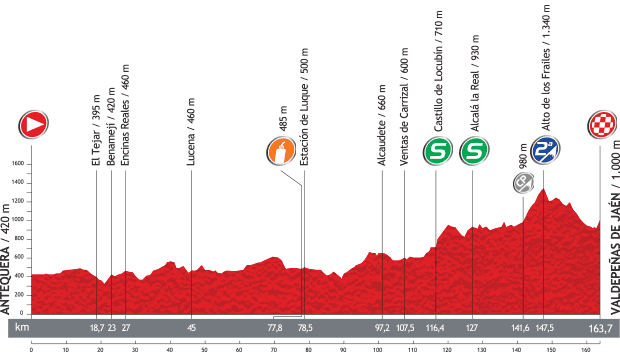
    Stage 9: Antequera > Valdepeñas de Jaén | 163.7km | Medium Mountains

    VS9

    Stage 9 again throws only a single categorized climb at the competitors, a Cat. 2 whose summit is 16km from the finish line, but the peloton will climb over rolling hills and then a steady upward incline to reach that summit. Then, they will zip downward toward the town of Valdepeñas de Jaen, until reaching a short but maddeningly steep ramp up to the finish line. Stage 9 is certain to provide excitement: riders might attack on the Cat. 2, or they might wait until the closing kilometer to launch up the zany climb. Katusha’s duo of Joaquim Rodriguez and Daniel Moreno (winner of this year’s La Fleche Wallone) will likely feature on the Mur de Huy-esque slope. Alejandro Valverde has come close to victory more than once on the early uphill finishes and will be out for the stage win and bonus seconds. After a rough start due to his knee injury, Philippe Gilbert has been looking stronger and stronger, and this finish suits him; the day’s climbs are likely to weed out the sprinting types from being much of a factor at the finish, but a tougher rider like Gilbert has a great opportunity to survive to the final gallop. It may be a bit steep for Simon Gerrans, who is riding himself into form, but he’s shown some real punch in earlier races this year. Roman Kreuziger, Daniel Martin (if he is alright healthwise, which is unclear at this point), Bauke Mollema, Sky teammates Rigoberto Uran and Sergio Henao, and Carlos Betancur (if he ever manages to find his legs again) have the explosiveness to take a victory here, too.

    VeloHuman Stage Favorites

    1. Joaquim Rodriguez | 2. Daniel Moreno | 3. Philippe Gilbert | 4. Sergio Henao

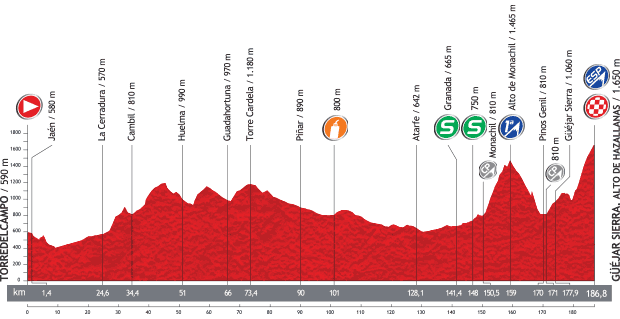
    Stage 10: Torredelcampo > Alto Hazallanas | 186.8km | High Mountains (Summit Finish)

    VS10

    It’s a good thing that the riders get a rest day in between Stage 10 and Stage 11, because Monday’s ride from Torredelcampo to Alto Hazallanas will be very hard on everyone. The day begins with a few small foothills. A little less than 30km away from the end of the line is the Alto de Monachil, a Cat. 1 mountain with 8.5 km of ascent at 7.7%. The riders will then take a steep descent before the road goes up again toward the finish line at the end of Special Category climb, Alto de Hazallanas, which is nearly 16 kilometers long at an average of 5%. If he didn’t already have enough of an advantage on the stage given his elite descending skills, Vincenzo Nibali’s diesel climbing style will serve him well in his bid to reach finish the long, grueling challenge ahead of his opponents. The ascent is highly irregular, however, with a flat portion 6 kilometers in, followed by a quick but very steep downhill turn a little over 7 kilometers in, and then a section of roughly 5 kilometers with gradients pushing 18% before things ease off a bit near the finish. In other words, there will be opportunities for aggressive climbers to attack, paving the way for a serious GC showdown between all the big names on Stage 10. Only the riders on elite form will be able to hang in front here. Purito will surely find a section of road to power ahead, as might his teammate Dani Moreno. Carlos Betancur would love this stage if he were feeling up for it, but he has struggled mightily so far. Roman Kreuziger is the full all-rounder package, an elite climber and time trialist with the capacity for quick bursts up upward speed as well: that skill set will set him up nicely on this climb if he decides to target the victory. It will be a true test for riders who have not looked sharp yet, ie. Samuel Sanchez and Sergio Henao (though, if he can find his form, he has a surprisingly strong combination of long-term power and quick acceleration in his engine that would suit him here), as there is very little respite after the downhill section ends and the punishing steep section begins with still roughly 7 kilometers remaining. As a side note, the descent to the start of the climb will be an interesting gauge of Thibaut Pinot’s progress in his struggle to overcome a fear of going down; if he can get over that obstacle, his fresher legs (he abandoned the Tour before it’s toughest days) and overall ability could make him a real danger not only for this climb but for the GC battle in general. Stage 10 should tell us what is what this Vuelta.

    VeloHuman Stage Favorites

    1. Vincenzo Nibali | 2. Joaquim Rodriguez | 3. Roman Kreuziger

    -Dane Cash

    Photo by Contando Estrelas.

  • Vuelta a España 2013 Day 3: Where We Stand After Three Stages, and Looking Ahead to Stages 4-7

    Fisterra

    Day 3: Early Fireworks

    As expected, the big GC show started right away in the 2013 Vuelta. First, a hotly contested team time trial put some favorites into strong positions (Vincenzo Nibali, and Sky’s Sergio Henao and Rigoberto Uran) and left others down a little more than they might have liked (Ivan Basso, Michele Scarponi, and Dan Martin). Then, stage two shook up the fight for the red jersey when the lead group dropped heavy hitters like the aforementioned Sergio Henao and Samuel Sanchez, who lost a few minutes on GC, and Carlos Betancur, who put himself completely out of contention rolling in more than nine minutes down. Nicolas Roche led a late attack over the line with other GC outsiders Dani Moreno, Domenico Pozzovivo, and Leopold Konig, and the rest of the big names were close behind. Stage 3 saw some danger moments for a number of riders after crashes and windy conditions caused splits, but things got organized for the final climb. 41 year old American Chris Horner (RSLT) attacked late and the rest of the big names just stared at each other, allowing the veteran to nab the stage victory and the red jersey. Valverde won the sprint behind him and a few small gaps formed on the summit finish, but all of the favorites finished within a few seconds of each other. Now, after a thrilling first three days, the Vuelta turns to four straight days that could potentially be for the sprinters.

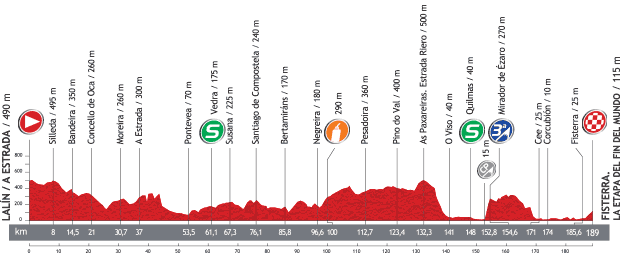
    Stage 4: Lalín > Fisterra | 189km | Flat

    VS4

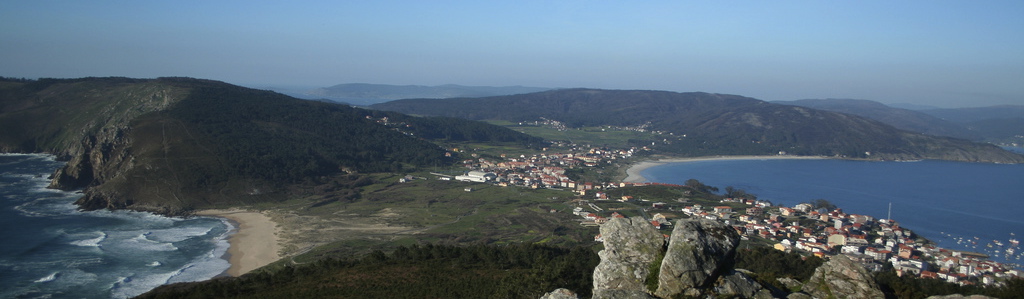
    There is only one categorized climb on the menu, but Stage 4 is rather lumpy, enough to spur a breakaway move early. The peloton will fight to reel them in, and the generally downhill/flat stretch of about thirty kilometers leading into the finish will favor the pursuit. Then, the road heads up at roughly 3.5% for the finish at a beautiful promontory (pictured above) that was once the edge of the known world for much of Western Europe. It’s enough to give an advantage to the lighter, more capable climbers of the sprinting crowd, and a bend in the road in final few hundred kilometers will favor a well-marshaled, aggressive squad. Assuming the pack finishes together, this sounds perfect for Omega Pharma-Quick Step and Gianni Meersman. He’s been on fire this year, and his legs don’t have any Grand Tour mileage in them other than what they’ve covered so far this week. BMC will potentially look to set up Philippe Gilbert again, especially after he was unable to threaten in Stage 3. It might not be steep enough for Gilbert to outshine some of the stronger kicks in the peloton, especially with his recent nasty knee injury. Sky’s Edvald Boasson Hagen would be an obvious pick here were it not for his shoulder injury from the Tour de France; with those concerns, it is harder to say how he will fare. He was dropped from the Sky train in the opening time trial, but he looked okay climbing up the summit finish of Stage 3. Orica-GreenEdge has both Simon Gerrans and Michael Matthews, and it seems like they’ll favor the latter here, though it’s never easy to tell with OGE. The finish might be a bit steep for Tyler Farrar, but he’s been very good this year. The two under-the-radar sprinters I tipped in my initial Vuelta preview, Argos Shimano’s Nikias Arndt and Reinardt Janse van Rensburg, could also factor here. If an aggressive rider manages to attack for the win, don’t be surprised if it’s Diego Ulissi, Luis Leon Sanchez, Grega Bole, or the resurgent Anthony Roux. And of course, the uphill finish could see Alejandro Valverde, Joaquim Rodriguez, and other punchy, Ardennes-style GC types strike out for bonus seconds.

    VeloHuman Stage Favorites

    1. Gianni Meersman | 2. Michael Matthews | 3. Philippe Gilbert | 4. Alejandro Valverde

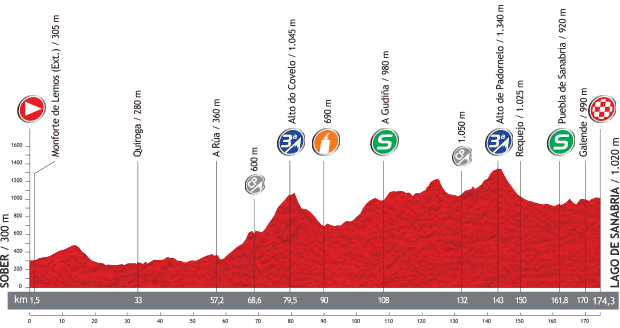
    Stage 5: Sober > Lago de Sanabria | 174.3km | Medium Mountains

    VS5

    Another lumpy day, with two Cat 3 climbs and a lot of uncategorized ascending, Stage 5 will also likely see a lot of attacking early. However, the road angles downward again with plenty of distance left, and with one of the few relatively flat finishes in this Vuelta awaiting the peloton at the end of the line, those sprinters who have made it over the hills will be extra-motivated to bring back anyone up the road. The lumps may force some selection, but it seems likely that this stage will go to a sprinter. If OGE decides to support Michael Matthews over Gerrans or Leigh Howard (and, as this is a more difficult stage but not an extremely difficult one, they seem likely to), this is a great opportunity for him. Tyler Farrar isn’t guaranteed to make it, but as few sprinting opportunities as there are in this race, he’ll surely be giving every one of them 100%. Gianni Meersman and (assuming he’s healthy enough) Edvald Boasson Hagen probably won’t have much trouble with the climbing, so they’re sure to challenge. Whomever Argos-Shimano decides to back, Janse van Rensburg or Ardnt, will have a good opportunity as well. Cannondale’s young up-and-comer Daniele Ratto might be in the mix. If BMC decides to support Gilbert for the sprints at the end of every difficult stage, he could be involved here, too. Vacansoleil’s Barry Markus, should he manage to finish with the bunch, is a danger if he makes it to the finish with the pack and with his strength, and Omega Pharma-Quick Step’s Andrew Fenn is a name to keep in mind as well. Finally, Fabian Cancellara’s goals in this Vuelta are rather unclear, but he might target this stage with its potentially selective early climbs, but flatter finish.

    VeloHuman Stage Favorites

    1. Michael Matthews | 2. Gianni Meersman | 3.  Tyler Farrar | 4. Edvald Boasson Hagen

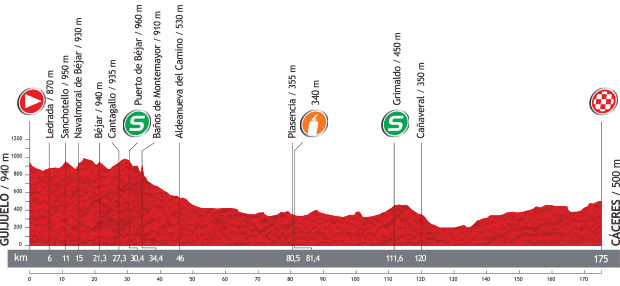
    Stage 6: Guijuelo > Caceres | 175km | Flat

    VS6

    Stage 6 is the flattest stage so far, one that the sprinters will have circled in the road book. There is a very short kick upward not far from the finish line, but it seems likely that the stage will end in a bunch sprint contested by the big names. Tyler Farrar is the first one that comes to mind. Barry Markus of Vacansoleil and Adrien Petit of Cofidis will be eager to sure what they can do, if they haven’t already in the previous two stages. We will probably know the rider that Argos is favoring by this point, so keep an eye on Stages 4 and 5 to get an idea of the direction in which they’re heading in terms of Ardnt vs. Janse van Rensburg. We’ll also probably have a better idea of how Boasson Hagen is doing by this point. As always, Meersman could be in play, or it could be a time for Andrew Fenn. Orica-GreenEdge might go with Leigh Howard here.

    VeloHuman Stage Favorites

    1. Tyler Farrar | 2. Barry Markus | 3. Gianni Meersman

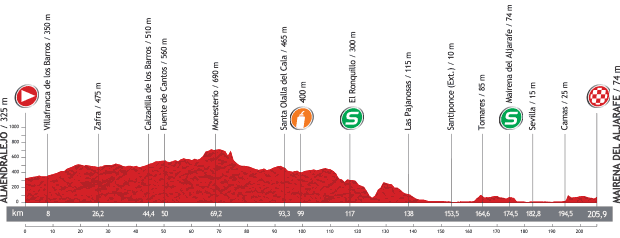
    Stage 7: Almendralejo > Mairena del Aljarafe | 205.9km | Flat

    VS7

    I hate to say it, but with so many consecutive stages that could go to sprinters, I’m running out of things to say about them. Stage 7 is almost certain to end in a bunch gallop, and by this point, if you’ve been watching the previous bunch sprints, you’ll already have a good sense of what is what in this race. It should be the usual suspects here, and it’s probably Farrar’s best shot to win a stage until the Madrid finale. Same goes for Leigh Howard, given OGE’s stated intention of giving Michael Matthews the green light on harder stages. This could be a stage for Andrew Fenn of OPQS, or they could stick with Meersman. You should be familiar with the rest of the names now: Boasson Hagen, Markus, Arndt/Janse van Rensburg, Petit. Watching from home, Theo Bos will rue the low cortisol levels that kept him out of the race.

    VeloHuman Stage Favorites

    1. Tyler Farrar | 2. Barry Markus | 3. Leigh Howard

    -Dane Cash

    Photo by Oscar Anton.

  • Vattenfall Cyclassics 2013 Preview

    Nizzolo

    To Hamburg!

    While many of the world’s biggest GC threats are suffering in Spain, some of cycling’s fastest fast men are headed to Hamburg, Germany for the annual sprintfest known as the Vattenfall Cyclassics. The course, which loops a few times around the greater Hamburg area, ostensibly contains a lump or two, but the difficult ascents amount to little more than repeated trips over one very short berg and a few bridges.

    Every edition in recent memory (and it hasn’t been around very long) has ended in a bunch sprint, and every recent winner has been a marquee sprinter. Last year, Arnaud Demare nabbed the victory and relegated power sprinter Andre Greipel to second place. With another Cyclassic final likely to come down to a mass gallop, the leaderboard should once again read as a who’s who of on-form hard finishers, albeit minus Mark Cavendish, Marcel Kittel, and two-time winner Tyler Farrar, who is spending a few days in Spain.

    Leading the way, certainly somewhere near the top, should be Andre Greipel. He’s been 3rd and 2nd here before, he’s got a strong leadout squad, and he looks very sharp right now. He was right there with Cav and Kittel in so many Tour de France finishes, but he only notched one victory, losing out in photo finishes to his countryman Kittel twice. He won a stage in the Eneco Tour, but will surely feel robbed of better results after Mark Renshaw galloped out ahead around a sharp turn on the flat, would-be sprinter’s first stage; Greipel won the bunch sprint for second. He stayed sharp all week, winning in the fourth stage and gunning for the intermediates in an attempt to nab the points jersey, only to be pipped by a whopping one point by Lars Boom in the end. In other words, the form is definitely there, but the Gorilla will be hungry for more concrete results. This is the only WorldTour race in his home country, and a perfect opportunity for him to finally take a one-day victory at the WT level.

    Last year’s winner Demare has been sharp recently as well, taking a victory of his own in the Eneco Tour to add to several other big wins this year. He’s just 21 years old, and he’s got a strong finishing kick and a healthy dose of endurance, making him a good bet on a long race like this one.

    Young Radioshack sprinter Giacomo Nizzolo rounded out last year’s podium. He’s won a pair of sprint victories this year at the Skoda Tour de Luxembourg, but those were against rather weak competition. However, he looked very strong at this month’s Eneco Tour, where, like Greipel, he probably felt robbed of a victory when Zdenek Stybar won stage 3 with an attack near the finish: Nizzolo won the bunch sprint behind him. He was just behind Greipel on Stages 2 and 4. After knocking at the door all week in the Low Countries, Nizzolo would love to make a statement at Vattenfall, and I think he has a great shot at it.

    Alexander Kristoff was 4th here back in 2010 when he was just 23. After back-to-back finishes just outside the top 10, I think he’s on track for another strong showing this year: he’s been on fire basically since March, winning one of the Three Days of De Panne to kick off a string of high placings in major races, including top 10s in Paris-Roubaix, Milano-San Remo, and the Tour of Flanders, three wins in the Glava Tour, and a win over Peter Sagan in a sprint at the Tour de Suisse. He was always in the mix in the Tour de France sprints despite lacking much team support. Katusha won’t be distracted here, and he’s got the all-around fastman package to add to his palmares this year.

    Gerald Ciolek was second in the 2011 edition and MTN Qhubeka is here again with a big showing in mind. Toiling away on a Pro Continental squad, Ciolek has only attended two WorldTour races this year, but he won one of them, and it happened to be the monumental Milano-San Remo. Recent good results in the run-up to this event are scarce for him, but they were in 2011 as well, and Ciolek is a tough, smart racer in his home country, and he doesn’t get as many opportunities to race on the highest level as he should.

    Thor Hushovd, recently back from a long slump, will clip in Sunday looking for more results. He won a pair of stages in Poland and has taken a slew of recent victories in smallar races. German sprinter John Degenkolb actually hasn’t raced here before, and he’ll be in attendance as well, but he hasn’t really lived up to his name lately. He’ll look to get back on track in front of a crowd full of countrymen. Orica GreenEdge sends both Matt Goss and Daryl Impey. Goss is a better pure sprinter, but of course he’s been invisible lately. Impey will take up the slack if Goss drops off the back early, as has been his M.O. for a while, though if he does make it to the finish, this is a good opportunity for him to get his mojo back. Elia Viviani will be days removed from a win at the Dutch Food Valley Classic. He was always in the mix at the Giro and picked up a win in the Dauphine; I don’t know if he can outkick some of the stronger names in attendance, but being in the mix isn’t out of the question. Lampre sends Filippo Pozzato, also in the mix often at the Giro.

    Belkin’s Lars Boom and Omega Pharma-Quick Step’s Alessandro Petacchi are both coming off of Eneco Tours in which they featured prominentaly in a number of sprint stages. Boom, as has been mentioned, worked hard for the points jersey as a consolation for missing out on GC. He’ll want more results this year after a disappointing spring. Petacchi will be supported by an always strong OPQS squad that includes Michal Kwiatkowski. Movistar’s J.J. Rojas, master of the decent-but-not-great finishing sprint, was 5th here in 2011 and can probably muster another top 10. Saxo-Tinkoff’s Daniele Bennati last raced here in 2010, and he finished 5th then. He seems to be slowing down but he looked alright without much team support in the Tour. His teammate Matti Breschel was 2nd in the 2009 edition and looked very strong in the recent Tour of Denmark.

    Vacansoleil is sending both van Poppels. Danny was the better rider in the Tour de France, where he managed a top three finish on the first stage. Hard to call.

    My under-the-radar pick is Garmin’s 25 year old Steele von Hoff, who hung right with Hushovd on stage 3 of the Tour de Pologne and then won the bunch sprint for second place moments behind Taylor Phinney on stage 4. Those were long days in the saddle, much like this will be, and the time seems right for him to make a splash. Garmin also has the young Raymond Kreder.

    VeloHuman Predictions

    Winner

    Andre Greipel

    Podium

    Alexander Kristoff, Giacomo Nizzolo

    Top 10

    Arnaud Demare, Gerald Ciolek, Thor Hushovd, Elia Viviani, Lars Boom, J.J. Rojas, John Degenkolb

    Under the Radar Challenger

    Steele von Hoff

    -Dane Cash

    Photo by Sum_of_Marc.

  • Vuelta a España 2013 Day 0: Where We Stand, and Looking Ahead to Stages 1-3

    OPQS TTT

    Day 0: Starting with a Bang

    No easing into this one. The Vuelta opens with a team time trial and back-to-back steep uphill finishes. That means the contenders will have to be on their game from the moment they clip in on the first stage. I’ve already covered most of “where we stand” in my comprehensive race preview, so let’s get to it.

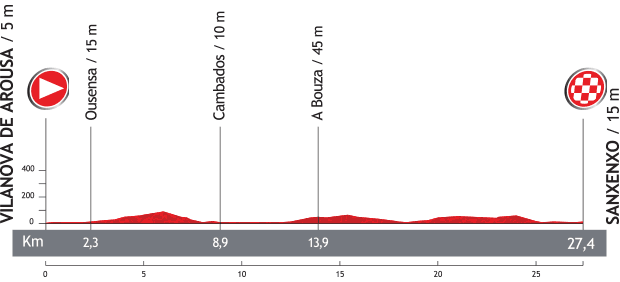
    Stage 1: Vilanova de Arousa > Sanxenxo | 27km | Team Time Trial

    VS1

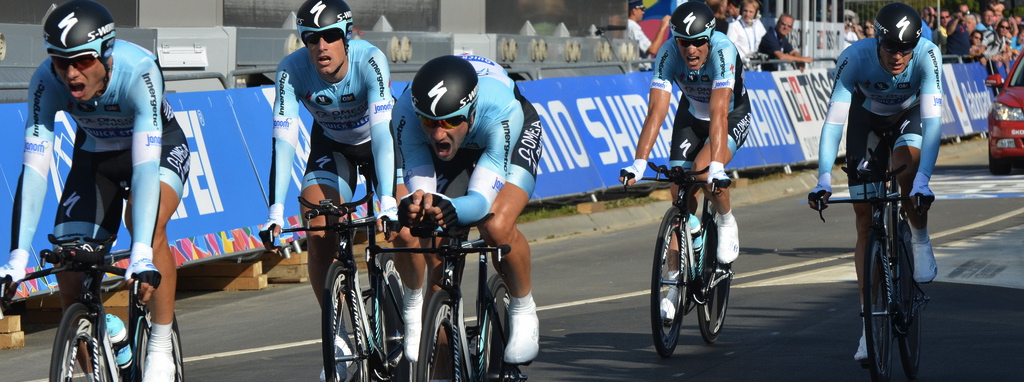
    It isn’t a long team time trial, and it’s not hilly either. Omega Pharma-Quick Step will be hoping to defend their world TTT title at the upcoming championships in Italy, and after just missing out in the Tour de France, they will be gunning for this one. Tony Martin leads the squad, but they are missing some of their big pieces, like Sylvain Chavanel and Niki Terpstra. Still, they’ve got some talent here. Astana’s strong squad looks poised to challenge them. Movistar and Saxo-Tinkoff both have a boatload of talented riders, but this parcours might be a bit flat for them. Sky’s roster isn’t packed with as many TT stars as it was in the Giro and the Tour, but they’ll probably be alright. Speaking of the Tour, Orica-GreenEdge fielded a very different squad there, and I don’t expect them to provide back to back Grand Tour TTT wins. RadioShack – Leopard will be led by Fabian Cancellara. Don’t overlook them, despite their aging roster behind him. Traditional favorites BMC and Garmin aren’t packing many heavy hitters. Katusha will be gunning to keep Purito from losing too much time.

    VeloHuman Stage Favorites

    1. Astana | 2. Omega Pharma-Quick Step | 3. Movistar | 4. Radioshack-Leopard

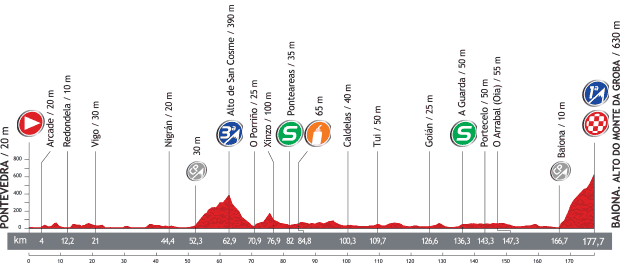
    Stage 2: Pontevedra > Monte da Groba | 176.8km | High Mountains (Summit Finish)

    VS2

    We had to wait until the eight day of the Tour de France to get a summit finish. The Vuelta will be cutting to the chase much more quickly. The run to the top of Monte da Groba includes a Category 3 climb well before the halfway point and is otherwise pretty flat. However, 11km before the finish, the road turns up and stays steep until the summit finish. The average grade is 5.6%, with a 10% section early, a litte break in the middle, and then an 8% section near the top. It’s an early test, and gaps will surely form, but they aren’t likely to be devastating. Carlos Betancur has had plenty of time to rest since the Giro, and while it’s possible he might not be able to sustain a high level all Vuelta, he’s sure to be gunning for every uphill finish out there. For all his success, he has yet to claim his first WorldTour win. I’ll take a few stars of the Giro here, who have had plenty of time to recharge since they last Grand Toured. It’s also possible that a non-GC threat could be allowed to go up the road.

    VeloHuman Stage Favorites

    1. Carlos Betancur | 2. Sergio Henao | 3. Vincenzo Nibali

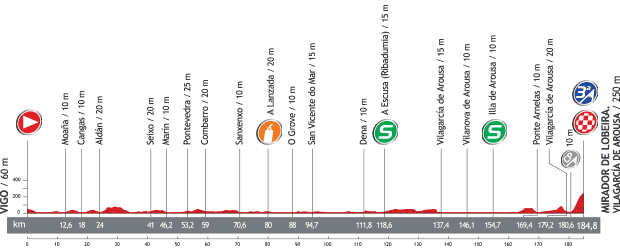
    Stage 3: Vigo > Mirador de Lobeira | 172.5km | Medium Mountains

    VS3

    Stage 2’s finish isn’t backbreaking, but it should tell us at least a little bit about what’s what in this Vuelta. That means that anything I have to say about a Stage 3 could be completely out-of-date by the time the riders take to the road on Monday, but I’ll go ahead and make some predictions anyway. Until the last 4 kilometers, Stage 3 presents the riders with nary a hill. Then comes the finish, a climb of roughly 6%. With such a flat profile leading into the day’s only real climb, which is a short one, competition will be hot and heavy as the peloton hits the Cat. 3 at a very high pace. It’s steep, but not that steep, and the slope eases a bit in the last few hundred meters; a group of hard-chargers could come across the line together. The last image I saw of Philippe Gilbert was a bloodied and bruised leg post-crash in the Eneco Tour, but he is back on the bike and will love this opportunity to nab his first win of the year, especially after coming so close in Benelux (where he was 2nd on an uphill sprint to Arnaud Demare before crashing on the stage that perhaps best suited his skills). Other familiar hard-finishing, uphill-capable names could be in the mix as well. Alejandro Valverde and Purito Rodriguez should jump at the opportunity to pick up bonus seconds with a short uphill sprint. Roman Kreuziger, Simon Gerrans, Dan Martin, and Bauke Mollema might be in the hunt, too.

    VeloHuman Stage Favorites

    1. Philippe Gilbert | 2. Alejandro Valverde | 3. Simon Gerrans | 4. Joaquim Rodriguez

    -Dane Cash

    Photo by Sean Rowe, Profiles from www.lavuelta.com.

  • Vuelta a España 2013 Preview

    Angliru

    Race Overview

    The final Grand Tour of 2013 is here at last! It promises to be grueling, extremely hilly and hot, which means plenty of entertainment for us. In return, VeloHuman promises to be full of content: after this outlook on the overall race, every few days will bring recaps and previews of the stages to come, so check back often. If you just came here for the picks, well, they’re at the bottom, but if you scroll past all the analysis, you’ll miss some names you might not have otherwise considered!

    The 2013 Vuelta will put twenty-stages and four jerseys (General Classification, Points, Mountains, and Combination) up for grabs. Time bonuses of 10, 6, and 4 seconds are awarded to the top three finishers on each stage, and bonuses of 6, 4, and 2 seconds are awarded to the first three riders across the lines of intermediate sprints. Mountains are classified (from easiest to hardest) as Categories 3, 2, 1, and (for the marquee summits) Especial.

    The first stage is a team time trial, not terribly long or hilly, and stage 11 is an individual time trial, with a small climb in the middle. We’ll call five stages (stages 4, 6, 7, 12, and 21) flat, and an additional three stages (stages 5, 13, and 17) are classified here as “medium mountain” stages, but will likely end in sprints, albeit with possibly reduced bunches. The remaining eleven stages are mountainous and finish uphill: stages 3, 9, and 19 are also classified as medium mountain stages but end with ascents, and stages 2, 8, 10, 14, 15, 16, 18, and 20 all fall into the high mountain class.

    With so many uphill finishes scattered throughout the twenty-one days of racing, the Vuelta organizers have guaranteed an intense battle for the overall victory that will rage constantly, rather than slowly building up to a few grueling stages in the last week–though with L’Angliru awaiting the GC contenders as the final summit of the 2013 Vuelta a España, the last week will be more than grueling. Not many pure sprinters are bothering to make the trip. This is truly a tour for the star climbers, and many of the sport’s most recognizable climbing talents (minus recent Tour de France racers Chris Froome, Nairo Quintana, and Alberto Contador) are making the journey to the province of Pontevedra to start the race, regardless of their fatigue level this late in the year.
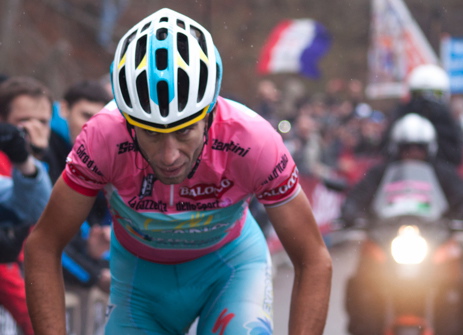
    Nibali

    All-rounder Roundup

    As so many major contenders are taking on the Vuelta after already grinding through either the Giro or the Tour this year, and with so many difficult stages offering opportunities for even the best riders to lose huge chunks of time at once, the quest for the GC victory at the Vuelta a España will be very hard to call. On perfect form and targeting this race, Astana’s Vincenzo Nibali would be a strong favorite. He dominated the Giro d’Italia with his combination of elite climbing and relatively newfound elite time trialing, winning the pink jersey with nearly five minutes of cushion over the 2nd place rider, Sky’s Rigoberto Uran. He has already won the Vuelta once, in 2010, and he knows that an opportunity to win two Grand Tours in a year, an opportunity that he has in 2013, is a rare thing. However, after a midseason break from racing, it is hard to tell whether Nibali has the form to take on another three-week Grand Tour as the favorite, especially when his next main target this season is the World Championship race, an event with far more climbing than usual that is being held in his home country. That leaves this competition open for a sizable lot of other contenders, though the question of focus (Vuelta vs. World Champs) exists for nearly every one of them.

    Still, the discussion should start with Vincenzo Nibali. Not only is he probably the strongest all-round rider in this Vuelta at his best, he’s also riding at the head of a stacked team. His Astana supporting squad includes Tour top 10 man Jakob Fuglsang (don’t write him off for a top 10 here if he targets it), and capable all-rounders Tanel Kangert, Maxim Iglinsky, Janez Brajkovic, and Andriy Grivko. Even without Kessiakof, they are well-built for the opening team time trial, and the climbing support will be strong (as it needs to be for all the summit finishes). Nibali’s performance at the Tour de Pologne showed a lot of post-Giro rust, but he got back on track at the Vuelta a Burgos, putting in a podium performance with solid climbing legs, rolling in 48 seconds behind Quintana on the decisive final stage.

    Given his resume and a recent showing of form, Nibali is my prohibitive favorite, but even with the necessary form, his powerful engine isn’t built to nab bonus seconds in short, steep, close finishes against punchy opponents, and this Vuelta offers many opportunities for those explosive riders, meaning competition will be fierce.
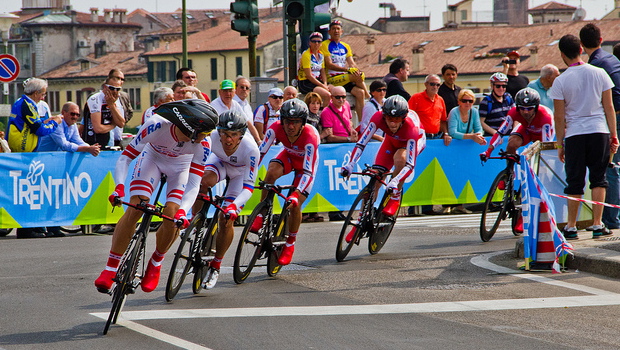
    KatushaAs such, there will be a bevy of explosive climbers in attendance to challenge the Shark of Messina. Chief among them are Spanish stars Joaquim Rodriguez of Katusha and Alejandro Valverde of Movistar. Rodriguez is coming off a strong Tour de France in which he finished on the podium. The stage profiles at the Vuelta a España probably have him salivating, but he dug incredibly deep in the last week of the Tour to come up with his third place in GC. He hasn’t raced since, leaving some question marks about his form. He isn’t a stranger to performing at a high level in two Grand Tours per year (he stood on two GT podiums last year), but he did have a bit more recovery time in 2012 between the Giro and the Vuelta. Still, despite a bit of uncertainty, Purito has the talent and, at age 34 riding in his home Grand Tour, motivation will be through the roof. He has performed at an extremely high level in Grand Tours in the past two years, but his could be his best chance to finally win one. He has the finishing kick to pick up seconds on any given stage, and he has improved his time trialing enough that it shouldn’t keep him out of contention, especially not when this edition’s ITT has a categorized climb in the middle of it. If he still has the form, I think his overall package will be enough to carry him onto the podium and possibly even to the overall victory.

    Alejandro Valverde’s combination of climbing and finishing power make him another prime candidate for the podium, especially after a heartbreaking Tour de France that saw him lose an insurmountable chunk of time after a mechanical problem on a windy flat stage. Bonus seconds play to Valverde’s strengths, as he is the best sprinter among the elite climbers on the start list, but like Rodriguez, he’s coming off a Tour de France in which he went very deep in the final week (fighting to get back into the top 10 in GC, which he did), and as strong as he is, Rodriguez and Nibali may have a slight advantage in terms of pure climbing. He already has a Vuelta victory on his Palmares and knows what it takes, but this might cut both ways: with the World Championship race parcours almost perfectly tuned to his strengths, Valverde does already have one Vuelta to his name, but no rainbow jersey.

    As good as Nibali, Rodriguez, and Valverde are, none of them could be considered even close to being the favorite. This race is just too open, and there are so many questions raised by fatigue and rider motivation. The other contenders include a pack of up-and-comers, and a stable of old veterans. Perhaps chief among the 25 and under crowd are Sky’s Sergio Henao and AG2R’s Carlos Betancur. Betancur won the young rider classification at this year’s Giro, finishing in 5th place. He’s a pure climbing talent, though what he makes up for in climbing, he really lacks in time trialing (he lost five minutes to Vincenzo Nibali in the stage 8 time trial of the Giro). Fortunately, this year’s Vuelta looks perfect for that skillset. However, he has not raced at all since the Giro and at just 23, his resume lacks much evidence for his ability to perform at a high level across two GTs. As explosive as he is, it may be a bit much to ask of him to cruise through three more weeks in peak form.

    Sergio Henao, on the other hand, was able to take the Giro at a less grueling pace, riding in support of first Wiggins, and then Rigoberto Uran. He looked great climbing in the Tour de Pologne, finishing 5th, and as he has shown in single day climber’s races, he does have some explosiveness under the hood. He rides at the head of a powerful Team Sky, and Giro runner-up Rigoberto Uran is, apparently, here to support him. Henao’s best Grand Tour performance so far is his 9th place in the 2012 Giro d’Italia, but I think he will improve on that here, possibly challenging for a podium place as one of the top contenders with some of the freshest legs. The aforementioned Uran should not be written off, either; had he not ridden the Giro so hard, he’d be an obvious favorite here, but even with that mileage, he’s still a threat, though he may be more interested in the World Championship race in Italy (after his 2nd place at the Olympics and twice on the podium in Lombardy, Uran must feel the time is right for a marquee single-day win).

    Ivan Basso, Samuel Sanchez, Michele Scarponi, and Chris Horner headline the list of cagey veterans looking for statement victories at this point in their careers. Cannondale’s Basso missed the Giro this year and, therefore, has very little mileage in the legs. Only a year ago, he was 5th in that race, and he’s looked okay in recent contests (8th in the Tour de Pologne, 10th in the Vuelta a Burgos). Especially at this age, he might lack the explosiveness for a top finish in GC, but that freshness has to count for something, and his team is 100% committed to him. Samuel Sanchez will love the lumpy profile, but his stage race successes have been dwindling lately, and he put a lot of energy (with unfortunately little return) into the Giro d’Italia. Still, a top 10 performance, especially with his endurance and team support, is not out of the question. Michele Scarponi really isn’t all that old (33), but he has never performed at a high level across two Grand Tours in the same year. 4th place in the Giro is nothing to sneeze at, and suggests he still has plenty of power in the legs, but it is hard to see him nabbing a podium position in the Vuelta. Horner gets a mention for his long list of career successes, a top 10 at Tirreno-Adriatico this year, and no other Grand Tour in his legs in 2013, but I don’t know that I see a top 10 in the cards for him. His teammate Haimar Zubeldia, 36, has so many Grand Tour top 10s under his belt that even without much to talk about in terms of results this year, he gets a sentence here, too.

    Joaquim Rodriguez’s Katusha teammate Daniel Moreno took 5th in last year’s Vuelta and, while he did already ride in the Tour de France, he, like Sergio Henao, probably still has some left in the tank, in that his prior Grand Tour appearance seems to have been fully in support of a teammate. Last year, Moreno supported Rodriguez in the Giro and then was given opportunities to make his own mark in the Vuelta. If the script is the same this year, his elite climbing abilities, with no little amount of explosiveness to nab bonus seconds, could put him in the top 10.
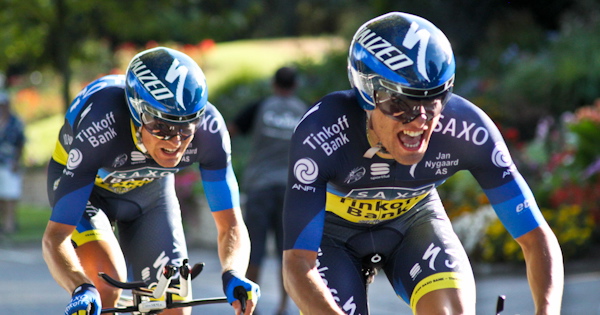
    MajkaTeam Saxo-Tinkoff sends a whopping three possible podium finishers to the Vuelta, though all of them have already ridden in a Grand Tour this year and it is yet totally unclear who will be their top rider. On the one hand, the team has declared Roman Kreuziger leader. He is a true all-rounder and after putting in such an impressive Tour performance, he’s a legitimate threat. However, that effort and the upcoming World Championship race, which will play strongly to his Amstel Gold-winning skillset, raise a lot of questions about his motivations; he has even said straight out that he isn’t going for GC, despite being given the leadership nod. That may leave the task up to one of his strong teammates. Rafal Majka, 7th in the Giro d’Italia, is a very capable up-and-comer who just showed with a 4th place finish (and the Points Classification) at the Tour de Pologne that he still has some form. However, expecting two top-tier GT performances out of a 23-year-old rider might be a bit much. And then, of course, there is Nicolas Roche, who, in his 29th year, is surely striving for some kind of big win to add to his palmares. He certainly has the talent for a top 10, though people have been saying that for a long time. By saving his legs on a number of Tour de France stages, he has probably got some energy left for another push. He was a faithful domestique in the Tour de France and then in San Sebastian, and he may feel he has earned some team support, but we won’t know the team’s tactics until the race begins. Roche and Majka will at least be protected if they are not initially team leaders, and whomever this team ultimately decides to rally behind will have some impressive support. Chris Anker Sorensen at least deserves a mention as a potential decent finisher, and Oliver Zaugg, winner of Il Lombardia in 2011 (and so close to a top 10 at the Vuelta in 2008, where he finished 11th), will lend his support as well.

    To a lesser extent, Vacansoleil-DCM is in a similar position, with Thomas de Gendt (totally disappointing in the Tour de France), Wout Poels, and Tomasz Marcynski in attendance and all potentially capable of a GC top 10. Only a year ago, De Gendt was on the podium at the Giro d’Italia, and after falling off the pace early in the Tour de France, he showed a flare of ability in the first ITT and then disappeared again. It’s hard to say where he’ll end up in the Vuelta.

    For all his climbing talent Daniel Martin can’t be left out of a preview; he has had a stellar 2013 with a Monument victory (Liege-Bastogne-Liege), a stage in the Tour de France, and the overall and a stage in the Volta a Catalunya. In terms of chasing the GC at the Vuelta, however, there are many, many questions about his candidacy as a contender. He looked great at the Tour de France until he caught ill and finished at the back of the peloton for the final week, but strong starts and fading finishes are not new for him on the Grand Tour scene. It doesn’t help that he takes every opportunity to tell the media that he targets stage wins and doesn’t worry much about his position in GC. Additionally, the World Championship race is a target of his this year. Finally, Garmin hasn’t really sent him much help, with most of their star climbers in North America for the USA Pro Cycling Challenge and the upcoming Canadian circuit races. In his favor, the route will be to his liking, full of climbs and low on time trial mileage. He also didn’t push his legs as hard as some of the other top climbers late in the Tour de France, as he was busy battling a cough. Is a top 5 possible for someone like Martin? Sure. Is it possible that he will finish nowhere near the top 30 on GC? Sure.

    Belkin’s dynamic Tour de France duo of Laurens ten Dam and Bauke Mollema are both in attendance. Mollema has done very well here in the past, taking 4th and the points classification in 2011, and he’s become a more well-rounded rider since, but he gave his all in the Tour de France and likely won’t have too much left in his tank. Ten Dam was 8th in last year’s Vuelta after riding a Tour de France, so he can’t be written out for a top 10 either, but it’s hard to see him overtaking the fierce competition. It should be noted that Belkin’s Luis Leon Sanchez nabbed 10th place finishes in the 2010 Tour de France and Vuelta a España, but the summit-happy edition of this year’s race might be a bit out of his league in terms of GC.

    Movistar’s Eros Capecchi and Benat Intxausti and Euskaltel’s Igor Anton and Mikel Nieve are among the many super-domestiques with the chops to land in the top 10 overall. 24-year old Diego Ulissi of team Lampre has had a decent 2013, placing 7th in Paris-Nice and taking a stage in the Tour de Pologne. He doesn’t have the mileage of a prior Grand Tour in his legs, and if given opportunities, he could make a mark on GC.

    Domenico Pozzovivo of AG2R had a fine Giro d’Italia, finishing in 10th place behind his teammate Betancur, and showed good climbing form with a 7th place at the recent Tour de Pologne. As Betancur is a question mark in terms of both form and motivation, AG2R could turn its (admittedly not strong) support to Pozzovivo, who has a number of Grand Tour top 10s on his resume and could add another here.

    From the Pro Continental ranks, David Arroyo is fresh off a 2nd overall in the Vuelta a Burgos (behind Quintana and ahead of Nibali). 2010 may seem like a long time ago, but this is a rider who has been 2nd overall in Grand Tour, and, perhaps most importantly, he has not ridden one yet this year. Fresh legs and the support of a Spanish team that will be highly motivated to show their prowess in their home Grand Tour, Arroyo could put in a challenge against a field filled with exhausted contenders lacking motivation.

    Lastly, Thibaut Pinot will be at the Vuelta and, for all the jokes that have been made about his troubles with descending and his poor form in the Tour this year, he is coming off a 6th place in the Tour de l’Ain against some big talents and probably has fresher legs than most of the riders at the Vuelta with Grand Tour top 10s on their resumes. Maybe he’ll get back on track? Probably not, but it’s worth a mention.

    Even with all those names listed (far more than I outlined for the Tour preview), I’m still not confident that I’ve brought up every potential top 10 rider for GC. This Vuelta is just that open.

    Stagehunters

    The number of stages that won’t have GC implications is pretty low compared to the Tour de France we just witnessed, meaning that the collection of star stagehunters at the Vuelta is smaller than you might expect. In fact, with eleven uphill finishes, you might see the majority of the Vuelta’s stages won by GC riders, or all-rounders who have fallen off the pace and who will trade the occasional day of recovery in the saddle for shots at stage victories in the mountains. Riders likely to fit into this latter category deserve the first mention in the stagehunter section.

    It is quite possible that one or more of even the big three of Alejandro Valverde, Joaquim Rodriguez, Vincenzo Nibali will turn to targeting stage victories in preparation for the World Championship race. Given the number of uphill finishes and the bonus seconds on offer at each finish line, I’d imagine Rodriguez, Valverde, and Nibali, in that order, are the three most likely winners of the Points Classification’s green jersey. I’d also say there is a very high likelihood that one or more of Roman Kreuziger, Daniel Martin, and Daniel Moreno, the three winners of this year’s Ardennes week, will turn to focusing on nabbing multiple stage wins as well–I’d also bet that one of them is successful in this regard. Rigoberto Uran and Carlos Betancur will probably lead the Colombian charge at the World Championship race, meaning that both could drop their GC aspirations entirely and gun for multiple stage wins in preparation here at the Vuelta.
    Farrar

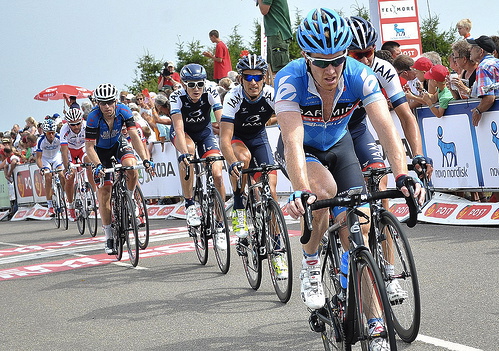
    And for the rest of the stages? There are very few pure sprinters in attendance. Tyler Farrar looks to be the headliner in that department, and he’s looked good this year, with a number of stage top 10s and a win in the Tour of California. There aren’t a ton of flat stages for him to make his mark on, but there is a four day period (stages 4-7) that could put him at the forefront on multiple days in a row. He’ll be challenged by a number of other sprinters and more balanced riders with fast finishes, and in that respect, he’s going up against stiff competition, as some of the sport’s top sprinters-who-can-climb/all-rounders-who-can-sprint are making the trip to this hilly edition of the Vuelta. Gianni Meersman of Omega Pharma-Quick Step won the points classification at the Criterium du Dauphine after already having nabbed two stages each at the Tour de Romandie and the Volta Ciclista a Catalunya. The 27-year old is in his prime with a powerful team backing him, and it is a team that does not really have any GC riders and will therefore be fully committed to winning stages. As hot as he has been this year, and given his skill set, Meersman could be in line for a bucketful of high placings. He can sprint with the best sprinters, he’s more than capable of getting over late climbs, and he’s even capable of longer attacks. If he weren’t contending with so many climbing superstars in a Vuelta with so many summit finishes for the points classification, he might be my pick for that jersey, and regardless, he’s definitely my pick of the non GC-contenders who will finish highest in terms of points.

    Edvald Boasson Hagen brings a similar skillset to the competition, though he is a bit of an unknown quantity after a nasty shoulder injury in the Tour de France. If he’s back on form (and he has apparently been training for some time now, having recovered quite quickly), he is, like Meersman, capable of winning on a variety of terrains in a number of different ways. Against a somewhat less challenging field, EBH has a great opportunity to add a few wins to a resume that has lacked a bit of its usual pop this year.

    As usual, Orica-GreenEdge is stacked with stagehunters. Young riders Leigh Howard and Michael Matthews are poised to make a splash, especially Matthews, who just won two stages and the points classification of the Tour of Utah to go with his other good results this year. Tour stage winner (and 2012 Milano-San Remo winner) Simon Gerrans will be in attendance for the more difficult stages, and he’s a great bet to nab a stage win, though it’s always very difficult trying to predict just which stage he’ll win, as OGE likes to mix it up. Simon Clarke took a stage win en route to last year’s KoM jersey, and is likely to try for a few long ones again here, as his list of successes is short so far in 2013.

    Without Andre Greipel to support, Lotto Belisol will try to place Jelle Vanendert for GC, and look for opportunities elsewhere as they come. Since I don’t see the relatively-unsuccessful-in-2013 Vanendert making much of a dent in the overall, perhaps he and Bert de Clercq will try to pick up a win on one of the many uphill stages, while Greg Henderson will finally be able to sprint for his own ambitions instead of leading out a Gorilla–though at his age (36), expectations are low. Perhaps the Belgian squad will surprise.

    Luis Leon Sanchez is back and looks strong again with recent good showings in the Tour de l’Ain and his National Champs races. Belkin has a strong team here, and LL Sanchez is a great bet to deliver a long attack or a victory out of a reduced bunch on one of the medium mountain stages.

    Meersman’s teammate Zdenek Stybar just wowed the cycling world with a dominant Eneco Tour, nabbing a pair of stages and the overall victory, showing some true all around talent while everyone else was focused on containing his teammate Sylvain Chavanel. Don’t be surprised to see him rack up a few more results with his aggressive riding; he has definitely arrived as a rider, and in style.

    Belkin has Theo Bos, but the former track superstar has been underwhelming this year. He did zilch at the Eneco Tour (he seemed to have trouble making it to the finishing sprints), and despite starting the year with a string of Continental Tour victories, he hasn’t had much success at the top level in 2013. The competition from pure sprinters will be light, giving him a decent opportunity to nab a win, but the result results just aren’t there to back up his bid, leaving me a bit less confident. Vacansoleil’s Barry Markus has just signed on to Belkin for 2014, and after a third place in Scheldeprijs earlier this year (ahead of Bos, and Alexander Kristoff, and Tyler Farrar), he’s primed to show his future team that he’s got the chops to be a supported sprinter.

    If you are looking for a few under the radar sprinters, I’ll name a pair of young up-and-comers riding for an Argos-Shimano squad that doesn’t have Marcel Kittel or John Degenkolb to take away stage victories: Reinardt Janse van Rensburg and Nikias Arndt. The former has put together a string of high finishes in WorldTour events in the past few months, and the latter was stellar at the recent Arctic Race of Norway.

    For the uphill sprints, Philippe Gilbert will be going all-in to nab something out of his 2013. BMC does not have a GC-oriented squad, meaning Gilbert’s goals will be the team’s goals. As ugly as his knee looked after his unfortunate crash on the Eneco Tour stage that seemed to suit him most, if he’s healthy, there are multiple stages that look great for his uphill bursts, and he looked on good form at the Eneco Tour before it all went wrong.

    Fabian Cancellara is also in attendance. He’s looking ahead to the World Championships, and might be hoping for a stage win or two. Surely he’ll be targetting the stage 11 time trial, but he’ll be up against Tony Martin, who seems content to pick off the ITTs in basically every World Tour race he can think of. The Vuelta’s does have a hill, but it’s not a massive one, and that favors these two riders over the GC men. Other contenders for that stage include, obviously, said GC types like Vincenzo Nibali, and also time trialing heavyweights Tanel Kangert, Stef Clement, and Lieuwe Westra (who, unfortunately, crashed out of an Eneco Tour that was going very well for him, after abandoning the Tour de France in its final stage).

    The three Pro Continental squads (NetApp, Cofidis, and especially Spanish team Caja Rural) will surely be sending lots of riders up the road as often as possible for maximum visibility. Maybe this is the race in which Amets Txurruka finally stays out front all day for a stage win. Leopold Konig is a name to keep in mind. Euskaltel’s stable of climbers and Vacansoleil’s breakaway artists will likely be out in force for wins on the intermediate stages as well.

    VeloHuman Predictions

    General Classification Winner

    Vincenzo Nibali

    GC Podium

    Joaquim Rodriguez, Sergio Henao

    GC Top 10

    Ivan Basso, Alejandro Valverde, Samuel Sanchez, Daniel Moreno, Carlos Betancur, Rafal Majka, Nicolas Roche

    Points Classification Winner

    Joaquim Rodriguez

    Stages

    Stage 1: Vilanova de Arousa > Sanxenxo | 27km | Team Time Trial

    Stage 2: Pontevedra > Monte da Groba | 176.8km | High Mountains (Summit Finish)

    Stage 3: Vigo > Mirador de Lobeira | 172.5km | Medium Mountains

    Stage 4: Lalín > Finisterra | 186.4km | Flat

    Stage 5: Sober > Lago de Sanabria | 168.4km | Medium Mountains

    Stage 6: Guijuelo > Caceres | 177.3km | Flat

    Stage 7: Almendralejo > Mairena del Aljarafe | 195.5km | Flat

    Stage 8: Jerez de la Frontera > Alto de Peñas Blancas | 170km | High Mountains (Summit Finish)

    Stage 9: Antequera > Valdepeñas de Jaén | 174.3km | Medium Mountains

    Stage 10: Torredelcampo > Alto Hazallanas | 175.5km | High Mountains (Summit Finish)

    Stage 11: Tarazona | 38km | Individual Time Trial

    Stage 12: Maella > Tarragona | 157km | Flat

    Stage 13: Valls > Castelldefels | 165km | Medium Mountains

    Stage 14: Bagà > Andorra | 164km | High Mountains (Summit Finish)

    Stage 15: Andorra > Peyragudes | 232.5km | High Mountains (Summit Finish)

    Stage 16: Graus > Formigal | 147.7km | High Mountains (Summit Finish)

    Stage 17: Calahorra > Burgos | 184.5km | Medium Mountains

    Stage 18: Burgos > Peña Cabarga | 186km | High Mountains (Summit Finish)

    Stage 19: San Vicente de la Barquera > Alto del Naranco | 177.5km | Medium Mountains

    Stage 20: Aviles > Alto de L’Angliru | 144.1km | High Mountains (Summit Finish)

    Stage 21: Leganes > Madrid | 99.1km | Flat

    -Dane Cash

    Photos by Román P. G., Laurent Brun (photo 2 and 4), Flowizm, and Louise Hyldegaard and Ditte Thieme.
  • Eneco Tour 2013 Pre-race Outlook

    Eneco

    All-rounder Roundup

    The weeklong drought of WorldTour racing since Weening took the Tour de Pologne in grand style with a strong final stage performance is finally over. The Eneco Tour is here, and WT cycling is finally returning to the territory of the spring classics, with the occasional crosswinds, cobbles, and short but steep climbs to keep things interesting.

    In years past, this has been a race whose outcome has been almost wholly determined by time trialing prowess, with one or two stages against the clock providing the brunt of the time gaps, and a number of flat stages in between. Organizers have gradually provided more and more bumps in the road to liven up the GC, with last year seeing an ascent of the Muur van Geraardsbergen (formerly of the Tour of Flanders) in the queen stage, a climb that shook up the leaderboard and gave Lars Boom the victory and Niki Terpstra a podium position.

    This year’s Eneco Tour is the hilliest yet. Stages 1-4 will be for the sprinters (though hills on Stage 2 might reduce the pack a bit), but then the GC battle will heat up on some difficult roads. The Stage 5 time trial is short — 13.2 km — but technical and lumpy, too. Stage 6 combines the roads of Amstel Gold and Liege-Bastogne-Liege, and Stage 7 returns to Geraardsbergen. Last year’s GC was dominated by time trialists who were capable of staying with the pack on the tougher classics-style climbs. This year’s hills should be even more selective in terms of the overall leaderboard. The winner will be a true all-rounder, who can possibly nab bonus seconds at the finish lines, produce a top-tier time against the clock, and climb at a high level.

    Last year’s winner, Lars Boom, is a capable climber, a top-notch time trialist, and a good enough handler to take on the technical course. He’s likely to repeat a high level performance; however, his results this year have not been as impressive as he might have liked; he didn’t make the podium in the Dutch time trial championships, his classics campaign was disappointing, and he did not produce any remarkable results in the Tour de France. Moreover, the hilly route may be a bit too much to ask from Boom to expect an outright victory. A podium may be doable, especially with the support of a strong team Belkin. The Dutch squad may have another rider better suited to this year’s edition, coming off a strong win in the Tour of Denmark: Wilco Kelderman. Kelderman is already sporting top 10s in this year’s Tour Down Under and Tour de Romandie, and he is targeting this race. He is a good climber who should be able to hang on when the road goes up: the 22-year old could be primed for a high finish.

    Serious competition could come from another Benelux squad, Omega Pharma-Quick Step. Sylvain Chavanel was second last year and also in 2009. His 11th in the San Sebastián might not have been as great as he’d hoped for, but he managed to hang with a group of strong-climbing chasers to show good form after a disappointing Tour de France. He won the French time trial championship in June and, despite lacking a signature World Tour win this year, he’s managed a number of top 10s in stage races and classics in 2013. With help from a team well-suited to succeed low country crosswinds, Chavanel should be able to hang on the hilly stages, even if he loses a few seconds to climbing specialists atop summit finishes, and he’s sure to place highly in the time trial. Teammate Niki Terpstra, 3rd last year, may find the parcours a bit trying, but he’s another strong bet for a good finish.

    Bradley Wiggins leads Team Sky at the Eneco Tour. At his best, he’s certainly able to hang on on these types of climbs, and he’s one of the strongest time trialists in the world (and one who thrives with a hill or two in a race against the clock). He showed last week in the Tour de Pologne that he’s still capable of dominating the discipline, winning by nearly a minute over Fabian Cancellara. The big question is, of course, whether or not the 2012 Tour de France winner is targeting the General Classification here. His big target for the year is the World Championship time trial, and he will surely look to outshine the competition on the Eneco Tour’s fifth stage. Only time will tell whether he plans on fighting for GC. If so, it’s hard to look past his combination of skills.

    Orica GreenEdge is primed to get plenty of sponsorship time on camera with a strong team of all-rounders on the start list. Svein Tuft has done well in past Eneco Tours and figures to at least place highly in the Stage 5 TT. However, last year’s hills proved his undoing, and this year’s parcours will not do him any favors. Teammates Pieter Weening (fresh of a Tour de Pologne win) and Sebastian Langeveld (top 10s this year in Paris-Roubaix, the Tour of Flanders, and E3 Harelbeke, and 9th in last year’s Eneco Tour) are maybe stronger candidates for GC this year.

    lieuwe

    Lieuwe Westra won the Dutch TT championship and he’s got the package of all-rounder skills necessary to finish highly. Unfortunately, Westra was forced to pull out of the Tour de France due to some health problems. He seems to be recovered, but the question marks remain, enough to keep him out of my podium predictions. If he’s healthy, I can see him winning the whole thing, and Dutch squad Vacansoleil would sure love to have something to be proud of this year, currently sitting at dead last in the UCI team rankings.

    RadioShack-Leopard sends Belgians Jan Bakelants and Stijn Devolder to the Eneco Tour. Devolder’s past few years have been frustrating in terms of results, but he did just win the Belgian national championship race. Bakelants was third in that championship race, and just took a stage in the Tour de France in impressive style. He was 10th in last year’s edition of the Eneco Tour, and a capable all-rounder. A repeat top 10 might be doable, as Bakelants is the type of rider who should not be too troubled by some added inclines. Maxime Monfort of RadioShack is a bit of a dark horse to keep in mind: it’s unclear whether he’s targeting the Eneco Tour, but he’s a Belgian with strong all-rounder capabilities who had a good under the radar Tour de France (14th overall).

    Philippe Gilbert has had an immensely disappointing season in the rainbow jersey, but top 10s in Amstel Gold and Liege-Bastogne-Liege and a 2nd place at Brabantse Pijl suggest that he’s not totally off-form in 2013. He’s also not a bad time trialist when he puts his mind to it, nabbing second at the Belgian champs this year. The final two stages fit the skill set of the Boar of the Ardennes, and he’s was champing at the bit all Tour while riding in support of disappointing teammates. A stage win would be completely within reasonable expectations of the Gilbert of 2011 (when he was 2nd overall and took a stage), but it is unclear whether he’s got much of that old self left. Still, he deserves a mention not just as a stage win contender, but as a possible GC threat, with the support of a strong team BMC.

    Argos-Shimano’s stable of sprinter talent shouldn’t make you forget young Tom Dumoulin, who scored podium positions in the Dutch road and TT champs. He is targeting the Eneco Tour and should be up to the variety of challenges the weeklong race poses. I tend to use a “Watch Out For” tag to tip young up-and-comers or dark horses who could be boom or bust type picks, but I really think Dumoulin will be in the top 10 overall, so he merits mention as more than just a sleeper pick.

    Moreno Moser leads the Cannondale attack after a top 10 in San Sebastián and a great showing on the double d’Huez ascent in the Tour. He’s only 22 so the word “inconsistent” probably isn’t appropriate, but his results have been a bit hard to predict. He lacks much in the way of time trialing results in his young career, but this one is a short one, with a pair of lumps. Moser could do well in the GC if he can deliver on the hard uphill finishes.

    Simon Spilak leads Katusha, and he certainly has the climbing and TTing chops to compete. Weeklong stage races have been his forte. However, after a strong start to the season, Spilak’s form is in question this August.

    Stagehunters

    The sprinting and pure time trailing talent in attendance at the Eneco Tour should make for some exciting individual stage finishes. Headlining the fast men are Marcel Kittel and Andre Greipel. Theo Bos and Mark Renshaw of Belkin, Tyler Farrar, Yauheni Hutarovich, Danny van Poppel, Ben Swift, Gert Steegmans, Daniele Bennati, Arnaud Demare, Elia Viviani, Francisco Ventoso, JJ Rojas, and Daryl Impey could also feature in the bunch sprints.

    Contenders for the win in the time trial will also be numerous, with a number of pure TT stars in attendance beyond those riders who can TT and climb well enough for GC. Svein Tuft and Taylor Phinney headline the list of guys who might find the week as a whole too hilly, but who could perform highly in the time trial. Both have done well time trailing here before (and in GC, as well, though this year will likely prove too lumpy). Alex Dowsett, who won the first ITT at the Giro and took the national title in Britain, is also in attendance. Wiggins, mentioned above, might be interested in GC, but he is certainly interested in coming away with a win in Stage 5, and if I had to pick one name for the stage win, it would be his.

    VeloHuman Predictions

    General Classification Winner

    Sylvain Chavanel

    GC Podium

    Wilco Kelderman, Lars Boom

    Other Strong GC Contenders

    Bradley Wiggins, Tom Dumoulin, Philippe Gilbert, Lieuwe Westra, Moreno Moser

    Stages

    Stage 1: Koksijde > Ardooie | 175.3km | Flat

    Stage 2: Ardooie > Brussel | 176.9km | Medium Mountains

    Stage 3: Oosterhout › Schouwen-Duiveland | 187.3km | Flat

    Stage 4: Essen › Vlijmen | 169.6km | Flat

    Stage 5: Sittard-Geleen › Sittard-Geleen | 13.2 | ITT

    Stage 6: Riemst › Aywaille | 150km | Medium Mountains

    Stage 7: Tienen › Geraardsbergen | 208km | Medium Mountains

    -Dane Cash

    Photos by Wouter de Bruijn and Georges Ménager.