Tag: 2014

  • Criterium du Dauphine 2014 Preview

    Criterium du Dauphine 2014 Preview

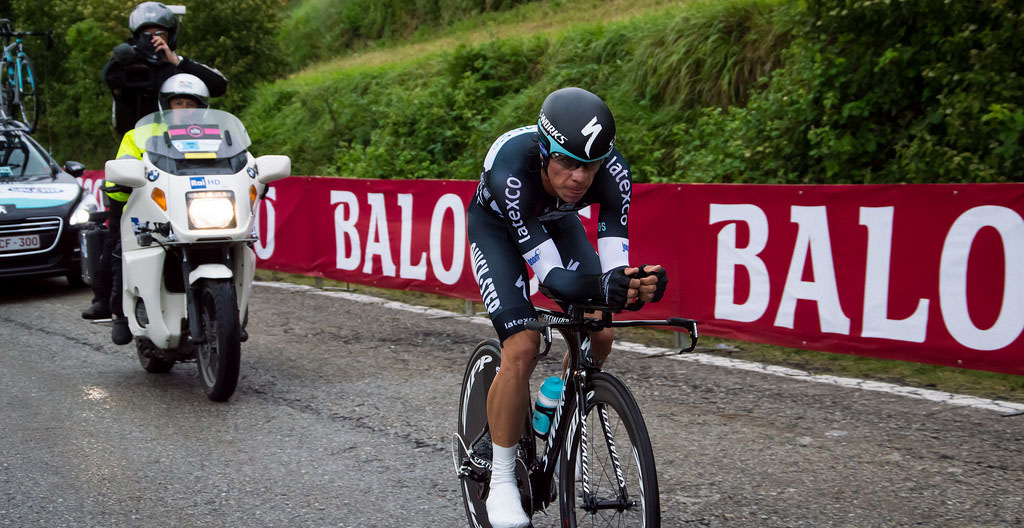
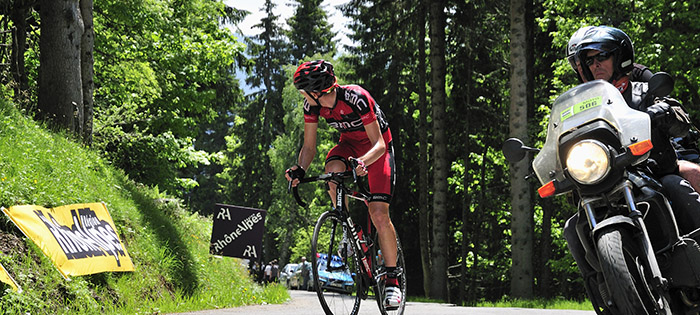
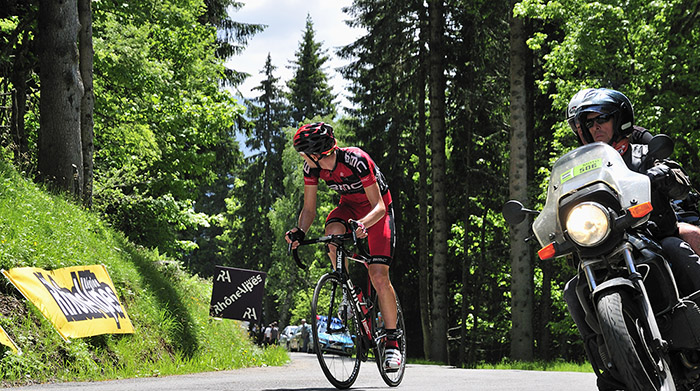
    Tejay van Garderen - Dauphine 2012

    As one Grand Tour ends, the run-up to another begins. The Critérium du Dauphiné (I’m hereafter dropping the accents for various Internet-friendly reasons) is one of the most important stage races of the year. It is one of two major tuneup events for July’s Tour de France (the other being the Tour de Suisse). The balanced route of the Dauphine, which includes a time trial, flat stages, hilly stages, and some difficult mountains, offers excellent preparation for the Tour. Many of the likely stars of La Grande Boucle make the start to face off against their major rivals. Bradley Wiggins won in 2012 and Chris Froome was winner in 2013; both went on to win the Tour. With such an elite field and over sixty years of history, the Dauphine is a major event in its own right.

    A quick note before I dive in: I’m not previewing individual stages, but I’ll be tweeting stage picks and live analysis, so remember to follow @VeloHuman on Twitter.

    The Route

    The 2014 edition of the Criterium du Dauphine wastes no time in kicking off the GC competition, beginning with a 10.4 kilometer individual time trial. It’s a short test but it includes a Category 4 climb (800 meters at 5.5%). It’s also somewhat technical, its route meandering through winding roads along the banks of the Saône. The distance won’t open up any massive gaps, but it will establish a small early advantage for some GC riders.
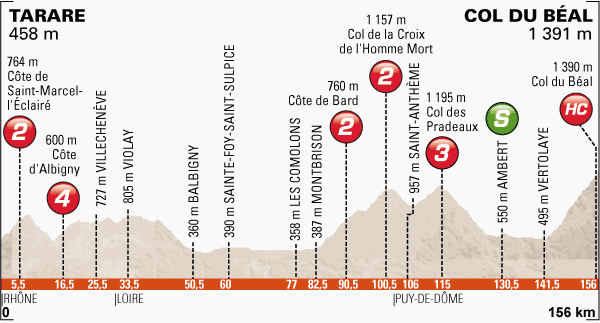
    Stage 2 Profile
    Stage 2: Tarare › Pays d’Olliergues-Col du Béal (156 km) – Things turn mountainous quickly with an HC-rated climb to close out the second stage.

    Stage 2 guarantees that none of those riders who got out to an early lead on Day 1 can rest on their laurels: the 156 kilometer journey sets out from Tarare and crests five categorized climbs before one final ascent to the finish atop the Hors Categorie Col du Beal. 13.6 km at 6.6%, it’s not the hardest climb in the world but it’s certain to weed out pretenders before the race even enters its third day.

    Stages 3 has some bumps, but with a long flat run in to the finish, it is unlikely to shake up the General Classification. Stage 4 rides on many of the same roads as Stage 16 of last year’s Tour de France (won from the break by Rui Costa). There is a challenging climb crested a little over 10km from the finish that might see GC attacks go clear.

    Stage 5 is another hilly affair with a pair of Category 2 ascents in the final 50 km. Stage 6 is mostly flat, but it gets bumpy towards the end of the day, with a vicious little climb in the final few kilometers that could prove challenging for the sprinters.
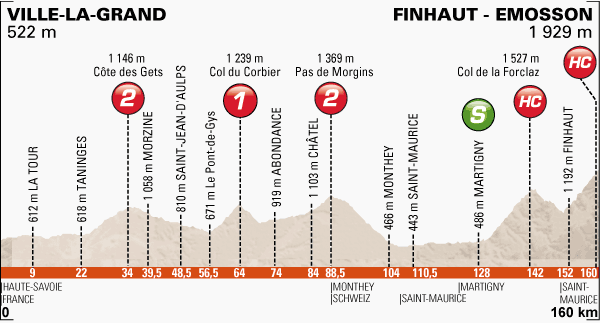
    Stage 7 Profile
    Stage 7: Ville-la-Grand › Finhaut-Emosson (160 km) – There is nowhere to hide on the final climb of the seventh stage, which has sections above 10%.

    Stage 7 will pack quite a punch, challenging the riders with the Hors Categorie Col de la Forclaz (12.6 km at an 8.2% average) crested with 18 km to go, and then, after a short descent, another HC-rated climb to finish the day, 10.2 km at an 8% average, with a few extremely steep sections.

    Things do not get much easier for Stage 8, which tosses in a pair of Cat. 1s to close out the day, and the Dauphine as a whole. The difficult conclusion ensures that nothing will be decided on GC until the very end of the race.

    The overall route does not include any truly grueling ascents, but it is quite hilly, and the many days of ups and downs will certainly wear on the peloton, putting the climbers in the spotlight. Bonus seconds of 10-6-4 at the line will benefit the faster finishers. This year’s race includes far fewer time trial kilometers than recent editions have, which is likely to open things up a bit after recent domination from the chrono-loving Team Sky.

    The General Classification Contenders

    The startlist is stacked with talent (and it is important to note that it isn’t completely settled as of this writing), but there are two clear favorites for the overall victory. The first is Sky’s Chris Froome. Even with reduced time trial mileage, Froome is likely to excel in this race, as it is a very important part of his and his team’s program. After injury derailed the first few European races of his season, Froome got back on track in a major way at the Tour de Romandie, where he outclimbed almost everyone else and then won the time trial and with it, the General Classification.

    Froome vs. Nibali
    Chris Froome looks to be back in top shape after struggling with injury early in 2014.

    The importance of this race to Froome’s 2014 campaign is obvious given the talent his team is sending to back his efforts: constant lieutenant Richie Porte, runner-up in last year’s race, will make the start, an elite talent at all levels who makes a viable second should his team leader suffer misfortune. Porte has had a difficult year as well, but on talent alone he has to be considered a secondary contender for the overall. Geraint Thomas is another all-round talent likely to contribute in a big way (also, watch out for him in the opening ITT). David Lopez and Mikel Nieve are two of Sky’s top mountain domestiques. The British squad is fully committed to winning the Dauphine for the fourth straight time as part of a strong statement in the run-up to Froome’s Tour defense, and with the star finally back from his ailments, it’s hard to see past Sky here.

    Alberto Contador of Tinkoff-Saxo is the rider most likely to challenge the Sky juggernaut. Contador has put in some of the finest racing of his life in 2014, winning Tirreno-Adriatico and Pais Vasco and coming in 2nd in Catalunya, climbing at an otherworldly level in every mountain stage. He will have several opportunities to attack on this climber-centric parcours. Few will be able to match him if he has maintained the form he showed at the beginning of the year, though he has not raced for two months, making that a bit of a question mark. Further, in the past, Contador has not focused on this race as heavily as Sky has, and that may be the case again this year; the squad Tinkoff-Saxo sends to support him is not nearly as strong as Chris Froome’s. Chief lieutenant Roman Kreuziger, for instance, will be absent, taking on the Tour de Suisse instead. At Contador’s best and most focused, that might not matter (especially with the very steep Stage 7 on the program), but there are enough concerns that Contador is the second of my two favorites rather than the first.

    Astana’s Vincenzo Nibali is third favorite with the bookmakers in this race (just as he is in the upcoming Tour de France), but he enters the Dauphine with a number of question marks. Obviously the aggressive winner of the 2013 Giro (and runner-up of the 2013 Vuelta) is a top climber who will love the profile. He also has an excellent supporting cast. However, he has not had the 2014 that he would have hoped for, starting out very slowly and only really showing flashes of his form in the Tour de Romandie, where he still settled for 5th despite being one of the major favorites. If he has managed to build on his form and has reached that top level he is capable of, he will challenge for the victory, but that is not a given. Astana has the excellent all-rounder Jakob Fuglsang to help in the mountains or to act as an alternative if necessary. He has a knack for finding himself Top 10s even when riding for Nibali.

    Katusha’s Simon Spilak has had a very impressive 2014. Always a strong climber, the 27-year-old is coming into his own as a featured rider for his team, soaring to new heights on the slopes but also sporting an improved time trial. He will be the guy for Katusha at the Tour de France, making this an important opportunity for him to make a statement. With the form that won him a stage and 2nd overall in Romandie, Spilak (something of a specialist in these one-week races) is primed to challenge for the victory against the very biggest names in the sport. He’ll also have last year’s 3rd place finisher Daniel Moreno on his side. Though Moreno has just finished a grueling Grand Tour, he can’t be counted out either: Katusha needs to find some results after Purito’s rough exit from the Giro.

    Tejay van Garderen was having a very strong 2014 (with a 2nd in the Tour of Oman behind Chris Froome and a stage victory and 3rd overall in Catalunya among his results) before abandoning the Tour de Romandie following a crash. He returned to the USA to recover and is now back in Europe prepping for the Tour, where he will be BMC’s sole leader for the first time. The TvG of years past may have been more of a time trial specialist, which would at first glance make this a less favorable Dauphine than he’s used to, but he was climbing at an elite level early in the year, suggesting a refocused approach. If he’s recovered completely from his crash, he should contend here, especially given recent statements that suggest he is taking this race very seriously.

    Fellow American Andrew Talansky has had an okay 2014. He landed in the Top 10 in Catalunya and looked good in Romandie until a dropped chain on a tough climb ruined his chances for a strong result. Like van Garderen, Talansky seems to have focused on improving his climbing this year (possibly even at the expense of his top-notch time trial) which will be crucial in this Dauphine. He tends to perform well in short stage races, even against top talent, and he’ll have recent Giro Top 10 finisher Ryder Hesjedal for support.

    AG2R sends a powerful 1-2 punch with Jean-Christophe Peraud and Romain Bardet. Peraud was excellent in the spring, landing a string of great results capped off by a Criterium International victory. He cooled off at Romandie but with some time to return to form he should be able to play a role here. Teammate Romain Bardet is a sharp climbing with an aggressive streak. He’s looked good this year and, unlike many of the other contenders, he won’t be coming in cold, as he has just completed the Bayern Rundfahrt. The strong AG2R duo should be able to land at least one rider in the Top 10.

    OPQS wunderkind Michal Kwiatkowski returns to racing after some time off. As usual, it’s hard to know what to expect. He is one of the most versatile riders in the sport and he does not have an off-switch, so it seems likely that he’ll be going 100% on every stage, but the mountains will be a challenge. He will be one of the top contenders for the opening ITT, and bonus seconds favor his fast finish, so he will at least be in the conversation. Jan Bakelants is another all-round talent who could decide to make a bid for the overall.

    Movistar’s Beñat Intxausti gets a rare opportunity to ride for his own ambitions, as Tour leader Alejandro Valverde is riding the Route de Sud instead. When given these chances, Intxausti does not usually disappoint, and he was one of the strongest on the slopes in the Tour de Romandie. Igor Anton and John Gadret will offer more options on the climbs. NetApp-Endura’s Leopold Konig has struggled with a knee injury in 2014, but he returned to racing at Bayern Rundfahrt and looked strong there. At his best, he’s a top climber who shouldn’t be underestimated. Maintaining a high level of form for so long is a lot to ask of Belkin’s Wilco Kelderman but he has been nothing if not surprising in 2014, and bonus seconds favor his very fast finish. Lampre’s Damiano Cunego also has some Giro mileage in his legs, but like Kelderman, he’ll enjoy the chance to fight for bonus seconds. OGE’s young Adam Yates will hope to continue his excellent year against this top competition. Europcar’s Tommy Voeckler has not produced the sort of results he tends to aim for, but it’s a good route for him. Lotto Belisol’s Jurgen Van Den Broeck finally returns to racing. It’s been a very rough year for the Belgian, who has been bothered by a knee injury, but this is a very important race for him to prove that he belongs in Lotto’s Tour squad. Cofidis’s Daniel Navarro and Rein Taaramae and Trek’s duo of veteran Haimar Zubeldia and up-and-comer Bob Jungels are other outsiders.

    The Stagehunters

    While the Tour’s biggest GC names are making the Dauphine start in preparation for July’s big race, many of the top sprinters are conspicuously absent. The parcours may have something to do with it, as there aren’t a lot of sprinting opportunities here. Trek’s Giacomo Nizzolo, coming off his strong Giro, and FDJ’s Arnaud Demare, who has racked up quite a collection of wins this year, headline the list. Both excel on similar terrain, so it will be an interesting battle between the two in the flat finishes. OPQS’s Gianni Meersman, BMC’s Thor Hushovd, OGE’s Leigh Howard, and Giant-Shimano’s Reinardt Janse van Rensburg will hope to challenge them.

    The list of versatile, quick finisher types who thrive on the hilly profiles is impressive. OGE’s Simon Gerrans and Daryl Impey, FDJ’s Arthur Vichot, Lampre’s Filippo Pozzato, Lotto’s Tony Gallopin, Europcar’s Cyril Gautier, BMC’s Greg Van Avermaet, and OPQS’s Zdenek Stybar could battle with some of the fast-finishing GC riders (Michael Kwiatkowski especially) for the intermediate days, though they’ll have to keep an eye on solo artists like Trek’s Jens Voigt, Astana’s Lieuwe Westra, Belkin’s Lars Boom, IAM’s Sylvain Chavanel, and Garmin’s Ramunas Navardauskas.

    VeloHuman Top 10 GC Favorites

    Winner: Chris Froome
    Podium: Alberto Contador, Simon Spilak
    Other Top Contenders: Vincenzo Nibali, Tejay van Garderen, Andrew Talansky, Beñat Intxausti, Romain Bardet, Richie Porte, Jakob Fuglsang

    I won’t be previewing individual stages, but as usual I’ll have plenty of picks and analysis at the still relatively new @VeloHuman on Twitter! Also, be sure to come back soon, as there are plenty of big things coming at VeloHuman: previews of the Tour de Suisse and every stage of the Tour de France, as well as interviews with some fast-rising young pros! Stay tuned.

    -Dane Cash

    Photos by Georges Menager.
  • Giro d’Italia 2014 Post-race Impressions: Rising Stars Put on a Show in Italy

    Giro d’Italia 2014 Post-race Impressions: Rising Stars Put on a Show in Italy

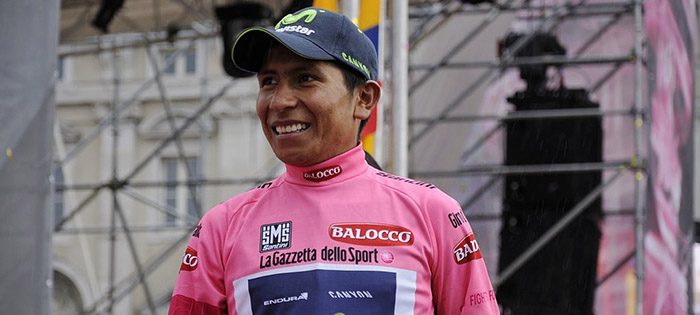
    Quintana in Pink

    Now that the dust has settled in the battle for the maglia rosa, it’s time to give some thought to what we learned from the 2014 Giro d’Italia. With several brilliant performances over the course of the three-week tour, the race offered a wealth of insight into which riders are on the rise at the sport’s top level. The dominant theme at this year’s Giro? A new generation of stars has definitely arrived.

    Promising Talents Confirmed, Part 1: GC Riders

    An amazing seven of the Top 10 riders in the General Classification are age 27 or younger. For every one of them, this Giro was a statement, a confirmation of the ability to take a step forward, whether from promising young all-rounder to Grand Tour Top 10 finisher, or from Grand Tour runner-up to Grand Tour winner. Many of the biggest names in the race are primed to light up the sport’s highest profile events for years to come.

    Nairo Quintana did not need to prove to anyone that he was one of the world’s best climbers, but his ability to handle full team leadership and the pressure of being a top favorite for a huge race was something of an unknown. In the 2014 Giro, Quintana was Movistar’s man from Day 1, and the Spanish superteam brought a squad completely dedicated to putting the young Colombian into the pink jersey. He delivered in convincing fashion, proving that a leadership role is something he can handle without any reservations. Famous for his poker face, Quintana did not let a number of early mishaps (a poor TTT performance, crashes, and illness) get to his head or his morale. He also showed improved ability in a non-mountain time trial, and dominant form in a mountainous one, building towards a more well-rounded game that will surely position him for more success moving forward.

    Rigoberto ITT

    Rigoberto Uran may not have bettered his 2013 result, delivering a second runner-up performance in a row, but he did show a more complete skillset, including a vastly improved ability to ride against the clock. Long considered a pure climber with a decent punch, the 27-year-old blew the doors off a Stage 12 time trial that did not appear to be particularly climber-centric, and continued to show off stellar endurance with his 3rd place performance in the Stage 19 hill climb. His newfound prowess in the chrono may not have been enough to hold onto the pink jersey, but it bodes very well for his future, especially should he decide to shift his focus to the Tour de France, which typically places greater importance on the flat ITTs and the long climbs.

    Fabio Aru was undoubtedly the revelation of the race. Flashes of brilliance in his young career had already put him in the spotlight as Italian cycling’s next big thing, but few expected him to deliver in so dazzling a fashion so soon. A pure climber with an aggressive streak, Aru exploded up the Montecampione on Stage 15 to put himself into contention for the podium, and then grabbed hold of it with two hands in the hill climb TT. Despite a lack of experience consistently performing at this level, he did not appear to fatigue in the final week. Just as Michele Scarponi’s career is starting to enter its twilight years, Astana suddenly has a new Grand Tour contender on their hands in Aru, who will surely light up the Giro for years to come.

    Pierre Rolland bounced back from a very disappointing 2013 in a major way. After strong Tours de France in 2011 and 2012, he looked set for long-term success, but he failed to notch even a single WorldTour Top 10 in the year to follow. The 27-year-old was consistently climbing with the best in this Giro, suggesting that he is back on track for success moving forward. Rafal Majka did his 2013 performance one better with a 6th overall, despite suffering from stomach issues late in the race. He delivered a very impressive first time trial. With Alberto Contador seemingly locked in for the Tour de France for a while, Majka could shine as Tinkoff-Saxo’s Giro star for years to come.

    Wilco Kelderman may not have finished on the podium or won a high profile stage, but he was another major revelation of this race. He put in a handful of Top 10s in shorter stage races in 2013 but he was consistently climbing with the very best in this Giro, and while he did fade a bit towards the end of the race, he limited his losses and still landed 7th overall, ahead of Cadel Evans. He managed all this at just 23 years old, and, in my opinion, without particularly strong team support. He still needs to develop more, but if he can continue his progression he has a very high ceiling. As an added bonus, while it won’t help him much in the Grand Tours, he has shown a newfound ability to finish very fast, as well.

    Trek’s Robert Kiserlovski came into the race targeting a Top 10 and delivered on his goal, finishing exactly 10th. He never challenged for the overall victory, but on most of the decisive stages in the race he was able to hang with the top climbers most of the way up. His third WorldTour Top 10 this year, it’s a strong performance to continue a nice run for the Croatian, whose team is sorely in need of rising GC talent.

    Sky’s Sebastian Henao may have finished the race much further down the General Classification, but he showed serious promise in this Giro. On several mountain stages, he was able to hang with the leaders for most of the way up the climbs despite generally being alone among his team while Dario Cataldo and Phil Deignan were hunting breakaway victories. Then, in Stage 19 ITT up Monte Grappa, he notched an 8th place, ahead of Cadel Evans and Wilco Kelderman. He’s only 20 years old, and riding for a team famous for their ability to develop young talent: big things are coming from Sergio’s cousin, and they could be coming soon. Wouter Poels of OPQS was another strong performer whose final position in GC did not reflect his performance in the race. He was constantly at the side of team leader Rigoberto Uran even on the tough climbs, riding uphill so impressively that he managed to hang on in the GC Top 10 all the way up through Stage 15. He also landed 6th in the first ITT. It’s been an excellent year for the young Poels, who notched a stage win at Pais Vasco with a brilliant escape from GC rivals on a tough climb in Stage 4 of that race. Poels is establishing himself as yet another all-rounder talent for a team looking to expand on their already dominant position in the one day races and sprints.

    Promising Talents Confirmed, Part 2: Stagehunters

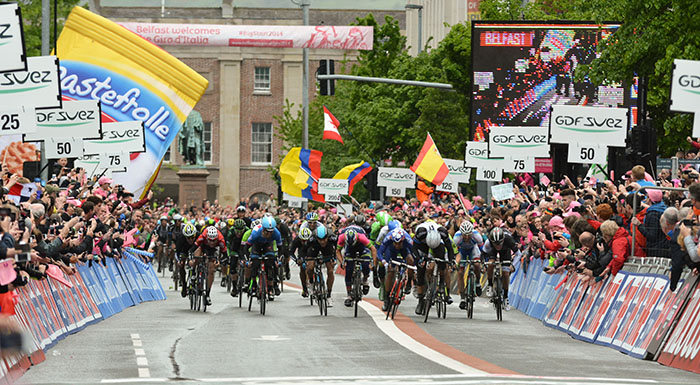
    Of the six stages that ended in a bunch sprint in the 2014 Giro d’Italia, six were won by riders aged 26 or younger, and it was only Marcel Kittel‘s birthday stage victory that keeps me from saying 25 or younger! The German dominated the first two bunch gallops of the race, delivering an astounding performance on Stage 3 (where he closed a ridiculous gap in the final hundred meters to pip Ben Swift to the line) that will be remembered for a long time. With the Tour on the horizon, the young Kittel has made a major statement that his rivals Mark Cavendish and Andre Greipel will surely have noticed.

    Giro d'Italia Sprinters

    The departure of Marcel Kittel ostensibly left the sprints wide open for the remaining fast men, but 23-year-old Nacer Bouhanni quickly established himself as the one to beat. His scrappy, wheel-surfing style was perfect for the technical finishing circuits of the race, and he showed time and again an ability to put himself into the best position for the final gallop, and then time his jump just right. FDJ’s young sprinter is obviously very fast, but he also displayed the sort of sprinting savvy necessary to actually win races consistently, which has already set up a bit of a controversy within his team, where the presence of fellow young fast man Arnaud Demare leaves things a bit crowded at that position.

    Giacomo Nizzolo notched a heart-breaking four 2nd place finishes but he has much to be proud of, and more to be excited about. Nizzolo is a versatile rider who has shown serious potential in flatter one-day races: he has notched podium performances in the GP Ouest France and the Vattenfall Cyclassics. He’ll be disappointed to come away from this Giro without a win, but if he can maintain this level of top speed into the late summer races that favor someone with his array of skills, he can expect continued success there.

    Giant-Shimano’s 25-year-old Luka Mezgec picked up a stage win on the final day of the Giro to finish off an admirable job of filling in for Marcel Kittel. Mezgec has been on fire this year, dominating the sprints in the Volta a Catalunya, and he gives his team yet another option in the bunch finishes behind Kittel and John Degenkolb.

    Michael Matthews of Orica-GreenEdge showed in last year’s Vuelta a Espana that he deserves to be considered a top-shelf sprinter, but his Giro performance showed the terrific depth to his game. He was already known as a versatile fast finisher, the sort of rider who was particularly dangerous when hills reduced the bunch before a final gallop, but his week in the pink jersey displayed a whole new level of versatility. He capped it off with a stage win atop a Category 2 climb. He was forced to abandon midway through the race, but now looks set to head to the Tour de France, where he will hope to mount a challenge to the likes of Peter Sagan and John Degenkolb on the bumpier days.

    Elia Viviani got off to a fine start, with a trio of Top 5s in the first three sprint stages, but he was unable to come up with anything after that. Crashes did not help. As the bookies’ favorite to win the points jersey, Viviani was one of the surprise disappointments of the race, but weather-caused carnage may have played a role, and he’ll hope to prove that that was the case in his next few races.

    Stepping away from the bunch sprints, Lampre’s Diego Ulissi was an early star of the race, delivering a powerful uphill assault on his way to victory on Stage 5 and then charging up a steeper gradient to win Stage 8 atop the Category 1 Montecopiolo. After a disappointing Ardennes campaign, Ulissi was head and shoulders above the competition in the fast uphill finishes in this race. In my mind, he’s ascended to the very top echelon of riders in that specialty, and even though he was unable to make much happen in the classics this year, I expect to see him launching himself to success in races like La Fleche Wallonne very soon. The punchy skillset wasn’t the only ability he put on display in this race, however. Ulissi also delivered one of the most shocking performances in the Giro d’Italia on Stage 12, where he notched 2nd place in a long, not particularly hilly time trial. He had picked up strong results here and there in mountain climb chronos in his young career, but this was something new entirely. Ulissi left a number of TT specialists in his wake and was only bested by an otherworldly Rigoberto Uran, suggesting that while his near future may focus on the one-day races and hillier days in stage races, he may have real GC style talent under the hood.

    Arredondo in Blue

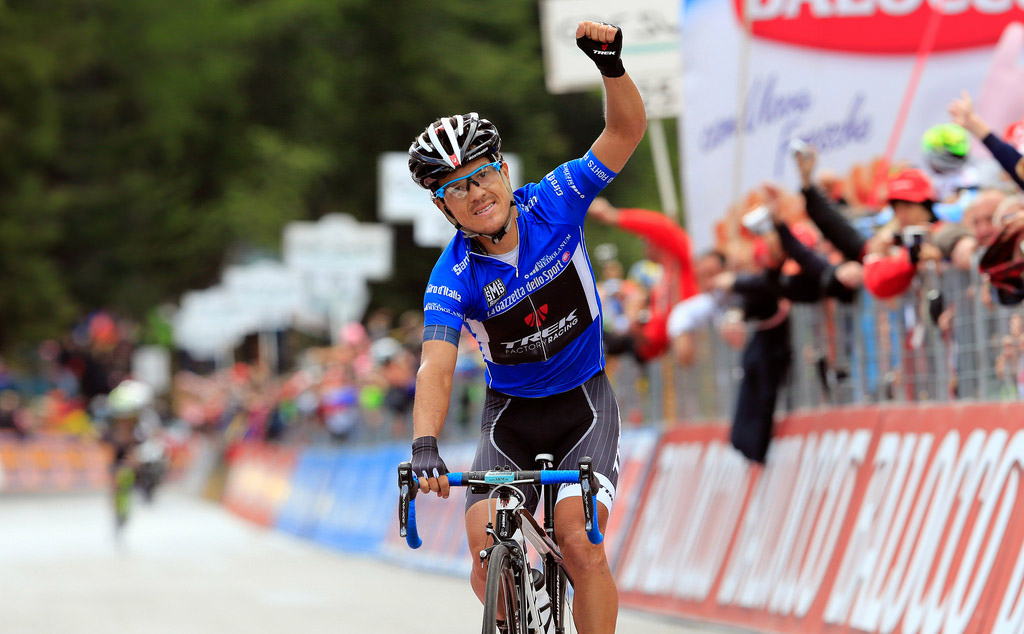
    Trek’s Julian Arredondo was the other uphill-charging stagehunter to take a massive step forward in this race. His Tour de Langkawi win in 2013 put him on the map and caught the eye of plenty of observers, but he has come into his own for a WorldTour squad here in 2014. He won a pair of stages in the Tour de San Luis at the beginning of the year, and then climbed his way to 5th at Tirreno-Adriatico, hinting that bigger successes were right around the corner. He did not disappoint in the Giro d’Italia, earning the King of the Mountains jersey and a stage win with his aggressive style and his considerable uphill punch. He was always on the lookout for opportunities to attack, and it served him well. His Stage 18 victory was particularly impressive: he put in a ton of effort racking up KOM points early in the day but still managed to have enough in the tank to outclimb his breakaway companions on the final climb. Now with a top-level team to help him continue to develop as a rider, 25-year-old Arredondo is likely to continue to rise as a climbing star.

    Lotto Belisol’s 23-year-old Tim Wellens was another very impressive rider in this race. He was unable to come away with a win, but notched a pair of great 2nd place performances as well as a 9th place in the uphill ITT. He was 3rd in the overall King of the Mountains competition thanks to his aggressive pursuit of breakaway success. He may not have picked up the result he wanted, but he put a ton of ability on display and can no longer be considered “under-the-radar.” Team Colombia’s Fabio Duarte also picked up a pair of 2nd places, upping his total to four in the Giro. He’s an uphill specialist with a sharp eye for opportunities to attack; riding for a Pro Continental squad, he doesn’t get as many chances to shine on the biggest stage as he probably should, but he’s making his mark when he can.

    Crashes Cloud the Issue for Others

    Even as a sizeable contingent of up-and-coming stars made massive strides, a number of other riders saw their bids for glory fall apart on messy, rain-soaked roads, robbing us of an opportunity to see how they might have fared under more favorable conditions. Dan Martin hoped to deliver his first Grand Tour Top 10 in this Giro, but found himself out of the race on its very first day. He seems to be recovering well and will now refocus his season on the Tour or the Vuelta. He was in excellent shape in the Ardennes before his nasty TTT crash; if he can recapture that form, a return to success this season seems likely.

    Joaquim Rodriguez was the biggest name to fall victim to the slippery Italian roads. Caught up in the mess on Stage 6, Purito was forced to abandon before the Giro ever really hit any mountains. This was supposed to be a strong opportunity for him to pick up that elusive Grand Tour victory, but now he, too, will have to shift his focus, apparently to the Vuelta. Though he hasn’t ruled out the Tour de France, he could find himself in an excellent position in Spain if he does: without having the grueling mileage of another Grand Tour in his legs, he would be a strong contender for that race, which has been won by a rider without a previous GT on the year in its last three editions.

    Michele Scarponi, Nicolas Roche, and Przemyslaw Niemiec were also caught up in or behind the Stage 6 carnage (along with a number of other non-GC riders) and saw their GC hopes crumble. The first two then realigned their goals rather successfully (Scarponi went into domestique mode for Aru, who finished on the podium; Roche helped Majka achieve a strong GC placing and Michael Rogers notch a pair of stage victories), but it was an unfortunate turn of events for both riders, who harbored GC aspirations. Scarponi will be 35 next year and with Nibali as the team’s big star and Aru on the rise, the future is not particularly promising. Lampre’s Niemiec was coming off a strong performance in Trentino, but did not feature much after his tumble down the General Classification. Though he was excellent in 2013, he, too, will be 35 for next year’s Giro and may see younger talent take a more prominent role.

    Gearing Up for Tour Season

    With the Giro wrapping up, the cycling world shifts its focus to its biggest event (and the tuneup races that lead into it). The Criterium du Dauphine and Tour de Suisse are around the corner and the Tour de France is only about a month away. A few of the stars of the Giro will make the start in their second Grand Tour, riding against the likes of Chris Froome and Alberto Contador on cycling’s biggest stage. You can expect to see their names and plenty more in the VeloHuman previews to come, so stay tuned!

    -Dane Cash

    Photos by Maurizio Costanzo, Maurizio Massasso, Sean Rowe, and nuestrociclismo.com.

  • Giro d’Italia 2014: Stage 21 Preview

    Giro d’Italia 2014: Stage 21 Preview

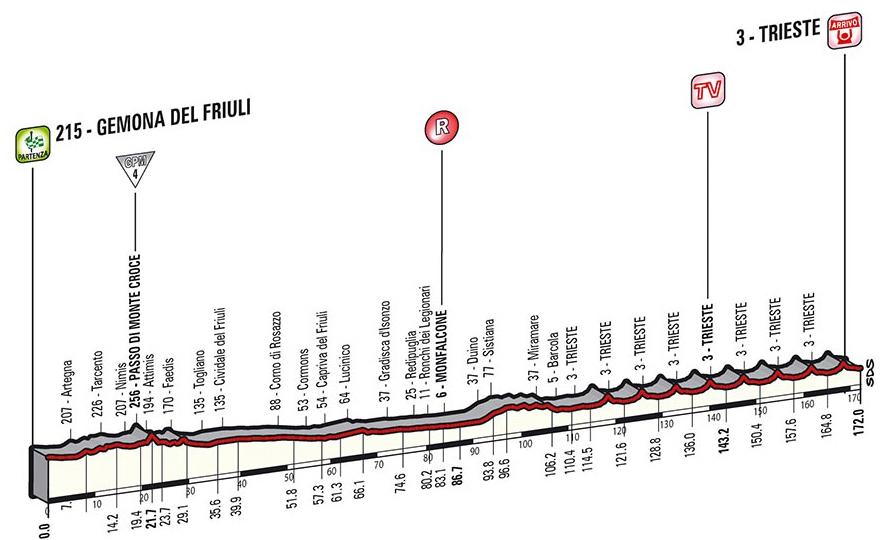
    Stage 21 Profile

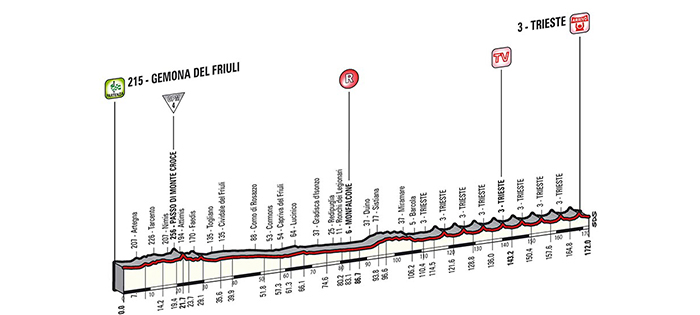
    Stage 21: Gemona del Friuli > Trieste – 172 km

    Just like that, the final stage of the 2014 Giro d’Italia is here. It’s been an eventful ride, and not without controversy, but it all comes to a close at the Trieste finish line. It’s a huge accomplishment to finish a Grand Tour, and the fans will line the road to voice their admiration as the peloton bids farewell. The fast men have braved several grueling climbs in the past few days (including the brutal Monte Zoncolan conquered by Michael Rogers on Stage 20) to reach this last contest.

    The Stage 21 course is pretty straightforward. The riders will traverse a little over 114 kilometers of mostly flat roads to reach Trieste, where the stage and the 2014 Giro d’Italia will finish after eight laps of a 7.15 km city circuit. Each lap involves both a small climb of a little less than a kilometer at an average gradient a bit over 4%, and then a quick but somewhat technical descent. The final kilometer includes an early left hook, but from there it’s a mostly straightforward run to the line, with a gentle rightward curve in the final 500 meters.

    While there are a few bumps along the journey, it’s hard to see the sprinters letting this one get away from them. The Giro’s final stage is a big prize, and after the initial period of riding at a parade pace is over, the sprint trains are going to ramp up the speed to shut down anyone with dreams of getting ahead for a solo victory. Anything other than a bunch gallop among the heavyweight fast men will be a shock.

    It’s been a while since the sprinters had the spotlight, but little has changed in the predictive pecking order. FDJ’s Nacer Bouhanni, three times a stage winner already and wearer of the red points jersey, is the rider to beat. At the beginning of this race, it seemed that he might abandon in the mountains, but when Marcel Kittel exited the race early and left the sprints open to Bouhanni, the young French star found himself in the driver’s seat for the points jersey very quickly. He resolved to survive the mountains, and survive he did. Now, he’s got an excellent opportunity to pick up win number four. His rivals will have to step up their game if they want to beat Bouhanni; he has already proven himself best in the sprints in this Giro d’Italia.

    Giacomo Nizzolo, three time runner-up to Bouhanni, may have his best opportunity to finally nab a win here in Stage 21. There are twists and turns late in the circuit, but the final 500 meters only involve a slight rightward pull, which should allow the sprinters to reach some high speeds. Nizzolo has struggled a bit with positioning and timing in this Giro’s sprint stages, but for once the last several hundred meters will set up a pretty straightforward gallop to the line. This is his last chance to defeat Bouhanni, so I expect that he’ll hit an impressive velocity on this finishing straight.

    Cannondale’s Elia Viviani has excellent top-speed, and while he and his squad have disappointed in this race, I think they have a nice chance to get it right in this finale, which is relatively uncomplicated compared to some of the technical circuits they faced early in the Giro. Cannondale doesn’t have a GC rider to worry about, and they haven’t picked up a single stage in the race: they are going to go all out to get Viviani into position here.

    Giant-Shimano’s Luka Mezgec should be in the mix. A strong GSH leadout will position him well to take on the other fast men. Sky’s Ben Swift should be there as well, fighting for this last chance to bring home a victory for a team that has had so many near misses but no wins in the Giro. Lampre’s Roberto Ferrari and Garmin’s Tyler Farrar are strong outsiders. Bardiani-CSF’s Enrico Battaglin will hope to pick up one more victory for his very successful squad. Movistar’s Francisco Ventoso might even give it a go, as his duty protecting Nairo Quintana is finally coming to an end.

    VeloHuman Stage Favorites

    1. Nacer Bouhanni | 2. Giacomo Nizzolo | 3. Elia Viviani

    It’s been a blast previewing every stage in this race! I hope you’ve enjoyed it as much as I have. If you don’t already, follow me @VeloHuman on Twitter for more analysis, and stay tuned for previews of the Criterium du Dauphine, the Tour de Suisse, and, of course, the Tour de France (with individual previews of all 21 stages), along with plenty of other great content over the next few weeks.

  • Giro d’Italia 2014: Stage 20 Preview

    Giro d’Italia 2014: Stage 20 Preview

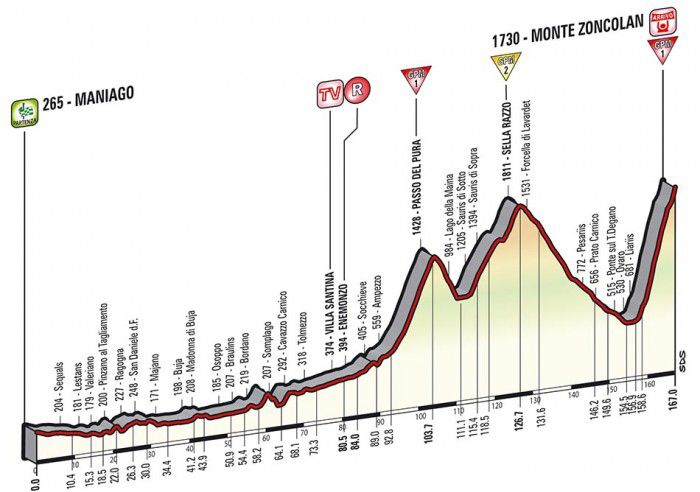
    Stage 20 Profile

    Stage 20: Maniago > Monte Zoncolan – 167 km

    After the Monte Grappa ITT that solidified Nairo Quintana’s hold on the pink jersey, only one GC-relevant stage remains in the 2014 Giro d’Italia. By this point, we’ve seen who is climbing on top form and who is struggling, but the race isn’t over just yet; everyone is vulnerable to a bad day here and there, and Stage 20 is not going to be forgiving.

    The penultimate stage of the Giro is 167 kilometers in length. The first half is mostly flat, but then it starts to steadily rise upward into the Passo del Pura, a Category 1, 11.3 kilometer climb with an average gradient of 7.7%. Next comes the Category 2 Sella Razzo, 15.9 km at 5.2%. From there it’s a fast descent to the final mountain challenge of the 2014 Giro d’Italia: Monte Zoncolan.

    Monte Zoncolan

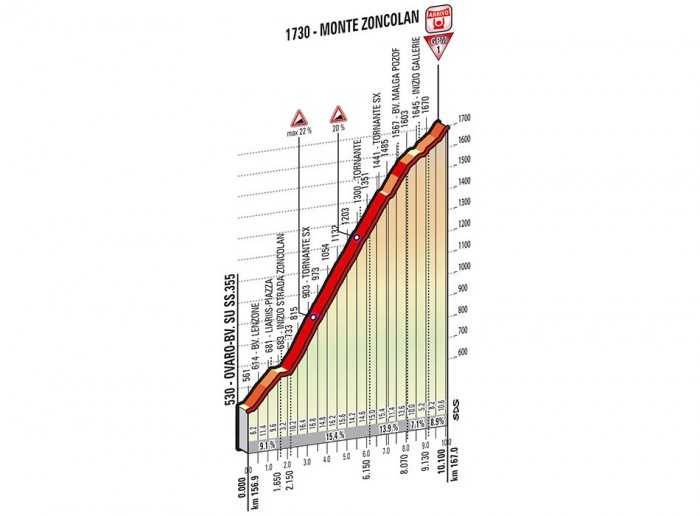
    The Giro d’Italia is full of brutal climbs, but the Monte Zoncolan is a different sort of challenge. It’s less than half the length of the Stelvio or the Val Martello, and does not reach the same dizzying heights. What makes the Zoncolan so vicious is its exceptional steepness. For 10.1 kilometers, the riders must brave an average gradient of 11.9%, and the average does not even tell the full story. The midsection of the ascent jumps up over 15% for a few kilometers, with sections in the 20% range. At gradients this extreme, there is simply nowhere to hide. Even a strong team cannot offer much help; there is not much benefit to be gained from sitting on a lieutenant’s wheel when everyone is going up this slowly.

    As the last opportunity for the GC contenders to make any sort of moves up the leaderboard, Stage 20 will likely see the sort of fireworks from the big guns that will put any morning breakaway under pressure. Still, riders could decide to save up for the final push up the Zoncolan, allowing opportunists to get away on the earlier slopes, making it at least a possibility that a long distance attacker could take the day.

    I think it is slightly more likely that the battle for stage honors comes down to the GC men and those who decide to stick with them, so I’ll name the favorites among the overall leaders first. Heavier diesel engines that prefer climb with steady teammate support are not going to enjoy this gradient. This stage is going to go to an ultra-lightweight, uphill charger. Nairo Quintana does not need to do anything else to prove that he’s the best climber in the race, so he is the most obvious candidate for the title of “favorite.” His performance in the Monte Grappa ITT was simply amazing, and the wicked gradients of Monte Zoncolan should be yet another perfect setting for the pink jersey wearer to put his talents on display.

    Fabio Aru has shown on multiple occasions that he deserves to be considered the second best climber in the race. He was stellar in the Monte Grappa time trial, behind only Quintana, and he’s already taken a stage in this race. What’s more, he’ll be extra motivated knowing that 2nd overall on GC is within his grasp. He’s going to be on the lookout for the right opportunity to make a move on this climb, and there aren’t many riders who will be able to catch him.

    Battling illness, Domenico Pozzovivo has not been at his best in this Giro. This would have been an excellent stage for his talents, but it’s hard to tip him as a favorite over Quintana or Aru right now. Europcar’s Pierre Rolland has an outside shot here but he is a marked man now that he’s in the Top 5 on GC, and he won’t be allowed to get up the road without a fight. Rigoberto Uran should be able to survive without huge time gaps but winning on these gradients seems unlikely; he’ll be more focused on protecting his 2nd overall on GC from Fabio Aru. Rafal Majka‘s podium hopes have been hit hard by stomach issues, and this is an unforgiving climb that could see him continue to struggle unless he recovers overnight. Cadel Evans, Wilco Kelderman, and Ryder Hesjedal could find themselves holding on for dear life.

    I have a few favorites among the non-GC riders as well, climbers who could be allowed to get up the road, either in the day’s breakaway or with a late attack from the bunch on Monte Zoncolan. Team Colombia’s Fabio Duarte is, in my opinion, the member of this group with the best chances. He’s now a four-time 2nd place stage finisher in the Giro d’Italia, clearly capable of mixing it up with the best, but always just a hair shy of success. Unlike most of the other top climbers in the race, he did not expend a lot of energy in the Stage 19 time trial. He’ll be very motivated to pick up that elusive win here on the last summit finish of the race. Trek’s Julian Arredondo now has his stage win, and his KOM jersey is practically in the bag, but he could look for more glory on the famous Monte Zoncolan. Franco Pellizotti rode very well up the Monte Grappa and was also strong from the breakaway on the stage prior, suggesting excellent form at the moment. Androni Giacotolli is winless in this Giro d’Italia, and Pellizotti is their best chance at coming away from the race with a result. Katusha’s Daniel Moreno is another very strong climber on a team that needs to get something out of this Giro. Sky’ s Dario Cataldo and the very surprising Sebastian Henao and Neri Sottoli’s Edoardo Zardini also fit this description.

    VeloHuman Stage Favorites

    1. Nairo Quintana | 2. Fabio Aru | 3. Fabio Duarte

    Check back for the preview of the last stage of the 2014 Giro d’Italia after the Stage 20 finale atop Monte Zoncalan. Also, remember to follow @VeloHuman on Twitter for more analysis during the race.

    With the Giro coming to a close this weekend, now seems like a good time to point out that VeloHuman will be previewing the Criterium du Dauphine, the Tour de Suisse, and, of course, every stage of the Tour de France, so make sure you come back soon!

  • Giro d’Italia 2014: Stage 19 Preview

    Giro d’Italia 2014: Stage 19 Preview

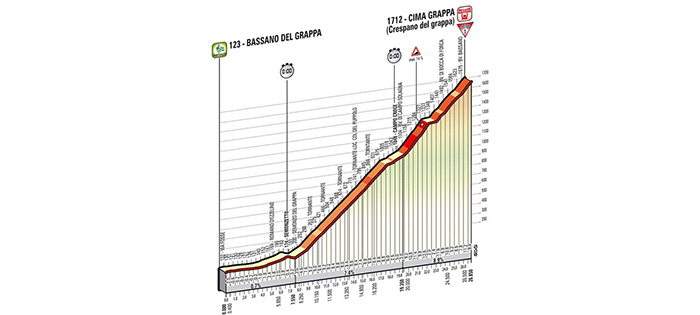
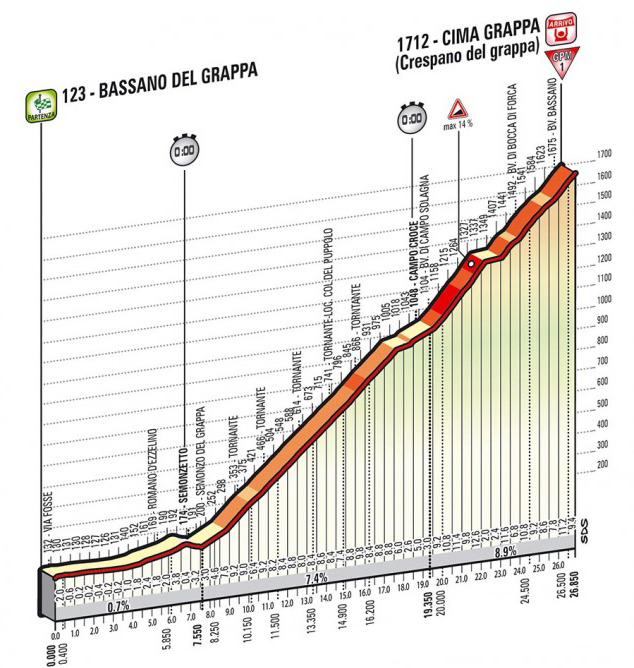
    Stage 19 Profile

    Stage 19 (ITT): Bassano del Grappa > Cima Grappa (Crespano del Grappa) – 26.8 km

    It isn’t really a surprise that most of the maglia rosa hunters took a measured approach to Stage 18 (which went to Julian Arredondo from the breakaway) with something as important as Friday’s ITT on the horizon. Only three stages remain in this Giro d’Italia, and only two of them are likely to have any effect on the overall outcome: it’s all down to the wire in the first Grand Tour of the year, and Stage 19 will play a huge part in the final GC standings.

    The 26.8 kilometer individual time trial that awaits is not your average chrono. It is dominated by a Category 1 climb that kicks off around 7.5 kilometers into the stage. Hill climb TTs are not uncommon, but ones that combine gradients this high with such grueling length are rare: the Monte Grappa climb is a beast, 19.3 kilometers long at an average of 8%, with a few very steep sections near the top, including one that touches 14%. It’s about as long and, on average, about as steep as the Montecampione climb that launched Fabio Aru to victory in the Giro’s fifteenth stage. Unlike the summit finishes that have preceded it, however, this race against the clock won’t allow riders to bunch up and ride together along the lower slopes, conserving energy for late attacks. Each rider must face this challenge on his own.

    This is a mountain test that will reward the best climbers in the race, especially those who combine lightweight frames with good endurance. Most of the riders generally considered time trialing specialists will not have a chance; the GC men are the likeliest contenders. Nairo Quintana is the heavy favorite. He’s the best climber here, a featherlight who excels at going uphill all by himself for extended periods of time. He’s good enough in a standard time trial, but on a stage like this, he is going to excel. Anything less than a win on Stage 19 will be a disappointment for the Movistar rider.

    Rigoberto Uran dominated the Giro’s first time trial, but this will be a very different test. He’s been climbing well throughout the race and he obviously has the engine to produce a high wattage for quite a while. I imagine that he’ll be able to strengthen his hold on a podium position with this ride, but picking up time on Quintana will be a big ask.

    Domenico Pozzovivo is my third favorite. Illness has slowed him down late in this race, which is unfortunate, because he had planned to be more aggressive in this last week. Still, he’s looked good in the past two tough mountain finishes, and he’s shown off some seriously improved chrono chops recently. He was decent in the first ITT of the race, but a hill climb like this suits him very well.

    I expect success from Tinkoff-Saxo’s Rafal Majka in Stage 19. He was just a hair better than Uran in the mountain ITT in last year’s Giro d’Italia, and he’s extremely motivated to fight for the podium. I’m not sure if the vicious gradients of the Monte Zoncolan will suit him compared to his rivals, so this could be his best shot.

    Wilco Kelderman is a stronger time trialist than most of his GC rivals on a flatter course, but that advantage will fade on these slopes; obviously he’s still an excellent climber, so a strong result is likely, but in terms of gaining time on GC I think he’d prefer a profile that doesn’t suit the other contenders as well. Fellow 23-year-old Fabio Aru, on the other hand, may be something of an unknown in the time trial, but if there were ever an ITT for the climbing star to shine in, this is it. Europcar’s Pierre Rolland is climbing wonderfully, but his affinity for uphill attacks does not necessarily translate that well in a chrono; he has not excelled in time trials, even in the hillier ones, in his career. BMC’s Cadel Evans is fading fast as the Giro gets harder and harder and I think he will struggle to limit his losses here. Garmin’s Ryder Hesjedal lost some time in Stage 18 and will be hoping for a rebound. Trek’s Robert Kiserlovski does not have a good track record in the ITT but he’s on very strong form at the moment and this will be an excellent opportunity for the climber to get a rare decent result against the clock.

    Sky’s Dario Cataldo, the OPQS trio of Thomas de Gendt, Wouter Poels, and the very surprising Gianluca Brambilla, Androni’s Franco Pellizotti, the Tinkoff-Saxo pair of Nicolas Roche and Michael Rogers, and Trek’s Julian Arredondo (there are KOM points up for grabs) are probably the best non-GC candidates for stage success here but it would be a pretty big surprise to see anyone who isn’t hunting the maglia rosa take the day.

    VeloHuman Stage Favorites

    1. Nairo Quintana | 2. Rigoberto Uran | 3. Domenico Pozzovivo

    Saturday’s finish atop Monte Zoncolan will be a thriller, so check back for the preview after the last rider crosses the line in the Stage 18 ITT. Also, be sure to follow @VeloHuman on Twitter for more analysis during the race.

    -Dane Cash

  • Giro d’Italia 2014: Stage 18 Preview

    Giro d’Italia 2014: Stage 18 Preview

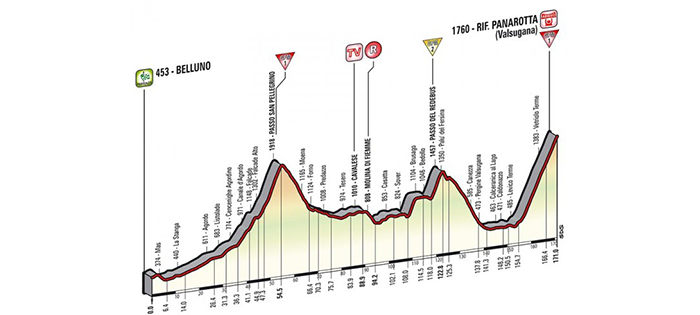
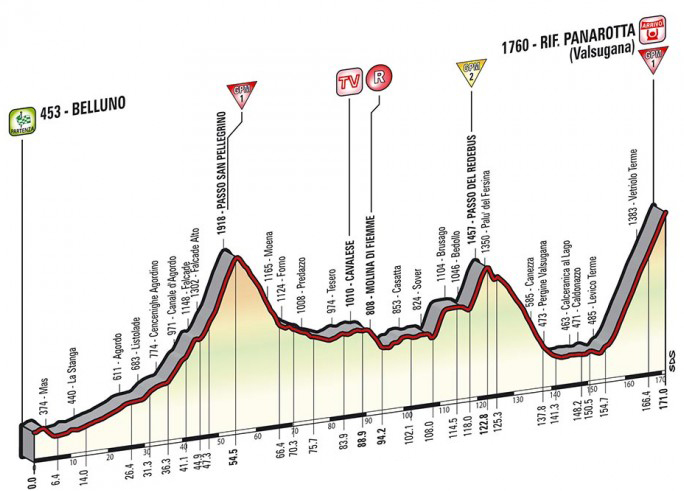
    Stage 18 Profile

    Stage 18: Belluno > Rif. Panarotta (Valsugana) – 171 km

    Culminating with the Category 1 Rifugio Panarotta climb, the Giro’s eighteenth stage is sure to offer fireworks. However, with an all-important uphill time trial on the horizon followed by the nasty Monte Zoncolan the day after, the GC contenders may decide to temper their efforts on Stage 18, which could open things up to a breakaway for the second day in a row (Stefano Pirazzi got into the day’s big move on Stage 17 and ultimately took the win). Once again, it wouldn’t make sense to call any one rider the singular favorite, but several riders do deserve to be considered contenders.

    The profile is a mountainous one, with the Passo San Pellegrino as the first categorized climb on the menu. It’s a Cat. 1, 18.5 kilometers at an average of 6.2%. While it officially starts some 36 km into the race, by that point the road has already been going uphill, albeit gently, for about 30 kilometers! In other words, the first hour and a half of racing will take a lot out of the riders. From the top of the climb, it’s a descent followed by some ups and downs into the short but steep Passo del Redebus climb. Then comes a long descent and a flat section before the finale, a 15.9 kilometer, 7.9% average gradient ascent to the Rifugio Panarotta.

    As difficult as the day looks, Stage 19’s time trial and Stage 20’s climax atop Monte Zoncolan finish may prove more decisive for GC. That could see the main maglia rosa contenders trying to keep their powder dry. On the other hand, Nairo Quintana has a significant GC lead, and his rivals know that their time is running out. Some of them are also probably not likely to fancy their chances against the clock. If they decide to use Stage 18 as an opportunity to take back time, anyone up the road will struggle to maintain an advantage on the final climb; it’s yet another day that, to me, is a tossup to go to the break or to the GC riders.

    As the best climber in the race, Nairo Quintana is the first favorite among the overall contenders. As I like to point out in these breakaway-friendly scenarios, I’m not sure I’d bet on him against the field, but given the uncertainty that comes with trying to predict who will make the breakaway, let alone survive out front, his chances are at least as good as any other one rider in the race. His team can drive a very hard pace on the ascents, and even though he is now in the leader’s jersey, I don’t think he will just sit around and let attackers go by him on the final climb. I wouldn’t be surprised if he is driven to extend his lead to quiet critics of his unpopular Stelvio descent.

    Astana’s Fabio Aru has had an amazing Giro d’Italia, but with a time trial approaching, he may feel the pressure to make an attack on this stage, and he’s looked strong enough to be a real contender for a victory. Nobody could match him on the Montecampione ascent, and he hasn’t shown any signs of fading. Europcar’s Pierre Rolland could have similar motivation. Time trialing has never been a strong suit. However, after two weeks of being given a lot of a leeway to make attacks due to his relatively non-threatening GC position, Rolland is now a marked man. It will be interesting to see how he responds, and whether he’s able to ride with the big favorites now that he won’t find it as easy to escape from long distance.

    At 1:41 down, Rigoberto Uran knows he needs to act, so he could try to put Quintana under pressure here. Domenico Pozzovivo is even further down, making an attack likely. Young guns Rafal Majka and Wilco Kelderman have not been afraid to try late moves when they’ve seen openings. Garmin’s Ryder Hesjedal made huge gains in GC and looked excellent on Stage 16 but, like Rolland, he’ll now find that his rivals won’t give him the same kind of freedom that he’s had up till now. BMC’s Cadel Evans has been losing time in the mountains and he will have his work cut out for him holding onto the final podium spot—this is a steep final ascent.

    Should the maglia rosa hunters take a reserved approach, the morning breakaway could stick. A number of strong climbers could be weighing their chances in either scenario. He has not featured as prominently lately as he did in the first several stages, but Trek’s Julian Arredondo cannot sit idle here. There are too many KOM points on offer for him to miss the breakaway. If he can get into the day’s move, he will be a strong contender for stage honors. His countryman Fabio Duarte was 2nd behind Fabio Aru on the Montecampione climb. If he makes the break, he probably won’t waste his energy trying to pick up early mountain points, and that could leave him better prepared for the finale. Team Colombia squadmates Robinson Chalapud and Jarlinson Pantano are further strong options. Katusha’s Daniel Moreno looked very strong on Stage 15 and is running out of chances to get something positive out of this race, so he could try to strike here. Androni Giacotolli’s Franco Pellizotti is in a similar boat.

    Other potential long-distance candidates include Sky’s Dario Cataldo and Sebastian Henao, Astana’s Mikel Landa, Lampre’s Przemyslaw Niemiec and Damiano Cunego, FDJ’s Alexandre Geniez, Tinkoff-Saxo’s Nicolas Roche, and Neri Sottoli’s Matteo Rabottini.

    VeloHuman Stage Favorites

    1. Nairo Quintana | 2. Fabio Aru | 3. Fabio Duarte

    Friday’s time trial will have major GC implications, so be on the lookout for the preview after the conclusion of Stage 18. Also, be sure to follow @VeloHuman on Twitter for more analysis during the race.

    -Dane Cash