Tag: Alejandro Valverde

  • Tour de France 2015: Stage 3 Preview

    Tour de France 2015: Stage 3 Preview

    PROFIL3

    Stage 3: Antwerp › Huy – 159.5km

    Following a thrilling Stage 2 that, despite it’s Greipel-won sprint finale, saw several GC contenders lose chunks of time, the Tour de France will throw another stage with potential GC implications at the peloton early on in the race. The Tour may be leaving the Netherlands but it isn’t leaving the “Low Countries” altogether—Stage 3 will take the riders from Antwerp to Wallonia’s Ardennes region for a finish in Flèche Wallonne territory. The yellow jersey hopefuls will again need to be on their toes with this profile.

    It’s not a long stage at 159.5km (not nearly as long as La Flèche Wallonne), but things get bumpy late in the day, especially in the final 20 kilometers, where the pack will hit the Cat. 4 Cote d’Ereffe, and then a quick uncategorized ascent, and then the Cat. 4 Cote de Cherave before the stage finish on the classic Mur de Huy. It’s only 1.3km from the bottom to the top but the winding road up the Mur averages 9.6%, with a 19% section along the way. The Cat. 3 finish will have GC contenders and climbing-oriented stagehunters alike vying for position on the vicious gradient.

    Alejandro Valverde won La Flèche Wallonne this year for the third time in his career. An elite climber with a devastating kick uphill, he has to be the favorite here. Very few riders can explode ahead like Valverde on a climb like this, and given his brilliant form all season, there’s little reason to think he won’t be ready for lunch here on Stage 3. The motivation to charge up the Mur will be sky-high after Movistar’s big losses on Stage 2. Teammate Nairo Quintana, top-notch climber that he is, will also be a rider to watch. He doesn’t have the finishing speed that Valverde has, but anything with a gradient in the 9% range is favored terrain for Quintana.

    Joaquim Rodríguez is another past Flèche Wallonne winner with a chance. He had a disappointing Ardennes campaign this season but has also shown flashes of brilliance this season (his País Vasco was incredible). He did crash on Stage 2, however, which may have left him a bit banged up coming into this stage.

    Dan Martin has never won La Flèche Wallonne, but he’s been close multiple times. After a poor run in this year’s Ardennes, Martin is looking for some success in this Tour, and this is a great stage for him. He should be in the mix for the victory.

    Julian Arredondo is typically very strong on this sort of finish, though he’s never actually landed a Flèche Wallonne Top 10. He lost a chunk of time on Stage 2 but will have a shot at redemption here. His teammate Bauke Mollema also has a nice upward kick, with several great results on the Mur in the past.

    Orica-GreenEdge has multiple options for Stage 3. Michael Albasini is probably the team’s best bet, as he has done well on this climb in the past, though form is a bit of a question mark for Albasini. Simon Gerrans, excellent in an uphill sprint, is another option. Simon Yates, who has been in great shape pretty much all season long, could surprise people. He doesn’t have much Ardennes experience yet but this is a good profile for him.

    World champ Michal Kwiatkowski has had good results on the Mur in the past and could shine in Stage 3. Meanwhile, his teammate Rigoberto Urán is suddenly in the GC conversation after an under-the-radar start. He has a great finishing kick and could continue to surprise people here if he can position himself well to battle it out with the big favorites. Vincenzo Nibali, Wilco Kelderman, Rui CostaTim Wellens, and possibly even Peter Sagan will like the profile as well. And don’t count out Chris Froome just because he’s not an Ardennes specialist—this is a steep finishing climb in a Tour de France stage, and that’s reason enough for Froome to be seen as a big threat.

    VeloHuman Stage 3 Favorites

    1. Alejandro Valverde | 2. Joaquim Rodríguez | 3. Dan Martin

    Be sure to follow VeloHuman on Twitter for more analysis and commentary during the race, and check back for the preview of the next stage after the conclusion of Stage 3. The VeloHuman overall Tour de France race preview is available here.

    -Dane Cash
  • Critérium du Dauphiné 2015 Preview

    Critérium du Dauphiné 2015 Preview

    14251756210_d6631ef982_k

    The Dauphiné marks the arrival of “Tour de France season,” drawing an always impressive startlist of top Tour talent hoping for a final tuneup before La Grande Boucle. The big names and mountainous parcours should make this year’s edition of the race a worthwhile attraction.

    The Route

    The 2015 Dauphiné route offers a healthy dose of difficult climbs. The only stage without a categorized climb is the TTT, and even that has some challenges.

    The race kicks off with a bumpy stage 1 likely to favor a punchier rider, with eight categorized climbs, small though they may be, on the day. Stage 2 does have a Cat. 1 challenge on the menu, but a long flat finale could favor the sprinters. The Stage 3 TTT will likely have serious GC implications. 24.5 kilometers is long enough to open the sort of gaps that will have an impact in a one-week race, especially given a long, slightly uphill stretch in the second half of the stage.

    Stage 4 will be a day for the sprinters or more versatile fast-finishers before the GC riders come to the fore again on Stage 5, which closes out with a one-two punch of categorized climbs. Stage 6 is another day that may have a GC impact, closing out with a Category 3 climb.

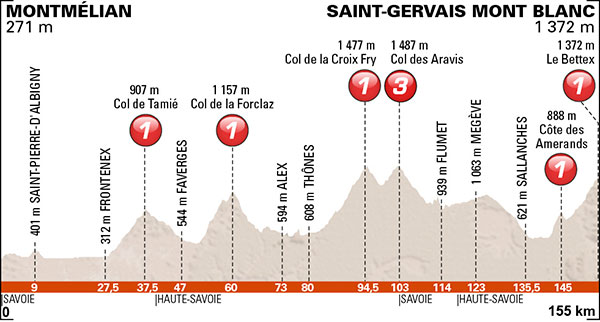
    Stage 7 will probably be the most decisive stage of the 2015 Critérium du Dauphiné. After 30 flat kilometers, it’s up and down the rest of the way, with a total of five Cat. 1s along the route, including the summit finish.

    Stage 7: Montmélian › Saint-Gervais Mont Blanc (155km) - A succession of difficult climbs will likely make Stage 7 the Dauphiné's most hotly contested GC battleground.
    Stage 7: Montmélian › Saint-Gervais Mont Blanc (155km) – A succession of difficult climbs will likely make Stage 7 the Dauphiné’s most hotly contested GC battleground.

    None of the climbs are all that brutal by themselves but altogether they will provide plenty of launching pads for the uphill specialists. Stage 8 closes out the race with another Category 1 summit finish at Modane Valfréujs.

    The General Classification Contenders

    Two of cycling’s so-called “Big Four” will garner the most attention coming into the race: Chris Froome and Vincenzo Nibali. Froome has won the race before, the year he won the Tour de France, and he may be hoping to replicate his performance from 2013, where he came into the Tour riding high on the back of strong performances in the one-weekers. He’s had a decent, though not great, year so far, and this is an opportunity to get on track with a big success for his Tour bid this year. At his best, Froome is almost unstoppable, and he should be motivated to be close to his best here. The team trial suits Sky well. Nicolas Roche and Wout Poels are among Froome’s many strong teammates in attendance who will be valuable supporters or even potential alternatives should the need arise.

    Vincenzo Nibali’s path to Tour de France victory was a bit different from Froome’s—the Italian all-rounder did not look nearly as strong in the run-up to the 2014 Tour, but peaked at the right time in July. If he’s looking to replicate that approach, he might not be quite at 100% here. If he’s gunning for victory though, he should love the climber-friendly profile, and Astana’s TTT squad looks strong too. This is a great parcours for Nibali, without any individual time trial to potentially set him back against his more chrono-adept rivals—motivation may be the key factor in determining how well he performs.

    Last year’s winner Andrew Talansky was one of the most surprising winners of a WorldTour race all year, grabbing the Critérium du Dauphiné yellow jersey with a brilliant breakaway move on the final stage. The lack of a time trial in this year’s edition does not suit Talansky, the USA’s new national time trial champion, but with all of these climbs, the opportunities are there for plenty of action should he be hoping to get aggressive again this year. Teammate Daniel Martin is another option—individual time trials often tank his chances in stage races, and the absence of one here will make this an attractive event for him.

    Alejandro Valverde will love the Dauphiné parcours. He’s been cycling’s most successful rider so far this season, landing on podiums almost at will, and he should be motivated to prove himself ready for the Tour with Nairo Quintana elsewhere. Movistar brings a strong team that includes Beñat Intxausti, who was great in the Giro.

    Tejay van Garderen has looked great at times this season, and mediocre at other times. With the Tour on the horizon, though, he should be in strong form in this race, and with the strength of BMC’s world champion TTT squad, he should be set up for success. Van Garderen has focused on improving as a pure climber recently and that will come in handy here.

    Despite a disappointing Ardennes campaign, Joaquim Rodríguez has shown flashes of brilliance in 2015. If he rides here like he did in País Vasco, he’ll be difficult to beat, especially with these sorts of climbs—the uphill challenges in the Dauphiné are many, but none of them are of the brutal, interminable sort that could put Rodríguez into trouble against the likes of Froome. Katusha Teammate Giampaolo Caruso should be a great second. Lampre’s Rui Costa is riding in the Dauphiné instead of the Tour de Suisse this year, eschewing a chance to win a fourth Suisse title in a row. He is hoping to make his mark on the Tour de France this season, which means that the form should be there. The profile, with its constant ups and downs but without any Ventoux-esque climbs, should suit him very well too.

    Wilco Kelderman rode well here last year and should be primed for success with the Tour around the corner. Julian Alaphilippe will be eager to show that his success on the climbs in California was no fluke. Trek’s Bauke Mollema rode very well in Tirreno-Adriatico, and should be in the mix with the favorites in this race if he can show that sort of form here. AG2R’s two-pronged attack of Romain Bardet and Jean-Christophe Peraud won’t be easy to counter, assuming the French squad can hang tough in the TTT. Mathias Frank, Pierre Rolland, and Daniel Navarro, and Simon Yates are others with an outside chance at success in the General Classification.

    The Stagehunters

    The list of sprinters in this mountains race is rather thin, but not without talents. Nacer Bouhanni, Sacha Modolo, and Luka Mezgec look like the fastest finishers here, with Tyler Farrar, Edvald Boasson Hagen, Samuel Dumoulin, Kris Boeckmans, and Kevin Reza are others who could be in the mix in the bunch kicks.

    Versatile quick men like Simon Gerrans, Ramunas Navardauskas, and Tony Gallopin will hope to challenge the more explosive GC types on the intermediate days, like Stage 1. And of course, watch out for any strong climbers who fall out of contention early with poor TTT performances to get involved in the breakaway conversation later on in the race.

    VeloHuman Top 10 Overall Favorites

    GC Winner: Chris Froome
    Podium: Alejandro Valverde, Vincenzo Nibali
    Other Top Contenders: Tejay van Garderen, Joaquim Rodríguez, Andrew Talansky, Rui Costa, Romain Bardet, Bauke Mollema, Wilco Kelderman

    Be sure to follow @VeloHuman on Twitter for more analysis and commentary during the race!

    -Dane Cash

    Photo by Georges Ménager (CC).

  • Liège-Bastogne-Liège 2015 Preview

    Liège-Bastogne-Liège 2015 Preview

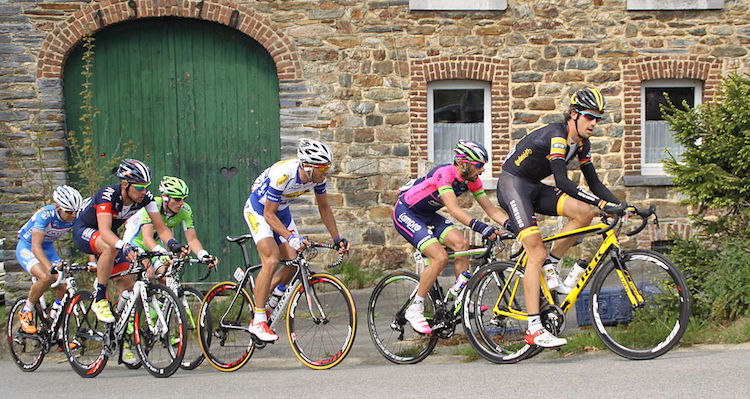
    Liège-Bastogne-Liège_2014_Echappée_du_jour_Côte_de_Wanne

    What better way to close out the Classics season than with the legendary Liège-Bastogne-Liège? The oldest Classic, Liège lives up to its status as a historic (said history covered in more detail in the most recent Recon Ride Podcast) springtime cycling icon with a challenging route that caters to aggressive types with strong climbing legs, and recent editions have offered no shortage of thrills. With most of the familiar veteran contenders and a host of young guns making start, the 2015 edition should not disappoint.

    The Route

    Liège-Bastogne-Liège is a long one at 253 kilometers, and the road from Liége to the finishing town of Ans is lined with difficult climbs (officially, there are ten). This is especially true in the final 90 kilometers of the race, where eight of the ten ascents big enough to warrant an icon on the official race profile await the peloton.

    PROFIL

    The last three in particular really put the hurt on, typically whittling down the peloton and launching attacks as well: the Côte de La Redoute (2 km at an average grade of 8.9%), the Côte de la Roche-aux-Faucons (1.5 km at an average grade of 9.4%), and the Côte de Saint-Nicolas (1.2 km at 8.6%). Saint-Nicolas, crested just 5 kilometers from the line, is a popular place to strike out for glory. The race finishes on a gradient as well, with a climb into Ans of more than a kilometer.

    With the abundance of challenging climbs and a lot of kilometers between the start and the finish, Liège wears down the peloton, but also offers opportunities for those strong enough to get clear. Sometimes the race ends in a small sprint, but there are always attacks to be marshaled, and endurance and great climbing legs are critical here.

    The Contenders

    Last year’s winner Simon Gerrans looks to still be recovering from a crash, meaning that Orica-GreenEdge is probably riding for the likes of Michael Albasini. That might open up the contenders conversation a bit, but fresh off his third career Flèche Wallonne victory, two-time Liège winner Alejandro Valverde comes into the race as the hot favorite. His elite climbing legs and deadly finishing kick make him an obvious choice for this race, and the form he has shown recently confirm has status as the rider to beat this year.

    Michal Kwiatkowski was 3rd last year and comes into this year’s edition with Amstel Gold Race-winning confidence. His already impressive sprint has clearly improved this year, and he’s a great solo artist. It won’t be easy to match the climbing legs of some of the star uphill chargers in this race, but if Kwiatkowski can survive some of the steeper sections of the road, he’ll be able to outsprint most of the contenders in the race or outpower them in a late break to the finish.

    After his incredible Basque Country performance, Joaquim Rodríguez was a bit of a disappointment only coming in 4th at La Flèche Wallonne, but this is the grand prize and the one he’s been hunting for so long. The rare soloing form he showed in the País Vasco time trial could come in handy here, matched with his elite climbing ability. This is also a race where a strong team can make a big difference, and Katusha is among the strongest. Daniel Moreno and Giampaolo Caruso, both Top 10 finishers last year, are excellent cards to play for the Russian outfit.

    Dan Martin won this race in 2013 and came close to winning in 2014 before a late crash ruined his shot at victory. He’s obviously a rider to watch, but he’ll be in unknown shape following a crash at La Fléche Wallonne. If he’s healthy, he’ll be in the mix to win. Tom-Jelte Slagter is a nice backup option in case he isn’t.

    Philippe Gilbert is another former winner of the race in unknown health following a crash, though unlike Dan Martin, he’s not been as successful in recent years. He looked okay at the Amstel Gold Race but he was unable to stay clear at the top of the Cauberg. Health, form, and top-level ability at this point in his career are all question marks now.

    Vincenzo Nibali and Jakob Fuglsang make a great 1-2 punch for Astana. Neither can win in a sprint, but both have great uphill ability and an aggressive streak. Watch for attacks from the light blue jerseys on a late climb like the Côte de la Roche-aux-Faucons. Also watch out for action from Lotto Soudal. Tim Wellens is hunting for glory in the Ardennes and his best shot at a top result is a long-range move. He’s not the best climber or the most powerful soloist on the startlist, but he seems to find an extra gear when he gets up the road on a Belgian climb. Jelle Vanendert and Tony Gallopin are excellent alternatives for the team. AG2R is another squad with multiple excellent options, among them, Romain Bardet and Domenico Pozzovivo, both Top 10 finishers last year.

    Rui Costa, Sergio Henao, Roman Kreuziger, Bauke Mollema, Julián Arredondo, and Tom Dumoulin also have a chance at being in the mix in this race.

    VeloHuman Top 10 Favorites

    Winner: Alejandro Valverde
    Podium: Michal Kwiatkowski, Joaquim Rodríguez
    Other Top Contenders: Vincenzo Nibali, Tim Wellens, Dan Martin, Rui Costa, Domenico Pozzovivo, Tony Gallopin, Bauke Mollema

    Be sure to follow @VeloHuman on Twitter for more analysis.

    -Dane Cash

    Photo by Les Meloures (CC).

  • The Recon Ride Podcast: Liège-Bastogne-Liège 2015 Pre-race Show

    The Recon Ride Podcast: Liège-Bastogne-Liège 2015 Pre-race Show

    RR_VH_Art_LBL2015

    Episode 10: Liège-Bastogne-Liège 2015 Pre-race Show
    The Recon Ride talks Liège-Bastogne-Liège, the spring’s final big one-day race.

    [powerpress]


    The last of the Ardennes Classics has arrived! Dane Cash of VeloHuman and Cosmo Catalano of Cyclocosm cover the history, the parcours, and the potential scenarios for this weekend’s Liège-Bastogne-Liège.

    Photo by Sjaak Kempe (CC).

  • La Flèche Wallonne 2015 Preview

    La Flèche Wallonne 2015 Preview

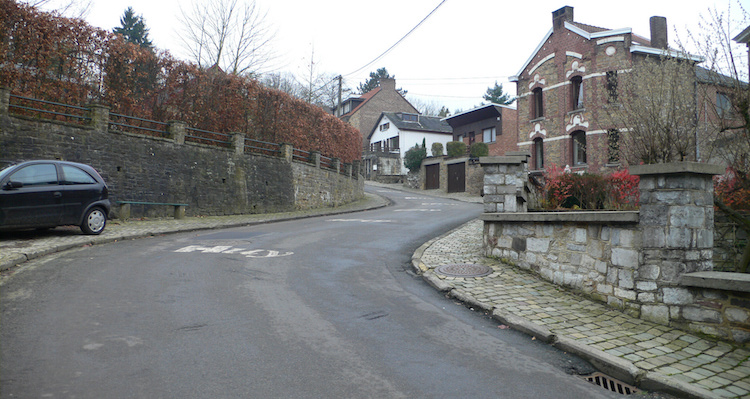
    13970497864_ee72fa31df_k

    After the opening act of the Amstel Gold Race, the hilly Classics specialists head to Belgium for La Flèche Wallonne. A rare midweek WorldTour one-day event, it’s more than just a warmup for Liège-Bastogne-Liège: the “Walloon Arrow” is a major prize for the explosive climbers, and they’re here in droves for the 2015 edition.

    The Route

    The shortest of the Ardennes week trio, La Flèche Wallonne is only 205.5 km in total. Its 11 classified climbs range from 1 kilometer to 2.9 kilometers in length and 4.8% to 9.6% in average gradients—these are all short climbs, but most are at least somewhat steep, and some are downright brutal. The final two climbs in particular are quite demanding from a vertical standpoint.

    LFW

    The organizers added the Côte de Cherave to the route this year as the penultimate uphill challenge. 1.3 kilometers at 8.1%, it could be a nice launching pad with only about 5 km to go. But the real test will be the final climb, the Mur de Huy. The peloton will actually crest the iconic Wall of Huy three times in this race, but the last will be the most important, because the finish line is at the top of the climb. 1.3 km at 9.6%, it’s a vicious ascent that has no mercy for those without pure climbing ability. The winding slopes of the Mur deaden any momentum the riders bring with them into the ascent, forcing would-be winners to rely on raw uphill strength for almost the entirety of the way up (though things flatten out a bit at the very top). Coming at the end of a day full of climbs, it’s even more of a challenge.

    Knowing that the Mur is coming, riders tend to try to keep a lot of energy in reserve in this race. That being the case, even with a new and difficult climb added so close to the line, it seems likely that many of the favorites will still plan to wait until the slopes of the Mur de Huy to launch their bids for glory. It’s possible that someone slips away before the pack reaches the the final climb, but it seems more probable that, as in years past, the Mur will remain the battleground on which La Flèche Wallonne is decided.

    The Contenders

    Neither Amstel nor Liège end on an uphill, and they are therefore open to victory bids from those with strong sprints or powerful soloing engines. But a race that ends on the Mur de Huy is almost guaranteed to go a rider with an elite uphill kick. Alejandro Valverde certainly fits the bill, which is probably why he’s won the race twice, including last year. He’s among the two or three most explosive uphill chargers in cycling, and his three-win Catalunya performance and runner-up ride at Amstel prove his great form right now. He’s got a great chance of doubling up here this year. He may be able to rely on Nairo Quintana to try something late in the day to put the pressure on Movistar’s rivals as well.

    Right up there in the discussion of most explosive climber in cycling is Katusha’s Joaquim Rodríguez, also a past winner here. Purito isn’t quite as strong as Valverde in a flat finish, but I rate his upward kick (when he’s at his best) ever so slightly above Valverde’s—and I think he’s currently quite close to his best. Rodríguez did not factor much in Amstel, but that parcours isn’t really his style; La Flèche Wallonne, on the other hand, suits him perfectly. Purito showed incredible form in the Basque Country and one would imagine he’s carried it into the Ardennes. Katusha must be excited to make the start here, having what is clearly the best team in the race. Daniel Moreno won here in 2013, and Giampaolo Caruo, who seems to get better every year despite being well over 30, has consistently been a factor in the hilly one-day events these past few seasons. Tiago Machado is no slouch either. With so many options, Katusha is likely to launch one uphill assault after another, and that will make them very difficult to counter.

    Dan Martin has come close to victory here in the past, and seems destined to win at some point in his career given his excellent skillset for the Mur de Huy. Runner-up in 2014, he’s got a great uphill kick and an aggressive streak to match. He has improved tactically since his 4th place in 2013 that might have been a win if he hadn’t started the Mur so out of position. It seems likely that he’ll again be among those fighting for the win this year. Cannondale can send Tom-Jelte Slagter on the offensive as well.

    Chris Froome will likely get plenty of media attention coming into this race, but it’s his teammate Sergio Henao that Sky’s rivals will really be watching. He sat out the 2014 edition but was 2nd to Daniel Moreno in 2013, and a recent 2nd-place in Pais Vasco shows his excellent form. With Froome and Nicolas Roche and Wout Poels as alternatives or support options, Sky can be aggressive in this race.

    Amstel Gold Race winner Michal Kwiatkowski was 3rd here in 2014. He launched his attack relatively early in that edition and looked good into the final few hundred meters before being passed by Dan Martin and Alejandro Valverde. This pure climber’s finale doesn’t suit him as well as Amstel or Liège, simply because he just doesn’t quite have the uphill ability that Purito and some of the other top contenders here have, but he’s a better soloist and a better sprinter than practically anyone else with a chance in this race. That means that he could try something a bit long distance, or alternatively, try to hold the right wheel all the way to top of the Mur where things flatten out, and in either scenario, he’ll have a chance.

    Rui Costa looked good at Amstel and is constantly underrated as a climber (and as a time trialist, and as a sprinter for that matter). With Diego Ulissi as a fine second, Lampre can probably make something happen here. Trek has the excellent 1-2 punch of Bauke Mollema and Julián Arredondo—Arredondo has the perfect skillset for La Flèche Wallonne but hasn’t shown much lately. If he’s got some form hidden away he’ll be in the mix. AG2R’s Carlos Betancur also has an excellent skillset for La Flèche Wallonne; at his best, few would be able to match him in this race. He has done almost nothing from a results standpoint in over a year, but he didn’t look too bad at Amstel and will be worth watching here. Lotto Soudals’s Jelle Vanendert and Tim Wellens could get involved. Astana’s Vincenzo Nibali and Jakob Fuglsang, both clearly hungry for one-day success, will almost certainly try to be aggressive as the day nears its conclusion. Philippe Gilbert has won here in the past and will probably be up there again, but a podium performance at this stage in his career seems highly unlikely—he is not climbing like he used to. Samuel Sanchez could be a nice alternative option for BMC. OGE’s Simon Yates and Michael Albasini, LottoNL’s Wilco Kelderman, and Tinkoff-Saxo’s Rafal Majka and Roman Kreuziger are others who could get involved.

    VeloHuman Top 10 Favorites

    Winner: Joaquim Rodriguez
    Podium: Alejandro Valverde, Daniel Martin
    Other Top Contenders: Michal Kwiatkowski, Sergio Henao, Rui Costa, Daniel Moreno, Philippe Gilbert, Simon Yates, Vincenzo Nibali

    Be sure to follow @VeloHuman on Twitter for plenty more live analysis during the race.

    Photo by umelog (CC).

  • Amstel Gold Race 2015 Preview

    Amstel Gold Race 2015 Preview

    Samuel_Sanchez_AmstelGR

    The Classics calendar leaves the rough cobblestones of Flanders and northern France behind for the short, steep bergs of the Netherlands Sunday at the Amstel Gold Race. The uphill chargers will face off on a bumpy parcours in the Limburg province, the first of three puncheur-friendly WorldTour races often called the “Ardennes Classics” (though the Amstel Gold Race doesn’t actually go through the Ardennes forest.

    The Route

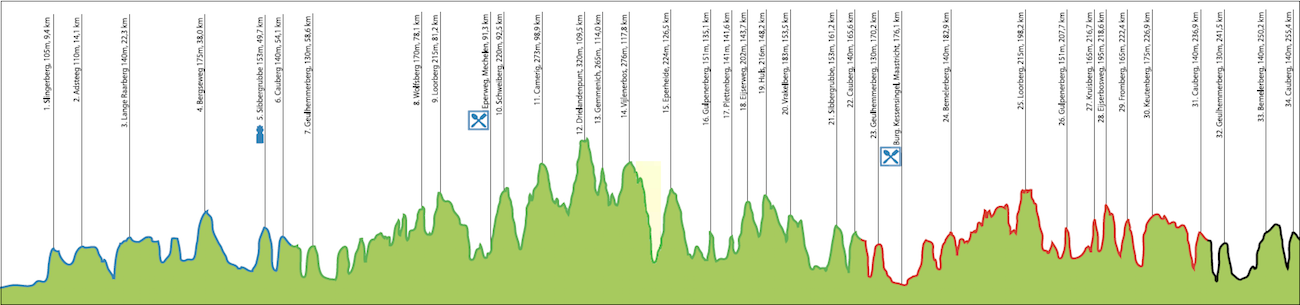
    Even at a long 251 kilometers in full, with 34 classified climbs from start to finish, the Amstel Gold Race is a roller-coaster ride throughout. The trip from Maastricht to Berg en Terblijt is one of constant ups and downs, with plenty of road furniture along the way to boot.

    AGR

    On paper, the route and profile look perfect for aggressive racing, and recent editions have seen successful long-range attackers. But historically, this race has quite often been all about the very last uphill test, the Cauberg. It’s a little over a kilometer long at just under a 5% average gradient, but with some seriously steep stuff in the middle. From the top of the final ascent (the peloton will visit the iconic climb multiple times on the day) of the Cauberg, it’s still almost two kilometers to the line, a relatively recent route alteration that requires those who get away on the last slope to maintain their gap over a flat stretch before the finish.

    The Contenders

    Whether this race is won with a long-range attack, a charge up the Cauberg, or a finishing sprint in the final drag, explosiveness is the critical trait for any would-be contender in the Amstel Gold Race: explosiveness to get clear in a breakaway attempt, to launch up the last climb, or to win a bunch kick in the finishing straight. The Amstel Gold Race is a puncheur’s playground.

    Philippe Gilbert is the peloton’s most successful active Amstel Gold Racer, and generally, the sport’s dominant figure on the Cauberg climb. He’s won this race three times, and won his rainbow jersey atop the Cauberg in 2012. This race suits him down to the ground, and his 3rd place in the recent Brabantse Pijl suggests he’s in good shape. Still, he’s not the Philippe Gilbert he once was, and all eyes will be on him in the last few kilometers. He won’t be able to slip away. As strong as he is here, this startlist is packed with hungry uphill specialists, it won’t be easy for him to get clear even on his favored terrain, and a few of the other likely contenders could probably beat him in a sprint if he can’t drop them. He’s the oddsmakers’ favorite for obvious reasons, but winning a force Amstel will be a real challenge. Regardless, having Samuel Sanchez, Greg Van Avermaet, and Ben Hermans around to launch attacks does give BMC plenty of cards to play.

    Alejandro Valverde has never won here, but his uphill burst is one of the best in cycling, and his ability to win a sprint even in a flat finish makes him particularly dangerous. In blazing form after a three-stage-win Catalunya, Valverde has a terrific chance of winning this race.

    Michal Kwiatkowski, 5th last year, also has a strong uphill burst and an excellent finishing kick. One advantage he may have even over the versatile Alejandro Valverde in this finale is a talent for late solo moves. He earned his Worlds title with a brilliant late attack in Ponferrada, and with the finish line still over a kilometer from the top of the Cauberg, his time trialing skills will come in very handy.

    Simon Gerrans is perfectly suited to this parcours, but he is probably still a bit lacking in the form department after an early season injury. Orica-GreenEdge will likely put their faith in Michael Matthews instead, who just landed his second straight 2nd-place result in Brabantse Pijl. If the punchier riders can’t get separation, Matthews has a great chance of winning this race in a sprint.

    Joaquim Rodríguez has the punch to thrive on the Cauberg, and showed incredible form in Pais Vasco. The flat stretch that follows from the top of the final climb is not great for his skillset but he may be strong enough to open up a winning gap on the uphill drag. Teammate Daniel Moreno also has plenty of punch, and a decent sprint as well.

    Sergio Henao is another talented climber with a fair bit of punch, and he showed strong form in the Basque Country. Daniel Martin would probably fare better with a purely uphill finish too, but he does have a nice finishing kick if he manages to get into a small group in the finale—Tom-Jelte Slagter is another option for Cannondale.

    With an impressive trio of Jelle Vandendert (twice 2nd here), Tony Gallopin, and Tim Wellens, Lotto Soudal will almost certainly be in the mix for the win. Wellens is a great candidate to go from afar. Giant-Alpecin’s Tom Dumoulin is another great long-range candidate. His elite soloing ability combined with an ever-improving finishing kick make him a terrific outsider for victory.

    Lampre’s Rui Costa and Diego Ulissi, Wanty-Groupe Gobert’s Enrico Gasparotto, Astana’s Vincenzo Nibali, Tinkoff-Saxo’s Roman Kreuziger, Trek’s dangerous trio of Bauke Mollema, Julián Arredondo, and Fabio Felline, CCC’s Davide Rebellin, and AG2R’s Carlos Betancur and Jan Bakelants are others hoping to get into the mix.

    VeloHuman Top 10 Favorites

    Winner: Michal Kwiatkowski
    Podium: Alejandro Valverde, Philippe Gilbert
    Other Top Contenders: Michael Matthews, Joaquim Rodriguez, Jelle Vanendert, Tim Wellens, Daniel Moreno, Sergio Henao, Tom Dumoulin

    Be sure to follow @VeloHuman on Twitter for more analysis.

    -Dane Cash

    Photo by By Jakub Cerveny (CC).