With the big favorites holding back even as the pack crested the penultimate climb, it looked like it might be a less-than-thrilling finale at this year’s World Championships, but everything changed when Michal Kwiatkowski divebombed the circuit’s second to last descent, caught up with a fading break up the road, sailed past them, and stayed clear over the final kilometers. At the end of the day, a familiar trio, the exact same three that had stood on the podium in April’s Liege-Bastogne-Liege, received the medals at Worlds, but with a crucial difference: Michal Kwiatkowski came away with the win, having made a gutsy escape from his rivals and held on for victory.
Takeaways from the Elite Men’s Road Race
Michal Kwiatkowski took plenty of victories this season, in Strade Bianchi and in the prologue of the Tour de Romandie, for instance, but the big one-day race wins eluded him, just barely. He was quite impressive in the Ardennes in particular, but despite being inside the Top 5 in all three races, he was unable to grab the top spot on the podium in any of them. Now, he’s got his marquee one-day victory. He did it with the help of a dedicated Polish team that spent a lot of time setting the pace early, doing more than a little damage to wear down the peloton. In the preview, I mentioned Kwiatkowski’s support squad as something not to be underestimated. Thanks mostly to Kwiatkowski himself and countryman Rafal Majka and the bevy of WorldTour points they racked up in their stellar seasons, the team was well-staffed in this Worlds, and it showed. They made the race hard, and they kept their man at the front and out of trouble during a hectic day. Even with that strong support, however, it still took a massive effort to win the race. The performance highlighted the amazing completeness of Kwiatkowski’s skillset: his descending skills, which allowed him to open up the initial gap to the peloton, his explosiveness, which allowed him to break free from would-be hangers-on in the group up the road, and his climbing and soloing abilities, which allowed him to maintain his gap over the final climb and all the way to the line. A true all-rounder, Kwiatkowski will have plenty of opportunities to take more wins over the next 364 days while holding the title of World Champion.
With a kilometer to go in the race, Alejandro Valverde and Simon Gerrans were both well-positioned to fight for the victory, but in the end they were left battling for the lower steps of the podium. Given the small gap between Kwiatkowski and his chasers, it’s hard not to criticize the poor cooperation in the group behind: Philippe Gilbert was really the only rider putting in any work in the final few minutes, and had he received any help from the rest of the group, it’s quite possible that we would have a different rainbow jersey wearer in 2015. Given the stellar form of Simon Gerrans, he may have even been able to put in a few pulls and still won the sprint. Podium places are nice, but this was a serious dropping of the ball.
Another World Championship without a win for Fabian Cancellara, for whom this is always such an important race. He missed the move in the final lap and never had a chance after that, landing a disappointing 11th (though, outsprinting Ben Swift, Sonny Colbrelli, Michael Matthews, and Ramunas Navardauskas is actually rather impressive, another sign of a vastly improved finishing kick late in Cancellara’s career, even if it wasn’t worth much at all). Meanwhile, Classics rival Peter Sagan didn’t feature; the form was a question mark coming in, and it turned out that he just couldn’t make a difference in the end.
One rider who did manage to just eke out a Top 10 performance was Nacer Bouhanni: it may be a minor footnote in the history of this race, which will be remembered for Kwiatkowski’s brilliant escape, but the fact that Bouhanni managed to stick with the pack over 254.8 hilly kilometers is a big deal. His ride in Ponferrada, coupled with several nice showings on some of the Vuelta’s hillier stages, will help his confidence on the more difficult days moving forward.
For the second year running, and the third time and four years, the winner of the World Championship Road Race did not ride in the Vuelta. Neither did the runner-up, for that matter. Nor the rider who won the bunch sprint behind the escapees. The Vuelta has long been considered the optimal preparation for Worlds, but clearly, times are changing.
The Italian team didn’t have anyone inside the Top 10. I didn’t find that particularly surprising given their team selection, which I questioned from the start. They just didn’t seem to really understand the parcours, leaving riders like Pippo Pozzato and Giacomo Nizzolo at home and focusing their team around Vincenzo Nibali, for whom this was not a particularly well-tailored profile.
Lastly, a word on the Danes. Matti Breschel put in his fourth Top 7 performance in a Worlds Road Race. Big results in other races on the pro calendar are pretty rare for the 30-year-old, but he always seems to be in the mix in the biggest one-day race of the year. Meanwhile, teammate Michael Valgren spent a lot of time out front in Ponferrada, doing much of the work driving the pace in a group of escapees. He still managed to land 20th overall. The 22-year-old, closing out his first season with Tinkoff-Saxo, has a bright future ahead of him.
Check back soon for the preview of Il Lombardia, the season’s final Monument Classic!
The Ponferrada World Championships will come to a close with the Men’s Elite Road Race. Cycling’s biggest stars have been training and riding in tuneup races for some time now, but the weekend of the main event has arrived. With the rainbow jersey on the line and a parcours that should make for a wide open race, it looks set to be quite a showdown.
The Route
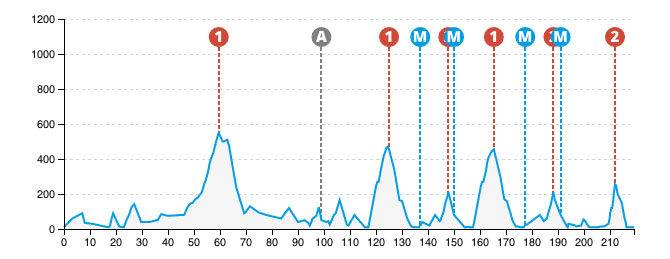
The Road Race takes place on an 18.2 kilometer circuit in and around Ponferrada, Spain. The peloton will complete 14 laps of the circuit, making for a total race distance of 254.8 kilometers.
Each lap involves a pair of climbs and also pair of tricky descents that, especially as the day nears its conclusion, are likely to see plenty of action from the more aggressive riders in the pack. First in the circuit is the Confederación climb, 5.2 kilometers at an average of 3.3%. Despite the low gradient, the ascent starts out with a few stretches that hit 8%. After the riders crest the climb, they will take on a very sharp descent. Then comes the Mirador climb, 1.1 kilometers at 5.5% but with two stretches (at the beginning of the climb and again near the top) of around 10%. Another descent follows, and the road doesn’t flatten out until there are less than 2 kilometers remaining before the finish line. The last few kilometers involve a few twists and turns, including a sharp right hander in the final 1000 meters.
There is a chance of rain in the forecast. If the conditions are poor, the technical downhills will get a lot more hectic, and what is already going to be a long day in the saddle will get a lot more uncomfortable.
The Contenders
A moderately challenging profile will become much more difficult as 14 laps are completed, but this is still a parcours that will appeal to those riders with a powerful kick. The Ponferrada circuit, much like a number of circuit races on the WorldTour calendar that have preceded it, has challenges to guarantee action before the finish while still allowing for a sprint as a likely outcome: the inclines never reach extreme gradients and the last kilometer is quite flat. Still, a lumpy journey of over 250 kilometers will greatly whittle down the pack, and a perfectly timed and determined escape attempt will have a chance at staying clear, and even if this does come down to a sprint, it will be a select group battling it out for the victory. As such, winning the rainbow jersey in 2014 will require decent climbing legs and the toughness to stay sharp after a long day in the saddle, and either the kick to outsprint the (likely somewhat reduced) peloton at the line, the power to get clear of the pack before the finish, or a blend of both, to stay with any late attackers and then outmatch them in a high-speed finale.
No other rider in attendance combines current form, a well-tailored skillset, and a powerful team quite as well as Simon Gerrans. He proved that he is in top shape by sweeping the Canadian GPs (his second victory, in Montreal, was particularly dominant), and with Milano-Sanremo and Liege-Bastogne-Liege on his career palmares, he is a proven contender in sprint finishes that follow difficult days in the saddle in even the biggest races. The climbs shouldn’t be a problem for the Australian, who also has the power to glue himself to any aggressive wheels should any late attacks look particularly dangerous. Holding out for the sprint has been his strategy in these sorts of races lately, but he is also an accomplished attacker himself. In any scenario, he is a threat, and he leads a very powerful squad. Teammate Michael Matthews is a deadly alternative, even faster in a sprint and also capable of handling a few climbs. Matthews, still just 24, does not have the same resume for the very long days (though he has thrived on the hillier profiles in his career, none of his big wins have come after this much distance) but he has shown remarkable versatility and shouldn’t be counted out given the likelihood of a sprint. With Cadel Evans, Rohan Dennis, Adam Hansen, and Heinrich Haussler also in attendance, the Australian squad is loaded for this World Championship Road Race.
As a reduced sprint does seem to be the most probable outcome, Peter Sagan is among the top favorites as well; no rider is as fast to the line after a hilly day as the 24-year-old Slovakian. When the Ponferrada Worlds circuit was revealed, Sagan was the first name that came to mind for many observers. However, form is a major question mark for the talented young rider, who has done little to prove himself in shape since his Tour de France. He has expressed his own doubts about his form in the media recently as well. It is that uncertainty that keeps him from being the top favorite. If he manages to marshal his ability by the time this race kicks off, however, or if this is all nothing more than a clever strategy to deflect attention from himself, Sagan will be very difficult to beat. It will be hard for anyone else who sprints as well as Peter Sagan to stick with the pack all the way through the 254.8 hilly kilometers to the line. He’s also a master escape artist, should the opportunity present itself to get away from the bunch. He leads a small team of only three riders, but this profile, which is less friendly to attackers than last year’s, somewhat downplays the importance of squadmates who might help chase down late moves.
Spain’s Alejandro Valverde will need for this to be a selective race if he wants a chance at taking the rainbow jersey, but several climber-oriented teams are here to help with that ambition. Valverde has a terrific kick and he should be in the mix if this comes down to a reduced sprint. In front of a Spanish crowd and aware that this may be his last chance at the World Championship, he’ll be highly motivated to perform. Daniel Moreno is another fast finisher for the home country, while Joaquim Rodriguez and Luis Leon Sanchez present yet more options to make this an aggressive event.
Poland’s Michal Kwiatkowski was among the Top 5 in all three of this year’s Ardennes Classics, showing his immense strength in the group finishes that come after long, bumpy days, but he’s also an elite solo artist and strong descender who could try to get away from the lead group in the final few kilometers if still contains a few of the purer sprinter types. An excellent Tour of Britain showed that he’s back on good form after a rough patch in the middle of the year. Strong seasons from a number of Polish riders guaranteed a large team for Poland in this race (which isn’t always the case), and that will boost Kwiatkowski’s chances.
Among the likeliest late escapees is Fabian Cancellara, who eschewed the Worlds ITT this year to focus solely on this opportunity to take the rainbow jersey. No rider on this startlist can get clear of a charging peloton quite like Spartacus, and a constantly improving finishing kick makes him all the more dangerous should he reach the line in a small group; he showed it when he won the 2014 Ronde in a high-speed four-man showdown. He was even 2nd in a bunch sprint finish in Milano-Sanremo this year, ahead of the likes of Mark Cavendish. After 250 kilometers, many riders will start to lose steam, but Cancellara is not as easily weakened by distance. That puts him among the very strongest favorites here, and while his best chance at winning seems to be an attempt at a late move, he’s a contender in any scenario. His descending abilities make him even more dangerous. Though only consisting of two other riders, his team has firepower: Michael Albasini has the climbing legs to make it over these inclines and a particularly impressive burst of speed at the end of a hilly parcours, making a very strong second.
Belgium has several cards to play for this circuit, and at least one of the squad’s many options should be in the mix for the podium. Greg Van Avermaet will almost certainly attempt to get clear alone or with a small group as the day nears its close, and with recent showings of good form, he is among the top favorites for victory at Worlds. He has had found it difficult so far in his career to turn near victories into actual wins on the biggest stages, but he has finished in the Top 7 in each his last four starts (with two victories), and should come into this race feeling confident. Former World Champions Philippe Gilbert and Tom Boonen haven’t shown quite the same strength recently as Van Avermaet, but both are specialists in selective one-day races. Sep Vanmarcke, though not as speedy at the line, is another strong rider after a tough day, and Jan Bakelants, Jelle Vanendert,and Tim Wellens are even further options.
Defending champion Rui Costa has a difficult task ahead of him. As an uphill specialist, Costa is not as well-suited to this parcours, which doesn’t have the gradients he’d prefer. Still, he’s a strong attacker with underrated punch, and he has a knack for being in the mix on a wide variety of profiles.
Rui Costa put in a strong performance against high-level competition in Montreal, his final WorldTour race in the rainbow jersey.
A repeat win won’t be easy, but Costa clearly has the form (he was runner-up in the GP Montreal) and plenty of motivation to prove that he has what it takes to continually contend for the rainbow jersey. Expect a strong performance from him.
France has a few strong options that seem to be flying a bit under the radar at the moment. Tony Gallopin has the skillset to thrive on the Ponferrada circuit: he is a quality sprinter (he charged to 3rd in the bunch finish in Montreal) and a particularly dangerous attacker on the hilly profiles. He took his two biggest career wins (San Sebastián in 2013 and a stage in the Tour de France) by soloing out of a small group and staying clear to the line. His versatility will allow him to be in the mix in several different race scenarios. Sylvain Chavanel is another rider who could feature in several different ways; he won in Plouay last month after escaping from a pack of sprinting hopefuls, and that may be exactly what’s on his mind here. Romain Bardet could also get involved, having shown some surprising ability in one-day races this year (in Liege-Bastogne-Liege and in Montreal). Nacer Bouhanni makes the start as well, hoping for a bigger bunch gallop. This circuit will greatly test his climbing legs, and he does not have much of a resume in races this long, but he showed improved uphill ability in the recent Vuelta, and it has increased his confidence in his ability to be involved in this sort of race. It would be a surprise if he held on all the way to the finish, but he’s among the fastest sprinters in this race, making him a favorite if he can hang on.
Perhaps a bit more likely to hang on for a potential sprint is Germany’s John Degenkolb, who has landed his biggest results by surviving difficult days to thrive in reduced sprints. His victories in Paris-Tours, the Vattenfall Cyclassics, and Gent-Wevelgem and most of his nine career Vuelta stage wins, as well as his runner-up performance in this year’s Paris-Roubaix, have come that way. His finishing kick has been stronger this year than it has ever been before, though he may have given up just a little bit of his uphill ability getting there; more worrisome for his chances, however, is his recent bout with illness. Degenkolb was recently hospitalized while fighting an infection that he picked up in the Vuelta, and that trip certainly wasn’t a welcome addition to his training schedule. If the form is there, he could contend for the victory, but it’s hard to say how strong he is right now. Andre Greipel makes the start as well, though he’s a long shot to make it to the finish; Simon Geschke, a specialist on the hilly days, may be a better bet to survive. Tony Martin is another elite rider who can’t be counted out when a profile offers opportunities for solo moves.
Alexander Kristoff will share John Degenkolb’s ambition of surviving the tough day for a sprint finish. He wasn’t much of a factor in Quebec or Montreal recently, but the Ponferrada circuit should be a bit less climber-oriented, and Kristoff also thrives on the very long days in the saddle, and the Worlds parcours always is a long one. He won’t have an easy time of holding out for a bunch finish, but it’s hard to imagine anyone beating him if he’s there. Edvald Boasson Hagen and Lars Petter Nordhaug are both strong alternatives on this profile.
Tom Dumoulin was a top performer in Canada, 2nd in Quebec and 6th in Montreal. He has carried top-notch form into Ponferrada, and it helped him reach the podium in the ITT championship, where he was not far behind Tony Martin and Bradley Wiggins. Dumoulin would prefer a course more favorable to attackers, but he is an excellent solo artist who will have a better chance than most at pulling off a late strike, and he has an ever-improving finishing sprint to help him outgun a select group should it come to that.
Tom Dumoulin has had a very strong September, with podium performances in Quebec and in the World Championship ITT. His soloing ability makes him a threat in the Road Race.
Teammate Tom-Jelte Slagter is well-suited to this parcours, and will be another strong option. Garmin was riding for Ramunas Navardauskas in Canada, but Slagter was 11th in Quebec and 12th in Montreal, suggesting that the form is there right now. With versatile Bauke Mollema, Wout Poels, Wilco Kelderman, and Pieter Weening all making the start as well, the Dutch squad may not have any one rider among the top few favorites for the race, but there is a lot of firepower here for a strong outside bid at the rainbow stripes.
The aforementioned Ramunas Navardauskas makes for a quality dark horse contender in this race, with just the right blend of climbing legs, attacking ability, and finishing kick to be dangerous on this profile. Ireland’s Dan Martin leads a small but capable squad, and the winner of last year’s Liege-Bastogne-Liege has both the form (which he proved with his first Grand Tour Top 10 in the Vuelta) and the skillset to make a challenge here. The Italian squad seems to be rallying behind Tour de France winner Vincenzo Nibali, who will hope to make an escape on the late climbs and then hold out on the last descent and final flat stretch; it may seem strange to mention the Italian team this late in the preview, but it’s hard to see their climber-centric squad selection as anything other than odd on this parcours. Daniele Bennati and Sonny Colbrelli could feature in a reduced sprint, while Alessandro De Marchi and Giovanni Visconti will be alternative options for a solo move. Unsurprisingly, Colombia also has a squad that will push for a very selective race, though it’s hard to name any one rider as their best hope; when at their best, Julian Arredondo, Carlos Betancur, and Rigoberto Uran all have the skillsets for this parcours, but none of them came out of the Vuelta on a particularly positive note. Zdenek Stybar of the Czech Republic, Denmark’s Matti Breschel, South Africa’s Daryl Impey, Russia’s Alexandr Kolobnev and Great Britain’s Ben Swift and Geraint Thomas are others on the list of potential protagonists on this parcours.
VeloHuman Top 10 Favorites
Winner: Simon Gerrans Podium: Peter Sagan, Fabian Cancellara Other Top Contenders: Alejandro Valverde, Michal Kwiatkowski, Greg Van Avermaet, Tony Gallopin, John Degenkolb, Alexander Kristoff, Rui Costa
Be sure to follow @VeloHuman on Twitter for live analysis of the battle for the rainbow jersey! And stay tuned for post-race analysis and, of course, the preview of the season’s final Monument Classic, Il Lombardia.
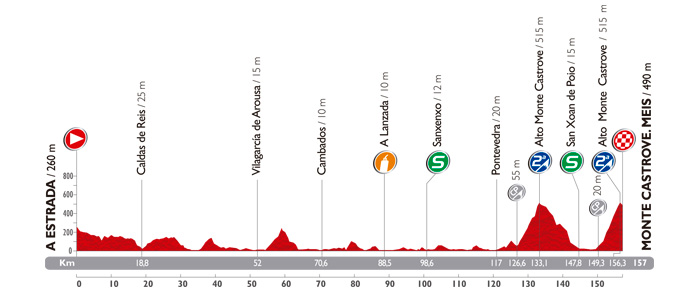
Stage 18: A Estrada › Monte Castrove. Meis – 157 km
Following John Degenkolb’s strong win on the Vuelta’s final real sprinters’ day, Stage 18 will bring to the fore those who prefer charging up a gradient. Very short at only 157 kilometers, Stage 18 nevertheless packs a punch in the finale. After they’ve spent most of the day riding on relatively flat roads, the peloton will have to climb the Alto Monte Castrove twice to close out the day. It’s short, but its 7% average grade will do plenty of damage, and with the finish line coming just over a half a kilometer after the riders crest the climb for the second time, only those with punchy climbing legs will have a chance at being positioned to contest the stage victory.
Since this finish is too difficult for the pure sprinters’ teams to drive the pace, the breakaway will have a chance at staying away on Stage 18, but if Movistar or Katusha decide to keep things on a short leash so that their GC men might have a shot at the bonus seconds on offer, it will be hard for anyone to succeed for afar here. Katusha and Movistar should be keen on controlling this one, because Joaquim Rodriguez and Alejandro Valverde have to be among the top favorites for stage honors. The narrow uphill road of the final climb suits Purito quite well, and it’s hard to imagine him not delivering an all-out attack in the waning moments of the race. Daniel Moreno has just the right skillset for the Alto Monte Castrove as well. Meanwhile, Alejandro Valverde packs quite the uphill kick himself, and he also has the strongest sprint among the riders in the GC Top 5. If he can hold the wheels of the attackers in the last ascent, he’ll have an excellent opportunity to nab a victory and valuable bonus seconds on Stage 18.
Dan Martin has already come close to a stage victory in this race using his top-notch punchy climbing legs, and he has maintained a high level of form even into the third week. He has a great chance here to finally pick up the stage win he’s been hunting. Fabio Aru may not have the Ardennes resume that Purito, Valverde, Moreno, and Martin have, but he is an elite climber who has a knack for exploding out of the pack on the very steep stuff.
Chris Froome is getting stronger every day in this race, and if he can drop his rivals with an attack from far enough out, he’ll have a shot at victory on Stage 18 even on a short climb like this. Race leader Alberto Contador, on the other hand, doesn’t need to attack, and therefore will have the luxury of being able to follow the wheels he wants to follow. That puts him into a good position to pick up another win in much the same way he won Stage 16, when he allowed Chris Froome to drive the pace until an opportunity to fly past presented itself.
Wilco Kelderman hasn’t had quite the level of form in this Vuelta a España that he displayed in the Giro, but he has a very fast finish and is a dangerous rider in a post-climb sprint. Samuel Sanchez, Warren Barguil, and Daniel Navarro are others on the fringes of the GC leaderboard who could hope to get involved in this sort of finish, while Philippe Gilbert and Michael Matthews will hope that they can hang with the GC-oriented climbers on the incline and outgun them in the final few moments for stage honors.
Should a long-distance move take the day, Ryder Hesjedal, Alessandro De Marchi, Luis Leon Sanchez, Adam Yates, Wout Poels, Alexey Lutsenko, Louis Meintjes, and Alexandr Kolobnov are among those who should be considered good candidates for success on a profile that turns hilly quite suddenly in the last 30 kilometers.
VeloHuman Stage Favorites
1. Alejandro Valverde | 2. Joaquim Rodriguez | 3. Dan Martin
Be sure follow @VeloHuman on Twitter for live commentary of this and every stage of the 2014 Vuelta a España! The next preview will be up after the conclusion of Stage 18, and there is plenty of GP Quebec and GP Montreal coverage coming very soon as well, so stay tuned!
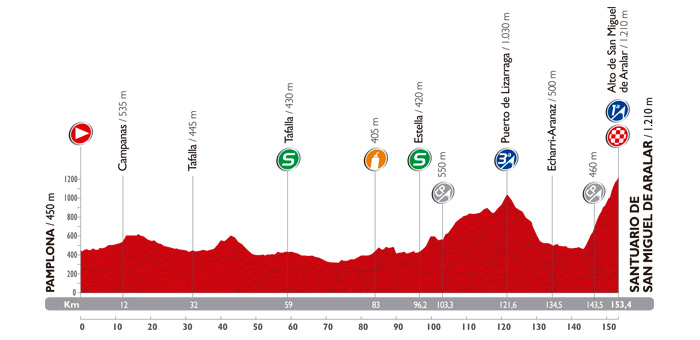
Stage 11: Pamplona › Santuario de San Miguel de Aralar – 153.4 km
Even after a tough time trial (won by Tony Martin) that saw Alberto Contador take the red jersey and Nairo Quintana and Chris Froome lose a lot of time, dramatically shaking up the General Classification of this race, the peloton won’t have a chance to rest on Stage 11. Another summit finish is on tap. The first two thirds of the stage are relatively tame, without any categorized climbs, but things get a bit more difficult with around 50 kilometers to go, when the road rises at the Puerto de Lizarraga, a Cat. 3 of 18.3 long kilometers with an average grade of 2.6%. It’s an uneven climb with a steep stretch at the top, so it is harder than the low gradient indicates. From the top it’s a tricky descent of about 9 kilometers, and then a stretch of flat before the final climb, a 9.9 kilometer Category 1 with an average gradient of 7.5%. It’s a fairly steady climb, except for a short 14% section at around 2.5 km from the top. The summit finish marks 153.4 kilometers in the saddle, making Stage 10 the second shortest non-TT day in the race: this is likely going to be a fast-paced affair.
The breakaway will have its chance of taking this stage, but if the GC contenders decide to keep the early aggressors on a tight leash, it will be hard for anyone up the road to stay away with a late flat section (likely to see an injection of pace as the GC men jostle for position) and then a tough final climb. Katusha is among the teams who will hope that the battle for stage honors will come down to the GC contenders. Joaquim Rodriguez put in a respectable time trial on Stage 10 to stay within striking distance of the GC title, and he has already shown that he’s on the offensive in this race. The steep section near the finish should be a perfect place for him to strike out for a gap and for bonus seconds. Daniel Moreno makes for a dangerous ally. Katusha’s elite uphill talents will be very hard to keep under control in the last few kilometers of the race.
Alberto Contador no longer has to gain ground on anyone, as the race leader, but without a strong team helping him, sitting tight and waiting for the attacks may not be the best idea. He’s obviously on excellent form, far more so than he was willing to admit publicly at the start of the race, and he’s not the type to rest on his laurels with a great opportunity for more success right in front of him.
Nairo Quintana may have gone down hard on Stage 10 but Movistar isn’t out of this race yet. If the young Colombian wants to get back into this Vuelta a España, he’ll need to attack early and often. Alternatively, if he shifts his attention to helping Alejandro Valverde, attacking early and often (and forcing the other GC riders to chase) would still be a good strategy. Quintana’s form is an unknown after his fall, but if he’s feeling strong enough to attack, he probably will. That would give Valverde the opportunity to latch onto any wheels that go chasing after, and should this come down a sprint (things are a bit easier at the very top), Valverde would of course be the heavy favorite among the top GC contenders. Even if Quintana isn’t at his best, Valverde will still likely be in the mix on Stage 11 on his own. He has looked sharp in this Vuelta and he’s running out of opportunities to add another Grand Tour to his palmares.
Chris Froome, on the other hand, showed in the Stage 10 ITT that he’s just not at his best in this race, giving up nearly a minute to Alberto Contador on a parcours that looked to suit him quite well. He’s still one of the top climbers in the Vuelta, though, with Mikel Nieve as a valuable second, so it would be unwise to overlook Team Sky on this final climb.
Rigoberto Uran put in a great chrono and is now sitting in 3rd overall. He struggled to hold the pace on the first climbing stage of the Vuelta, but since then he’s looked stronger every day. He’s got a nice sprint and if he can hold onto the lead group to the line he’ll have a shot. Fabio Aru has been flying a bit under the radar in this Vuelta but he has looked to be in excellent shape thus far. More than two minutes behind on GC, he might be allowed some room if he puts in an attack, and this final climb suits him very well. Daniel Martin is another rider who could get aggressive. He tried an attack on Stage 9 but was reeled in; he’ll be on the lookout for another opportunity here. Esteban Chaves, who had a very rough day in the ITT, will at least now be less of a marked man should he try to put in a dig on his favored terrain. If he can pick himself up after his disappointing chrono, he could be in the mix (he might even try to his luck in the break). Winner Anacona, unlike compatriot Chaves, had a very impressive ride against the clock on Stage 10 after a very impressive breakaway victory on Stage 9, and those performances have put him into the GC conversation. That will make it harder to successfully attack the pack on the climb, but with the form he’s shown, he still has a shot at a good result on Stage 11 even from the pack and with the top GC contenders watching him more closely.
Should the GC riders allow an early move to stay up the road all day, the long list of potential protagonists for stage honors from afar would include OGE’s Adam Yates, FDJ’s Thibaut Pinot and Kenny Elissonde, Garmin’s Ryder Hesjedal and Andrew Talansky, Lampre’s Jose Serpa and Przemyslaw Niemiec, Trek’s Julian Arredondo, BMC’s Cadel Evans, Astana’s Mikel Landa, Cannondale’s Alessandro De Marchi, Caja Rural’s David Arroyo and Amets Txurruka, Belkin’s Laurens Ten Dam, Europcar’s Romain Sicard, and Sky’s Dario Cataldo, among others.
Be sure follow @VeloHuman on Twitter for live commentary of this and every stage of the 2014 Vuelta a España! The next preview will be up after the conclusion of Stage 11, so stay tuned.
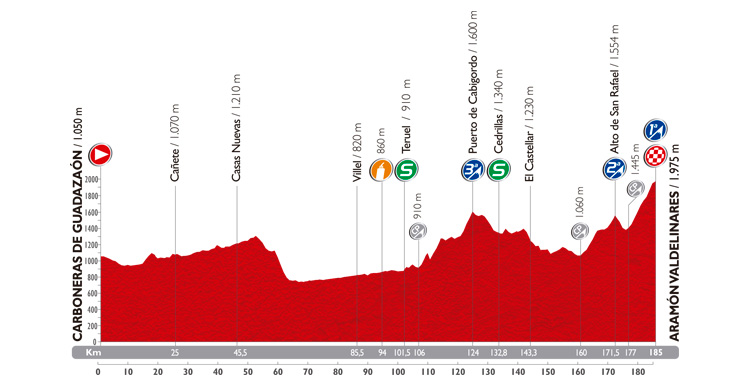
Stage 9: Carboneras de Guadazaón › Aramón Valdelinares – 185 km
After Nacer Bouhanni’s bunch sprint victory in Stage 8, the Vuelta heads North and the road gets mountainous. Stage 9 opens with a short downhill and then a long stretch on a slight incline. Roughly 50 kilometers into the day the incline abates for a fast downhill, and then the peloton will take on another long false flat before they reach the foot of the first categorized ascent. The Puerto de Cabigordo is quite a long Cat. 3, 18 kilometers in total, at an average gradient of 3.8%. From the top it’s 36 kilometers of mostly downhill roads to the two-part stage finale: the 11.5 kilometer, 4.2% average grade Alto de San Rafael, and the 8 kilometer, 6.6% average grade Aramón Valdelinares climb that follows almost immediately after. There are only 5.5 kilometers of descent between the two, so it will feel much more like one harsh climb with a quick respite in the middle than two separate tests. Near the very top of the final climb, at the end of a steeper stretch, things do flatten out a bit, opening the stage up for a possible sprint between survivors if a group reaches the line.
A breakaway will have a decent shot at this stage, with plenty of ups and downs after the midway point of the route to make controlling the race hard. However, it’s the day before a rest day, the GC is very tight, and there are bonus seconds on the line, meaning that there is a strong chance that a lot of riders in the pack will want to go full gas. For a long-range attacker to maintain any advantage over the final climb, a wealth of climbing talent will be necessary.
Stage 6 offered the first indications of who is on form and who isn’t in this race, and most of the riders who delivered on that final climb should be in the mix again here. Chris Froome will be a top favorite if this contest comes down to a battle among the GC contenders. He has been sharp in this Vuelta a España, and moreso than the very steep 4.6 km test that decided Stage 6, the final uphill drag that awaits on Stage 9 is much more Froome’s style. With Mikel Nieve as a top-notch lieutenant, Froome will look to take an advantage over his rivals here.
Movistar’s Alejandro Valverde put in a brilliant performance on Stage 6, but this will be a different sort of challenge. Climbs that require an explosive kick suit him perfectly, but over a longer, more drawn-out uphill ride, his post-Tour form will face a new test. He did do a lot of pulling at the front on the lower slopes of the final climb on Stage 6, suggesting that the engine is running well. If he is with the lead group at the finish, his sprint will make him hard to beat. Teammate Nairo Quintana will find this profile suits his skillset quite well, but he did fade a bit on Stage 6 and it’s a bit of a question mark whether the form is where it needs to be just yet. If he has gotten that little bit stronger over the past few days, this will be a nice opportunity for him to get ahead on GC.
Alberto Contador looked quite recovered from his leg injury on Stage 6, and this is an excellent profile for him if he is indeed returning to full strength. This is a longer test, which will offer a better opportunity to gauge his fitness. If it’s all there, he should be right in the mix for stage victory.
Joaquim Rodriguez has looked strong in this race but his performance on a sixth stage that seemed to suit him perfectly left a bit to be desired. He’ll have another shot at landing a good result here, with Daniel Moreno as a strong second.
Astana’s Fabio Aru and OGE’s Johan Esteban Chaves were 6th and 7th, respectively, on Stage 6, and this final uphill test will be a good opportunity for both uphill specialists to get involved in the battle for stage glory.
Daniel Martin definitely underwhelmed on Stage 6, but with that one exception he has looked strong recently, and this will be another chance to get it right. His sprint has been particularly on point, and if he can manage to stick with the lead group until the final kilometer he’ll have a shot in the flatter finish. Rigoberto Uran also struggled on the Cumbres Verdes climb, but typically, this long climb would suit him, and he’s not a bad post-climb sprinter either.
Cofidis’s Dani Navarro outperformed expectations on the Alto Cumbres Verdes and will be an outsider for victory here on Stage 9 if the GC men are indeed fighting for the day’s victory. Belkin has a powerful trio in Laurens Ten Dam, Robert Gesink, and Wilco Kelderman. Gesink and Kelderman in particular have strong finishing kicks if they can manage to stick with the leaders here. Having such strong team support will help. Sergio Pardilla, Warren Barguil, Samuel Sanchez, and Damiano Caruso are others who could be in the mix on Stage 9 if the General Classification riders make up the lead group on the road when the day nears its conclusion.
Thibaut Pinot and Julian Arredondo are both in the Vuelta a España targeting mountain stage victories, both are well-suited to this profile, and both would be allowed off the front if they decided to go for a long one here, but as of yet form is still a question mark for both as well. Ryder Hesjedal looked strong on Stage 7 before his crash, and could be a candidate for stage honors if he can get into the breakaway again here on Stage 9. Hesjedal’s teammate Andrew Talansky, Alessandro De Marchi, Damiano Caruso, George Bennett, Kenny Elissonde, Cadel Evans, Przemyslaw Niemiec, Winner Anacona, Louis Meintjes, Adam Yates, David Arroyo, and Amets Txurruka are others who could have a shot in a long-range strike.
VeloHuman Stage Favorites
1. Chris Froome | 2. Alejandro Valverde | 3. Alberto Contador
For many of the biggest names in pro cycling, the Clasica de San Sebastian (or, the Donostiako Klasikoa in the Basque language) is the opening race of the post-Tour season, and with a hilly profile that always encourages attacks, it kicks off the stretch of late summer races in style. Tony Gallopin won last year’s edition ahead of some impressive competition, with most of the race’s top contenders having just completed the Tour. The 2014 edition again has an impressive startlist, again largely composed of riders fresh off of Tour de France campaigns, but with a collection of other likely protagonists who skipped this year’s running of La Grande Boucle.
The Route
The San Sebastian parcours has gotten harder and harder in recent years, as race organizers look for ways to liven up the event. This year’s route contains many of the familiar challenges of past runnings of the race, but also an addition that could play a major role in deciding the winner.
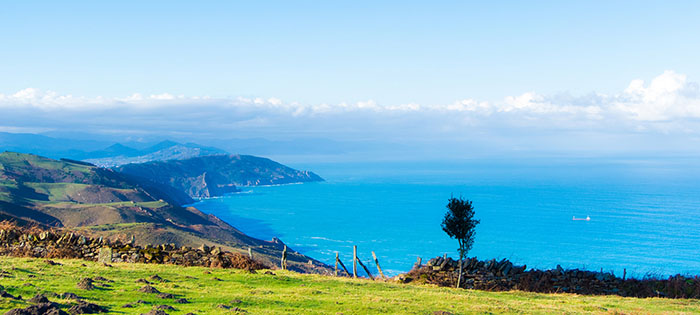
The race starts and finishes in the coastal town of San Sebastian, making a large loop and a few repeated twists and turns through the Basque countryside on the way from beginning to end. It’s a long trip at 219.2 total kilometers, and there are plenty of uphill tests on the menu.
The harder climbs of the San Sebastian are categorized, and there are six such challenges on the route of the 2014 edition, with most coming after 100 kilometers of racing (though the Category 1 Iturburu climb, crested around kilometer 60, is no slouch). A bit before the peloton reaches kilometer 120, the road kicks upward for the next major test, the climb that has become a staple of this race: the Jaizkibel. It’s another Category 1 ascent, roughly 8 kilometers in length at an average gradient well over 5%. After a testy descent, it’s not long before the riders reach the Cat. 2 Arkale, a short but steep climb and the third categorized test of the day. From the top of the Arkale, the pack will make a downhill trip right back to the foot of the Jaizkibel, where they’ll take on both the Jaizkibel and then the Arkale for a second time. This repeat journey is followed by the final run-in to finish line, with one final challenge in the way: the most significant alteration made to this route, the Bordako Tontorra climb to Igeldo, a short but steep Cat. 2 crested just over 7 kilometers from the finish. It’s less than 3 kilometers long but with an average gradient nearing 10% and sections in the 20% range, it’s a serious challenge that will be provide the punchy climbers with an excellent launching pad, especially given the high-speed descent that follows, leaving little room for much regrouping before the finish line at 219.2 kilometers is reached.
A long route, plenty of hills, occasional road furniture, and the ever-present threat of bad weather that exists in this area make the Clasica de San Sebastian truly worthy of its “Classic” title. This will be a hard-fought battle, where attrition will take its toll as aggressive all-rounder types take every opportunity to push the pace on the climbs.
The Contenders
The parcours opens a variety of possible scenarios, making it very hard to predict how things will play out: this race could be decided with a long-range attack, it could come down to a rider or a small group of riders escaping in the tough final kilometers (I see this as the most likely outcome), or it could even come down to a sprint among a reduced field. All things considered, this a hilly classic that tends to favor riders who specialize in riding hilly classics. Grit to handle the length of the journey and the possible bad conditions, punchy climbing legs for the obvious uphill challenges on the profile, and soloing ability to make or bridge over to attacks are prerequisites for success here, with a fast finish another useful tool to have should a small group arrive at the line together. A startlist filled with climbing powerhouses, Ardennes Classics protagonists, and versatile fast men reflects the importance of all these traits.
Movistar’s Alejandro Valverde is a dangerous rider in hilly one-day races which is probably why he has had so much success here in the past—he won in 2008, and was runner-up in last year’s edition. The late climb added to this year’s parcours suits him perfectly, and will make his ability to charge uphill even more valuable. While he is coming off of a relatively disappointing Tour de France campaign, unable to manage a podium result despite the absence of Chris Froome and Alberto Contador, there is still plenty to be said for being on good enough form to be 4th in the Tour de France, and this race fits his talents quite well, making him a top favorite for the win. Movistar has several other strong riders on this startlist too, with climbing specialist Igor Anton, fast-finishing JJ Rojas, and well-rounded Giovanni Visconti all potential protagonists themselves.
Cannondale’s Peter Sagan may inspire Movistar to repeat their strategy of 2013 (setting a vicious pace over the climbs to wear down the less climbing-oriented fast finishers in the bunch). There are a few versatile sprinter-types in this race, but none will inspire as much fear as the Tour’s green jersey winner, who can handle some tough climbs and who isn’t afraid to launch an attack if he sees an opportunity. The 2014 San Sebastian profile will really put his uphill ability to the test, however; the addition of a Cat. 2 in the final 10 km makes an already difficult-to-control race even harder to control, reducing the likelihood of a sprint finale. If Sagan is forced to hang on for the last ascent alone with a select few climbing specialists, he may struggle. If he is near the front of the lead group on the slope of the final climb, he has a great shot at winning. Sagan presents every other fast finisher hoping for a sprint with a major conundrum: if any quick man in San Sebastian can make it to the line, Sagan probably can, too, and he’s a hard rider to beat. Any team with sprinting aspirations will hope to isolate him while putting their own man in the best possible position as the day nears its conclusion. Meanwhile, Alessandro De Marchi is a very strong climber who could act as an alternative should Sagan falter.
Tony Gallopin came into last year’s race somewhat under the radar, a 25-year-old who, though talented, had not not landed too many big results in his career up to that point. As the returning champion and a recent Tour stage winner and yellow jersey wearer, Gallopin won’t have that luxury any more, but he’ll still be a strong option. He has been delivering nice results all year, growing as a climber and as a consistent threat in the tough one-day races. He can sprint if need be, but he’s more than capable of escaping from a pack if he feels the need to distance faster finishers. Ardennes specialist Jelle Vanendert makes for a terrific teammate who can put pressure on Lotto’s rivals on the steep stuff, while Tim Wellens is having an excellent year and should thrive on this profile. He came close to a stage win in the Tour de Wallonie, putting in a late attack on the final day that was only swallowed up in the final few kilometers, and that aggressive style will serve his squad well here. Lotto is well-staffed to defend their title in this race.
As is usually the case in a race with a hilly profile, Orica-GreenEdge should be in the mix with quite a collection of potential protagonists, with Simon Gerrans as a strong team leader capable of winning in a variety of scenarios. The final climb is very steep, but Gerrans has put in some great performance on high gradients so far this year, and if he can follow the inevitable attacks in the last few kilometers, he’ll be difficult to beat at the line. Michael Albasini will play the role of dangerous second. Simon and Adam Yates and Jens Keukeleire are other alternatives who can handle climbs and a long day of racing.
BMC has a lot of firepower for the Clasica de San Sebastian. Philippe Gilbert won here in 2011, and assuming he has recovered from a recent bout of illness, he’s on good form right now and will love this profile, especially given the new climb added at the tail end of the day. Few can launch an uphill attack with the potency of Philippe Gilbert, and should anyone stick with the former World Champ if he does make a move late, he has a nice sprint, to boot. Greg Van Avermaet is another well-rounded option who is likely to try for a long-distance strike, while Tejay van Garderen offers impressive climbing chops should any of the real mountain specialists try to turn this into a battle of true climbers. Silvan Dillier is yet another versatile talent for the team.
OPQS is also a team with plenty of firepower (this almost goes without saying, given the amount of talent this team has for one-day races). Zdenek Stybar has not racked up too many major results lately outside of his national championships, but he has the skillset to be in the mix in a classics-style race. Jan Bakelants is another option. The very capable Gianni Meersman will hope to hang on for a sprint. It won’t be easy, but he packs one of the most impressive sprinting and climbing combos in the sport, and, like Peter Sagan, he’ll have a better chance than most fast men of surviving all the way to the line. Even young Julian Alaphilippe, an up-and-comer with a well-rounded skillset, could be in the mix.
Garmin-Sharp’s Ramunas Navardauskas is fresh off a Tour de France stage win in which he put his aggressive stlye on display, but he’s also got a very fast finish in case he reaches the line with company. The climbs in this race will put him to the limit, though, especially that last one. If he can’t hold on, Garmin has other impressive options in Daniel Martin and Tom-Jelte Slagter, who will look to break the race open on the steep stuff. Martin appears to be recovered from his Giro crash, and this is an excellent profile for him. If he’s back on form, he will be a strong contender for victory here. Slagter has cooled somewhat since his hot start to the year but the parcours suits his well-rounded skillset very well, and if he can find some form by the start time, he’ll be a dangerous rider.
Daniel Moreno and Joaquim Rodriguez always make for a potent dynamic duo when short, steep ascents are on the menu. Moreno has not raced for weeks, while Rodriguez did not look to be back at his best yet during the Tour, making both of them question marks, but on-form, they both have what it take to put up a serious fight for the win, with Alexandr Kolobnev and Yuri Trofimov candidates mix it up as well.
Several teams look to be going all-in for strong GC-style climbers, hoping for a selective race with all of the uphill challenges. In Romain Bardet, AG2R has a dangerous option should the tough climbs wear down the weaker climbers. Bardet may not be well-known for his one-day racing prowess, but was an impressive 10th in Liege-Bastogne-Liege this year. He will be a top option if the puncheurs and sprinters start to lose ground, but he’ll need this to be a particularly difficult race if he wants any shot at victory. He’ll have help making the climbs as difficult as possible from a few other squads. Belkin brings Bauke Mollema and Laurens Ten Dam. Ten Dam seems to be equal or maybe even better form right now, but Mollema has the fast finish and explosive uphill charging ability to make him a strong contender on this parcours. This is also a nice profile for Nick van der Lijke, though he’ll be recovering from a crash sustained in the final stage of the Tour de Wallonie. Tinkoff-Saxo is another team built around strong GC-style climbing talent in Nicolas Roche and Michael Rogers. Roche was 5th here last year. Trek is also heavily climber-oriented, with Haimar Zubeldia (on great form right now) and Frank Schleck in attendance. Sky’s Mikel Nieve was an impressive 4th in this race in 2013 and David Lopez is a strong alternative; both could thrive if enough teams organize an effort to make this a hard race.
Astana sends a number of riders fresh from lieutenancy roles at the Tour, including Lieuwe Westra and Tanel Kangert, as well as strong climber Mikel Landa (6th last year) and hilly classics specialist Maxim Iglinskiy. Giant-Shimano has a well-rounded talent for this race in Simon Geschke, who may not have the palmares of Philippe Gilbert or Alejandro Valverde, but who could be a strong outsider with this parcours. Lawson Craddock and Chad Haga are options to try to go from afar. Europcar has Pierre Rolland, Cyril Gautier, and Thomas Voeckler to liven up the race on the ascents, while FDJ also has options in Arthur Vichot, Arnold Jeannesson, Anthony Roux, and Kenny Elissonde.
VeloHuman Top 10 Favorites
Winner: Alejandro Valverde Podium: Philippe Gilbert, Simon Gerrans Other Top Contenders: Romain Bardet, Daniel Martin, Peter Sagan, Daniel Moreno, Joaquim Rodriguez, Tony Gallopin, Bauke Mollema
As usual, I’ll be tweeting plenty of live analysis during the race, so follow @VeloHuman on Twitter for more! Also, be sure to check back Saturday for the preview of the Tour de Pologne.