Tag: Clásica de San Sebastián

  • Clásica de San Sebastián 2016 Preview

    Clásica de San Sebastián 2016 Preview

    IMG_7828

    The cycling season may be over for casual fans, but this weekend’s Clásica de San Sebastián proves there’s plenty of good bike racing still watch this year. The one-day trek on the undulating roads of the Basque Country tends to be pretty exciting, though hopefully this year’s edition will eschew the whole motorcycle-running-into-the-potential-race-winner thing.

    The Route

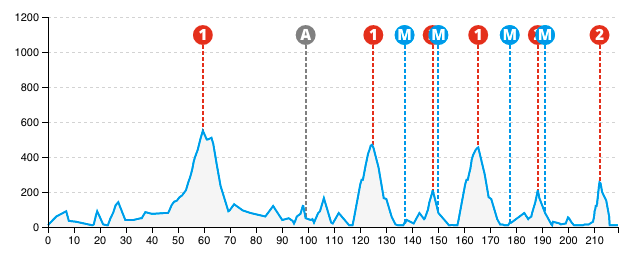
    The race is 220.2km long with six “categorized” climbs. The first is just an appetizer to possibly spring a long-range break. Then comes a two-climb circuit that the peloton will traverse twice (for a total of four climbs). The first ascent is the Jaizkibel, basically a small mountain, and then the short but steep Arkale. After two trips up and over both comes the final climb, the Tontorra, also short and steep but harder than the Arkale. From the top, it’s just 8km to the finish, most of it downhill.

    The Contenders

    On such a hilly parcours, the climbers and punchy classics specialists reign supreme—though the great thing about this race is that both have a shot at winning. Last year was a good example of this: winner Adam Yates is a Grand Tour-type climber, but the rider who probably would have won without moto interference, Greg Van Avermaet, is a Flemish classics star.

    To recap, climbing legs and endurance for a tough day on the bike are both key. Having a finishing kick is important too, if you can’t drop everyone before the flat run-in to the line.

    Alejandro Valverde is probably the top favorite in a very open field. He’s won before, he’s in good form, and the race suits him perfectly, with a profile hard enough to whittle things down and a finish that allows him to put his descending skills and sprint on display.

    BMC brings two riders with excellent prospects. Greg Van Avermaet will probably be itching for revenge. I was actually surprised that he did so well last year (up until getting knocked out of the race) on such a hilly course, but if he could do it then, he can probably do it now. Past winner Philippe Gilbert is another terrific option if the form is there—though that’s a question mark.

    Etixx has Dan Martin, who loves this sort of race, but he’s never done well in San Sebastián for whatever reason. Maybe that changes this year, with Rio on the horizon.

    Katusha’s Joaquím Rodríguez is definitely a rider to watch. His punchy climbing legs are still among the best in the peloton, even as he nears retirement. Ilnur Zakarin is another option for the squad.

    Adam Yates could certainly feature again, though last year’s win was a bit unconventional for me to be that confident in him. His brother Simon Yates and Michael Albasini are other options for the team.

    2013 winner Tony Gallopin, Michal Kwiatkowski, Mikel Landa, Alberto Contador, Roman Kreuziger, Bauke Mollema, Diego Ulissi, Jarlinson Pantano, and Tim Wellens are other strong candidates for success Saturday.

    VeloHuman Top 10 Race Favorites

    Winner: Alejandro Valverde
    Podium: Joaquím Rodríguez, Greg Van Avermaet
    Other Top Contenders: Philippe Gilbert, Dan Martin, Michal Kwiatkowski, Adam Yates, Tony Gallopin, Tim Wellens, Diego Ulissi

  • The Recon Ride Podcast: Clásica de San Sebastián 2016

    The Recon Ride Podcast: Clásica de San Sebastián 2016

    16cssvh

    Episode 50: Clásica de San Sebastián 2016 Pre-race Show

    The Tour is over but the pro peloton still has plenty of racing to do, with this weekend’s Clásica de San Sebastián the next big event on the menu.

    [powerpress]


    Dane Cash and Cosmo Catalano talk route, favorites, and storylines for Spain’s biggest one-day race, the always-exciting Clásica de San Sebastián.

    Photo by Dane Cash.

  • Clásica de San Sebastián 2015 Preview

    Clásica de San Sebastián 2015 Preview

    70144462_e580b584e3_o

    The 2015 Tour de France may be over but the WorldTour rolls on. The Clásica de San Sebastián (or the Donostiako Klasikoa in Basque) is the next race on the docket. It’s a hilly event that has just the right profile to inspire plenty of attacks, in a region mad for cycling, and its position on the calendar makes it a tough race to predict—some of the stars of the Tour de France are in attendance hoping to get just a bit more out of their legs, while a few other big-name riders are returning to racing for the first time and hoping to get back up to speed quickly.

    This strange dynamic is just one of the many topics discussed in the Recon Ride’s San Sebastián pre-race podcast, which you should check out for more analysis.

    The Route

    The San Sebastián organizers made a small but impactful change to the race route last season that led to an exciting finale, and the event returns to that successful parcours for 2015.

    The race starts and finishes in the coastal town of San Sebastián, looping in and around the environs to make for a total race length of 219.2 kilometers.

    The harder climbs on San Sebastián profile are categorized as if this were a stage race, and there are six such challenges on the route. The Category 1 Iturburu climb, crested around kilometer 60, is no slouch, but it’s early enough to be more of a leg-softener than anything else.

    Screen Shot 2015-07-31 at 10.56.51 PM
    Once the peloton hits the slopes of the Jaizkibel, the more enterprising riders in the bunch will have one opportunity after another to go on the attack, all the way to the last climb of the day less than 10km from the finish.

    Things get more consistently difficult after the midway point of the route with the first trip up the Jaizkibel, the marquee climb of the race. It’s another Cat. 1 ascent, roughly 8 kilometers in length with an average gradient over 5%. After a descent, it’s not long before the riders reach the Cat. 2 Arkale, a short but steep climb and the third categorized test of the day. From the top of the Arkale, the pack will make a downhill trip right back to the foot of the Jaizkibel, where they’ll take on both the Jaizkibel and then the Arkale a second time.

    After the second descent from the Arkale comes the final run-in to town, but there’s a tough climb along the road to the finish. The Bordako Tontorra climb to Igeldo is a short but steep Cat. 2 crested just over 7 kilometers from the finish. It’s less than 3km in length but with an average gradient nearing 10% and sections in the 20% range, it’s a hard road to the top. After the climb comes a descent into a flat finish.

    The Contenders

    The profile favors strong climbers with a lot of punch. It’s probably possible to attack from the more pure-climber-friendly Jaizkibel or from the Arkale and hold out to the finish, but it’s more likely that the race comes down to the last bump in the road, which is more suited to the Ardennes-style riders than the big stage racing stars.

    That late climb shook up the race last year, providing Alejandro Valverde with a launching pad to go on the attack for the win. Because the parcours is so up-and-down already, the peloton is pretty thinned out by the time it reaches the final 10km—even if attacks on the Jaizkibel and Arkale are reeled in, it’s still very hard to keep things altogether on the last climb. In case it’s a small group that reaches the finish, a strong flatland kick will be important to anyone hoping to win.

    However things play out, Valverde is capable of winning this race in pretty much any scenario, which is probably why he is a two-time champion. Coming off of a Tour de France podium, and in the middle of an excellent season (in which he dominated the hilly spring classics), it’s hard not to see Valverde as the clear favorite. He’s among the best climbers on the starlist who can thrive on pretty much any gradient, and he’s got more punch than most of his rivals. Valverde could win this with another late attack, or he could follow the moves in the finale and hold out for a reduced sprint. Giovanni Visconti is a good alternative for Movistar.

    As good a candidate as Valverde is to win this race, however, the Clásica is still a pretty wide open event. It’s always hard to say how riders’ legs will react coming into the race. Valverde went very deep fighting for a Tour de France podium spot.

    Philippe Gilbert is another former winner who has been on terrific form of late. If the pace is really high over the finale climb, the Philippe Gilbert of 2015 may have just a bit of trouble holding on all the way up, but if the peloton plays the early slopes cautiously, Gilbert will be well-positioned to make a late attack or to look for a sprint win. BMC has some serious firepower behind Gilbert, though—Greg Van Avermaet was in the Top 10 last year and is in great form this year, and Samuel Sánchez has been in the Top 10 several times over his career.

    Joaquim Rodríguez has never won the race but he’s come close several times, and it’s no surprise that he does well here given the punchy-climber-friendly profile. He’ll probably need to launch a late attack if he wants to win, since he’ll have trouble outsprinting some of the other top favorites at the flat finish, but the Igeldo climb is the perfect place to do that. His form was good enough for two stage wins at the Tour, but he didn’t look terrific in the final week; however, he landed on the podium in the 2014 edition of the Clásica despite a lackluster Tour, so I won’t read too much into his not-great few days in the Alps. Daniel Moreno makes for an excellent foil—he’s been a bit quiet this season, but Purito and Moreno always make for a strong 1-2 punch.

    Bauke Mollema was 2nd in this race last year and has been in the Top 10 all three times he’s made the start. Mollema is known as a strong climber but he’s also handy in a sprint. If he can get into a small group at the end of the day he will have a great shot at winning. For whatever reason, his kick is a bit underrated, and that can only help him potentially pull one over the more obvious Ardennes veterans in the finale. Julian Arredondo and Bob Jungels are other great options for Trek.

    Etixx-QuickStep is loaded with talent in the form of Julian Alaphilippe, Rigoberto Urán, and Zdenek Stybar. Alaphilippe is probably best-suited to the profile, but he’s not raced in a little while so the form is a question mark. Urán looked decent in the Tour, and packs a nice sprint—he’s a rider to watch. Stybar will be a good bet as well, coming off of strong Tour de France in which he took a stage victory. He climbs better every year and he was 10th here last year.

    2013 winner Tony Gallopin is not racing, but Lotto Soudal has a few good options in his stead with Tim Wellens and Jelle Vanendert. Both seem like good candidates to try an attack from a little ways out;

    Dan Martin is an obvious candidate for success on the San Sebastián profile but he was not at his best in the last week of the Tour and if he’s feeling a bit rusty, a 200+ kilometer bike race might be tough. Ryder Hesjedal could pick up the slack if Martin isn’t up for it. Roman Kreuziger will lead Tinkoff-Saxo after Alberto Contador decided to back out of the start citing a fever—Kreuziger has a good track record in San Sebastián and will be worth keeping an eye on. Astana’s Luis Leon Sanchez is a two-time winner of the race, but he might not even be the best rider on his team. Mikel Landa has had an excellent season thus far and has the explosive climbing legs to try a move on slopes. He was 6th in this race back in 2013 before he had really even come close to the level at which he’s been racing this year.

    Both of the Yates twins have a shot—Adam was riding well in last year’s edition of the race before crashing out of the lead group in the final few kilometers, and Simon may be even better suited to the profile. AG2R’s Romain Bardet is in good shape and has quietly become a dangerous one-day racer. Teammate Alexis Vuillermoz could look to launch himself on one of the late climbs. Rui Costa was forced to abandon the Tour de France by a variety of ailments, but this is a great parcours for him if he’s back to 100%.

    Jarlinson Pantano, Sylvain Chavanel, Wilco Kelderman, and Thibaut Pinot are others who will hope to be involved with the other race favorites.

    Pello Bilbao of Caja Rural is VeloHuman’s Under-the-radar rider to watch at the Clásica de San Sebastián. Bilbao is a talented all-rounder with the climbing legs to be in the mix as a stage race contender, but who also packs a nice finishing kick. He’s having a great year so far, having won a mountain stage at the Tour of Turkey and the overall at the Tour de Beauce, among other results. Caja Rural in general is having a very nice season, with quite a collection of wins at Continental Tour races; watch out for a long-range dig from Amets Txurruka or David Arroyo as well, and keep an eye on versatile fast finisher Carlos Barbero.

    VeloHuman Top 10 Favorites

    Winner: Alejandro Valverde
    Podium: Philippe Gilbert, Bauke Mollema
    Other Top Contenders: Joaquim Rodríguez, Greg Van Avermaet, Zdenek Stybar, Julian Alaphilippe, Romain Bardet, Dan Martin, Mikel Landa

    Listen to the Recon Ride’s Clásica de San Sebastián pre-race podcast for more analysis, and be sure to follow @VeloHuman on Twitter!

    Photo by Oscar Anton (CC).

  • The Recon Ride Podcast: Clásica de San Sebastián 2015 Pre-race Show

    The Recon Ride Podcast: Clásica de San Sebastián 2015 Pre-race Show

    css2015vh3

    Episode 20: Clásica de San Sebastián 2015 Pre-race Show
    Many of the pro peloton’s top climbers and one-day specialists are headed to Spain this weekend to take on the Clásica de San Sebastián. The Recon Ride previews the action, with some help from cycling journo Dave Everett and race contender Bauke Mollema.
    [podcast]


    In the latest episode of the Recon Ride podcast, Dane Cash of VeloHuman and Cosmo Catalano of Cyclocosm dive into the storylines and discuss the route and the potential favorites of the always exciting Clásica de San Sebastián. Dave Everett provides local insight, while 2014 runner-up Bauke Mollema gives his thoughts on how things might play out this year.

    Photo by Greta Hughson (CC).

  • Clasica Ciclista San Sebastian 2014 Preview

    Clasica Ciclista San Sebastian 2014 Preview

    Jaizkibel

    For many of the biggest names in pro cycling, the Clasica de San Sebastian (or, the Donostiako Klasikoa in the Basque language) is the opening race of the post-Tour season, and with a hilly profile that always encourages attacks, it kicks off the stretch of late summer races in style. Tony Gallopin won last year’s edition ahead of some impressive competition, with most of the race’s top contenders having just completed the Tour. The 2014 edition again has an impressive startlist, again largely composed of riders fresh off of Tour de France campaigns, but with a collection of other likely protagonists who skipped this year’s running of La Grande Boucle.

    The Route

    The San Sebastian parcours has gotten harder and harder in recent years, as race organizers look for ways to liven up the event. This year’s route contains many of the familiar challenges of past runnings of the race, but also an addition that could play a major role in deciding the winner.

    The race starts and finishes in the coastal town of San Sebastian, making a large loop and a few repeated twists and turns through the Basque countryside on the way from beginning to end. It’s a long trip at 219.2 total kilometers, and there are plenty of uphill tests on the menu.
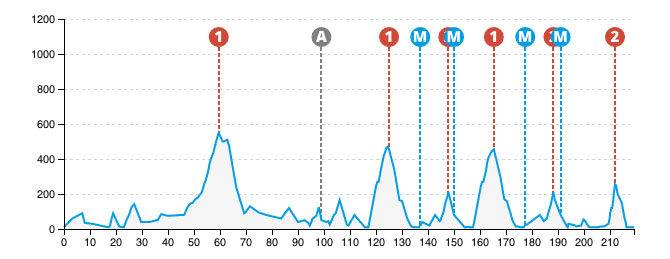
    San Sebastian Profile

    The harder climbs of the San Sebastian are categorized, and there are six such challenges on the route of the 2014 edition, with most coming after 100 kilometers of racing (though the Category 1 Iturburu climb, crested around kilometer 60, is no slouch). A bit before the peloton reaches kilometer 120, the road kicks upward for the next major test, the climb that has become a staple of this race: the Jaizkibel. It’s another Category 1 ascent, roughly 8 kilometers in length at an average gradient well over 5%. After a testy descent, it’s not long before the riders reach the Cat. 2 Arkale, a short but steep climb and the third categorized test of the day. From the top of the Arkale, the pack will make a downhill trip right back to the foot of the Jaizkibel, where they’ll take on both the Jaizkibel and then the Arkale for a second time. This repeat journey is followed by the final run-in to finish line, with one final challenge in the way: the most significant alteration made to this route, the Bordako Tontorra climb to Igeldo, a short but steep Cat. 2 crested just over 7 kilometers from the finish. It’s less than 3 kilometers long but with an average gradient nearing 10% and sections in the 20% range, it’s a serious challenge that will be provide the punchy climbers with an excellent launching pad, especially given the high-speed descent that follows, leaving little room for much regrouping before the finish line at 219.2 kilometers is reached.

    A long route, plenty of hills, occasional road furniture, and the ever-present threat of bad weather that exists in this area make the Clasica de San Sebastian truly worthy of its “Classic” title. This will be a hard-fought battle, where attrition will take its toll as aggressive all-rounder types take every opportunity to push the pace on the climbs.

    The Contenders

    The parcours opens a variety of possible scenarios, making it very hard to predict how things will play out: this race could be decided with a long-range attack, it could come down to a rider or a small group of riders escaping in the tough final kilometers (I see this as the most likely outcome), or it could even come down to a sprint among a reduced field. All things considered, this a hilly classic that tends to favor riders who specialize in riding hilly classics. Grit to handle the length of the journey and the possible bad conditions, punchy climbing legs for the obvious uphill challenges on the profile, and soloing ability to make or bridge over to attacks are prerequisites for success here, with a fast finish another useful tool to have should a small group arrive at the line together. A startlist filled with climbing powerhouses, Ardennes Classics protagonists, and versatile fast men reflects the importance of all these traits.

    Movistar’s Alejandro Valverde is a dangerous rider in hilly one-day races which is probably why he has had so much success here in the past—he won in 2008, and was runner-up in last year’s edition. The late climb added to this year’s parcours suits him perfectly, and will make his ability to charge uphill even more valuable. While he is coming off of a relatively disappointing Tour de France campaign, unable to manage a podium result despite the absence of Chris Froome and Alberto Contador, there is still plenty to be said for being on good enough form to be 4th in the Tour de France, and this race fits his talents quite well, making him a top favorite for the win. Movistar has several other strong riders on this startlist too, with climbing specialist Igor Anton, fast-finishing JJ Rojas, and well-rounded Giovanni Visconti all potential protagonists themselves.

    Cannondale’s Peter Sagan may inspire Movistar to repeat their strategy of 2013 (setting a vicious pace over the climbs to wear down the less climbing-oriented fast finishers in the bunch). There are a few versatile sprinter-types in this race, but none will inspire as much fear as the Tour’s green jersey winner, who can handle some tough climbs and who isn’t afraid to launch an attack if he sees an opportunity. The 2014 San Sebastian profile will really put his uphill ability to the test, however; the addition of a Cat. 2 in the final 10 km makes an already difficult-to-control race even harder to control, reducing the likelihood of a sprint finale. If Sagan is forced to hang on for the last ascent alone with a select few climbing specialists, he may struggle. If he is near the front of the lead group on the slope of the final climb, he has a great shot at winning. Sagan presents every other fast finisher hoping for a sprint with a major conundrum: if any quick man in San Sebastian can make it to the line, Sagan probably can, too, and he’s a hard rider to beat. Any team with sprinting aspirations will hope to isolate him while putting their own man in the best possible position as the day nears its conclusion. Meanwhile, Alessandro De Marchi is a very strong climber who could act as an alternative should Sagan falter.

    Tony Gallopin came into last year’s race somewhat under the radar, a 25-year-old who, though talented, had not not landed too many big results in his career up to that point. As the returning champion and a recent Tour stage winner and yellow jersey wearer, Gallopin won’t have that luxury any more, but he’ll still be a strong option. He has been delivering nice results all year, growing as a climber and as a consistent threat in the tough one-day races. He can sprint if need be, but he’s more than capable of escaping from a pack if he feels the need to distance faster finishers. Ardennes specialist Jelle Vanendert makes for a terrific teammate who can put pressure on Lotto’s rivals on the steep stuff, while Tim Wellens is having an excellent year and should thrive on this profile. He came close to a stage win in the Tour de Wallonie, putting in a late attack on the final day that was only swallowed up in the final few kilometers, and that aggressive style will serve his squad well here. Lotto is well-staffed to defend their title in this race.

    As is usually the case in a race with a hilly profile, Orica-GreenEdge should be in the mix with quite a collection of potential protagonists, with Simon Gerrans as a strong team leader capable of winning in a variety of scenarios. The final climb is very steep, but Gerrans has put in some great performance on high gradients so far this year, and if he can follow the inevitable attacks in the last few kilometers, he’ll be difficult to beat at the line. Michael Albasini will play the role of dangerous second. Simon and Adam Yates and Jens Keukeleire are other alternatives who can handle climbs and a long day of racing.

    BMC has a lot of firepower for the Clasica de San Sebastian. Philippe Gilbert won here in 2011, and assuming he has recovered from a recent bout of illness, he’s on good form right now and will love this profile, especially given the new climb added at the tail end of the day. Few can launch an uphill attack with the potency of Philippe Gilbert, and should anyone stick with the former World Champ if he does make a move late, he has a nice sprint, to boot. Greg Van Avermaet is another well-rounded option who is likely to try for a long-distance strike, while Tejay van Garderen offers impressive climbing chops should any of the real mountain specialists try to turn this into a battle of true climbers. Silvan Dillier is yet another versatile talent for the team.

    OPQS is also a team with plenty of firepower (this almost goes without saying, given the amount of talent this team has for one-day races). Zdenek Stybar has not racked up too many major results lately outside of his national championships, but he has the skillset to be in the mix in a classics-style race. Jan Bakelants is another option. The very capable Gianni Meersman will hope to hang on for a sprint. It won’t be easy, but he packs one of the most impressive sprinting and climbing combos in the sport, and, like Peter Sagan, he’ll have a better chance than most fast men of surviving all the way to the line. Even young Julian Alaphilippe, an up-and-comer with a well-rounded skillset, could be in the mix.

    Garmin-Sharp’s Ramunas Navardauskas is fresh off a Tour de France stage win in which he put his aggressive stlye on display, but he’s also got a very fast finish in case he reaches the line with company. The climbs in this race will put him to the limit, though, especially that last one. If he can’t hold on, Garmin has other impressive options in Daniel Martin and Tom-Jelte Slagter, who will look to break the race open on the steep stuff. Martin appears to be recovered from his Giro crash, and this is an excellent profile for him. If he’s back on form, he will be a strong contender for victory here. Slagter has cooled somewhat since his hot start to the year but the parcours suits his well-rounded skillset very well, and if he can find some form by the start time, he’ll be a dangerous rider.

    Daniel Moreno and Joaquim Rodriguez always make for a potent dynamic duo when short, steep ascents are on the menu. Moreno has not raced for weeks, while Rodriguez did not look to be back at his best yet during the Tour, making both of them question marks, but on-form, they both have what it take to put up a serious fight for the win, with Alexandr Kolobnev and Yuri Trofimov candidates mix it up as well.

    Several teams look to be going all-in for strong GC-style climbers, hoping for a selective race with all of the uphill challenges. In Romain Bardet, AG2R has a dangerous option should the tough climbs wear down the weaker climbers. Bardet may not be well-known for his one-day racing prowess, but was an impressive 10th in Liege-Bastogne-Liege this year. He will be a top option if the puncheurs and sprinters start to lose ground, but he’ll need this to be a particularly difficult race if he wants any shot at victory. He’ll have help making the climbs as difficult as possible from a few other squads. Belkin brings Bauke Mollema and Laurens Ten Dam. Ten Dam seems to be equal or maybe even better form right now, but Mollema has the fast finish and explosive uphill charging ability to make him a strong contender on this parcours. This is also a nice profile for Nick van der Lijke, though he’ll be recovering from a crash sustained in the final stage of the Tour de Wallonie. Tinkoff-Saxo is another team built around strong GC-style climbing talent in Nicolas Roche and Michael Rogers. Roche was 5th here last year. Trek is also heavily climber-oriented, with Haimar Zubeldia (on great form right now) and Frank Schleck in attendance. Sky’s Mikel Nieve was an impressive 4th in this race in 2013 and David Lopez is a strong alternative; both could thrive if enough teams organize an effort to make this a hard race.

    Astana sends a number of riders fresh from lieutenancy roles at the Tour, including Lieuwe Westra and Tanel Kangert, as well as strong climber Mikel Landa (6th last year) and hilly classics specialist Maxim Iglinskiy. Giant-Shimano has a well-rounded talent for this race in Simon Geschke, who may not have the palmares of Philippe Gilbert or Alejandro Valverde, but who could be a strong outsider with this parcours. Lawson Craddock and Chad Haga are options to try to go from afar. Europcar has Pierre Rolland, Cyril Gautier, and Thomas Voeckler to liven up the race on the ascents, while FDJ also has options in Arthur Vichot, Arnold Jeannesson, Anthony Roux, and Kenny Elissonde.

    VeloHuman Top 10 Favorites

    Winner: Alejandro Valverde
    Podium: Philippe Gilbert, Simon Gerrans
    Other Top Contenders: Romain Bardet, Daniel Martin, Peter Sagan, Daniel Moreno, Joaquim Rodriguez, Tony Gallopin, Bauke Mollema

    As usual, I’ll be tweeting plenty of live analysis during the race, so follow @VeloHuman on Twitter for more! Also, be sure to check back Saturday for the preview of the Tour de Pologne.

    -Dane Cash

    Photo by Luken.
  • Clásica de San Sebastián 2013 Pre-race Outlook

    Sebastian

    Back into the Saddle

    The Clásica de San Sebastián showcases a number of serious climbing specialists and puncheurs, many of whom are getting right back into the saddle after a grueling Tour de France and still looking for chances to shine. The profile is dotted with classic Basque Country climbs. Scaling the Category 1 Jaizkibel twice, the second time about 40 kilometers from the finish line, should force some selection. A Cat 2 with less than 20km to go could provide a springboard for attacks, but it is the unclassified bump in the road just a few kilometers from the end of the race that has played launchpad for many of the races recent winners, including Philippe Gilbert and Luis Leon Sanchez.

    Luis Leon Sanchez will be absent from the startlist in 2013. Gilbert is here again this year, but picking him to win anything seems to be a losing game recently. Instead, it looks like this edition will be be a battle royale between some of the biggest names of the recent Tour de France. Of those big names, few riders probably want to make a statement win more than Movistar’s Alejandro Valverde, and the San Sebastian parcours suits his combination of sprinting and climbing. He’ll need to be aggressive (recent winners of this race have been) but he should be capable of both keeping up with last-ditch strikes and outsprinting a select group to the line, and after his terrible luck in the Tour, I don’t think he’ll want for aggression. Omega Pharma-Quick Step sends two potential contenders from Paris to the startling line in Sylvain Chavanel and Michal Kwiatkowski. Chavanel was constantly at the head of the pack in the Tour, but never made much of a mark; doubtless he’ll try something here, but I don’t see him having success against this field on this succession of ascents. The very young Kwiatkowski might be my favorite to win were he not coming off his first Tour effort. Still, he climbed well even into the Alps, and he has had a few days to recover: if Kwiatkowski can hang with the lead group, he can sprint with the best of them, and he can sustain a long distance strike, too. Simon Gerrans is another rider with a strong post-climb sprint, but with Orica GreenEdge’s stable of rouleurs and sprinters-who-can-climb, it is difficult to pick any one to shine ahead of the others. If the team helps him make it to the line, he’s very dangerous in the closing kilometer. Moreno Moser, winner of last year’s Tour de Pologne, showed strong form on the Alpe d’Huez a few days ago. He battled Kwiatkowski fiercely in Poland last year, and I can see both young riders jockeying for position here if a select group finishes together. Roman Kreuziger, in the middle of a career year that includes a win at Amstel Gold, a podium in the Tour de Suisse and a top 10 finish in the Tour, leads a Saxo-Tinkoff team not dissimilar from the Tour squad: Roche and Rogers will be in attendance, too. If he can solo over the Cauberg, Kreuziger can hang on here, as well. Bauke Mollema apparently caught ill in the Tour’s mountain time trial in which he lost so much time. Recovered, he could certainly show up at San Sebastian. He was 5th here last year, his climbing has form has never been better, and lest anyone forget, he had the finishing kick to secure the points classification at the 2011 Vuelta. With no Joaquim Rodriguez, Alexandr Kolobnev looks like Katusha’s best chance here. He was second all the way back in 2008, and this year he’s coming off a strong Tour of Wallonie and will be fresher than many of his Tour-wearied opponents. Lastly, Gilbert’s teammate Greg Van Avermaet is coming off an extremely successful Tour de Wallonie, in which he won two stages, the points classification, and the overall race. He was third here in 2011: whether or not he finishes highly will depend on the pace up the final climbs (and, of course, whether he is targetting a victory Saturday in the first place). He won’t be able to hang with any of the pure climbers if they make any aggressive attacks late, but if things come back together, he could contend with the likes of Simon Gerrans for a sprint finish with a select group.

    VeloHuman Predictions

    Winner

    Alejandro Valverde

    Podium

    Roman Kreuziger, Michal Kwiatkowski

    Other Strong Contenders

    Simon Gerrans, Bauke Mollema, Greg van Avermaet, Alexandr Kolobnev, Moreno Moser

    -Dane Cash

    Photo by malomen.