Episode 36: E3 Harelbeke + Gent-Wevelgem 2016 Pre-race Show
The Recon Ride gets ready for a big weekend of Classics racing with a double-header preview of E3 Harelbeke and Gent-Wevelgem.
[powerpress]
Dane Cash and Cosmo Catalano talk route, favorites, and major storylines ahead of two WorldTour Classics: Friday’s E3 Harelbeke and Sunday’s Gent-Wevelgem.
The 107th edition of Milano-Sanremo gets underway Saturday. 291 kilometers of racing through north-western Italy, the event is a classic in every sense of the word, but unique among the classics in its appeal to sprinters and hardmen alike.
The Route
This year’s Milano-Sanremo route sticks to the recent formula: the first 235km feature only one climb, the Passo del Turchino, and then comes a succession of small ascents sure to launch attacks. The two key climbs are the Cipressa, 5.6km with a 4.1% gradient (summitted just over 21km from the finish) and the subsequent Poggio, a little under 4km at a little under 4% (summitted a little over 5km from the finish).
The race concludes on the iconic Via Roma, with a long finishing straight that usually treats fans to a high-speed showdown.
The Contenders
The Poggio and Cipressa spring attacks every year, but neither climb is hard enough to really favor the escapees. It’s certainly a possibility that someone aggressive can jump clear here, but the bunch kick specialists seem more likely to thrive—in particular, those bunch kick specialists with the endurance to ride for six hours while keeping a sprint in the tank.
2015 winner John Degenkolb fits that bill, but injury has forced him to miss out on the race; he won’t be defending his crown Saturday, leaving the title open for the taking.
2014 winner Alexander Kristoff will be in attendance. He narrowly missed out on the win last year when he opened his sprint far too early, but still managed to come in second. A proven performer at this distance who has looked sharped so far in 2016, Kristoff will have the eyes of the whole peloton on him when the riders roll into Sanremo.
Peter Sagan has come close here in years past and seems like a lock to do so again this year, but he might not have the top-end speed to compete on this parcours. Plus, the distance may get to him—he still has yet to take a victory in a Monument Classic. For Sagan, it will be important to drop or get clear of the likes of Alexander Kristoff.
Michael Matthews of Orica-GreenEdge found himself on the podium in 2015 and should have only gotten better since then. The 26-year-old has yet to take that big one-day win and he is probably just a tad behind Kristoff in the speed department, but he has looked very strong so far in 2016. Former winner Simon Gerrans should be a strong ally.
That trio looks to be a cut above the rest if this come downs to a sprint, but there are quite a few others who could be in the mix.
Fernando Gaviria is a hot name right now given his strong results so far this year and his great top-end speed, but it’s really, really hard to win Sanremo without having ever raced a big classic. If he’s not up for this, Etixx does have Tom Boonen on the squad. Nacer Bouhanni is another sprinter who can never been ignored, though this is a very difficult race that might be too much for the Frenchman who has never been a huge classics star.
Ben Swift, Elia Viviani, Arnaud Demare, Niccolo Bonifazio, and Giacomo Nizzolo are others who should be to hold their own in a sprint.
Fabian Cancellara will be among those hoping to deny the sprinters their shot at the win. He has won Milano-Sanremo in the past and proved his form in the Tirreno-Adriatico time trial. It won’t be easy for him to escape the bunch, but he’ll probably try.
Greg Van Avermaet is another rider who will probably need to break free from the peloton to make something happen here, but if his early season results are any indication, he has all the form in the world right now. He’s also got a lot of speed for a reduced sprint.
Edvald Boasson Hagen is yet another versatile guy who has looked strong this season, and he brings the complete package with his ability to both solo and sprint. Dimension Data teammate Mark Cavendish, a former winner here, has said that Boasson Hagen will be the one to watch.
Vincenzo Nibali will almost certainly make some kind of late attack in this race. His defending skills will give him an edge if he can escape the peloton on the Cipressa or the Poggio.
Tony Gallopin, Tim Wellens, Geraint Thomas, Zdenek Stybar, and Sep Vanmarcke are others who could try to take advantage of the late climbs to make something happen.
VeloHuman Top 10 Race Favorites
Winner: Alexander Kristoff Podium: Peter Sagan, Michael Matthews Other Top Contenders: Fabian Cancellara, Greg Van Avermaet, Vincenzo Nibali, Fernando Gaviria, Nacer Bouhanni, Edvald Boasson Hagen, Mark Cavendish
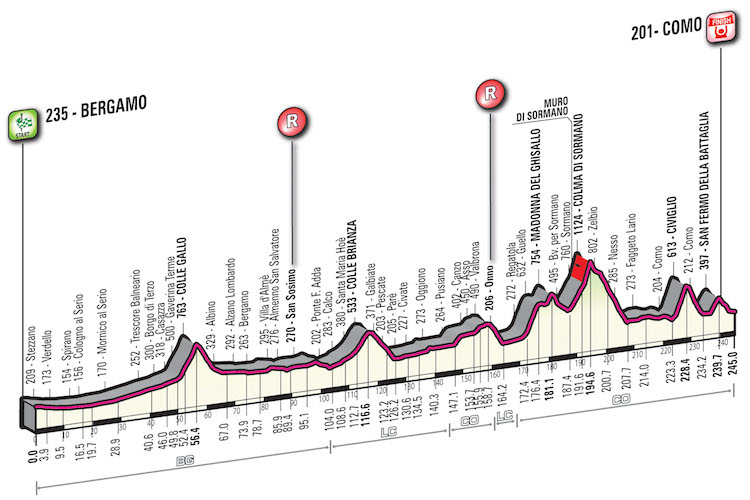
Il Lombardia, the final race of the 2015 WorldTour, kicks of Sunday in Bergamo, Italy. 245 kilometers of up and down in Italy’s Lombardy region, Il Lombardia (formerly known as the Giro di Lombardia) is the last of the five Monument Classics on the cycling calendar. The organizers have tinkered with the profile over the course of the last few years, but a unique Northern Italian character, incredible lakeside scenery, and thrilling finishes are constant features in Il Lombardia, making it a great event to close out the season in style.
Be sure to check out the latest Recon Ride powered by VeloNews, with special insight from cycling expert and Lombardy local Gregor Brown, for more on what makes Il Lombardia stand out as a legendary bike race.
The Route
Il Lombardia gets progressively harder as the day goes on. After leaving Bergamo, the peloton will enjoy nearly 50km of flat before the road angles upward for the Colle Gallo, 7.4km at 6%. After a descent it’s another mostly flat stretch for nearly 50km once again before the long, low-gradient Colle Brianza. Another downhill leads to another flat stretch before things get a bit lumpier in the run-up to a very difficult pairing of climbs: the Madonna del Ghisallo and the Colma di Sormano.
The challenging profile of Il Lombardia makes it an excellent opportunity for the climbing specialists to take a big one-day win.
Ghisallo is an irregular climb whose average gradient doesn’t really tell the whole story. All told it’s 8.6km at an average grade of 6.2%, but it’s really a three-part climb, starting out with about 3.5km at around 9%, flattening out (even running downhill for a bit) for 4km or so, and then kicking up again at nearly 10% for the rest of the way to the top. Unfortunately for the riders, there won’t be much of a chance to rest after the climb is crested—a fast descent leads into the foot of the brutal Colma di Sormano (with a particularly challenging stretch known as the Muro di Sormano).
The climb opens with a little over 5km at 6.6%. Then things suddenly get extremely difficult. The final 1.9km have an average gradient of 15.8%, with one stretch at over 25%, which will undoubtedly see many riders dropped off the back. At least the view is nice.
As hard as the Ghisallo-Sormano combo is, the race is far from over after the pack crests the latter, as there are still about 50 kilometers left to race. From the top of the Sormano it’s a tricky descent into a flat section of about 15km, where we can expect things to get very cagey as riders jockey for position for the finale.
With a little over 21km to go the riders will hit the foot of the Civiglio, 4.2km at a vicious 9.7%. It’s consistently steep the whole way up. Then comes a very steep descent that runs into the foot of the final climb of the race, the San Fermo della Battaglia, 2.7km at 7.2%. Expect plenty of action here if the race isn’t blown to pieces already. Once the riders go over the summit, it’s a little over 3km downhill and then just 1.5km of flat to the finish line in Como.
The Contenders
This year’s route strongly favors the explosive climbing stars. A fast finish will be useful in case a small group comes to the line together, but the finale will make it very hard for riders to sit in and hold out for a big sprint. The pack will be thinned out after so much climbing, and a pair of steep launching pads in the last 20km will provide the aggressive riders with plenty of space to go on the move. Some technical descents will further favor the attackers. Those descents could get even more technical with a chance of some rain on Sunday—rain is as much a classic feature of Il Lombardia as the scenery along Lake Como, and it figures to at least play a part this year.
Alejandro Valverde’s combination of elite climbing legs, strong descending skills, Classics grit, and an excellent sprint make him an obvious entrant in the favorites conversation. Although he’s never won the race, he has been the runner-up for two years in a row now. 5th in the World Championship Road Race, he’s still in-shape even at the end of a very long season, and this is a race he’s been trying to win for a little while now. Giovanni Visconti makes for an strong second. For me, the big question mark next to Valverde’s name is whether he will be aggressive enough to take the victory—I don’t think he can take his usual approach (staying in the wheels for a reduced sprint) into this race and expect to win, with a finale so well-tailored to a do-or-die attack.
One rider who probably won’t hesitate to launch an all-or-nothing strike is Vincenzo Nibali. It’s been a down year for Nibali, and he’s never managed to take the big one-day victory he has long sought (other than Plouay back in 2006), but he’s in great form right now and this course suits him perfectly. Nibali is not a good sprinter, meaning that he’ll need to drop everyone and win this thing solo, but the gradients on the final climbs and the tricky descents that follow should give him plenty of chances to do that. Fabio Aru, Diego Rosa, and Mikel Landa are other strong options for a stacked Astana squad.
Dan Martin won Il Lombardia in 2014, but he’s only just returned to racing after a shoulder injury knocked him out of the Vuelta, which could hurt his chances of repeating. Still, this course suits him as well as ever (of his six career participations, he’s finished in the Top 10 four times in this race) and an encouraging showing in Milano-Torino (he was 14th) suggests that he’s already back in shape to contend. Tom-Jelte Slagter is a great alternative for Cannondale-Garmin if Dan Martin isn’t at 100%.
Speaking of past winners, Joaquím Rodríguez won Il Lombardia in 2012 and 2013, but he’s a late scratch this year after hurting his knee in training. Daniel Moreno will attempt to take up the flag for Katusha, and he’s not a rider to be underestimated.
Philippe Gilbert is certainly not the rider he was back when he took the win here in 2010, but he’s looked pretty strong this year and appears to be in decent late-season form. The finale suits him well, if he can make it all the way over the tough climbs. Samuel Sánchez will be a fine second. Greg Van Avermaet was originally going to ride this race as well, but he withdrew from the startlist upon returning from Richmond a bit jet-lagged.
Rui Costa was 3rd in 2014 and I expect him to contend for the win this year. He tends to attract less attention than he maybe should given his excellent array of abilities, and I think that could come in particularly handy on this profile. I wouldn’t be surprised if the peloton let him jump clear on one of the final two climbs only to see him hold out all the way to the line. Diego Ulissi is a nice backup option for Lampre-Merida.
Tim Wellens has had his sights set on improving last season’s 4th place all year long. This profile will really put him to the test, but like Costa and Nibali, he’s not afraid to go all-in on an attack, and he often gets a bit more breathing room than maybe he should (as was the case when his two-man move in the GP Montréal managed to go the distance). Tony Gallopin will also be on the limit on this course but will be a huge threat if he holds out to the finish.
AG2R sends a powerhouse team to Il Lombardia, with Domenico Pozzovivo, Romain Bardet, and Alexis Vuillermoz all capable of being in the mix. The French outfit isn’t well-known for its one-day prowess but Pozzovivo and Bardet in particular have had a few nice showings in Liège-Bastogne-Liège and this route should be even better for them. On the other side of the French team coin is FDJ, a squad sending only one strong contender this race in Thibaut Pinot, a rider who doesn’t have anything to speak of in the realm one-day results—but who is in good shape right now.
Rafal Majka was 3rd here back in 2013 and looks to be strong right now. Michal Kwiatkowski is also showing great end-of-year form for Etixx-QuickStep, and he hasn’t done much historically in this race, the profile should suit him. Orica-GreenEdge sends a team full of options: Adam and Simon Yates, Esteban Chaves, Simon Gerrans, and Michael Albasini will all have a chance here. Expect OGE to try to stick a rider in every legitimate move. Trek has Bauke Mollema, Julián Arredondo, and Fränk Schleck. LottoNL-Jumbo’s Robert Gesink and Wilco Kelderman are worth watching. Former three-time winner Damiano Cunego, Sergio Henao, Wout Poels, Davide Rebellin, Rodolfo Torres, Warren Barguil, and Tom Dumoulin are other riders who could be in the mix.
VeloHuman Top 10 Race Favorites
Winner: Vincenzo Nibali Podium: Alejandro Valverde, Rui Costa Other Top Contenders: Dan Martin, Tim Wellens, Rafal Majka, Philippe Gilbert, Domenico Pozzovivo, Thibaut Pinot, Daniel Moreno
As the last WorldTour race of the season, Il Lombardia is also the last event that VeloHuman will preview in 2015. I hope you’ve enjoyed the year as much as I have! Follow @VeloHuman on Twitter to stay up-to-date with the cycling world through the cold, dark offseason. The Tour Down Under will be here before you know it!
Most of cycling’s biggest Grand Tour stars are in Spain for the Vuelta right now, but the cream of the sprinting crop will be in Germany on Sunday instead to take on the Vattenfall Cyclassics. The event, which almost always comes down to a bunch sprint in Hamburg, offers the fast finishers a rare opportunity to take a one-day win at the WorldTour level, though a bit of grit will come in handy at the end of a long day: hardman Alexander Kristoff won the race in 2014 with Giacomo Nizzolo and Simon Gerrans behind him, all three of them besting even Marcel Kittel and Mark Cavendish in the finishing sprint.
The Route
The race starts in Kiel, Germany and heads southward to Hamburg, where the route twists and turns through the city and its suburbs en route to the finish line after 221.3 kilometers. The terrain is not particularly challenging throughout, but it does include one moderately difficult climb taken a total of three times. The Waseberg, about 800 meters long with an average gradient of about 15%, usually inspires attacks and puts a few riders into difficulty, especially during the third and final ascent of the climb with about 15km to go, but in the past the race has usually come back together before the line for a (sometimes messy) sprint on a flat straightaway.
The Contenders
It’s hard to see this race coming down to anything other than a bunch kick, but at the end of 221 kilometers of racing and a probably-hectic chase to close down any late attackers, the likely sprint for Vattenfall Cyclassics glory will be a lot more than just a test of pure top-end spend. A sprint may be all but guaranteed, but predicting the winner won’t be easy.
Cycling’s “big three” sprinting stars are all making the start. Mark Cavendish, Marcel Kittel, and André Greipel are in a class of their own in the pure speed department, and all three will have a chance in this race.
Greipel comes into Hamburg on the heels an excellent Tour de France, and despite his stellar July, motivation should still be high: this is Germany’s only WorldTour race, and Greipel has been on the podium a three times in the last five years without winning. At this stage in his career, he has developed the strength to handle some climbs and some distance (as evidenced by his strong work in the Classics this year), and should come into the likely sprint finish in good shape. The big question will be the potentially hectic finale. Greipel has historically struggled in challenging position battles. If he is not afraid to take a few risks, Greipel might finally nab the Vattenfall Cyclassics win he’s been looking for for years.
Marcel Kittel at peak form is probably the fastest sprinter in the world, but Kittel has not been on the level this year. This race is also considerably more difficult than he’d prefer—of the aforementioned trio of speedsters, Kittel is probably the least versatile, and could come to the finish gassed if he gets there at all. He was in the mix in the 2014 edition of the race, but could only manage a 6th-place finish. Still, he’s hungry to pick up as many results as possible after a disappointing for half of the year, and this is a prime opportunity, so he can’t be counted out.
Mark Cavendish did not come away with as many stage wins from the Tour de France as he would have liked, but he’s still had plenty of success so far this season. He was 5th in Hamburg last year, and isn’t afraid of a hectic finale even if it isn’t his forte. He will be a top favorite for the win if he can stay well-placed coming into the finale, while Tom Boonen and Julian Alaphilippe make for impressive alternatives for EQS.
In a battle of pure speed, Alexander Kristoff is a step behind the aforementioned trio of Cav, Greipel, and Kittel, but he can’t be underestimated in his attempted title defense—the one-day races are Kristoff’s territory, and he’s a proven winner in the Vattenfall Cyclassics. He’s also carrying strong form right now en route to a bid for glory at Worlds. Kristoff can beat anyone under the right conditions. There should be plenty of action on the final ascent of the Waseberg, forcing some selection and making for a stressful finale, which will suit the stoic Kristoff well.
Giacomo Nizzolo has made the podium twice in the last three editions of the race, earning runner-up honors in 2014. Hamburg is a very important goal of his; his typical season routine starts with a buildup to a peak at the Giro, and then concludes with a second run at high-level success in the late-season circuit races. The motivation is there, and Nizzolo is particularly effective in hectic finishes. He’s also quite handy after a long day on the bike. In short, the conditions are perfect for Nizzolo to succeed. Converting that into an actual victory though won’t be easy, given the startlist and Nizzolo’s propensity to come up just a hair short in the big races. He’ll need everything to go right to turn a podium performance into a win.
Arnaud Démare has not had nearly the year FDJ was expecting of him, but he did win this race in 2012 and it does suit his strengths. He’s got a shot. MTN-Qhubeka has a pair of former winners on the roster in Tyler Farrar (two times the winner of this race) and Edvald Boasson Hagen. Gerald Ciolek makes the start as well. It’s tough to say who the team will back, but Boasson Hagen has been in great form of late and will have a chance if the day is particularly hectic. Greg Van Avermaet of BMC would love that scenario: if the race is hard enough to put some of the sprinters into difficulty, he’ll have a shot in a reduced bunch kick. So will teammate Philippe Gilbert, and fellow Belgian Classics star Sep Vanmarcke of LottoNL-Jumbo. Vanmarcke is building up to a strong late-season peak again after a disappointing spring.
Sam Bennett, JJ Lobato, Elia Viviani, Heinrich Haussler, Moreno Hofland, Andrea Guardini, Michael Albasini, and Niccolo Bonifazio are others with a shot at glory in Hamburg.
VeloHuman Top 10 Favorites
Winner: André Greipel Podium: Alexander Kristoff, Mark Cavendish Other Top Contenders: Giacomo Nizzolo, Marcel Kittel, Greg Van Avermaet, JJ Lobato, Sam Bennett, Edvald Boasson Hagen, Elia Viviani
Be sure to follow @VeloHuman on Twitter for more analysis, and don’t miss VeloHuman’s Vuelta a España stage previews—stage 2 of the Vuelta is running concurrently with the Vattenfall Cyclassics!
What better way to close out the Classics season than with the legendary Liège-Bastogne-Liège? The oldest Classic, Liège lives up to its status as a historic (said history covered in more detail in the most recent Recon Ride Podcast) springtime cycling icon with a challenging route that caters to aggressive types with strong climbing legs, and recent editions have offered no shortage of thrills. With most of the familiar veteran contenders and a host of young guns making start, the 2015 edition should not disappoint.
The Route
Liège-Bastogne-Liège is a long one at 253 kilometers, and the road from Liége to the finishing town of Ans is lined with difficult climbs (officially, there are ten). This is especially true in the final 90 kilometers of the race, where eight of the ten ascents big enough to warrant an icon on the official race profile await the peloton.
The last three in particular really put the hurt on, typically whittling down the peloton and launching attacks as well: the Côte de La Redoute (2 km at an average grade of 8.9%), the Côte de la Roche-aux-Faucons (1.5 km at an average grade of 9.4%), and the Côte de Saint-Nicolas (1.2 km at 8.6%). Saint-Nicolas, crested just 5 kilometers from the line, is a popular place to strike out for glory. The race finishes on a gradient as well, with a climb into Ans of more than a kilometer.
With the abundance of challenging climbs and a lot of kilometers between the start and the finish, Liège wears down the peloton, but also offers opportunities for those strong enough to get clear. Sometimes the race ends in a small sprint, but there are always attacks to be marshaled, and endurance and great climbing legs are critical here.
The Contenders
Last year’s winner Simon Gerrans looks to still be recovering from a crash, meaning that Orica-GreenEdge is probably riding for the likes of Michael Albasini. That might open up the contenders conversation a bit, but fresh off his third career Flèche Wallonne victory, two-time Liège winner Alejandro Valverde comes into the race as the hot favorite. His elite climbing legs and deadly finishing kick make him an obvious choice for this race, and the form he has shown recently confirm has status as the rider to beat this year.
Michal Kwiatkowski was 3rd last year and comes into this year’s edition with Amstel Gold Race-winning confidence. His already impressive sprint has clearly improved this year, and he’s a great solo artist. It won’t be easy to match the climbing legs of some of the star uphill chargers in this race, but if Kwiatkowski can survive some of the steeper sections of the road, he’ll be able to outsprint most of the contenders in the race or outpower them in a late break to the finish.
After his incredible Basque Country performance, Joaquim Rodríguez was a bit of a disappointment only coming in 4th at La Flèche Wallonne, but this is the grand prize and the one he’s been hunting for so long. The rare soloing form he showed in the País Vasco time trial could come in handy here, matched with his elite climbing ability. This is also a race where a strong team can make a big difference, and Katusha is among the strongest. Daniel Moreno and Giampaolo Caruso, both Top 10 finishers last year, are excellent cards to play for the Russian outfit.
Dan Martin won this race in 2013 and came close to winning in 2014 before a late crash ruined his shot at victory. He’s obviously a rider to watch, but he’ll be in unknown shape following a crash at La Fléche Wallonne. If he’s healthy, he’ll be in the mix to win. Tom-Jelte Slagter is a nice backup option in case he isn’t.
Philippe Gilbert is another former winner of the race in unknown health following a crash, though unlike Dan Martin, he’s not been as successful in recent years. He looked okay at the Amstel Gold Race but he was unable to stay clear at the top of the Cauberg. Health, form, and top-level ability at this point in his career are all question marks now.
Vincenzo Nibali and Jakob Fuglsang make a great 1-2 punch for Astana. Neither can win in a sprint, but both have great uphill ability and an aggressive streak. Watch for attacks from the light blue jerseys on a late climb like the Côte de la Roche-aux-Faucons. Also watch out for action from Lotto Soudal. Tim Wellens is hunting for glory in the Ardennes and his best shot at a top result is a long-range move. He’s not the best climber or the most powerful soloist on the startlist, but he seems to find an extra gear when he gets up the road on a Belgian climb. Jelle Vanendert and Tony Gallopin are excellent alternatives for the team. AG2R is another squad with multiple excellent options, among them, Romain Bardet and Domenico Pozzovivo, both Top 10 finishers last year.
Rui Costa, Sergio Henao, Roman Kreuziger, Bauke Mollema, Julián Arredondo, and Tom Dumoulin also have a chance at being in the mix in this race.
VeloHuman Top 10 Favorites
Winner: Alejandro Valverde Podium: Michal Kwiatkowski, Joaquim Rodríguez Other Top Contenders: Vincenzo Nibali, Tim Wellens, Dan Martin, Rui Costa, Domenico Pozzovivo, Tony Gallopin, Bauke Mollema
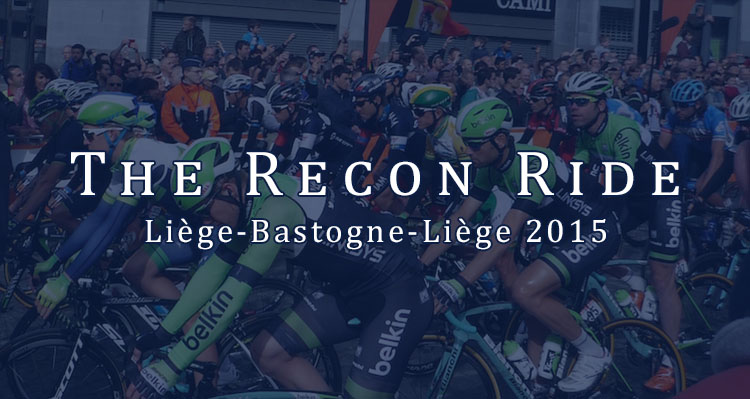
Episode 10: Liège-Bastogne-Liège 2015 Pre-race Show The Recon Ride talks Liège-Bastogne-Liège, the spring’s final big one-day race.
[powerpress]
The last of the Ardennes Classics has arrived! Dane Cash of VeloHuman and Cosmo Catalano of Cyclocosm cover the history, the parcours, and the potential scenarios for this weekend’s Liège-Bastogne-Liège.