The 2015 Tour de France may be over but the WorldTour rolls on. The Clásica de San Sebastián (or the Donostiako Klasikoa in Basque) is the next race on the docket. It’s a hilly event that has just the right profile to inspire plenty of attacks, in a region mad for cycling, and its position on the calendar makes it a tough race to predict—some of the stars of the Tour de France are in attendance hoping to get just a bit more out of their legs, while a few other big-name riders are returning to racing for the first time and hoping to get back up to speed quickly.
This strange dynamic is just one of the many topics discussed in the Recon Ride’s San Sebastián pre-race podcast, which you should check out for more analysis.
The Route
The San Sebastián organizers made a small but impactful change to the race route last season that led to an exciting finale, and the event returns to that successful parcours for 2015.
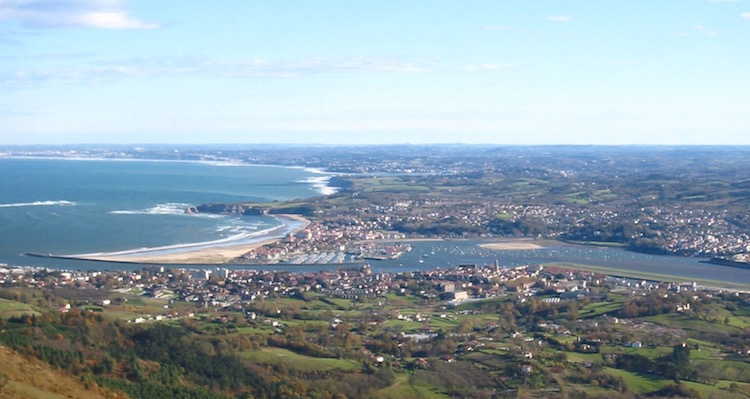
The race starts and finishes in the coastal town of San Sebastián, looping in and around the environs to make for a total race length of 219.2 kilometers.
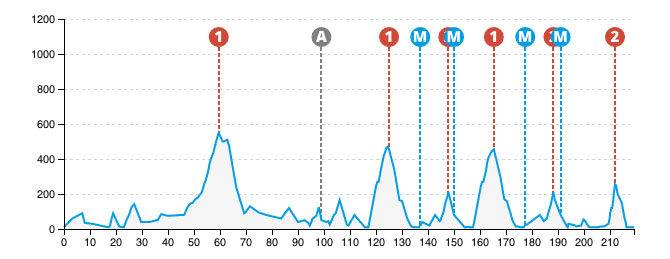
The harder climbs on San Sebastián profile are categorized as if this were a stage race, and there are six such challenges on the route. The Category 1 Iturburu climb, crested around kilometer 60, is no slouch, but it’s early enough to be more of a leg-softener than anything else.
Things get more consistently difficult after the midway point of the route with the first trip up the Jaizkibel, the marquee climb of the race. It’s another Cat. 1 ascent, roughly 8 kilometers in length with an average gradient over 5%. After a descent, it’s not long before the riders reach the Cat. 2 Arkale, a short but steep climb and the third categorized test of the day. From the top of the Arkale, the pack will make a downhill trip right back to the foot of the Jaizkibel, where they’ll take on both the Jaizkibel and then the Arkale a second time.
After the second descent from the Arkale comes the final run-in to town, but there’s a tough climb along the road to the finish. The Bordako Tontorra climb to Igeldo is a short but steep Cat. 2 crested just over 7 kilometers from the finish. It’s less than 3km in length but with an average gradient nearing 10% and sections in the 20% range, it’s a hard road to the top. After the climb comes a descent into a flat finish.
The Contenders
The profile favors strong climbers with a lot of punch. It’s probably possible to attack from the more pure-climber-friendly Jaizkibel or from the Arkale and hold out to the finish, but it’s more likely that the race comes down to the last bump in the road, which is more suited to the Ardennes-style riders than the big stage racing stars.
That late climb shook up the race last year, providing Alejandro Valverde with a launching pad to go on the attack for the win. Because the parcours is so up-and-down already, the peloton is pretty thinned out by the time it reaches the final 10km—even if attacks on the Jaizkibel and Arkale are reeled in, it’s still very hard to keep things altogether on the last climb. In case it’s a small group that reaches the finish, a strong flatland kick will be important to anyone hoping to win.
However things play out, Valverde is capable of winning this race in pretty much any scenario, which is probably why he is a two-time champion. Coming off of a Tour de France podium, and in the middle of an excellent season (in which he dominated the hilly spring classics), it’s hard not to see Valverde as the clear favorite. He’s among the best climbers on the starlist who can thrive on pretty much any gradient, and he’s got more punch than most of his rivals. Valverde could win this with another late attack, or he could follow the moves in the finale and hold out for a reduced sprint. Giovanni Visconti is a good alternative for Movistar.
As good a candidate as Valverde is to win this race, however, the Clásica is still a pretty wide open event. It’s always hard to say how riders’ legs will react coming into the race. Valverde went very deep fighting for a Tour de France podium spot.
Philippe Gilbert is another former winner who has been on terrific form of late. If the pace is really high over the finale climb, the Philippe Gilbert of 2015 may have just a bit of trouble holding on all the way up, but if the peloton plays the early slopes cautiously, Gilbert will be well-positioned to make a late attack or to look for a sprint win. BMC has some serious firepower behind Gilbert, though—Greg Van Avermaet was in the Top 10 last year and is in great form this year, and Samuel Sánchez has been in the Top 10 several times over his career.
Joaquim Rodríguez has never won the race but he’s come close several times, and it’s no surprise that he does well here given the punchy-climber-friendly profile. He’ll probably need to launch a late attack if he wants to win, since he’ll have trouble outsprinting some of the other top favorites at the flat finish, but the Igeldo climb is the perfect place to do that. His form was good enough for two stage wins at the Tour, but he didn’t look terrific in the final week; however, he landed on the podium in the 2014 edition of the Clásica despite a lackluster Tour, so I won’t read too much into his not-great few days in the Alps. Daniel Moreno makes for an excellent foil—he’s been a bit quiet this season, but Purito and Moreno always make for a strong 1-2 punch.
Bauke Mollema was 2nd in this race last year and has been in the Top 10 all three times he’s made the start. Mollema is known as a strong climber but he’s also handy in a sprint. If he can get into a small group at the end of the day he will have a great shot at winning. For whatever reason, his kick is a bit underrated, and that can only help him potentially pull one over the more obvious Ardennes veterans in the finale. Julian Arredondo and Bob Jungels are other great options for Trek.
Etixx-QuickStep is loaded with talent in the form of Julian Alaphilippe, Rigoberto Urán, and Zdenek Stybar. Alaphilippe is probably best-suited to the profile, but he’s not raced in a little while so the form is a question mark. Urán looked decent in the Tour, and packs a nice sprint—he’s a rider to watch. Stybar will be a good bet as well, coming off of strong Tour de France in which he took a stage victory. He climbs better every year and he was 10th here last year.
2013 winner Tony Gallopin is not racing, but Lotto Soudal has a few good options in his stead with Tim Wellens and Jelle Vanendert. Both seem like good candidates to try an attack from a little ways out;
Dan Martin is an obvious candidate for success on the San Sebastián profile but he was not at his best in the last week of the Tour and if he’s feeling a bit rusty, a 200+ kilometer bike race might be tough. Ryder Hesjedal could pick up the slack if Martin isn’t up for it. Roman Kreuziger will lead Tinkoff-Saxo after Alberto Contador decided to back out of the start citing a fever—Kreuziger has a good track record in San Sebastián and will be worth keeping an eye on. Astana’s Luis Leon Sanchez is a two-time winner of the race, but he might not even be the best rider on his team. Mikel Landa has had an excellent season thus far and has the explosive climbing legs to try a move on slopes. He was 6th in this race back in 2013 before he had really even come close to the level at which he’s been racing this year.
Both of the Yates twins have a shot—Adam was riding well in last year’s edition of the race before crashing out of the lead group in the final few kilometers, and Simon may be even better suited to the profile. AG2R’s Romain Bardet is in good shape and has quietly become a dangerous one-day racer. Teammate Alexis Vuillermoz could look to launch himself on one of the late climbs. Rui Costa was forced to abandon the Tour de France by a variety of ailments, but this is a great parcours for him if he’s back to 100%.
Jarlinson Pantano, Sylvain Chavanel, Wilco Kelderman, and Thibaut Pinot are others who will hope to be involved with the other race favorites.
Pello Bilbao of Caja Rural is VeloHuman’s Under-the-radar rider to watch at the Clásica de San Sebastián. Bilbao is a talented all-rounder with the climbing legs to be in the mix as a stage race contender, but who also packs a nice finishing kick. He’s having a great year so far, having won a mountain stage at the Tour of Turkey and the overall at the Tour de Beauce, among other results. Caja Rural in general is having a very nice season, with quite a collection of wins at Continental Tour races; watch out for a long-range dig from Amets Txurruka or David Arroyo as well, and keep an eye on versatile fast finisher Carlos Barbero.
VeloHuman Top 10 Favorites
Winner: Alejandro Valverde
Podium: Philippe Gilbert, Bauke Mollema
Other Top Contenders: Joaquim Rodríguez, Greg Van Avermaet, Zdenek Stybar, Julian Alaphilippe, Romain Bardet, Dan Martin, Mikel Landa
Listen to the Recon Ride’s Clásica de San Sebastián pre-race podcast for more analysis, and be sure to follow @VeloHuman on Twitter!
Photo by Oscar Anton (CC).