Paris-Roubaix kicks off Sunday in Compiègne (which is actually about an hour from Paris by car), and this year’s edition of the race should be as interesting as ever.
The Route
257.5 kilometers from start to finish, the Paris-Roubaix parcours is pancake-flat, with 27 officially rated cobbled sectors. Even the less difficult sections are perilous, but things really heat up after 160km at the Arenberg Trench, the first “five-star” sector in terms of difficulty, the tenth official section on the day. It’s a narrow, 2.4km stretch of “road” that runs through a dense forest. The surface is brutal, and even a specialist can have it all go wrong bouncing around on the cobbles. Unfortunately, things don’t get a whole lot easier after that.
After eight more difficult stretches of cobbles comes Mons-en-Pévele, 3km long, another particularly nastry stretch. The riders will have less than 50km to go when they arrive, so you can expect attacks to fly from the more aggressive types.
If the race isn’t broken up by then, it almost certainly will be by the time the riders are through with the Carrefour de l’Arbre, the last major obstacle on the profile before an easier final three cobbled sectors. The Carrefour is a make or break 2.1km section that is tough enough to blow any group to pieces.
15 kilometers later those who have survived the trek over some of the most uncomfortable roads in cycling will arrive at the Roubaix velodrome to finish the race. It’s often the sight of a small sprint, though solo wins and larger sprint are possibilities as well.
The Contenders
2015 champ John Degenkolb won’t be defending his title due to injuries suffered in a training crash, but the startlist is still full of classics firepower.
Fabian Cancellara is in the hunt for his fourth career Paris-Roubaix victory Sunday in his last ever appearance at the race. The form he showed last weekend at the Tour of Flanders makes that seem like a real possibility. Roubaix suits his huge engine perfectly. With a solid team around him, Cancellara can mark early attacks right up to the point where he launches his own. His biggest challenge will be shedding the many contenders who might be potentially speedier in a sprint finish.
Peter Sagan fits the bill. He’s got the “when will you win a Monument?” monkey off his back now, and he’s on blazing form. However, Paris-Roubaix doesn’t suit him nearly as well as De Ronde. One of the things that sets him apart as a rider is his ability to leave other one-day specialists behind on short climbs and then seal the deal with his masterful descending abilities. He won’t be able to put those skills on display here. It won’t be as easy for the punchy world champ to leave his rivals behind on this profile.
Sep Vanmarcke, on the other hand, will appreciate the flatter parcours, at least when it comes to facing off against Sagan. He has looked very strong the past few races and has improved dramatically as a sprinter since he took runner-up honors in Roubaix in 2013. That makes him dangerous.
Alexander Kristoff can go toe to toe against anyone on this startlist in a sprint. He looked sharp in Flanders, and although he’s never had as much success in Paris-Roubaix, he can’t be counted out. He’ll need everything to go his way in a race notorious for doling out punctures, mechanicals, and even fan collisions at the worst possible moments, but if he can hang with the lead group he’s a big threat in the velodrome.
Etixx-QuickStep’s Zdenek Stybar, Niki Terpstra, and Tom Boonen form a powerful lead trio that can boast several Roubaix wins and podium performances. Four-time winner Boonen has looked decent so far this year but Stybar and Terpstra are probably better bets. I particularly like Terpstra’s chances — I wouldn’t be surprised to see a small group enter the last 10km together and he has already shown that he has the power to make his rivals pay if they hesitate even for a moment when he launches a late solo move.
Lars Boom, Edvald Boasson Hagen, Jurgen Roelandts, Tiesj Benoot, Luke Rowe, Ian Stannard, Jens Keukeleire, and Daniel Oss are others to watch.
VeloHuman Top 10 Race Favorites
Winner: Fabian Cancellara Podium: Sep Vanmarcke, Peter Sagan Other Top Contenders: Zdenek Stybar, Niki Terpstra, Alexander Kristoff, Tom Boonen, Edvald Boasson Hagen, Lars Boom, Luke Rowe
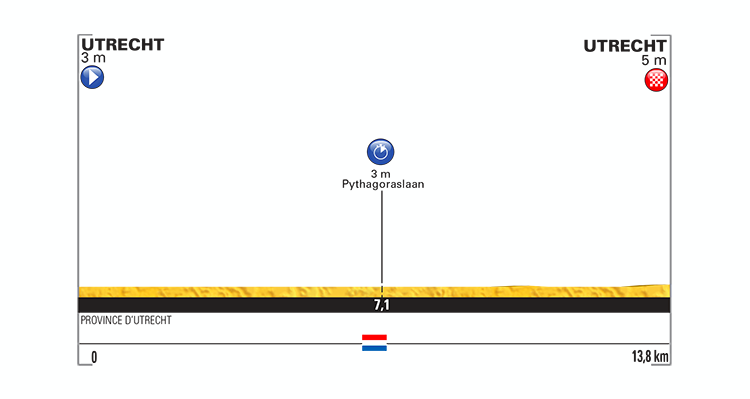
The Tour de France gets underway with a flat 13.8-kilometer time trial in Utrecht. It’s a little longer than a traditional prologue, but still short enough that those riders with a bit of pop could enjoy a chance to churn out a very high tempo for the duration of the trip along the course. There are no hills to speak of, though there are several corners that will require some deft bike handling.
Tony Martin is the best pure time trialing talent in the race, and an excellent bike handler. He’d probably prefer something a bit longer to put his big engine on display, but this is still a good course for him. It’s probably safe to assume that Martin has had his eye on the yellow jersey since the Stage 1 was announced, and when Martin focuses his full attention on a time trial, it’s almost impossible to beat him.
Tom Dumoulin will have a chance. His explosiveness should translate favorably on this shorter parcours, and he is, of course, riding in front of a home crowd. He’s had trouble beating Martin head-to-head in the past, but this is an ideal scenario for him to overcome those difficulties.
Fabian Cancellara also has a good shot here on Stage 1. The terrain suits him and he looked strong in the Tour de Suisse time trials. The veteran Classics star knows how to handle pressure and in the spotlight of the Tour’s busy first stage, he should shine.
The stage winner will very likely come from the aforementioned trio of favorites, but there are a few outsiders who could contend . Adriano Malori has been knocking at the door of the elite time trialing club for a little while now. Short courses tend to suit him. Watch out for the Italian Movistar rider. Michal Kwiatkowski, Geraint Thomas, Rohan Dennis, Alex Dowsett, Peter Sagan, and Greg Van Avermaet are others with a chance at Stage 1 success and the yellow jersey on offer as well.
VeloHuman Stage 1 Favorites
1. Tony Martin | 2. Tom Dumoulin | 3. Fabian Cancellara
Be sure to follow @VeloHuman on Twitter for more analysis and commentary during the race, and check back for the preview of the next stage after the conclusion of Stage 1. The VeloHuman overall Tour de France race preview is available here.
Episode 6: E3 Harelbeke + Gent-Wevelgem 2015 Pre-race Show The Recon Ride takes on both of the weekend’s WorldTour one-day events in a double pre-race show of E3 Harelbeke and Gent-Wevelgem.
[powerpress]
Sharing a weekend, many of the same riders, and similar Belgian terrain, E3 Harelbeke and Gent-Wevelgem make for a great pair of races. VeloHuman and Cyclocosm explore the routes, the startlists, and the narratives, with a bit of help from AG2R-La Mondiale’s Hugo Houle.
Milano-Sanremo, the first one-day race on the 2015 WorldTour and also the first “Monument Classic” of the season, has almost arrived! The grueling event, which will take riders from Italy’s Lombardy region to its Ligurian coast this Sunday, combines an overlong race distance with a few topographic features along the way, and often a sizeable dose of unpleasant weather. Even in a sport that prizes toughness, Milano-Sanremo demands grit and endurance on another level, which is why a big reason why its list of winners includes some of cycling most legendary hard men (one of the many topics discussed in the Recon Ride pre-race show, which you should also check out).
The Route
Though Milano-Sanremo has undergone a number of route changes in the past few years, the 293-kilometer route of the 2015 edition is similar to that of the 2014 edition (lacking a few of the climbs often planned for this race), with some alterations in the final kilometers. The peloton will set out from Milan and enjoy mostly flat roads for over a hundred kilometers. The pavement angles upward for the long, low-gradient climb of the Passo del Turchino a bit before the midway point, and that ascent is followed by a fast descent towards the coast.
293 kilometers in total, the Milano-Sanremo parcours becomes more and more difficult near the finish line.
From there, it’s still over a hundred kilometers along the Mediterranean in the direction of San Remo. Things stay flat for a while, but around kilometer 240, the peloton will start to hit a few small bumps, leading into a pair of more difficult late climbs likely to break up the peloton before the finish. First comes the Cipressa, 5.6 kilometers at a 4.1% average gradient. The riders will reach the top with a little over 20 km to go, take on a fast descent, and then speed over flat roads until they hit the foot of the Poggio climb. 3.7 kilometers at 3.7%, the Poggio does have a few steep sections (one stretch of 8%), and its otherwise unimposing gradient is of course made much more intimidating by the fact that the riders won’t reach the climb until they’ve already ridden 280 kilometers. The top of the Poggio is 5.5 kilometers from the finish, and followed by a fast descent that doesn’t even out until there are only 2.3 kilometers to go. From there, it’s a flat run towards the finishing straight on the Via Roma, a classic conclusion to Milano-Sanremo that has returned after many years of being left out of the route. With the reintroduction of the Via Roma, the finish line in this year’s race is almost a kilometer closer to the bottom of the Poggio than it was last year.
As of the day before the race, the weather forecast calls for some rain, though at the moment it seems the peloton may escape the torrential downpours common in the area this time of year.
The Contenders
Given the parcours, the likeliest outcome for Milano-Sanremo 2015 would appear to be a sprint showdown among the more versatile quick men of the peloton. The late climbs will give the opportunists a chance to try to get up the road and stay clear for the victory, and a few riders stand out as particularly likely protagonists in that scenario, but it won’t be easy to hold of the charging pack on these relatively low gradients. On the other hand, there are a few pure sprinters who might be favorites in any other high-speed finale but who might struggle here after such a long day.
Katusha’s Alexander Kristoff is the defending champion, the victor of the 2014 edition in a bunch sprint that saw him well ahead of several very speedy finishers. Kristoff’s ability to survive the grueling distance without losing too much of his kick was crucial to his win over the other sprinters last year, and it remains a strong reason to expect big things from him again this year. Kristoff also has the experienced Luca Paolini to help him navigate the day’s difficulties. He has been in excellent form all season, winning sprints in several stage races, and that only makes him appear a stronger candidate here. The one question mark for Kristoff is whether he’ll be close enough to the front of the race as the Via Roma approaches. The reduced distance between the bottom of the Poggio descent and the finish line will give Kristoff less time to regain ground if he loses position on the last climb. Kristoff is not a bad climber, for a sprinter, but there are other quick men who can go uphill more comfortably, and they look to be Kristoff’s biggest challengers should this come down to a sprint.
Tinkoff-Saxo’s Peter Sagan has been close to success in this race before, but he has come up short at the line. Gerald Ciolek (surprisingly) denied him of a victory in a reduced sprint in 2013, and although he came to the line with the main pack in 2014, he was a nonfactor in the sprint. The altered finish may benefit Sagan, whose climbing legs set him apart from the other quick men. More so than most, he is capable of launching a late attack on the Poggio, or at least holding the wheel of someone who does. If some of top sprinters in the peloton have faded by the time the finish nears, Sagan will be in a prime position to pick up his first Monument win.
Another sprinter with capable climbing legs making the start is Giant-Alpecin’s John Degenkolb. His 2014 MSR campaign was ruined by a late puncture, but soon after, he took 2nd in Paris-Roubaix, proving that distance is not a problem for him. He has continually improved in the top speed department over the last few years, and even against the biggest-name sprinters in the world he can hold his own; when a long day and a late climb enter the equation, Degenkolb becomes even more dangerous. He hasn’t quite had the results he would have hoped for coming into the race, racking up a number of 2nd-places to go with one win early in the season in Dubai, but if he is timing his peak right around now, Degenkolb will be a great candidate for victory.
Movistar’s Juan José Lobato sports an excellent combination of climbing legs and sprinting prowess, and he has used that skillset to pick up several wins already this season (denying Degenkolb on multiple occasions). He will hope to build on his 4th-place here last year, and with the form he has shown so far in 2015, that seems like a real possibility. Should Movistar feel that Lobato’s bid is in doubt near the end of the day, the team could try to send Alejandro Valverde up the road on one of the two late climbs.
Michael Matthews of Orica-GreenEdge has a similarly fine-tuned skillset combining climbing legs and a vicious finishing kick. His Paris-Nice victory suggests that the form is there as well. For Matthews, the main question mark is whether he can handle the distance. He doesn’t really have any results to speak of in overlong races. He could certainly change that at this year’s Milano-Sanremo, but it will be a foray into new territory.
Mark Cavendish headlines a collection of elite pure sprinters in attendance who will hope that their explosiveness is not too diminished by the time the peloton reaches the finish in San Remo. Cavendish has of course won this race in the past (in 2009) but it was a much younger Mark Cavendish taking the victory then. On last year’s parcours, similar to this year’s, Cavendish was with the main pack at the end of the day, but was unable to come away with more than a Top 5 after the long journey from Milan. With the Via Roma finish coming closer to the bottom of the Poggio, Cavendish will have to work even harder to maintain a strong position and his energy in the finale, making his candidacy as a top favorite questionable despite his legitimate claim to the title of fastest field sprinter on the startlist. Etixx-Quickstep does have alternatives on the roster in Michal Kwiatkowski and Zdenek Stybar, both on blazing form and capable of putting in a strong attack on a late climb in a one-day race.
Like Mark Cavendish, André Greipel is another powerful pure sprinter hoping to survive the long day with his strong kick intact. Coming off a sprint stage win at Paris-Nice, Greipel clearly has the sprinting form to contend in a bunch gallop, and in fact, he has made it a stated goal of this season to finally pick up a big one-day victory after years of near misses. If his pursuit of such a target has led him to improve his power and endurance, he will be a real contender here. Lotto-Soudal may look to Tony Gallopin as a second card to play near the finale.
The very long list of other quick men with a chance in a potential sprint, all of them with varying levels of versatility, includes Cofidis’s Nacer Bouhanni, the MTN-Qhubeka duo of Gerald Ciolek and Edvald Boasson Hagen, FDJ’s Arnaud Démare, Sky’s Ben Swift (3rd last year, though entering the race with uncertain form this year), Cannondale-Garmin’s Ramunas Navardauskas, IAM Cycling’s Heinrich Haussler, Lampre-Merida’s duo of Niccolo Bonifazio and Davide Cimolai, Astana’s Andrea Guardini, and Bora-Argon 18’s Sam Bennett.
Fabian Cancellara headlines the list of riders who could be looking to jump clear of the peloton in the final few kilometers. This parcours, without some of the uphill challenges of past editions, will make it very difficult for anyone to get away from the pack, but if anyone can do it, Fabian Cancellara is a prime pick. His time trial victory in Tirreno-Adriatico suggests that he is in formidable soloing shape at the moment, and he has done a great deal to work on his sprint this year should he come to the line with a small group. Cancellara was a surprising 2nd in last year’s bunch sprint, suggesting that he’s even a danger if he can’t shed the pack on the Poggio or the Cipressa. Having landed podium results each of the last four years, another strong placing seems practically guaranteed this year. Giacomo Nizzolo, fresh off a GP Nobili victory, offers Trek another option.
BMC’s duo of Philippe Gilbert and an on-form Greg Van Avermaet, Astana’s Vincenzo Nibali, Sky’s Geraint Thomas and Ian Stannard, IAM Cycling’s Sylvain Chavanel, and Lampre-Merida’s Pippo Pozzato and Rui Costa are other riders to keep an eye on when the attacks start to fly around the Cipressa and the Poggio.
VeloHuman Top 10 Favorites
Winner: Alexander Kristoff Podium: John Degenkolb, Peter Sagan Other Top Contenders: Fabian Cancellara, JJ Lobato, Michal Kwiatkowski, Greg Van Avermaet, Mark Cavendish, André Greipel, Michael Matthews
Be sure to follow @VeloHuman on Twitter for live commentary and analysis of the race, and don’t forget to listen to the Recon Ride pre-race show for plenty more on the year’s first Monument. Check back soon for previews and roadside coverage of the upcoming Volta a Catalunya!