Tag: Fabio Aru

  • Giro d’Italia 2015: Stage 5 Preview

    Giro d’Italia 2015: Stage 5 Preview

    Stage_5_Prof

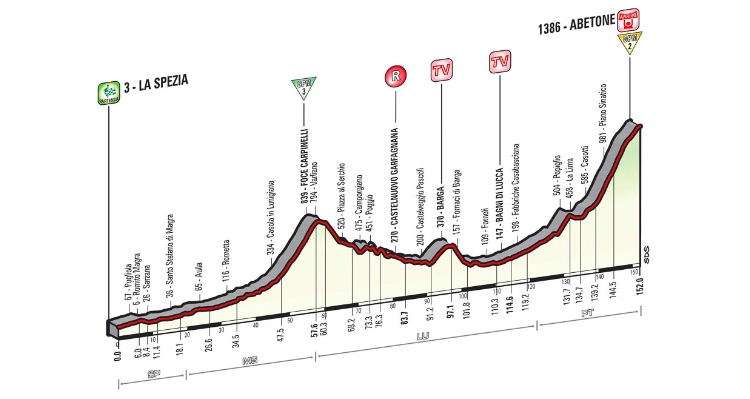
    Stage 5: La Spezia › Abetone – 152km

    An unpredictable Stage 4 (won by Davide Formolo) shook up the fight for the pink jersey in the Giro d’Italia perhaps earlier than expected. The GC riders will have to be alert for the Giro’s fifth day as well, however, because it concludes with a very long climb to a summit finish.

    The day opens with a long, low-gradient ascent into a Cat. 3 climb, followed by along descent, a short uncategorized climb, and then another long, low-gradient ascent into the finish climb to Abetone, 17.3 kilometers at a 5.4% average gradient.

    As with any climber-friendly stage, this day could go to a breakaway. This is especially true in the aftermath of a Stage 4 that saw so many would-be GC riders lose a lot of time—there are now many strong climbers who will not pose much of a GC threat. On the other hand, there are bonus seconds on offer and an opportunity for the pink jersey favorites to test each other here, and if a chase is organized properly, it should be possible for the peloton to reel in riders up the road on this parcours. It’s hard to predict how things will play out, though whether the race is won from the pack or a break, the favorites will be those riders with strong climbing skills and the punchiness to win a finishing sprint or launch a late attack on the long but not terribly steep final ascent.

    Fabio Aru is certainly a strong climber, and his Astana team proved to be in incredible shape on Stage 4, driving the pace in the peloton for the better part of the stage and closing down what had been a 10 minute gap to all of the breakaway riders up the road except for Formolo. That will be a big factor in Aru’s favor on this long slog of a climb, where Astana can put the pressure on Aru’s rivals, chase down other attacks, and prime the young Italian to launch an attack of his own at just the right moment. He’s quite adept at getting clear on a long climb like this one, as he showed in last year’s Giro and Vuelta alike, and he has to know that he’ll need every bit of time he can get before a long time trial that will suit his more time trial-oriented rivals.

    Speaking of which, Alberto Contador and Richie Porte will both be obvious candidates for success on this stage, though the extent to which they’re planning on being active this early in the race is unclear. Neither sports a particularly deadly finishing kick, so to win they’d both have to be aggressive—the low gradients could see a group arrive at the finish unless someone can get clear with a powerful attack. Rigoberto Urán does have a strong finishing kick. Before stage 4, Urán was my favorite for this stage—but the Colombian GC rider lost ground to his top GC rivals on that day, and that leaves his condition a bit uncertain. He’s also down two teammates. I still think he’s got a great chance here, but he comes into the stage with a few question marks. Damiano Caruso is another rider within a minute and a half of the GC lead who can finish fast. Esteban Chaves, sitting 2nd overall, is riding well right now and could be a danger too, as could Alberto Contador’s teammate Roman Kreuziger.

    Diego Ulissi is among the many punchy candidates for stage success who will have the luxury of being given a bit more room to get aggressive, given his non-threatening GC position. Even if he were a GC candidate, he’d be a terrific bet here, given his strong climbing legs and explosive power. From a long-range move or with the pack, he’s an excellent option on Stage 5. Carlos Betancur lost a lot of ground on Stage 4 but he doesn’t look totally out of shape either—at his best he’d be among the top favorites here, and perhaps with the freedom that will come with his nearly-14-minute GC deficit, he could challenge for the stage.

    Mikel Landa, Beñat Intxausti, Dario Cataldo, Stefano Pirazzi, Damiano Cunego, Giovanni Visconti, Ilnur Zakarin, Philippe Gilbert, and Tom-Jelte Slagter are on the long list of strong climbers who could be allowed up the road to go for the stage victory here. And don’t completely count out Trek’s Fabio Felline, who has put in some very strong uphill performances in the past, despite being quickly dropped on a difficult Stage 4.

    VeloHuman Stage 5 Favorites

    1. Fabio Aru | 2. Diego Ulissi | 3. Rigoberto Urán

    Be sure to follow @VeloHuman on Twitter for more race analysis, and remember to check back after the conclusion of Stage 5 for the preview of the next stage.

    -Dane Cash

  • Breakout Riders of 2014: A Look at the Rising Stars Who Made the Season’s Most Emphatic Statements

    Breakout Riders of 2014: A Look at the Rising Stars Who Made the Season’s Most Emphatic Statements

    Fabio Aru

    The cold-weather months may be light on road racing, but they do provide an excellent opportunity to take stock of the big performances of the past season with an eye for future potential. Looking at the big picture of races from January all the way up to October, we can get a pretty good idea of the riders that made the most emphatic arrivals this season, and also of those already-known up-and-comers who took clear steps forward into the spotlight with high-visibility results. This sort of prospective retrospective is always nice to have in the middle of the following season, as a barometer of which rising stars are on track in their progression, and which have fallen short of expectations.

    It’s hard to see anyone other than Fabio Aru as the year’s most emphatic arrival. He had been touted as Italian cycling’s next big thing for some time (in last season’s post-year retrospective, I named him as a likely break-out candidate), but he’d never even been on the podium in a WorldTour race before this year. Hard to believe, given that he’s now a three-time Grand Tour stage winner and two-time Grand Tour Top 5 finisher at age 24. A pure climber with an aggressive streak, Aru has the right combination of talent, racing acumen, and guile to pick up victories with bold long-range strikes on the sport’s most challenging slopes. The long, flat time trials are a major weakness in his game, but as chrono-light routes become more and more en vogue, Aru should continue to thrive in the Grand Tours. Interestingly, he doesn’t have much in the way of one-week stage race results to his name, but his skillset would seem well-suited to those too. In short, Aru should be primed for plenty more success as he continues to develop, and continue to develop he will: he doesn’t turn 25 until after the 2015 Giro. Teammate Vincenzo Nibali may have gotten the lion’s share of Astana publicity this season (and his Tour de France victory certainly represents a worthy career progression), but Aru really took a quantum leap forward in his two Grand Tour appearances.

    Where Aru made his arrival the in three-weekers, newly crowned World Champ Michal Kwiatkowski made his statements in the one-day and one-week races, racking up a slew of stellar performances in the early part of the season (winning in Strade Bianche and putting in big rides in Pais Vasco, the Ardennes, and the prologue of the Tour de Romandie, his first WorldTour victory) and then coming back with a vengeance in September, winning a stage in the Tour of Britain en route to 2nd overall and then, of course, taking the rainbow jersey in Ponferrada. It’s more of a giant step-up than an arrival, as Kwiatkowski did flash serious ability in 2013, but he turned Top 10s into podiums and victories this year. For all-around talent, Kwiatkowski rivals Alejandro Valverde in versatility. Pais Vasco was an early expression of that versatility for the young Pole: he was 2nd to Alberto Contador on the General Classification thanks to his climbing legs and his stellar ITT, but he also won the Points Jersey after being in the Top 3 in five of the six stages of the race. After narrowly missing out on the Top 10 in last year’s Tour de France, Kwiatkowski’s ride from Leeds to Paris this season was a bit of a disappointment, but it may be that Kwiatkowski just isn’t a Grand Tour GC contender at this point in his career, and with the way he has performed in the shorter races, that may be okay with him given his ability to contest all manner of one-day and one-week events.

    Giant-Shimano’s Tom Dumoulin was another 1990-born all-round talent to take several steps forward this season. Dumoulin, like Kwiatkowsi, showed promise with several big rides in 2013, but he took his game to a new level in 2014, racking up a few time trial victories in big races (including the Eneco Tour) and taking third in the ITT World Champs, and also delivering several strong road race performances. Wins eluded him, but he came very close in the Grand Prix Cycliste de Quebec, passed by Simon Gerrans just a few meters before the line. He also climbed well enough to hold onto 5th overall in the Tour de Suisse after getting into good position on GC early in that race with strong chrono rides. His time trial has been his biggest strength throughout his young career, but he made significant strides on the hills and at the finish line this season, and looks primed for big things on all sorts of profiles in 2015.

    Alexander Kristoff has enjoyed a textbook progression over the last few years, steadily earning more and more success as he has carved out a niche on the road; in last season’s post-year impressions piece, I said that he had “established himself as a serious contender for hardman sprinter’s races going forward.” He delivered on that promise this season, winning a Monument Classic and two Tour de France stages and picking up plenty of other big results on the way. John Degenkolb, another hardman sprinter (who should challenge Kristoff on the tougher profiles for years to come), took a major leap forward this season as well. The German announced himself with five Vuelta stage wins in 2012 and had a strong 2013, but his victory in Gent-Wevelgem this spring, along with a runner-up ride at Paris-Roubaix, another collection of stage wins at the Vuelta, and several other major successes cemented his position as an elite rider on the tougher sprinters’ days. The emergence of Kristoff and Degenkolb will be a major challenge for Peter Sagan to overcome in the sprinter-friendly classics moving forward.

    Stepping away from WorldTour teams, the Europe Tour provided a down-to-the-wire battle for overall supremacy between two of the year’s biggest arrivals: Topsport Vlaanderen’s Tom van Asbroeck and Bardiani – CSF’s Sonny Colbrelli. Both riders put in impressive performances at major WorldTour events early in the season (van Asbroeck in Gent-Wevelgem and Colbrelli in Milano-Sanremo), and top result after top result in the bigger Europe Tour races on the year.

    Colbrelli

    WorldTour-level action was limited for both of them, but the talent (and top-end speed) is there: Van Asbroeck has a bright future in the classics, especially those where fast finishes are likely, while Colbrelli looks well-suited for bumpier sprinter-friendly days. Van Asbroeck should have plenty of opportunities to go up against prime competition next year, having signed a two-year contract with Belkin, who will appreciate his addition to their classics squad with the departure of Lars Boom. Colbrelli will stay with Bardiani – CSF, but he should continue to have chances to shine in MSR and the Giro, among other races.

    23-year-old Tim Wellens has been with Lotto Belisol since 2012, but something clicked for him this season. The Giro offered the first hints of an impressive puncheur’s engine lurking under the hood; Wellens was active in long-range moves in Italy and came close to victory on multiple occasions, though a pair of 2nd places was all he had to show for his efforts. However, he didn’t have to wait too long to make good on that promise. Sitting 16th overall and 49 seconds down on GC, Tim Wellens struck out for glory from afar on Stage 6 of the Eneco Tour and held on for a decisive stage win and, ultimately, the time gap necessary to secure overall victory. He again put those punchy legs on display with a Top 10 in Plouay, and a 4th place finish in Il Lombardia among very impressive company. Lotto Belisol will be able to mount a potent two-pronged attack with Wellens and Jelle Vanendert in next year’s Ardennes and other hilly classics.

    Orica-GreenEdge was able to enjoy the highly visible arrivals of multiple squad members. The Australian outfit knew that they were getting a wealth of talent when they signed the Yates twins, and both showed ability this season, with Adam Yates in particular having a breakout year. The 22-year-old took a stage and the overall victory in the Tour of Turkey and kept the foot on the gas for his next several starts, landing 5th in the Tour of California and 6th in a hotly contested Criterium du Dauphine (ahead of Tour winner Vincenzo Nibali). He won Italy’s GP Industria & Artigianato and was in prime position in a leading group of five in the final kilometers of the Clasica de San Sebastian before a crash took him out of contention. With explosive climbing legs and a willingness to take chances, Yates had plenty of success in 2014 and looks ready for more in 2015. OGE saw yet another major breakout season with Johan Esteban Chaves, a pure climbing talent with an affinity for the tough mountains.

    Chaves

    Chaves had a promising 2012 but his 2013 was derailed by an early-season crash that left him with a number of serious injuries (including a fractured collarbone and cheekbone). He got back on track in style this year, climbing to stage wins in the Tour of California and 3rd overall in the Tour of Beijing. He likely still needs to get some mileage as a WorldTour pro before he can put in a challenge in the Grand Tours, but he’s ready to contend in the one-week races right now. Suddenly Orica-GreenEdge has multiple options in the mountains.

    French cycling enjoyed a renaissance year, and Romain Bardet‘s emergence as a top-level threat was a big part of that. After a strong 2013, his progression wasn’t necessarily unexpected, but a nation of cycling fans was pleased to see him deliver on his early promise. His impressive climbing legs took him to 6th overall in the Tour (he was a flat tire in the final ITT away from 5th), and he also displayed a surprising knack for one-day success, landing in the Top 10 in Liege-Bastogne-Liege and the GP Montreal. He has a surprising kick and should make waves in the shorter climber-friendly races as he continues to develop for the Grand Tours.

    Cannondale may be going through a merger/takeover, but the final year of the team as we know it saw a few impressive stage racing performances from rising stars. Neo-pro Davide Formolo, just 22, climbed to 4th in the Tour of Turkey and then a month later, against several top GC-style riders nearing their Tour de France peak form, he finished 7th overall in the Tour de Suisse. He strung together a nice collection of results in smaller one-day races as well. He should continue to develop with the new Garmin-Cannondale squad. Meanwhile, another Italian talent wearing Cannondale green took major strides forward in the Vuelta. Damiano Caruso had never been in the Top 10 in the General Classification of a WorldTour race until this season, but he picked up his first WT Top 10 in style at the Vuelta a España, where he consistently hung with the best climbers in the bunch most of the way up that race’s toughest mountains. BMC, running a bit low on GC guys as Cadel Evans retires and Samuel Sanchez nears the end of his career, will be glad to have the infusion of talent as he joins them for 2015.

    Speaking of BMC, Silvan Dillier put together a nice season, picking up results in a wide variety of races and contributing to his squad’s World Championship TTT ride as well. He thrives during hard days in the saddle and has a fast finish to boot. The same could be said (and more emphatically) of the skillset of Garmin-Sharp’s Ramunas Navardauskas. He picked up an impressive win with a late attack in the Tour de France, and he was 3rd in Quebec and 4th in Montreal. He’s always been an aggressive rider with a knack for getting clear on the harder profiles, but an improved finishing kick allowed him to contest a number of sprint finishes this year. He’s now won two Grand Tour stages, and at age 26, he’s just hitting his prime.

    Michael Valgren of Tinkoff-Saxo gets the final mention. The 22-year-old has been a high-profile prospect for some time after delivering several big results in U23 and national events, but this season he sailed to a convincing victory in the Post Danmark Rundt and put in several other strong rides in big races. He was a visible figure at the Worlds Road Race, taking several shots from afar. He has a wide array of talents and a lot of raw power in the tank, and at just 22, he should be on track to land plenty more big results in 2015.

    This is, of course, not an exhaustive list, but hopefully it makes for a useful catalog of the year’s biggest arrivals and most improved up-and-comers. For many of them, breakout success will lead to more focused scrutiny in 2015, which should offer plenty of interesting storylines for the upcoming season as these young rising talents try to cope with pressure to perform. To face that challenge, they will hope to get in as much recovery this offseason as possible, but January and the start of the WorldTour in Australia get closer every day.

    -Dane Cash

    Photos by Alberto Brevers and moz278.

  • Vuelta a España 2014: Stage 15 Preview

    Vuelta a España 2014: Stage 15 Preview

    Stage 15 Profile

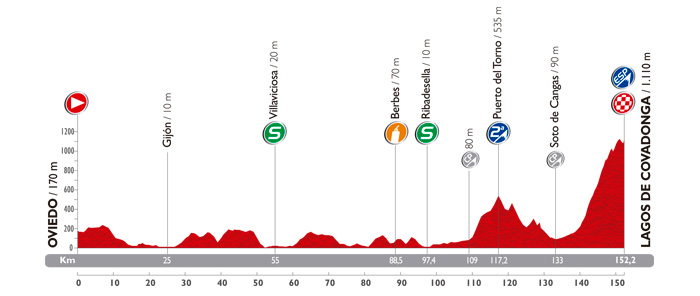
    Stage 15: Oviedo › Lagos de Covadonga – 152.2 km

    The Vuelta’s fifteenth stage is the second in a trio of intense mountain days (the first went to Ryder Hesjedal from the breakaway). Stage 15 is the shortest non-TT stage in the race at 152.2 kilometers, but the uphill challenges will make this a long day for everyone involved. Small, uncategorized hills are interspersed throughout the first 100 kilometers. Then comes the first categorized test of the day, the Puerto del Torno, a Cat. 2 of 7.2 kilometers at an 8.2% average gradient. The slopes are irregular, with several very steep sections on the way up; in other words, it’s harder than it looks. A tricky descent comes next, followed by a brief respite before the final climb: the iconic Lagos de Covadonga. 12.2 kilometers in length at an average grade of 7.2%, it’s another irregular ascent with several stretches (in the first half of the journey and then again at the very end) that push over 10%. It may rain, which would make this an even more difficult trip skyward.

    It’s tough to say one way or the other whether the pack will let the break stay clear here. Coming after one hard day and with yet another to follow, the GC riders could take the first half of the day at a less than furious pace, hoping to save a little energy for all the climbing yet to come. That would give the break a good chance on a profile that is already breakaway-friendly. However, both Chris Froome and Joaquim Rodriguez took a bit of time from Alberto Contador on Stage 14, suggesting that maybe he’s not as invincible as he has seemed so far in the race, and that may give Katusha and Sky the confidence and the motivation to put up more of a fight then they have so far and hunt down the valuable bonus seconds that await at the finish line.

    That uncertainty means that no single rider stands out as the indisputable favorite, but there are a few likely top protagonists for each scenario. Should this all come back together for a GC showdown for stage honors, I see Alberto Contador as the day’s most likely winner. He may have lost a bit of time on Stage 14, but he did spend more energy than he probably should have trying to chase down Alejandro Valverde. Ultimately, Valverde lost time, and Contador has to know that Rodriguez and Froome are the most dangerous rivals now. The Lagos de Covadonga climb suits Contador quite well, and he’ll want to do what he can here to close the door of opportunity that may have cracked open just a bit on Stage 14.

    Chris Froome‘s Vuelta a España has been enigmatic, to say the least. Who would have expected him to lose time to Alejandro Valverde in the time trial, only to outshine even Purito just days later on a climb with stretches of 20% gradients in the finale? This climb, less explosive except in the last hundred meters or so at the very top, should suit him a bit better, and if he can get away before the final two kilometers he’ll be hard to track down.

    Joaquim Rodriguez couldn’t escape from Chris Froome on Stage 14, but he did show strength in putting some daylight between himself and Contador. He’ll have another shot at stage honors on Stage 15, if the GC men are battling for the day and if he can hold on until the very steep final run to the line that will give him a chance to put his elite uphill kick on display.

    This is another good opportunity for Astana’s Fabio Aru to take a stage win. He crossed the line on Stage 14 just after Alberto Contador, and, still over two minutes down on GC, he will probably be given some breathing room if he tries to go on the move on Stage 15. Robert Gesink, Daniel Martin, Daniel Navarro, Daniel Moreno, and Mikel Nieve (if Team Sky is inclined to send him up the road) could face the same reaction if attempt to get clear of the GC bunch on the final slopes. Alejandro Valverde, on the other hand, still 2nd overall though losing ground to Froome and Rodriguez, will have plenty of eyes on him and a lot of pressure to bounce back here. That’s not out of the question, and this stage, which eases in the final few kilometers and then hits a steep wall at the very end, does suit him, but he’ll need to find an extra gear fast if he wants to keep his place on GC secure.

    No one potential breakaway protagonist could be called a top favorite for Stage 15, but there are several riders who will be well-positioned for glory if they can get out front of the peloton in a long-distance move. More than ten minutes behind on GC, Esteban Chaves is far enough off the radar of the top GC contenders that he should have some freedom to go up the road, and while he hasn’t yet put in a spectacular performance on one of the mountain stages in this Vuelta, he’s still been reasonably strong even when battling among the fringe GC contenders. Teammate Adam Yates might to try give this a go as well. Astana’s Mikel Landa, Trek’s Julian Arredondo, Lampre-Merida’s Damiano Cunego, OPQS’s Gianluca Brambilla, Belkin’s Laurens Ten Dam, MTN-Qhubeka’s Sergio Pardilla, and Cannondale’s Alessandro De Marchi are other top-notch climbers who could shine in a long-range attack. Ryder Hesjedal, Davide Arroyo, Romain Sicard, and Louis Meintjes will likely be feeling the effects of spending Stage 14 out front when they set out on Stage 15, but depending on each rider’s ability to recover quickly, any one of them could feature again soon

    VeloHuman Stage Favorites

    1. Alberto Contador | 2. Chris Froome | 3. Fabio Aru

    Be sure follow @VeloHuman on Twitter for live commentary of this and every stage of the 2014 Vuelta a España! The next preview will be up after the conclusion of Stage 15, so stay tuned.

    -Dane Cash

  • Vuelta a España 2014: Stage 14 Preview

    Vuelta a España 2014: Stage 14 Preview

    Stage 14 Profile

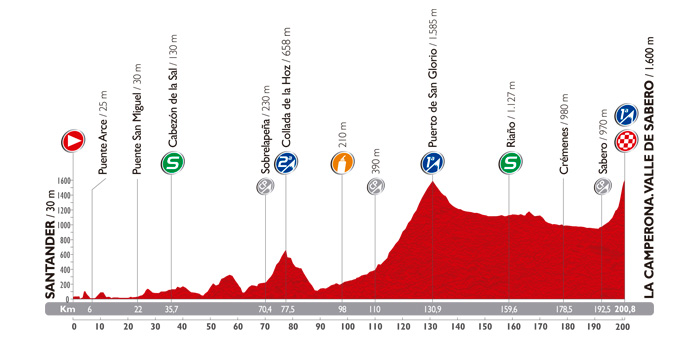
    Santander › La Camperona. Valle de Sabero – 200.8 km

    Stage 13, won by Dani Navarro, saw a skirmish among the GC riders in its final few kilometers, but the impending fourteenth stage of the Vuelta will likely be an intense battle among the top overall contenders of this race. The uphill challenges on Stage 14 are daunting. Things get started with 70 kilometers of mostly gentle roads before the Cat. 2 Collada de la Hoz kicks off the day’s categorized climbing. After cresting that ascent and then riding a tricky downhill, the peloton will take on approximately twenty kilometers of false flat at a slight incline before reaching the bottom of the Puerto de San Glorio, 20.9 kilometers long at a 5.8% average grade. There are sure to be some tired legs in the pack once they reach the top after over forty kilometers going uphill, but there will still be challenges yet to come on the day. Following a fast descent comes a long stretch of mostly flat roads before the final test. After 192.5 kilometers in the saddle, the peloton will reach the foot of La Camperona, a vicious 8.3 kilometer climb whose average gradient of 7.5% doesn’t really tell the whole story. Things start out relatively easy, but with around 2 kilometers to go, the road kicks up sharply, and it stays in the 15% range, touching well over 20% at points, until the final hundred meters or so, where things ease off to be only a little under 9% in the run to the line.

    A profile like this will be absolutely brutal for all but the most lightweight climbing specialists. The GC contenders will be locked in on the final ascent, knowing that a bad day could lead to serious losses on such a steep climb (especially after some hard uphill riding earlier in the day). Stage 14 is likely to end in a major showdown for the red jersey hunters. Whether or not they are riding for stage honors will depend on how they play the run-in to La Camperona; if the pace is kept high over the flat section that precedes the final climb, with riders jostling for position as the slopes approach, the morning break will be doomed. However, there are some tough mountain days to come in the days ahead, which could lead to enough hesitation in the pack that if a truly top-notch climber is up the road, he might have a chance.

    The top favorite to shine on this profile is Katusha’s Joaquim Rodriguez, the peloton’s premier uphill charger. He has put in attacks here and there in this race, but nothing has really stuck so far. This time, the parcours is perfect, and he needs to land a blow soon or he’ll have run out of opportunities to claw back time from those ahead of him on the leaderboard. He has the also explosive Daniel Moreno as an elite second.

    Race leader Alberto Contador has been up to every challenge thrown his way in this race so far, and he should continue to shine here. His biggest weakness is his lack of team support, but he may be strong enough for that not to matter. He’s not the type to rest on his laurels (or his current race lead), and if he sees an opportunity to pick up more time on his rivals, he will.

    Movistar’s Alejandro Valverde is very dangerous on the extreme gradients, and he’s within striking distance of the overall lead. A strong ride seems likely on Stage 14, but he needs to get more aggressive in this race if he wants to move up to that coveted first spot in the General Classification.

    Astana’s Fabio Aru took the eleventh stage of the race with a perfectly timed attack as the finish line approached, and he is still far enough back on GC that the riders at the very top of the leaderboard might give him some leeway if he tries to go on the move again. He has the skillset to achieve more success here. Garmin-Sharp’s Daniel Martin is in a similar boat, and he’s shown with repeated attempts to get away on the steep stuff that he’s highly motivated to get results on these climbs.

    Robert Gesink, who looked strong in an ultimately unsuccessful attempt to get clear of the GC bunch on Stage 11, Samuel Sanchez, Stage 13 winner Daniel Navarro, and Warren Barguil are other riders in the GC conversation who could enjoy a bit of freedom and potentially success if they attempt to get clear on the last climb. Chris Froome, who has at times looked very strong, and at times looked to be lacking something in this race, will be put to the test on this gradient; at his best he’d be a top candidate for success, but there won’t be anywhere to hide if he’s not feeling in peak condition when the road shoots skyward on Stage 14. Teammate Mikel Nieve could look to get something of his own if Sky decides to set him loose.

    If the pack does put in the effort to keep the breakaway on a tight leash early in the day, it will be very hard for anyone up the road to stay clear all the way to the top of the final climb, but should the GC contenders spend the stage looking at each other instead of worrying about the break, it’s possible that a strong uphill talent could hold out for victory here. Trek’s Julian Arredondo, Garmin-Sharp’s Ryder Hesjedal, Astana’s Mikel Landa, OGE’s Esteban Chaves and Adam Yates, Lampre’s Przemyslaw Niemiec, Cannondale’s Alessandro De Marchi, and Belkin’s Laurens Ten Dam are on the list of strong-climbing riders who might be able to succeed from the morning breakaway; alternatively, some of the aforementioned group could look to put in a dig a bit closer to the finish line, still benefitting from being far enough out of GC contention that they might be given some breathing room.

    VeloHuman Stage Favorites

    1. Joaquim Rodriguez | 2. Fabio Aru | 3. Alberto Contador

    Be sure follow @VeloHuman on Twitter for live commentary of this and every stage of the 2014 Vuelta a España! The next preview will be up after the conclusion of Stage 14, so stay tuned.

    -Dane Cash

  • Giro d’Italia 2014 Post-race Impressions: Rising Stars Put on a Show in Italy

    Giro d’Italia 2014 Post-race Impressions: Rising Stars Put on a Show in Italy

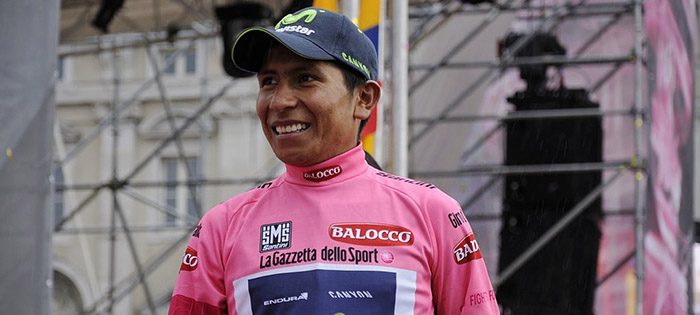
    Quintana in Pink

    Now that the dust has settled in the battle for the maglia rosa, it’s time to give some thought to what we learned from the 2014 Giro d’Italia. With several brilliant performances over the course of the three-week tour, the race offered a wealth of insight into which riders are on the rise at the sport’s top level. The dominant theme at this year’s Giro? A new generation of stars has definitely arrived.

    Promising Talents Confirmed, Part 1: GC Riders

    An amazing seven of the Top 10 riders in the General Classification are age 27 or younger. For every one of them, this Giro was a statement, a confirmation of the ability to take a step forward, whether from promising young all-rounder to Grand Tour Top 10 finisher, or from Grand Tour runner-up to Grand Tour winner. Many of the biggest names in the race are primed to light up the sport’s highest profile events for years to come.

    Nairo Quintana did not need to prove to anyone that he was one of the world’s best climbers, but his ability to handle full team leadership and the pressure of being a top favorite for a huge race was something of an unknown. In the 2014 Giro, Quintana was Movistar’s man from Day 1, and the Spanish superteam brought a squad completely dedicated to putting the young Colombian into the pink jersey. He delivered in convincing fashion, proving that a leadership role is something he can handle without any reservations. Famous for his poker face, Quintana did not let a number of early mishaps (a poor TTT performance, crashes, and illness) get to his head or his morale. He also showed improved ability in a non-mountain time trial, and dominant form in a mountainous one, building towards a more well-rounded game that will surely position him for more success moving forward.
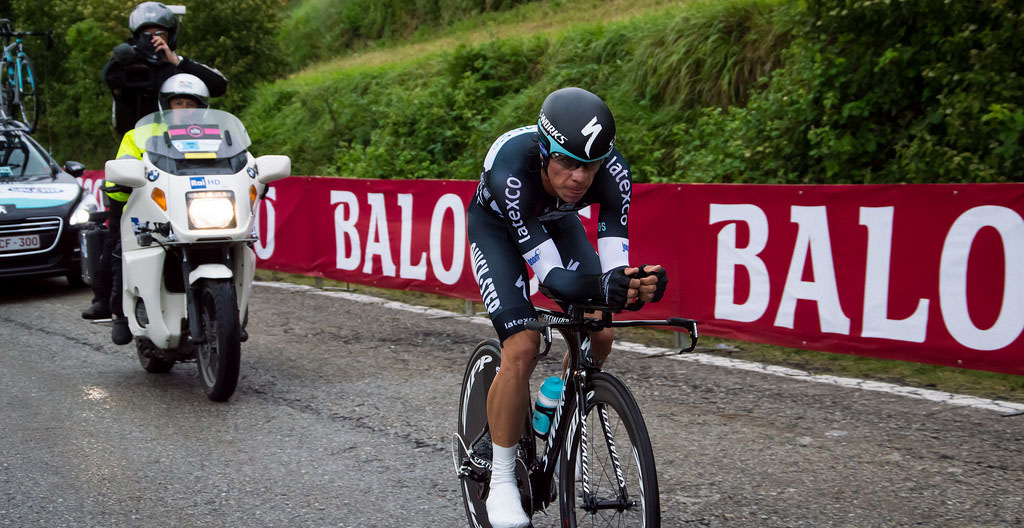
    Rigoberto ITT

    Rigoberto Uran may not have bettered his 2013 result, delivering a second runner-up performance in a row, but he did show a more complete skillset, including a vastly improved ability to ride against the clock. Long considered a pure climber with a decent punch, the 27-year-old blew the doors off a Stage 12 time trial that did not appear to be particularly climber-centric, and continued to show off stellar endurance with his 3rd place performance in the Stage 19 hill climb. His newfound prowess in the chrono may not have been enough to hold onto the pink jersey, but it bodes very well for his future, especially should he decide to shift his focus to the Tour de France, which typically places greater importance on the flat ITTs and the long climbs.

    Fabio Aru was undoubtedly the revelation of the race. Flashes of brilliance in his young career had already put him in the spotlight as Italian cycling’s next big thing, but few expected him to deliver in so dazzling a fashion so soon. A pure climber with an aggressive streak, Aru exploded up the Montecampione on Stage 15 to put himself into contention for the podium, and then grabbed hold of it with two hands in the hill climb TT. Despite a lack of experience consistently performing at this level, he did not appear to fatigue in the final week. Just as Michele Scarponi’s career is starting to enter its twilight years, Astana suddenly has a new Grand Tour contender on their hands in Aru, who will surely light up the Giro for years to come.

    Pierre Rolland bounced back from a very disappointing 2013 in a major way. After strong Tours de France in 2011 and 2012, he looked set for long-term success, but he failed to notch even a single WorldTour Top 10 in the year to follow. The 27-year-old was consistently climbing with the best in this Giro, suggesting that he is back on track for success moving forward. Rafal Majka did his 2013 performance one better with a 6th overall, despite suffering from stomach issues late in the race. He delivered a very impressive first time trial. With Alberto Contador seemingly locked in for the Tour de France for a while, Majka could shine as Tinkoff-Saxo’s Giro star for years to come.

    Wilco Kelderman may not have finished on the podium or won a high profile stage, but he was another major revelation of this race. He put in a handful of Top 10s in shorter stage races in 2013 but he was consistently climbing with the very best in this Giro, and while he did fade a bit towards the end of the race, he limited his losses and still landed 7th overall, ahead of Cadel Evans. He managed all this at just 23 years old, and, in my opinion, without particularly strong team support. He still needs to develop more, but if he can continue his progression he has a very high ceiling. As an added bonus, while it won’t help him much in the Grand Tours, he has shown a newfound ability to finish very fast, as well.

    Trek’s Robert Kiserlovski came into the race targeting a Top 10 and delivered on his goal, finishing exactly 10th. He never challenged for the overall victory, but on most of the decisive stages in the race he was able to hang with the top climbers most of the way up. His third WorldTour Top 10 this year, it’s a strong performance to continue a nice run for the Croatian, whose team is sorely in need of rising GC talent.

    Sky’s Sebastian Henao may have finished the race much further down the General Classification, but he showed serious promise in this Giro. On several mountain stages, he was able to hang with the leaders for most of the way up the climbs despite generally being alone among his team while Dario Cataldo and Phil Deignan were hunting breakaway victories. Then, in Stage 19 ITT up Monte Grappa, he notched an 8th place, ahead of Cadel Evans and Wilco Kelderman. He’s only 20 years old, and riding for a team famous for their ability to develop young talent: big things are coming from Sergio’s cousin, and they could be coming soon. Wouter Poels of OPQS was another strong performer whose final position in GC did not reflect his performance in the race. He was constantly at the side of team leader Rigoberto Uran even on the tough climbs, riding uphill so impressively that he managed to hang on in the GC Top 10 all the way up through Stage 15. He also landed 6th in the first ITT. It’s been an excellent year for the young Poels, who notched a stage win at Pais Vasco with a brilliant escape from GC rivals on a tough climb in Stage 4 of that race. Poels is establishing himself as yet another all-rounder talent for a team looking to expand on their already dominant position in the one day races and sprints.

    Promising Talents Confirmed, Part 2: Stagehunters

    Of the six stages that ended in a bunch sprint in the 2014 Giro d’Italia, six were won by riders aged 26 or younger, and it was only Marcel Kittel‘s birthday stage victory that keeps me from saying 25 or younger! The German dominated the first two bunch gallops of the race, delivering an astounding performance on Stage 3 (where he closed a ridiculous gap in the final hundred meters to pip Ben Swift to the line) that will be remembered for a long time. With the Tour on the horizon, the young Kittel has made a major statement that his rivals Mark Cavendish and Andre Greipel will surely have noticed.
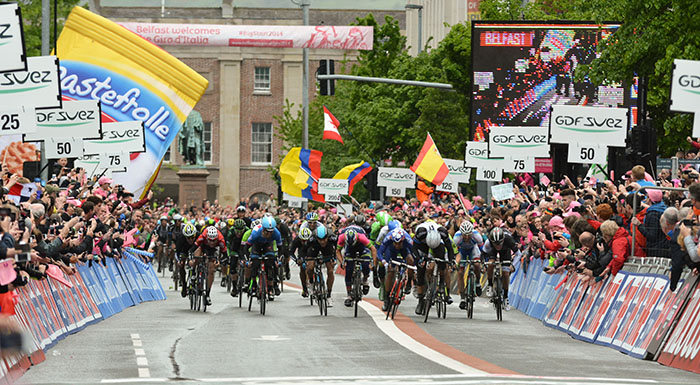
    Giro d'Italia Sprinters

    The departure of Marcel Kittel ostensibly left the sprints wide open for the remaining fast men, but 23-year-old Nacer Bouhanni quickly established himself as the one to beat. His scrappy, wheel-surfing style was perfect for the technical finishing circuits of the race, and he showed time and again an ability to put himself into the best position for the final gallop, and then time his jump just right. FDJ’s young sprinter is obviously very fast, but he also displayed the sort of sprinting savvy necessary to actually win races consistently, which has already set up a bit of a controversy within his team, where the presence of fellow young fast man Arnaud Demare leaves things a bit crowded at that position.

    Giacomo Nizzolo notched a heart-breaking four 2nd place finishes but he has much to be proud of, and more to be excited about. Nizzolo is a versatile rider who has shown serious potential in flatter one-day races: he has notched podium performances in the GP Ouest France and the Vattenfall Cyclassics. He’ll be disappointed to come away from this Giro without a win, but if he can maintain this level of top speed into the late summer races that favor someone with his array of skills, he can expect continued success there.

    Giant-Shimano’s 25-year-old Luka Mezgec picked up a stage win on the final day of the Giro to finish off an admirable job of filling in for Marcel Kittel. Mezgec has been on fire this year, dominating the sprints in the Volta a Catalunya, and he gives his team yet another option in the bunch finishes behind Kittel and John Degenkolb.

    Michael Matthews of Orica-GreenEdge showed in last year’s Vuelta a Espana that he deserves to be considered a top-shelf sprinter, but his Giro performance showed the terrific depth to his game. He was already known as a versatile fast finisher, the sort of rider who was particularly dangerous when hills reduced the bunch before a final gallop, but his week in the pink jersey displayed a whole new level of versatility. He capped it off with a stage win atop a Category 2 climb. He was forced to abandon midway through the race, but now looks set to head to the Tour de France, where he will hope to mount a challenge to the likes of Peter Sagan and John Degenkolb on the bumpier days.

    Elia Viviani got off to a fine start, with a trio of Top 5s in the first three sprint stages, but he was unable to come up with anything after that. Crashes did not help. As the bookies’ favorite to win the points jersey, Viviani was one of the surprise disappointments of the race, but weather-caused carnage may have played a role, and he’ll hope to prove that that was the case in his next few races.

    Stepping away from the bunch sprints, Lampre’s Diego Ulissi was an early star of the race, delivering a powerful uphill assault on his way to victory on Stage 5 and then charging up a steeper gradient to win Stage 8 atop the Category 1 Montecopiolo. After a disappointing Ardennes campaign, Ulissi was head and shoulders above the competition in the fast uphill finishes in this race. In my mind, he’s ascended to the very top echelon of riders in that specialty, and even though he was unable to make much happen in the classics this year, I expect to see him launching himself to success in races like La Fleche Wallonne very soon. The punchy skillset wasn’t the only ability he put on display in this race, however. Ulissi also delivered one of the most shocking performances in the Giro d’Italia on Stage 12, where he notched 2nd place in a long, not particularly hilly time trial. He had picked up strong results here and there in mountain climb chronos in his young career, but this was something new entirely. Ulissi left a number of TT specialists in his wake and was only bested by an otherworldly Rigoberto Uran, suggesting that while his near future may focus on the one-day races and hillier days in stage races, he may have real GC style talent under the hood.
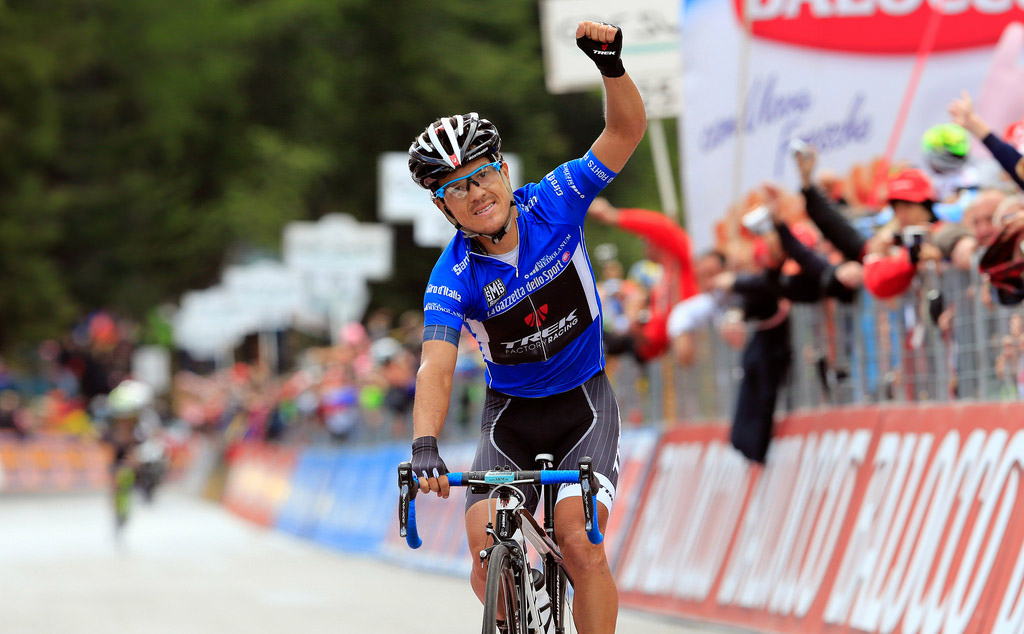
    Arredondo in Blue

    Trek’s Julian Arredondo was the other uphill-charging stagehunter to take a massive step forward in this race. His Tour de Langkawi win in 2013 put him on the map and caught the eye of plenty of observers, but he has come into his own for a WorldTour squad here in 2014. He won a pair of stages in the Tour de San Luis at the beginning of the year, and then climbed his way to 5th at Tirreno-Adriatico, hinting that bigger successes were right around the corner. He did not disappoint in the Giro d’Italia, earning the King of the Mountains jersey and a stage win with his aggressive style and his considerable uphill punch. He was always on the lookout for opportunities to attack, and it served him well. His Stage 18 victory was particularly impressive: he put in a ton of effort racking up KOM points early in the day but still managed to have enough in the tank to outclimb his breakaway companions on the final climb. Now with a top-level team to help him continue to develop as a rider, 25-year-old Arredondo is likely to continue to rise as a climbing star.

    Lotto Belisol’s 23-year-old Tim Wellens was another very impressive rider in this race. He was unable to come away with a win, but notched a pair of great 2nd place performances as well as a 9th place in the uphill ITT. He was 3rd in the overall King of the Mountains competition thanks to his aggressive pursuit of breakaway success. He may not have picked up the result he wanted, but he put a ton of ability on display and can no longer be considered “under-the-radar.” Team Colombia’s Fabio Duarte also picked up a pair of 2nd places, upping his total to four in the Giro. He’s an uphill specialist with a sharp eye for opportunities to attack; riding for a Pro Continental squad, he doesn’t get as many chances to shine on the biggest stage as he probably should, but he’s making his mark when he can.

    Crashes Cloud the Issue for Others

    Even as a sizeable contingent of up-and-coming stars made massive strides, a number of other riders saw their bids for glory fall apart on messy, rain-soaked roads, robbing us of an opportunity to see how they might have fared under more favorable conditions. Dan Martin hoped to deliver his first Grand Tour Top 10 in this Giro, but found himself out of the race on its very first day. He seems to be recovering well and will now refocus his season on the Tour or the Vuelta. He was in excellent shape in the Ardennes before his nasty TTT crash; if he can recapture that form, a return to success this season seems likely.

    Joaquim Rodriguez was the biggest name to fall victim to the slippery Italian roads. Caught up in the mess on Stage 6, Purito was forced to abandon before the Giro ever really hit any mountains. This was supposed to be a strong opportunity for him to pick up that elusive Grand Tour victory, but now he, too, will have to shift his focus, apparently to the Vuelta. Though he hasn’t ruled out the Tour de France, he could find himself in an excellent position in Spain if he does: without having the grueling mileage of another Grand Tour in his legs, he would be a strong contender for that race, which has been won by a rider without a previous GT on the year in its last three editions.

    Michele Scarponi, Nicolas Roche, and Przemyslaw Niemiec were also caught up in or behind the Stage 6 carnage (along with a number of other non-GC riders) and saw their GC hopes crumble. The first two then realigned their goals rather successfully (Scarponi went into domestique mode for Aru, who finished on the podium; Roche helped Majka achieve a strong GC placing and Michael Rogers notch a pair of stage victories), but it was an unfortunate turn of events for both riders, who harbored GC aspirations. Scarponi will be 35 next year and with Nibali as the team’s big star and Aru on the rise, the future is not particularly promising. Lampre’s Niemiec was coming off a strong performance in Trentino, but did not feature much after his tumble down the General Classification. Though he was excellent in 2013, he, too, will be 35 for next year’s Giro and may see younger talent take a more prominent role.

    Gearing Up for Tour Season

    With the Giro wrapping up, the cycling world shifts its focus to its biggest event (and the tuneup races that lead into it). The Criterium du Dauphine and Tour de Suisse are around the corner and the Tour de France is only about a month away. A few of the stars of the Giro will make the start in their second Grand Tour, riding against the likes of Chris Froome and Alberto Contador on cycling’s biggest stage. You can expect to see their names and plenty more in the VeloHuman previews to come, so stay tuned!

    -Dane Cash

    Photos by Maurizio Costanzo, Maurizio Massasso, Sean Rowe, and nuestrociclismo.com.
  • Giro d’Italia 2014: Stage 20 Preview

    Giro d’Italia 2014: Stage 20 Preview

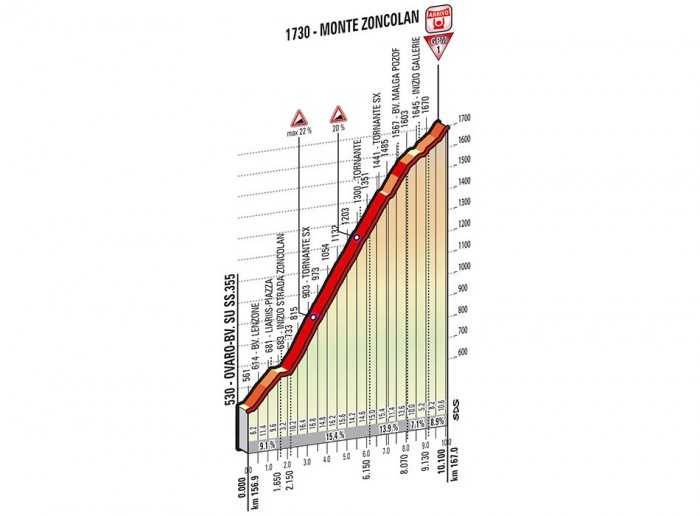
    Stage 20 Profile

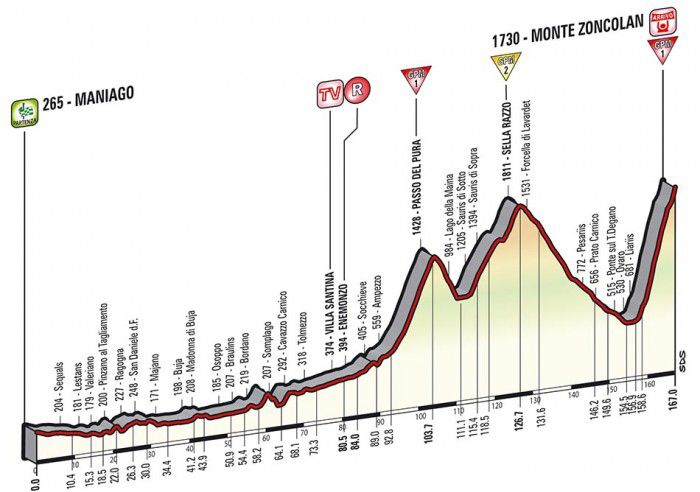
    Stage 20: Maniago > Monte Zoncolan – 167 km

    After the Monte Grappa ITT that solidified Nairo Quintana’s hold on the pink jersey, only one GC-relevant stage remains in the 2014 Giro d’Italia. By this point, we’ve seen who is climbing on top form and who is struggling, but the race isn’t over just yet; everyone is vulnerable to a bad day here and there, and Stage 20 is not going to be forgiving.

    The penultimate stage of the Giro is 167 kilometers in length. The first half is mostly flat, but then it starts to steadily rise upward into the Passo del Pura, a Category 1, 11.3 kilometer climb with an average gradient of 7.7%. Next comes the Category 2 Sella Razzo, 15.9 km at 5.2%. From there it’s a fast descent to the final mountain challenge of the 2014 Giro d’Italia: Monte Zoncolan.

    Monte Zoncolan

    The Giro d’Italia is full of brutal climbs, but the Monte Zoncolan is a different sort of challenge. It’s less than half the length of the Stelvio or the Val Martello, and does not reach the same dizzying heights. What makes the Zoncolan so vicious is its exceptional steepness. For 10.1 kilometers, the riders must brave an average gradient of 11.9%, and the average does not even tell the full story. The midsection of the ascent jumps up over 15% for a few kilometers, with sections in the 20% range. At gradients this extreme, there is simply nowhere to hide. Even a strong team cannot offer much help; there is not much benefit to be gained from sitting on a lieutenant’s wheel when everyone is going up this slowly.

    As the last opportunity for the GC contenders to make any sort of moves up the leaderboard, Stage 20 will likely see the sort of fireworks from the big guns that will put any morning breakaway under pressure. Still, riders could decide to save up for the final push up the Zoncolan, allowing opportunists to get away on the earlier slopes, making it at least a possibility that a long distance attacker could take the day.

    I think it is slightly more likely that the battle for stage honors comes down to the GC men and those who decide to stick with them, so I’ll name the favorites among the overall leaders first. Heavier diesel engines that prefer climb with steady teammate support are not going to enjoy this gradient. This stage is going to go to an ultra-lightweight, uphill charger. Nairo Quintana does not need to do anything else to prove that he’s the best climber in the race, so he is the most obvious candidate for the title of “favorite.” His performance in the Monte Grappa ITT was simply amazing, and the wicked gradients of Monte Zoncolan should be yet another perfect setting for the pink jersey wearer to put his talents on display.

    Fabio Aru has shown on multiple occasions that he deserves to be considered the second best climber in the race. He was stellar in the Monte Grappa time trial, behind only Quintana, and he’s already taken a stage in this race. What’s more, he’ll be extra motivated knowing that 2nd overall on GC is within his grasp. He’s going to be on the lookout for the right opportunity to make a move on this climb, and there aren’t many riders who will be able to catch him.

    Battling illness, Domenico Pozzovivo has not been at his best in this Giro. This would have been an excellent stage for his talents, but it’s hard to tip him as a favorite over Quintana or Aru right now. Europcar’s Pierre Rolland has an outside shot here but he is a marked man now that he’s in the Top 5 on GC, and he won’t be allowed to get up the road without a fight. Rigoberto Uran should be able to survive without huge time gaps but winning on these gradients seems unlikely; he’ll be more focused on protecting his 2nd overall on GC from Fabio Aru. Rafal Majka‘s podium hopes have been hit hard by stomach issues, and this is an unforgiving climb that could see him continue to struggle unless he recovers overnight. Cadel Evans, Wilco Kelderman, and Ryder Hesjedal could find themselves holding on for dear life.

    I have a few favorites among the non-GC riders as well, climbers who could be allowed to get up the road, either in the day’s breakaway or with a late attack from the bunch on Monte Zoncolan. Team Colombia’s Fabio Duarte is, in my opinion, the member of this group with the best chances. He’s now a four-time 2nd place stage finisher in the Giro d’Italia, clearly capable of mixing it up with the best, but always just a hair shy of success. Unlike most of the other top climbers in the race, he did not expend a lot of energy in the Stage 19 time trial. He’ll be very motivated to pick up that elusive win here on the last summit finish of the race. Trek’s Julian Arredondo now has his stage win, and his KOM jersey is practically in the bag, but he could look for more glory on the famous Monte Zoncolan. Franco Pellizotti rode very well up the Monte Grappa and was also strong from the breakaway on the stage prior, suggesting excellent form at the moment. Androni Giacotolli is winless in this Giro d’Italia, and Pellizotti is their best chance at coming away from the race with a result. Katusha’s Daniel Moreno is another very strong climber on a team that needs to get something out of this Giro. Sky’ s Dario Cataldo and the very surprising Sebastian Henao and Neri Sottoli’s Edoardo Zardini also fit this description.

    VeloHuman Stage Favorites

    1. Nairo Quintana | 2. Fabio Aru | 3. Fabio Duarte

    Check back for the preview of the last stage of the 2014 Giro d’Italia after the Stage 20 finale atop Monte Zoncalan. Also, remember to follow @VeloHuman on Twitter for more analysis during the race.

    With the Giro coming to a close this weekend, now seems like a good time to point out that VeloHuman will be previewing the Criterium du Dauphine, the Tour de Suisse, and, of course, every stage of the Tour de France, so make sure you come back soon!