The 2015 Vuelta a España will get underway with one of the whackiest stages in race history thanks to an absurd course design and a last-minute UCI decision.
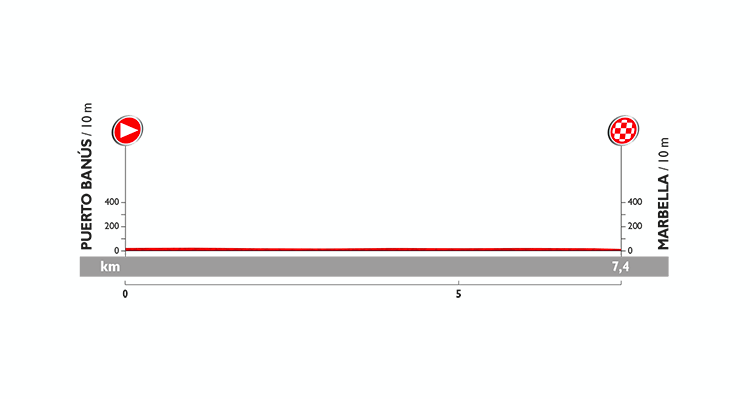
An opening team time trial of just 7.4 pancake-flat kilometers is odd enough, too short to really have any GC impact whatsoever, but the route includes a few unique challenges. Running along the vacationer-friendly Mediterranean coast from Puerto Banús to Marbella, the course involves stretches of packed dirt and sand and a narrow wooden bridge. Those peculiar obstacles caused plenty of consternation to riders putting in some course recon this week, spurring the UCI to call a meeting that ultimately deemed the TTT parcours too dangerous to count towards the General Classifiation. And so, just one day before the start of the Vuelta, the decision has been made to neutralize the opening stage in terms of the GC, leaving only a stage win and position in the team classification up for grabs.
Obviously, that dramatically changes the prediction picture, as any teams with GC aspirations now have little motivation to take any risks on the absurd course. A few of the top overall contenders lead strong TTT squads, but it’s hard to see them putting in the effort to contend for a stage win on the sand.
Instead, this should come down to the teams without GC candidates on the roster. Trek Factory Racing is among the front-runners. Fabian Cancellara leads a squad packed with fast finishers, and over a course of just 7.4km, sprinter speed will come in handy. Without a top GC favorite to shepherd over the whacky parcours, Trek will be hard to beat.
Giant-Alpecin should thrive for the same reasons as Trek—time trialing star Tom Dumoulin will lead the squad, with high-octane John Degenkolb and Luka Mezgec providing firepower over the very short course.
Orica-GreenEdge may have a shot, with a few time trialing specialists and a few fast finishers making the start. OGE always outperforms the sum of its parts in team time trials, and the team has nothing to lose in this race.
Etixx-QuickStep doesn’t have many of its top talents against the clock making the start, but Niki Terpstra leads a team that does include a few decent TT men and no reason to take the course gingerly.
Tinkoff-Saxo has a collection of speedsters and big engines to put up a good ride if Rafal Majka’s GC aspirations don’t hold them back. Sky has the firepower to put in a challenge for the TTT victory, but it seems almost guaranteed that the British squad will ride this one without much urgency as Chris Froome is a contender for the overall Vuelta a España victory. The same goes for BMC and Movistar, who might otherwise have contended for the stage, but who will now likely keep the powder dry for a day with real GC implications.
VeloHuman Stage 1 Favorites
1. Trek Factory Racing | 2. Giant-Alpecin | 3. Orica-GreenEdge
Be sure to follow @VeloHuman on Twitter for 2015 Vuelta analysis. The next preview will be up after the conclusion of Stage 1. And if you haven’t already checked out the Recon Ride’s first of three Vuelta episodes, there’s no time like the present to start listening!
The youngest of the trio of legendary three-week races, the Vuelta a España tends to garner less attention than the Giro d’Italia or the Tour de France, but the past few editions of Spain’s biggest race have been must-watch cycling entertainment. The challenging route, the top-notch startlist, and the desperation for results always present at this part of the season should make for an epic final grand tour of 2015 (the perfect storm of factors likely contributing a thrilling Vuelta is just one of many topics covered in the Recon Ride’s Vuelta pre-race show by the way—you should definitely check it out).
The Route
This year’s Vuelta offers the variety of profiles to favor a well-rounded winner. After things open with a very short team time trial (short enough that it’s unlikely to make a difference for the GC battle), the race takes on an uphill finish (albeit only a Cat. 3) right away in Stage 2, which is a great way to set the tone for a challenging race.
Then come several days that look likely to favor the sprinters or puncheurs, until a likely GC showdown on Stage 7, which sees the first Cat. 1 finishing climb of the race. After a medium-difficulty day on Stage 8, the Vuelta will throw another Cat. 1 uphill finish at the pack on Stage 9. Then, it’s a stagehunter friendly Stage 10 and a long-awaited rest day after a whopping ten straight days of racing.
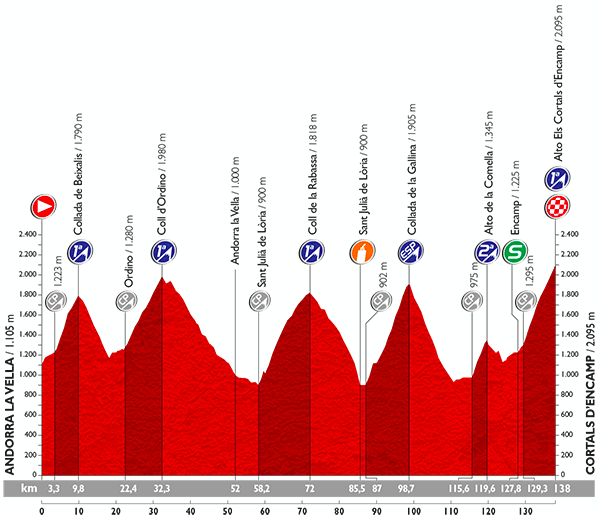
Any dreams of a stress-free return to racing after the day off will be squashed by the brutal Stage 11, which will throw one steep climb after another at the riders
Stage 11: Andorra la Vella › Cortals d´Encamp (138km) – The peloton will come back from the first rest day of the Vuelta to face a tough day in Andorra.
After such a difficult Stage 11, pair of more fast-finisher-friendly stages will give the GC men a chance to relax a bit, but climb-heavy Stages 14, 15, and especially 16 will bring them to the fore again.
The Stage 17 time trial will also be a critical day for the GC hopefuls.
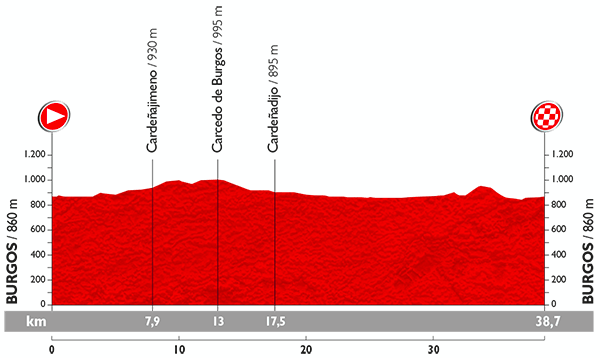
Stage 17: Burgos › Burgos (38.7km) – A time trial favoring the big engines in the Vuelta’s final week will put the pure climbers under pressure.
A little under 40km and mostly flat, the ITT could deal a serious blow the GC campaign of anyone without strong time trialing ability.
Stages 18 and 19 look good for those with an aggressive streak who are not afraid to be active on the late climbs, before a Stage 20 that consists of four Cat. 1 ascents.
To close out the race, the sprinters will get one last chance on the final stage in and around Madrid.
The General Classification Contenders
Most of cycling’s top Grand Tour GC stars are making the Vuelta start this year, which should set up a thriller of an overall battle. Chris Froome, the 2015 yellow jersey winner himself, headlines the startlist. It’s pretty rare for a Tour winner to start the Vuelta, but Froome has come close here in the past and has some unfinished business to take care of.
It’s hard to say just how well the route suits him because the Chris Froome of 2015 is a different rider from the Chris Froome that won the 2013 Tour de France. That previous incarnation of Froome was an excellent time trialist who could take advantage of a long flat ITT against less chrono-savvy rivals. The Froome of the past two years, however, has been far less impressive against the clock. If Froome can get his time trial back on track, he could run away with this race. If he doesn’t, this will be a close fight, though Froome is still among the world’s very best climbers (something that often gets overlooked or underplayed by many observers) and can still win this race on pure climbing ability and a powerful team. Geraint Thomas and Nicolas Roche are back at Froome’s side. Sergio Henao could be the real star—he’s been prepping for this all season and he’s been sharp recently. He makes a fine alternative if Froome decides a few days into the Vuelta that he’s content with his Tour de France win and doesn’t need to fight for a second Grand Tour in 2015.
Nairo Quintana and Alejandro Valverde were unable to wrest control of the Tour de France from Sky but they’ll have another opportunity here. The time trial won’t help the Movistar pair, but motivation to beat Froome will be pretty high, and a route filled with steep climbs will offer plenty of chances to launch a flurry of attacks to keep the pressure on. Quintana is the better overall rider at this point and if his motivation is there he could challenge for the win with help from Valverde. If Quintana isn’t coming in at 100%, Valverde will likely be in the mix on his own, though winning the Vuelta against this caliber of rivals would be a tall order. Andrey Amador is another card to play on a strong Movistar squad.
In terms of depth, Astana’s trio of Fabio Aru, Mikel Landa, and VincenzoNibali headline the strongest GC squad in recent memory. Aru is probably the team’s best hope, having been preparing for this race since his runner-up performance in the Giro. He’ll love all the opportunities to break clear of his rivals on the tough climbs of the race, and he’ll probably be a bit fresher with more of a time cushion since his last Grand Tour appearance than those who raced the Tour. Meanwhile, Nibali will be motivated to prove something in this race after a disappointing Tour de France. He’s not afraid to get aggressive and if he is in better shape for this race, he’ll be up there. Landa is the wildcard—he has said he is targeting stages, and a long flat time trial does not suit him in the slightest, but he showed flashes of incredible climbing ability in the Giro and Astana’s multifaceted approach could see him steal a huge chunk of time if he can launch an unanswered move somewhere along the way. It would be pretty surprising if Astana didn’t land at least one rider on the Vuelta podium.
Joaquim Rodríguez will have his work cut out for him taking on such a list of stars in this Vuelta, but he did not have to expend nearly as much energy in the Tour as his other Vuelta GC rivals—his stagehunting focus allowed him to take days off in the mountains. Daniel Moreno will serve as a valuable second.
Rafal Majka leads the Tinkoff-Saxo charge. He should put in a good Vuelta campaign—he has developed into a well-rounded rider who isn’t afraid of a time trial, and like Rodríguez he should be a bit fresher than Froome or Quintana.
Speaking of freshness, Domenico Pozzovivo probably stands the best chance of being the rider to keep one recent Vuelta streak alive: since 2011, the winner of the Vuelta a España has been a rider who did not complete either the Tour of the Giro earlier in the season. Freshness has been critical in recent years at the Vuelta, and Pozzovivo, who crashed out of the Giro early, has not put the same sort of wear and tear into his legs this season as many other ridres in this race. He’s also a specialist on the steep stuff, which the Vuelta has in spades. Expect a strong ride from Pozzovivo here.
BMC’s Tejay van Garderen will find himself in the same boat, hoping to benefit from the freshness of not having finished a Grand Tour yet this season, but it’s hard to say how he’ll fair. On the one hand, the Vuelta suits him more than the Tour did thanks to its long and flat time trial, where he is stronger than most of the top GC riders in this race. On the other hand, van Garderen’s Vuelta was a last minute decision to salvage something from the season after his disappointing Tour. If van Garderen is in shape and motivated, I’d expect to see him in the thick of the GC battle. If not, he’ll probably be out of it very quickly. Samuel Sánchez is a fine alternative for BMC, having put up plenty of strong Vuelta rides in the past.
Lotto-Soudal’s Jurgen Van Den Broeck has managed to put up several excellent time trial performances so far this season, and if he can bring that balanced approach into the Vuelta, he could prove to be a big surprise. Cannondale-Garmin’s duo of Andrew Talansky and Dan Martin should be capable of producing at least one contender for the Top 10 among them. Cofidis’s Daniel Navarro hasn’t done much this season but he tends to come alive in the Vuelta. Pierre Rolland rode a respectable Tour de France, nearly coming away with a stage win, and should be capable of another decent result here.
The Stagehunters
Without many pan-flat stages but plenty of days to suit the more versatile fast finishers, it’s no surprise that the Vuelta has drawn several riders who thrive in bunch kicks after harder days. Peter Sagan is an obvious member of that club, though his Vuelta form is a big question mark—last year he rode the Vuelta purely to prep for Worlds, and mostly stayed under the radar. John Degenkolb also makes the start, hopefully with the same interest he showed last year (when he won four stages and the Points Classification) and not an approach entirely centered on his own Worlds campaign. Nacer Bouhanni can handle a climb or two and should be able to nab multiple wins if the form is there for this race—the motivation should certainly be there near the end of a disappointing season. Caleb Ewan, JJ Rojas, Matteo Pelucchi, and Danny Van Poppel are other speedsters to keep an eye on at the Vuelta.
Tom Dumoulin and Fabian Cancellara are obvious favorites for the long, flat time trial in the third week. Simon Gerrans, Alessandro De Marchi, Sylvain Chavanel, Carlos Barbero and Pello Bilbao will be among the riders hoping to do some damage on the intermediate stages, while the likes of Fabio Duarte, Amets Txurruka, and Joe Dombrowski could be on the hunt for breakaway wins in the high mountains.
VeloHuman Top 10 Overall Favorites
GC Winner: Chris Froome Podium: Fabio Aru, Nairo Quintana Other Top Contenders: Alejandro Valverde, Joaquim Rodríguez, Vincenzo Nibali, Domenico Pozzovivo, Mikel Landa, Tejay van Garderen, Rafal Majka
VeloHuman will be previewing every individual stage of the race, so stay tuned for more analysis. Meanwhile, if you haven’t already checked out the Recon Ride’s first of three Vuelta episodes, there’s no time like the present to start listening! And, of course, be sure to follow @VeloHuman on Twitter for more commentary.
The WorldTour makes one last stop in Spring Classics territory for the weeklong Eneco Tour, a relatively young race that has nevertheless offered a healthy amount of high-caliber entertainment the past few years. While the race doesn’t visit any Alpine climbs, the cobbles and the short but steep uphill tests of Belgium and the Netherlands, familiar to anyone who enjoys bike racing in the spring, will provide plenty of challenges to sort out the General Classification. Bonus seconds tend to play a pretty important role as well, giving the fast finishers a leg up on those less inclined to get involved in the hunt for high stage placings.
The Route
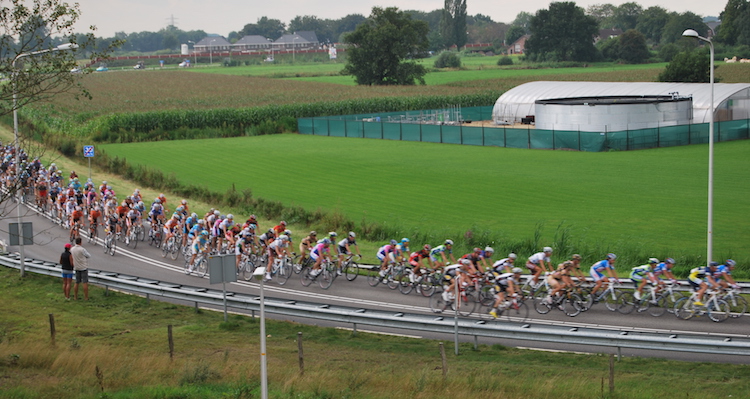
The Eneco Tour opens with three straight relatively flat days that look good for the sprinters, though don’t be surprised if at least one of them ends up going to an aggressive attacker. Nothing is guaranteed a part of the world as prone to crosswinds and sketchy conditions.
Stage 4 is a 13.9km individual time trial. It doesn’t sound like much, but in a weeklong race without any mountains, it’s a critical stage for the GC hopefuls. Despite a somewhat visually deceiving official profile graphic, it’s quite flat (and not particularly technical) and will favor the powerhouse specialists.
Stage 5 will take the peloton into Amstel Gold Race territory, pitting the riders up against some of the climbs of that one-day classic (although the stage avoids the Cauberg). The final few kilometers involve multiple short but steep climbs, and then a downhill run into the finishing straight.
Stage 6 should play out like a mini-Liège-Bastogne-Liège, taking on some of the same challenges and offering a similar profile: numerous climbs that are just a bit tougher than those of the previous stage.
The Eneco Tour concludes with a visit to the heartland of the Cobbled Classics in Belgium, where the peloton will take on multiple ascents of the legendary Muur van Geraardsbergen.
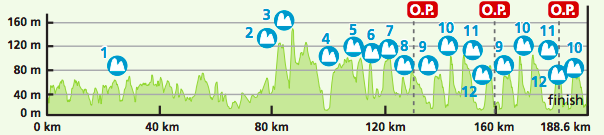
Stage 7: St.Pieters-Leeuw › Geraardsbergen (188.6km) – The Eneco Tour’s final stage is up-and-down from start to finish, with plenty of cobbled stretches to make things even tougher.
The challenging cobbled climbs will give the strongmen one last shot at a WorldTour victory in Flanders this season.
The General Classification Contenders
Given the Classics-esque feel of the Eneco Tour, it shouldn’t come as much of a surprise that many of the big names of the spring are making the start at this race. The more versatile among them will have a shot at the overall victory here.
Tim Wellens was the surprise victor last year (he launched an attack on that year’s Liège-Bastogne-Liege-esque stage 6 that catapulted him into the lead) and he returns this year with a strong Lotto-Soudal team. The route certainly suits Wellens, a true all-round talent who can handle this terrain well, though form has been a question mark for Wellens this season. The 24-year-old has not quite had the 2015 he was probably hoping for. Still, he’s a proven threat in this race who can’t be counted out. His team is stacked with other versatile talents as well: Tiesj Benoot, Jens Debuscherre, Jürgen Roelandts, and Thomas De Gendt are all capable supporters or alternatives if Wellens isn’t up for it.
Greg Van Avermaet and Philippe Gilbert head a powerful BMC squad. It would be a big surprise if at least one of them was not involved in the fight for the overall victory. I see Van Avermaet as the slightly more likely of the pair to lead the team, though both are very well-suited to the race and in sharp form. Van Avermaet’s recent climbing performances and a relatively newfound ability to time trial will come in especially handy in this race. He won the Muur van Geraardsbergen stage in 2014 and is sure to contend there again, and his cobblestone skills and finishing speed coupled with the best form of his life on the climbs and against the clock give him an edge in this race. He was 5th overall last year. Motivation is likely through the roof after a frustrating Clásica San Sebastián. Gilbert is a dangerous contender in his own right, however, 7th last year and the winner of multiple Eneco Tour stages in the past, and coming off a San Sebastián runner-up performance. Jempy Drucker and Daniel Oss round out a very strong BMC roster.
Lars Boom won the Eneco Tour back in 2012 and he was 2nd in 2014. He is very strong against the clock and on the cobbles, and always seems to climb better than you might expect on the Eneco Tour’s uphill tests. He should be right up there fighting for the overall victory. Andriy Grivko is another excellent option on an Astana team that is surprisingly well-suited to this race. Grivko was 3rd in 2013 and 4th last year, and he has the climbing legs and time trialing skills to make up for a relative lack of cobblestone prowess.
Etixx-QuickStep will be without 2013 overall winner Zdenek Stybar but that doesn’t mean they aren’t loaded with options. Julian Alaphillipe, one of the big stars of this year’s Ardennes Classics, is the most obvious choice. He is untested on the cobblestones but he should be among the best riders in the race on Stages 6 and 7, and can put in a nice ITT on a short course as well. Niki Terpstra is another excellent option—he tends to perform surprisingly well on the climbs of the Eneco Tour, and the rest of the terrain suits him perfectly. Tom Boonen is of course another rider to watch out for on EQS.
Simon Spilak may seem out of place among the many Classics stars on the startlist, but as a balanced rider with both strong climbing legs and a strong time trial, he can’t be overlooked in this race. Viacheslav Kuznetsov is a dark horse on the Katusha squad to watch out for—he’s comfortable on this terrain and was 11th overall in 2014.
It hasn’t been the best season for Wilco Kelderman, but like Simon Spilak he is an excellent all-round talent and a danger in pretty much any stage race. He also has a nice finishing kick to hunt down bonus seconds. Trek is without Fabian Cancellara but Fabio Felline could surprise some people with his climbing legs and time trialing skills. Lampre-Merida’s Diego Ulissi certainly has the climbing chops to handle the climbs and the finishing speed to nab bonus seconds. If he can survive the conditions and the cobblestones, he’s also pretty good against the clock in a short ITT.
Jan Bakelants, Lars Petter Nordhaug, Jens Keukeleire, Gorka Izagirre, Michael Rogers, Simon Geschke, Tom-Jelte Slagter, and Sebastian Langeveld are others on the list of outsiders hoping to contend for the Eneco Tour GC title.
The Stagehunters
André Greipel is the biggest name in a long list of fast finishers making the start, a list that also includes Giacomo Nizzolo, Arnaud Démare, Sacha Modolo, Elia Viviani, JJ Lobato, Moreno Hofland, Heinrich Haussler, Ramunas Navardauskas, Nikias Arndt, and Andrea Guardini. Greipel is in a class of his own out of that bunch, but coming off the Tour, motivation and form aren’t guaranteed. The sprinters should have three chances to hunt for stage victories at the beginning of the race.
Also watch out for Classics specialists like Filippo Pozzato, Ian Stannard, and StijnVandenbergh who might not be contenders for the General Classification, but who will nevertheless be dangerous on their preferred terrain in the hunt for stage victories. Practically the entire Topsport team fits this description as well.
VeloHuman Top 10 Overall Favorites
GC Winner: Greg Van Avermaet Podium: Lars Boom, Tim Wellens Other Top Contenders: Philippe Gilbert, Julian Alaphilippe, Andriy Grivko, Niki Terpstra, Diego Ulissi, Simon Spilak, Wilco Kelderman
Be sure to follow @VeloHuman on Twitter for more analysis and commentary during the race!
Episode 22: Eneco Tour 2015 Pre-race Show The WorldTour returns to Classics territory for the Eneco Tour, and the Recon Ride is here with all the analysis you need to prepare for the big race.
[powerpress]
Dane Cash of VeloHuman and Cosmo Catalano of Cyclocosm join forces to cover all the storylines of the 2015 Eneco Tour, with a little help from Classics specialist Jürgen Roelandts of Lotto-Soudal.
August is upon us, which means it’s time for seven days of racing (and balloons! more on that in the most recent Recon Ride podcast…) in Poland. The Tour de Pologne is an often unpredictable race that has offered plenty of thrills in the past few years of nail-biting GC battles and daring solo attacks for stage wins. The startlist of the 2015 edition will put plenty of talent on display, with a few big names coming from the Tour de France with aspirations of squeezing a few more drops of form out of their legs, and several other big names working up to Vuelta form.
The Route
The 72nd Tour de Pologne opens with a trio of fast-finisher-friendly stages, though scattered hills and technical urban roads could leave the door open for late attackers on all three.
The GC men will need to be on their toes for Stage 4, which includes three climbs in the middle of the day before 30 kilometers of flat run-in to the finish. The uphill tests are categorized 2, 1, and 1, and while a Tour de Pologne Cat. 1 is probably closer to a Tour de France Cat. 2 or even Cat. 3 in terms of difficulty, the three ascents in quick succession will make things interesting regardless.
It’s important to keep the arbitrary nature of climb categorization in mind for Stage 5, where there are officially eight Cat. 1s—still, the stage is 223km in total and after the first 30km there are essentially zero flat kilometers all the way to the finish line. Expect plenty of pretenders to see their GC bids go up in flames on a day like this.
Stage 6 is the queen stage, and it runs along a route the Tour of Poland has taken on for several years running now. The peloton faces a pairing of Cat. 1 climbs (the first about 4.5km and the second 5.5km, both at nearly 6%) a total of four times each, with other smaller lumps thrown in as well. The stage finishes one of those smaller climbs, an uncategorized uphill drag that grades out at around 4.5%. for about 5km.
Stage 6: Bukovina Terma Hotel Spa › Bukowina Tatrzańska (174km) – The peloton is in for a tough day of non-stop climbing in the queen stage of the Tour de Pologne.
The now-familiar parcours has been a crucial GC stage in the past several years, though it often plays a weeding-out role more than anything, with small gaps near the top of the leaderboard but then significant ones outside the first 30 or 40 finishers.
The Tour de Pologne finishes with a 25km individual time trial in Krakow. It’s flat as a pancake and will favor the big engines. Any pure climbers hoping for good GC results will be in for tough days on the bike.
The General Classification Contenders
2014 winner Rafal Majka is skipping the Tour of Poland this year, leaving the race wide open. His countryman Michal Kwiatkowski is certainly one potential successor. If Kwiatkowski were to draw up a stage race route for himself, he probably couldn’t do much better than this: classics style climbs and a long flat time trial to close things out. The Ardennes star and elite chrono rider would be a big favorite to excel on the parcours if his form and motivation were at 100%—however, neither one is clear heading into this race. Kwiatkowski was 2nd here back in 2012, but he’s looked a bit rusty the past few weeks. His goals for his home race are unclear. He’s still a favorite because of his peak ability and perfectly-tailored skillset, but recent showings keep him from being an obvious candidate to boss this race.
Movistar’s Ion Izagirre has been runner-up in the past two editions, and his balanced skillset makes him a strong candidate again this year. His team certainly won’t hurt: Beñat Intxausti was 3rd in 2015, and Andrey Amador was 6th, and both riders have flashed great form this year with strong Giro performances (though Amador hasn’t raced since). Izagirre probably gets the team leadership nod due to his past rides at Poland but this is a team that isn’t afraid to support more than one contender should he falter, so watch out for the rest of the squad as well.
Sky’s Sergio Henao has performed well in past editions of the Tour de Pologne, and his strong climbing legs and underrated time trial make him a top favorite in the 2015 running of the race. Henao, like Izagirre, performed well in the Tour of the Basque Country, a race also featuring numerous but not incredibly steep climbs and a critical closing TT. Vasil Kiryienka, good on the hills and excellent in the time trial, is another option, as is Phil Deignan, who took 7th here last year.
Astana’s Fabio Aru is undoubtedly among the biggest-name riders in the race, but form and motivation are completely unknown. This is also not a great event for his skillset. There are no huge climbs for him to open up gaps on his less uphill-inclined rivals, and the flat ITT that closes out the race does not suit hm very well. A GC bid would be a surprise. Well-rounded Dario Cataldo could be a better option for Astana, and Alexey Lutsenko is another alternative.
Robert Gesink was 2nd in the Tour of Poland all the way back in 2007, and he’s coming off a very impressive Tour de France. Gesink is known for his climbing abilities but he’s put in some good riding against the clock this year.
Katusha’s Ilnur Zakarin is on uncertain form at this point in the season, but the overall parcours suits his talents. He’s proven himself a strong climber capable of an excellent time trial.
AG2R’s Christophe Riblon spends most his time racing in a support role for his team’s stable of impressive climbers, but he’s performed very well in the Tour de Pologne in the past and has the all-round skillset to be in the mix again this year. Diego Ulissi took one of his first big career victories at the Tour of Poland in 2013. He’s put in a few impressive time trial result in his career and could have a chance at the overall if he can turn in a consistent performance all week long.
Ben Hermans of BMC is VeloHuman’s Under-the-radar rider for the Tour of Poland. His strong climbing legs often get lost in the shuffle at big-budget BMC, but Hermans has had a great year so far and is coming off a podium performance at the Tour of Austria. In a race with several stages that resemble the hilly spring classics, the Brabantse Pijl winner could find himself well positioned to pick up time on the climbs.
Jurgen Van Den Broeck, Robert Kiserlovksi, former winner Moreno Moser, Davide Formolo, Przemyslav Niemiec, and Jan Hirt are others who could be in the mix on GC.
The Stagehunters
Marcel Kittel is the marquee sprinting name on the roster but illness had laid him low so far in 2015. Hopefully he’ll get back into shape soon but he hasn’t made any showings of form lately, and until he does, it’s hard to bet on him to succeed on the flat stages in Poland.
There are several fast men on the startlist who could look to step into that marquee sprinter role. Giacomo Nizzolo, Sacha Modolo, Caleb Ewan, and Luka Mezgec are the top names on the list, while Gianni Meersman and JJ Lobato are good bets for bunch sprints that follow slightly hillier days. Matteo Pelucchi, Andrea Guardini, and Tom Van Asbroeck are others who could feature in the high speed finishes.
Watch out for 2014 KOM-winner Maciej Paterski on the hillier days—although the home rider has not been feeling well this past week, he’s had a great year so far and is a definite threat on the intermediate stages. Paterski’s teammate Davide Rebellin, Carlos Betancur, and Alessandro De Marchi are others who could be on the hunt for stage victories on the lumpier days.
VeloHuman Top 10 Overall Favorites
GC Winner: Ion Izagirre Podium: Sergio Henao, Robert Gesink Other Top Contenders: Beñat Inxtausti, Ilnur Zakarin, Jurgen Van Den Broeck, Christophe Riblon, Vasil Kiryienka, Ben Hermans, Michal Kwiatkowski
The 2015 Tour de France may be over but the WorldTour rolls on. The Clásica de San Sebastián (or the Donostiako Klasikoa in Basque) is the next race on the docket. It’s a hilly event that has just the right profile to inspire plenty of attacks, in a region mad for cycling, and its position on the calendar makes it a tough race to predict—some of the stars of the Tour de France are in attendance hoping to get just a bit more out of their legs, while a few other big-name riders are returning to racing for the first time and hoping to get back up to speed quickly.
The San Sebastián organizers made a small but impactful change to the race route last season that led to an exciting finale, and the event returns to that successful parcours for 2015.
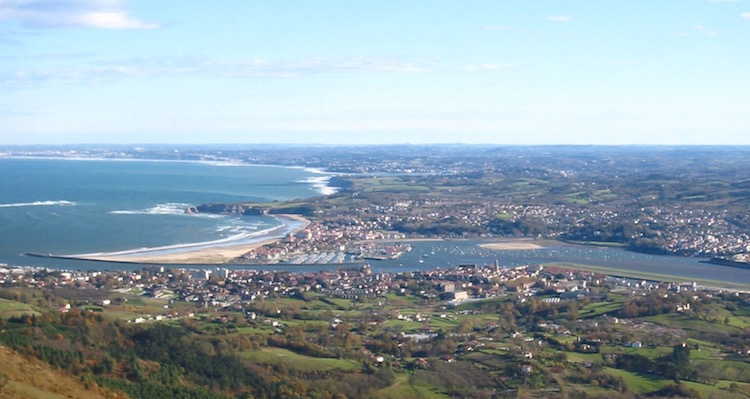
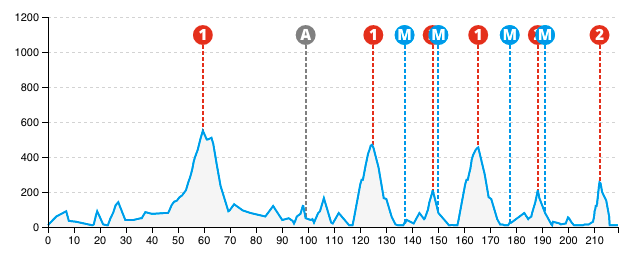
The race starts and finishes in the coastal town of San Sebastián, looping in and around the environs to make for a total race length of 219.2 kilometers.
The harder climbs on San Sebastián profile are categorized as if this were a stage race, and there are six such challenges on the route. The Category 1 Iturburu climb, crested around kilometer 60, is no slouch, but it’s early enough to be more of a leg-softener than anything else.
Once the peloton hits the slopes of the Jaizkibel, the more enterprising riders in the bunch will have one opportunity after another to go on the attack, all the way to the last climb of the day less than 10km from the finish.
Things get more consistently difficult after the midway point of the route with the first trip up the Jaizkibel, the marquee climb of the race. It’s another Cat. 1 ascent, roughly 8 kilometers in length with an average gradient over 5%. After a descent, it’s not long before the riders reach the Cat. 2 Arkale, a short but steep climb and the third categorized test of the day. From the top of the Arkale, the pack will make a downhill trip right back to the foot of the Jaizkibel, where they’ll take on both the Jaizkibel and then the Arkale a second time.
After the second descent from the Arkale comes the final run-in to town, but there’s a tough climb along the road to the finish. The Bordako Tontorra climb to Igeldo is a short but steep Cat. 2 crested just over 7 kilometers from the finish. It’s less than 3km in length but with an average gradient nearing 10% and sections in the 20% range, it’s a hard road to the top. After the climb comes a descent into a flat finish.
The Contenders
The profile favors strong climbers with a lot of punch. It’s probably possible to attack from the more pure-climber-friendly Jaizkibel or from the Arkale and hold out to the finish, but it’s more likely that the race comes down to the last bump in the road, which is more suited to the Ardennes-style riders than the big stage racing stars.
That late climb shook up the race last year, providing Alejandro Valverde with a launching pad to go on the attack for the win. Because the parcours is so up-and-down already, the peloton is pretty thinned out by the time it reaches the final 10km—even if attacks on the Jaizkibel and Arkale are reeled in, it’s still very hard to keep things altogether on the last climb. In case it’s a small group that reaches the finish, a strong flatland kick will be important to anyone hoping to win.
However things play out, Valverde is capable of winning this race in pretty much any scenario, which is probably why he is a two-time champion. Coming off of a Tour de France podium, and in the middle of an excellent season (in which he dominated the hilly spring classics), it’s hard not to see Valverde as the clear favorite. He’s among the best climbers on the starlist who can thrive on pretty much any gradient, and he’s got more punch than most of his rivals. Valverde could win this with another late attack, or he could follow the moves in the finale and hold out for a reduced sprint. Giovanni Visconti is a good alternative for Movistar.
As good a candidate as Valverde is to win this race, however, the Clásica is still a pretty wide open event. It’s always hard to say how riders’ legs will react coming into the race. Valverde went very deep fighting for a Tour de France podium spot.
Philippe Gilbert is another former winner who has been on terrific form of late. If the pace is really high over the finale climb, the Philippe Gilbert of 2015 may have just a bit of trouble holding on all the way up, but if the peloton plays the early slopes cautiously, Gilbert will be well-positioned to make a late attack or to look for a sprint win. BMC has some serious firepower behind Gilbert, though—Greg Van Avermaet was in the Top 10 last year and is in great form this year, and Samuel Sánchez has been in the Top 10 several times over his career.
Joaquim Rodríguez has never won the race but he’s come close several times, and it’s no surprise that he does well here given the punchy-climber-friendly profile. He’ll probably need to launch a late attack if he wants to win, since he’ll have trouble outsprinting some of the other top favorites at the flat finish, but the Igeldo climb is the perfect place to do that. His form was good enough for two stage wins at the Tour, but he didn’t look terrific in the final week; however, he landed on the podium in the 2014 edition of the Clásica despite a lackluster Tour, so I won’t read too much into his not-great few days in the Alps. Daniel Moreno makes for an excellent foil—he’s been a bit quiet this season, but Purito and Moreno always make for a strong 1-2 punch.
Bauke Mollema was 2nd in this race last year and has been in the Top 10 all three times he’s made the start. Mollema is known as a strong climber but he’s also handy in a sprint. If he can get into a small group at the end of the day he will have a great shot at winning. For whatever reason, his kick is a bit underrated, and that can only help him potentially pull one over the more obvious Ardennes veterans in the finale. Julian Arredondo and Bob Jungels are other great options for Trek.
Etixx-QuickStep is loaded with talent in the form of Julian Alaphilippe, Rigoberto Urán, and Zdenek Stybar. Alaphilippe is probably best-suited to the profile, but he’s not raced in a little while so the form is a question mark. Urán looked decent in the Tour, and packs a nice sprint—he’s a rider to watch. Stybar will be a good bet as well, coming off of strong Tour de France in which he took a stage victory. He climbs better every year and he was 10th here last year.
2013 winner Tony Gallopin is not racing, but Lotto Soudal has a few good options in his stead with Tim Wellens and Jelle Vanendert. Both seem like good candidates to try an attack from a little ways out;
Dan Martin is an obvious candidate for success on the San Sebastián profile but he was not at his best in the last week of the Tour and if he’s feeling a bit rusty, a 200+ kilometer bike race might be tough. Ryder Hesjedal could pick up the slack if Martin isn’t up for it. Roman Kreuziger will lead Tinkoff-Saxo after Alberto Contador decided to back out of the start citing a fever—Kreuziger has a good track record in San Sebastián and will be worth keeping an eye on. Astana’s Luis Leon Sanchez is a two-time winner of the race, but he might not even be the best rider on his team. Mikel Landa has had an excellent season thus far and has the explosive climbing legs to try a move on slopes. He was 6th in this race back in 2013 before he had really even come close to the level at which he’s been racing this year.
Both of the Yates twins have a shot—Adam was riding well in last year’s edition of the race before crashing out of the lead group in the final few kilometers, and Simon may be even better suited to the profile. AG2R’s Romain Bardet is in good shape and has quietly become a dangerous one-day racer. Teammate Alexis Vuillermoz could look to launch himself on one of the late climbs. Rui Costa was forced to abandon the Tour de France by a variety of ailments, but this is a great parcours for him if he’s back to 100%.
Jarlinson Pantano, Sylvain Chavanel, Wilco Kelderman, and Thibaut Pinot are others who will hope to be involved with the other race favorites.
Pello Bilbao of Caja Rural is VeloHuman’s Under-the-radar rider to watch at the Clásica de San Sebastián. Bilbao is a talented all-rounder with the climbing legs to be in the mix as a stage race contender, but who also packs a nice finishing kick. He’s having a great year so far, having won a mountain stage at the Tour of Turkey and the overall at the Tour de Beauce, among other results. Caja Rural in general is having a very nice season, with quite a collection of wins at Continental Tour races; watch out for a long-range dig from Amets Txurruka or David Arroyo as well, and keep an eye on versatile fast finisher Carlos Barbero.
VeloHuman Top 10 Favorites
Winner: Alejandro Valverde Podium: Philippe Gilbert, Bauke Mollema Other Top Contenders: Joaquim Rodríguez, Greg Van Avermaet, Zdenek Stybar, Julian Alaphilippe, Romain Bardet, Dan Martin, Mikel Landa