Tag: Giacomo Nizzolo

  • Giro d’Italia 2015: Stage 6 Preview

    Giro d’Italia 2015: Stage 6 Preview

    Stage_6_Preview

    Stage 6: Montecatini Terme › Castiglione della Pescaia – 183km

    Following two days of GC action and breakaway success (Jan Polanc won Stage 5 with a long-range move), the peloton will return to mostly flat roads for what should be a day for the sprinters.

    Stage 6 opens and closes with long flat sections, with a bit of climbing (a single Cat. 4 and several uncategorized bumps) in between. It’s hard to see anything other than a bunch sprint for victory here. The finale involves a few corners and roundabouts but the last kilometer is basically a straightaway perfectly tailored for a drag race.

    Unlike last year’s Giro, the 2015 edition of the Tour of Italy is lacking a dominant sprinter, but there are several very strong quick men who should battle it out for the win.

    André Greipel, at his best, should be faster than the field. But he’s looked a bit below his best so far. He’s also somewhat inconsistent, and not prone to take control of all of a race’s sprint stages, even though he can beat the world’s best on a good day. On Stage 2, he opened up his sprint too early and couldn’t sustain his power on the slight incline to the line. Here, he’ll try to time things better, and prove that he’s still got what it takes to be the top favorite for this sort of profile.

    Elia Viviani timed things just right on Stage 2, taking a victory on the day, and he’s worn the red jersey ever since. He lacks the level of leadout support that some of his rivals enjoy, but as I already pointed out in the Stage 2 preview when talking up his chances, I tend to think the necessity of a strong leadout is overstated by many observers. A fast rider with positioning savvy can win a sprint without much help, and Viviani has a great chance to do that again on Stage 6. Like Greipel, though he tends to have good and bad days, so it will be interesting to see if he’s still at the same level in this sprint that he was showing off on the second day of the race.

    Giacomo Nizzolo has great top-end speed and will love the long, straight finale. He sometimes struggles when timing a jump coming out of a corner is required (even though he is a good bike handler), so he’ll be happy to focus more on the matter of getting up to blazing speed here in this probable sprint finish.

    Sacha Modolo has beaten Mark Cavendish more than once in a bunch kick. It’s a bit hard to predict how he’ll do because he can go from hot to cold very quickly, but he seems to be pretty fast right now (he took a nice stage win in Turkey) and like Greipel and Viviani, if he’s on a good day he can be pretty hard to beat.

    Moreno Hofland took 2nd on Stage 2 of this race somewhat surprisingly. He’s had big results in the past but against this company and in this big of a race, I didn’t expect him to come so close to the win. He tends to appreciate the slight gradients at the line (which this stage lacks) but he’ll still be dangerous.

    Luka Mezgec was 4th on Stage 2 and has the always impressive Giant-Alpecin to set him up nicely coming into the final straightaway. The winner of last year’s final Giro d’Italia stage should be in the mix with the other favorites again.

    Michael Matthews may have lost the pink jersey on the road to Abetone, but he’ll have plenty more opportunities for wins in this race, including here in this Stage 6. People often say that Matthews is “not a sprinter” because of his versatility, but in the same way that they’ll say that about Peter Sagan (who just beat Mark Cavendish in a Tour of California sprint) as well, that undermines the amazing finishing kick he does have. He’s capable of winning a bunch sprint if everything goes his way.

    Juan José Lobato, Matteo Pelucchi, Tom Boonen, Nicola Ruffoni, and Alessandro Petacchi are others to watch in the field sprint likely to close out Stage 6.

    VeloHuman Stage 6 Favorites

    1. André Greipel | 2. Elia Viviani | 3. Giacomo Nizzolo

    Be sure to follow @VeloHuman on Twitter for more race analysis, and remember to check back after the conclusion of Stage 6 for the preview of the next stage.

    -Dane Cash

  • Giro d’Italia 2015: Stage 2 Preview

    Giro d’Italia 2015: Stage 2 Preview

    Stage_2_Prof

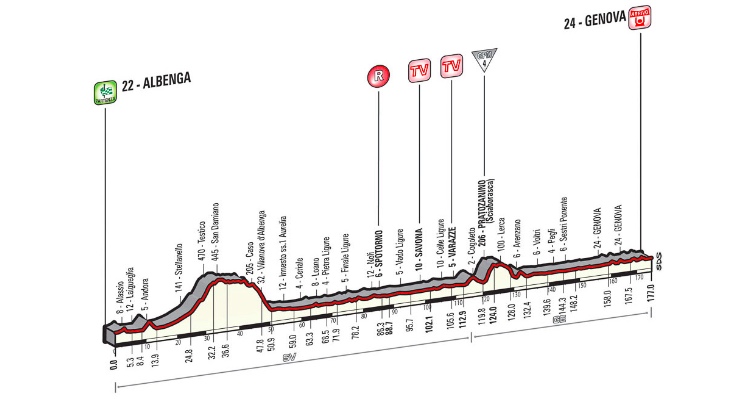
    Stage 2: Albenga › Genova – 177km

    Road racing gets underway at the Giro d’Italia with a mostly flat Stage 2. A single Cat. 4 climb inside the final 60 kilometers is the only official categorized acent of the day. The finish has a few bumps, though, and the road to the line angles ever so slightly uphill.

    With the general classification still completely unsettled and a profile without many big challenges, this looks like a sprinters’ stage all the way. There are several candidates for victory—although there are plenty of big-name fast finishers in the race, none comes in as the clear favorite for one reason or another.

    André Greipel has the strongest track record and, at his best, probably the fastest kick. He’s probably the best bet to win Stage 2, though he’s here without much of a leadout and he’s not the most consistent rider in the world, often disappearing on days that would seem to suit him.

    Giacomo Nizzolo can handle a slightly uphill finish and he’s highly motivated in this Giro d’Italia, with a dedicated leadout train to position him well among the favorites. Few can match him for top speed. Sacha Modolo is also extremely quick, and coming off a nice stage win in the Tour of Turkey. He can run hot and cold, but if he’s feeling good, he will be hard to beat.

    Elia Viviani is a strong sprinter who won’t have as much support as he’d like, given the fact that Sky is here for Richie Porte; still, I think he’s capable of coming away with a victory in a straight-up bunch kick. Nacer Bouhanni showed last year that you don’t need an elite leadout to win big sprints in the Giro. Luka Mezgec does have a strong leadout squad but little in the way of recent results. Still, he’s a danger.

    Michael Matthews of Orica-GreenEdge can’t be underestimated even if a big bunch gallop. He’s been successful in that scenario before. With the slight uphill drag at the line, he’ll be an even stronger candidate for victory. The same is true for JJ Lobato, who has had a nice year so far.

    Other candidates for victory in the likely sprint are Matteo Pelucchi, Alessandro Petacchi, Moreno Hofland, and the EQS duo of Gianni Meersman and Tom Boonen.

    VeloHuman Stage 2 Favorites

    1. André Greipel | 2. Giacomo Nizzolo | 3. Sacha Modolo

    Be sure follow @VeloHuman on Twitter for more analysis of the race, and stay tuned after the conclusion of Stage 2 for the preview of the next stage.

    -Dane Cash

  • Giacomo Nizzolo “Really, Really, Really Motivated” for Plouay’s GP Ouest-France after Runner-up Performance at Vattenfall Cyclassics

    Giacomo Nizzolo “Really, Really, Really Motivated” for Plouay’s GP Ouest-France after Runner-up Performance at Vattenfall Cyclassics

    GNTWCrop

    Fresh off of a 2nd-place finish at the Vattenfall Cyclassics in Hamburg, Giacomo Nizzolo of Trek Factory Racing is looking forward to having another shot at a big win in the upcoming GP Ouest-France, where he was 2nd in 2013. Nizzolo’s 2014 campaign has had its gratifying moments and its frustrating ones, and plenty of moments that have been a bit of both, and he took a few minutes out of his midweek preparation to talk to VH about his season so far and his expectations for Sunday’s race in Plouay.

    Nizzolo started off the year strong with a victory in the Tour de San Luis, but soon after, he suffered a broken collarbone as a result of a training crash. The painful injury would be just the first in a series of difficult health issues that have hampered him on and off throughout the year. Nizzolo described the persistent challenge of being slowed by injury and illness this season when his form has otherwise been very strong as “one of the hardest” of his career.

    “I had great training camps in the winter and I was in really good shape at the beginning of the season and then unluckily I broke my collarbone. I think that the first part of the season could have been really successful for me, but then with the crash everything was gone,” he explained to VeloHuman. “And then, mentally and physically, it was really hard to get my shape back for the Giro.

    “I came to the Dauphiné to try to get a victory after the Giro because I knew I was in great shape and normally after a big tour I’m good. So I went there, and then on the only stage for the sprinters, with sixty kilometers to go, I crashed and I broke a bone in my shoulder. I only discovered the fracture twenty days later. I thought it was something with the tendon and I planned some therapy to try to treat the tendon, but I kept moving the shoulder and it was definitely not [feeling] the right way.

    “Then, I stopped, I took a break, and then tried to work hard for the second part of the season. I went to altitude again, I came down, I went to Wallonie and got the stage victory. But still I felt that something was wrong, and I got this virus. I was feeling it actually until the Eneco Tour last week. Even last week I was not feeling so good.”

    He finally started to feel better in time for Hamburg’s Vattenfall Cyclassics, where he put in a strong ride to finish 2nd behind Alexander Kristoff in a sprint. His sixth 2nd-place performance on the year (he notched four of them in the Giro d’Italia), it was certainly something to be proud of, but at the same time, a frustrating result. Nizzolo acknowledged that it is hard to feel satisfied when he finishes a race as runner-up.

    “I’m disappointed. Sometimes, third is much better than second because when you’re second you’re so close to victory and you’re missing really only a few things to win,” he explained. “When you’re third you can say, ‘Well there was one guy stronger than me even if the winner was not there.’ So I am a little bit frustrated. But on the other side, when I think about it days later, I say, ‘Okay, in the end, what can I say? I did my best.’ . . . Sometimes I make mistakes, but for example in Hamburg, this was the best I could bring home, especially when you think that I was coming from a week that was not the best. On one side, you’re disappointed, but on the other you can be proud to be there.”

    Frustrating though they may be, the near misses don’t stop Nizzolo from working hard to find areas of improvement. In the Giro, for example, he tried to fine tune his timing with each finish.

    “In the Giro I tried different ways to win the stage. One time I waited, but he [Nacer Bouhanni] started [his sprint]. Other times, I tried to anticipate the sprint and start before him. You look at the videos and you look at what maybe you did wrong and what you can make better and, for sure, you can learn something. . . . When you lose you can always learn something. Even when you win. When I win, I say sometimes, ‘This could be better.’ Every time, you have to learn something.”

    He now has his sights set on the upcoming GP Ouest-France in Plouay, a major objective for the remainder of his 2014 racing calendar. Hillier than the Vattenfall Cyclassics, the GP Ouest-France came down to a sprint last year, but it’s a tough event that does encourage riders to attempt longer-range moves.

    “Plouay was one of my targets from the top of the season,” Nizzolo said. “Hamburg and Plouay are some of my favorite races. Sunday in Plouay is harder than Hamburg, but it’s a race that I like (like Hamburg) so I will go there really, really, really motivated and I will have the maximum support from the team, as I had in Hamburg. In Hamburg I had the support from the team even when I was not in the best shape. So in Plouay I will have everybody helping me and we will go for it.”

    The race is still a few days away, but he already has a sense of who his main rivals might be.

    “I think, more or less, it will be the same competitors as Hamburg, though it’s harder and the climb is closer to the finish, so guys like Van Avermaet, Trentin, Albasini, Gerrans . . . they could make some action at the end so that for us as sprinters it will be harder to get results,” he said.

    After the GP Ouest-France, Nizzolo expects to take on the Brussels Cycling Classic and the Tour de l’Eurométropole, among other races. With the World Championship Road Race not far off, Nizzolo acknowledges that selection to the Italian team is something he thinks about, but he isn’t sure how well the parcours suits him.

    “I checked the circuit a few months ago and it’s hard. The climbs are hard but there is not much recovery between them . . . and there are more than 4000 meters of altitude, so it will be hard. For a guy like me, I would need to be in the best shape to be there. So honestly at the moment I will go for Plouay and then we will make a check and discuss,” he said.

    Looking beyond the 2014 season, Nizzolo is signed with Trek through 2016 after renewing with the team in the middle of this year. The team isn’t laying any specific goals for these next few seasons at his feet, but Nizzolo has targets in mind.

    “I don’t think we have particular goals, but I see and they see probably that I improve every year a little bit. So we will try to go for stages in the big tours and then a semi-classic like Hamburg or Plouay,” he said.

    On strong form and, at least for the moment, unhampered by illness or injury, Nizzolo will have an opportunity at meeting one of those goals in four days at the GP Ouest-France in Plouay. Narrowly missing out on a win there last year, and likely to face some of the same rivals that contested the recent Vattenfall Cyclassics, Nizzolo will have that little bit of extra familiarity with the situation on the road as the day nears its conclusion, which will certainly be a useful asset in his attempt to reach the next step on the podium this time around.

    -Dane Cash

    Photo by Jérémy Jännick.

  • Vattenfall Cyclassics 2014 Preview

    Vattenfall Cyclassics 2014 Preview

    VattenfallCyclassics

    While some of the pro peloton is in Spain taking on the year’s final Grand Tour, a number of other riders will be in Hamburg to take on the Vattenfall Cyclassics. The first of several late summer circuit races on the WorldTour calendar, the event offers the sprinting heavyweights a rare opportunity to take a one-day victory at the highest level. It’s a lengthy race at 247.2 kilometers, and there are a few bumps along the way, but it almost invariably ends with a bunch gallop.

    The Route

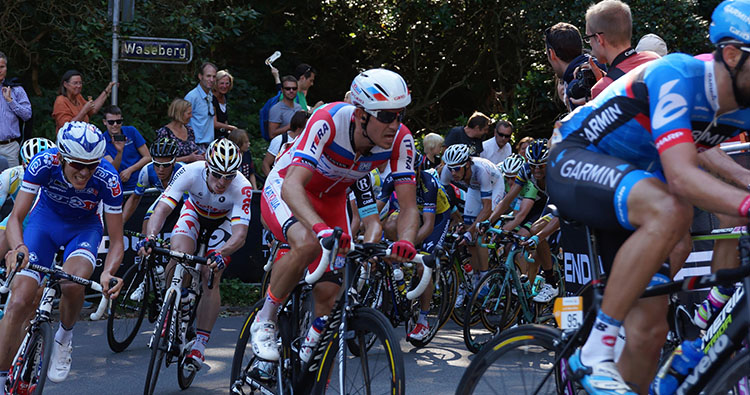
    The race starts and finishes in Hamburg, with a route that will take the peloton in several loops through the city and its outskirts. The terrain is not particularly undulating throughout, but it does become a bit more challenging as the race wears on. After a long and mostly flat first half, the riders face four climbs of the Waseberg, the only real uphill test that must be overcome before the finish. It’s not even a full kilometer to the top, but after a long day, repeated trips up the steep climb will wear down some of the heavier riders. Generally, the Waseberg is the site of attacks, and though in recent editions they’ve all been closed down before the line (which comes roughly 15 km after the last ascent), the potential for a late game of cat and mouse does make for a hectic finale.

    Weather has played a role in this race in the past, and it may again in the 2014 edition of the Vattenfall Cyclassics. There is a possibility of rain and a likelihood of high winds in the forecast, which could make this journey from start to finish a bit more stressful.

    The Contenders

    With a sprint as the most probable outcome, a fast finish will be the most important asset for anyone to be considered a main contender here. Endurance to survive a long day in the saddle and arrive at the finale fresh will help. The big-name sprinters, especially those who are comfortable sprinting after 240 kilometers, will be the top favorites. Last year’s winner John Degenkolb fit the bill perfectly, but he is in Spain for the Vuelta. However, there are plenty of other top quick men on this startlist (the field is probably even stronger than it was last year) to battle it out for the win.

    Katusha’s Alexander Kristoff was 3rd in the 2013 edition of the race, and given his impeccable form right now, he will have an excellent opportunity to improve on that this year. The Milano-Sanremo winner is at his best after a lengthy race, he doesn’t mind a few bumps on the way to the line, and his top speed has reached new heights this season, making him among the most likely winners of the race. Bad weather will only increase his chances. The very quick Alexey Tsatevich makes for a powerful teammate.

    Andre Greipel took 2nd place for the second consecutive time in 2013 and he’ll again be a strong contender in 2014. He is one of the fastest sprinters in the world, and he has made it through this parcours to the seemingly inevitable bunch finish in the past. However, he’s been a bit of a mystery over the past two months, at times showing off the blazing top speed for which he is well-known, and at other times widely missing the mark in races that seemed to suit him. He’ll need to put it all together to come away with the win here, and he hasn’t had a perfect run-up to race after withdrawing from the Eneco Tour due to illness. The possibility of rain won’t help either. Still, if he is feeling good and positions himself well, he’ll be hard to beat.

    Marcel Kittel is the best pure sprinter on this startlist, with the Tour success to prove it. In a straight contest of speed, he is very rarely beaten, especially with the help of the Giant-Shimano leadout. However, as impressive as Kittel is as a sprinter, he doesn’t have the same versatility as teammate and 2013 winner John Degenkolb; he struggles with even minor challenges in a profile, and after 245 kilometers, he may be a different rider entirely from the speed machine that won the sprint down the Champs-Elysees. He’s certainly a contender, but he needs to prove that he can handle long days with a few bumps along the way before he is favored to win a race like this. The team may rely on Luka Mezgec as a capable alternative. Mezgec has taken his game to a new level in 2014, collecting win after win in the spring and showing good form lately in the Tour de Pologne and the Eneco Tour. He is a bit more capable than Kittel on the tougher parcours. Simon Geschke is another nice alternative; should this race be more selective than it usually is, he’s a dangerous rider in a reduced sprint.

    OPQS brings a team loaded with firepower, with sprinting star Mark Cavendish leading the way. He’ll be eager to reassert himself in a bunch gallop after his early exit from the Tour de France, and he’s obviously among the very best sprinters here, with only Kittel and Greipel as potential rivals for pure speed. Still, while he’s a bit more likely to make it to the line than the aforementioned Kittel, there is a difference between surviving and arriving to the finale with fresh legs, as this year’s Milano-Sanremo (where several riders outmatched him even in a sprint) showed. Gianni Meersman is a terrific alternative if necessary, having shown brilliant form at the recent Tour de Wallonie, and Tour de l’Ain. The versatile Meersman should have no problem at all with the profile or the length of the race, and he may have more left in the tank than others by the end of the day. The same is true for Matteo Trentin, who will be yet another option for OPQS. Mark Renshaw, who showed in the Tour de France that he still has a lot of speed, deserves a mention too.

    FDJ’s Arnaud Demare took the biggest win of his career here in 2012, and he has the skillset to fight for the overall victory again this year. Apart from a forgettable, illness-marred Tour de France campaign, he’s had a strong season so far, and he’ll be motivated to show that he’s back to his best in this race. 2nd in Gent-Wevelgmen in March, Demare is especially strong after a long day in the saddle, making him a top favorite for victory.

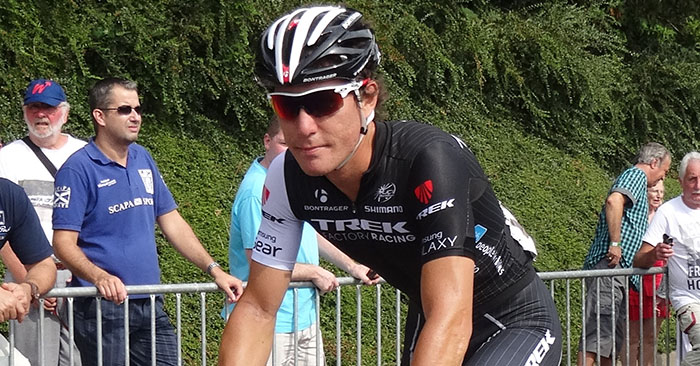
    Trek’s Giacomo Nizzolo was 3rd in the 2012 Vattenfall Cyclassics. He’s had an odd year, with quite a collection of nice sprinting performances but only two victories (in the Tour de San Luis and the recent Tour de Wallonie). Timing has been a bit of an issue on a number of occasions, and this race’s often chaotic finale won’t help with that, but the route and profile suit him perfectly, and Trek has a fast group of riders in attendance to strengthen his chances. Given the possibility that the likes of Kittel, Cavendish, and Greipel may not make it all the way to the line with the lead group, Nizzolo could contend for the win.

    Lampre-Merida’s Sacha Modolo has shown flashes of brilliance in 2014, but he’s missed out on several races that looked to be good opportunities as well. Crashes haven’t helped. If he can hang on here, he’s extremely fast and should be in the mix for the victory. Europcar’s Bryan Coquard has won some smaller races this season and will hope to put his strong finish on display on a bigger stage in Hamburg. Sky’s Ben Swift would probably prefer a few more hills on the profile, but he’s a good sprinter in any scenario, and the length of the race alone could give him an advantage (like it did in Milano-Sanremo this year, where he was 3rd); much the same could be said for his teammate Edvald Boasson Hagen, who, though he has had a year to forget, did win this very race back in 2011. NetApp-Endura’s Sam Bennett is another very quick rider who becomes more dangerous when the route to the finish line has a few challenges along the way. Movistar’s JJ Lobato, BMC’s Thor Hushovd, Garmin-Sharp’s Tyler Farrar (winner of both the 2009 and 2010 edition), Orica-GreenEdge’s Matt Goss, Tinkoff-Saxo’s Matti Breschel, and AG2R’s Davide Appollonio are others who could contend in a sprint.

    Despite a historical precedent of bunch finishes deciding this race, a few teams have brought some talented riders, several of them familiar classics specialists, who will try to make things interesting by applying pressure as the long day nears its finish. BMC’s Greg Van Avermaet, OGE’s Simon Gerrans, Michael Albasini, and Jens Keukeleire, Astana’s Enrico Gasparotto, and Belkin’s Sep Vanmarcke and Lars Boom look to be the likeliest protagonists for a late move or success in a sprint from a small group.

    VeloHuman Top 10 Favorites

    Winner: Alexander Kristoff
    Podium: Arnaud Demare, Giacomo Nizzolo
    Other Top Contenders: Andre Greipel, Mark Cavendish, Marcel Kittel, Gianni Meersman, Luka Mezgec, Sacha Modolo, Ben Swift

    -Dane Cash

    Photo by youkeys.

  • Giro d’Italia 2014 Post-race Impressions: Rising Stars Put on a Show in Italy

    Giro d’Italia 2014 Post-race Impressions: Rising Stars Put on a Show in Italy

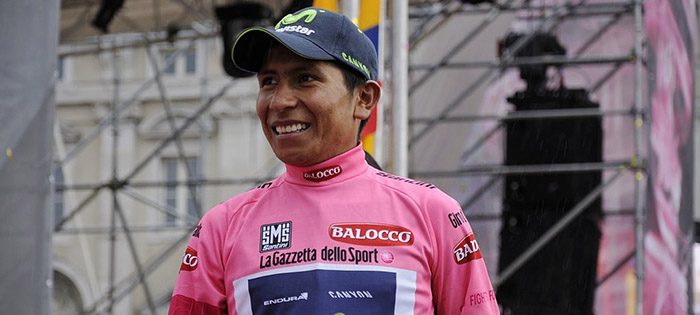
    Quintana in Pink

    Now that the dust has settled in the battle for the maglia rosa, it’s time to give some thought to what we learned from the 2014 Giro d’Italia. With several brilliant performances over the course of the three-week tour, the race offered a wealth of insight into which riders are on the rise at the sport’s top level. The dominant theme at this year’s Giro? A new generation of stars has definitely arrived.

    Promising Talents Confirmed, Part 1: GC Riders

    An amazing seven of the Top 10 riders in the General Classification are age 27 or younger. For every one of them, this Giro was a statement, a confirmation of the ability to take a step forward, whether from promising young all-rounder to Grand Tour Top 10 finisher, or from Grand Tour runner-up to Grand Tour winner. Many of the biggest names in the race are primed to light up the sport’s highest profile events for years to come.

    Nairo Quintana did not need to prove to anyone that he was one of the world’s best climbers, but his ability to handle full team leadership and the pressure of being a top favorite for a huge race was something of an unknown. In the 2014 Giro, Quintana was Movistar’s man from Day 1, and the Spanish superteam brought a squad completely dedicated to putting the young Colombian into the pink jersey. He delivered in convincing fashion, proving that a leadership role is something he can handle without any reservations. Famous for his poker face, Quintana did not let a number of early mishaps (a poor TTT performance, crashes, and illness) get to his head or his morale. He also showed improved ability in a non-mountain time trial, and dominant form in a mountainous one, building towards a more well-rounded game that will surely position him for more success moving forward.
    Rigoberto ITT

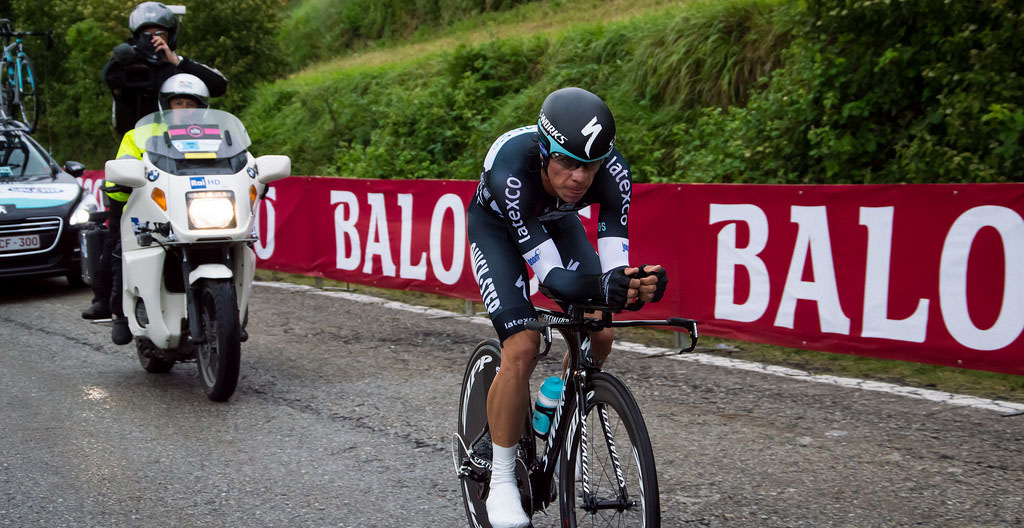
    Rigoberto Uran may not have bettered his 2013 result, delivering a second runner-up performance in a row, but he did show a more complete skillset, including a vastly improved ability to ride against the clock. Long considered a pure climber with a decent punch, the 27-year-old blew the doors off a Stage 12 time trial that did not appear to be particularly climber-centric, and continued to show off stellar endurance with his 3rd place performance in the Stage 19 hill climb. His newfound prowess in the chrono may not have been enough to hold onto the pink jersey, but it bodes very well for his future, especially should he decide to shift his focus to the Tour de France, which typically places greater importance on the flat ITTs and the long climbs.

    Fabio Aru was undoubtedly the revelation of the race. Flashes of brilliance in his young career had already put him in the spotlight as Italian cycling’s next big thing, but few expected him to deliver in so dazzling a fashion so soon. A pure climber with an aggressive streak, Aru exploded up the Montecampione on Stage 15 to put himself into contention for the podium, and then grabbed hold of it with two hands in the hill climb TT. Despite a lack of experience consistently performing at this level, he did not appear to fatigue in the final week. Just as Michele Scarponi’s career is starting to enter its twilight years, Astana suddenly has a new Grand Tour contender on their hands in Aru, who will surely light up the Giro for years to come.

    Pierre Rolland bounced back from a very disappointing 2013 in a major way. After strong Tours de France in 2011 and 2012, he looked set for long-term success, but he failed to notch even a single WorldTour Top 10 in the year to follow. The 27-year-old was consistently climbing with the best in this Giro, suggesting that he is back on track for success moving forward. Rafal Majka did his 2013 performance one better with a 6th overall, despite suffering from stomach issues late in the race. He delivered a very impressive first time trial. With Alberto Contador seemingly locked in for the Tour de France for a while, Majka could shine as Tinkoff-Saxo’s Giro star for years to come.

    Wilco Kelderman may not have finished on the podium or won a high profile stage, but he was another major revelation of this race. He put in a handful of Top 10s in shorter stage races in 2013 but he was consistently climbing with the very best in this Giro, and while he did fade a bit towards the end of the race, he limited his losses and still landed 7th overall, ahead of Cadel Evans. He managed all this at just 23 years old, and, in my opinion, without particularly strong team support. He still needs to develop more, but if he can continue his progression he has a very high ceiling. As an added bonus, while it won’t help him much in the Grand Tours, he has shown a newfound ability to finish very fast, as well.

    Trek’s Robert Kiserlovski came into the race targeting a Top 10 and delivered on his goal, finishing exactly 10th. He never challenged for the overall victory, but on most of the decisive stages in the race he was able to hang with the top climbers most of the way up. His third WorldTour Top 10 this year, it’s a strong performance to continue a nice run for the Croatian, whose team is sorely in need of rising GC talent.

    Sky’s Sebastian Henao may have finished the race much further down the General Classification, but he showed serious promise in this Giro. On several mountain stages, he was able to hang with the leaders for most of the way up the climbs despite generally being alone among his team while Dario Cataldo and Phil Deignan were hunting breakaway victories. Then, in Stage 19 ITT up Monte Grappa, he notched an 8th place, ahead of Cadel Evans and Wilco Kelderman. He’s only 20 years old, and riding for a team famous for their ability to develop young talent: big things are coming from Sergio’s cousin, and they could be coming soon. Wouter Poels of OPQS was another strong performer whose final position in GC did not reflect his performance in the race. He was constantly at the side of team leader Rigoberto Uran even on the tough climbs, riding uphill so impressively that he managed to hang on in the GC Top 10 all the way up through Stage 15. He also landed 6th in the first ITT. It’s been an excellent year for the young Poels, who notched a stage win at Pais Vasco with a brilliant escape from GC rivals on a tough climb in Stage 4 of that race. Poels is establishing himself as yet another all-rounder talent for a team looking to expand on their already dominant position in the one day races and sprints.

    Promising Talents Confirmed, Part 2: Stagehunters

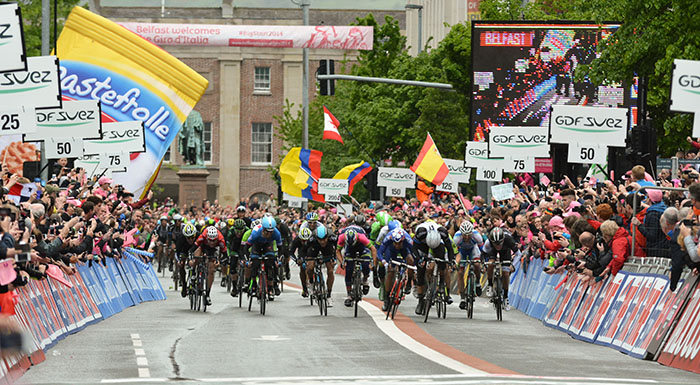
    Of the six stages that ended in a bunch sprint in the 2014 Giro d’Italia, six were won by riders aged 26 or younger, and it was only Marcel Kittel‘s birthday stage victory that keeps me from saying 25 or younger! The German dominated the first two bunch gallops of the race, delivering an astounding performance on Stage 3 (where he closed a ridiculous gap in the final hundred meters to pip Ben Swift to the line) that will be remembered for a long time. With the Tour on the horizon, the young Kittel has made a major statement that his rivals Mark Cavendish and Andre Greipel will surely have noticed.
    Giro d'Italia Sprinters

    The departure of Marcel Kittel ostensibly left the sprints wide open for the remaining fast men, but 23-year-old Nacer Bouhanni quickly established himself as the one to beat. His scrappy, wheel-surfing style was perfect for the technical finishing circuits of the race, and he showed time and again an ability to put himself into the best position for the final gallop, and then time his jump just right. FDJ’s young sprinter is obviously very fast, but he also displayed the sort of sprinting savvy necessary to actually win races consistently, which has already set up a bit of a controversy within his team, where the presence of fellow young fast man Arnaud Demare leaves things a bit crowded at that position.

    Giacomo Nizzolo notched a heart-breaking four 2nd place finishes but he has much to be proud of, and more to be excited about. Nizzolo is a versatile rider who has shown serious potential in flatter one-day races: he has notched podium performances in the GP Ouest France and the Vattenfall Cyclassics. He’ll be disappointed to come away from this Giro without a win, but if he can maintain this level of top speed into the late summer races that favor someone with his array of skills, he can expect continued success there.

    Giant-Shimano’s 25-year-old Luka Mezgec picked up a stage win on the final day of the Giro to finish off an admirable job of filling in for Marcel Kittel. Mezgec has been on fire this year, dominating the sprints in the Volta a Catalunya, and he gives his team yet another option in the bunch finishes behind Kittel and John Degenkolb.

    Michael Matthews of Orica-GreenEdge showed in last year’s Vuelta a Espana that he deserves to be considered a top-shelf sprinter, but his Giro performance showed the terrific depth to his game. He was already known as a versatile fast finisher, the sort of rider who was particularly dangerous when hills reduced the bunch before a final gallop, but his week in the pink jersey displayed a whole new level of versatility. He capped it off with a stage win atop a Category 2 climb. He was forced to abandon midway through the race, but now looks set to head to the Tour de France, where he will hope to mount a challenge to the likes of Peter Sagan and John Degenkolb on the bumpier days.

    Elia Viviani got off to a fine start, with a trio of Top 5s in the first three sprint stages, but he was unable to come up with anything after that. Crashes did not help. As the bookies’ favorite to win the points jersey, Viviani was one of the surprise disappointments of the race, but weather-caused carnage may have played a role, and he’ll hope to prove that that was the case in his next few races.

    Stepping away from the bunch sprints, Lampre’s Diego Ulissi was an early star of the race, delivering a powerful uphill assault on his way to victory on Stage 5 and then charging up a steeper gradient to win Stage 8 atop the Category 1 Montecopiolo. After a disappointing Ardennes campaign, Ulissi was head and shoulders above the competition in the fast uphill finishes in this race. In my mind, he’s ascended to the very top echelon of riders in that specialty, and even though he was unable to make much happen in the classics this year, I expect to see him launching himself to success in races like La Fleche Wallonne very soon. The punchy skillset wasn’t the only ability he put on display in this race, however. Ulissi also delivered one of the most shocking performances in the Giro d’Italia on Stage 12, where he notched 2nd place in a long, not particularly hilly time trial. He had picked up strong results here and there in mountain climb chronos in his young career, but this was something new entirely. Ulissi left a number of TT specialists in his wake and was only bested by an otherworldly Rigoberto Uran, suggesting that while his near future may focus on the one-day races and hillier days in stage races, he may have real GC style talent under the hood.
    Arredondo in Blue

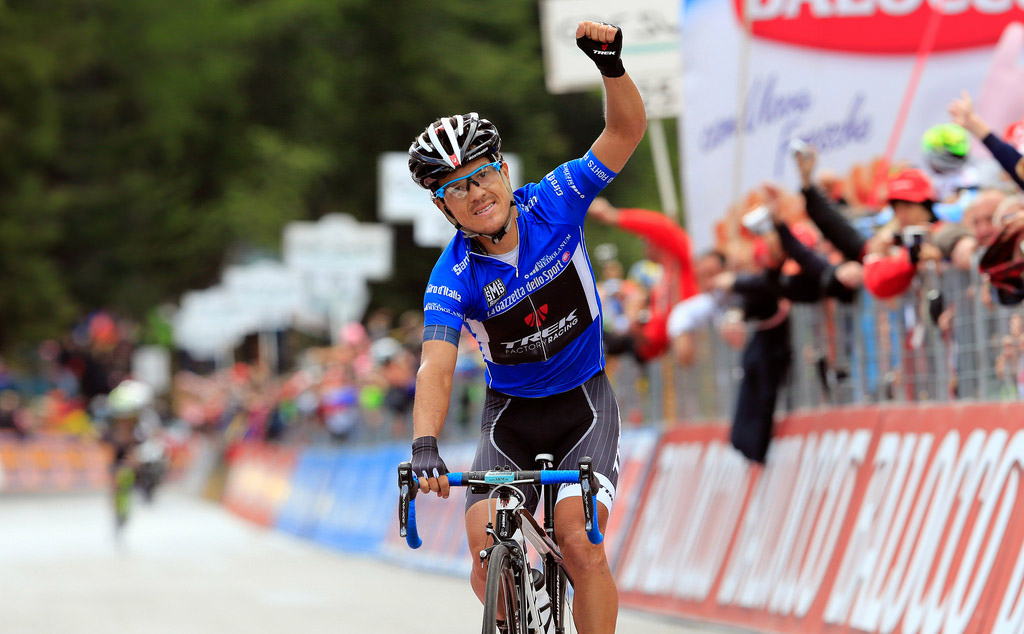
    Trek’s Julian Arredondo was the other uphill-charging stagehunter to take a massive step forward in this race. His Tour de Langkawi win in 2013 put him on the map and caught the eye of plenty of observers, but he has come into his own for a WorldTour squad here in 2014. He won a pair of stages in the Tour de San Luis at the beginning of the year, and then climbed his way to 5th at Tirreno-Adriatico, hinting that bigger successes were right around the corner. He did not disappoint in the Giro d’Italia, earning the King of the Mountains jersey and a stage win with his aggressive style and his considerable uphill punch. He was always on the lookout for opportunities to attack, and it served him well. His Stage 18 victory was particularly impressive: he put in a ton of effort racking up KOM points early in the day but still managed to have enough in the tank to outclimb his breakaway companions on the final climb. Now with a top-level team to help him continue to develop as a rider, 25-year-old Arredondo is likely to continue to rise as a climbing star.

    Lotto Belisol’s 23-year-old Tim Wellens was another very impressive rider in this race. He was unable to come away with a win, but notched a pair of great 2nd place performances as well as a 9th place in the uphill ITT. He was 3rd in the overall King of the Mountains competition thanks to his aggressive pursuit of breakaway success. He may not have picked up the result he wanted, but he put a ton of ability on display and can no longer be considered “under-the-radar.” Team Colombia’s Fabio Duarte also picked up a pair of 2nd places, upping his total to four in the Giro. He’s an uphill specialist with a sharp eye for opportunities to attack; riding for a Pro Continental squad, he doesn’t get as many chances to shine on the biggest stage as he probably should, but he’s making his mark when he can.

    Crashes Cloud the Issue for Others

    Even as a sizeable contingent of up-and-coming stars made massive strides, a number of other riders saw their bids for glory fall apart on messy, rain-soaked roads, robbing us of an opportunity to see how they might have fared under more favorable conditions. Dan Martin hoped to deliver his first Grand Tour Top 10 in this Giro, but found himself out of the race on its very first day. He seems to be recovering well and will now refocus his season on the Tour or the Vuelta. He was in excellent shape in the Ardennes before his nasty TTT crash; if he can recapture that form, a return to success this season seems likely.

    Joaquim Rodriguez was the biggest name to fall victim to the slippery Italian roads. Caught up in the mess on Stage 6, Purito was forced to abandon before the Giro ever really hit any mountains. This was supposed to be a strong opportunity for him to pick up that elusive Grand Tour victory, but now he, too, will have to shift his focus, apparently to the Vuelta. Though he hasn’t ruled out the Tour de France, he could find himself in an excellent position in Spain if he does: without having the grueling mileage of another Grand Tour in his legs, he would be a strong contender for that race, which has been won by a rider without a previous GT on the year in its last three editions.

    Michele Scarponi, Nicolas Roche, and Przemyslaw Niemiec were also caught up in or behind the Stage 6 carnage (along with a number of other non-GC riders) and saw their GC hopes crumble. The first two then realigned their goals rather successfully (Scarponi went into domestique mode for Aru, who finished on the podium; Roche helped Majka achieve a strong GC placing and Michael Rogers notch a pair of stage victories), but it was an unfortunate turn of events for both riders, who harbored GC aspirations. Scarponi will be 35 next year and with Nibali as the team’s big star and Aru on the rise, the future is not particularly promising. Lampre’s Niemiec was coming off a strong performance in Trentino, but did not feature much after his tumble down the General Classification. Though he was excellent in 2013, he, too, will be 35 for next year’s Giro and may see younger talent take a more prominent role.

    Gearing Up for Tour Season

    With the Giro wrapping up, the cycling world shifts its focus to its biggest event (and the tuneup races that lead into it). The Criterium du Dauphine and Tour de Suisse are around the corner and the Tour de France is only about a month away. A few of the stars of the Giro will make the start in their second Grand Tour, riding against the likes of Chris Froome and Alberto Contador on cycling’s biggest stage. You can expect to see their names and plenty more in the VeloHuman previews to come, so stay tuned!

    -Dane Cash

    Photos by Maurizio Costanzo, Maurizio Massasso, Sean Rowe, and nuestrociclismo.com.
  • Giro d’Italia 2014: Stage 21 Preview

    Giro d’Italia 2014: Stage 21 Preview

    Stage 21 Profile

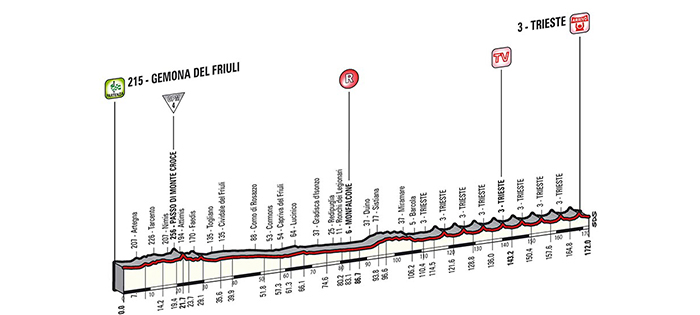
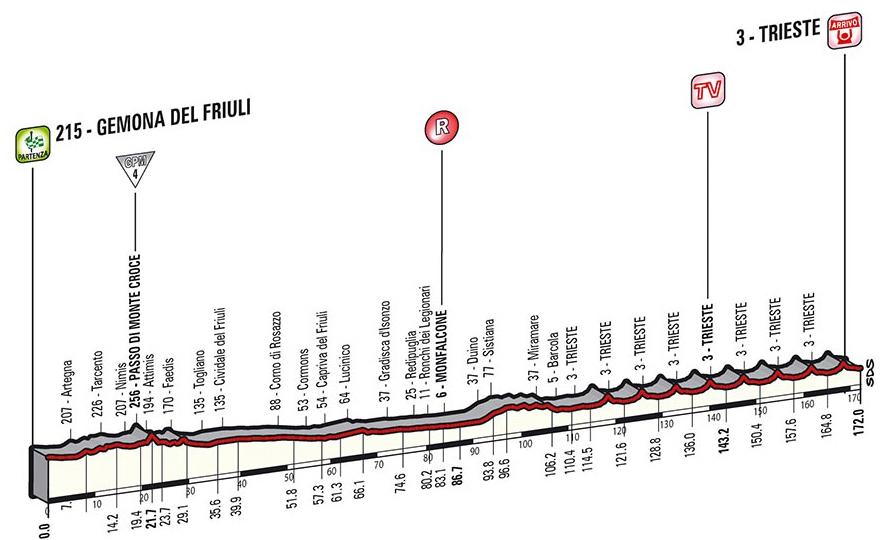
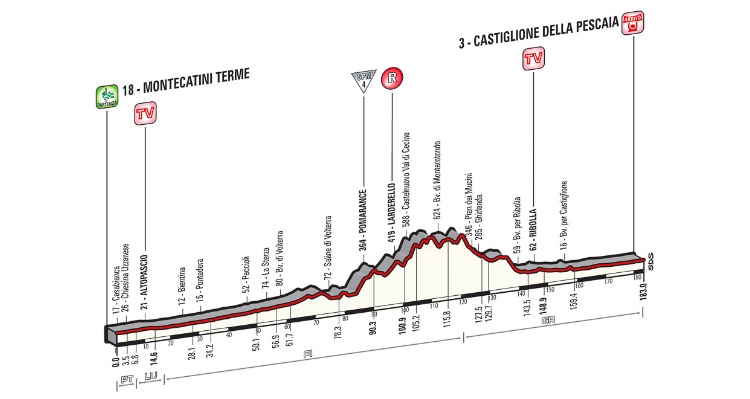
    Stage 21: Gemona del Friuli > Trieste – 172 km

    Just like that, the final stage of the 2014 Giro d’Italia is here. It’s been an eventful ride, and not without controversy, but it all comes to a close at the Trieste finish line. It’s a huge accomplishment to finish a Grand Tour, and the fans will line the road to voice their admiration as the peloton bids farewell. The fast men have braved several grueling climbs in the past few days (including the brutal Monte Zoncolan conquered by Michael Rogers on Stage 20) to reach this last contest.

    The Stage 21 course is pretty straightforward. The riders will traverse a little over 114 kilometers of mostly flat roads to reach Trieste, where the stage and the 2014 Giro d’Italia will finish after eight laps of a 7.15 km city circuit. Each lap involves both a small climb of a little less than a kilometer at an average gradient a bit over 4%, and then a quick but somewhat technical descent. The final kilometer includes an early left hook, but from there it’s a mostly straightforward run to the line, with a gentle rightward curve in the final 500 meters.

    While there are a few bumps along the journey, it’s hard to see the sprinters letting this one get away from them. The Giro’s final stage is a big prize, and after the initial period of riding at a parade pace is over, the sprint trains are going to ramp up the speed to shut down anyone with dreams of getting ahead for a solo victory. Anything other than a bunch gallop among the heavyweight fast men will be a shock.

    It’s been a while since the sprinters had the spotlight, but little has changed in the predictive pecking order. FDJ’s Nacer Bouhanni, three times a stage winner already and wearer of the red points jersey, is the rider to beat. At the beginning of this race, it seemed that he might abandon in the mountains, but when Marcel Kittel exited the race early and left the sprints open to Bouhanni, the young French star found himself in the driver’s seat for the points jersey very quickly. He resolved to survive the mountains, and survive he did. Now, he’s got an excellent opportunity to pick up win number four. His rivals will have to step up their game if they want to beat Bouhanni; he has already proven himself best in the sprints in this Giro d’Italia.

    Giacomo Nizzolo, three time runner-up to Bouhanni, may have his best opportunity to finally nab a win here in Stage 21. There are twists and turns late in the circuit, but the final 500 meters only involve a slight rightward pull, which should allow the sprinters to reach some high speeds. Nizzolo has struggled a bit with positioning and timing in this Giro’s sprint stages, but for once the last several hundred meters will set up a pretty straightforward gallop to the line. This is his last chance to defeat Bouhanni, so I expect that he’ll hit an impressive velocity on this finishing straight.

    Cannondale’s Elia Viviani has excellent top-speed, and while he and his squad have disappointed in this race, I think they have a nice chance to get it right in this finale, which is relatively uncomplicated compared to some of the technical circuits they faced early in the Giro. Cannondale doesn’t have a GC rider to worry about, and they haven’t picked up a single stage in the race: they are going to go all out to get Viviani into position here.

    Giant-Shimano’s Luka Mezgec should be in the mix. A strong GSH leadout will position him well to take on the other fast men. Sky’s Ben Swift should be there as well, fighting for this last chance to bring home a victory for a team that has had so many near misses but no wins in the Giro. Lampre’s Roberto Ferrari and Garmin’s Tyler Farrar are strong outsiders. Bardiani-CSF’s Enrico Battaglin will hope to pick up one more victory for his very successful squad. Movistar’s Francisco Ventoso might even give it a go, as his duty protecting Nairo Quintana is finally coming to an end.

    VeloHuman Stage Favorites

    1. Nacer Bouhanni | 2. Giacomo Nizzolo | 3. Elia Viviani

    It’s been a blast previewing every stage in this race! I hope you’ve enjoyed it as much as I have. If you don’t already, follow me @VeloHuman on Twitter for more analysis, and stay tuned for previews of the Criterium du Dauphine, the Tour de Suisse, and, of course, the Tour de France (with individual previews of all 21 stages), along with plenty of other great content over the next few weeks.