Tag: Michal Kwiatkowski

  • Amstel Gold Race 2015 Preview

    Amstel Gold Race 2015 Preview

    Samuel_Sanchez_AmstelGR

    The Classics calendar leaves the rough cobblestones of Flanders and northern France behind for the short, steep bergs of the Netherlands Sunday at the Amstel Gold Race. The uphill chargers will face off on a bumpy parcours in the Limburg province, the first of three puncheur-friendly WorldTour races often called the “Ardennes Classics” (though the Amstel Gold Race doesn’t actually go through the Ardennes forest.

    The Route

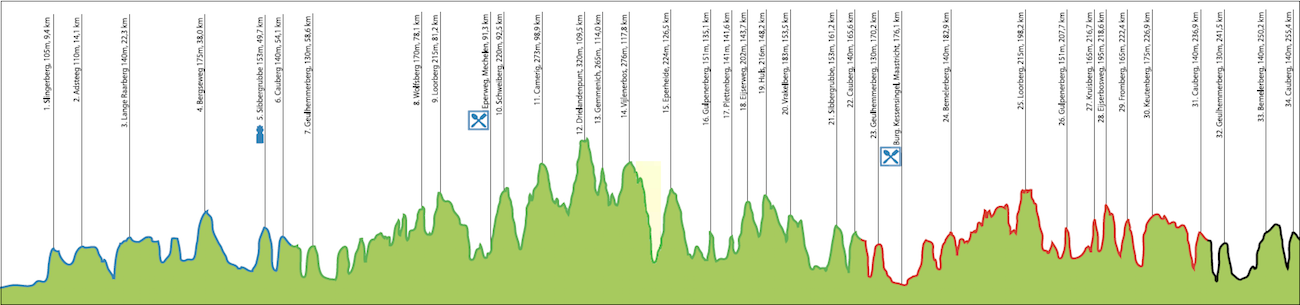
    Even at a long 251 kilometers in full, with 34 classified climbs from start to finish, the Amstel Gold Race is a roller-coaster ride throughout. The trip from Maastricht to Berg en Terblijt is one of constant ups and downs, with plenty of road furniture along the way to boot.

    AGR

    On paper, the route and profile look perfect for aggressive racing, and recent editions have seen successful long-range attackers. But historically, this race has quite often been all about the very last uphill test, the Cauberg. It’s a little over a kilometer long at just under a 5% average gradient, but with some seriously steep stuff in the middle. From the top of the final ascent (the peloton will visit the iconic climb multiple times on the day) of the Cauberg, it’s still almost two kilometers to the line, a relatively recent route alteration that requires those who get away on the last slope to maintain their gap over a flat stretch before the finish.

    The Contenders

    Whether this race is won with a long-range attack, a charge up the Cauberg, or a finishing sprint in the final drag, explosiveness is the critical trait for any would-be contender in the Amstel Gold Race: explosiveness to get clear in a breakaway attempt, to launch up the last climb, or to win a bunch kick in the finishing straight. The Amstel Gold Race is a puncheur’s playground.

    Philippe Gilbert is the peloton’s most successful active Amstel Gold Racer, and generally, the sport’s dominant figure on the Cauberg climb. He’s won this race three times, and won his rainbow jersey atop the Cauberg in 2012. This race suits him down to the ground, and his 3rd place in the recent Brabantse Pijl suggests he’s in good shape. Still, he’s not the Philippe Gilbert he once was, and all eyes will be on him in the last few kilometers. He won’t be able to slip away. As strong as he is here, this startlist is packed with hungry uphill specialists, it won’t be easy for him to get clear even on his favored terrain, and a few of the other likely contenders could probably beat him in a sprint if he can’t drop them. He’s the oddsmakers’ favorite for obvious reasons, but winning a force Amstel will be a real challenge. Regardless, having Samuel Sanchez, Greg Van Avermaet, and Ben Hermans around to launch attacks does give BMC plenty of cards to play.

    Alejandro Valverde has never won here, but his uphill burst is one of the best in cycling, and his ability to win a sprint even in a flat finish makes him particularly dangerous. In blazing form after a three-stage-win Catalunya, Valverde has a terrific chance of winning this race.

    Michal Kwiatkowski, 5th last year, also has a strong uphill burst and an excellent finishing kick. One advantage he may have even over the versatile Alejandro Valverde in this finale is a talent for late solo moves. He earned his Worlds title with a brilliant late attack in Ponferrada, and with the finish line still over a kilometer from the top of the Cauberg, his time trialing skills will come in very handy.

    Simon Gerrans is perfectly suited to this parcours, but he is probably still a bit lacking in the form department after an early season injury. Orica-GreenEdge will likely put their faith in Michael Matthews instead, who just landed his second straight 2nd-place result in Brabantse Pijl. If the punchier riders can’t get separation, Matthews has a great chance of winning this race in a sprint.

    Joaquim Rodríguez has the punch to thrive on the Cauberg, and showed incredible form in Pais Vasco. The flat stretch that follows from the top of the final climb is not great for his skillset but he may be strong enough to open up a winning gap on the uphill drag. Teammate Daniel Moreno also has plenty of punch, and a decent sprint as well.

    Sergio Henao is another talented climber with a fair bit of punch, and he showed strong form in the Basque Country. Daniel Martin would probably fare better with a purely uphill finish too, but he does have a nice finishing kick if he manages to get into a small group in the finale—Tom-Jelte Slagter is another option for Cannondale.

    With an impressive trio of Jelle Vandendert (twice 2nd here), Tony Gallopin, and Tim Wellens, Lotto Soudal will almost certainly be in the mix for the win. Wellens is a great candidate to go from afar. Giant-Alpecin’s Tom Dumoulin is another great long-range candidate. His elite soloing ability combined with an ever-improving finishing kick make him a terrific outsider for victory.

    Lampre’s Rui Costa and Diego Ulissi, Wanty-Groupe Gobert’s Enrico Gasparotto, Astana’s Vincenzo Nibali, Tinkoff-Saxo’s Roman Kreuziger, Trek’s dangerous trio of Bauke Mollema, Julián Arredondo, and Fabio Felline, CCC’s Davide Rebellin, and AG2R’s Carlos Betancur and Jan Bakelants are others hoping to get into the mix.

    VeloHuman Top 10 Favorites

    Winner: Michal Kwiatkowski
    Podium: Alejandro Valverde, Philippe Gilbert
    Other Top Contenders: Michael Matthews, Joaquim Rodriguez, Jelle Vanendert, Tim Wellens, Daniel Moreno, Sergio Henao, Tom Dumoulin

    Be sure to follow @VeloHuman on Twitter for more analysis.

    -Dane Cash

    Photo by By Jakub Cerveny (CC).

  • The Recon Ride Podcast: Amstel Gold Race + La Flèche Wallonne 2015 Pre-race Show

    The Recon Ride Podcast: Amstel Gold Race + La Flèche Wallonne 2015 Pre-race Show

    RR_VH_Art_AGR+LFW2015_fin

    Episode 9: Amstel Gold Race + La Flèche Wallonne 2015 Pre-race Show
    The Recon Ride presents a double helping of pre-race analysis for the Amstel Gold Race and La Flèche Wallonne.

    [powerpress]


    The peloton heads for the hills to take on the Amstel Gold Race and La Flèche Wallonne, the first two races in a trio of springtime one-day WorldTour events for the punchier types, and the Recon Ride is covering the talking points with a double pre-race show.

    Photo by Johan Wieland.

  • Vuelta Ciclista al País Vasco 2015 Preview

    Vuelta Ciclista al País Vasco 2015 Preview

    1024px-Aiako_harria

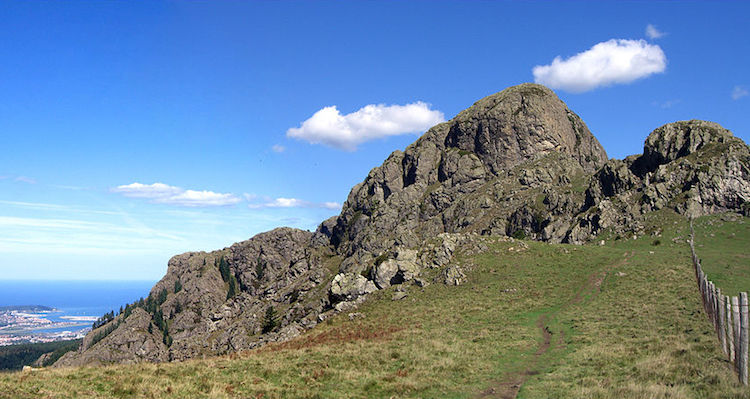
    While the Cobbled Classics stars do battle in Northern Europe, many of the peloton’s top climbers are headed to the Basque Country for the Vuelta Ciclista al País Vasco. With a parcours that includes both climbs and an ITT, it attracts plenty of Grand Tour-style riders. It also happens to be a hilly race just a few days in advance of the Ardennes Classics, and therefore, it draws many of the likely protagonists of those races as well. True to form, the 2015 edition boasts an appealing, bumpy route and a strong startlist of stars with a variety of specializations.

    The Route

    There isn’t a lot of flat in the Vuelta al País Vasco. Potential launching pads are everywhere in this race.

    Stages 1 and 2 both involve some hills and both end with downhill sections; sprint finishes (likely reduced) are possible, though only if the interested teams can work well to keep any attacks on a short leash. Stage 3 will test the riders with eight categorized climbs, which will almost certainly break things up.

    Stage 4 finishes at Arrate just after a Cat. 1 summit. The race often sees a major shakeup here. Another eight-climb day on Stage 5 (closing out with a Cat. 2) will probably see plenty more action. None of these climbs are terribly long, meaning that those riders who can put some punch into a quick uphill charge will thrive.

    Stage 6, the final day of racing, is an 18.3-kilometer ITT. The first half is downhill, but then the road goes up, and then down, and then up again towards the finish. Those two uphill sections are pretty tough, which will make this an interesting chrono to close out the Tour of the Basque Country

    The General Classification Contenders

    Although he would probably prefer the climbs to be more alpine in nature, 2013 winner Nairo Quintana looks like the top contender for the Tour of the Basque Country. Quintana knows how to win this race, he does well even in the time trials here (and this hilly ITT will suit him more than most), and he recently displayed incredible form when he won Tirreno-Adriatico ahead of a powerhouse field. It’s hard to see anyone matching him on the climbs, and he should be able to hold his own on the final stage time trial. With Beñat Intxausti and Ion Izagirre on the startlist as well, Movistar has a stacked lineup for this race.

    Michal Kwiatkowski of EQS is the other top favorite for this race. 2nd last year, he has looked to be in excellent form (which he showed with a 2nd place in the recent Paris-Nice. Due to his nice sprint, he would surely prefer bonus seconds, but his explosiveness will suit him plenty even without added time bonuses at the line. He also happens to be one of the best time trialists in the world. It won’t be easy, but if he can hang with Quintana on the tough uphill stuff in this race, he should manage to take a victory on the back of his impressive chrono skills. Tony Martin, who can climb better than many realize, could have a chance at the overall as well.

    A powerhouse BMC squad the includes Tejay van Garderen, Rohan DennisSamuel Sánchez, and Darwin Atapuma can’t be overlooked. Van Garderen has had a bit of an up-and-down season but his form looked very good at the queen stage of the Volta a Catalunya. If he can manage to avoid having a bad day here (the rainy Basque Country won’t make that easy) he should contend, especially given his great ITT skills. Rohan Dennis obviously sports a strong ITT as well, and is improving as a climber with every race, while Samuel Sanchez seems to always do well in this race, given his punchy skillset, well-suited to the parcours. Atapuma is a bit of a wildcard. He doesn’t get many opportunities to ride for himself but he just put in a nice Top 10 in Catalunya and could get some freedom here.

    Rui Costa will love this route (he is a specialist on this sort of terrains) and his ability to put in a nice time trial, especially on a hilly profile, is constantly underrated by cycling analysts. That makes him a strong contender.

    FDJ’s Thibaut Pinot has improved as a time trialist and, 2nd in the Critérium International, he seems to have the for necessary to be in the mix here. AG2R’s Jean-Christophe Peraud has been a strong time trialist for a long time and, 1st in the Critérium International, he most certainly has the form necessary to be in the mix here.

    Bauke Mollema, 2nd at Tirreno-Adriatico, could continue to shine here. His form in Italy was impressive; he seemed to ride there at a level above what he can typically muster. It’s hard to say whether that will continue here but if the same Bauke Mollema shows up, he’ll contend for the win, with teammate Julián Arredondo an option for Trek as well. Meanwhile, Joaquim Rodriguez is on unknown form after skipping the Volta a Catalunya, but obviously he’s a very dangerous rider in this ultra-hilly race, especially with the Ardennes Classics looming. Simon Spilak was impressive at Paris-Nice and Daniel Moreno is always a strong alternative as well. Andrew Talansky, Tom DumoulinMikel Nieve and Sergio Henao, Adam Yates and Esteban Chaves, and Rafal Majka are others with a shot at the GC in this Tour of the Basque Country.

    The Stagehunters

    The parcours seems to be deterring the class of pure sprinters who lack versatility from making the trip, but there are plenty of in-between types with fast finishes and strong climbing legs who will hope to bag stage wins here. Michael Matthews, Ben Swift, and Gianni Meersman look to be the class of the bunch, all capable of hanging on over uphill challenges and battling it out at the finish line in a sprint.

    Tony Gallopin and Tim Wellens, Philippe Gilbert, Diego UlissiTom-Jelte Slagter, and Simon Gerrans are strong bets to battle it out with the GC types for the intermediate stages that could come down to punchy late attacks or small group sprints; the versatile Lotto duo of Wellens and Gallopin could conceivably contend for the overall if they ride strategically.

    And, of course, watch out for Amets Txurruka to try to go on the attack at all times. A constant fixture in KOM competitions in Spanish races, Txurruka has never actually won a WorldTour-level race, but his spirited breakaway attempts have come close in the past.

    VeloHuman Top 10 GC Favorites

    Winner: Nairo Quintana
    Podium: Michal Kwiatkowski, Tejay van Garderen
    Other Top Contenders: Bauke Mollema, Rui Costa, Jean-Christophe Peraud, Thibaut Pinot, Samuel Sánchez, Andrew Talansky, Joaquim Rodríguez

    -Dane Cash

    Photo by Mikel Ortega.

  • Breakout Riders of 2014: A Look at the Rising Stars Who Made the Season’s Most Emphatic Statements

    Breakout Riders of 2014: A Look at the Rising Stars Who Made the Season’s Most Emphatic Statements

    Fabio Aru

    The cold-weather months may be light on road racing, but they do provide an excellent opportunity to take stock of the big performances of the past season with an eye for future potential. Looking at the big picture of races from January all the way up to October, we can get a pretty good idea of the riders that made the most emphatic arrivals this season, and also of those already-known up-and-comers who took clear steps forward into the spotlight with high-visibility results. This sort of prospective retrospective is always nice to have in the middle of the following season, as a barometer of which rising stars are on track in their progression, and which have fallen short of expectations.

    It’s hard to see anyone other than Fabio Aru as the year’s most emphatic arrival. He had been touted as Italian cycling’s next big thing for some time (in last season’s post-year retrospective, I named him as a likely break-out candidate), but he’d never even been on the podium in a WorldTour race before this year. Hard to believe, given that he’s now a three-time Grand Tour stage winner and two-time Grand Tour Top 5 finisher at age 24. A pure climber with an aggressive streak, Aru has the right combination of talent, racing acumen, and guile to pick up victories with bold long-range strikes on the sport’s most challenging slopes. The long, flat time trials are a major weakness in his game, but as chrono-light routes become more and more en vogue, Aru should continue to thrive in the Grand Tours. Interestingly, he doesn’t have much in the way of one-week stage race results to his name, but his skillset would seem well-suited to those too. In short, Aru should be primed for plenty more success as he continues to develop, and continue to develop he will: he doesn’t turn 25 until after the 2015 Giro. Teammate Vincenzo Nibali may have gotten the lion’s share of Astana publicity this season (and his Tour de France victory certainly represents a worthy career progression), but Aru really took a quantum leap forward in his two Grand Tour appearances.

    Where Aru made his arrival the in three-weekers, newly crowned World Champ Michal Kwiatkowski made his statements in the one-day and one-week races, racking up a slew of stellar performances in the early part of the season (winning in Strade Bianche and putting in big rides in Pais Vasco, the Ardennes, and the prologue of the Tour de Romandie, his first WorldTour victory) and then coming back with a vengeance in September, winning a stage in the Tour of Britain en route to 2nd overall and then, of course, taking the rainbow jersey in Ponferrada. It’s more of a giant step-up than an arrival, as Kwiatkowski did flash serious ability in 2013, but he turned Top 10s into podiums and victories this year. For all-around talent, Kwiatkowski rivals Alejandro Valverde in versatility. Pais Vasco was an early expression of that versatility for the young Pole: he was 2nd to Alberto Contador on the General Classification thanks to his climbing legs and his stellar ITT, but he also won the Points Jersey after being in the Top 3 in five of the six stages of the race. After narrowly missing out on the Top 10 in last year’s Tour de France, Kwiatkowski’s ride from Leeds to Paris this season was a bit of a disappointment, but it may be that Kwiatkowski just isn’t a Grand Tour GC contender at this point in his career, and with the way he has performed in the shorter races, that may be okay with him given his ability to contest all manner of one-day and one-week events.

    Giant-Shimano’s Tom Dumoulin was another 1990-born all-round talent to take several steps forward this season. Dumoulin, like Kwiatkowsi, showed promise with several big rides in 2013, but he took his game to a new level in 2014, racking up a few time trial victories in big races (including the Eneco Tour) and taking third in the ITT World Champs, and also delivering several strong road race performances. Wins eluded him, but he came very close in the Grand Prix Cycliste de Quebec, passed by Simon Gerrans just a few meters before the line. He also climbed well enough to hold onto 5th overall in the Tour de Suisse after getting into good position on GC early in that race with strong chrono rides. His time trial has been his biggest strength throughout his young career, but he made significant strides on the hills and at the finish line this season, and looks primed for big things on all sorts of profiles in 2015.

    Alexander Kristoff has enjoyed a textbook progression over the last few years, steadily earning more and more success as he has carved out a niche on the road; in last season’s post-year impressions piece, I said that he had “established himself as a serious contender for hardman sprinter’s races going forward.” He delivered on that promise this season, winning a Monument Classic and two Tour de France stages and picking up plenty of other big results on the way. John Degenkolb, another hardman sprinter (who should challenge Kristoff on the tougher profiles for years to come), took a major leap forward this season as well. The German announced himself with five Vuelta stage wins in 2012 and had a strong 2013, but his victory in Gent-Wevelgem this spring, along with a runner-up ride at Paris-Roubaix, another collection of stage wins at the Vuelta, and several other major successes cemented his position as an elite rider on the tougher sprinters’ days. The emergence of Kristoff and Degenkolb will be a major challenge for Peter Sagan to overcome in the sprinter-friendly classics moving forward.

    Stepping away from WorldTour teams, the Europe Tour provided a down-to-the-wire battle for overall supremacy between two of the year’s biggest arrivals: Topsport Vlaanderen’s Tom van Asbroeck and Bardiani – CSF’s Sonny Colbrelli. Both riders put in impressive performances at major WorldTour events early in the season (van Asbroeck in Gent-Wevelgem and Colbrelli in Milano-Sanremo), and top result after top result in the bigger Europe Tour races on the year.

    Colbrelli

    WorldTour-level action was limited for both of them, but the talent (and top-end speed) is there: Van Asbroeck has a bright future in the classics, especially those where fast finishes are likely, while Colbrelli looks well-suited for bumpier sprinter-friendly days. Van Asbroeck should have plenty of opportunities to go up against prime competition next year, having signed a two-year contract with Belkin, who will appreciate his addition to their classics squad with the departure of Lars Boom. Colbrelli will stay with Bardiani – CSF, but he should continue to have chances to shine in MSR and the Giro, among other races.

    23-year-old Tim Wellens has been with Lotto Belisol since 2012, but something clicked for him this season. The Giro offered the first hints of an impressive puncheur’s engine lurking under the hood; Wellens was active in long-range moves in Italy and came close to victory on multiple occasions, though a pair of 2nd places was all he had to show for his efforts. However, he didn’t have to wait too long to make good on that promise. Sitting 16th overall and 49 seconds down on GC, Tim Wellens struck out for glory from afar on Stage 6 of the Eneco Tour and held on for a decisive stage win and, ultimately, the time gap necessary to secure overall victory. He again put those punchy legs on display with a Top 10 in Plouay, and a 4th place finish in Il Lombardia among very impressive company. Lotto Belisol will be able to mount a potent two-pronged attack with Wellens and Jelle Vanendert in next year’s Ardennes and other hilly classics.

    Orica-GreenEdge was able to enjoy the highly visible arrivals of multiple squad members. The Australian outfit knew that they were getting a wealth of talent when they signed the Yates twins, and both showed ability this season, with Adam Yates in particular having a breakout year. The 22-year-old took a stage and the overall victory in the Tour of Turkey and kept the foot on the gas for his next several starts, landing 5th in the Tour of California and 6th in a hotly contested Criterium du Dauphine (ahead of Tour winner Vincenzo Nibali). He won Italy’s GP Industria & Artigianato and was in prime position in a leading group of five in the final kilometers of the Clasica de San Sebastian before a crash took him out of contention. With explosive climbing legs and a willingness to take chances, Yates had plenty of success in 2014 and looks ready for more in 2015. OGE saw yet another major breakout season with Johan Esteban Chaves, a pure climbing talent with an affinity for the tough mountains.

    Chaves

    Chaves had a promising 2012 but his 2013 was derailed by an early-season crash that left him with a number of serious injuries (including a fractured collarbone and cheekbone). He got back on track in style this year, climbing to stage wins in the Tour of California and 3rd overall in the Tour of Beijing. He likely still needs to get some mileage as a WorldTour pro before he can put in a challenge in the Grand Tours, but he’s ready to contend in the one-week races right now. Suddenly Orica-GreenEdge has multiple options in the mountains.

    French cycling enjoyed a renaissance year, and Romain Bardet‘s emergence as a top-level threat was a big part of that. After a strong 2013, his progression wasn’t necessarily unexpected, but a nation of cycling fans was pleased to see him deliver on his early promise. His impressive climbing legs took him to 6th overall in the Tour (he was a flat tire in the final ITT away from 5th), and he also displayed a surprising knack for one-day success, landing in the Top 10 in Liege-Bastogne-Liege and the GP Montreal. He has a surprising kick and should make waves in the shorter climber-friendly races as he continues to develop for the Grand Tours.

    Cannondale may be going through a merger/takeover, but the final year of the team as we know it saw a few impressive stage racing performances from rising stars. Neo-pro Davide Formolo, just 22, climbed to 4th in the Tour of Turkey and then a month later, against several top GC-style riders nearing their Tour de France peak form, he finished 7th overall in the Tour de Suisse. He strung together a nice collection of results in smaller one-day races as well. He should continue to develop with the new Garmin-Cannondale squad. Meanwhile, another Italian talent wearing Cannondale green took major strides forward in the Vuelta. Damiano Caruso had never been in the Top 10 in the General Classification of a WorldTour race until this season, but he picked up his first WT Top 10 in style at the Vuelta a España, where he consistently hung with the best climbers in the bunch most of the way up that race’s toughest mountains. BMC, running a bit low on GC guys as Cadel Evans retires and Samuel Sanchez nears the end of his career, will be glad to have the infusion of talent as he joins them for 2015.

    Speaking of BMC, Silvan Dillier put together a nice season, picking up results in a wide variety of races and contributing to his squad’s World Championship TTT ride as well. He thrives during hard days in the saddle and has a fast finish to boot. The same could be said (and more emphatically) of the skillset of Garmin-Sharp’s Ramunas Navardauskas. He picked up an impressive win with a late attack in the Tour de France, and he was 3rd in Quebec and 4th in Montreal. He’s always been an aggressive rider with a knack for getting clear on the harder profiles, but an improved finishing kick allowed him to contest a number of sprint finishes this year. He’s now won two Grand Tour stages, and at age 26, he’s just hitting his prime.

    Michael Valgren of Tinkoff-Saxo gets the final mention. The 22-year-old has been a high-profile prospect for some time after delivering several big results in U23 and national events, but this season he sailed to a convincing victory in the Post Danmark Rundt and put in several other strong rides in big races. He was a visible figure at the Worlds Road Race, taking several shots from afar. He has a wide array of talents and a lot of raw power in the tank, and at just 22, he should be on track to land plenty more big results in 2015.

    This is, of course, not an exhaustive list, but hopefully it makes for a useful catalog of the year’s biggest arrivals and most improved up-and-comers. For many of them, breakout success will lead to more focused scrutiny in 2015, which should offer plenty of interesting storylines for the upcoming season as these young rising talents try to cope with pressure to perform. To face that challenge, they will hope to get in as much recovery this offseason as possible, but January and the start of the WorldTour in Australia get closer every day.

    -Dane Cash

    Photos by Alberto Brevers and moz278.

  • Il Lombardia 2014 Preview

    Il Lombardia 2014 Preview

    Bergamo

    Worlds may be over, but the 2014 cycling season isn’t quite done yet. There are still two events on the WorldTour calendar, including the final Monument of the year, Il Lombardia (formerly the Giro di Lombardia, the Tour of Lombardy). It’s a race with a lot of history, and the parcours (though updated this year) always provides plenty of uphill challenges to make for an exciting day; in recent years, those challenges have proven ideal for climbing specialist Joaquim Rodriguez, who has won the previous two editions.

    The Route

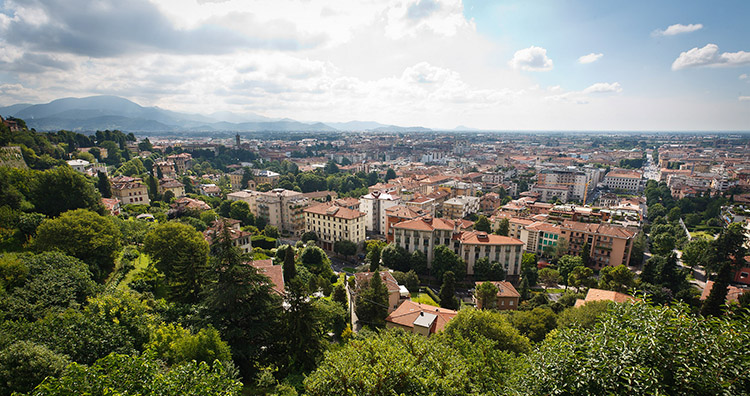
    Still a scenic ride through the hilly Lombardy region of Italy, the “Race of the Falling Leaves” has a new route with new climbs to overcome this year. Instead of starting in Bergamo, Il Lombardia 2014 will finish there, setting out from Como and weaving alongside lakes and over several climbs before the line after a total of 254 kilometers. The first vertical challenge is the Madonna del Ghisallo, which, in previous editions, featured much later in the route. This year, it will be crested only 58 kilometers into the race, but it will still inject plenty of pain into the legs early in the day. Roughly 8.6 kilometers at around a 6.2% average grade, the climb is significantly harder than those general numbers would suggest due to its irregular nature. Things flatten out for a few kilometers in the middle of the ascent, but on both sides of this reprieve are stretches where the gradient jumps over 10%.
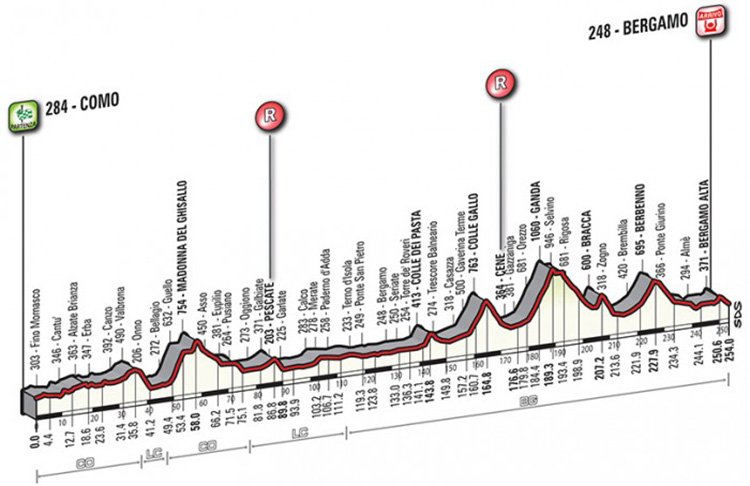
    Il Lombardia Profile

    After the Madonna del Ghisallo, things ease off for a while as the road heads toward Bergamo, which the riders will pass through a little over 130 kilometers into the race before embarking on a long, wide loop that will take them over some challenging climbs on the way back to Bergamo for the finish. The tough stuff starts in earnest with the Colle Gallo (7.4 km at 6%) after about 157 kilometers, and from there it’s mostly up and down to the line. After a fast descent comes the hardest climb of the race, the Passo di Ganda, 9.2 kilometers at 7.3%. Crested about 65 kilometers from the finish, it’s certain to force some selection. A tricky descent follows, interrupted by a short but very steep climb to Bracca, and then another downhill stretch to the foot of the Berbenno climb, which is likely to be a major battleground. 5.5 kilometers at 5.3%, there are a few particularly steep stretches early on, maxing out at 10%. From the top, it’s less than 30 kilometers from the finish line. The peloton will take on a fast descent and then ride on relatively flat roads until the final climb of the day, the Bergamo Alta. It’s only a little over a kilometer to the top, but the average gradient is a demanding 7.9%, and once the climb is crested less than 4 km remain to the line, mostly downhill and with plenty of twists and turns along the way; the winner of the race will likely be one of the first few riders over the Bergamo Alta, as there isn’t much room to recover lost ground after the climb. The ensuing downhill gradient flattens out for the final 500 meters of the race, which could set up a reduced sprint to the line if a small group of riders are together in the lead.

    As an autumn race, Il Lombardia is no stranger to difficult conditions. Purito’s two victories have both been rainy affairs, and there is again a chance of rain this year; with so many descents on the docket, wet roads would certainly shake up an already unpredictable race.

    The Contenders

    The Final Monument Classic of the season, Il Lombardia tends to draw most of the top specialists of the hilly one-day events looking to take one last big prize on the year; the 2014 edition of the race is no exception. Joaquim Rodriguez returns to Il Lombardia hoping to collect his third straight win. It won’t be easy. He has been on decent form in the second half of his season, but he wasn’t quite at the level he’d planned to be during the Vuelta and he did not make as much of an impact at Worlds as maybe he’d hoped. Still, he has been unstoppable in Lombardy in the past few seasons, landing three straight podium performances, and he put in a strong ride (to take 5th) in this week’s Milano-Torino. I’m not sure the new parcours suits him quite as well as past editions did, but Purito is motivated to get more out of this year than he has so far. Katusha has a lot of firepower in the race to support Rodriguez or to provide alternatives. Daniel Moreno was 6th in this race last year and is a particularly strong sprinter even on flat roads should he find himself in shootout late, and he showed good form in Milano-Torino, coming in 3rd. The winner of that race also happens to ride for Katusha: Giampaolo Caruso, always aggressive and having a strong year (he was 4th in Liege-Bastogne-Liege), will be another weapon in Il Lombardia, as will Alexandr Kolobnev. The team will need all hands on deck, given the startlist and a less Purito-friendly profile, to defend their title.

    Alejandro Valverde was runner-up in 2013 and the alterations to the route should be just fine with him; he couldn’t stay with Rodriguez on the Villa Vergano climb last year, and he no longer has to worry about that this year. Valverde’s versatile skillset makes him a difficult opponent. He may have Grand Tour-winning climbing talent, but he also has an especially strong sprint, and that could be critical to victory here. Few riders likely to survive the entire day at the head of affairs are as quick at the finish as Valverde; expect to see his rivals do everything they can in an attempt to drop him before the final few kilometers (which will be a pretty tall order). They know that Valverde, coming off a podium performance at Worlds, is probably the top favorite for the race, even with Rodriguez here looking for a third straight win. Movistar also has Giovanni Visconti and several top climbers in attendance, among them, Beñat Intxausti and Ion Izagirre.

    One rider who may have the top speed to challenge even Valverde in a reduced sprint finale is new World Champion Michal Kwiatkowski. His daring escape from the peloton in the Ponferrada finale may be his most famous accomplishment so far in his career, but his finishing kick is very impressive in and of itself. If he can hold on over the tough climbs, he can contest the victory in a number of ways, whether that means launching another bold move or holding on for a group finish. The rainbow jersey isn’t the only threat on a loaded OPQS team: Rigoberto Uran is a two-time podium finisher in this race, Pieter Serry was an impressive 7th last year, and Wout Poels and Gianluca Brambilla have been particularly strong in 2014.

    Garmin-Sharp’s Daniel Martin has been 8th, 4th, and even 2nd in this race already in his career; the 2013 Liege-Bastogne-Liege winner thrives in the hillier one-day races, and Il Lombardia definitely qualifies. Martin’s sprinting chops seem to have improved this year should a small group reach the line together, and he should again be one of the top contenders in the race. Ryder Hesjedal and Tom-Jelte Slagter will give Garmin-Sharp a strong, multi-facted attack plan.

    Tinkoff-Saxo’s Alberto Contador may not have the one-day resume to match his stage-racing palmares, but on a climber-friendly parcours, few are as dangerous. He will need to get clear of the faster finishers, but the abundance of ascents, especially the Berbenno climb (though not especially challenging by itself, it does have steep stretches and it comes near the end of a day full of ups and downs) will give him opportunities. Success in the Monument Classics has eluded Contador so far in his career but he’s had a brilliant year and looked to still be on strong form even in October with a 6th place in Milano-Torino. Teammate Oliver Zaugg was the surprise winner of this race in 2011, and he’s not having a bad year himself.

    The back-to-back Giro di Lombardia victories of BMC’s Philippe Gilbert may seem like a lifetime ago now, but he should still be a threat on this parcours. Coming off a strong ride at Worlds, where he was really the only rider in the first chase group doing any work attempting to close down Michal Kwiatkowski and still landed 7th, Gilbert looks to be on good form. The short climb that closes out this race will be a nice potential launching pad for Gilbert; alternatively, he could rely on his strong sprint if he sticks with the lead group over the top. Samuel Sanchez, a four-time podium finisher here, can’t be overlooked either. 6th overall in this year’s hotly contested Vuelta is nothing to sneeze at, and his age probably hasn’t diminished his elite descending skills, which will come in handy here. Tejay van Garderen and Cadel Evans bring even more firepower for BMC.

    Now former World Champion Rui Costa wasn’t able to make it into the Gerrans/Valverde move in Ponferrada, but he finished respectably with the group behind, and the form he showed in Montreal isn’t likely to have faded just yet. This is an excellent profile for Costa, who is particularly adept at breaking away from the pack on hillier days and capable in a reduced sprint as well, and he is highly motivated to pick up more victories this season.

    AG2R may have explosive Carlos Betancur and Tour de France runner-up Jean-Christophe Peraud on the startlist, but Romain Bardet looks to be the team’s strongest option, having shown some surprising one-day racing chops this season (10th in Liege-Bastogne-Liege and 5th in Montreal). Il Lombardia suits him about as well as any classic on the calendar, and he’ll be among the most dangerous potential escapees on the late climbs. Rinaldo Nocentini, 2nd in Milano-Torino, is obviously on terrific form and could be in contention as well, as could Domenico Pozzovivo.

    Belkin’s Bauke Mollema has the uphill talent to get involved at the business end of the race, and an underrated finishing kick, especially after a lumpy day (he outsprinted Joaquim Rodriguez for 2nd in the Clasica de San Sebastian in August). With Wilco Kelderman, another very complete rider, Lars Petter Nordhaug, and Laurens Ten Dam as well, Belkin has options. Lotto-Belisol is another team with several different weapons here: Tony Gallopin will hope to stick with the premium climbing favorites over the harder ascents so that he can challenge for victory with a late escape or in a reduced sprint finish, while Tim Wellens and Jelle Vanendert are both excellent bets to get aggressive on the hills. Orica-GreenEdge, as might be expected in a race with this many hills, also has a stacked squad, with Michael Albasini, an excellent climber with a fast finish, probably the strongest option and Daryl Impey, Esteban Chaves, Pieter Weening, and Adam and Simon Yates all dangerous, too. Astana has elite uphill talent Fabio Aru, who may not have the classics experience, but who can attack on a climb better than almost anyone in the professional peloton; meanwhile, Enrico Gasparotto is an always-underrated contender in the hilly one-day races, and he was 5th in last year’s Tour of Lombardy. FDJ’s Thibaut Pinot, Cannondale’s strong and on-form Alessandro De Marchi, Davide Formolo, and Damiano Caruso, Giant-Shumano’s Tom Dumoulin, Warren Barguil, and Simon Geschke, Bardiani’s Edoardo Zardini, Europcar’s Cyril Gautier, Trek’s Frank Schleck (a decent 9th in Milano-Torino) and Julian Arredondo, and Caja Rural’s Luis Leon Sanchez are on the long list of outside contenders who will hope to be in the mix as well. Sky’s Ben Swift deserves the final mention; it seems highly unlikely that he’d survive to the finish, but he’s a more capable climber and one-day racer than most other sprinters, and this profile at least leaves the door open just a bit.

    VeloHuman Top 10 Favorites

    Winner: Alejandro Valverde
    Podium: Joaquim Rodriguez, Michal Kwiatkowski
    Other Top Contenders: Daniel Martin, Alberto Contador, Daniel Moreno, Philippe Gilbert, Rui Costa, Romain Bardet, Bauke Mollema

    Be sure to follow @VeloHuman on Twitter for live commentary and analysis, and check back soon for the preview of the final race of the 2014 season, the Tour of Beijing, and more interviews and analysis!

    -Dane Cash

    Photo by Matthew Peoples.
  • World Championship Road Race 2014 Post-race Impressions: Bold Move Pays Off for Kwiatkowski, Other Contenders Let Opportunity Pass Them By

    World Championship Road Race 2014 Post-race Impressions: Bold Move Pays Off for Kwiatkowski, Other Contenders Let Opportunity Pass Them By

    KwiatoPodium

    With the big favorites holding back even as the pack crested the penultimate climb, it looked like it might be a less-than-thrilling finale at this year’s World Championships, but everything changed when Michal Kwiatkowski divebombed the circuit’s second to last descent, caught up with a fading break up the road, sailed past them, and stayed clear over the final kilometers. At the end of the day, a familiar trio, the exact same three that had stood on the podium in April’s Liege-Bastogne-Liege, received the medals at Worlds, but with a crucial difference: Michal Kwiatkowski came away with the win, having made a gutsy escape from his rivals and held on for victory.

    Takeaways from the Elite Men’s Road Race

    Michal Kwiatkowski took plenty of victories this season, in Strade Bianchi and in the prologue of the Tour de Romandie, for instance, but the big one-day race wins eluded him, just barely. He was quite impressive in the Ardennes in particular, but despite being inside the Top 5 in all three races, he was unable to grab the top spot on the podium in any of them. Now, he’s got his marquee one-day victory. He did it with the help of a dedicated Polish team that spent a lot of time setting the pace early, doing more than a little damage to wear down the peloton. In the preview, I mentioned Kwiatkowski’s support squad as something not to be underestimated. Thanks mostly to Kwiatkowski himself and countryman Rafal Majka and the bevy of WorldTour points they racked up in their stellar seasons, the team was well-staffed in this Worlds, and it showed. They made the race hard, and they kept their man at the front and out of trouble during a hectic day. Even with that strong support, however, it still took a massive effort to win the race. The performance highlighted the amazing completeness of Kwiatkowski’s skillset: his descending skills, which allowed him to open up the initial gap to the peloton, his explosiveness, which allowed him to break free from would-be hangers-on in the group up the road, and his climbing and soloing abilities, which allowed him to maintain his gap over the final climb and all the way to the line. A true all-rounder, Kwiatkowski will have plenty of opportunities to take more wins over the next 364 days while holding the title of World Champion.

    PolishTeamCastle

    With a kilometer to go in the race, Alejandro Valverde and Simon Gerrans were both well-positioned to fight for the victory, but in the end they were left battling for the lower steps of the podium. Given the small gap between Kwiatkowski and his chasers, it’s hard not to criticize the poor cooperation in the group behind: Philippe Gilbert was really the only rider putting in any work in the final few minutes, and had he received any help from the rest of the group, it’s quite possible that we would have a different rainbow jersey wearer in 2015. Given the stellar form of Simon Gerrans, he may have even been able to put in a few pulls and still won the sprint. Podium places are nice, but this was a serious dropping of the ball.

    Another World Championship without a win for Fabian Cancellara, for whom this is always such an important race. He missed the move in the final lap and never had a chance after that, landing a disappointing 11th (though, outsprinting Ben Swift, Sonny Colbrelli, Michael Matthews, and Ramunas Navardauskas is actually rather impressive, another sign of a vastly improved finishing kick late in Cancellara’s career, even if it wasn’t worth much at all). Meanwhile, Classics rival Peter Sagan didn’t feature; the form was a question mark coming in, and it turned out that he just couldn’t make a difference in the end.

    One rider who did manage to just eke out a Top 10 performance was Nacer Bouhanni: it may be a minor footnote in the history of this race, which will be remembered for Kwiatkowski’s brilliant escape, but the fact that Bouhanni managed to stick with the pack over 254.8 hilly kilometers is a big deal. His ride in Ponferrada, coupled with several nice showings on some of the Vuelta’s hillier stages, will help his confidence on the more difficult days moving forward.

    For the second year running, and the third time and four years, the winner of the World Championship Road Race did not ride in the Vuelta. Neither did the runner-up, for that matter. Nor the rider who won the bunch sprint behind the escapees. The Vuelta has long been considered the optimal preparation for Worlds, but clearly, times are changing.

    The Italian team didn’t have anyone inside the Top 10. I didn’t find that particularly surprising given their team selection, which I questioned from the start. They just didn’t seem to really understand the parcours, leaving riders like Pippo Pozzato and Giacomo Nizzolo at home and focusing their team around Vincenzo Nibali, for whom this was not a particularly well-tailored profile.

    Lastly, a word on the Danes. Matti Breschel put in his fourth Top 7 performance in a Worlds Road Race. Big results in other races on the pro calendar are pretty rare for the 30-year-old, but he always seems to be in the mix in the biggest one-day race of the year. Meanwhile, teammate Michael Valgren spent a lot of time out front in Ponferrada, doing much of the work driving the pace in a group of escapees. He still managed to land 20th overall. The 22-year-old, closing out his first season with Tinkoff-Saxo, has a bright future ahead of him.

    Check back soon for the preview of Il Lombardia, the season’s final Monument Classic!

    -Dane Cash

    Photos by Sean Rowe.