Tag: Peter Sagan

  • Tirreno-Adriatico 2014 Preview

    T-A2012

    Top Talent Everywhere at Tirreno-Adriatico

    Being able to watch two WorldTour stage races at the same time is almost too good to be true. Paris-Nice has kicked off already, and it’s been a thrilling ride so far, with three different sprinters winning the opening three stages; Bouhanni and Degenkolb were well above the competition in stages 1 and 3, respectively, and Moreno Hofland (VH did tell you he looked great this season!) made a brilliant WorldTour entrance on stage 2. There is even more action on the way tomorrow with the beginning of the “Race of the Two Seas,” boasting a start list packed with talent from all angles and specialties. While Paris-Nice took an unconventional approach to stage planning this year, drawing up a course with no mountaintop finishes and no time trials, Tirreno-Adriatico looks to be an archetypical stage race, opening with a team time trial, offering a few flat sprinters’ days and a few days in the mountains for the climbers, and then closing with an individual time trial. This race was made for a true blue GC rider at the head of a strong team.

    Before I dive in: don’t forget to follow the just-launched @VeloHuman on Twitter for more news and views during the race! And as usual, if you just want to cut straight to the GC Top 10 predictions, they’re at the bottom of this post.

    All-Rounder Roundup

    True blue GC riders leading strong teams are all over the startlist. First on the docket is a rider who wasn’t scheduled to ride this race until just this weekend, when Plan A, Chris Froome (who was 2nd last year to Vincenzo Nibali, currently at Paris-Nice), withdrew from Tirreno-Adriatico with back pain. Richie Porte steps into his place. The Australian was set to defend his Paris-Nice title, but he may have lucked out; with his combination of TT ability and long haul climbing, T-A seems to suit him much better than P-N. He’ll also have the benefit of a great chrono team on the opening stage, as Sky brings Bradley Wiggins, Kanstantsin Siutsou, Dario Cataldo, and Ian Stannard as well. Wiggins was another late addition, and after he announced a plan to also ride the Volta a Catalunya, it wouldn’t surprise me to see Sir Bradley with his own GC ambitions.

    Tinkoff Saxo’s Alberto Contador nabbed 3rd place and the Points Classification of last year’s edition. He’s off to a hot start, winning a stage and taking 2nd in the Volta ao Algarve. He’ll bring quite a team to the 2014 race, with elite climbers Nicolas Roche and Roman Kreuziger (also looking sharp) to serve as impressive seconds. Tinkoff-Saxo will be a very difficult team to beat.

    Nairo Quintana and his Movistar squad will also bring serious firepower, with a squad well selected for this race: Quintana will love the uphill mileage but he’ll struggle on the final day’s time trial; good thing for him that Movistar is likely to set him up nicely from the first stage with some top men against the clock, including Alex Dowsett, Jonathan Castroviejo and Adriano Malori. Benat Intxausti, Igor Anton, Eros Capecchi, and Andrey Amador (surprisingly 8th here last year), will provide quite a buffer of talent on the hills as well. With the kind of form he showed in the Tour de San Luis, Quintana could put serious time on anyone not climbing at an elite level right now. I think it’s likely he will.

    BMC’s Cadel Evans has looked good in the early goings, and he’s won here in the past. With his all-round abilities, he can be a strong player in the GC game at this race. Other than Philippe Gilbert, he won’t have the name recognition supporting him that the other big GC guys will have, but Darwin Atapuma will make a strong ally on the slopes.

    OPQS is bringing a pairing of potential team leaders, making it difficult for opponents to plan accordingly. One of the hottest riders in the peloton right now is Poland’s Michal Kwiatkowski, and he’ll roll into T-A as a great candidate for the overall, especially with the stalwart support of the team’s world-beating time trial skills giving him an advantage right out of the gate. He’s also a good pick to have the best final day chrono of any GC contender, as he excels in that discipline, especially over short distances. Meanwhile, OPQS is also sending top climber Rigoberto Uran, who will be a favorite on both mountain stages, and who will also be helped by the TTT. He was one of the strongest riders in the Tour of Oman, where he finished on the podium.

    I think the top of the leaderboard will be very tight among these top favorites. All of them are big names with big support and proven Grand Tour style talent, with the exception of Kwiatkowksi, who makes up for what he lacks in experience with on fire form. But this is one of the most impressive startlists you’ll see for a one week stage race this year, and that doesn’t simply apply to the top favorites.

    A number of challenger squads are taking a 1-2 punch approach: Belkin’s pairing of Robert Gesink (looking sharp so far) and Bauke Mollema will make them very difficult to plan against; both riders are very well-rounded, which will be helpful in this race. Garmin-Sharp brings their own top duo of Andrew Talansky and Daniel Martin, and there’s something for both of them here: Andrew Talansky has the big tank necessary for the long haul climb of stage 4 (and the finishing time trial), while Martin is just the type of rider to explode up the sloping finish of stage 5, and his style won’t be too hampered by the time trial, which will be short enough that he can probably cope; however, the form of both Garmin riders is an unknown. AG2R’s Domenico Pozzovivo and Jean-Christophe Peraud, both excellent uphill sloggers and both off to strong starts this year, will make a formidable mini-train when the road goes skyward. Lampre-Merida could go with the hot hand of Italian wunderkind Diego Ulissi, a force in the bonus seconds game and a strong presence at the Tour Down Under, or with newly acquired vet Chris Horner, who, despite being teamless for most of the offseason, looked like he hadn’t lost much form when he took to the slopes at the Volta ao Algarve. Astana sends former winner Michele Scarponi, looking alright so far this year, and Tanel Kangert, who gets better at climbing every day.

    Dani Moreno gets to race on his own in a rare occurrence, and he tends to do well enough as it is when he’s second to Purito; watch out for him here with bonus seconds in play and an ITT short enough not to disadvantage him too heavily. Thibaut Pinot pulled out of Oman, making his form an unknown, but he’s a contender if he’s in shape, though FDJ’s weak TTT squad won’t help his cause; Alexandre Geniez is another option. Europcar’s Pierre Rolland is in a similar boat. Jurgen van den Broeck hasn’t showed much this year, but he’ll head up Lotto’s GC ambitions. Ivan Basso is yet another bringing unknown form but obvious talent. Robert Kiserlovski is probably Trek’s go to GC man, and he’ll at least have a decent start thanks to Cancellara and Co. in the opening stage.

    Stagehunters

    The list of riders here to chase stages is perhaps even more impressive. The four biggest names in sprinting will be in attendance, namely, Andre Greipel, Marcel Kittel, Mark Cavendish, and Peter Sagan. Greipel looks amazing right now and Kittel took several wins in Dubai. Mark Cavendish got started a bit later than Greipel and Kittel, but he took a stage win against very talented sprinters in the Volta ao Algarve. Sagan is his usual self, probably just a hair behind the big three pure sprinters but always lurking, and he’ll be gunning for the slightly uphill third stage finish. FDJ’s Arnaud Demare (who can probably handle stage 3 as well), Lampre’s very hot Sacha Modolo, MTN-Qhubeka’s Gerald Ciolek, and Tinkoff-Saxo’s Daniele Bennati and Michael Morkov will try to nab a sprint victory from the bigger names. Philippe Gilbert could also feature on the third stage. I’d love to see a guy like Sam Bennett take a stage win here but with such a talented field, it’s hard to see guys on the fringe with much of a shot.

    Not to be outdone by the caliber of sprinting talent in attendance, the three biggest names in time-trialing will set out from Donoratico as well: Tony Martin, Bradley Wiggins, and Fabian Cancellara. The final stage will be a treat for fans of chronos with so many TT specialists and GC contenders with TT ability gunning for victory. Orica-GreenEdge seems to have brought a squad hellbent on performing in both the opening team time trial and the final short ITT, with Luke Durbridge, Michael Hepburn, Cam Meyer and Svein Tuft all making the start. Every stage of this race really will feature top talents in every cycling specialty.

    VeloHuman Predictions

    GC Winner: Nairo Quintana

    GC Podium: Michal Kwiatkowski, Richie Porte

    GC Top 10: Alberto Contador, Rigoberto Uran, Domenico Pozzovivo, Cadel Evans, Diego Ulissi, Robert Gesink, Andrew Talansky

    Check back in soon for post-race analysis and the next VH race preview (Milano-Sanremo is less than two weeks away). In the meantime, look for more news and views @VeloHuman on Twitter.

    -Dane Cash

    Photo by Antonio Cinotti.

  • UCI World Championship Road Race 2013 Preview

    FlorencePhoto

    The Main Event

    The first few days of World Champs week have lived up to the hype; Tony Martin delivered back-to-back legendary performances in the team and individual time trials to kick things off in grand style. Now, the thrilling conclusion draws near.

    For many of the biggest names in the sport, the post-Tour months have been all about tuning up. Whether in Spain or North America, in the final Grand Tour of the year or flying around urban circuits, riders have had an eye on Sunday’s main event. Every conversation predicting the Vuelta had to be framed in the context of preparation for Florence. The WorldTour’s stop visit to Canada garnered plenty of discussion about which one-day stars were in form for the real showdown at the World Champs.

    The time for for tuning up is over. The rainbow jersey is up for grabs this weekend, and the competition is the most open in years. The nature of the course is such that nobody really knows for sure how the race will play out. The Florentine circuit race is an unmistakably up-and-down affair that will put the peloton through a seemingly never-ending series of climbs; but it will be repeated ascending of the same difficult but not overwhelming summits, without any one great climb that we can look to as the inevitable selection point. And the end of the run is flat, meaning that late breakers will not have an easy time staying away, and the winner will have to be rider with a very fast finish. Will the climbers be able to force the heavier riders out of the race? Will an attack go clear? And will a number of riders who might be favorites with the support of their trade teams have sufficient team backing with their national squads instead, especially against powerhouses like Spain and Italy?

    The Road Ahead

    One thing everyone can agree on about this profile: it’s grueling. This race will be won by a true hardman. 272.2 km of ascending and descending, and the favorites will face all the adversity that comes with every other rider on the road dreaming of this one day being his big day for a legendary winning move. The first half is not particularly challenging, a 100 kilometer prelude with a pair of climbs (Montecarlo and San Baronto) to put a bit of fatigue in the legs before the riders begin their ten laps around the Florence circuit. Every trip around town will include a climb up the Fiesole (4.4 km at 5.2%) and the short but steep Via Salviata (0.6 km at 10.2%), summited with 5 kilometers to go. There is also a bump in the road 3.5 kilometers from the end of the loop of less than a kilometer, but it’s got a section at 10%. Going up and down so many times adds up to quite a quantity of vertical meters; but it will have to be this repeated suffering that takes its toll, as a single climb up the Fiesole wouldn’t be particularly selective. More importantly, the top of the Fiesole is more than 10 km from the end, and the short Via Salviati and shorter mini-ramp a few km later are the only real lumps in an otherwise downhill or flat run-in. In other words, it will be a big challenge to attack on the climbs with so much space for the peloton to catch back up. With a flat finish, the winner will likely need a sprint.

    WorldRRProfile

    And, of course, the weather will play it’s part. Riders who came to this event hoping for a nice weekend under the Tuscan sun will get a rude awakening: the forecast calls for some heavy rain. Anyone who gets away on a climb will have to stay away on a wet descent. With the pace as high as it will inevitably be, this one won’t be for the faint of heart.

    So who will emerge from this slogfeset with the gold medal and the rainbow jersey? I won’t say it’s anyone’s game, but I do think the number of legitimate contenders is quite high. There are a few names, however, that I’m confident will be in the mix.

    The Contenders

    Chief among them for me has to be Peter Sagan. He really needs no introduction, especially if you’ve ever read a VeloHuman preview, so I’ll get to the specifics that make him tops. He won a difficult Gent-Wevelgem and came in second in the grueling Milano-San Remo and Tour of Flanders this year, but he also found himself on the podium in Amstel Gold last year, and atop it in the Grand Prix Cycliste de Montreal a few weeks ago. He has won back-to-back green jerseys in the Tour de France (which now weights flat stages more heavily than climbing stages), but he also won Stage 3 of the Tour de Suisse, cresting an Alpine summit with a who’s who of climber talent at his side. And if the conditions get bad on Sunday? I think the former junior cyclocross world championship silver medalist will be able to handle himself. He can sprint with the best, he can climb with the best, he can go long, and he can handle the bike with some serious dexterity, which is exactly the kind of versatility necessary to win this open race. He also willed Slovakia into six positions on the startlist basically on his own WorldTour points alone; it’s not nine, which is what his main rivals will have, but he will have help. The hardest test for the young superstar will be the length of the course, which will push him to his limit.

    Oddsmakers see another very versatile star as the favorite, Switzerland’s Fabian Cancellara. If the World Championship ITT is any indication (and I think it probably is) Cancellara is one of the top 3 soloists in the world right now (and as a four time winner of that competition, I don’t think that was ever in doubt). He’s a masterful descender with a strong sprint. Rainy conditions won’t trouble the Paris-Roubaix winner. For Cancellara, as for the other hard-chargers, the question is the same: will they be able to survive the hills and constant uphill attacks? If Cancellara is there, surely he will be a favorite, but will the rider who has been a constant sight in many of the same races in which he’s starred be there as well? I’m not sure Cancellara will be able to be out-drag-race Sagan or the other two sprinting talents I think have a chance to make it (see blow), but after so many miles of racing, anything could happen, and Spartacus is one of the toughest riders in the sport. He also has a strong team behind him, with big names like Michael Albasini and rising star Mathias Frank.
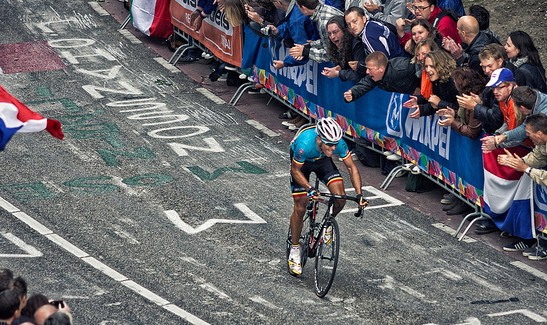
    GilbertAttacksA third versatile rider famous for his one day kicks is the man who currently wears the rainbow jersey: Philippe Gilbert. It’s been a very hard year for the Belgian star, who was held winless until the Vuelta a España, but he followed the same script last year on his way to the World Championship, and he sure looked fine there. Moreover, his constant misses shouldn’t be taken as signs of a total lack of form: he top 10ed in Amstel and Liege Bastogne Liege, came in second at Brabantse Pijl to Sagan, and notched second places in stages all over, from Paris-Nice to the Eneco Tour (which, in my opinion, he might have won or at least podiumed in had he not crashed out) to the Vuelta, where he lost out in a photo finish a few days before finally nabbing that elusive victory. Said win in the Vuelta was masterful, and it showed that he can sprint with the best riders out there: despite his disappointments, he looks to be very much on form right now. His career shows ample evidence of his ability to hang on over the tough climbs, and the Via Salviata looks to be exactly the sort of ascent the Boar of the Ardennes might jump out for glory on; however, I think this year’s Gilbert might be even more dangerous in a reduced sprint after a long day. He looked like he’d lost a bit of a step in the steep uphill finish game in the Ardennes this year, but his recent results show a formidable kick in a flat finish. I think he’s a great bet for a repeat of last year’s late season glory, one way or another.

    The other elite-finisher-who-can-climb I’ll mention is Norway’s Edvald Boasson Hagen, 2nd in last year’s championship race. He won a stage at the Dauphine in June and cleaned up the less-competitive Glava Tour of Norway, but his Grand Tour experiences this year were defined by near misses: three 2nd places but no wins and only a broken shoulder (in France) to show for his efforts. Still, he’s one of the best climbing sprinters in the game, with endurance and the light frame to nab victories and podium finishes in a wide variety of one day events. His team support will be limited, and he’ll be pushed to the edge by the difficulty of the race, but if he’s there, he’s got the engine.

    The peloton will be full of riders trying to use the ascents to drop these four and their ilk (though really, if it’s a bigger group at the finish, it’s these riders pretty well ahead of everyone else in that ilk my mind, which is why I only give their four names before getting into the climbier types). Spain, Great Britain, Italy, Australia, Colombia, the Netherlands, and France all have stacked squads to try to force this result. The Spanish Armada will sure look imposing out on the course: Alejandro Valverde looks like their best option for a select group at the finish, but Daniel Moreno has been absolutely on fire in 2013 (winning La Fleche Wallone as well as two stages of the Vuelta, where he was also a top 10 finisher), showing an elite kick. Depending on which rider is still there and whom this team decides to support, if a small bunch makes it a drag race to the finish, these two have the form and the ability to be in the mix, and it’s hard to see a scenario where at least one of them isn’t in the top 10, or even on the podium. Joaquim Rodriguez is surely eying a late climb to make a move, and former Olympic Gold medalist Samuel Sanchez could also play a part. Luis Leon Sanchez will enjoy the circuit’s similarity to the Clasica San Sebastian. And then there is Alberto Contador, who could try to go for a long one, knowing that he won’t be able to outsprint his rivals at the line.

    If he does, Tour de France winner Chris Froome would love a partner: he’s focused on this race ever since his dominant win in Paris, but he knows he’ll have to use his elite TTing and climbing abilities to get away from the pack if he wants a shot at the rainbow. He’ll have quite a team to back him: Wiggins, Cavendish, Geraint Thomas, and Ian Stannard will work hard to keep him out of the wind until he decides to make his move. I don’t know if the course or the elements favor him, and he doesn’t have the one-day race resume that the other contenders have, but he showed in July that he’s one of the best cyclists on the planet.

    A Grand Tour star who will love the forecast is home favorite Vincenzo Nibali. Like Froome and Contador, Nibali knows he’ll need to drop Valverde and Co. if he wants to win, but he’s a strong descender and doesn’t mind a little rain, and he’ll be riding in front of a home crowd. He may have been disappointed with his second place at the Vuelta, but 1st and 2nd in two Grand Tours in the same year is a pretty phenomenal feat, and Nibali has the all-rounder package to contend. He also has a team stacked with alternative options: Filippo Pozzato’s GP Ouest France win and GP Montreal top 10 mark a resurgence for him, and if he does reach the finish with the leaders, he’ll be able to duke it out with any of the remaining sprinters. Diego Ulissi was champing at the bit in the Vuelta and took a stirring victory in the Tour de Pologne in late July. Rinaldo Nocentini will appreciate the Ardennes-style climbs, Giovanni Visconti and Luca Paolini both showed incredible power with hilly stage wins in the Giro, Michele Scarponi can climb with the best, and even Ivan Santaromita was mixing it up on numerous Vuelta stages.

    Colombia’s stable of climbers will look to join forces with these European stars to animate things on the ascents. Henao and Betancur (who was the talk of the town a few weeks back before he showed up the Vuelta and bombed) will probably be riding in support of Tour phenom Nairo Quintana and Giro surprise star Rigoberto Uran, who is probably the team’s best bet given his explosive talent. He enjoyed his autumn visit to Italy last year (where he won Gran Piemonte and took 3rd in Lombardy) and he’s likely to make a dent again this year. Quintana will need to get away on the climbs, as he is not known for his drag-racing ability, but he was riding aggressively in the Tour of Britain and will have plenty of company trying to get away.

    Australia’s Cadel Evans has a surprising sprint and a strong team; it’s been all about form for him this year, and it’s not clear what kind of form he’s on right now (he was in the top 20 in both Canadian races but didn’t factor for the win), but a few years back he won the Amstel Gold Race and top 5ed at LBL that weekend. And the year before? He won the World Championship Road Race. The former rainbow wearer can’t be counted out. His teammate Richie Porte will look to outclimb the bunch, so don’t be surprised to see a repeat of the Tour de France, with Froome, Porte, Contador, and Quintana out ahead alone.

    France and the Netherlands both have a number of quick-finishing climber types who have strong single-day resumes. France’s Tommy Voeckler leads a squad filled with mountain-stage-winning types who will be very aggressive: Christophe Riblon, Arthur Vichot (French champ this year and 2nd in Quebec), Warren Barguil (Vuelta star), Romain Bardet and Anthony Roux are all explosive and capable on the climbs. Pinot is probably the best pure climber on the squad. There are so strong riders on the team that at least one is likely to be in the mix at the end, and the way Vichot and Barguil have been riding, I have my eye on them most of all. The Dutch squad will wait to see which of their stars, Mollema or Gesink, is in the best shape at the end of the day: recent Vuelta stage winner and former points classification winner Bauke Mollema is sneaky fast at the line, and Robert Gesink just won the Grand Prix Cycliste Quebec by outsprinting none other than Peter Sagan after a long day in the saddle. Tom Jelte Slagter can finish hard, too, and the endurance-filled talent behind them (Dumoulin especially, as well as Langeveld, Kelderman, and Weening) will give Dutch fans confidence. It’s very hard to say whether the team backs Mollema or Gesink if they’re both there in a group finish, but I imagine one of the two will be in the top 10.

    Michal Kwiatkowski has been somewhat M.I.A. in WorldTour leaderboards since the Tour, but the parcours is perfect for him. His form is an unknown, but he did crash while in Canada, making it difficult to declare him unfit; if he’s on his game, he’ll be hard to beat at the line, and he shouldn’t struggle with the climbs. He also has a surprisingly large team behind him that includes strong climbers like Rafal Majka, Pryzslaw Niemiec and Bartosz Huzarski. I’m hard-pressed to tab him for the top 10 based on his slew of DNFs and anonymous finishes these past few months, but I can also see him winning the race.

    Obviously I can’t give a full rundown of every national squad, but there are a few non-Sagan and Gilbert (tragically, Belgium only has 7 riders here) contenders on the less-staffed teams who merit mention as either potential uphill attackers or versatile fast finishers. Gilbert’s teammates Jan Bakelants and Greg Van Avermaet are both quick to the line, should they still be around if their leader go missing in the finale. I suppose after routinely leaving him out of my Vuelta stage previews until the final week, Chris Horner deserves a mention; he’s certainly one of the best climbers in the world right now. Tejay van Garderen is another strong climber with a lot of soloing talent for a long breakaway. Andrew Talansky seems to be a support rider after a long season, and Taylor Phinney might not like all the climbing, but it’s a strong team. Zdenek Stybar is another late season star on a smaller squad: he showed in the Eneco Tour and Vuelta that he’s got an all-rounder package to rival the best of the best, with the ability to go for a long one, to make it up the punchy climbs, and to win a sprint to the line. As a former world CX champ, he won’t be bothered by the rain, either.

    Finally, two of my top 10 favorites come from teams with just four and three riders, respectively: Ireland’s Dan Martin, Portugal’s Rui Costa. Martin had a boatload of early season success, winning the Volta a Catalunya and then one of the sport’s biggest events, Liege-Bastogne-Liege. He was looking good at the Tour de France before he got sick, and he was looking good at the Vuelta before he crashed out; in a way, maybe the lack of high mountain mileage will be good for him. His one-day climber’s resume (in addition to LBL, he was 4th, and milliseconds away from 3rd, at La Fleche Wallonne this year, top 10 in both last year, and a podium finisher in Lombardy in 2011) shows the explosive talent that could vaunt him over a late climb or prove useful in a reduced drag race. He has a small team, but Nicolas Roche is one of the best climbers in the business and a very capable teammate, and Martin showed in the spring how effectively he feeds off teammates in a one-day showdown.

    Rui Costa has an even smaller squad of backers, but he is such a constant fixture in late season circuit races that I see him as a top challenger here. He’s been a winner in Montreal and on the podium in Quebec and Ouest France. He is known as a climber, but he’s got a strong soloing ability and has shown time and time again a very impressive ability to charge for the line. His aggressive riding netted him a pair of wins in the Tour de France this year on the heels of a Tour de Suisse win. Like Kwiatkowski, Moreno, Marin, and Valverde, if the climbing stars distance the Boasson Hagens and Cancellaras but reel in any late moves from Froome and Contador, Costa will be a favorite to outsprint the GC types. But even if Sagan is still there, I can see Costa on the podium, and he’s got the soloing skills to jump into a move if he sees it going places, too.

    Other smaller team potential contenders include tough sprinters like John Degenkolb and Thor Hushovd (obviously big favorites if they make it to the finish, but that’s probably too much to ask), Lars Petter Nordhaug, Daryl Impey, Alexandr Kolobnev, Jakob Fuglsang, Matti Breschel, Maxim Iglinksiy, and Tanel Kangert.

    After weeks of preparation, the riders finally get there shot at the rainbow on Sunday, and with the parcours and the quality of the field, you can guarantee a ferocious battle for the victory.

    VeloHuman Predictions

    Winner

    Peter Sagan

    Podium

    Alejandro Valverde, Philippe Gilbert

    Top 10

    Fabian Cancellara, Rui Costa, Vincenzo Nibali, Daniel Martin, Daniel Moreno, Joaquim Rodriguez, Robert Gesink

    -Dane Cash

    Photos by Bruce Stokes and Michiel Jelijs.

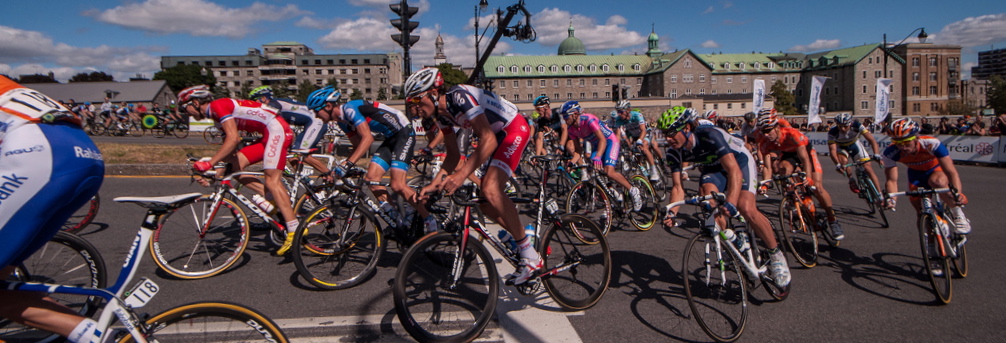
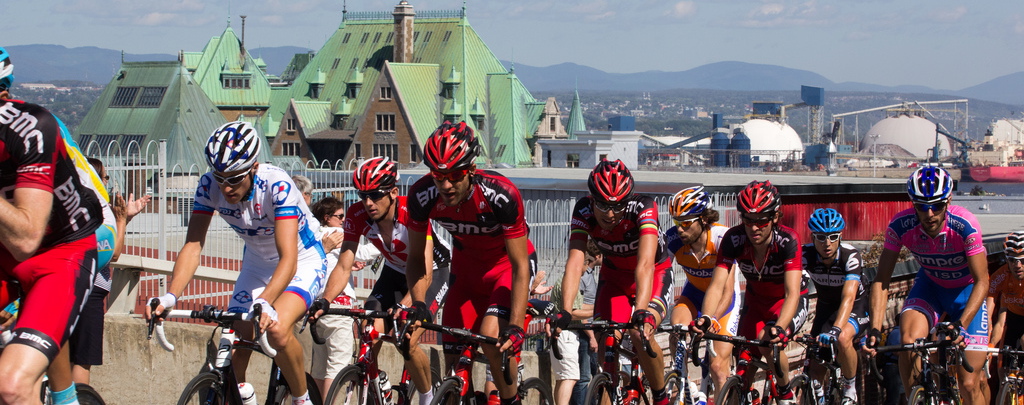
  • Grand Prix Cycliste de Montreal 2013 Preview

    MontrealPhoto

    WorldTouring in North America, Chapter 2

    The WorldTour’s three most recent one-day winners: John Degenkolb, Filippo Pozzato, and now, Robert Gesink. One or two years ago, this set of winners might have seemed totally predictable, but in 2013? It’s as if all of these guys who have been flying under the radar decided to reenter the scene in grand style at the same time. Belkin has had a great week, with Bauke Mollema stealing a stage from the power sprinters at the Vuelta, and Robert Gesink outsprinting Peter Sagan himself in Quebec. As closely as the two are tied together, and as often as they share common riders in their leaderboards, GP Quebec is an important foreshadower for GP Montreal.

    That race came down to a very reduced sprint with some marquee names, guys we expected to be right there, like Peter Sagan, Greg Van Avermaet, and Rui Costa. Things pretty much went as expected, right up to the point where Robert Gesink (with Arthut Vichot not far behind) passed all those pre-race favorites for the victory. Obviously Gesink is a major talent (he won Montreal in 2010 and was 2nd at Quebec in 2012), but 1. his Palmares have been so lacking lately, and 2. his career resume hasn’t really shown any evidence of a high caliber sprinting ability: with a kilometer to go and Tom Jelte Slagter also with the lead group, I wouldn’t have even picked Gesink to be the highest placed rider from his own team, let alone in the whole race. But while Sagan and Van Avermaet seemed just too exhausted to keep up on the ascent to the line, Gesink powered ahead and took a commanding win. With a career that primarily features results in climber’s races, Gesink seemed like a better pick (albeit an outside one) to get involved in Montreal; if this is the kind of form he’s got right now, and if he’s suddenly realized that he has a heck of a sprint within him, he goes from a worthy-of-a-mention-as-a-past-winner pick to one of the favorites for the second of the Canadian WorldTour dates.

    GP Montreal Profile

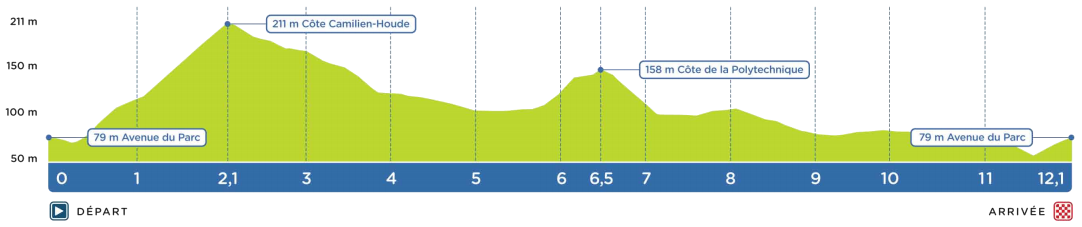
    Like its sister race, the Grand Prix Cycliste Montreal has a profile that provides great opportunities for successful attacks on the final lap. Unlike its sister race, Montreal’s big climbs come earlier in the circuit (Côte Camilien-Houde, 1.8 km at 8%, and Côte de la Polytechnque, 0.78 km at 6&), and they’re followed by several kms of gentle descent, and the finish in Montreal, while uphill, is only a few hundreds meters at a few percent grade, rather than a long upward drag: in other words, the race favors attackers who can go from much further out, and it also is friendlier than Quebec was to any sprinters who beat the odds and manage to stay up front. Last year, Lars Petter Nordhaug (then of Team Sky, now of Belkin) made a move from several kilometers out. Rui Costa in 2011 and Robert Gesink in the inaugural edition in 2011 also made moves from several kilometers out.

    Gesink’s sprint is what surprised everyone on Friday; we’ve always known he could climb and put in a sustained effort. It’s those skills that won him this race in 2010, and now that we know he’s got quite a kick, he’s got a great shot again here. But Sagan will be out to improve on his placing from Quebec, as will Greg Van Avermaet, Rui Costa, and up-and-comer Arthur Vichot, all of whom finished with the lead group not very far behind Gesink in Quebec. Costa won this thing two years ago and he’s my favorite rider to launch a successful long attack, but he’s also got the kick to outsprint a reduced group. FDJ’s Vichot has had a fine year, runner-up yesterday and French national champion not long ago; he was also in the mix in the finale at Quebec last year and like Costa, he’s got a varied skillset and could either make an early jump or hang with a small group. I like his chances. Sagan and Van Avermaet might find it harder to come across with the lead bunch or to launch a big attack early, as the higher altitude hills in Montreal are likely to break up the race on the final laps, but if they do, the finish suits them more than it did in Quebec. I’ll throw out some familiar names of real fastmen who will also appreciate the finish if they can just make it there at the head of the race: John Degenkolb, Filippo Pozzato, Giacomo Nizzolo, Matti Breschel, Matt Goss, and Luka Mezgec are the biggest ones for me. The way Degenkolb has been going, I think it’s a real possibility he is in the final group chasing down the final break, and Breschel was, of course, in the top 10 in Quebec on Friday.

    Should the truer sprinters all be dropped, I’d imagine the danger men in the pack pursuing the last breakers will include: Tom-Jelte Slagter of Belkin, Fabian Wegmann of Garmin-Sharp, Jan Bakelants and Tony Gallopin of Radioshack, Michal Kwiatkowski of Omega Pharma-Quick Step, Jurgen Roelandts of Lotto Belisol, Bjorn Leukemans of Vacansoleil, Francesco Gavazzi, Simone Ponzi, and Borut Bozic of Astana, and Francisco Ventoso of Movistar.

    But since this is a race with a pretty serious incline in the circuit that will tire out everyone in the field and will surely launch some bids for glory, perhaps the most important question will be: who launches the marquee attack as the race nears its finish? If it’s not one of the riders mentioned above, last year’s winner Lars Petter Nordhaug seems like a great place to start. Recent results have been lacking, though, so the top alternative choices include Pierrick Fedrigo (2nd behind Costa in 2011), Ryder Hesjedal (3rd in 2010), Niki Terpstra (who was off the front until the end on Friday, finishing 6th), Alexander Kolobnev, Simon Geschke, Enrico Gasparotto, Sylvain Chavanel, Simon Spilak, and Christophe Riblon and Cadel Evans, who led the chasers over the line behind Sagan at GP Quebec. OGE’s stable of Michael Albasini, Pieter Weening, Sebastian Langeveld, and Cameron Meyer and Euskaltel’s squad of climbers, like the Izagirre brothers, are also great bets to animate the race from a distance. Evans and Hesjedal seem the most motivated of the Grand Tour stars here, but any one of Froome, Contador, Porte, Schleck, Talansky and van Garderen might decide to go for a long one as well.

    However it goes down, long distance attack or late catch and pass by a bunch, I think the Grand Prix Cycliste de Montreal is going to end with many of the same names from Friday towards the front, riders who combine a strong kick with an aggressive style and a whole lot of endurance.

    VeloHuman Predictions

    Winner

    Peter Sagan

    Podium

    Rui Costa, Robert Gesink

    Top 10

    Greg Van Avermaet, Tom Jelte-Slagter, John Degenkolb, Arthur Vichot, Matti Breschel, Jurgen Roelandts, Niki Terpstra

    -Dane Cash

    Photo by O. Taillon.

  • Grand Prix Cycliste de Quebec 2013 Preview

    GP Quebec

    WorldTouring in North America, Chapter 1

    The WorldTour follows up GP Ouest France with two more Grand Prix circuit-style races this weekend, also run on hilly courses that seem to lead to battles between late attacekrs and hard-charging pursuit groups. This weekend’s competitions are unique among WorldTour races, however, in that they take place in North America. Canada, to be exact.

    Friday’s race comprises 16 laps of 12.6km (totalling 201.6km) around scenic Old Quebec. It has a number of rolling ups and downs and it finishes on an incline; obviously, there are no Alpine summits in the middle of Quebec City, but the ascents are more than enough to encourage constant aggressive moves off the front, and even if attacks are reeled in, the incline at the line favors the lighter, more versatile hard-chargers. Last year, Simon Gerrans and Greg Van Avermaet jumped ahead in the final lap, and hung on despite a spirited bridging attempt by Peter Sagan and an impressive (and sizeable) group of pursuers behind them, a group that was led across the line by Rui Costa. Going further back, we see similar outcomes. The hard pace of the 2011 edition whittled the lead group down to a group of about ten on the final lap, and Philippe Gilbert added another victory to his great list that year by launching a successful attack with Robert Gesink in the final kilometers, and then beating the Dutchman to the line. The inaugural edition in 2010 saw Tommy Voeckler make a successful bid for glory. Given the versatile talents in attendance, I think this year’s Grand Prix Cycliste de Quebec will again come down to a late attack battling a small group of chasers, though a sizable bunch sprint for the line isn’t out of the question, and while I think it’s a bit less likely, neither is a long-range breakaway victory.

    GP Quebec Profile

    None of this race’s past winners will make the start tomorrow, meaning that 2013 will see a new winner in Quebec. One favorite for that title stands above the rest: Cannondale’s Peter Sagan. After a successful classics campaign in which he nabbed a win at Gent-Wevelgem and a boatload of other high placings, he stormed the Tour de France green jersey competition. But he hasn’t been resting on his laurels: he’s been a prominent feature in some big American stage races, winning stages and the points competition at the USA Pro Cycling Challenge. He has clearly kept his form sharp, and with so many opportunities to tune up at the AmericaTour level in preparation for the big doubleheader in Canada this weekend, it’s hard to see past him. As he showed in Gent-Wevelgem, he’s more than capable of winning via a late attack. He came close to bridging the gap last year, and this year he’s got that much more experience, and probably better form. He’s a smart rider and a excellent handler, which will come in handy in the constant quest to come out of the corners at high speed. He’s shown time and again this year that all but the most difficult of climbs are not a problem for him, making it very likely that he’ll be somewhere near the front towards the end of this race. Whether he attacks off the front or outsprints the field, Sagan has the tools to win this thing.

    He’ll have a big target on his back, and his challengers will be many. One rider who has been just behind Sagan at a number of races this year is Greg Van Avermaet, who has looked sharp through his many appearances this summer. He attacked on the final climb of the GP Ouest France, but the break refused to organize themselves: GVA himself seemed to be the most concerned with dragging other riders to the finish and, therefore, wouldn’t work with a group. As such, he didn’t start with enough of a gap when he launched his own solo from the reduced bunch, and was caught in the final few hundred meters. He’ll hope to have a bit more success in Quebec, where he narrowly lost out to Simon Gerrans last year. Like Sagan, his skillset makes him a danger in both a late attack and a reduced sprint; he’s not as quick as the Slovakian wunderkind, but he might be a bit more likely to make a move, which showed last year.

    Also in that last-ditch move on the final climb of Ouest France was Michal Kwiatkowski, who was a familiar face on most of the intermediate stages where Sagan featured so prominently in the Tour de France. Had the final break managed to work together two weeks ago, he would have been a strong contender for the win. He’s a better climber than Sagan, but still has a great sprint. His teammate Sylvain Chavanel has earned himself a ton of camera time time this year with his characteristic aggressive riding, and his time trial victory at the Eneco Tour shows that the 34 year old is still soloing well this year. He’ll probably need to strike earlier than guys like Sagan or Van Avermaet, but if he can time an attack, he’s always a good bet to feature on a profile like this.

    Rui Costa has had a lot of success in Canada (he was just behind Van Avermaet last year), and he has the perfect combination of skills to win in a variety of ways. He showed off that combination of skills by winning two stages from a breakaway in the Tour de France; he can solo, he can climb better than most other riders in this race, and he has a surprising sprint. He’ll definitely be lurking around the top of the leaderboard. His teammate Francisco Ventoso is another rider with a shot, coming off a top 10 in Ouest France.

    Lotto Belisol’s Jurgen Roelandts, Belkin’s Lars Petter Nordhaug (who won last year’s Grand Prix Cycliste de Montreal) and Tom Jelte Slagter (fifth here last year), Cannondale’s Moreno Moser, Astana’s trio of Francesco Gavazzi, Borut Bozic, and Simon Ponzi, and Radioshack’s trio of Tony Gallopin (winner of the Clasica de San Sebastian), Jan Bakelants (Tour de France stage winner) and Maxime Monfort are all also great candidates for a win from a late attack or a very reduced field sprint.

    If a larger bunch reaches the finish line, it will be hard to beat Sagan in a sprint, but John Degenkolb of Argos-Shimano and Giacomo Nizzolo of Radioshack (they have a lot of options here!) are on the shortlist of riders who have a decent shot at it. Degenkolb went into the Vattenfall Cyclassics as something of an unknown in terms of form, and all he did was win the whole thing. He showed continued form at the GP Ouest France, where he, too, managed to get into the late attack of Van Avermaet and Kwiatkowski (and was probably the prime reason that the breakaway attempt refused to cooperate), quite a feat for a sprinter. He then proceeded to place tenth in the sprint after putting out a lot of effort in the failed attempt to break free. He won’t mind the uphill finish in Quebec. Neither will Giacomo Nizzolo, who looks great right now, and who came so close to a win at Ouest France, but was denied at the line by a charging Filippo Pozzato. Speaking of Pozzato, I almost didn’t mention him in my Ouest France preview, given a lack of recent results, and I’m still not really sure how to judge his chances here: was his Ouest France win a flash in the pan, or is his form back to where it once was? Matti Breschel of Saxo-Tinkoff was a top 10 finisher at the Vattenfall Cyclassics and is a capable climber. Look out for Luka Mezgec, who was just behind Sagan in a bunch of stages in Alberta and the USAPCC and who could be a second option for Argos if Degenkolb struggles. And, of course, Matt Goss will be in attendance, though he was 27th at Vattenfall’s sprintfest and a DNF in the GP Ouest France.

    A number of big name Grand Tour winners are making the start, probably looking to go for a long one, launching off one of the many hills they’ll ascend in their trips around Quebec: Ryder Hesjedal, Chris Froome, Alberto Contador, Cadel Evans, and even Andy Schleck are all here. Sky also has Richie Porte, Garmin also has Andrew Talansky, Tom Danielson, and Fabian Wegman (Top 10 in every edition of this race so far), and BMC’s Tejay van Garderen gives that team yet another option. Of these big three-week stars, Hesjedal and Evans are probably most likely to feature; Hesjedal doesn’t really have any one-day statement wins in his career yet, but he’s had a flair for high placings and he has a strong kick: plus, this is a home race for him, which is rare. Evans has shown decent form since arriving in Canada (he won a stage at the Tour of Alberta) and he has always had a good sprint if he makes it to the line with a small lead group. Other riders who will look for a long distance opportunity, or hope that the fast men are all dropped, include Katusha’s Alexandr Kolobnev and Simon Spilak, AG2R’s Christophe Riblon and Jean-Christophe Peraud, Pierrick Fedrigo, OPQS’s Niki Terpstra, Astana’s Enrico Gasparatto, everyone on Euskaltel, and Orica GreenEdge’s typical stable of breakaway capable talent: Michael Albasini, Sebastian Langeveld, Pieter Weening, and Cameron Meyer. Also, watch out for Europcar’s David Veilleux, riding in his home country and having just announced an imminent retirement.

    However it plays out, I think the Grand Prix Cycliste de Quebec is going to be another very exciting race, guaranteeing plenty of attacks and counterattacks to give you a double dose of high speed racing after a morning that will likely offer the same from Spain!

    VeloHuman Predictions

    Winner

    Peter Sagan

    Podium

    Greg Van Avermaet, Rui Costa

    Top 10

    Michal Kwiatkowski, John Degenkolb, Giacomo Nizzolo, Ryder Hesjedal, Sylvain Chavanel, Jurgen Roelandts, Filippo Pozzato

    -Dane Cash

    Photo by Arnaud Anciaux.

  • Tour de France 2013 Post-race Impressions: Froome Lightyears Ahead and a Youth Movement on the Rise

    Paris2

    Brief Recap

    After Chris Froome crested stage 8’s Ax-3 Domaines way ahead of everyone else in contention, many were worried that the remaining two weeks of competition would be boring. While Team Sky’s 28-year old leader held onto the jersey tightly all the way to Paris, even increasing his lead on the rest of the bunch, this year’s two was anything but boring, even after Froome’s dominant first high mountain stage.

    Froome increased his lead with a predictably awesome time trial on Stage 11. He lost around one minute when Saxo-Tinkoff and Belkin broke away on a windy flat stage, but gained it right back climbing up Mont Ventoux. He put in another masterful performance in the mountain time trial, though this time his rivals kept their time losses to a minimum. The pressure was high heading into the double ascent of Alpe d’Huez on stage 18, the first of three grueling Alpine stages, but Froome never cracked. Breakaways took stages 18 and 19, though the GC contenders duked it out when they reached the slopes, and stage 20 saw a showdown between all top climbers in the peloton, but despite the best effort of Joaquim Rodriguez, and stacked teams like Movistar and Saxo-Tinkoff, Froome’s lead barely shrunk. The high uphill tempos across the last few days were too much for Contador, who tumbled down to 4th place by the time all was said and done in the mountains, unable to keep up with Froome, Quintana, and Rodriguez on the steep summits: the relentless assaults by the young Colombian Quintana and seasoned veteran Rodriguez nabbed them spots on the podium beside the man who dominated the Tour almost from start to finish, Chris Froome. The final results looked like this:

    1. Christopher Froome (UK) Sky Procycling | 83:56:40

    2. Nairo Alexander Quintana Rojas (Col) Movistar Team | +0:04:20

    3. Joaquim Rodriguez Oliver (Spa) Katusha | +0:05:04

    4. Alberto Contador Velasco (Spa) Team Saxo-Tinkoff | +0:06:27

    5. Roman Kreuziger (Cze) Team Saxo-Tinkoff | +0:07:27

    6. Bauke Mollema (Ned) Belkin Pro Cycling Team| +0:11:42

    7. Jakob Fuglsang (Den) Astana Pro Team | +0:12:17

    8. Alejandro Valverde Belmonte (Spa) Movistar Team | +0:15:26

    9. Daniel Navarro Garcia (Spa) Cofidis, Solutions Credits | +0:15:52

    10. Andrew Talansky (USA) Garmin-Sharp | +0:17:39

    Peter Sagan won the Points Classification, and Nairo Quintana won both the King of the Mountains polka dots and the white jersey of the best young rider.

    Froome Dominates and Young Guns Step Up

    Starting with the obvious, Froome was simply head and shoulders above the competition. The 100th edition of the Tour de France was very exciting to watch, but the fiercest competition was for the other two spots on the podium: Froome’s hold on the top was basically unassailable. He jumped well ahead early in the Pyrenees, solidified his position with stellar time trialing, and held on through the Alps despite vicious assaults from Nairo Quintana and Joaquim Rodriguez. His teammate Richie Porte showed rare talent as well, and together they were able to overpower the competition on the summit finishes. Porte gave everything he had for Froome’s victory, gladly sacrificing his own top 10 aspirations for the cause, and I fully believe he could have been on the podium had he not done so: he went so hard leading Froome up stage 8’s climb that he was exhausted on stage 9, and he chose not to contest stage 17’s time trial so as to save energy to lead Froome through the Alps. The word is that he’ll be given team leadership at one of the other two Grand Tours, and I believe that if he focuses on his position rather than a teammate’s, he’s more than capable of a Grand Tour win.

    QuintanaWhile Froome’s lead was never really in doubt, a number of young riders achieved other immense successes at the 100th Tour de France. The festivities started and ended with Marcel Kittel winning stages. His final tally was four stage wins, and he beat Mark Cavendish and Andre Greipel in flat sprints more than once. After years of dominance from the Manx Missile, who had never been beaten on the Tour’s final day, Kittel’s emergence at age 25 promises to give cycling fans a real show of speed for the next several years. At age 23, Peter Sagan dominated the points competition in a manner similar to Froome’s dominance of the general classification. And of course, Colombian prodigy Nairo Quintana arrived loudly and clearly, adding a stage win, 2nd overall, the young rider’s jersey, and the King of the Mountains jersey to his resume. What a year he has had, winning the Tour of the Basque Country in style (beating the likes of Alberto Contador and Richie Porte in the final day’s time trial to take the win) and now this. His team gave most of its support to Alejandro Valverde for the first two weeks of the race; with full support, if Quintana can improve his time trial and his attacking strategy, he is more than capable of repeating or even bettering this performance in the future, as he isn’t even close to hitting his prime. Andrew Talansky clawed his way back after a day of suffering in the heat of the Pyrenees early on and found himself in the General Classification Top 10 when the peloton finally rolled over the finish line in Paris, good enough for second in the young rider’s competition. Michal Kwiatkowski finished in the top 10 of six separate stages with varying profiles, and he managed to nab 11th place overall in the Tour. Surely, in a few years, he could be a top 10 favorite here, or a favorite for the points classifications of the Vuelta or Giro, where points aren’t split up to favor the sprinters over other riders. He was one of the most complete riders in the Tour de France, with a rare combination of climbing, sprinting, and time trialing ability.

    There were many other great storylines to follow as well. For all the success Nairo Quintana had, his team struggled in the middle of the Tour. Alejandro Valverde fell out of contention for the podium on stage 13 due to mechanical problems on a windy day, and Rui Costa plummmeted, too, when Movistar sent him back to help Valverde. Undeterred, the team fought tooth and nail for glory over the last several days: Costa won not one but two stages, and Valverde powered his way back into the top 10 overall.

    Much was made of the contenders’ form heading into the first days of the Tour in Corsia. Of the four biggest favorites (Froome, Contador, Rodriguez, Valverde), only Froome seemed to be in impeccable form, having won every stage race he attempted this year except for Tirreno-Adriatico, in which he placed second to Giro winner Vincenzo Nibali. Contador, on the other hand was only so-so all year long, prompting questions about his ability to peak in time. Rodriguez had a strong spring and then struggled in the Dauphine. Valverde also had a strong spring and wasn’t great in the Dauphine. As it turned out, starting on form made all the difference for Froome, as it was his first real mountain day that put him virtually out of reach. Contador, meanwhile, never did really round into old form; 4th isn’t anything to sneeze at, but he could never really keep up with the top 3 riders in the race. Joaquim Rodriguez steadily improved as the Tour went on, chipping away at an early deficit to the other contenders and improving his position in the Alps. Valverde will be left wondering what might have been had he not suffered some very bad luck on stage 13; he finished ahead of Contador on both Alpine summit finishes and his stages 8 and 11 had originally given him an impressive chunk of time on Purito and around half a minute on Contador. In any case, Froome has been dominant all year and continued his dominance into the Tour, Rodrigez and Valverde showed good form earlier in the year and were able to maintain a high level and then peak again for the Tour, and Contador never showed his old levels of ability earlier this year and was unable to round into form this July.

    Other riders who impressed? Roman Kreuziger, Bauke Mollema, and Jakob Fuglsang. All 28 or younger. Kreuziger managed a 5th place despite working for his teammate Alberto Contador. Bauke Mollema was as high as 2nd as late as stage 14, but he faded a bit as the Tour crested more and more summits—still, he adds a 6th overall to a resume that already includes a 4th overall and the points classification at the Vuelta. Jakob Fuglsang was steady throughout the race despite having very little team support compared to the other riders who finished in the top 8—given the kind of help from Astana that his teammate Vincenzo Nibali gets, Fuglsang could take on the Giro or Vuelta with podium aspirations while the Shark heads to the Tour. With Rodrigez, Valverde, and Contador all on the wrong side of 30, these guys could be hanging around Grand Tour top 10s a lot in years to come.

    On the other hand, it would be an oversight not to mention BMC’s terrible three weeks. Despite their massive team budget, the red and black squad managed no stage wins and didn’t place anyone in even the top 20 overall. For some reason, team management expected Cadel Evans to perform at a high level despite the fact that he entered the race only a month after finishing a grueling Giro. His Tour was a flop–he lost a lot of time on stages 8 and 11 and then faded badly after. Tejay van Garderen fell out of contention early, finishing over twelve minutes behind Froome on stage 8, apparently due to an inability to cope with heat in the Pyrenees. Philippe Gilbert proved again that if your form wasn’t good heading into the Tour, it’s probably not going to magically appear when you get there. His best finish was 5th on stage 3. In the wake of so much team failure, BMC sports director John Lelangue has just quit his job.

    Edvald Boasson Hagen, Jurgen Van Den Broeck, Jean-Christophe Peraud, and others were forced to abandon after suffering various serious injuries. Peraud broke his collarbone on an early morning recon ride of stage 17’s time trial course when he was still in the top 10 overall: he started the race that day anyway, only crash and fall on the same side, one of the more cringe-worthy moments of the Tour. Hopefully they will all recover quickly.

    And to end positively? Daniel Navarro went from 20th overall and more than twenty-three minutes behind Froome after stage 15 to 8th overall by the time the peloton rode into Paris, thanks to a few breakaway successes and a good ride up the Semnoz. What a climb up the leaderboard! Jens Voigt, age 41, treated us to what may have been the last Tour de France breakaway attack of his career. Peter Sagan gave chanting fans what they wanted time and again with his trademark wheelie-popping, even doing it without hands on occasion. And to showcase a little globalization, a South African, Daryl Impey, wore the yellow jersey from stage 6 to stage 8 before he handed it over to Chris Froome, who was himself, of course, born in Africa.

    The Tour de France may be cycling’s biggest race, but the 2013 season still has yet to present the third Grand Tour, the Vuelta a Espana, as well as the final Monument Classic, the Giro di Lombardia, and the World Championship race, in addition to a number of other major events on the calendar. This Saturday will showcase not one but TWO WorldTour races, with the start of the Tour de Pologne, and the single-day Clasica de San Sebastian. Many of the same riders you saw in the Tour de France will be targetting these races to come, as will some of the sports biggest names who skipped the Tour this year, names like Bradley Wiggins, Vincenzo Nibali, and Fabian Cancellara. To summarize: keep watching! There are a number of big events right around the corner!

    -Dane Cash

    Photos by Natalie Marchant and Tom Ducat-White.

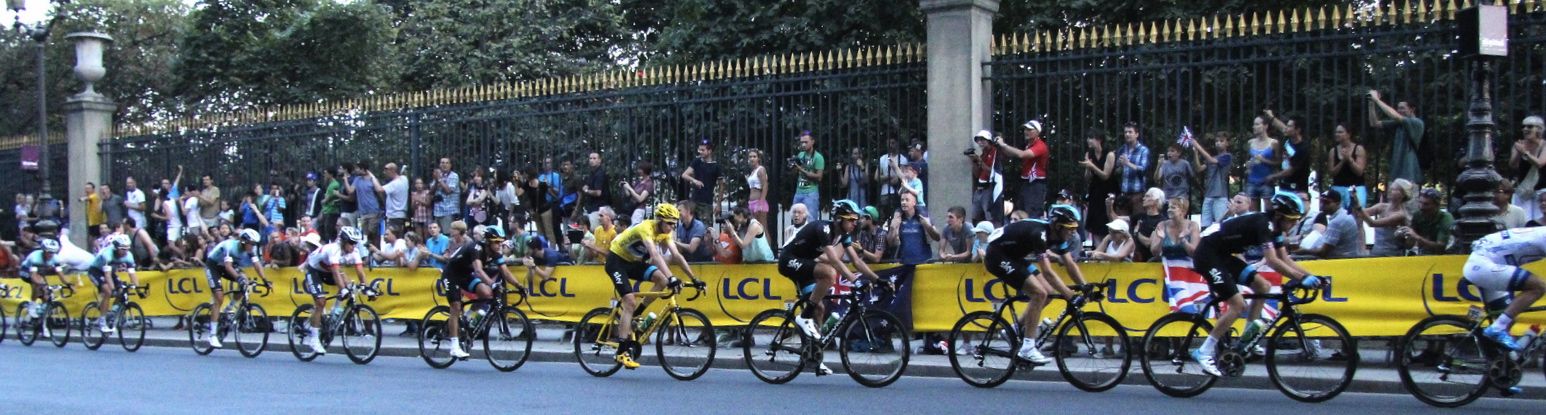
  • Tour de France 2013 Day 19: Where We Stand After Seventeen Stages, and Looking Ahead to Stages 18-21

    Top10ChasersDay 19: The Finale Is Here

    Stages 15, 16, and 17 showcased some awesome cycling. After a Sagan-led breakaway took the intermediate sprint early in the day, the heavy hitters caught up with them as the road started going up, and Sky’s dynamic duo laid waste to the best climbers in the world on the way up. By the time Porte pulled off, few were left to contest the day, and soon it was a battle royale between Froome and the young challenger Nairo Quintana. Quintana made a brave effort, but Froome matched every attack and then dropped him. The yellow jersey winner finished first, and in the process, he gained back much of what time he had lost to the other favorites in the crosswinds a few days before. Purito Rodriguez zoomed past Contador on the slopes to take fourth, crossing the line with an impressive Mikel Nieve (who is now the only guy focusing solely on the KoM competition that actually has a shot) to show that his form has arrived. Most of the other contenders for the top 10 of General Classification rolled in close together, though this was the stage that finally ended any hopes past winners Cadel Evans and Andy Schleck had of finishing among those ten. Lotto Belisol’s Bart de Clercq deserves a mention for finishing 11th, ahead of some big names like Kwiatkowski and Dan Martin.

    Stage 16 was predictably unpredictable, a day for the breakaway, and as usual, many of the big breakaway types jumped and many didn’t do anything at all (I’m looking at you, Gerrans, Clarke, and Chavanel). Rui Costa, whose GC hopes were smashed when Movistar sent him back to (fruitlessly) help Valverde back when said team leader was getting gapped by the peloton in the crosswinds, got into the break and, once there, realized that he was easily the best man in the best form in the bunch. He attacked on the final climb and stayed away for the win, well-earned. But there was also some real action going on further back in the race, where Katusha attacked on the same climb when they reached it several minutes later. They were matched by a group with most of the big contenders, but they left behind the likes of Laurens Ten Dam, Jakob Fuglsang, Michal Kwiatkowski, Dan Martin, Jean-Christophe Peraud, and Michael Rogers for a final gap of about a minute.

    Stage 17 threatened to be extremely dangerous, what with a technical descent and a nasty, rainy forecast, but for the most part, the big names emerged unscathed, except for Jean-Christophe Peraud, who fractured his collar bone in a recon ride crash, raced anyway, and then crashed and fell onto the same side during the time trial, forcing him to abandon. Froome won the day rather predictably, but Contador wasn’t off by much, and (of the potential podium contenders) neither were Quintana, Kreuziger, or Joaquim Rodriguez. Unfortunately for him and Dutch fans everywhere, Bauke Mollema, typically a very good time trialist, finished a full two minutes down on Alberto Contador, with whom he had been vying for second place. The Dutch rider slides into fourth following the bad day.

    Heading into the Tour’s big three Alpine stages, Froome has a gap of over four and a half minutes on Contador and Kreuziger, who themselves have roughly two minutes on Mollema and Quintana, with Rodriguez half a minute back from that. It is hard to see any other riders than these making it onto the General Classification podium in Paris.

    Stage 18: Gap > Alpe-d’Huez | 172.5km | Summit Finish

    The long-awaited double climb of Alpe-d’Huez is finally here. The peloton will take on an early Cat 2, and then a Cat 3 before the feed station, and then the Category 2 Col d’Ornon and a descent to the intermediate sprint, before they finally begin the steep slopes of Alpe-d’Huez. After reaching the summit, the riders must climb the short but steep Col de Sarenne, a Cat 2, before strapping in for a steep, dangerous descent. After almost 30km of mostly downhill roads, the riders must climb Alpe-d’Huez one more time. A brutal day, for sure, and one that will offer many opportunities for attacks to stick and gaps to form. Team Sky will face relentless attacks from Movistar and Saxo-Tinkoff, and down a few men, they may struggle to control the race. Contador and Joaquim Rodriguez have both had a very strong three days in the saddle, and after disappointing Dauphiné’s from both, it seems the form is finally there. Contador’s second-in-command Roman Kreuziger has yet to falter by his leader’s side as well. Meanwhile, Bauke Mollema seems to be fading at the worst possible time. After a valiant first two weeks, I do not know how much Belkin has left in the tank.

    Alpe

    Froome has had fun winning three stages this Tour while he ups his lead overall, but I think he knows he shouldn’t take his eyes off the real prize, which may mean finally riding a bit more conservatively on this dangerous stage. At nearly seven minutes down, Quintana would need to pick up serious ground to pass Froome for the yellow jersey. Ergo, Froome will be more concerned about Contador and Kreuziger than the young Movistar rider, and that favors Quintana attacking for the stage. Don’t be surprised to see another climbing specialist let out ahead as well, Mikel Nieve. Nieve crested Ax 3 Domaines sixth and Mont Ventoux third: he is quite capable of handling the long slogs toward the sky, and far more so than Quintana, he doesn’t pose a threat to Froome. If Nieve can stay on the right wheels and make it through the first 160 km of the race with the pack, he has a fine shot of getting up to the summit finish first or second. Or maybe Froome doesn’t give anyone any breathing room, as has been his M.O. throughout the Tour so far. In any case, I don’t know that I see Rodriguez or Valverde liking the long ascents as best fitting their abilities. Kreuziger might be well positioned to attack on the Sarenne and then fly down the mountainside with his best-of-the-bunch descending skills, but he has stuck close by Contador’s side so far this year, so such an attack would only be called for as a strategic move to put pressure on Froome rather than as a way for Kreuziger himself to advance, and it seems likely that such a move would get swallowed up on the final ascent.

    VeloHuman Favorites

    1. Nairo Quintana | 2. Chris Froome | 3. Alberto Contador | 4. Roman Kreuziger

    Watch Out For

    Mikel Nieve

    Stage 19: Le Bourg-d’Oisans > Le Grand-Bornand | 204.5km | High Mountains

    With two Hors Categorie climbs in the first half of the day and then three more categorized climbs before the finish (a Cat 2 and then a pair of Cat 1s), stage 19 could completely ruin the top 10 hopes of any rider whose legs are starting to falter at this stage of the Tour. Those feeling fresh will surely put the hammer down early to weaken the field quickly. Laurens Ten Dam has been a real surprise so far this Tour, but this is the sort of day that could crack his admirable resolve. Roman Kreuziger and Daniel Martin are both climbers who have had great career successes on single day races and short stage races (each taking an Ardennes Classic this spring), but days like this after nearly three weeks of racing are the sort of thing that separate the classics guys from the winners of the Grand Tours. Given his unassailable dominance so far, I think Froome will pass the long test. With a strong team around him, Contador should be right there with the captain of Team Sky at the end of the day, and I do think Kreuziger will be there with him. In fact, the race’s finish, over 10 km of steep descent, favors the aggressive Czech rider. If he makes it to the final climb and is able to perform his duties as Contador’s lieutenant most of the way up, Kreuziger could use his Ardennes-proven talent for sharp attacks and then descend at full speed for the win. With that descent, there is also potential for a very select group to finish together, and a sprint among climbers is exactly what Alejandro Valverde will aim for to at least salvage something from his unfortunate Tour de France experience. Joaquim Rodriguez, too, would surely love to take a shot at it, either near the summit of the final climb, or in the final sprint. If Kwiatkowski is still here, it’s a great last few hundred meters for him, but I don’t know that he’ll be able to hang on all day without much of a team for help. Gaps are likely to be small or nonexistent, so if a group of heavy hitters reaches the final climb together, I imagine Froome will be content to roll over the line with them rather than attempting to push his luck descending or sprinting, which are not his forte.

    VeloHuman Favorites

    1. Roman Kreuziger | 2. Alejandro Valverde | 3. Joaquim Rodriguez | 4. Chris Froome

    Stage 20: Annecy > Mont Semnoz | 125km | Summit Finish

    At only 125 kilometers, the penultimate stage of the Tour will be ridden lightning fast. Climbers who have yet to make their marks with a stage win will be attacking and counter-attacking like mad here, and the GC types will be focused on making it through without losing ground in the chaos of six categorized climbs, including an HC summit finish. I would imagine we will again see Mikel Nieve trying to get ahead for mountain points, but there will likely be a number of chasers for every attack. Anyone close to the podium, especially Alberto Contador, who doesn’t like to settle for second place, will have until the final summit to attack the man in yellow. Lots of action, but I see Froome cresting the summit before anyone. It’s the last climber’s stage of the Tour, and Froome won’t need to worry about storing energy for any more Alpine climbs. I imagine any long-range attacks from lesser riders will be reeled in by those higher up the ladder who don’t want to lose their places, and I imagine the legitimate volleys from those challenging for the podium will ultimately be answered by Froome, who has just been so much better than his competitors so far. And if the other contenders have managed to close the gap by this stage? Well what better place than a summit finish for the Tour’s best diesel climber to make his final statement? He reached the top of Ax 3-Domaines first, he reached the top of Ventoux first, and with almost thirty kilometers of downhill racing leading into the final climb to catch any breakaways, I imagine Froome will reach the top of the Semnoz first as well, though I expect everything Contador and Quintana have to give on the way up.

    VeloHuman Favorites

    1. Chris Froome | 2. Nairo Quintana | 3. Alberto Contador

    Stage 21: Versailles > Paris | 133.5km | Flat

    An evening finish in Paris will be a lovely sight. The route showcases many of France’s biggest tourist attractions (Versailles and the Champs-Elysses cap off a Tour that has already visited Mont Saint-Michel and the Alps). After so many days struggling over mountains, Mark Cavendish will look to pick up his fifth win on the Champs-Elysses, but challengers are nipping at his heels. Marcel Kittel beat him in a pure sprint earlier this Tour, and Greipel will have his say as well. Sagan is not quite as fast in a drag race, but surely he, too, will direct his determination toward this finish. Despite his loss to Kittel in an earlier sprint this Tour, it’s hard to see past Cavendish yet, here where he has never been beaten, though either one of the German pair would not surprise me if they made it to the line first. Forced to choose, I’ll take Cavendish, but I’m far less confident that he will win the day than I am that Britain’s Chris Froome will be not far behind him, wearing yellow.

    VeloHuman Favorites

    1. Mark Cavendish | 2. Marcel Kittel | 3. Andre Greipel

    -Dane Cash

     Photos by Marianne Casamance and stintje.