Tag: Picks

  • Grand Prix Cycliste de Montreal 2014 Preview

    Grand Prix Cycliste de Montreal 2014 Preview

    GP Montreal Bell

    The first of the Canadian WorldTour events is in the books, and now it’s on to Montreal. Another urban circuit race, the GP Montreal shares a hilly profile with its sister race in Quebec and, often, many of the same riders who shine in one do well in the other, but there are differences in the parcours, and no one has ever won both races in the same season. Plenty of names stand out as favorites, but the startlist is loaded with talent and the route will make a few different race scenarios possible. In short, the 2014 Grand Prix Cycliste de Montreal should be an exciting race, and it won’t be easy to predict the outcome.

    The Route

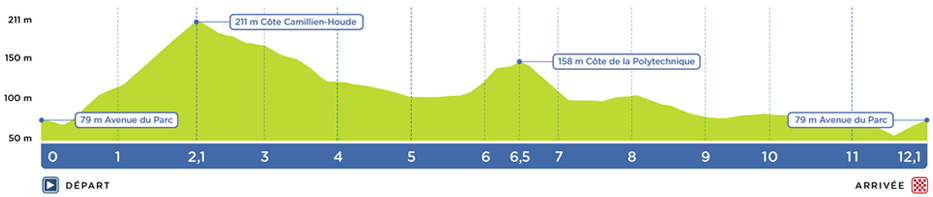
    The 12.1 kilometer circuit (17 laps of which will make for a total race distance of 205.7 kilometers) starts along the Avenue du Parc, makes a loop along the slopes of Montreal’s namesake Mount Royal, and then finishes back where it started. There are three uphill sections in each lap. After a short downhill from the starting line, the first and most challenging climb comes almost immediately, the 1.8 kilometer, 8% average gradient Côte Camillien-Houde. Then comes a fast descent, a brief flat section, and the next uphill test, the short but difficult Côte de la Polytechnique, 780 meters at a 6% average but with a steep 11% stretch of 200 meters along the way. After another descent, things even out for a a bit until the final 1100 meters: the riders will make a right turn heading south and shoot downhill on the Avenue du Parc, and then they will make a 180 degree turn to head back up the Avenue in the other direction towards the line. That final run-in is a 560 meter, 4% climb.
    GP Montreal Profile Site

    The Montreal circuit is, on the whole, harder than that of the GP Quebec. The Côte Camillien-Houde, crested 17 times, will put the heavier riders into serious difficulty and will likely launch attacks that will be a lot harder to marshal than those that were swallowed up without ever being much of a real threat in Quebec. The finish in Montreal, however, is a lot easier, meaning that sprinting legs will be important if a small group of riders come to the finish together; alternatively, a strong enough solo artist could stay clear after an attack on the circuit’s difficult early slopes.

    The Contenders

    A one-day race parcours favoring strong climbers with explosive finishes would bring Simon Gerrans to mind even if he hadn’t just taken the win in Quebec. With the form he just showed, he’ll be a top favorite for more success here. His rivals will be watching him closely, but Gerrans told VeloHuman today that he doesn’t feel any pressure coming in as a favorite after his win, and that instead the pressure is on the other teams to get something of the race. He also said that he feels the Montreal parcours might suit OGE even better than Quebec did.


    Simon Gerrans on the Montreal parcours and the riders his team will be keeping an eye on


    Gerrans has the uphill ability to get over the climbs and the sprint to beat almost anyone in the race. The biggest challenge for OGE will be the hard-to-control profile; Gerrans is capable of getting into moves or even making them on his own, but lately he has preferrred holding out for the sprint in these sorts of races, and Orica-GreenEdge will have their hands full trying to keep this together if that’s how they decide to play this. They have a very strong team here, though, and hilly profile specialists like Michael Albasini, Jens Keukeleire, Pieter Weening, and Daryl Impey (on top-notch form right now) will be great allies or, potentially, dangerous alternatives.

    Rui Costa was unable to get clear of the pack in Quebec and then had to cut his sprint short after Arthur Vichot went down right in front of him. Nevertheless, he was at the front as the race neared its climax. Montreal will give him a better opportunity to get aggressive. Few can launch an escape on a hilly profile as well as Rui Costa, and he has the burst of speed to win a sprint battle if need be. He’s never been outside the Top 10 in his Montreal-racing career, and he should continue to perform at a high level here. This will be an excellent opportunity for Costa to prove his form before his Worlds defense.

    Quebec runner-up Tom Dumoulin should also love this attacker-friendly profile. He’s the best soloist in the startlist, and if he can get clear of the bunch, his rivals will have a hard time tracking him down. Teammate Simon Geschke, always handy in the sprints that come after hilly days, is a great alternative for Giant-Shimano.

    BMC’s Greg Van Avermaet was hoping for a better result in Quebec, but Montreal will provide him with another chance at success. Van Avermaet told VH before the GP Quebec that he felt that, of the two, it suited him better. However, with the quality of punchy, fast finishers here in Canada, Montreal’s profile, more likely to spring the sort of successful long-range attacks for which Van Avermaet is known, should be good for him as well. He was 4th here last year. Don’t rule out a big ride from teammate Tejay van Garderen either; the American GC rider put in a strong dig on the final climb in Quebec, showing that he’s interested in getting involved in these races.

    Bauke Mollema was the best-placed of the GC-style riders in Quebec (landing 10th), and Montreal should suit him better if he and some of the other top climbers can make for a selective race. He also packs a great sprint, and if the ascending specialists can drop the less uphill-inclined, he’ll be a dangerous contender. Sep Vanmarcke, 7th in Quebec, may find Montreal a bit hilly, but he is climbing very well this year and with his Worlds role still undetermined, he will likely be going full gas here.

    Garmin-Sharp has a lot of firepower in Canada. Ramunas Navardauskas showed off his ever-widening array of skills with a strong uphill sprint to 3rd. The Montreal profile will really put him to the test, but Garmin-Sharp won’t panic if he struggles on the final few climbs: Tom-Jelte Slagter looked good in Quebec, finishing 11th, and this is an excellent race for him. Fabian Wegmann has put in strong performances here in the past as well.

    Alexander Kristoff will be in for a real battle to stick with the pack if the pace is high in the final few trips up the Côte Camillien-Houde. If this does come down to a sprint, and if he has made it to the line with the lead group, he’ll have an excellent opportunity to pick up the win, as the finish is less challenging than the one in Quebec, where he only managed 21st place. Simon Spilak will again be a good second.

    OPQS’s Gianni Meersman has great climbing legs (for a sprinter) and may be a bit more likely than Kristoff to stick with the peloton on the steep stuff. Having just taken 6th in Quebec, he’s showing good form right now, and he’ll be a top favorite if he’s there for a sprint. The team has options, though, with Jan Bakelants (10th in 2013) very well-suited to this sort of parcours, and with Zdenek Stybar, Julian Alaphillipe, and Matteo Trentin here as well, OPQS will undoubtedly be involved in the action.

    Astana is another team bringing a versatile fast finisher and several puncheurs and climbers to be ready for any race scenario. Francesco Gavazzi will have a chance to be in the mix in a bunch sprint. Enrico Gasparotto sometimes disappears in races that would look to suit him, but having landed 8th in Quebec he looks good enough to contend on a Montreal parcours that should be very good for him. Jakob Fuglsang and Borut Bozic are other strong riders for the team.

    Lotto Belisol’s Tony Gallopin was 10th here in 2012, and he looked good in Quebec. Lotto has several great talents for this profile, with Jelle Vanendert and Tim Wellens here too. Tinkoff-Saxo’s Matti Breschel could get involved if a larger group comes to the line together, while Michael Rogers can never be counted out in a race with plenty of opportunities for long-range attacks. Movistar has speedy JJ Lobato, JJ Rojas, and Fran Ventoso, but all-rounder Jesus Herrada also looks strong at the moment. AG2R’s climber-heavy squad should appreciate the tougher uphill challenges in Montreal; Jean-Christophe Peraud, Romain Bardet, and Christophe Riblon will have their chances to try to get away on the slopes. Trek’s Robert Kiserlovski and Frank Schleck may be thinking the same thing. Team Sky was unable to make anything out of Quebec, with Geraint Thomas struggling on the climbs, but this profile doesn’t look bad for Thomas (if Friday’s performance was just a bad day) and Edvald Boasson Hagen, and Chris Sutton looks to be strong right now as well. Cannondale’s trio of Davide Formolo, Marco Marcato, and Moreno Moser showed form in Quebec, with the first two finishing in the Top 20, and the third spending a lot of time in the morning breakaway. Europcar has Bryan Coquard for a possible sprint, and punchy Cyril Gautier and Yukiya Arashiro to animate the climbs. Team Canada will likely back Ryan Anderson, who has shown good form in his past few races.

    VeloHuman Top 10 Favorites

    Winner: Simon Gerrans
    Podium: Tom Dumoulin, Rui Costa
    Other Top Contenders: Bauke Mollema, Greg Van Avermaet, Tom-Jelte Slagter, Gianni Meersman, Tony Gallopin, Alexander Kristoff, Ramunas Navardauskas

    Be sure to follow @VeloHuman on Twitter for live coverage of the GP Montreal, and check back after the finish for post-race analysis!

    -Dane Cash

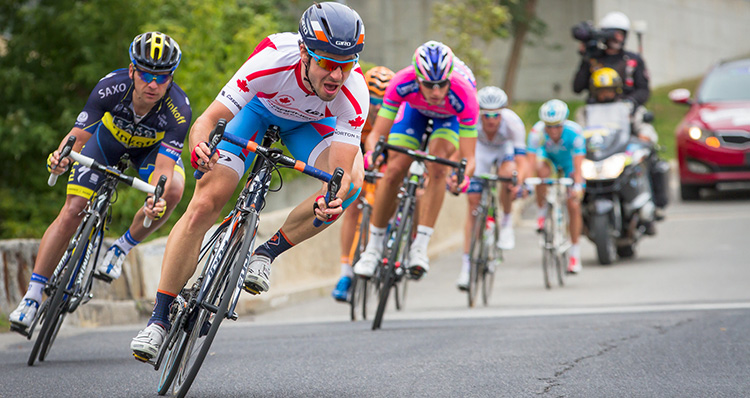
    Photo by Flowizm.
  • Vuelta a España 2014: Stage 20 Preview

    Vuelta a España 2014: Stage 20 Preview

    Stage 20 Profile

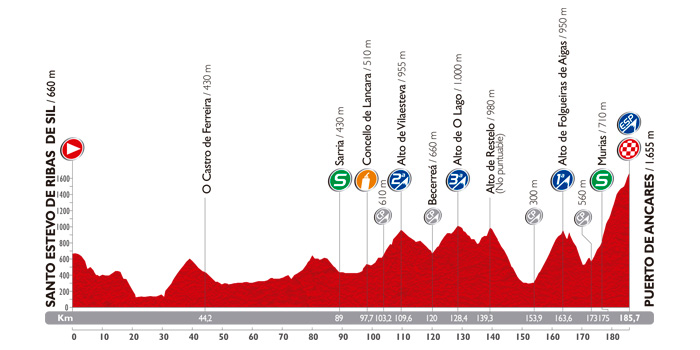
    Stage 20: Santo Estevo de Ribas de Sil › Puerto de Ancares – 185.7 km

    Following an Adam Hansen victory on a day without many GC implications, Stage 20, the final mountain stage of the 2014 Vuelta a Espana, is here. The parcours should make for quite a showdown. There are four categorized climbs on the profile, and a few more uncategorized challenges, and the constant barrage of ascents will be an uncomfortable experience for a peloton that has been racing for three weeks. The final 32 kilometers are particularly difficult. The Alto de Folgueiras de Aigas is 9.7 kilometers long at an average of 6.7%; just the sort of test to wear out the legs before the vicious final climb of the 2014 Vuelta. The Puerto de Ancares is a monstrous challenge, 12.7 km at 8.7%. Several stretches are significantly steeper (one such stretch, at 12%, comes in the last 2 km), and there aren’t many easy sections to offer respite. The last mountain stage of the last Grand Tour of the year would likely see aggressive riding regardless, but this final climb practically guarantees that the attacks will fly.

    The up-and-down second half will make it hard for the peloton to control the race, but as this is the last opportunity for the uphill specialists to shake up the General Classification, the GC men aren’t likely to hold back when the road goes up, which will make it hard for anyone up the road to stay clear. One thing is for certain: it will take an elite pair of climbing legs to win on this stage.

    Several very steep sections on the final climb will favor the ultra-lightweight climber types, and few of them are as in-shape right now as race leader Alberto Contador. He’ll be able to follow the attacks, rather than make them, and he’s already shown how dangerous that makes him. His rivals will certainly throw everything they have at him, but when it’s mattered most in this race, Contador has not shown much weakness on the climbs.

    Chris Froome has gotten much stronger over the course of this Vuelta, and he’s not going to let this chance to move up the leaderboard get away without a fight. The profile may look to suit some of his rivals a bit better, but Froome has looked strong enough these past few days that it may not matter. Expect to see him attempt a big attack on Stage 20 to try to open up a sizable gap to the rest of the GC contenders.

    Joaquim Rodriguez should appreciate the steep finish. He’s been just a bit less strong on the climbs than he might have hoped coming into the Vuelta, but he’ll still have an opportunity to pick up the stage win here. He’s far enough back on the General Classification now that he may get a little bit of breathing room for Contador and Froome if he tries something.

    Alejandro Valverde probably won’t get any space to attempt a move, but he’s still a danger. He seems content to hold wheels and hope for sprints even on the climbs that suit him, and that aversion to major risks, while it has kept him from ever picking up any huge gaps to his GC rivals, does make him a constant danger for stage success.

    Fabio Aru will have a great opportunity to add to his tally of stage wins with this steep finale; Contador and Co. have shown on multiple occasions that they won’t chase down his attacks, and that gives him even more of an edge than he already has thanks to his awesome uphill ability. Repeating what’s been said in most of the other mountain stage previews so far, Dan Martin, Samuel Sanchez, Daniel Navarro, and Warren Barguil are others who look strong right now and who will probably have freedom to put in moves from the pack.

    It’s always hard to predict potential breakaway protagonists, but at least this profile whittles down the list of realistic long-distance contenders to those with immense uphill talent. Ryder Hesjedal has been on excellent form in the Vuelta so far and this long day of climbing suits his one-time-Grand-Tour-winning skillset perfectly. Przemyslaw Niemiec is another rider with GC-style ability who should have a chance if he goes from afar; Damiano Cunego will be a strong card for Lampre-Merida to play as well. Alessandro De Marchi will love the constant up and down. Louis Meintjes has gotten stronger as this race has progressed, and he’ll have a nice opportunity if he can get into a move here on Stage 20. Romain Sicard, Mikel Landa, Wout Poels, Adam Yates and Esteban Chaves, Laurens Ten Dam, David Arroyo, Cadel Evans, and Mikel Nieve are others who might find success in a long-distance strike.

    VeloHuman Stage Favorites

    1. Alberto Contador | 2. Chris Froome | 3. Joaquim Rodriguez

    Be sure follow @VeloHuman on Twitter for live commentary of this and every stage of the 2014 Vuelta a España! The final preview will be up after the conclusion of Stage 20, so stay tuned. Also, don’t miss VH’s coverage the GPs Quebec and Montreal! The Quebec post-race is already up, and the Montreal preview is coming soon!

    -Dane Cash

  • Vuelta a España 2014: Stage 19 Preview

    Vuelta a España 2014: Stage 19 Preview

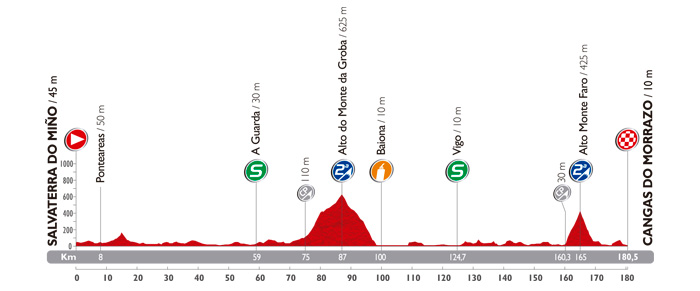
    Stage 19 Profile

    Stage 19: Salvaterra do Miño › Cangas do Morrazo – 180.5 km

    Following a Stage 18 with a pair of Cat. 2s as the only categorized climbs on the menu (Fabio Aru landed the victory) comes Stage 19, where two Cat. 2s are, again, the only categorized climbs on the profile. Their placement will make for a different sort of race, however. One comes right in the middle of the stage, and the other is crested with 15 kilometers still to go before the finish line. It could be a launching pad for attacks, but only a very strong move will have a chance of surviving all the way to the line. Following that final categorized ascent comes a fast descent, a few kilometers of flat, a slightly bumpy stretch, and then a flat final kilometer.

    The parcours will be too much for the pure sprinters to handle, but probably not difficult enough to offer much of an opportunity for a GC shakeup. That makes Stage 19 an excellent opportunity for the morning breakaway to get the victory, which of course means that the list of potential protagonists for stage success is quite long and varied.

    Orica-GreenEdge is likely to be the biggest challenge that anyone who gets up the road early will have to face. An impending mountain stage and the final time trial will temper any motivation the GC teams might have had to put in a lot of work, and that will give the early aggressors a big advantage. OGE, however, will want to control the race, in an effort to bring about a sprint and one final chance for Michael Matthews to pick up another win in this Vuelta a España. If the morning move is reeled in, the Australian squad will have probably played a major role in making the catch. The final climb is hard, but Matthews has amazing climbing legs right now, and if it is indeed the main bunch that is contesting this stage victory, he’ll be the top favorite for what will likely be a reduced sprint finish. Giant-Shimano’s John Degenkolb might have a chance of holding on in that scenario but it will be a lot to ask. Fast-finishing Alejandro Valverde and Wilco Kelderman may be more likely challengers for stage honors if the breakaway is swallowed up before the end of the day. Joaquim Rodriguez, Daniel Moreno, Dan Martin, Samuel Sanchez, and Fabio Aru are others likely to be riding in (what’s left of) the main peloton who have the strength to survive the final climb and then get involved in a reduced sprint.

    Philippe Gilbert is one of several versatile, punchy riders who could be looking to get into a long-distance move on Stage 19. If Gilbert sees an opportunity to break free from the pack early, he’ll be very dangerous in this sort of finale. Then again, he’ll be dangerous if he decides to stay with the pack as well. The ability to win in either scenario makes him a strong contender here.

    Luis Leon Sanchez, who, unless he abandons the race for some reason, will win the Vuelta’s King of the Mountains classification, is another rider who could find success from afar here. He’s ridden well in the hunt for the KOM jersey so far, and he’d love to add a stage win to go with that achievement. Strong in a solo move or in a sprint, he’s well-suited to this profile.

    So is Ryder Hesjedal, who already has a breakaway stage win in this Vuelta. Should he get into the day’s move, he’ll be a top contender with this very steep late challenge and with the great form he has shown in the past few days.

    Katusha’s Alexandr Kolobnev has been out front in this race before, and, riding for a team that really should have won something in this race already, he’ll be motivated to put it on the line as opportunities for victories are running out. He’s very dangerous in a reduced sprint.

    Cannondale’s Alessandro De Marchi, Lampre-Merida’s Filippo Pozzato and Damiano Cunego, Astana’s Alexey Lutsenko and Mikel Landa, OGE’s Adam Yates, Trek’s Fabio Felline and Jasper Stuyven, OPQS’s Wout Poels, Lotto Belisol’s Adam Hansen, and Europcar’s Romain Sicard are others who could be in the mix should the morning breakaway go the distance on Stage 19.

    VeloHuman Stage Favorites

    1. Michael Matthews | 2. Philippe Gilbert | 3. Luis Leon Sanchez

    Be sure follow @VeloHuman on Twitter for live commentary of this and every stage of the 2014 Vuelta a España! The next preview will be up after the conclusion of Stage 19, so stay tuned. Also, don’t miss VH’s coverage the GPs Quebec and Montreal! The Quebec preview and an interview with one of the top favorites for that race are already up!

    -Dane Cash

  • Grand Prix Cycliste de Quebec 2014 Preview

    Grand Prix Cycliste de Quebec 2014 Preview

    Veilleux

    While the Vuelta nears its conclusion in Spain, the WorldTour is also making its yearly visit to North America, where a pair of one-day races await. First up is the Grand Prix Cycliste de Quebec! 199.1 kilometers in total, the GP Quebec is a circuit race consisting of 11 laps that weave through the center of the city. As a top-level race and an important part of the Worlds buildup for many riders, it usually draws a very impressive group of participants (with those who focus on the hilly classics making up much of the roster) even with a Grand Tour taking place at the same time. This year is no exception!

    VH will be at the event in-person, so stay tuned here and on Twitter (@VeloHuman) for plenty of exciting coverage (previews, interviews, and post-race analysis) of the GP Quebec and the GP Montreal.

    The Route

    The profile of the GP Quebec always makes for a very interesting race. None of the uphill challenges on the menu seem particularly difficult at first glance, but their location on the route guarantees that they will play a major role in determining the day’s winner, either providing a launching pad for late attacks or at least whittling down the pack on the way to a reduced uphill sprint.

    GP Quebec Profile Crop

    The race starts (and finishes) in Old Quebec. The first 6.5 kilometers of the circuit are mostly flat as the road heads away from the city center, but then things change direction and there is a very fast descent down towards the water. As the road evens out, the pack will start heading back towards Old Quebec on the relatively flat Boulevard Champlain. Just after kilometer 14 of the circuit, things suddenly become difficult. The Côte de la Montaigne is only 375 meters in length, but at a 10% average grade, with almost half the climb at a whopping 13%, it will put plenty of pressure on the less uphill-oriented riders in the peloton. A fast descent follows, and then, as the route snakes through Quebec’s urban center, ultimately winding back towards the finish, the road kicks up in a series of climbs. The Côte de la Potasse is only 420 meters long, but the average gradient comes in at 9%. It is followed by a brief dip in the road and then another short, steep test, the Montée de la Fabrique, less than 200 meters in length but at 7%. Almost immediately after comes the long uphill drag to the line, the Montée du Fort climb, 1 kilometer at an average of 4%.

    By themselves, the late climbs may not look like much, but in rapid succession and coming at the end of the race, they will bring the uphill chargers to the fore. A technical urban circuit, with a few steep downhills to boot, will provide even more inspiration for the aggressive riders to attempt to escape from the pack as the day nears its conclusion.

    The Contenders

    The parcours makes for a very open race, where a wide spectrum of riders, including climbing powerhouses and even sprinters, will have an opportunity to pick up a WorldTour-level victory at the end of a hilly (but not too hilly) day. The 2013 edition was a perfect illustration of this: Robert Gesink, not partcularly known for his one-day race performances, outgunned would-be World Champion Rui Costa and even Peter Sagan in an uphill sprint.

    Gesink himself isn’t here, but the 2014 startlist, packed with hilly classics specialists, GC-style climbers, and a few of the peloton’s more versatile quick men, should set up another unpredictable race, as everyone will fight to survive the repeated uphill tests and then either launch a late move or hold out for a group finish on the Grande-Allée. A fair bit of punch and capable climbing legs will be necessities for anyone hoping to succeed in this race.

    Orica-GreenEdge, loaded with talented riders for the hilly profiles, probably couldn’t draw up a race much more suited to them than the GP Quebec or its sister race in Montreal. They bring a powerful squad to Canada to contest both. Simon Gerrans won this race in 2012, and with his skillset, he’ll be among the most dangerous riders on this parcours. The two-time Monument winner is strong enough to escape from the pack on a tough profile if he sees an opportunity, and he is deadly in an uphill sprint. With a World Championship course that suits him just around the corner, he showed excellent form in the recent Vattenfall Cyclassics, sprinting to 3rd ahead of some very impressive names, and this race fits him even more perfectly. OGE will also have Michael Albasini, Daryl Impey (fresh off a Tour of Alberta win), Pieter Weening, and Jens Keukeleire as powerful cards to play. At least one member of this impressive team should feature prominently in the finale.

    BMC’s Greg Van Avermaet was 2nd in the 2012 edition of the GP Quebec, and 3rd in last year’s race. The Canadian GPs are a major target of his, and an urban circuit with the ups and downs and twists and turns to inspire late attacks is perfect for the aggressive Belgian. He showed great form in an uphill burst to a stage victory in the recent Eneco Tour, and no matter how this race plays out, it’s hard to imagine that he won’t be involved at the finish once again. Tejay van Garderen may not have much of a resume in the one-day races, but the climbing specialist (who has looked more explosive than ever this year) will make for a powerful teammate.

    FDJ’s Arthur Vichot was runner-up to Robert Gesink in 2013, and just put in a top-notch display of form when he took 3rd overall in the GP Ouest France in Plouay. Vichot was very impressive in the hilly Paris-Nice in March, and he looks to be returning to a high level as the season nears its conclusion. He’s an explosive uphill charger who isn’t afraid to go solo, and he should be among the top contenders in the GP Quebec.

    World Champion Rui Costa has landed back-to-back top 5s in Quebec, and with his World Champs defense approaching, he’s highly motivated to put his mark on this race again. He’ll need a challenging race to put some of the faster finishers under pressure, but there are a number of true climbing talents on this startlist (including teammate Chris Horner) that could help. Costa has a knack for success here and the ability to strike out for glory alone or outgun a small group at the line.

    Katusha’s Alexander Kristoff is in attendance and probably has claim to the title of best sprinter on the startlist. Surviving the late uphill tests will not be easy for Kristoff, and the final drag doesn’t suit him that well, but he has continually delivered on very difficult profiles in 2014 and so he can’t be counted out with his elite finishing kick. Simon Spilak is a strong alternative.

    Gianni Meersman is one of the most versatile sprinters here, and he’s on strong form at the moment. He might have a chance at staying with the pack all the way to the line. If not, OPQS is loaded with other options. Zdenek Stybar has the power to make a late break for victory or to hold the wheel of anyone who does and the finishing kick to outmatch a group at the finish. Julian Alaphilippe is very strong right now and just delivered a very impressive ride in the GP Ouest France, and Jan Bakelants (who loves the hilly days) and Matteo Trentin (deadly in a reduced sprint) are even more potential protagonists for the team.

    Garmin-Sharp’s Tom-Jelte Slagter has finished in the Top 10 here on back-to-back occassions, and he’s had a career year. Form is a bit of a question mark, but he has the skills to thrive here if he’s in shape. Ramunas Navardauskas, Fabian Wegmann (an impressive 4th here in 2013), and sprinter Steele Von Hoff are other great options for the team. Europcar also has riders for multiple scenarios, with Bryan Coquard a potential contender in a sprint and Cyril Gautier and Yukiya Arashiro as options if the race is too selective for Coquard. Sky has their dangerous one-two punch of Geraint Thomas and Edvald Boasson Hagen, both of them capable of striking out for solo success or holding on for an uphill sprint. Giant-Shimano has an in-form Tom Dumoulin (who packs some underrated punch) and hilly classics specialist Simon Geschke (9th last year), and between them, a good result for the Dutch team seems likely. Lotto Belisol is stacked with talented riders for the parcours, with top-notch solo artist and very fast finisher Tony Gallopin in attendance and motivated, along with Jelle Vanendert and Tim Wellens, who could make things very interesting on the late climb, and strong one-day racer Jurgen Roelandts. Belkin’s Bauke Mollema is obviously an elite climber, but his great finishing kick might surprise some people; don’t rule him out even in a reduced sprint (he has a great chance to follow up Gesink’s unexpected victory with one of his own). Teammate Sep Vanmarcke may be known more for his cobbled classic prowess, but his punchy style and his ability to get over the small hills should translate well here.

    It’s hard to pick out one Astana rider as the most likely to land a good result in Quebec, but the team bring a serious array of talent to the race in Jakob Fuglsang, Enrico Gasparotto, Borut Bozic, Francesco Gavazzi, and Liewue Westra, and that impressive cast has among them the variety of skillsets to cover any scenario. Tinkoff-Saxo, with Michael Rogers and Matti Breschel, also has options for multiple outcomes. AG2R’s climber trio of Jean-Christophe Peraud, Christophe Riblon, and Romain Bardet should make this interesting, and don’t count out Hugo Houle either in his home country. Movistar’s Beñat Intxausti, JJ Rojas, and JJ Lobato, Cannondale’s Moreno Moreso, Marco Marcato, and Davide Formolo, and Trek’s Robert Kiserlovski and Frank Schleck are other talented riders who could be in the mix.

    VeloHuman Top 10 Favorites

    Winner: Simon Gerrans
    Podium: Greg Van Avermaet, Arthur Vichot
    Other Top Contenders: Rui Costa, Alexander Kristoff, Gianni Meersman, Tom-Jelte Slagter, Simon Geschke, Michael Albasini, Tony Gallopin

    Stay tuned for plenty more coverage of the GP Quebec and the GP Montreal, and be sure to follow @VeloHuman on Twitter for live commentary of both races.

    -Dane Cash

    Photo by Cephas.

  • Vuelta a España 2014: Stage 18 Preview

    Vuelta a España 2014: Stage 18 Preview

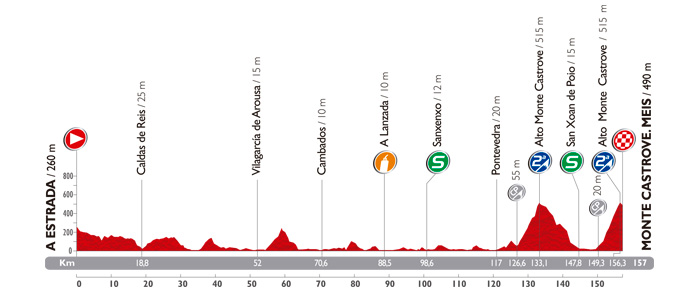
    Stage 18 Profile

    Stage 18: A Estrada › Monte Castrove. Meis – 157 km

    Following John Degenkolb’s strong win on the Vuelta’s final real sprinters’ day, Stage 18 will bring to the fore those who prefer charging up a gradient. Very short at only 157 kilometers, Stage 18 nevertheless packs a punch in the finale. After they’ve spent most of the day riding on relatively flat roads, the peloton will have to climb the Alto Monte Castrove twice to close out the day. It’s short, but its 7% average grade will do plenty of damage, and with the finish line coming just over a half a kilometer after the riders crest the climb for the second time, only those with punchy climbing legs will have a chance at being positioned to contest the stage victory.

    Since this finish is too difficult for the pure sprinters’ teams to drive the pace, the breakaway will have a chance at staying away on Stage 18, but if Movistar or Katusha decide to keep things on a short leash so that their GC men might have a shot at the bonus seconds on offer, it will be hard for anyone to succeed for afar here. Katusha and Movistar should be keen on controlling this one, because Joaquim Rodriguez and Alejandro Valverde have to be among the top favorites for stage honors. The narrow uphill road of the final climb suits Purito quite well, and it’s hard to imagine him not delivering an all-out attack in the waning moments of the race. Daniel Moreno has just the right skillset for the Alto Monte Castrove as well. Meanwhile, Alejandro Valverde packs quite the uphill kick himself, and he also has the strongest sprint among the riders in the GC Top 5. If he can hold the wheels of the attackers in the last ascent, he’ll have an excellent opportunity to nab a victory and valuable bonus seconds on Stage 18.

    Dan Martin has already come close to a stage victory in this race using his top-notch punchy climbing legs, and he has maintained a high level of form even into the third week. He has a great chance here to finally pick up the stage win he’s been hunting. Fabio Aru may not have the Ardennes resume that Purito, Valverde, Moreno, and Martin have, but he is an elite climber who has a knack for exploding out of the pack on the very steep stuff.

    Chris Froome is getting stronger every day in this race, and if he can drop his rivals with an attack from far enough out, he’ll have a shot at victory on Stage 18 even on a short climb like this. Race leader Alberto Contador, on the other hand, doesn’t need to attack, and therefore will have the luxury of being able to follow the wheels he wants to follow. That puts him into a good position to pick up another win in much the same way he won Stage 16, when he allowed Chris Froome to drive the pace until an opportunity to fly past presented itself.

    Wilco Kelderman hasn’t had quite the level of form in this Vuelta a España that he displayed in the Giro, but he has a very fast finish and is a dangerous rider in a post-climb sprint. Samuel Sanchez, Warren Barguil, and Daniel Navarro are others on the fringes of the GC leaderboard who could hope to get involved in this sort of finish, while Philippe Gilbert and Michael Matthews will hope that they can hang with the GC-oriented climbers on the incline and outgun them in the final few moments for stage honors.

    Should a long-distance move take the day, Ryder Hesjedal, Alessandro De Marchi, Luis Leon Sanchez, Adam Yates, Wout Poels, Alexey Lutsenko, Louis Meintjes, and Alexandr Kolobnov are among those who should be considered good candidates for success on a profile that turns hilly quite suddenly in the last 30 kilometers.

    VeloHuman Stage Favorites

    1. Alejandro Valverde | 2. Joaquim Rodriguez | 3. Dan Martin

    Be sure follow @VeloHuman on Twitter for live commentary of this and every stage of the 2014 Vuelta a España! The next preview will be up after the conclusion of Stage 18, and there is plenty of GP Quebec and GP Montreal coverage coming very soon as well, so stay tuned!

    -Dane Cash

  • Vuelta a España 2014: Stage 17 Preview

    Vuelta a España 2014: Stage 17 Preview

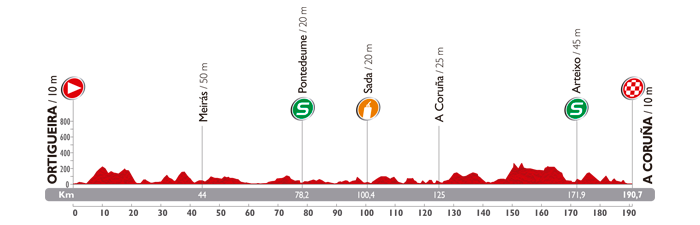
    Stage 17 Profile

    Stage 17: Ortigueira › A Coruña – 190.7 km

    With several tough mountain stages (closed out by Alberto Contador’s Stage 16 victory) behind them, the peloton will enjoy a day without any categorized climbs on Stage 17. The profile does include a few small bumps throughout, but the flat finish should motivate the sprinters’ teams to keep the break on a short leash. It’s not a given that they’ll succeed in bringing this back together as the line approaches, and the possibility for rain in the forecast could make things a bit more interesting, but as the last potential sprinters’ stage in the Vuelta a España, a bunch gallop on the waterfront in A Coruña seems likely.

    With FDJ’s Nacer Bouhanni out of the race, Giant-Shimano’s John Degenkolb is the most dangerous sprinter in attendance, and he will be the top favorite for Stage 17. Plenty of riders have abandoned the Vuelta at this point, but Degenkolb still has elite leadout man Koen de Kort to guide him to the final few hundred meters, and he has the top speed to take this victory.

    Michael Matthews of Orica-GreenEdge will be among his main rivals for stage honors. Versatile as he is, he may be fresher than most after some very hard climbing this week, and he was 2nd to Bouhanni even in the very flat Stage 8. OPQS’s Tom Boonen is getting stronger as this race goes on and as the World Championships near (he was 2nd on Stage 12). He could benefit from bad weather. Lampre-Merida’s Roberto Ferrari has a 3rd place finish in this Vuelta already. With Max Richeze and Pippo Pozzato for support, Lampre is loaded for this one.

    Astana’s Andrea Guardini has not been much of a factor even on the flatter stages in this race so far, but he has the talent to be in the mix. Lotto Belisol’s Jens Debusschere, MTN-Qhubeka’s Gerald Ciolek, AG2R’s Yauheni Hutarovich, BMC’s Philippe Gilbert, Garmin’s Nathan Haas, and IAM Cycling’s Vicente Reynes will be outside contenders for Stage 17. Trek has the speedy Jasper Stuyven and Fabio Felline, but Fabian Cancellara looks to be getting stronger and he could give this a go, maybe even with an attempt at a long-range victory.

    VeloHuman Stage Favorites

    1. John Degenkolb | 2. Tom Boonen | 3. Michael Matthews

    Be sure follow @VeloHuman on Twitter for live commentary of this and every stage of the 2014 Vuelta a España! The next preview will be up after the conclusion of Stage 17.

    -Dane Cash