Tag: Post-race

  • Ronde van Vlaanderen 2014 Post-race Impressions: Cancellara in a Class of His Own

    Ronde van Vlaanderen 2014 Post-race Impressions: Cancellara in a Class of His Own

    Koppenberg

    Quickly Summing Up the Action at the 2014 Tour of Flanders

    Pais Vasco kicked off today in Ordizia (check out the VeloHuman preview!), which means that De Ronde 2014 is now history. Sunday’s battle on the cobbles of East Flanders made for an incredibly exciting contest, with action enough for several races throughout the long day on the road. At times, it looked like anyone’s game, with constant crashes and daring attacks providing plenty of uncertainty to keep things interesting. Riders were dropping like flies with each climb. As the front of the pack approached the last few hillingen with two-time winner Fabian Cancellara among them, an air of inevitability started to creep in. The other contenders sensed it and did what they could, with Greg Van Avermaet and Stijn Vandenbergh going off the nose a bit over 30 km out. When Spartacus jumped from the chasers on the brutal Oude Kwaremont on his way to track them down, only Sep Vanmarcke could follow up the bone-rattling cobbles; fellow pre-race favorites Peter Sagan and Tom Boonen were unable to hang on.

    From there, it was a matter of Cancellara and Vanmarcke catching the men in front, which they did, and the foursome hanging on ahead of the pack. Their bid was successful, leading to a four man sprint for the 94th Tour of Flanders. A game of cat and mouse ensued, with each rider jockeying for the best position and trying to plan the perfect time to turn on the ignition, but even with 3-to-1 odds, the Belgian trio could not match Cancellara in the final gallop. Spartacus delivered again Sunday to pick up his 3rd win in the Monument Classic, with Greg Van Avermaet 2nd and Sep Vanmarcke a disappointed 3rd.

    Lessons Learned Along the Road to Oudenaarde

    Fabian Cancellara‘s 3rd Ronde van Vlaanderen victory is his seventh Monument. That ties him with Tom Boonen, and it does not look like Spartacus is slowing yet. He has shined on the two biggest stages of the year, outclassing some of the best sprinters in the world on his way to a 2nd place in Milano-Sanremo and then using his sprint again even more effectively to take De Ronde. Though the Trek rider just turned 33 this March, both his finishing kick and his powerful engine seem to be as strong as ever. He has said that he may retire within the next few years, but given his current form, he’s likely to fill those years with more success, especially in the most beloved one-day races on the calendar, which also happen to be the most grueling—and therefore suit him perfectly. This Sunday’s Paris-Roubaix will be the perfect place for the strongest of strongmen to take yet another major victory. He enters as the big favorite after this dominant show.

    Perhaps the second biggest story of the Ronde van Vlaanderen was Peter Sagan‘s inability to match Cancellara on the Oude Kwaremont. Despite showing strong form in several big races so far this season, Sagan had no answer for Spartacus on the brutal final hillingen. It would be hard and probably incorrect to pinpoint any one reason why his ability to nab races like Gent-Wevelgem and E3 Harelbeke has not translated into a Monument yet. A few factors come to mind. First, he does seem sapped of power when the odometer gets over 240 kilometers, as it does in these races. His Milano-Sanremo 2014 sprint was far less impressive than it usually is, and his uphill burst seemed drastically reduced when Cancellara turned on the afterburners in this weekend’s Tour of Flanders. Sagan’s team support, or lack thereof, may be another major factor—Sagan does not have Cancellara’s ability to carry on over tens of kilometers alone, and while it can’t be said that Cannondale does not surround the young Slovakian with talent, he is too often left without assistance at key moments in a race. Whatever has held him back, I don’t think it necessarily counts him out for this Sunday’s Paris-Roubaix, even if it seems to suit him less than other races. The truth of the matter is that any rider can have an off-day when he least wants to, and it’s always possible that Sagan just hasn’t gotten his best days to line up with the biggest races yet.

    Sep Vanmarcke impressed me more than most other riders in the race with his ability to jump up the Oude Kwaremont behind Cancellara. It is a serious climb, meaning that even if he has yet to win a big race this season, Vanmarcke is on serious form. In my mind, Vanmarcke is right with four-time winner Tom Boonen as top challengers to Cancellara in Paris-Roubaix. Without the uphill mileage of the Ronde, the Hell of the North may be a better shot for Vanmarcke. He’s perfected the art of holding Cancellara’s wheel, and, learning from the best, one day soon he might just time his own attack perfectly.

    What more can I say about Greg Van Avermaet that hasn’t already been said? It’s hard not to root for the 28-year old, a constant fixture in the spring classics. The BMC rider has shown in Omloop Het Nieuwsblad and on Sunday in Flanders that he is in great shape in 2014, and with such a high probability of a good placing in almost every race he takes on, it seems likely that one of these days, he might win the final sprint to the line or solo away and stay out until the finish line. Better tactics (not wasting energy trying to drop Stijn Vandenbergh) will help as well.

    Tom Boonen was unable to hang with the lead group on Sunday, but he did manage to end up a respectable 7th. His thumb seems to still be affecting him; I’d say he ran a decent race given his injury, and hopefully, he will continue to heal and challenge for Paris-Roubaix. OPQS as a whole will (and should) be very disappointed with the way things turned out. Their best placed rider Stijn Vandenbergh did not come close in the sprint. Niki Terpstra tried to pick up Boonen’s slack with an attempt to bridge to the final foursome, but was unsuccessful. Zdenek Stybar was among the big group of chasers but did not manage to make waves. They will look to bounce back in Paris-Roubaix. With last year’s 3rd place finisher (Terpstra) and 6th place finisher (Stybar, who might have been on the podium himself if not for a spectator crash) lining up alongside Tom Boonen (another week removed from his thumb injury) in a race he has dominated, they are set up nicely.

    Milano-Sanremo winner Alexander Kristoff forced himself further into the Paris-Roubaix conversation with a 5th place in the Ronde van Vlaanderen. It would have been something if the Katusha hardman had won the bunch sprint behind the leading group as he did last year, but his 2014 performance, while landing him a 5th instead of 4th, was arguably more impressive, as it involved him jumping into an attempt to bridge with only one other rider (Niki Terpstra) and then going it alone for the closing minutes of the race. The fact that he was able to be up there when Sagan and John Degenkolb had fallen away speaks volumes about Kristoff’s talent. His abilities shine brightest on the toughest days. Paris-Roubaix is one such day, and Kristoff will look to improve on his 2013 result, 9th place, in this edition. Without climbs but with all the brutality of a cobbled Monument Classics, P-R could be a great stage for Kristoff.

    Cancellara’s dominance, the rise of Kristoff and Vanmarcke, and the continued disappointment for Sagan may be the biggest takeaways from the 2014 Ronde, but in my mind they come with a major caveat. On the harsh cobbles of the spring classics, races can change in an instant (Cancellara knows this better than anyone thanks to his 2012 crash). Any rider can have a great day or a terrible day, and the conditions of the Monuments tend to push this fact to its extremes. In short, Fabian Cancellara was the most dominant rider on Sunday and he’ll enter Paris-Roubaix the favorite, but when the gears start turning and the adrenaline gets pumping, it only takes one perfectly-timed move by one in-form challenger to shake things up. As usual, VeloHuman will be previewing the excitement to come, and tweeting more thoughts @VeloHuman on Twitter (be sure to follow!).

    -Dane Cash

    Photo by Mark Blacknell. Video courtesy of CyclingHub.
  • E3 Harelbeke, Gent-Wevelgem, and Volta a Catalunya Post-race Impressions: Wrapping up the Weekend

    E3 Harelbeke, Gent-Wevelgem, and Volta a Catalunya Post-race Impressions: Wrapping up the Weekend

    VoltaMotocrop

    Tuning Up at the Highest Level

    The last week of March was positively full of WorldTour racing, and each day offered insights into who is on form and who is not in early 2014. Because of the major implications of the one-day races for the upcoming Monuments, and the golden opportunity to view the form of the top GC riders on the planet during their heavyweight bout in the mountains of Catalunya, I decided the races were worth a few minutes spent cataloging some post-race impressions.

    Takeaways from E3 Harelbeke and Gent-Wevelgem

    Peter Sagan picked up the second major spring classic victory of his career last Friday at E3 Harelbeke, sticking a late attack with Geraint Thomas, Niki Terpstra, and Stijn Vandenbergh and rather easily outsprinting the rest of the escapees to the line. Sep Vanmarcke and Tony Gallopin jumped from the chasing pack for the next placings and then Borut Bozic led the bunch over the line, with Tyler Farrar, Fabian Cancellara (who put in a valiant effort trying to track down the escapees despite being delayed by a crash), Greg van Avermaet and a banged up Tom Boonen following, among others. Two days later in Gent-Wevelgem, the peloton ate up attacks one by one to force a bunch sprint, but not without danger along the way. Crashes wreaked havoc on the peloton all day, downing the likes of Ian Stannard (who fractured a vertebra), Andre Greipel (who broke a collarbone), and Tyler Farrar and slowing Cancellara. Enough stayed upright for a bunch finish. MSR winner Alexander Kristoff jumped first, but Sagan, John Degenkolb, and Arnaud Demare charged past as he faded. Degenkolb took the win with Demare 2nd and Sagan 3rd. Sep Vanmarcke was an impressive 4th. Boonen (despite an injured thumb) pulled in 5th.

    Sagan’s strength in the successful E3 move shows that he’s on a very high level in the area of his game he’ll need most in the upcoming Tour of Flanders. Meanwhile, he couldn’t match high octane Degenkolb and Demare in the sprint. I’m beginning to think he has made a conscious decision to angle towards improving his climbing and endurance possibly at the expense of pure sprinting this year; Flanders will be a good indicator of things.

    Fellow E3 top finisher Geraint Thomas looked very sharp, certainly back on the level after a messy crash in Paris-Nice. With Stannard out for the foreseeable future, Thomas’s showing is important for Sky’s classics campaign. The climbs and distance of Flanders will be a good opportunity for him to show off his skillset.

    Gent-Wevelgem brought John Degenkolb the spring classic he’d been seeking. He burst onto the scene with a dominating Vuelta performance in 2012 and has built on that promise. I look forward to the next stage race that he and Sagan attend together. Arnaud Demare was very close behind him at the line. He will be disappointed at coming so close, but it was a good showing that bodes well for the future.

    Despite a lack of success during the weekend, Cancellara showed continued power in his efforts at the front of the peloton in both races. E3 and Gent-Wevelgem are big events but Cancellara has his eyes on the Monumental prizes, and he looks sharp. Rival Tom Boonen took a backseat to Niki Terpstra in Harelbeke but he was quite quick in the Gent-Wevelgem finish. Like Cancellara, he looks ready for Flanders and Paris. Terpstra was doomed to 2nd when the E3 break was unable to drop Sagan, but he did look quite strong. Zdenek Stybar was active during the weekend and will relish the more difficult contests to come.

    Sep Vanmarcke was one of the strongest riders in both races. He managed a 5th place in E3 despite running into mechanical issues on the day, and surprised many (including me) with his sprint to 4th on Sunday. It was nice to see him giving the races his all even when victory seemed out of the picture. He has been everywhere in the early season classics, and I think he’s likely to mix it up with Cancellara, Boonen, and Sagan in the next two weeks.

    Andre Greipel missed out on a golden opportunity to pick up a big classics victory, and now he’ll miss time for injury to boot. It’s a shame for the German sprinter, who is a true gentleman of the sport, and who obviously has the talent to succeed in one-day races as well as in the Grand Tour sprints he’s known for.

    Other takeaways from the E3 Harelbeke/Gent-Wevelgem weekend: Topsport Vlaanderen’s Tom Van Asbroeck looks primed for a bright future, getting into the Top 10 mix in G-W after already notching some semi-classic success in 2014. Jurgen Roelandts sniped the final Top 10 spot in G-W despite a last minute designation as team leader after Greipel went down. He has looked very strong across the first few weeks of classics season, and now that he won’t be on teammate duty, he could pose a threat in the race he took 3rd in last year, Flanders. Alternativley, Lotto could look to success from Tony Gallopin, who looked sharp on the climbs in Paris-Nice and who was strong at the E3 finish.

    Takeaways from the Volta a Catalunya

    The heavyweight GC competition may have been the big story in Spain, but first, a quick word on the stagehunters. While John Degenkolb was prepping for his days on the cobbles, teammate Luka Mezgec was absolutely cleaning up the sprints in Catalunya, earning a hat trick of victories against the likes of Leigh Howard and Roberto Ferrari. He’s a versatile rider who can hang on over the climbs (kind of like Degenkolb) and he packs a heck of a punch… He also shares youth with Giant’s other star sprinters: Mezgec, like Degenkolb and Marcel Kittel, is only 25! OPQS youth Julian Alaphillipe (just 21!), a cyclocross transfer, looked strong as well in Catalunya with three top 5 stage finishes.

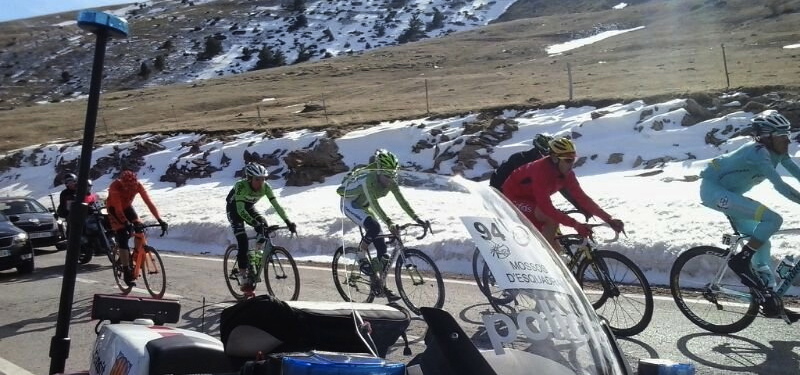
    Now to the GC contenders. Joaquim Rodriguez won the mountainous 3rdstage, taking the race lead, which he successfully defended through to the final podium. Alberto Contador was 2nd on the day, and he defended that position through to the final podium as well. Tejay van Garderen, 4th on stage 3, improved his position by winning a cold, dreary, foggy stage 4, and he hold on for 3rdoverall. Romain Bardet was just behind, both on the stage and in the GC. Nairo Quintana and Chris Froome were strong throughout the race, but could not match their rivals at the top, settling for 5th and 6th, respectively.

    There was plenty of insight to be gleaned from the climbers’ battle, but there are also some caveats. Starting with the insight: Purito quickly proved that his time away from racing was not spent on the couch. He was simply too strong on his way up La Molina, and if there were any concerns about his 2014 form heading into the month of the Ardennes classics, I’d say he dispelled them. Contador was among the top climbers on both decisive stages, and active on other days as well. Having just put in a Herculean effort in Tirreno-Adriatico, he still managed to challenge for the overall victory here, and if his performance in Italy did not say it emphatically enough, he is most definitely back. Meanwhile, Froome and Quintana, while among the best riders in the race, were not on the level of Purito and Contador. However, I think it is dangerous to draw too many conclusions from their performances. As was noted in the original preview, Quintana was still taking anti-biotics to stave of illness at the start of the race, and Froome was coming off of back pain that sidelined him for Tirreno-Adriatico and subsequent training. Given the circumstances, Quintana and Froome looked fine in Catalunya and I don’t think either is concerned.

    To my mind, Tejay van Garderen made the biggest statement of the race. Despite lurking at the top levels of the sport in the past two years, Tejay had yet to take a WorldTour victory before last week. He remedied that with a beautiful uphill charge through the mist on a stage 4 whose conditions were so bad that the only TV coverage came in the final ten minutes of the race. After last year’s disappointing Tour de France, Tejay looks to be better than ever, and winning a stage with a quick upward burst is even more impressive, as van Garderen is not really known for explosiveness. To stand on the podium in a race without a time trial against such high level competition bodes extremely well for van Garderen. AG2R’s Romain Bardet, who narrowly missed the stage 4 victory behind van Garderen, was vindicated after a series of misfortunes kept him from contending in Paris-Nice with his 4th overall here, on the same time as Nairo Quintana.

    Garmin will be pleased with Andrew Talansky’s 7th place, just behind Froome himself. The American was still rounding into form at Tirreno-Adriatico, and it looks like he is progressing nicely ahead of his first big target of the season, the Tour de Romandie. Meanwhile, teammates Dan Martin and Ryder Hesjedal both look to coming along as well (Martin is targeting the Ardennes and the Giro), from the same position of uncertainty.

    Warren Barguil was another statement-maker. Two Vuelta wins last year put the young French Giant-Shimano rider on the map, but as both came in breakaways, he had yet to mix it up with the big GC riders. Barguil crossed the line in the stage 4 finish behind Chris Froome, and ended the race 9th overall. According to ProCyclingStats, he’s set to start the Ardennes classics for GSH, and with Tom Dumoulin (winner of the Criterium International ITT) he makes a dangerous duo with the potential for serious long range strikes.

    The stars of E3 and Gent-Wevelgem take on the biggest prizes of the classics season in the next two weeks, starting in Flanders on Sunday. Meanwhile, many of the top names from Catalunya will head across Spain to start in the Tour of the Basque country, with Amstel, La Fleche Wallonne, and Liege to follow.

    The Tour of Flanders and Tour of the Basque country are the next previews on the docket. As usual, I’ll also be tweeting plenty of analysis of the action; be sure to follow the new @VeloHuman on Twitter!

    -Dane Cash

    Photo by Mossos.

  • Milano-Sanremo 2014 Post-race Impressions: Kristoff Delivers

    KristoffKBKTakeaways from La Classicissima di Primavera 2014

    Milano-Sanremo 2014 is in the books! The VeloHuman race preview noted that whoever won this race would truly have to earn his glory, and after 300 rain-soaked kilometers, I’d say he did. The biggest takeaway from this race is obviously that Alexander Kristoff is capable of pulling off the big win. If you’ve watched many bike races in the last year, you probably already knew that the Katusha sprinter is the real deal. If you read this particular site, you’re definitely aware: in the end-of-2013 thoughts published in November, VH said, “Speaking of quick hardmen, Alexander Kristoff gets a paragraph of his own: he built on a strong 2012 (in which he took an Olympic Bronze Medal) with top 10s in three Monument Classics and his first WorldTour level win in the Tour de Suisse (besting Peter Sagan on a tough day that ended in a sprint). He has established himself as a serious contender for hardman sprinter’s races going forward.” I’d say he’s made good on that promise. The number of major news outlets calling him a total surprise was a bit shocking to me. He was among the top 15 or so with the bookmakers, he was one of my Top 10 for this race, and every other preview site I read named his name, so he didn’t exactly come from nowhere. Still, that big win was something that seemed to constantly elude him. His Tour de Suisse stage win last year was his very first WorldTour win. With Sunday’s performance, we can be a bit more confident that Kristoff really does have that killer instinct required to pull of the victory (it wasn’t close at the line). He’s got to be viewed as a favorite in sprint finishes over the next few weeks of classics-riding. Luca Paolini also deserves some serious praise for the job he did keeping the pace high and guiding Kristoff over the obstacles on the way to the finish in Sanremo. Katusha, known for their climbers, has done a commendable job prepping for the spring classics, and I think we can look forward to more from them in the near future.

    The other big takeaway, or at least, the second biggest news item, is that Peter Sagan didn’t win. Not only did he not win, he wasn’t even in the top 5, rolling in 10th. Granted, he sort of gave up at the very end of the sprint after it was clear that he was a bit too far behind and boxed in as well, but no matter how you slice it, he didn’t look like he had it in him to make the podium. It’s a disappointment for him, but I am not going to read too much into it just yet. While Sagan was the favorite for the race, he was by no means a lock. The removal of the big climbs at the end put a dent in his chances at dropping other sprinters, and the length of the race was a bit longer than the sorts of contests Sagan has proven he can win. His form may also be a tad below what it was in last year’s race. All this to say: while I think it will be a blow to morale for Sagan to come away from the race without a win or even a podium spot, I will still have him among the favorites at E3, Gent-Wevelgem, and the Tour of Flanders (which may be his true goal this season), races that may provide more launching pads for victory, and fewer miles to wear him down.

    Speaking of all those races that Fabian Cancellara will be another favorite in: Spartacus nabbed a surprising second place at MSR by being the second best sprinter after 300 kilometers. Despite the presence of riders who tend to be faster to the line, Cancellara’s otherworldly endurance left him enough in the tank to land himself in the runner-up position. He seemed pretty frustrated after the race, but I’m not really sure there could have been a better outcome. I was quite impressed that he even managed a 2nd place: with no Pompeiana climb, it was always going to be very hard for Cancellara to get away. I’d say his outlook is pretty good for the next few weeks.

    Ben Swift was something of a revelation in this race, nabbing 3rd. He’s had some high-level road wins in his young career, but injury has gotten in the way of his pursuit of victory in the past. In a race that one might have expected Team Sky to be riding for Edvald Boasson Hagen, Swift shone as the best rider in black and blue on the day, and he delivered for Sky with a podium-level sprint at the end of a very long day at the office. At the moment he seems scheduled to ride Pais Vasco, which may offer a few opportunities for him to put his versatile skillset on display. Boasson Hagen, meanwhile, seems to struggle in this race, so I am not sure what to make of his fading on Sunday in terms of judging his form leading into the cobbled classics.

    John Degenkolb will be left wondering what might have been, after a late puncture ruined his shot at glory. Fortunately, we will get to see him again soon on the cobbles. Mark Cavendish will be disappointed that he didn’t get the win despite being involved in the bunch sprint at the end, but as Kristoff pointed out after the race, a sprint after 300 km is quite different from one after 200. Andre Greipel stated he had both cramps and mechanical troubles at the end of the race. Gerald Ciolek got the rain and the bunch sprint he probably wanted, but couldn’t manage more than 9th (though, I’d rate that as a moderate success, as I didn’t even expect that). Juan Jose Lobato took up JJ Rojas’s mantle, nabbing 4th for Movistar. It’s a good result for him, and he’s off to a pretty good year with some strong finishes so far. Sacha Modolo was another of the VeloHuman Top 10, and he finished right around where I expected. Like anyone who came to that finish line after Kristoff, he’ll probably be disappointed, but a top 10 in MSR is a pretty good sign of ability going forward. Zdenek Stybar pulled a fine 7th place while also working for Cav, as he continues to make his case for inclusion among the favorites in the spring races for serious hardmen. With more climbing and more cobbles to come, he’s going to be mentioned up there with the Cancellaras, Sagans, and Boonens as a contender when the peloton takes on the big classics in Northern Europe.

    Lastly, a chapeau to Vincenzo Nibali. I don’t think there was any way he could win this race, given the lack of significant inclines, but he tried and made the race exciting with a solo attack and divebomb descent. Hopefully, next year’s route will be known further in advance, giving the top riders time to decide on whether to attend based on what the road will actually look like, and whether it will really suit their strengths.

    If you haven’t already, be sure to check out the VeloHuman Volta a Catalunya 2014 preview! The race got underway this morning, with Luka Mezgec winning a sprint to the line, and the next few stages look like they’ll be pretty action-packed. I will be live-tweeting analysis on Twitter @VeloHuman. And of course, VeloHuman’s E3 Harelbeke preview is coming soon, so be sure to check back in a few days for more!

    -Dane Cash

    Photo by brassynn.

  • Paris-Nice 2014 and Tirreno-Adriatico 2014 Post-Race Impressions: Making Statements in March

    Post-raceP-N

    Youth is Served at Paris-Nice

    Paris-Nice was a race full of coming out parties. The youth movement was on full display on the undulating course, where every stage winner was aged 25 or younger. Young but already established sprinters Nacer Bouhanni and John Degenkolb further padded their resumes at the top level, both picking up victories (and Degenkolb’s multiple strong showings on the way to the points jersey suggest a high level of form heading into Milano-Sanremo this weekend). Moreno Hofland made good on his excellent Kuurne Bruxelles-Kuurne by taking a stage victory over both of Degenkolb and Bouhanni. He’s just 22 and an exciting addition for a Belkin team that has been lacking in sprint power recently.

    Once the road went up, AG2R’s Carlos Betancur put on a show, picking up two stage wins en route to the overall victory. Betancur, just 24, showed a powerful finishing kick in back to back stages. His explosiveness was already a well-known trait, but before this week, he had yet to pick up a WorldTour level victory. Now, he has three. With his performances in Paris-Nice, he has to be viewed as a top contender to nab a victory in the Ardennes.

    Tom-Jelte Slagter won the Tour Down Under in 2013, but that is a race that has a history of producing results that aren’t repeated elsewhere on the pro calendar. Garmin’s new acquisition confirmed his talents with a very successful Paris-Nice, winning two stages, once with a late attack, and another in a reduced bunch sprint. His shot at the overall classification was ruined by an untimely late mechanical, but he showed he could contend for GC in this kind of race before that misfortune. Slagter’s brand of riding is the sort that wins late summer circuit races, so watch out for him in the GPs of Ouest Plouay, Montreal, and Quebec, where he seems set to improve on a number of top 10s already on his resume. Speaking of those late summer circuit races, last year’s runner up in the Grand Prix Cycliste de Quebec, FDJ’s Arthur Vichot, outgunned more well-known sprinter/all-rounder JJ Rojas in the final stage of Paris-Nice on his way to a podium spot. Like most of the top riders in this race, the French champion will take on the Ardennes Classics in April.

    For many of the aforementioned riders, Paris-Nice was a chance to make good on previous flashes of talent. Europcar’s Cyril Gautier, 6th overall at Paris-Nice, was a bit more of a surprise, having only found some success at lower levels so far. He was in the mix at nearly all the stage finishes that mattered in P-N. Stefan Denifl was mixing it up as well on his way to 7th overall for IAM Cycling.

    Simon Spilak and Jakob Fuglsang (who stepped in for Astana with Nibali not at his best) both showed fine form, but this was always going to be a difficult race for them to break into podium positions: neither is well-known for his sprint, and with so many bonus seconds on the line, Top 10s are respectable results to start the season.

    The number of riders derailed by sudden misfortune was staggering. Many big contenders hit untimely mechanicals or were put out of contention by crashes, or just plain got sick. Geraint Thomas looked set for a podium position before a nasty late crash. Still, he showed serious all-round talent throughout the race, climbing at a surprising level, and Sky’s trust in his ability will grow after several strong days at P-N.

    Rui Costa gets the final mention. He’ll be frustrated beyond belief with 2nd places on two stages and in GC, but he’s obviously on sharp form and has plenty of big races coming up, including Pais Vasco, which looks full of stages to suit his talents.

    Contador Dominant in Italy

    Tirreno-Adriatico offers one takeaway that stands out above all others: Alberto Contador is back. The 31 year old Spaniard was untouchable on the two mountainous stages of T-A, and the sheer size of the gap he created on Stage 5, after already giving his best to win Stage 4, put him a level well above anyone else in the race. It’s early in the year, but he should carry this form into Catalunya, where he’ll face more of the peloton’s best. His teammate Roman Kreuziger landed yet another result suggesting that he should be considered alongside the very best GC riders in the peloton, fighting it out with the top climbers in the race behind Contador on Stages 4 and 5. There are few things that the winner of last year’s Amstel Gold Race can’t do, and he looks well-situated right now to bring those talents in full force to the spring stage races and Ardennes Classics.

    Nairo Quintana was not able to hang with Contador at Tirreno-Adriatico, but he still looked quite good, finishing as runner-up. He has had comparatively few days of racing so far this season, so a 2nd place at T-A bodes well. The biggest takeaway for Quintana may have been a rapidly improving ability to take on the clock: his ITT, usually a weak part of his game, was faster than the ITTs of both Kreuziger and Contador.

    Trek’s Julian Arredondo made one of the biggest entrances in T-A. The 25 year old Colombian came into T-A hot after a 2nd overall in San Luis and two stage wins, and he hung with all the best climbers in this race (minus Contador) on stages 4 and 5 to take 5th overall. He and teammate Robert Kiserlovski, 8th overall, will look to keep landing strong performances in the early season.

    AG2R, having just won Paris-Nice, put together a great showing at Tirreno-Adriatico, with Jean-Christophe Peraud nabbing 4th overall and Domenico Pozzovivo 6th. It’s quite a turnaround for a squad that, not long ago, was generally towards the bottom of the WorldTour standings.

    Michal Kwiatkowski’s week, characterized by an early lead and sudden fall back to Earth, was a big storyline in Tirreno-Adriatico. After giving his all and hanging with the best of the climbers in the race on the 4th stage, he simply couldn’t hang on the pace for the next day. He’ll be extremely disappointed with the missed chance at his first WorldTour victory, but he should take solace in the fact that OPQS was willing to put everything they had (including last year’s Giro runner-up Rigoberto Uran) behind his chances at winning the race. Pais Vasco looks to suit his talents, so watch out for him again there.

    Halfway through the race, Richie Porte joined Chris Froome on Sky’s sicklist, an unfortunate turn of events that kept us from the opportuntity to see much of Porte’s form right now, though he looked in fine shape on the 4th stage. Robert Gesink and Chris Horner pulled out for health reasons as well. Cadel Evans also dropped out of the race, well off form. He has work to do if he wants to contend in the big races of the spring.

    For various reasons, neither stage 2 nor stage 6 offered the expected showdown between the sport’s top three sprinters, Greipel, Kittel, and Cavendish. Cav won Stage 6 in commanding fashion, with a leadout so strong that his teammate Alessandro Petacchi took 2nd on the day, but Kittel and Greipel were not positioned to contest him there. Meanwhile, Matteo Pelucchi, with a beautiful kick and an uncanny sense of timing, jumped at just the right moment to take Stage 2 for IAM Cycling. Peter Sagan won the 3rd stage handily and took the Points Classification, lest there was any question about his form in the early season. He looks sharp for the upcoming classics.

    Adriano Malori finally nabbed his big win. He took the final ITT handily, and he did it against the biggest three names in time trialing and a slew of other big chrono riders. He was part of Movistar’s very strong TTT in this race, a group that set up Nairo Quintana for his 2nd place. I think we’ll see Malori and his fellow Movistar time trialing heavyweights on display again soon, perhaps in the Giro.

    What’s Next?

    Three WorldTour stage races are already in the books in 2014, both of them full of takeaways for the early season. If Paris-Nice and Tirreno-Adriatico didn’t get you excited enough, the first Monument of the season, Milano-Sanremo, is up next. VeloHuman will, of course, be previewing the race, so check back soon, and follow the new @VeloHuman on Twitter for more analysis every day!

    -Dane Cash

    Photo by Mike Slone.

  • Il Lombardia 2013 Post-race Impressions: Purito Again

    como

    The Narrative

    As exciting as Purito’s second Monument win in rainy Northern Italy was, it wasn’t particularly surprising. Tommy Voeckler tried to make things interesting with one of his characteristic long distance attacks, and at one point he had a fairly decent gap, but his solo move was doomed to fail when the contenders actually decided to chase him down as they closed in on Lecco, and all his grimaces were for naught. From then it was a battle between the favorites who had survived hard climbs and tough conditions, and despite the fact that everyone knew it was coming, Joaquim Rodriguez was able to distance all of them with his own decisive late attack.

    Inches away from victory in the World Championship after a nearly successful late uphill strike, Rodriguez was clearly on elite form, and primed for a major win, even if it didn’t come on the World Championship stage. He won Il Lombardia last October, and this year, the external conditions and his physical condition echoed 2012: he shot off the front of an elite group of survivors at the same time as he did last year on the Villa Vergano, and again soloed to the victory in the rain, escaping a spirited pursuit from Alejandro Valverde, Dan Martin, and Rafal Majka.

    Takeaways

    At 34, it seems like Rodriguez is riding at the highest level in his career, more explosive on the climbs than ever. As Chris Froome is officially out of the Tour of Beijing, the victory in Lombardy gives Joaquim Rodriguez his third WorldTour Numero Uno, and just as he did in 2012, it was a late move on an Italian ascent that nabbed him his biggest win of the year and the overall title. The rider who spent so many years coming up just short in one-day events made it look easy, and expected, on his way to another highly coveted achievement, the top of the rankings.

    The other strong performers weren’t all that surprising either, though I’ll make a few brief notes to at least provide a few takeaways other than “Purito is really good, but we knew that already.” For one, Alejandro Valverde has been a hot rider all season, and, like Purito, has stood on the podium in a boatload of huge races: Liege-Bastogne-Liege, the Vuelta a España, the World Championship Road Race, and now Il Lombardia. He took the points classification at the Vuelta for his constant presence near the top of the leaderboard on stage after stage. And yet, Valverde will finish the year without a single WorldTour victory. His showings these past two weekends have typified what was all too common for the Green Bullet this year: he hung at the head of the peloton and made it onto the back of every move except the final, successful, race-winning one, and outsprinted everyone else in his pack of pursuers for 2nd or 3rd. Obviously he still has a ton of talent, but he’s come up just short so many times this year, and it makes me wonder whether he might not have benefitted from taking a few more risks trying to get into late moves or making his own.

    Rafal Majka will be a name to watch in 2013. Top 10 at the Giro and on the podium in Lombardy, Majka was one of a group of four riders, the other three of whom have all won Monument classics, who were clearly the best climbers in the race. He turned 24 in September, which means he’ll be 24 almost all of next season, too, and it seems likely that by this time in 2014, he’ll have officially won his first pro race. Saxo Bank has to be excited to have such a talented young rider coming into his own just as their team leader is starting to draw questions. Right behind him, Dan Martin has had a year both immensely satisfying (victories in Liege-Bastogne-Liege, the Volta a Cataluyna, and a stage in the Tour de France) and extremely frustrating (illness derailed his top 10 bid in the Tour de France and he crashed out of the Vuelta a España and the World Championship Road Race). Sunday was a bit of both for the Irish star: with only a few hundred meters to go, the Garmin rider was a sprint against Majka away from a podium spot in his second Monument of the year when a mechanical/crash ruined his shot. He settled for 4th. It was hard to predict his form coming into Lombardy because of his bad fortune in so many races leading up to this one, but he showed that he’s hot right now and goes into the Tour of Beijing as a leading candidate for victory, assuming he doesn’t have another crash or mechanical issue when it matters.

    I’m most interested in mentioning the rider who finished 5th: Enrico Gasparotto. If you’re keeping score at home, you may have missed the fact that Gasparotto has now been in the top 10 in Il Lombardia, GP Montreal, Liege-Bastogne-Liege, and Amstel Gold after winning Amstel Gold in 2012, and yet, he is constantly overlooked by prognosticators (like me) for teammate Vincenzo Nibali. Gasparotto obviously can sprint and attack on the slopes, and maybe next time he takes on a one-day climber’s race, he should get a little bit more respect; even if Nibali hadn’t crashed, the Shark doesn’t have much of a sprint and hasn’t shown the kind of explosive bursts of the Purito/Valverde/Moreno/Martin variety. Gasparotto, on the other hand, won a huge race (Amstel Gold) last year and has almost kept pace with these other huge names on numerous occasions since. To Nibali: he crashed out on wet Italian roads, something he managed to deftly avoid during his dominant Giro d’Italia (he did crash in the rain during the Grand Tour, but he was able to get back on the bike and keep going). He crashed and clearly burned up energy the past weekend at the Champs race as well. Obviously, he’ll be frustrated with these occurrences, but I’m not sure how great a shot he has in these sorts of races anyway. Hopefully we’ll have a few chances next year to see him at 100% and not on the deck in crunch time.

    The rest of your top 10 finished together: the sprint for 6th was rather easily won by the ever present Dani Moreno (what a year for Rodriguez’s friend and lieutenant, and behind him were young Pieter Serry (watch out for him next year as a third or fourth option for OPQS in the climber’s classics after top 10s here and in San Sebastian this year), aging Franco Pellizotti, Italian champ Ivan Santaromia, and late-form-finder Robert Gesink. Ivan Basso, Thibaut Pinot, Domenico Pozzovivo, and Nairo Quintana were among the riders also finishing in Moreno’s group who didn’t make it in the sprint for the rest of the top 10 positions.

    Peter Sagan couldn’t hang with the group over the early climbs and was out of the wet very early. Gilbert and Van Avermaet were both able to stay with the main contenders all the way to the final decisive climb, and they finished respectively in the top 20. Meanwhile, I wasn’t thrilled that Movistar wasted now world champion Rui Costa as a domestique once again, but perhaps he was tired after a week of photo opportunities and didn’t have the legs to contend for the victory. Diego Ulissi and Rigoberto Uran both fell off the pace when the going got tough, disappointingly, and Ulissi’s teammate Michele Scarponi abandoned due to illness.

    All things considered, this year’s Il Lombardia managed to stay very exciting despite its similarity to both last week’s World Championship race and last year’s edition of Il Lombardia. Purito made the viewing experience worth it, and became a two-time Monument winner in the process.

    -Dane Cash

    Photo by Nico Franano.

  • World Championship Road Race 2013 Post-race Impressions: Costa Campeão

    Costa

    The Narrative

    For those who have watched Rui Costa win back-to-back Tours de Suisse, three stages of the Tour de France, and the Grand Prix Cycliste de Montreal, it was only a matter of time before the young Portuguese all-rounder took that marquee victory to make himself a cycling fan household name. Having seen him at the front of the pack in a number of big-time finishes, I named the “constant fixture in late season circuit races” a “favorite to outsprint the GC types” in my preview, and he did just that on Sunday when he hung with a very select group over the final climbs in Florence, bridged a late gap to star finisher Joaquim Rodriguez, and outran him in a drag to the line. Costa wasn’t too long of a longshot according to bookmakers, either, and a few other prominent previewers in the world of online pre-race outlooks named him as a hot rider for the championship race. However, based on fan and media response, you would think that Costa’s success came out of left field, and that Sunday’s race was a case of the Spanish duo of Valverde and Rodriguez losing, and not the Portuguese star winning. I think this sentiment is in denial of the facts, and I was thrilled to see Costa stake his claim for the world title so emphatically, beating the best in the world despite having a tiny squad of supporters compared to the full rosters of Spain, Italy, and the United Kingdom. I’ll admit I was a bit disappointed for Purito, always the bridesmaid in these big events, but only one rider could come out of the race as the victor, and Costa and his combination of skill and savvy make him a more than deserving world champion.

    A four-sentence recap of the race first. The grueling circuit was made all the more grueling by rotten weather, and the combined parcours and conditions led to countless crashes and abandons, which saw big name riders like Chris Froome (and the rest of the UK squad) and Dan Martin (and the rest of the Irish squad) exit the race. By the final lap, things were mostly altogether for the remaining few, which still included many favorites, but the last trip around Florence brought a succession of uphill attacks that proved too much for all but the most climbing-oriented riders left, and this small group of Grand Tour stars distanced the likes of Cancellara and Sagan. After Rigoberto Uran took a nasty fall, it was down to Joaquim Rodriguez playing keepaway from Vincenzo Nibali and Rui Costa, with Rodriguez’s teammate Alejandro Valverde hanging back with the Portuguese and Italian riders. As the finish line approached, Costa jumped across the gap and was not followed, and after he made the catch, he outsprinted Purito to the line for the rainbow jersey.

    Rodriguez was, of course, despondent after the race, and his compatriot Valverde was the target of scorn and audible booing, apparently for not following Costa’s move. Nibali wasn’t happy with fourth, but the Italian team director heaped more negativity on the Spanish squad by saying he’d rather be fourth than lose the race the way the Spanish did.

    Somehow, people seemed to gloss over the fact that Rui Costa, who observers should have known had a great shot at this thing, was the best rider in Florence that day. He was strong enough to hang with a group so select that every other rider in it has either won or been runner-up in a Grand Tour. He had the tank to solo across a significant gap with only a kilometer to go. And finally, he outsprinted a rider with a great finishing kick, Joaquim Rodriguez, on his way to the victory. He played his hand perfectly in the final lap, staying out the wind and letting Nibali do a good deal of chasing, making a decisive, powerful move at a bend in the road, and timing his sprint just right to pip Purito.

    Many seemed to think that Valverde made some mistake by not getting on Costa’s wheel when the now-champ made his bridge, but I’m not sure there are any reasons good enough for Valverde to willfully ignore Costa’s attack other than a decision to stick with the Giro winner Vincenzo Nibali, which would have been a pragmatic choice anyway. It seems as likely to me that Valverde just couldn’t keep up with Costa, which is what the bronze medalist has said in post-race interviews. Yes, Valverde is a Grand Tour and monument winning superstar, but he’s on the wrong side of thirty and it may surprise you to know that he has yet to actually nab a WorldTour level win this year. Costa, meanwhile, has been racking up the palmares in 2013. I believe that the young and versatile Costa was just the strongest guy out there, and much fresher, having not ridden the Vuelta and being a fair bit younger than the Purito generation.

    Takeaways

    Purito himself has every right to be depressed, coming so close to the rainbow jersey as he has come so close to so many big wins in the past. He finally got his monument victory last year at Il Lombardia, and he will get another opportunity there this weekend, but to have such an opportunity slip through his fingers must be heartbreaking. But let’s not lose sight in all that sadness of the year Rodriguez is having at the age of 34: he won a stage at the Vuelta and was 4th overall, he was on the podium in the Tour de France, was runner up in Liege-Bastogne-Liege and Catalunya (to the same rider and in the span of less than a month, to get back to being depressing for a second), and he won a mountain stage in a Tirreno-Adriatico that featured all three of this year’s Grand Tour winners. Now, he’s runner-up in the World Championship race. Compatriot Alberto Contador seems to have lost a step in his 30th year, but Purito keeps chugging along in his 34th. If he can win again or come in 2nd in Lombardy (and if Froome isn’t hanging around the top of the leaderboard), Rodriguez can again be WorldTour champion: given the single-day explosiveness he’s shown in the past few weeks, he’s got a great shot at it.

    Valverde has had a string of strong results this year, too, and Nibali has now added a World Championship top 5 to his shiny Palmares in 2013. Neither got the prize he was looking for, but there is still a lot to be said for the way they outdistanced the sprintier types and hung on ahead. Rigoberto Uran will be left wondering what might have been had he not gotten it all wrong on a wet descent; surely he could have challenged for the victory with his explosive skillset. Fortunately for Uran, he’s young and headed to a new trade team next year, just like Costa, and he will get many more chances to impress us in the future.

    The unpredictable course proved just a hair too difficult for Cancellara, Sagan, and Gilbert, who finished in a group behind the winners, all three left to wonder what might have been had they been able to marshal the uphill strikes by the climbing stars. Still, it was not a bad performance from all of them (really, any rider who finished the race at all deserves praise), and despite Gilbert’s constant losing this year, keeping pace with that group is just another in a long line of results that show he’s still got plenty left in the tank. Sagan, still 23 remember, will have plenty of opportunities in the future. Cancellara might be most disappointed of the three, as this race seemed to have the right level of toughness (ultra-high) to favor his hardman attitude, and years to come may not be as selective. Finishing with or around the same time as this trio were a few surprises: Maxim Iglinskiy, Simon Clarke, and Andriy Grivko. Crossing the line with an impressive pack that also included Dani Moreno, Bauke Mollema Sergio Henao, and Michele Scarponi, they have a right to be proud of their top 10s.

    What does the future hold for the winner of the race? He’s shown an incredible array of all-round ability in his young career, with results in one-day circuit races and Alpine stage races alike. VeloHuman bemoaned the tactics of his team (Movistar) in the Tour de France this year when they wasted his top 10 position in GC sending him back to Valverde on the day the latter was distanced in the crosswinds, as if a single rider was going to make a difference draging Valverde back up the front. Next year, Costa won’t need to worry about being sent back for his team leader, as he’ll be the guy for his new team Lampre-Merida. Fortunately, he’ll be able to wear the glorious rainbow jersey instead of Lampre’s garish kit. He’ll be the most prominent piece of the puzzle of Lampre’s youth movement, as that team is turning away from aging stars like Michele Scarponi and Damiano Cunego and towards some exciting new talent. Costa’s never contended for a Grand Tour GC, so it remains to be seen how well he’ll represent Portugal on the biggest stage racing stages next year, but he’s sure to continue to succeed in one-day and one-week races; he’s turning 27 tomorrow, just hitting his prime, just diving into his physical peak years. He showed the time trailing and climbing ability, he’s flashed a strong sprint when he’s needed to, he showed a sharp racing mind Sunday as he has many times before on smaller stages, and now he’ll have all the confidence in the World going forward.

    -Dane Cash

    Photo by Flowizm.