Even More Unpredictable Than Predicted
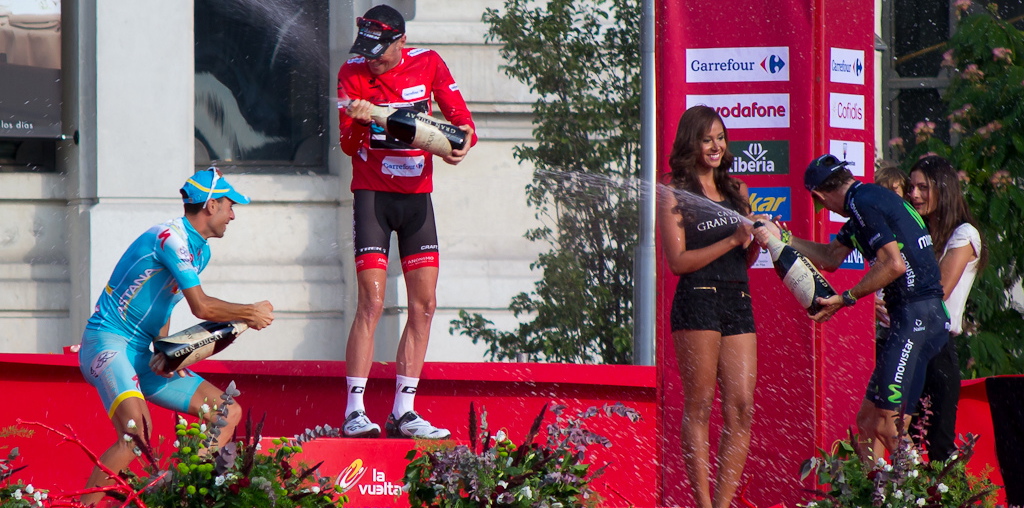
Now that the peloton has finally ended its journey in Madrid, we can look back on a few of the storylines. The biggest storyline of the Vuelta is obviously the succcess of Christopher Horner, who improved on his previous best Grand Tour performance (a lone top 10, 9th in the Tour de France in 2010) by winning the race ahead of past winners Vincenzo Nibali and Joaquim Rodriguez. He won a stage early on and it seemed like a great feel-good story, the balding veteran outclassing the favorites for a day; then he proceeded to look stronger and stronger each day, ultimately dropping Nibali and the rest nearly whenever he set his mind to it. This was always going to be a race for a strong climber (the only individual time trial had a categorized climb right in the middle of it), and Horner was unquestioably the best climber in Spain these past three weeks. Obviously there are a lot of theories on how he managed to take everyone by surprise and dominate the ascents, but clearly fresh legs played a part, as Horner had little mileage prior to the start of the Vuelta, unlike the rest of the big favorites, who had all taken on the Giro or the Tour already. Similarly, Contador hadn’t raced a Grand Tour before his Vuelta win last year, and Juan Jose Cobo’s 2011 Vuelta was his first Grand Tour of the year as well. Future hopefuls should take note.
It’s important to note that as old as he is, it’s not like Horner came out of nowhere. His career has had an interesting arc: much of his prime was spent racing (and really dominating) the American circuit. When he did finally start to concentrate on the higher level Euro competition, he was already well into his 30s: but he had a lot of success, and didn’t really see any decline as he aged either. As recently as 2010 (the year he top 10ed in the Tour), he won Pais Vasco. He was 2nd there and 4th in Catalunya in 2011 (a year in which he also won the Tour of California), was 2nd in Tirreno-Adriatico and 9th in Pais Vasco in 2012, and was 6th at Tirreno-Adriatico this year. None of those results come close to winning the Vuelta, but they show that he’s quietly built quite a resume very late in his career: a Grand Tour win will be the perfect marquee accomplishment for the 41 year old. The question now is: where will he be next year? As explosive and resilient as he was in the Tour of Spain, he doesn’t have a team for next year. It’s only a matter of time before someone makes him an appealing offer commit his smiles and his small frame to their cause.
After losing the race he was so heavily favored to win just a week ago, Vincenzo Nibali probably isn’t smiling, but taking 1st place in a grueling Giro and then 2nd place in the Vuelta with all those Italian miles already in your legs is an unbelievable accoomplishment that deserves recognition even if it was disappointing for Nibali. A single Grand Tour podium in a year is a feat worthy enough of praise. Winning one and runnering up a second? Vincenzo Nibali will be one of a very select group of riders who will be seen as legitimate challengers to Froome in the 2014 Tour de France. Alejandro Valverde and Joaquim Rodriguez can both come away proud; Valverde nabbed the final spot on the podium after his disappointing Tour de France, and he also won the points jersey despite not actually winning any stages. Purito wanted more, but 4th and a beautiful stage victory on Alto del Naranco will look great in his Palmares.
Nicolas Roche entered the race with a stated goal of coming in in the top 5. 5th overall and a stage win felt like a long time coming for the rider who has displayed a lot of talent in the past few years, but never come away with much to show for it. And not to take anything away from winning a stage later on during a Grand Tour, but Roche’s victory came early in the race, against his GC rivals: no gimmes there. AG2R won’t mind Carlos Betancur’s complete anonymity so much given Domenico Pozzovivo’s 6th place overall performance. He quietly notched a pair of Grand Tour top 10s this year without all that much team support.
Thibaut Pinot rolled in 7th overall, dispelling a great deal of doubt after his forgettable Tour de France. He’s definitely gotten back on track: he didn’t seem to struggle on the descents, and he hung with the likes of Nibali and Horner for a good part of many of the hardest climbs. Remember, he’s only 23, and he’s now got a pair of Grand Tour top 10s to his name. With a focused offseason, Thibaut Pinot will hope to build on this late success next year. Another young GC rider who really stood out was Leopold Konig. Nabbing a GT Top 10 at the head of a Pro Continental team against stacked squads like Astana and Movistar is quite the feat. Like Roche, his stage victory was early on in the race, meaning that he had to outclass the best in the bunch to pick it up. And Daniel Moreno (10th) nabs his 3rd Vuelta top 10 in as many year, and perhaps even more impressively, on the heels of a major one-day victory in La Fleche Wallonne, he picked up two early stage wins, and held three different jerseys for a time; he’s following in his team leader’s footsteps, making a name for himself as a killer uphill finisher with the ability to find his way into a Grand Tour leaderboard as well.
Samuel Sanchez will be disappointed with 8th, but most observers didn’t view him as much more than an outside contender coming in. He never seemed to find his form, and it’s starting to look as if his best years are behind him. At least he comes away with more than fellow old guys Michele Scarponi and Ivan Basso–Basso didn’t really look all that bad in this race, but he vacated his 7th overall spot when he abandoned on a nasty Stage 14.
The biggest disappointment of the Vuelta has to be Team Sky. Sergio Henao came into the race as one of the favorites, and Rigoberto Uran was touted as a great second option if things went awry; awry they went, as neither rider was able to keep the pace when the road went up. To his credit, Uran came so close to a victory from a breakaway on Stage 16, but was denied by Warren Bargul at the line. Vasil Kiryienka’s stage win (actually the third career Grand Tour stage victory for the Belarusian, which is the same number that his teammate Bradley Wiggins has) was some consolation, but for all Henao’s potential, he failed to deliver in a big way.
Youth Is Served Winning Stages, and So Is the Rainbow Jersey
Michael Matthews and Warren Barguil have arrived. Matthews, the 22 year old Aussie sprinter, had been having enough success in smaller races this year that I definitely saw big things for him in the Vuelta, and he did not disappoint, winning first on the 5th stage and again on the final day of festivities in Madrid. For the past few years, Orica-GreenEdge has looked to one of his teammates on the sprint stages, especially the ones with hard roads to the finish line, but it looks like the time of Michael Matthews is upon us. Meanwhile, Maximiliano Richeze racked up four top 3 stage performances but failed to come away with a victory, which must be a heartbreak: he really looked like one of the fastest riders in the peloton, and was inches away from winning on multiple occasions. In a similar boat were Tyler Farrar and Gianni Meersman, who both made a habit of lurking around the top 5 on the sprint stages (four times), without ever notching a victory. Meersman gets a pass, as he has already had a great year up to this point, but Farrar ends his year looking desperately for his old winning ways. Clearly he’s still fast, but his only victories in the past two years have come in Continental Tours; the American doesn’t have a contract for next year, and obviously a big win would have helped make his case.
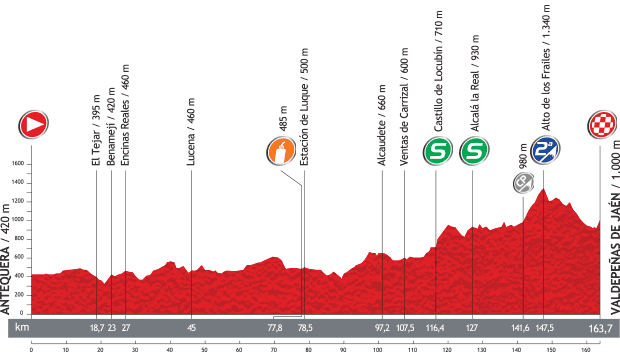
23 year old Warren Barguil took a brilliant win from the breakaway in Stage 13. Then, Barguil did it again on Stage 16 ahead of the immensely talented Rigoberto Uran in a drag race to the line. Taking a victory like that ahead of the explosive Giro and Olympic Road Race runner-up marks Barguil as a name to watch for the future. For his Argos-Shimano squad, it was “No Kittel or Degenkolb, no problem” in Spain this year. FDJ’s Alexandre Geniez and Kenny Elissonde both won mountain stages as breakaway survivors. And in stage after stage, 25 year old Nicolas Edet of Cofidis was constantly leading the breakers over the KOMs: he earned himself the title of King of the Mountains in the process. Seeing a pattern? All in all, France’s 25 and under crowd of Barguil, Geniez, Elissonde, Edet, and Pinot took between them four stage victories, the polka dot jersey, and 7th overall in GC; quite a haul for les Francois after they came up short of expectations in the Tour de France.
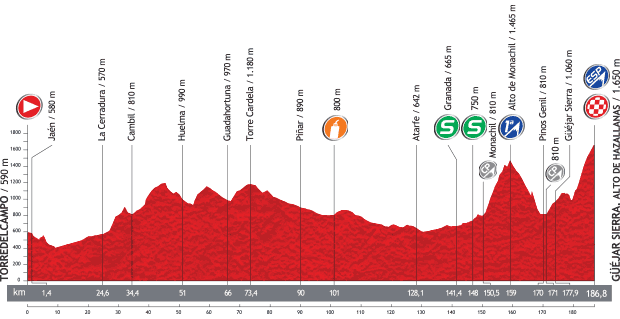
Another impressive young breaker was Daniele Ratto, who won a grueling 14th stage that saw mass abandons all by himself on a mountaintop finish.
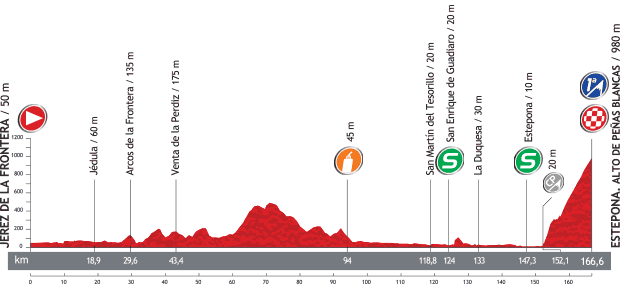
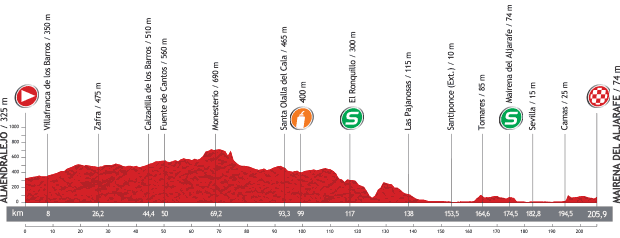
Zdenek Stybar isn’t exactly young (27), but he’s young to road racing, and the former CX world champ added to his amazing year jumping ahead late with Philippe Gilbert and beating him a photo finish to steal the 7th stage from the sprinters at Mairena de Aljafare.
Fortunately, Gilbert’s long, demoralizing drought of victories in the rainbow jersey ended in the following week when he outsprinted Edvald Boasson Hagen and Maximiliano Richeze to win stage 12. He’s come very close time and time again this year, but a win has eluded him. Outsprinting some of the fastest men in this race to get it meant that he ended his wait in grand style.
Three weeks of racing have finally come to a close, and in the end, the Vuelta was full of surprises for riders both young and old. We were treated to visions of riders who could be around for years to come (riders like Matthews, Stybar, Barguil, Konig, and Pinot), and of riders who finally took long awaited victories (Horner and Gilbert). Up next? The race that so many of these big names were preparing for when they decided to make the trip to Spain: the 2013 UCI World Championships.
-Dane Cash
Photo by Esteban Lamas