WorldTouring in North America, Chapter 1
The WorldTour follows up GP Ouest France with two more Grand Prix circuit-style races this weekend, also run on hilly courses that seem to lead to battles between late attacekrs and hard-charging pursuit groups. This weekend’s competitions are unique among WorldTour races, however, in that they take place in North America. Canada, to be exact.
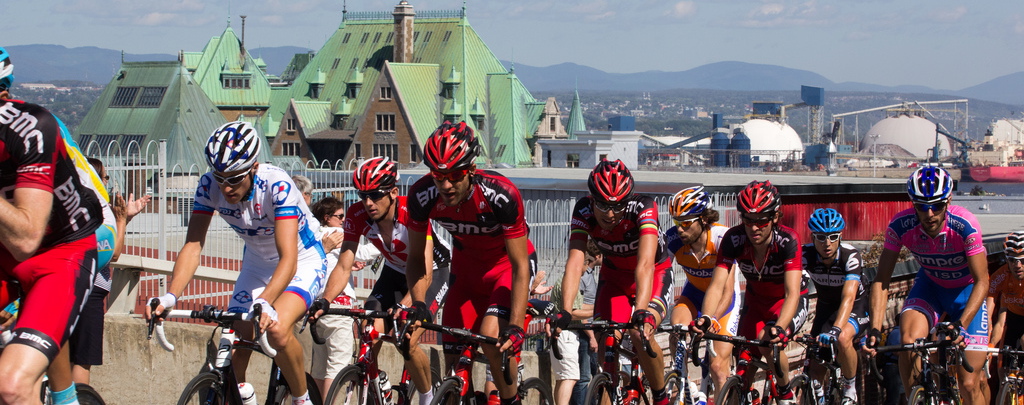
Friday’s race comprises 16 laps of 12.6km (totalling 201.6km) around scenic Old Quebec. It has a number of rolling ups and downs and it finishes on an incline; obviously, there are no Alpine summits in the middle of Quebec City, but the ascents are more than enough to encourage constant aggressive moves off the front, and even if attacks are reeled in, the incline at the line favors the lighter, more versatile hard-chargers. Last year, Simon Gerrans and Greg Van Avermaet jumped ahead in the final lap, and hung on despite a spirited bridging attempt by Peter Sagan and an impressive (and sizeable) group of pursuers behind them, a group that was led across the line by Rui Costa. Going further back, we see similar outcomes. The hard pace of the 2011 edition whittled the lead group down to a group of about ten on the final lap, and Philippe Gilbert added another victory to his great list that year by launching a successful attack with Robert Gesink in the final kilometers, and then beating the Dutchman to the line. The inaugural edition in 2010 saw Tommy Voeckler make a successful bid for glory. Given the versatile talents in attendance, I think this year’s Grand Prix Cycliste de Quebec will again come down to a late attack battling a small group of chasers, though a sizable bunch sprint for the line isn’t out of the question, and while I think it’s a bit less likely, neither is a long-range breakaway victory.

None of this race’s past winners will make the start tomorrow, meaning that 2013 will see a new winner in Quebec. One favorite for that title stands above the rest: Cannondale’s Peter Sagan. After a successful classics campaign in which he nabbed a win at Gent-Wevelgem and a boatload of other high placings, he stormed the Tour de France green jersey competition. But he hasn’t been resting on his laurels: he’s been a prominent feature in some big American stage races, winning stages and the points competition at the USA Pro Cycling Challenge. He has clearly kept his form sharp, and with so many opportunities to tune up at the AmericaTour level in preparation for the big doubleheader in Canada this weekend, it’s hard to see past him. As he showed in Gent-Wevelgem, he’s more than capable of winning via a late attack. He came close to bridging the gap last year, and this year he’s got that much more experience, and probably better form. He’s a smart rider and a excellent handler, which will come in handy in the constant quest to come out of the corners at high speed. He’s shown time and again this year that all but the most difficult of climbs are not a problem for him, making it very likely that he’ll be somewhere near the front towards the end of this race. Whether he attacks off the front or outsprints the field, Sagan has the tools to win this thing.
He’ll have a big target on his back, and his challengers will be many. One rider who has been just behind Sagan at a number of races this year is Greg Van Avermaet, who has looked sharp through his many appearances this summer. He attacked on the final climb of the GP Ouest France, but the break refused to organize themselves: GVA himself seemed to be the most concerned with dragging other riders to the finish and, therefore, wouldn’t work with a group. As such, he didn’t start with enough of a gap when he launched his own solo from the reduced bunch, and was caught in the final few hundred meters. He’ll hope to have a bit more success in Quebec, where he narrowly lost out to Simon Gerrans last year. Like Sagan, his skillset makes him a danger in both a late attack and a reduced sprint; he’s not as quick as the Slovakian wunderkind, but he might be a bit more likely to make a move, which showed last year.
Also in that last-ditch move on the final climb of Ouest France was Michal Kwiatkowski, who was a familiar face on most of the intermediate stages where Sagan featured so prominently in the Tour de France. Had the final break managed to work together two weeks ago, he would have been a strong contender for the win. He’s a better climber than Sagan, but still has a great sprint. His teammate Sylvain Chavanel has earned himself a ton of camera time time this year with his characteristic aggressive riding, and his time trial victory at the Eneco Tour shows that the 34 year old is still soloing well this year. He’ll probably need to strike earlier than guys like Sagan or Van Avermaet, but if he can time an attack, he’s always a good bet to feature on a profile like this.
Rui Costa has had a lot of success in Canada (he was just behind Van Avermaet last year), and he has the perfect combination of skills to win in a variety of ways. He showed off that combination of skills by winning two stages from a breakaway in the Tour de France; he can solo, he can climb better than most other riders in this race, and he has a surprising sprint. He’ll definitely be lurking around the top of the leaderboard. His teammate Francisco Ventoso is another rider with a shot, coming off a top 10 in Ouest France.
Lotto Belisol’s Jurgen Roelandts, Belkin’s Lars Petter Nordhaug (who won last year’s Grand Prix Cycliste de Montreal) and Tom Jelte Slagter (fifth here last year), Cannondale’s Moreno Moser, Astana’s trio of Francesco Gavazzi, Borut Bozic, and Simon Ponzi, and Radioshack’s trio of Tony Gallopin (winner of the Clasica de San Sebastian), Jan Bakelants (Tour de France stage winner) and Maxime Monfort are all also great candidates for a win from a late attack or a very reduced field sprint.
If a larger bunch reaches the finish line, it will be hard to beat Sagan in a sprint, but John Degenkolb of Argos-Shimano and Giacomo Nizzolo of Radioshack (they have a lot of options here!) are on the shortlist of riders who have a decent shot at it. Degenkolb went into the Vattenfall Cyclassics as something of an unknown in terms of form, and all he did was win the whole thing. He showed continued form at the GP Ouest France, where he, too, managed to get into the late attack of Van Avermaet and Kwiatkowski (and was probably the prime reason that the breakaway attempt refused to cooperate), quite a feat for a sprinter. He then proceeded to place tenth in the sprint after putting out a lot of effort in the failed attempt to break free. He won’t mind the uphill finish in Quebec. Neither will Giacomo Nizzolo, who looks great right now, and who came so close to a win at Ouest France, but was denied at the line by a charging Filippo Pozzato. Speaking of Pozzato, I almost didn’t mention him in my Ouest France preview, given a lack of recent results, and I’m still not really sure how to judge his chances here: was his Ouest France win a flash in the pan, or is his form back to where it once was? Matti Breschel of Saxo-Tinkoff was a top 10 finisher at the Vattenfall Cyclassics and is a capable climber. Look out for Luka Mezgec, who was just behind Sagan in a bunch of stages in Alberta and the USAPCC and who could be a second option for Argos if Degenkolb struggles. And, of course, Matt Goss will be in attendance, though he was 27th at Vattenfall’s sprintfest and a DNF in the GP Ouest France.
A number of big name Grand Tour winners are making the start, probably looking to go for a long one, launching off one of the many hills they’ll ascend in their trips around Quebec: Ryder Hesjedal, Chris Froome, Alberto Contador, Cadel Evans, and even Andy Schleck are all here. Sky also has Richie Porte, Garmin also has Andrew Talansky, Tom Danielson, and Fabian Wegman (Top 10 in every edition of this race so far), and BMC’s Tejay van Garderen gives that team yet another option. Of these big three-week stars, Hesjedal and Evans are probably most likely to feature; Hesjedal doesn’t really have any one-day statement wins in his career yet, but he’s had a flair for high placings and he has a strong kick: plus, this is a home race for him, which is rare. Evans has shown decent form since arriving in Canada (he won a stage at the Tour of Alberta) and he has always had a good sprint if he makes it to the line with a small lead group. Other riders who will look for a long distance opportunity, or hope that the fast men are all dropped, include Katusha’s Alexandr Kolobnev and Simon Spilak, AG2R’s Christophe Riblon and Jean-Christophe Peraud, Pierrick Fedrigo, OPQS’s Niki Terpstra, Astana’s Enrico Gasparatto, everyone on Euskaltel, and Orica GreenEdge’s typical stable of breakaway capable talent: Michael Albasini, Sebastian Langeveld, Pieter Weening, and Cameron Meyer. Also, watch out for Europcar’s David Veilleux, riding in his home country and having just announced an imminent retirement.
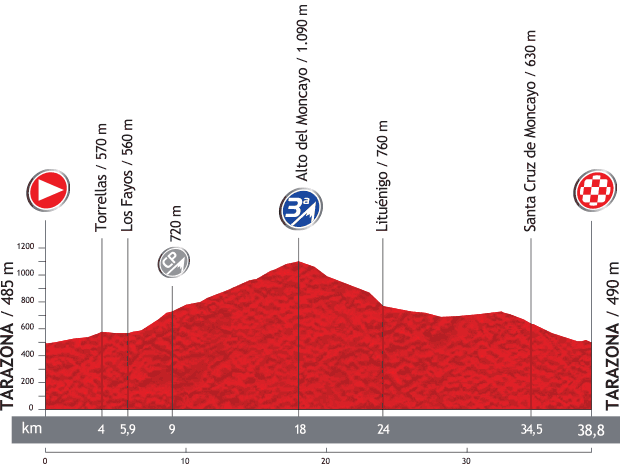
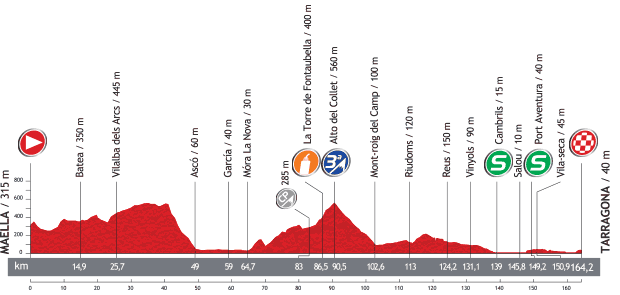
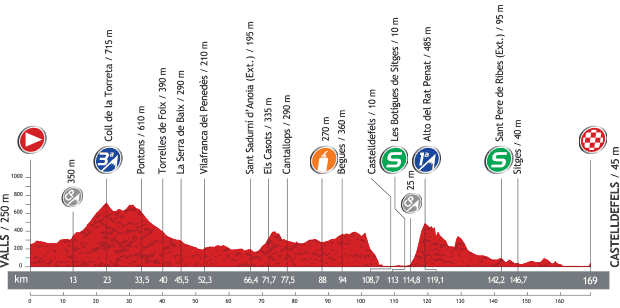
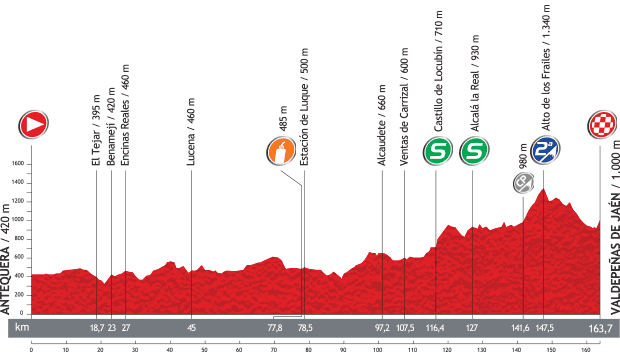
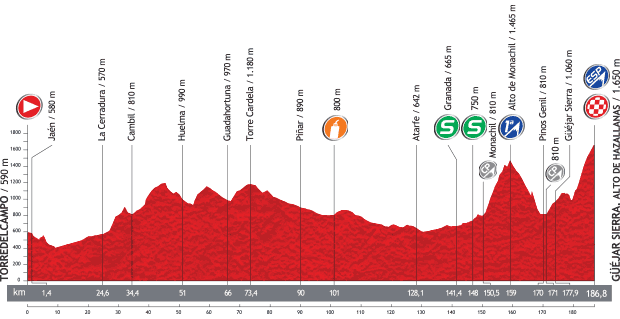
However it plays out, I think the Grand Prix Cycliste de Quebec is going to be another very exciting race, guaranteeing plenty of attacks and counterattacks to give you a double dose of high speed racing after a morning that will likely offer the same from Spain!
VeloHuman Predictions
Winner
Peter Sagan
Podium
Greg Van Avermaet, Rui Costa
Top 10
Michal Kwiatkowski, John Degenkolb, Giacomo Nizzolo, Ryder Hesjedal, Sylvain Chavanel, Jurgen Roelandts, Filippo Pozzato
-Dane Cash
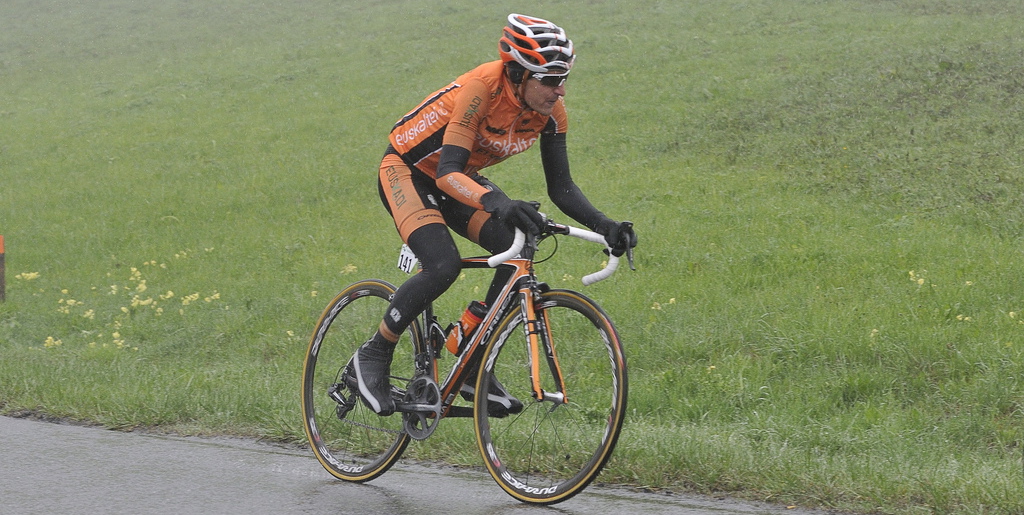
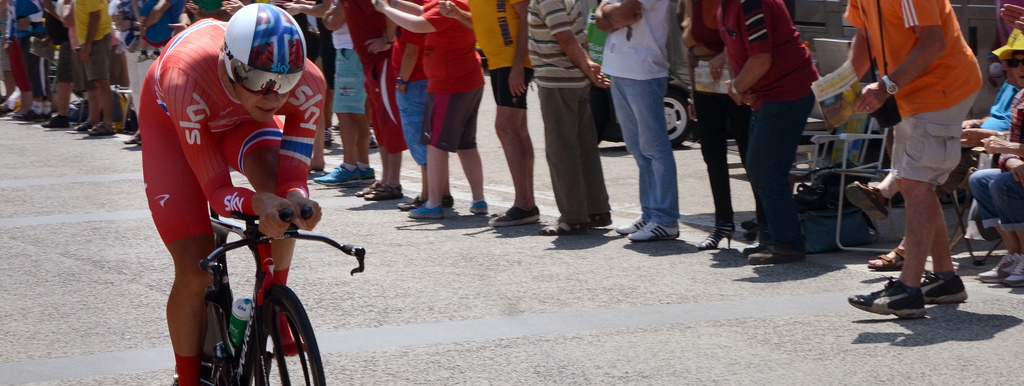
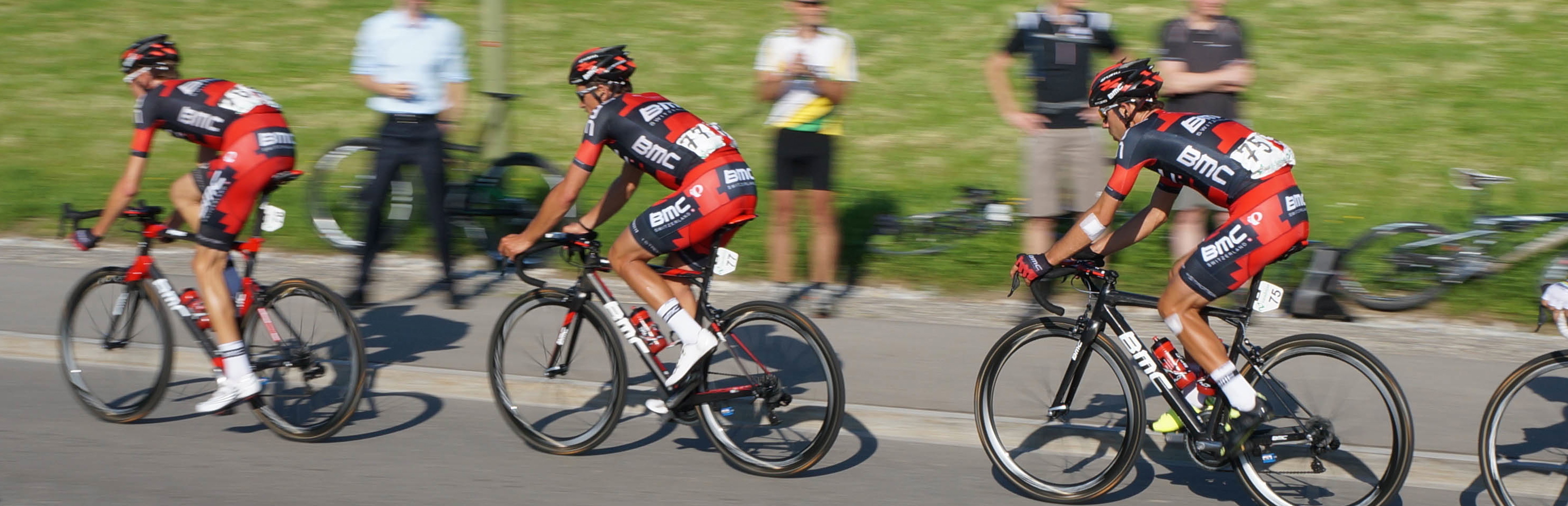
Photo by Arnaud Anciaux.