Tag: Predictions

  • Grand Prix Cycliste de Quebec 2013 Preview

    GP Quebec

    WorldTouring in North America, Chapter 1

    The WorldTour follows up GP Ouest France with two more Grand Prix circuit-style races this weekend, also run on hilly courses that seem to lead to battles between late attacekrs and hard-charging pursuit groups. This weekend’s competitions are unique among WorldTour races, however, in that they take place in North America. Canada, to be exact.

    Friday’s race comprises 16 laps of 12.6km (totalling 201.6km) around scenic Old Quebec. It has a number of rolling ups and downs and it finishes on an incline; obviously, there are no Alpine summits in the middle of Quebec City, but the ascents are more than enough to encourage constant aggressive moves off the front, and even if attacks are reeled in, the incline at the line favors the lighter, more versatile hard-chargers. Last year, Simon Gerrans and Greg Van Avermaet jumped ahead in the final lap, and hung on despite a spirited bridging attempt by Peter Sagan and an impressive (and sizeable) group of pursuers behind them, a group that was led across the line by Rui Costa. Going further back, we see similar outcomes. The hard pace of the 2011 edition whittled the lead group down to a group of about ten on the final lap, and Philippe Gilbert added another victory to his great list that year by launching a successful attack with Robert Gesink in the final kilometers, and then beating the Dutchman to the line. The inaugural edition in 2010 saw Tommy Voeckler make a successful bid for glory. Given the versatile talents in attendance, I think this year’s Grand Prix Cycliste de Quebec will again come down to a late attack battling a small group of chasers, though a sizable bunch sprint for the line isn’t out of the question, and while I think it’s a bit less likely, neither is a long-range breakaway victory.

    GP Quebec Profile

    None of this race’s past winners will make the start tomorrow, meaning that 2013 will see a new winner in Quebec. One favorite for that title stands above the rest: Cannondale’s Peter Sagan. After a successful classics campaign in which he nabbed a win at Gent-Wevelgem and a boatload of other high placings, he stormed the Tour de France green jersey competition. But he hasn’t been resting on his laurels: he’s been a prominent feature in some big American stage races, winning stages and the points competition at the USA Pro Cycling Challenge. He has clearly kept his form sharp, and with so many opportunities to tune up at the AmericaTour level in preparation for the big doubleheader in Canada this weekend, it’s hard to see past him. As he showed in Gent-Wevelgem, he’s more than capable of winning via a late attack. He came close to bridging the gap last year, and this year he’s got that much more experience, and probably better form. He’s a smart rider and a excellent handler, which will come in handy in the constant quest to come out of the corners at high speed. He’s shown time and again this year that all but the most difficult of climbs are not a problem for him, making it very likely that he’ll be somewhere near the front towards the end of this race. Whether he attacks off the front or outsprints the field, Sagan has the tools to win this thing.

    He’ll have a big target on his back, and his challengers will be many. One rider who has been just behind Sagan at a number of races this year is Greg Van Avermaet, who has looked sharp through his many appearances this summer. He attacked on the final climb of the GP Ouest France, but the break refused to organize themselves: GVA himself seemed to be the most concerned with dragging other riders to the finish and, therefore, wouldn’t work with a group. As such, he didn’t start with enough of a gap when he launched his own solo from the reduced bunch, and was caught in the final few hundred meters. He’ll hope to have a bit more success in Quebec, where he narrowly lost out to Simon Gerrans last year. Like Sagan, his skillset makes him a danger in both a late attack and a reduced sprint; he’s not as quick as the Slovakian wunderkind, but he might be a bit more likely to make a move, which showed last year.

    Also in that last-ditch move on the final climb of Ouest France was Michal Kwiatkowski, who was a familiar face on most of the intermediate stages where Sagan featured so prominently in the Tour de France. Had the final break managed to work together two weeks ago, he would have been a strong contender for the win. He’s a better climber than Sagan, but still has a great sprint. His teammate Sylvain Chavanel has earned himself a ton of camera time time this year with his characteristic aggressive riding, and his time trial victory at the Eneco Tour shows that the 34 year old is still soloing well this year. He’ll probably need to strike earlier than guys like Sagan or Van Avermaet, but if he can time an attack, he’s always a good bet to feature on a profile like this.

    Rui Costa has had a lot of success in Canada (he was just behind Van Avermaet last year), and he has the perfect combination of skills to win in a variety of ways. He showed off that combination of skills by winning two stages from a breakaway in the Tour de France; he can solo, he can climb better than most other riders in this race, and he has a surprising sprint. He’ll definitely be lurking around the top of the leaderboard. His teammate Francisco Ventoso is another rider with a shot, coming off a top 10 in Ouest France.

    Lotto Belisol’s Jurgen Roelandts, Belkin’s Lars Petter Nordhaug (who won last year’s Grand Prix Cycliste de Montreal) and Tom Jelte Slagter (fifth here last year), Cannondale’s Moreno Moser, Astana’s trio of Francesco Gavazzi, Borut Bozic, and Simon Ponzi, and Radioshack’s trio of Tony Gallopin (winner of the Clasica de San Sebastian), Jan Bakelants (Tour de France stage winner) and Maxime Monfort are all also great candidates for a win from a late attack or a very reduced field sprint.

    If a larger bunch reaches the finish line, it will be hard to beat Sagan in a sprint, but John Degenkolb of Argos-Shimano and Giacomo Nizzolo of Radioshack (they have a lot of options here!) are on the shortlist of riders who have a decent shot at it. Degenkolb went into the Vattenfall Cyclassics as something of an unknown in terms of form, and all he did was win the whole thing. He showed continued form at the GP Ouest France, where he, too, managed to get into the late attack of Van Avermaet and Kwiatkowski (and was probably the prime reason that the breakaway attempt refused to cooperate), quite a feat for a sprinter. He then proceeded to place tenth in the sprint after putting out a lot of effort in the failed attempt to break free. He won’t mind the uphill finish in Quebec. Neither will Giacomo Nizzolo, who looks great right now, and who came so close to a win at Ouest France, but was denied at the line by a charging Filippo Pozzato. Speaking of Pozzato, I almost didn’t mention him in my Ouest France preview, given a lack of recent results, and I’m still not really sure how to judge his chances here: was his Ouest France win a flash in the pan, or is his form back to where it once was? Matti Breschel of Saxo-Tinkoff was a top 10 finisher at the Vattenfall Cyclassics and is a capable climber. Look out for Luka Mezgec, who was just behind Sagan in a bunch of stages in Alberta and the USAPCC and who could be a second option for Argos if Degenkolb struggles. And, of course, Matt Goss will be in attendance, though he was 27th at Vattenfall’s sprintfest and a DNF in the GP Ouest France.

    A number of big name Grand Tour winners are making the start, probably looking to go for a long one, launching off one of the many hills they’ll ascend in their trips around Quebec: Ryder Hesjedal, Chris Froome, Alberto Contador, Cadel Evans, and even Andy Schleck are all here. Sky also has Richie Porte, Garmin also has Andrew Talansky, Tom Danielson, and Fabian Wegman (Top 10 in every edition of this race so far), and BMC’s Tejay van Garderen gives that team yet another option. Of these big three-week stars, Hesjedal and Evans are probably most likely to feature; Hesjedal doesn’t really have any one-day statement wins in his career yet, but he’s had a flair for high placings and he has a strong kick: plus, this is a home race for him, which is rare. Evans has shown decent form since arriving in Canada (he won a stage at the Tour of Alberta) and he has always had a good sprint if he makes it to the line with a small lead group. Other riders who will look for a long distance opportunity, or hope that the fast men are all dropped, include Katusha’s Alexandr Kolobnev and Simon Spilak, AG2R’s Christophe Riblon and Jean-Christophe Peraud, Pierrick Fedrigo, OPQS’s Niki Terpstra, Astana’s Enrico Gasparatto, everyone on Euskaltel, and Orica GreenEdge’s typical stable of breakaway capable talent: Michael Albasini, Sebastian Langeveld, Pieter Weening, and Cameron Meyer. Also, watch out for Europcar’s David Veilleux, riding in his home country and having just announced an imminent retirement.

    However it plays out, I think the Grand Prix Cycliste de Quebec is going to be another very exciting race, guaranteeing plenty of attacks and counterattacks to give you a double dose of high speed racing after a morning that will likely offer the same from Spain!

    VeloHuman Predictions

    Winner

    Peter Sagan

    Podium

    Greg Van Avermaet, Rui Costa

    Top 10

    Michal Kwiatkowski, John Degenkolb, Giacomo Nizzolo, Ryder Hesjedal, Sylvain Chavanel, Jurgen Roelandts, Filippo Pozzato

    -Dane Cash

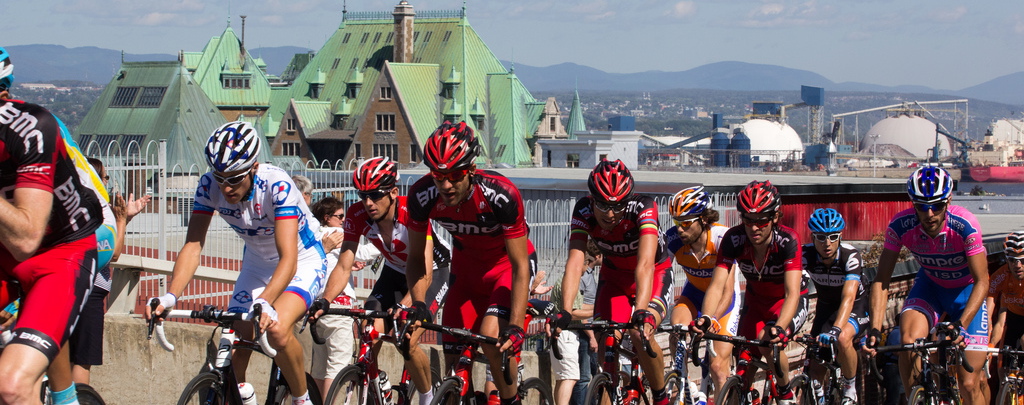
    Photo by Arnaud Anciaux.
  • Vuelta a España 2013 Day 18: Where We Stand After Sixteen Stages, and Looking Ahead to Stages 17-19

    Anton

    Day 18: GC Shaping Up

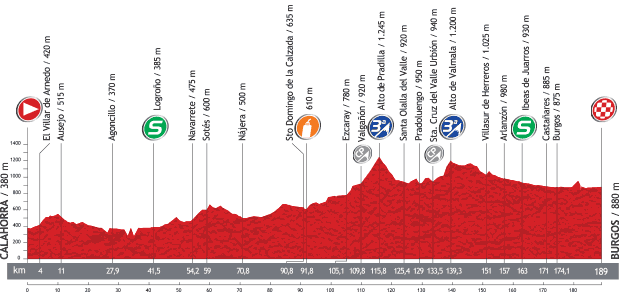
    The trip to the Pyrenees whittled an already thin list of true contenders down even further. With just three uphill finishes remaining, only three riders are within two and a half minutes of Vincenzo Nibali: Christopher Horner, Alejandro Valverde, and Joaquim Rodriguez. Breakaway riders took impressive victories on Stages 14 (Daniele Ratto), 15 (Alexandre Geniez), and 16 (Warren Barguil again). Attrition dropped Nicolas Roche from his spot near the top (he now sits 3:43 back on Nibali after a trying Stage 14) and it dropped Ivan Basso and many others out of the race entirely on a rainy, cold Stage 15 that saw mass abandons. On Stage 16, as the GC contenders rolled in behind Barguil and Rigoberto Uran (who lost out to Barguil in a photo finish), Nibali looked vulnerable for the first time, losing a little over twenty seconds to his rivals. After the rest day, the road from Calahorra to Burgos provides only on a pair of Cat. 3 climbs, giving Nibali a bit more time to get back any strength he might be missing before the arduous trip from Burgos to the Peña Cabarga, and then the lumpy stage that prefaces the road to l’Angliru.

    Stage 17: Calahorra > Burgos | 189km | Medium Mountains

    VS17

    While there are only two categorized climbs, there is a good deal of upward travel in the first 140 kilometers of the stage. The last few days have been for aggressive attackers, and surely Stage 17 will see riders striking out for the long one; but it’s been a long time since the sprinters had a chance to be on camera, and those who have made it this far will fight hard to bring back anyone up the road. The last several kilometers are techinical and include a short but steep spur that will invite further aggression. Michael Matthews and Maximiliano Richeze have looked the strongest to the line so far in this race, if it comes to a bunch sprint. Edvald Boasson Hagen, Gianni Meersman, and Fabian Cancellara are strong options as well, given their combined sprinting and soloing abilities. Boasson Hagen’s Team Sky came so close to a victory in Stage 16, and Eddy Bos himself was barely pipped to the line by Philippe Gilbert earlier in the Vuelta; he’ll be highly motivated and he’s very capable in this sort of finish. Juan Antonio Flecha has been a common sight at the Vuelta’s sprint finishes, though he hasn’t come that close to actually winning anything. This finish suits him as well as any.

    VeloHuman Stage Favorites

    1. Edvald Boasson Hagen | 2. Michael Matthews | 3. Maximiliano Richeze | 4. Fabian Cancellara

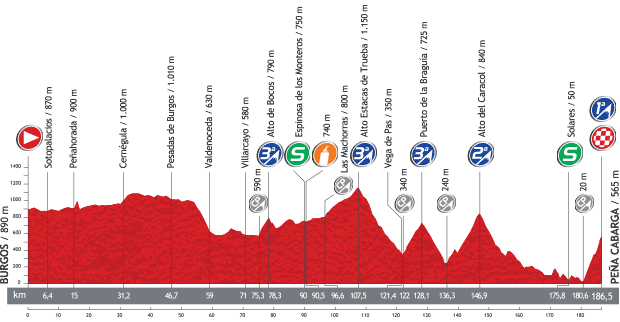
    Stage 18: Burgos > Peña Cabarga | 186km | High Mountains (Summit Finish)

    VS18

    The road out of Burgos is much more demanding than the road in. It goes up and over a trio of Category 3s and a hard Cat. 2, and then finishes atop the Peña Cabarga. The summit has seen fireworks before (future Tour de France winner Chris Froome bested Juan Jose Cobo here in 2011). It’s an extremely difficult, 6 km push at an average of 9.2%, and a 20% section in the final kilometer will surely see gaps form late if they haven’t already. With so many lumps early, this stage could be another for a breakaway, as the GC strongmen haven’t seemed too concerned with the prospect of hunting down early breakers. If that happens, watch out for Rigoberto Uran, who was so close to a victory in Stage 16. Amets Txurruka will probably have another go at it, as might Chris Anker Sorensen. Diego Ulissi has been a bit quiet lately, but after some rest, he might have the strength to challenge for the stage victory. Igor Anton, currently in 15th, will probably be allowed up the road if he attacks on the final climb, and he’s managed to keep pace with the GC heavyweights over the last few days, showing great form.

    Whether their battles will come behind a successful breakaway is hard to say, but the fight among the red jersey contenders will be fierce. Having smelled blood on Stage 16, Nibali’s rivals will look for a chance to test him again here. The steepness would seem to favor Joaquim Rodriguez. Alejandro Valverde looked good attempting to chase him down on the last day in the Pyrenees. Thibaut Pinot has been very impressive of late, and his fresher legs appear to be paying off. Samuel Sanchez has been coming on strong. Chris Horner looks unbelievable going uphill, and he’s had the help of a very strong Robert Kiserlovski. Nicolas Roche cracked on stage 14, but on Stages 15 and 16 he was looking sharp again. The relatively short length of the climb will not favor Nibali’s climbing style, so he’d better be rested and ready to fight.

    VeloHuman Stage Favorites

    1. Joaquim Rodriguez | 2. Igor Anton | 3. Rigoberto Uran | 4. Christopher Horner

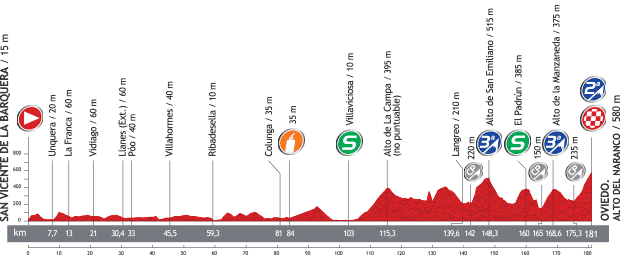
    Stage 19: San Vicente de la Barquera > Alto del Naranco | 181km | Medium Mountains

    VS19

    A relatively flat first half gives way to a very lumpy second half: this stage will favor an aggressive, punchy rider with a lot of pop still in his legs after so many miles already traveled through Spain. The day finishes with a roughly 6 km, 4.2% average grade Cat. 2, Alto del Naranco: not tough enough to open up big time gaps in GC, but more than tough enough to put a hard hitting climber in line for the victory. Warren Barguil has to be in the conversation again. Rinaldo Nocentini has come close in a few stages (2nd to Barguil in Stage 13), and the explosive French rider will look to stand out among a field that has been reduced by the tough hills and tough weather by this late point. Bauke Mollema was right behind him on that stage and will be hoping to salvage something from this Grand Tour, and he is a hard finisher uphill. Uran and Ulissi will again be aiming to put their explosiveness to good use. Uran’s teammate Sergio Henao and Lampre’s Michele Scarponi (who has been very active in breakaways recently) could see an opportunity here, and Amets Txurruka will definitely look to be involved in any breakaway proceedings. Should the peloton reach the final climb together, the Katusha duo of Daniel Moreno and Joaquim Rodriguez will try to best Alejandro Valverde for the day’s victory, and Samuel Sanchez will be gunning for the line as well. Chris Horner has basically attacked on every summit finish, and he could do so again here. Ivan Santaromita, Mikel Landa, and Pieter Serry are other outsiders for the stage win, whether from the breakaway or the peloton.

    VeloHuman Stage Favorites

    1. Rigoberto Uran | 2. Diego Ulissi | 3. Bauke Mollema | 4. Warren Barguil

  • Vuelta a España 2013 Day 14: Where We Stand After Thirteen Stages, and Looking Ahead to Stages 14-16

    Envalira

    Day 14: Into the Pyrenees

    The last three days have been full of surprises. Fabian Cancellara and Tony Martin taking the top two spots in Stage 11’s ITT, perhaps not that surprising… But Domenico Pozzovivo taking the third spot ahead of Vincenzo Nibali? And Nicolas Roche not far behind? Clearly they are on the form of their lives. On Stage 12, World Champion Philippe Gilbert finally took his first win of the year, timing a sprint perfectly and zipping past Edvald Boasson Hagen in the closing meters of a slightly uphill finish. An impressive group managed to break away on Stage 13, and an on again off again pursuit eventually gave up the chase, allowing Warren Barguil to solo away from his breakaway companions in the last kilometer for the victory. Two relatively easy days of racing complete, the peloton now takes on three very hard stages that are sure to have GC implications.

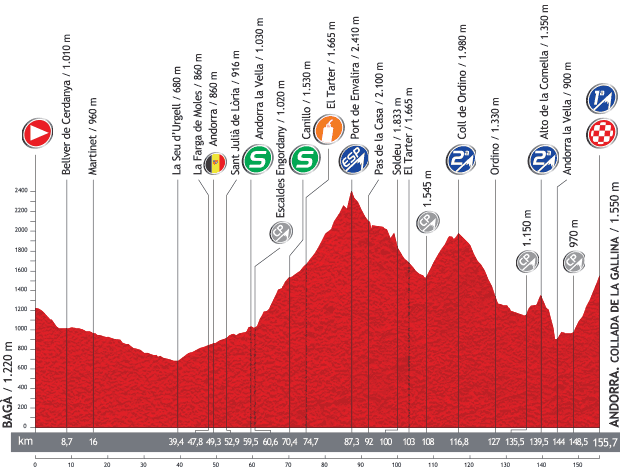
    Stage 14: Bagà > Andorra | 155.7km | High Mountains (Summit Finish)

    VS14

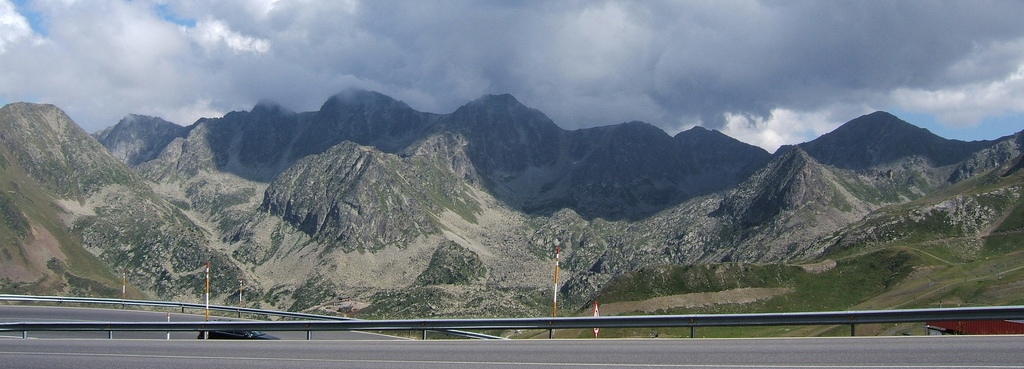
    The first categorized climb of the day happens to be the highest point in the Vuelta, Port de Envalira. The special category ascent is a 26.7 km slog at an average of 5.2% with sections of 15%; it’s a long, hard climb to the top, but the summit is nearly 70 kilometers from the finish, and after the legs of even the best climbers are exhausted, the climbing will continue. Steep descents and a pair of Cat. 2s lie between the special category climb and the finish, a Cat. 1 summit, 7.2 km at 8% that doesn’t really let up at the line either. There are some real talents who are out of GC contention these days, meaning a breakaway win is more than possible; if that happens, Roman Kreuziger, Diego Ulissi, and any number of Euskaltel riders (Anton, Nieve) might try to get into the fray. But it will be a grueling day of racing and no small feat to stay away from the peloton riding up and over four very hard climbs. With so much up and down, falling off the pace could lead to serious losses, meaning that the GC men will be at their limit trying to hang on. There have been some tough days so far in the Vuelta, but nothing with this much potential to blow up the race.

    Whether they are contesting for the stage or fighting amongst themselves behind a breakaway, I see Vincenzo Nibali staying in control of the lead and Ivan Basso and Joaquim Rodriguez possibly gaining a bit on the others in the top 10. Rodriguez knows he needs to get up the road before his opportunities run out, and Stage 14 could be one of his best remaining, while Basso is built for long, grueling days like this, especially since he doesn’t have the mileage many of his rivals have this year. If Thibaut Pinot can handle the high speed descending (and the weather may be nasty as well), he’s looked very good climbing in this Vuelta. Chris Horner has been climbing unbelievably so far, but Stage 14 could really test his resolve. I’ve been doubting him so far and he’s continuously surprised me, but I’m doubting him again here anyway. Alejandro Valverde had a bit of trouble hanging on on Stage 10 and his team is down a man after a crash; he’ll have some tough days ahead if he wants to stay close to Nibali. Nicolas Roche and Domenico Pozzovivo have been outperforming expectations so far; it’s time to see if they’re really up to snuff. Dani Moreno and Samuel Sanchez both struggled in Stage 10; Moreno might be able to hang onto his top 10 position, but I don’t see him picking up another stage win here. Samuel Sanchez has been getting stronger as the Vuelta goes on, and with riders with less impressive GC resumes (Eros Capecchi, Tanel Kangert) in front of him, he might lose time to Nibali this stage, but gain time on the riders around him in the GC battle.

    VeloHuman Stage Favorites

    1. Joaquim Rodriguez | 2. Vincenzo Nibali | 3. Ivan Basso | 4. Alejandro Valverde

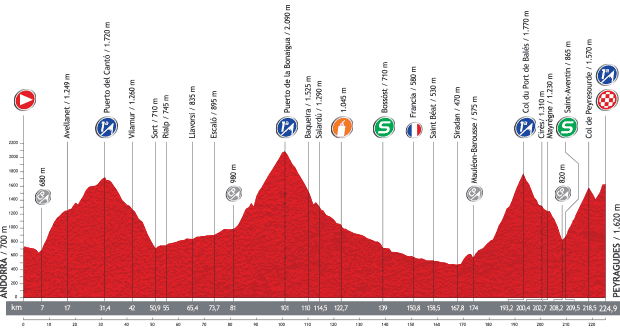
    Stage 15: Andorra > Peyragudes | 224.9km | High Mountains (Summit Finish)

    VS15

    A pair of Cat. 1 climbs before the halfway mark is even reached could be a great launching pad for anyone with breakaway aspirations. Two more categorized summits in the final 25 kilometers will require serious climbing legs. The same riders mentioned above, as well as some of the same names that attacked early in stage 13 (names like Michele Scarponi, Benat Intxausti, and Bauke Mollema) could jump at the opportunity for a stage win. Of the GC contenders, Alejandro Valverde and Dani Moreno will love the flat run-in after the final climb. With so many ascents, there will be opportunities for attacks to go out of a lead group, but it may not be steep enough to keep a small group from galloping to the line for the stage win; the real question is whether they will be breakers or GC men. Knowing how favorable the finish will be to the likes of Valverde and Katusha’s big names, Saxo-Tinkoff and the other teams in contention would love to see a breakaway take the bonus seconds away from their GC rivals.

    VeloHuman Stage Favorites

    1. Alejandro Valverde | 2. Daniel Moreno | 3. Joaquim Rodriguez | 4. Roman Kreuziger

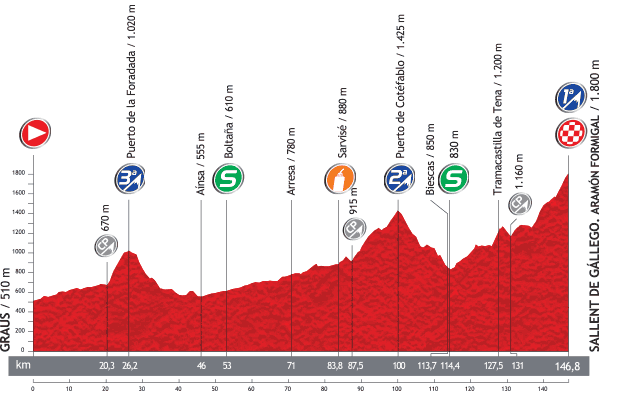
    Stage 16: Graus > Formigal | 146.8km | High Mountains (Summit Finish)

    VS16

    Monday’s stage is an interesting one. It’s one of the shortest stages in the race, but it’s essentially one long uphill grind with a few ups and downs on the way: the starting line’s altitude is 500 meters, but the day ends at 1800, with a Cat. 3 and Cat. 2 along the way to the Cat. 1 summit finish. The pace will be very high, and legs will tire. The last climb is 15.8 kilometers at a relatively gentle average gradient of 4%; it’s probably not steep enough to see any successful attacks from the GC men, especially not if the pace is as high as I think it will be. A breakaway could take it, of course, but should the big names constitute the group furthest up the road, the teams of the heaviest hitters will keep them at the front and in contention for a stage win. If a group finishes together, the leader of perhaps the strongest team, Vincenzo Nibali, will probably be content to roll in behind the  leaders of the other marquee teams: Alejandro Valverde, Nicolas Roche, and Joaquim Rodriguez.

    VeloHuman Stage Favorites

    1. Alejandro Valverde | 2. Nicolas Roche | 3. Joaquim Rodriguez | 4. Vincenzo Nibali

    -Dane Cash

    Photo by Andy Hay.

  • Vuelta a España 2013 Day 11: Where We Stand After Ten Stages, and Looking Ahead to Stages 11-13

    EBH

    Day 11: Turning Back the Clock

    The past few days have proven decisive for a number of outside GC contenders in the Vuelta. Not long after my last update, Dan Martin withdrew with a concussion. In Stage 8, Bauke Mollema lost enough time to put himself out of the conversation, and Roman Kreuziger apparently started to have a heart problem that would, over the coming stages, drop him out of the conversation as well.

    “Up-and-comer” Leopold Konig did, in fact, take Stage 8 with a well-timed, well-executed attack. The other top names were close behind. Moreno continued to look strong on a parcours that appeared to be designed perfectly for him and his teammate Joaquim Rodriguez on stage 9. And Stage 10? Perhaps it’s time to finally start believing that Chris Horner is the real deal. I used the vague terms “serious GC showdown” and “riders on elite form” to describe how Stage 10 would play out, but I’ll admit I wasn’t really thinking of the Radioshack veteran: all along I’ve been expecting him to fade, but he hasn’t yet, and he managed to drop everyone on the slopes of Alto Hazallanas on his way to the top. Vincenzo Nibali, however, was not all that far behind and a fair bit ahead of the other contenders, and unfortunately for Horner, a time trial looms. The American took the red jersey back from Dani Moreno, but I fear he won’t wear it long.

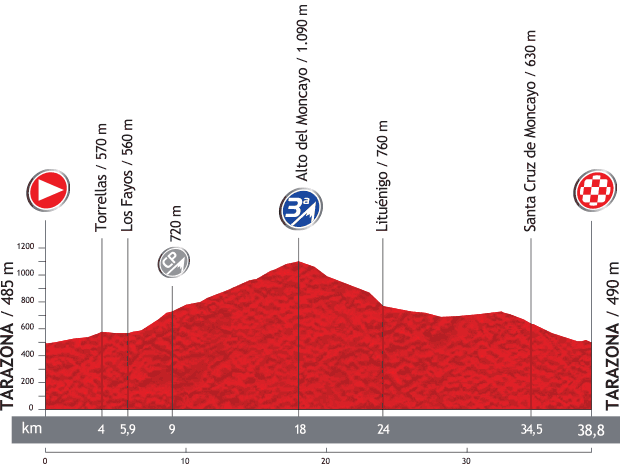
    Stage 11: Tarazona | 38.8km | Individual Time Trial

    VS11

    It’s an individual time trial with a Cat. 3 climb right at the heart of it, but it’s not so steep as to make me believe that anyone other than Tony Martin is going to win it. He’s the man to beat in all but the most difficult climber-oriented time trials, and betting against him on flatter days and even pseudo-hilly chronos has proven a dangerous decision so far this year. If he can win an ITT in which Nairo Quintana finished ahead of Richie Porte (Stage 6 at the Tour of the Basque Country), he can probably win this. Competition from fellow time trialing superstar Fabian Cancellara will be fierce, and the hill in the middle will help the classics specialist and strong descender, but Spartacus has been doing some hard racing in support of his team leader lately, and will continue to do so. Moreoever, he seems to be focusing more on his mass-start skills than his soloing right now. Like Tony Martin, there are plenty of other time trialing specialists in attendance who have come to the Vuelta with this one stage in mind (though it’s hard to see anyone beating Martin, the odds-on favorite), including Lieuwe Westra, who loves a time trial with a climb or two, Marco Pinotti, Stef Clement, and Luis Leon Sanchez. Edvald Boasson Hagen is more than just a TT specialist, but he’s capable of a high placing. I don’t include Tanel Kangert with those other names because I see him as a pseudo-GC name at the moment (he’s 14th overall) and after being a faithful domestique for Nibali all through the Giro, perhaps Astana will give him the green light to do his best in the Vuelta: he seems to have sacrificed some of his time trialing ability for climbing skills this year, but with this profile, things should balance out. If Astana gives him the go-ahead to ride hard for himself, I see him finishing between 2nd and 5th. Of the marquee names for GC, Nibali stands out head and shoulders above the rest. He’s the only rider in the top 10 with an actual chance to win this time trial, as he has become an elite time trialist at this point in his career, which he showed with commanding performances in the Giro. Ivan Basso, Alejandro Valverde and Joaquim Rodriguez (vastly improved in this discipline) will hope to limit their losses to within a minute of Astana’s leader; the Cat. 3 climb should help with that. Roche and Moreno aren’t great against the clock, but they aren’t terrible, and hanging around relatively close to their current positions is a reasonable expectation, though Roche will likely lose his spot on the virtual podium. I expect Pinot, Majka, Pozzovivo, and, yes, Chris Horner to struggle. None of them has the resume to produce anything other than expectations of large time losses here, though, of course, Chris Horner has been blowing up expectations daily. Samuel Sanchez will be excited about the opportunity to gain a chunk of time on his chase for whatever position he is targeting now that he’s no longer a contender for the red jersey; he has (or at least, had) a strong time trial when he is on form.

    VeloHuman Stage Favorites

    1. Tony Martin | 2. Fabian Cancellara | 3. Vincenzo Nibali | 4. Tanel Kangert

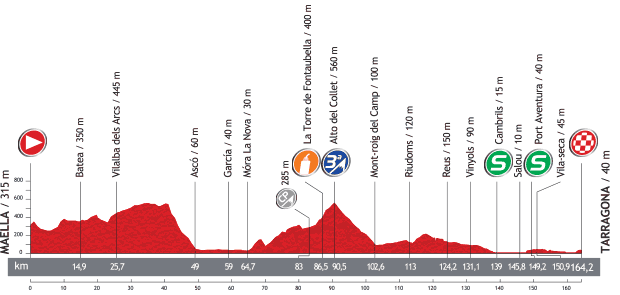
    Stage 12: Maella > Tarragona | 164.2km | Flat

    VS12

    After putting up with a few grueling days of climbing and time trialing, the sprinters finally get another day in the (hot Spanish) sun. There is a Category 3 climb to be summitted with more than 70 kilometers to go, but other than that, there isn’t much to keep the fast men from the line. It’s a day for the true sprinters, who must feel cheated after Stybar and Gilbert got the jump on them on the pan-flat Stage 7. Look to some familiar names to stake their claim today, though the dearth of marquee sprint team leaders means that a big bunch of teams have multiple options, and it’s been hard to nail down whom they are favoring in advance. If Orica-GreenEdge is still committed to giving him opportunities, this would be a great day for Leigh Howard, but it’s unclear whether they are just going 100% for Matthews now. It appears that Argos-Shimano favors Janse van Rensburg on the flatter days. Maybe. Nikias Arndt and Ramon Sinkeldam are there, too. Belkin has both Graeme Brown and Robert Wagner, who won the bunch sprint for 3rd on Stage 7. FDJ has Anthony Roux and Geoffrey Soupe. Vacansoleil has been one of the hardest to predict: depsite the presence of ostensibly highly talented sprinter Barry Markus, it has been the immensely mediocre Juan Antonio Flecha who has featured so frequently in the bunch sprints. No longer will Markus be a concern, as he did not finish Stage 10, but the team has sometimes thrown Grega Bole into the mix as well. Andrew Fenn got DQed, ending the sprinting leadership debate at OPQS, at least, though this stage might not be selective enough for Gianni Meersman.

    Sky, Garmin, Lampre, Saxo-Tinkoff, and Cofidis seem to have settled on their sprinters in, respectively: Edvald Boasson Hagen, Tyler Farrar, Maximiliano Richeze, Michael Morkov, and Adrien Petit. I also think that these are some of the strongest sprinting names in the race right now. Richeze has been 2nd twice, and Lampre wants something to show for this Grand Tour. Former track star Michael Morkov will appreciate the uber flat run into the finish on Stage 12. Petit has been improving. Farrar is still searching for that big win, but he hasn’t been too far off the mark.

    VeloHuman Stage Favorites

    1. Maximiliano Richeze | 2. Adrien Petit | 3. Tyler Farrar | 4. Michael Morkov

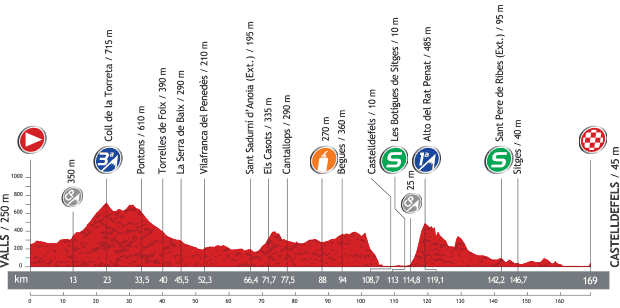
    Stage 13: Valls > Castelldefels | 169km | Medium Mountains

    VS13

    An early Cat. 3 and then a sudden, sheer Cat. 1 will challenge those riders who are likely to have done well on the previous stage. The four and a half kilometer climb at 10.6% could cause serious splits, benefitting the breakaway as the heavier riders try to catch back up to those who get over the hump first, but the top of the Cat. 1 is still some 40 kilometers from the finishing town of Castelldefels, and the road is pretty much downhill or flat all the way home, leaving plenty of time for those who have fallen off to play catchup. As the sprinters’ opportunities are very limited now, they’ll work hard to ensure that this thing ends in a sprint. It likely will, though the group that comes to the line might be reduced and fatigued. Sounds like a perfect opportunity for Michael Matthews to pick up a second stage win, or for Meersman or Boasson Hagen to pick up their first this Vuelta. With higher mountains looming, competition will be fierce, and the likes of Richeze, Petit, Farrar, and other bigger fast men will love the finish if they can just get there in one piece.

    VeloHuman Stage Favorites

    1. Michael Matthews | 2. Edvald Boasson Hagen | 3. Gianni Meersman

    -Dane Cash

    Photo by Tom Ducat-White.

  • GP Ouest France 2013 Preview

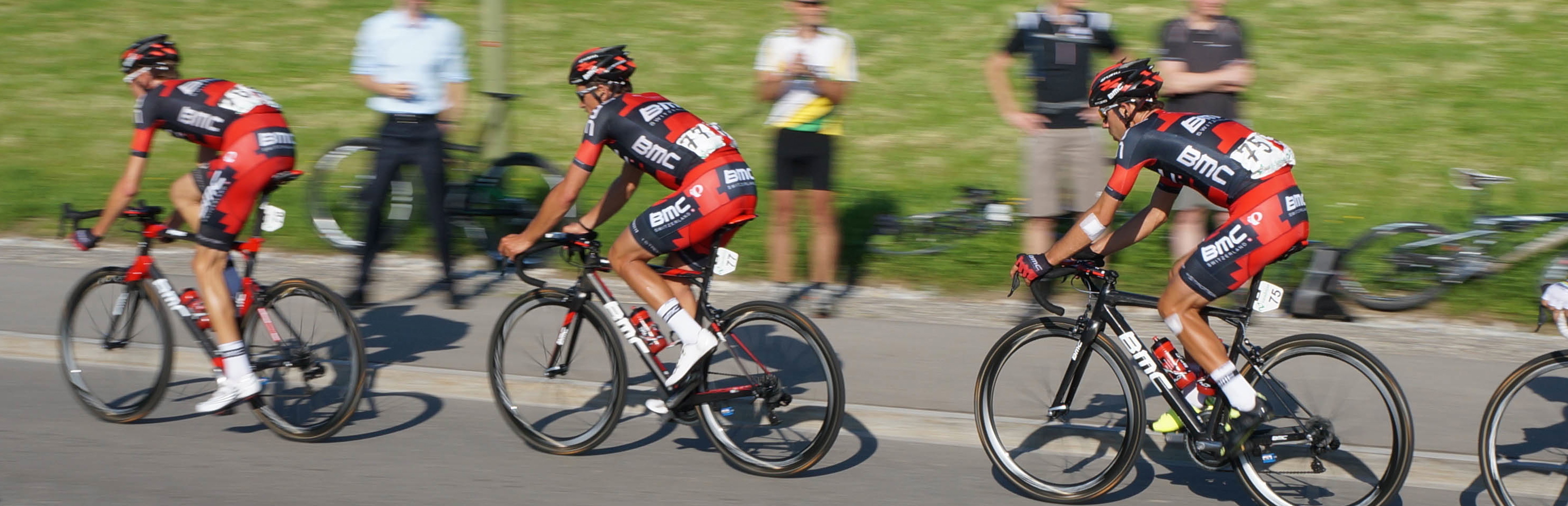
    BMC

    An Open Field

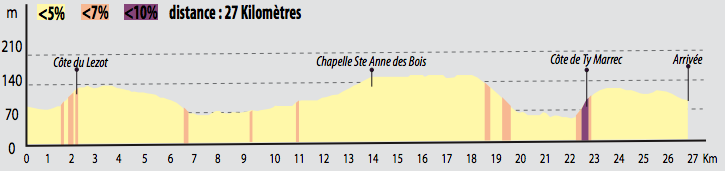
    A circuit race comprising nine laps around a 27km loop, GP Ouest France provides just enough tough climbs to keep you guessing until the very end: recent races have come down to late attacks battling a hard-charging peloton full of sprinters to the line. The 2013 startlist reflects this trend, with a number of powerful sprinters and aggressive attackers making the trip to Brittany. Last year saw Edvald Boasson Hagen launch a last minute assault over the final climb of Ty Marrec to catch and pass soloist Rui Costa, while the bunch finished just behind them. 2011 offered a similar result, with Grega Bole striking out with 2 kilometers remaining and just managing to beat a Simon Gerrans-led pack to the finish. With the same route as the 2012 edition, this year’s GP Ouest France is likely to offer a similar script (though neither Gerrans or Bole are here to see it through): each lap around the town of Plouay will drop more competitors, as attackers try to get ahead and stay ahead and the chasers give dogged pursuit. Perhaps a late break will stay clear, or perhaps the peloton will reel all attackers in and give the day to a sprinter, as happened in 2010, when Matt Goss took the victory. The two biggest questions will be: will the pack catch everyone who breaks for glory, and if so, who will be the fastest man left?

    GPOF2013Profile

    There will be no shortage of elite tough sprinter types making the trip, and many of the names that featured heavily in the Vattenfall Cyclassics will do so again here. A few stand out to me. Chief among them is Alexander Kristoff, who took third in the Cyclassics behind John Degenkolb and Andre Greipel. He’s had a phenomenal year with top 10s in so many big, grueling one-day races, including all three Monument Classics he’s taken on so far. In his favor, GP Ouest France is a much harder race than Vattenfall (Andre Greipel isn’t racing, as the parcours is too challenging for a rider like him), and Kristoff is a high endurance sprinter who relishes the sorts of difficulties that could wear down even the others in that class of rider. John Degenkolb has a reputation for a similar skill set, and he is sure to be a threat here, but the inclines here will certainly push him to the limit. It’s been hard to predict Degenkolb’s performance this year, as he has peppered two beautiful wins in with a bunch of duds, and he has a tendency to disappear when you expect him to make a statement. Still, he obviously has the talent and the form, and with so many contenders, a good leadout will be all-important, and Argos-Shimano knows how to lead out its stars. Giacomo Nizzolo has been in the top 10 here in back-to-back years, and he’ll be extra motivated after a very frustrating Vattenfall Cyclassics, in which Lotto’s Marcel Sieberg swerved in front of him in the final moments, causing him to brake and miss out on the last push for the line. He’s looking extremely fast right now. Elia Viviani and Arnaud Demare are also great candidates for a bunch sprint victory. Viviani managed a nice 5th place in that race and has had good results this year, and showing a lot of versatility in the Giro. Demare couldn’t find an opening in Hamburg and came across a disappointing 10th, but he’s shown elite speed very recently and is a decent enough climber that he should be able to hang on.  Thor Hushovd leads a very strong BMC team and will look to pick up more results to continue something of a resurgence. Lotto-Belisol’s Jurgen Roelandts loves this sort of terrain. AG2R’s Samuel Dumoulin, Movistar’s JJ Rojas and Francisco Ventoso, Steele von Hoff of Garmin-Sharp, Hushovd’s teammate Adam Blythe, and Saxo-Tinkoff’s Matti Breschel and Daniele Bennati are other names to watch in a sprint. 2010 winner Matt Goss gets an obligatory mention, and if he manages to stay with the pack he would be, if at his best, one of the fastest men here, but that’s a lot of ifs.

    I see Daryl Impey as a potentially better option for Orica-GreenEdge: he’s one of a number of in-betweener type riders who will hope the inevitable cat and mouse game over the hilly profile drops the Degenkolbs and Vivianis, leaving the survivors to fight it out in a very reduced sprint or with late attacks of their own. Impey’s form in the Eneco Tour was impressive: he was at his best on the very trying final two stages of that race, and should be able to hang on if his teammate fails. Greg Van Avermaet also has a fast finish and is coming off of a successful trip to the USA, where he showed off some capable climbing legs; if things don’t work out for Hushovd, Van Avermaet has a chance, as does Taylor Phinney, who has a great combination of straight line speed and endurance, though he doesn’t have much of a climber’s physique. Tony Gallopin’s all-rounder package makes him a candidate to win in either a bunch gallop or an aggressive strike over the Ty Marrec. Michal Kwiatkowksi has not done much since the Tour, but he is an even more complete rider than Gallopin, and should he be on form, he’ll be dangerous. Astana sends a trio of all-round threats in Francesco Gavazzi, Borut Bozic, and Simone Ponzi, who had a very successful Vuelta a Burgos, and can finish hard after a long day in the saddle: keep an eye on him. Cannondale’s inconsistent but talented Moreno Moser, Belkin’s Lars Boom, Sky’s Geraint Thomas, and Lampre’s Filippo Pozzato also fit the bill of versatile fast-finishers.

    Edvald Boasson Hagen won last year by bridging the gap between the bunch and a soloing Rui Costa. Costa returns to the start list, and he is one of the best among a third bevy of riders, those who will need to launch up the inclines ahead of the peloton to give themselves a chance at victory. Alberto Contador is also in attendance, and he’s unlikely to pass up a shot at victory if he sees it. Sylvain Chavanel leads a strong Omega Pharma-Quick Step squad in his home country, and with time trialing talents this big, a long distance strike from one of them seems likely. Michael Albasini of Orica-GreenEdge will see this as a perfect opportunity for his style of riding. With so many combative riders on the start list, it would be impossible to name everyone with a shot at breaking away, but I’ll give a few names I think could jump ahead: Ramunas Navardauskas, Katusha’s Alexandr Kolobnev and Simon Spilak, almost anyone from Euskaltel, Rein Taaramae, Wilco Kelderman, and any number of strong Frenchmen, including Julien Simon, Pierrick Fedrigo and the Europcar duo of Rolland and Voeckler. Voeckler looked pretty uninspiring in the Tour de France, but he just won a smaller French stage race (the Tour du Poitou Charentes) and he won here all the way back in 2007. Regardless of the result this year, he’s sure to at least earn some screen time with his signature grimace-heavy attacks.

    While many of the same fast men from the Vattenfall Cyclassics are in attendance, the outcome of the GP Ouest France will be far harder to predict, given the aggressive nature of the riding and the varied outcomes of the recent past. All things considered, I’d probably take Kristoff, Nizzolo, and Demare to hang on and lead the pack over the line, but whether they’ll be fighting for second or third behind someone like Greg Van Avermaet or Sylvain Chavanel is tough to say. As usual, I will name the guys I think are most likely to contend for Top 10 placings, but naming Degenkolb, for instance, as an outside top 10 contender doesn’t mean I think he’s going to come in 8th behind a bunch of other sprinters on my list: he’s likely to either be right near the top of the leaderboard, or nowhere to be seen; the same goes for the solo attacker types, as it is just too hard to predict who will get into the right break, and whether they will hang on or get swallowed up and finish well outside the top 50. No matter what happens, it will certainly be an awesome show.

    VeloHuman Predictions

    Winner

    Alexander Kristoff

    Podium

    Giacomo Nizzolo, Arnaud Demare

    Top 10

    Thor Hushovd, John Degenkolb, Greg Van Avermaet, Sylvain Chavanel, Daryl Impey, Elia Viviani, Michal Kwiatkowski

    Under the Radar Challenger

    Simone Ponzi

    -Dane Cash

    Photo by kaveman743.

  • Vuelta a España 2013 Day 7: Where We Stand After Seven Stages, and Looking Ahead to Stages 8-10

    VueltaPT

    Day 7: Fast Men Have Their Chances, Mountains Await

    Stages 4-7, while not particularly mountainous, still managed to offer plenty of excitement, with no repeat winners and no shortage of drama, even if General Classification did not see much of a real shakeup; however, at the time of this writing, Dan Martin has reportedly been taken to the hospital for injuries suffered in a crash today, a crash that dropped him a little bit after he did not make it back to the peloton quite in time. Keep an eye on that.

    A “punchy, Ardennes-style GC type” (see the previous post) did, in fact, nab stage 4: 2013 La Fleche Wallone winner Daniel Moreno attacked on the uphill finish and crossed the line ahead of an aggressive Fabian Cancellara and a pack of sprinters. The red jersey went back to Nibali after a tiny gap formed on the hill, but there was little to speak of in the way of substantial time differences for any of the big contenders, a theme that continued through today’s stage. Stage 5 went, as predicted, to Michael Matthews, who has officially arrived as a name to know. Specializing in sprints after hard days of riding, particualrly with slight uphill finishes, Matthews capitalized on Stage 5’s perfect profile to power ahead of Maximiliano Richeze and Gianni Meersman, leaving Tyler Farrar and Edvald Boasson Hagen a disappointed 5th and 6th. Stage 6, which looked set to be innocuous, saw Tony Martin attack early and ride solo ahead of the peloton basically all day, exceeding everyone’s expectations and generating real belief that he might manage, somehow, to stay ahead of the chasers for the victory, before getting caught just seconds from the finish line by a hard charging bunch of sprinters led by Danish track star turned road cyclist Michael Morkov. Richeze was again 2nd, with Cancellara 3rd and Farrar 4th. The even flatter Stage 7 had enough twists and turns toward the finish to allow a very late jump by world champion Philippe Gilbert and recent Eneco Tour champion Zdenek Stybar. They somehow held their advantage to the end, and Stybar pipped Gilbert to the line in a photo finish, with the bunch just behind, led by Belkin’s Robert Wagner. Four different days, four different winners, none of them Gianni Meersman, Edvald Boasson Hagen, or Tyler Farrar. Now that the sprinters have had their shot to make a mark on this Vuelta, the road goes up.

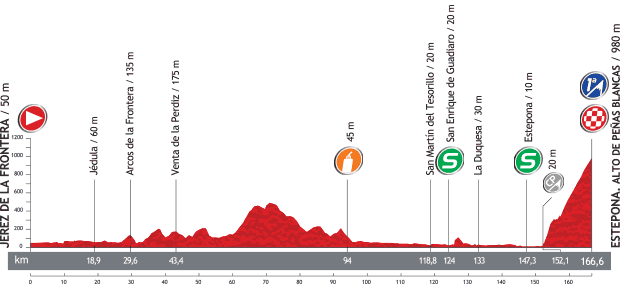
    Stage 8: Jerez de la Frontera > Alto de Peñas Blancas | 166.6km | High Mountains (Summit Finish)

    VS8

    The peloton takes on a single categorized climb in Stage 8, but it’s a Cat. 1, 960 meter incline to the finish at Alto de Peñas Blancas. The climb is 14.5 kilometers long at an average gradient of 6.6%. The steepest portions are early (a brief section at 12.5% around 2km in), meaning that this climb will favor those all-rounders with full tanks, capable of sustained upward efforts. If a group finishes together, a strong finishing kick would seal the deal. Stage 2 might have led to frustrating time losses for a few of the big GC names, but Stage 8 is sure to cause serious selection in the fight for GC. Giro riders have now had a week to ride themselves into form, and Nibali has shown no signs of weakness, making him one of my obvious favorite for this stage, assuming a breakaway isn’t given the chance to nab a win (and given the number of riders currently still in contention for GC whose stated Giro aims are stage-win-oriented, it seems like the chase would be fierce). Ivan Basso has looked very capable so far, and he will appreciate the long road to the top. As the climb is only a little steeper and longer than that on Stage 2, many of those same names could factor here, including that stage’s winner Nicolas Roche, Domenico Pozzovivo, the ever-present Joaquim Rodriguez (though the road isn’t steep enough late enough to provide a great opportunity for his style of attack), his teammate Dani Moreno, and up-and-comers Leopold Konig and Diego Ulissi. As the ascent does even out a bit towards the top, a group could reach that point together, favoring riders with a strong finish: most obviously Alejandro Valverde, but don’t forget the rider who won the Points jersey in the 2011 Vuelta, Bauke Mollema, who has looked great so far.

    VeloHuman Stage Favorites

    1. Alejandro Valverde | 2. Bauke Mollema | 3. Vincenzo Nibali | 4. Ivan Basso

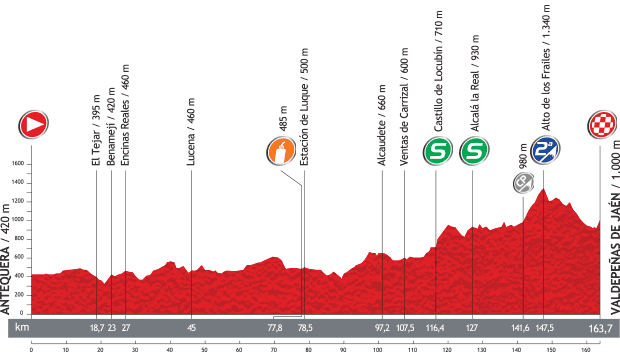
    Stage 9: Antequera > Valdepeñas de Jaén | 163.7km | Medium Mountains

    VS9

    Stage 9 again throws only a single categorized climb at the competitors, a Cat. 2 whose summit is 16km from the finish line, but the peloton will climb over rolling hills and then a steady upward incline to reach that summit. Then, they will zip downward toward the town of Valdepeñas de Jaen, until reaching a short but maddeningly steep ramp up to the finish line. Stage 9 is certain to provide excitement: riders might attack on the Cat. 2, or they might wait until the closing kilometer to launch up the zany climb. Katusha’s duo of Joaquim Rodriguez and Daniel Moreno (winner of this year’s La Fleche Wallone) will likely feature on the Mur de Huy-esque slope. Alejandro Valverde has come close to victory more than once on the early uphill finishes and will be out for the stage win and bonus seconds. After a rough start due to his knee injury, Philippe Gilbert has been looking stronger and stronger, and this finish suits him; the day’s climbs are likely to weed out the sprinting types from being much of a factor at the finish, but a tougher rider like Gilbert has a great opportunity to survive to the final gallop. It may be a bit steep for Simon Gerrans, who is riding himself into form, but he’s shown some real punch in earlier races this year. Roman Kreuziger, Daniel Martin (if he is alright healthwise, which is unclear at this point), Bauke Mollema, Sky teammates Rigoberto Uran and Sergio Henao, and Carlos Betancur (if he ever manages to find his legs again) have the explosiveness to take a victory here, too.

    VeloHuman Stage Favorites

    1. Joaquim Rodriguez | 2. Daniel Moreno | 3. Philippe Gilbert | 4. Sergio Henao

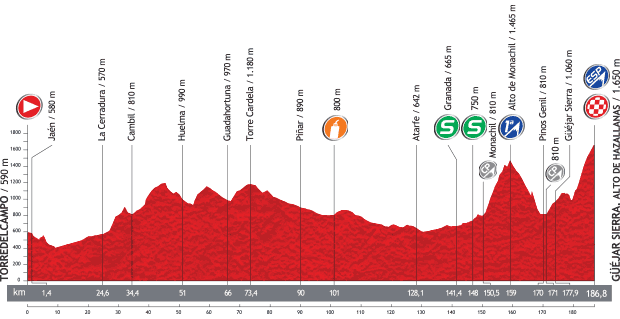
    Stage 10: Torredelcampo > Alto Hazallanas | 186.8km | High Mountains (Summit Finish)

    VS10

    It’s a good thing that the riders get a rest day in between Stage 10 and Stage 11, because Monday’s ride from Torredelcampo to Alto Hazallanas will be very hard on everyone. The day begins with a few small foothills. A little less than 30km away from the end of the line is the Alto de Monachil, a Cat. 1 mountain with 8.5 km of ascent at 7.7%. The riders will then take a steep descent before the road goes up again toward the finish line at the end of Special Category climb, Alto de Hazallanas, which is nearly 16 kilometers long at an average of 5%. If he didn’t already have enough of an advantage on the stage given his elite descending skills, Vincenzo Nibali’s diesel climbing style will serve him well in his bid to reach finish the long, grueling challenge ahead of his opponents. The ascent is highly irregular, however, with a flat portion 6 kilometers in, followed by a quick but very steep downhill turn a little over 7 kilometers in, and then a section of roughly 5 kilometers with gradients pushing 18% before things ease off a bit near the finish. In other words, there will be opportunities for aggressive climbers to attack, paving the way for a serious GC showdown between all the big names on Stage 10. Only the riders on elite form will be able to hang in front here. Purito will surely find a section of road to power ahead, as might his teammate Dani Moreno. Carlos Betancur would love this stage if he were feeling up for it, but he has struggled mightily so far. Roman Kreuziger is the full all-rounder package, an elite climber and time trialist with the capacity for quick bursts up upward speed as well: that skill set will set him up nicely on this climb if he decides to target the victory. It will be a true test for riders who have not looked sharp yet, ie. Samuel Sanchez and Sergio Henao (though, if he can find his form, he has a surprisingly strong combination of long-term power and quick acceleration in his engine that would suit him here), as there is very little respite after the downhill section ends and the punishing steep section begins with still roughly 7 kilometers remaining. As a side note, the descent to the start of the climb will be an interesting gauge of Thibaut Pinot’s progress in his struggle to overcome a fear of going down; if he can get over that obstacle, his fresher legs (he abandoned the Tour before it’s toughest days) and overall ability could make him a real danger not only for this climb but for the GC battle in general. Stage 10 should tell us what is what this Vuelta.

    VeloHuman Stage Favorites

    1. Vincenzo Nibali | 2. Joaquim Rodriguez | 3. Roman Kreuziger

    -Dane Cash

    Photo by Contando Estrelas.