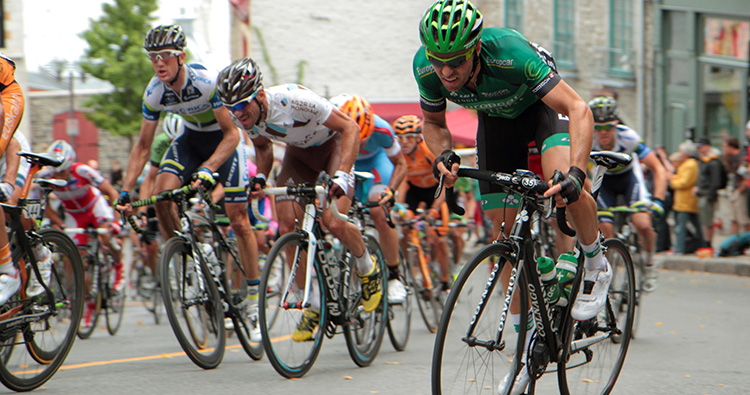
While the Vuelta nears its conclusion in Spain, the WorldTour is also making its yearly visit to North America, where a pair of one-day races await. First up is the Grand Prix Cycliste de Quebec! 199.1 kilometers in total, the GP Quebec is a circuit race consisting of 11 laps that weave through the center of the city. As a top-level race and an important part of the Worlds buildup for many riders, it usually draws a very impressive group of participants (with those who focus on the hilly classics making up much of the roster) even with a Grand Tour taking place at the same time. This year is no exception!
VH will be at the event in-person, so stay tuned here and on Twitter (@VeloHuman) for plenty of exciting coverage (previews, interviews, and post-race analysis) of the GP Quebec and the GP Montreal.
The Route
The profile of the GP Quebec always makes for a very interesting race. None of the uphill challenges on the menu seem particularly difficult at first glance, but their location on the route guarantees that they will play a major role in determining the day’s winner, either providing a launching pad for late attacks or at least whittling down the pack on the way to a reduced uphill sprint.

The race starts (and finishes) in Old Quebec. The first 6.5 kilometers of the circuit are mostly flat as the road heads away from the city center, but then things change direction and there is a very fast descent down towards the water. As the road evens out, the pack will start heading back towards Old Quebec on the relatively flat Boulevard Champlain. Just after kilometer 14 of the circuit, things suddenly become difficult. The Côte de la Montaigne is only 375 meters in length, but at a 10% average grade, with almost half the climb at a whopping 13%, it will put plenty of pressure on the less uphill-oriented riders in the peloton. A fast descent follows, and then, as the route snakes through Quebec’s urban center, ultimately winding back towards the finish, the road kicks up in a series of climbs. The Côte de la Potasse is only 420 meters long, but the average gradient comes in at 9%. It is followed by a brief dip in the road and then another short, steep test, the Montée de la Fabrique, less than 200 meters in length but at 7%. Almost immediately after comes the long uphill drag to the line, the Montée du Fort climb, 1 kilometer at an average of 4%.
By themselves, the late climbs may not look like much, but in rapid succession and coming at the end of the race, they will bring the uphill chargers to the fore. A technical urban circuit, with a few steep downhills to boot, will provide even more inspiration for the aggressive riders to attempt to escape from the pack as the day nears its conclusion.
The Contenders
The parcours makes for a very open race, where a wide spectrum of riders, including climbing powerhouses and even sprinters, will have an opportunity to pick up a WorldTour-level victory at the end of a hilly (but not too hilly) day. The 2013 edition was a perfect illustration of this: Robert Gesink, not partcularly known for his one-day race performances, outgunned would-be World Champion Rui Costa and even Peter Sagan in an uphill sprint.
Gesink himself isn’t here, but the 2014 startlist, packed with hilly classics specialists, GC-style climbers, and a few of the peloton’s more versatile quick men, should set up another unpredictable race, as everyone will fight to survive the repeated uphill tests and then either launch a late move or hold out for a group finish on the Grande-Allée. A fair bit of punch and capable climbing legs will be necessities for anyone hoping to succeed in this race.
Orica-GreenEdge, loaded with talented riders for the hilly profiles, probably couldn’t draw up a race much more suited to them than the GP Quebec or its sister race in Montreal. They bring a powerful squad to Canada to contest both. Simon Gerrans won this race in 2012, and with his skillset, he’ll be among the most dangerous riders on this parcours. The two-time Monument winner is strong enough to escape from the pack on a tough profile if he sees an opportunity, and he is deadly in an uphill sprint. With a World Championship course that suits him just around the corner, he showed excellent form in the recent Vattenfall Cyclassics, sprinting to 3rd ahead of some very impressive names, and this race fits him even more perfectly. OGE will also have Michael Albasini, Daryl Impey (fresh off a Tour of Alberta win), Pieter Weening, and Jens Keukeleire as powerful cards to play. At least one member of this impressive team should feature prominently in the finale.
BMC’s Greg Van Avermaet was 2nd in the 2012 edition of the GP Quebec, and 3rd in last year’s race. The Canadian GPs are a major target of his, and an urban circuit with the ups and downs and twists and turns to inspire late attacks is perfect for the aggressive Belgian. He showed great form in an uphill burst to a stage victory in the recent Eneco Tour, and no matter how this race plays out, it’s hard to imagine that he won’t be involved at the finish once again. Tejay van Garderen may not have much of a resume in the one-day races, but the climbing specialist (who has looked more explosive than ever this year) will make for a powerful teammate.
FDJ’s Arthur Vichot was runner-up to Robert Gesink in 2013, and just put in a top-notch display of form when he took 3rd overall in the GP Ouest France in Plouay. Vichot was very impressive in the hilly Paris-Nice in March, and he looks to be returning to a high level as the season nears its conclusion. He’s an explosive uphill charger who isn’t afraid to go solo, and he should be among the top contenders in the GP Quebec.
World Champion Rui Costa has landed back-to-back top 5s in Quebec, and with his World Champs defense approaching, he’s highly motivated to put his mark on this race again. He’ll need a challenging race to put some of the faster finishers under pressure, but there are a number of true climbing talents on this startlist (including teammate Chris Horner) that could help. Costa has a knack for success here and the ability to strike out for glory alone or outgun a small group at the line.
Katusha’s Alexander Kristoff is in attendance and probably has claim to the title of best sprinter on the startlist. Surviving the late uphill tests will not be easy for Kristoff, and the final drag doesn’t suit him that well, but he has continually delivered on very difficult profiles in 2014 and so he can’t be counted out with his elite finishing kick. Simon Spilak is a strong alternative.
Gianni Meersman is one of the most versatile sprinters here, and he’s on strong form at the moment. He might have a chance at staying with the pack all the way to the line. If not, OPQS is loaded with other options. Zdenek Stybar has the power to make a late break for victory or to hold the wheel of anyone who does and the finishing kick to outmatch a group at the finish. Julian Alaphilippe is very strong right now and just delivered a very impressive ride in the GP Ouest France, and Jan Bakelants (who loves the hilly days) and Matteo Trentin (deadly in a reduced sprint) are even more potential protagonists for the team.
Garmin-Sharp’s Tom-Jelte Slagter has finished in the Top 10 here on back-to-back occassions, and he’s had a career year. Form is a bit of a question mark, but he has the skills to thrive here if he’s in shape. Ramunas Navardauskas, Fabian Wegmann (an impressive 4th here in 2013), and sprinter Steele Von Hoff are other great options for the team. Europcar also has riders for multiple scenarios, with Bryan Coquard a potential contender in a sprint and Cyril Gautier and Yukiya Arashiro as options if the race is too selective for Coquard. Sky has their dangerous one-two punch of Geraint Thomas and Edvald Boasson Hagen, both of them capable of striking out for solo success or holding on for an uphill sprint. Giant-Shimano has an in-form Tom Dumoulin (who packs some underrated punch) and hilly classics specialist Simon Geschke (9th last year), and between them, a good result for the Dutch team seems likely. Lotto Belisol is stacked with talented riders for the parcours, with top-notch solo artist and very fast finisher Tony Gallopin in attendance and motivated, along with Jelle Vanendert and Tim Wellens, who could make things very interesting on the late climb, and strong one-day racer Jurgen Roelandts. Belkin’s Bauke Mollema is obviously an elite climber, but his great finishing kick might surprise some people; don’t rule him out even in a reduced sprint (he has a great chance to follow up Gesink’s unexpected victory with one of his own). Teammate Sep Vanmarcke may be known more for his cobbled classic prowess, but his punchy style and his ability to get over the small hills should translate well here.
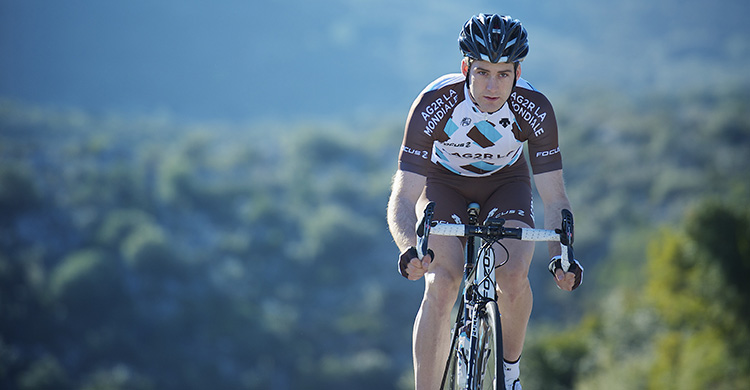
It’s hard to pick out one Astana rider as the most likely to land a good result in Quebec, but the team bring a serious array of talent to the race in Jakob Fuglsang, Enrico Gasparotto, Borut Bozic, Francesco Gavazzi, and Liewue Westra, and that impressive cast has among them the variety of skillsets to cover any scenario. Tinkoff-Saxo, with Michael Rogers and Matti Breschel, also has options for multiple outcomes. AG2R’s climber trio of Jean-Christophe Peraud, Christophe Riblon, and Romain Bardet should make this interesting, and don’t count out Hugo Houle either in his home country. Movistar’s Beñat Intxausti, JJ Rojas, and JJ Lobato, Cannondale’s Moreno Moreso, Marco Marcato, and Davide Formolo, and Trek’s Robert Kiserlovski and Frank Schleck are other talented riders who could be in the mix.
VeloHuman Top 10 Favorites
Winner: Simon Gerrans
Podium: Greg Van Avermaet, Arthur Vichot
Other Top Contenders: Rui Costa, Alexander Kristoff, Gianni Meersman, Tom-Jelte Slagter, Simon Geschke, Michael Albasini, Tony Gallopin
Stay tuned for plenty more coverage of the GP Quebec and the GP Montreal, and be sure to follow @VeloHuman on Twitter for live commentary of both races.
-Dane Cash
Photo by Cephas.