Tag: Romain Bardet

  • Paris-Nice 2016 Preview

    Paris-Nice 2016 Preview

    16576947639_e08f072dc8_k

    The 74th edition of Paris-Nice gets underway Saturday, which means that WorldTour racing has arrived in Europe. The startlist may have taken a slight hit in the last few years, but the race still draws plenty of talent—the sprinting field is particularly strong this year, and several top GC names are also in attendance to battle for the overall title in the “Race to the Sun.”

    The Route

    Paris-Nice runs for eight days, starting with a short, flat prologue in the Paris suburbs. The organizers have mixed things up with the inclusion of a few dirt road sections in the ensuing Stage 1. That could make for an interesting day of racing.

    Stage 2 looks to be one for the sprinters, with Stage 3 injecting the first serious climbs into the race. A Cat. 2 finale is likely to break things up a bit on the overall leaderboard.

    The sprinters will have another chance on Stage 4 before an intriguing Stage 5 that includes a partial trip up Mont Ventoux—though the visit to the iconic climb comes earlier on in the stage. The three Cat. 2 climbs that follow Ventoux could break things up further, but a flat run-in to the finish will likely keep the stage from being too decisive.

    The GC is likely to be decided on Stage 6, which includes seven categorized climbs, all of them Cat. 2s or harder, with a Cat. 1 climb to the finish line.

    If that hasn’t settled things, the race concludes with a lumpy stage 7, whose up-and-down profile involves six more categorized climbs, the last of which is Paris-Nice favorite Col d’Éze.

    In general, it’s a route with plenty of challenges, but one that lacks either a long time trial or any particularly massive or viciously steep finishing climbs. Bonus seconds could play an important role in deciding the overall winner.

    The General Classification Contenders

    Richie Porte won the race last year (and in 2013) and he will look defend the title this year, riding for new team BMC. The route, however, is less Porte’s style, without a tough time trial to give him the advantage over his rivals. Furthermore, Porte might not be terribly focused on defending his Paris-Nice crown with later-season objectives on his mind—Porte was incredible in the one-week races last year, and yet all the buzz around his season focused on his inability to pull of a Grand Tour win. The Tour is likely occupying all of his focus right now.

    Alberto Contador is another two-time winner of the race in attendance. He too might have preferred some changes to the route, but he’s dangerous on practically any terrain and will have plenty of opportunities to put in a characteristic Contador attack if he’s feeling up for it in March.

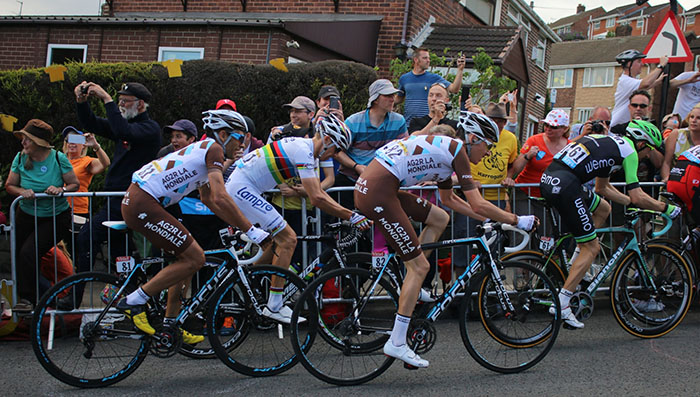
    Romain Bardet looked strong last month in Oman, and should be on-point in Paris-Nice. He has a nice uphill kick, which should help him in the bonus seconds game, and riding on French rides his motivation should be high.

    Sky’s Geraint Thomas will hope to follow up a strong 2015 performance wither another this year, and the profile should favor his riding style. Teammate Sergio Henao is another strong bet.

    Rui Costa has come close here in the past and should love this year’s route. He thrives on profiles that present opportunities for escape attempts, and Paris-Nice 2016 has plenty of those. He also looks to be in good shape right about now. Louis Meintjes gives Lampre-Merida another good option.

    Underrated on the short, steep stuff, Tom Dumoulin should do well on this parcours if he is motivated to fight for a result.

    The same goes for Wilco Kelderman and Luis León Sánchez.

    Lotto-Soudal’s Tony Gallopin and Tim Wellens, Simon Yates, Rafal Majka, Ion Izagirre, Alexis Vuilermoz, Cannondale’s duo of Andrew Talansky and Pierre Rolland, and the Katusha trio of Ilnur Zakarin, Rein Taaramäe, and Simon Spilak are others who could get involved in the GC battle.

    The Stagehunters

    A bevy of strong sprinters should provide action on the flatter early stages. Marcel Kittel, off to a strong start this season, will be hard to beat now that he appears to be back up to speed after a down year in 2015. Alexander Kristoff, also very strong right now, will hope to best Kittel in the bunch kicks, as will André Greipel, 33 but still showing plenty of ability in the sprints.

    Michael Matthews, Wouter Wippert, Arnaud Démare, Nacer Bouhanni, Juan José Lobato, and Ben Swift are others to watch in the sprint finishes.

    VeloHuman Top 10 Overall Favorites

    GC Winner: Romain Bardet
    Podium: Alberto Contador, Rui Costa
    Other Top Contenders: Richie Porte, Geraint Thomas, Tony Gallopin, Simon Yates, Tom Dumoulin, Pierre Rolland

    Be sure to follow @VeloHuman on Twitter for more analysis and commentary during the race!

    -Dane Cash

    Photo by Kat Rietberg (CC).

  • The Recon Ride Podcast: Paris-Nice 2016

    The Recon Ride Podcast: Paris-Nice 2016

    pn2016vh

    Episode 32: Paris-Nice 2016 Pre-race Show

    The 2016 WorldTour has arrived in Europe—Paris-Nice is upon us! The podcast previews the eight-day “Race to the Sun.”

    [powerpress]


    Road racing is getting back into full swing, and so is the Recon Ride. Dane Cash and Cosmo Catalano take a closer look at Paris-Nice.

    Photo by Conseil départemental des Yvelines (CC).

  • The Recon Ride Podcast: GP Québec + GP Montréal 2015 Pre-race Show

    The Recon Ride Podcast: GP Québec + GP Montréal 2015 Pre-race Show

    GPMGPQ2015vh

    Episode 27: GP Québec + GP Montréal 2015 Pre-race Show
    The Recon Ride delivers a double dose of analysis, the with a pre-race show that takes on the GP Québec and its sister race, the GP Montréal. A few of the top names in attendance offer the insider’s take on North America’s only WorldTour races.
    [powerpress]


    For one weekend every year, WorldTour cycling crosses to the other side of the Atlantic for the Grande Prix Cycliste de Québec and Grand Prix Cycliste de Montréal. The courses tend to produce exciting racing, and thanks to Canada’s proximity to the Richmond world championships, the always-excellent startlists are even more impressive this year. Dane Cash of VeloHuman and Cosmo Catalano of Cyclocosm preview both events in one Recon Race pre-race show—with a little help from the three of biggest stars who have made the trip: Greg Van Avermaet, Michal Kwiatkowksi, and Romain Bardet.

  • Tour de France 2015: Stage 18 Preview

    Tour de France 2015: Stage 18 Preview

    PROFIL18

    Stage 18: Gap › Saint-Jean-de-Maurienne – 186.5km

    Simon Geschke’s Stage 17 breakaway win concluded just the first of four tough Alpine stages. With another day at the Tour de France comes another day in the mountains. Stage 18 features more categorized climbs (seven in total) than any stage in the Tour de France, and a few of them are quite challenging.

    The climbing starts right away with the 6.3km, 7%-gradient Col Bayard, which will certainly see some action as riders try to get into an early move. After the top of the climb and a descent thats eases into a stretch of more gentle downhill, the profile is up and down for the rest of the day. Three Cat. 3 climbs lead into the Cat. 2 Col de la Morte, only 3.1km in length but with a harsh 8.4% average gradient.

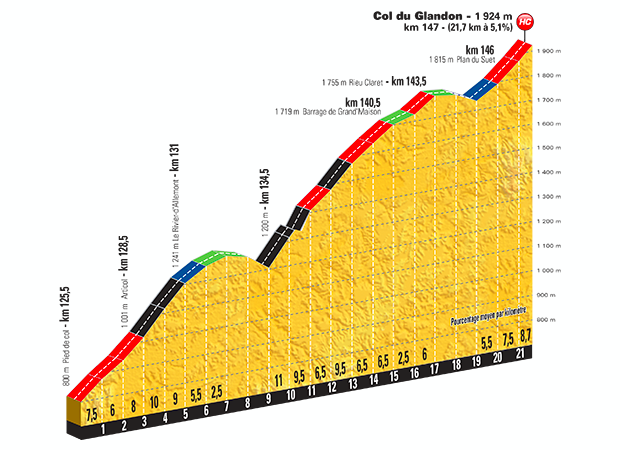
    From the top it’s a very steep descent of about 15 kilometers, after which the road angles upward again, climbing for a not-insignificant stretch to the official start of the Col du Glandon.

    21.7km a 5.1%, and coming after a bit of uncategorized climbing at that, the Cat. 1 Col du Glandon is an irregular ascent with numerous stretches that get up near and over 10%. There are plenty of places to attack on the very long way up, and the sheer magnitude of the climb will make it an unpleasant trip for everyone involved.

    The riders will have already been going uphill for a while by the time they hit the official start of the very long Col du Glandon, which has a number of very steep stretches to inject some serious hurt into the legs.
    The riders will have already been going uphill for a while by the time they hit the official start of the very long Col du Glandon, which has a number of very steep stretches to inject some serious hurt into the legs.

    But the day doesn’t end at the top of the climb—a 20km descent follows into the final climb of the day, the Cat. 2 Lacets de Montvernier. 3.4km at 8.2%, it’s one last jumping off point for the punchy, enterprising riders in this Tour, with the top of the ascent coming 10km from the finish.

    So many categorized climbs, and so many short steep stretches, will make Stage 18 an attackers’ playground. Expect to see plenty of action on the earlier climbs. If the morning aggressors are reeled in, expect to see plenty more attackers on the Col de la Morte and then the Col du Glandon. It could be some time before a solid break is formed. And even if the early break is reeled in sometime before the final 20km, the Lacets de Montvernier will be a great launching pad for one last strike for glory.

    The Tour has already seen plenty of big, successful breakaway moves, with Sky and Movistar content to fight it out in the GC battle well behind the breaks. The fact that the hardest climb of the day comes so far from the line might help temper the pace in the peloton. Controlling this stage will be a big challenge anyway, given the profile. With so many strong climbers well out of the overall race leadership competition, it seems likely that plenty of talented riders will find themselves up the road on battling for Stage 18 from a long-range move. Only a serious injection of pace from the pack on the Col du Glandon can keep this together.

    In any case, the Stage 18 winner will almost certainly be a top-notch climber with good descending skills as well. Joaquim Rodríguez tried and tried again to get up the road on Stage 17 but the peloton kept reeling in the early moves. I’m betting he’ll resume that effort on Stage 18. Of the strong climbers in the Tour de France who aren’t any GC threat whatsoever, Rodríguez is one of the very strongest. He should thrive on this brutal day, and he doesn’t even need to attack on the Col du Glandon if he doesn’t want to, since the short but very steep test near the end of the stage suits him perfectly. The finishing straight even kicks up slightly to favor him in a late uphill sprint if he finds himself in that situation. As always, the question mark will be whether Purito gets up the road. If he’s there, he’s a major threat.

    Romain Bardet kept the powder dry on Stage 17, but he could try to go on the move on Stage 18. This profile doesn’t suit him quite as much, but he’s still among the top climbers in the race, and he has plenty of motivation to get something out of the Tour before it leaves the Alps. Alternatively, AG2R could send Alexis Vuillermoz up the road here instead. Vuillermoz has shown in the past that he’s capable on the long, hard climbs, and the steep final climb suits him very well.

    Ryder Hesjedal has been active in the breakaways in 2015 Tour but he hasn’t been particularly successful. He’ll have another chance here on a stage that suits his characteristics. Teammate Dan Martin is another solid candidate for long-range success—the profile, especially the late climb, is a good one for him. Unfortunately, Martin suffered from illness in the second week of the Tour, and his current form is a question mark. Andrew Talansky will probably be a bit exhausted after Stage 17 but he is, at his best, a Grand Tour GC rider who should have the endurance for back-to-back hard days if he has it in his mind to get involved here.

    BMC’s Samuel Sánchez has been quietly riding an excellent Tour de France, currently sitting 13th overall despite riding in support of Tejay van Garderen for most of the race. Now that his team leader has abandoned the Tour, Sánchez could look to go on the move. It’s hard to imagine a better profile for the elite descender and punchy climber. If Sánchez can get up the road, he’ll be a top favorite for stage honors. Damiano Caruso is worth keeping an eye on as well.

    Europcar, a team looking for a 2016 sponsor, has yet to come away with a stage victory in this Tour, but this is a golden opportunity. Pierre Rolland tried to get into the break on Stage 17 and could look to get on the move again on Stage 18. Cyril Gautier doesn’t have a Tour de France white jersey in his palmarès, but he may be an even better bet. The up and down suits him very well. Tommy Voeckler isn’t what he once was as a racer but this is a great profile for him as well.

    Jakob Fuglsang is among the top climbers in the Tour and way down on GC; if he were clear in his motivations of taking every opportunity available to go stagehunting from the break, he’d be a strong pick—but he’s been very quiet since his 2nd-place finish on Stage 12. If he’s up there, he’s a strong contender but he might be waiting a little bit longer to go for it . . . or he might even have resigned himself back to being a domestique again that Vincenzo Nibali seems set on fighting for the Top 5.

    Jarlinson Pantano (who is surprisingly fast at the line), Rigoberto Urán, Jan Bakelants, Wilco Kelderman, Michael Rogers, Rafal Majka, Thibaut Pinot, and, if he’s not too exhausted, Stage 17 winner Simon Geschke are other riders worth watching as potential candidates to take a Stage 18 victory from afar.

    Tony Gallopin would be one of my top contenders from the breakaway for this stage but he has shown very little interest in getting up the road in this race, and he’s looked exhausted in the past few days. The profile suits him but I’m not sure he’s got the strength at this point. On the flipside, don’t rule out Peter Sagan—the HC-rated climb of the Col du Glandon is very difficult and not really Sagan’s style, but he’s looked to be incredibly strong this month and if he can hold on over the top of the climb he’s got a great shot at the stage win if he’s in the lead group.

    Should the main breakaway be reeled in by the peloton on Stage 18, Alejandro Valverde will be an obvious favorite with the late short climb and then the flat finish. He excels in both scenarios. If Robert Gesink can hold on over the day’s challenging climbs, he’s another rider to keep an eye on late in the day. The Top 5 is a real possibility and Gesink has some punch.

    Vincenzo Nibali will also like the look of the profile, given the very long descent on tap late in the day, followed by the short ramp that could provide an opportunity to go on the attack if he hasn’t distanced the GC men yet, though Chris Froome and Nairo Quintana are always potential stage winners themselves when there are mountains involved.

    VeloHuman Stage 18 Favorites

    1. Joaquim Rodríguez | 2. Romain Bardet | 3. Alejandro Valverde

    Don’t forget: you can find plenty more Tour de France analysis in the most recent Recon Ride podcast episode. Be sure to follow @VeloHuman on Twitter for more commentary during the race, and check back for the preview of the next stage after the conclusion of Stage 18.

    -Dane Cash

  • Tour de France 2015: Stage 17 Preview

    Tour de France 2015: Stage 17 Preview

    PROFIL17

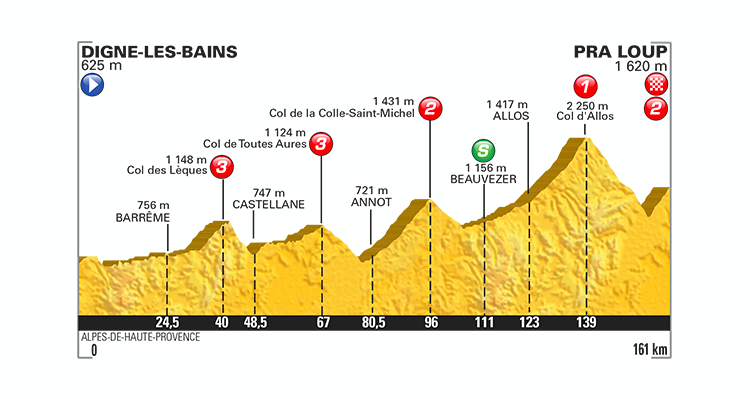
    Stage 17: Digne-les-Bains › Pra Loup – 161km

    The first of four challenging days in the Alps, Stage 17 comes on the heels of a rest day (which gave VH and Cyclocosm time to team up for one last Tour de France Recon Ride episode). Hopefully, the riders will have gotten in every bit of recovery they need, because the next few stages will put everyone to the test.

    Relatively short at 161km, Stage 17 follows the same route of Stage 5 of the 2015 Critérium du Dauphiné, won by Romain Bardet. The stage opens on a short climb, with about 30km of flat to follow, and then it’s up and down all the way to the line. A pair of Cat. 3s and then an 11km (at 5.2%) Cat. 2 are the appetizers of the day before a 1-2 punch of climbs (that happen to be Category 1 and Category 2 climbs, respectively) to close things out.

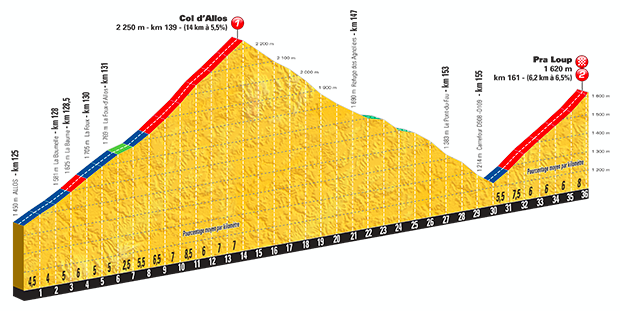
    The Cat. 1 Col d’Allos is really just the second half of a long uphill stretch that starts much earlier. The peloton will be going upward for over 30 kilometers, with an average grade of about 3% over the long haul. The official climb of the Col d’Allos is 14km in length at 5.5%. It starts out at relatively low gradients, but it stays at 6% or more for the final 6 kilometers.

    Neither of the final two climbs of Stage 17 is comparatively all that difficult, but together, with plenty of vertical meters already in the legs, they'll make for a hard day of racing.
    Neither of the final two climbs of Stage 17 is comparatively all that difficult, but together, with plenty of vertical meters already in the legs, they’ll make for a hard day of racing.

    After a long, tricky descent from the Col d’Allos comes the final climb of the day, the 6.2km, 6.5% ascent to Pra Loup. It’s a pretty steady uphill drag, with the final kilometer getting a bit steeper at 8%.

    The rolling profile, and the lack of any HC-rated climbs, makes this a great day for the breakaway, but it’s never easy getting a great read of the motivations of the teams in the pack. Several of the fringe GC contenders have shown interest in trying to get up the road, but others have been cagey about that prospect and had their teams policing potential escapes. We saw this on Stage 14 when IAM Cycling chased the break because the squad wasn’t pleased with the presence of GC outsiders in the move who might have threatened Mathias Frank’s Top 10 bid. The makeup of the Stage 17 break will help determine whether the pack chases it down, as will the plans of Movistar and Tinkoff-Saxo, who could be hoping to test the waters, knowing some riders struggle after a rest day. To me, it’s another toss-up day between the pack and the break.

    For a possible breakaway win, look to the strong climbers whose GC aspirations have faded. Romain Bardet will be an obvious pick after taking the win here in the Dauphiné. He’s already spent plenty of time up the road in this Tour de France, and he’s come close to stage victories so far twice. He’s not at his very best form-wise, but he’ll still be able to beat most anyone else on this profile if he’s in the breakaway. Teammates Alexis Vuillermoz and Jan Bakelants will be worth watching as well—these climbs aren’t so hard as to put them out of contention from a long-range move.

    Jakob Fuglsang beat Bardet to the top of the Plateau de Beille on Stage 12, and the long, steady climbs of the day suit him. He’s in good form and Astana is hoping to salvage something from this Tour despite Vincenzo Nibali’s GC failings. The biggest question for Fuglsang is whether he’ll go on the attack here, or wait until the following stages to try a breakaway move.

    That’s also a question for Joaquim Rodríguez, who has kept his powder dry over the last few stages for a big mountain push. The Stage 17 finish is excellent for Rodríguez, a short steep wall after a not-that-hard climb, but he may have the KOM points of the next few stages in mind. If he’s in the lead group at the end of the day he’ll be a top favorite.

    Pierre Rolland should shine on this profile, if he can manage to get up the road either early on, or with a late attack—Cyril Gautier and Romain Sicard could try to get in the mix as well. Compatriot Thibaut Pinot looked very strong coming into the Tour de France but his form has been nowhere near expectations so far. This isn’t a perfect profile for him (he’s never been the world’s best descender) but he’ll likely be very active in the hunt for a stage win in the mountains.

    Rafal Majka could threaten if he decides to try to get in the break. Dan Martin was sick during the last few stages but says he’s recovering now, and this is an excellent stage profile for him. Teammate Ryder Hesjedal will be worth watching as well. Michal Kwiatkowski, Rigoberto Urán, Louis Meintjes, Serge Pauwels, Adam and Simon Yates, Wilco Kelderman, and Rafael Valls are other potential dangers in a long-range move.

    If the peloton does reel in the break, Alejandro Valverde will be the hot favorite for stage victory with this final climb, which is not hard enough to open up huge gaps and will instead favor Valverde’s excellent finishing kick. A potentially aggressive Nairo Quintana will give Movistar a great 1-2 punch for Stage 17.

    Tony Gallopin has the speed at the line to challenge Valverde if this comes down to a reduced sprint among the GC types. He’d be a stronger contender if he hadn’t looked exhausted during the stage to Gap, but perhaps after a rest day he will have recovered some strength.

    Vincenzo Nibali’s ability to descend and his aggressive streak will serve him well if he decides to go on the hunt for a stage win here.

    Chris Froome may decide to play this safe and stay in the wheels, but if he is interested, he’s looked strong enough so far in this Tour de France that he can distance his GC rivals, with the exception of maybe Nairo Quintana, at a moment’s notice if he is so motivated. Sky’s Geraint Thomas will be one to watch with this finish as well.

    Robert Gesink and Bauke Mollema could both surprise people if this comes down to a group finish—both are speedier at the line than many realize.

    VeloHuman Stage 17 Favorites

    1. Alejandro Valverde | 2. Romain Bardet | 3. Joaquim Rodríguez

    Don’t forget: you can find plenty more Tour de France analysis in the most recent Recon Ride podcast episode. Be sure to follow @VeloHuman on Twitter for more analysis and commentary during the race, and check back for the preview of the next stage after the conclusion of Stage 17.

    -Dane Cash

  • Tour de France 2014 Post-race Impressions: Nibali Dominant, Others Ascendant

    Tour de France 2014 Post-race Impressions: Nibali Dominant, Others Ascendant

    Tour de France Wide

    Now that the 2014 Tour de France is officially in the books, there’s time to draw a few conclusions about what we’ve seen. Three weeks of racing offer enough storylines and takeaways for weeks of analysis, but I’ve distilled my impressions down to a select few major observations.

    A Worthy Winner

    Vincenzo Nibali did not want this race to be remembered as the Tour de France without Chris Froome and Alberto Contador, and the results he delivered in pursuit of a truly dominant performance were quite impressive. With four stage wins and several other Top 5s, a strong challenge for the polka dot jersey, and a gap of nearly eight minutes to his closest challenger, Nibali was in another universe compared to the competition in the race. It would have been nice to have seen him battling Froome and Contador, and as things stand right now, Froome is still the oddsmakers’ favorite for the 2015 Tour, but Nibali did all the right things to ensure his place in the history books as a worthy maillot jaune.

    Astana in Front

    We always knew that Nibali was a strong climber (one does not win the Vuelta and Giro without elite climbing ability) but he was up for it on every type of uphill challenge on the menu in this Tour, and avoided even one bad day. What’s more, he has developed into a top-notch time trialist, landing 4th in the Stage 20 chrono. And perhaps most importantly for this race, he displayed the sort of bike handling skills and racing savvy necessary to survive three weeks of riding on often rain-soaked and occasionally cobbled roads. There is a lot to be said for his ability to emerge unscathed from a Tour that dashed the hopes of so many other riders.

    A Lengthy Injury Report

    Speaking of those other riders: as much as Nibali did everything in his power to make this race his own, any rational analysis of this Tour has to include mention of the health issues that plagued so many riders and generated so many headlines. Alberto Contador was on fire this year and now he may not race again in 2014, and Chris Froome looked to be rounding back into shape before his multiple fractures took him out of the Tour. It would have undoubtedly been a very different Tour de France had they been in the mix in the mountains. They weren’t the only riders who suffered race-ending health problems. Mark Cavendish left the Tour on its very first day. Rui Costa was running well in the beginning of the race, but pneumonia hampered him as the Tour went on and ultimately he abandoned his campaign for a Top 10 overall. Andrew Talansky crashed and crashed again early on in the race and was just too banged up to continue riding at the level necessary to hang with the peloton. Andy Schleck suffered a serious knee injury which has put his next several months in doubt.

    Others made it to the Champs-Élysées but were noticeably lessened by ailments along the way. Among the big names in this camp were John Degenkolb, whose first several days were hampered by injury, Arnaud Demare, who battled sickness, and Richie Porte, whose tumble out of the GC Top 10 may have been partially due to a chest infection. In short, a number of big names struggled with health issues in this Tour de France. Those riders who did survive and thrive in the race are worth noting, but it’s important to view all of their successes in perspective.

    New Generation of Sprinters Here to Stay

    With four victories, Marcel Kittel was clearly the best “pure sprinter” in the race. We’ll never know how Mark Cavendish might have fared against the younger Kittel through three weeks of racing, but Kittel continues to assert himself as a dominant force in the top tier of fast men. This is his second straight year of four wins, but remember, he’s only 26! Alexander Kristoff, with a pair of stage wins, is planting his flag as a sprinting force as well, especially in the bunch gallops that follow long and/or rainy days. Peter Sagan is known as the rider to beat on the hilly days that end in reduced sprints, but Kristoff has carved out a niche of his own: he’s not as strong a climber as Sagan, but even flatter stages, if lengthy enough (and especially when wet) can wear out the other fast men, and it is in those scenarios that Alexander Kristoff shines brightest. Andre Greipel and Marcel Kittel were both in the mix on Stage 15, but Kristoff won anyway, much as he won the sprint finale of this year’s Milano-Sanremo despite the presence of Mark Cavendish.

    Peter Sagan may not have won a stage in this year’s Tour, but the nine Top 5 stage finishes that put him into the green jersey are undeniably impressive. It seems likely that with a stronger team, he’ll be able to focus more on winning and less on chasing down late moves; the question of “Where will Sagan land?” will be the biggest story of transfer season.

    Several other young non-winners were, nonetheless, strong performers on a number of stages as well. 22-year-old Bryan Coquard was always in the mix in the sprints, and 22-year-old Arnaud Demare and 25-year-old John Degenkolb delivered some nice results despite nagging ailments.

    A French Resurgence

    The 2014 Tour de France was a wonderful return to prominence for French cycling. Jean-Christophe Peraud, who has landed several impressive results in stage races in his career, put in a next-level performance to reach 2nd overall in cycling’s biggest event. He got stronger as the Tour went on, and benefitted from a top-notch team that also included 6th place finisher Romain Bardet, just 23 years old. A climbing specialist with serious talent and a high ceiling, Bardet now has a Top 10 in the Tour and in Liege-Bastogne-Liege on his 2014 resume (to go with several other nice results), and he should continue to develop as an uphill force.

    AG2R Jenkin Road

    Thibaut Pinot finally took that step up that many expected after his 10th overall and stage victory in the 2012 Tour; a podium position in the Tour de France (ahead of Grand Tour winner Alejandro Valverde) will do wonders for his confidence. He seems to have gotten over his fear of descending, which was a major drawback to his game, but he developed into a much more well-rounded rider in other ways too, now seemingly capable of putting in a strong time trial and several straight good days in the mountains. He should only get stronger over the next few years.

    The GC riders weren’t the whole story for the French revival either. Consummate breakaway specialist Blel Kadri took a very long stage win in Gerardmer, and versatile Tony Gallopin spent time in the yellow jersey and later escaped Peter Sagan and a chasing pack to win Stage 11. He took an impressive victory in San Sebastian last year and continues to prove his wide array of talents that include climbing, soloing, and sprinting.

    Deserving Team Leaders

    BMC’s Tejay van Garderen recovered from a prior injury to race in this Tour, and then recovered from an early crash and a single bad day in the Pyrenees to land 5th on GC when all was said and done. 2013 was a rough year for the young American, who, despite winning both the Tour of California and the USA Pro Challenge, looked to have taken a step back as a Grand Tour rider in that year’s edition of La Grand Boucle. With Cadel Evans showing signs of slowing down, however, BMC backed van Garderen completely in this year’s Tour, and by consistently hanging with with the GC Top 10 types and then delivering a very strong time trial performance in the penultimate stage, van Garderen proved that he is back on track as a GC contender. He’s still just 25.

    Not far behind van Garderen on the GC leaderboard was Leopold Konig. Konig took a stage and 9th overall in the 2013 Vuelta, but 2014 hadn’t been going smoothly for the young Czech climber, who was slated for his first run at being a team leader in the Tour de France. A knee injury hampered his early season campaign and left him unable to prepare as well as he would have liked for this race. He overcame those obstacles and looked strong in the second and third week of the Tour, climbing to 9th on GC before the time trial on Stage 20. He proceeded to deliver the chrono of his life and jumped two more placings to finish 7th overall. It shouldn’t come as a complete surprise, as he has been delivering impressive time trial results somewhat under the radar over the last two years, but few expected him to land 5th in the ITT. If he can continue to show that sort of abiltiy against the clock, he will be a rider to watch in Grand Tours for years to come.

    Looking Ahead

    The last day of the Tour de France is not the last day of the cycling season! The Clasica de San Sebastian, a one-day race with a hilly profile designed to thrill, is less than a week away, with the Tour de Pologne and Eneco Tour soon after. Stay tuned for more previews, analysis, and rider interviews!

    -Dane Cash

    Photos by Adam Bowie, Sum_of_Marc, and Photigule.