Quite a collection talented riders is headed to Tirreno-Adriatico this week to hunt for results – and the race’s famed golden trident trophy – along the road from one side of Italy to the other. A balanced parcours offers something for everyone in the country’s first big stage race of the year.
The Route
Tirreno-Adriatico opens with a 22.7-kilometer team time trial. It’s long enough to make a difference, giving an advantage to the GC hopefuls with high-octane backing squads, but it’s not so long that it’s going to flat-out win someone the race on day one.
Stage 2 throws a few challenges at the riders at the end of a 207km day. There is a small categorized climb just before the finish that may open up a few gaps.
Stage 3 is a day for the sprinters. Stage 4 concludes with a flat stretch but a string of late climbs could inspire attacks, either from stagehunters or from aggressive GC types.
Stage 5 is the definitive queen stage, with five categorized climbs including a tough uphill finish of 13km at 6.6%.
Stage 6, the longest stage in the race, has some uncategorized ascents late on in the profile that could favor the more versatile riders in the peloton, but it’s hard to see it having any GC impact.
The race closes out with a 10km individual time trial in San Benedetto del Tronto. It’s a completely flat out-and-back run that should see some pretty high speeds.
The General Classification Contenders
Nairo Quintana won the 2015 edition of the race, but he won’t be defending his crown in 2016. However, with Alejandro Valverde leading the way, Movistar still has a great chance of coming away with a win. The Spaniard can do it all, and that’s a big plus on this varied parcours. Movistar’s great TTT will help.
Vincenzo Nibali makes the start in pursuit of a third career Tirreno title, and he too should appreciate the parcours. The queen stage involves plenty of descendning, which should allow the Italian to put his downhill abilities on display. Jakob Fuglsang gives Astana a strong Plan B.
Tejay van Garderen would probably have a hard time drawing up a more favorable parcours. BMC’s world-class TTT squad should set him up well from the get go, and the long queen stage finishing climb and stage 7 time trial will both give him a chance to put his own big engine on display. He looked strong in Andalucía last month and should be among the top favorites in Italy.
Rigoberto Urán will also like the style of climbs in this race and the closing TT, though the opening team time trial may hurt him given Cannondale’s struggle in the discipline. If he can limit his losses there, he’ll have a shot at the overall.
Joaquím Rodríguez should appreciate the plethora of opportunities to punch clear of the pack even if the chrono mileage doesn’t suit him. He has yet to deliver much this season but it’s not unusual for him to show up stronger than expected after a few quiet weeks riding tune-up races. Jurgen Van Den Broeck could be a nice alternative.
Bauke Mollema was runner-up in Tirreno in 2015 and looks to be in good form at the moment. He could be among the GC favorites trying to snipe a few seconds here and there on the intermediate stages.
Thibaut Pinot won’t be a fan of the opening TTT but he’s improved dramatically as a descender and so should be able to hold his own on the queen stag. He’s also capable of putting in a decent ITT, making him a real contender for the overall title.
Ag2r’s one-two punch of Domenico Pozzovivo and Jean-Christophe Peraud should be in the mix, as should Orica-GreenEdge’s duo of Adam Yates and Esteban Chaves. Sky brings a powerhouse trio of Michal Kwiatkowski, Vasil Kiryienka, and Wout Poels.
Diego Ulissi, Roman Kreuziger, Rafael Valls, and Rodolfo Torres are other potential protagonists in the General Classification.
The Stagehunters
Mark Cavendish looks like the fastest of the pure sprinters in attendance, although there are several big names that could challenge him in the bunch kicks. Caleb Ewan,Fernando Gaviria, Elia Viviani, Giacomo Nizzolo, and Sacha Modolo are the headliners there.
Peter Sagan should have a few opportunities of his own as well, as there are some lumpier days. Greg Van Avermaet could be in the mix as well—he actually beat Sagan in a sprint to take a stage here in 2015. Edvald Boasson Hagen, Ramunas Navardauskas, and Jens Debusschere are others worth keeping an eye on in the stagehunting game.
VeloHuman Top 10 Overall Favorites
Winner: Vincenzo Nibali Podium: Alejandro Valverde, Tejay van Garderen Other Top Contenders: Rigoberto Urán, Joaquím Rodríguez, Domenico Pozzovivo, Thibaut Pinot, Bauke Mollema, Michal Kwiatkowski, Wout Poels
The podcast takes a closer look at the third WorldTour race of the season, Italy’s Tirreno-Adriatico.
[powerpress]
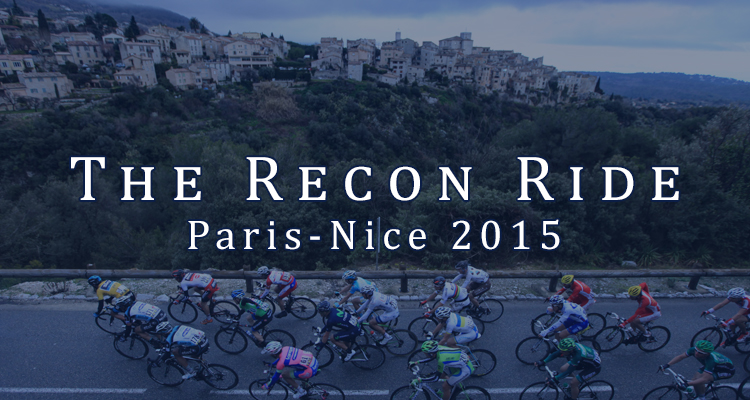
Though some big names are in France for Paris-Nice, plenty of other stars are headed to Italy to kick off their European WorldTour campaigns at Tirreno-Adriatico. The Recon Ride previews the race route and the favorites, and chats with Sam Bennett, who will make the start hoping to nab a stage win in the sprints.
After a February break, WorldTour racing is upon us again. The 73rd running of Paris-Nice brings time trials and high mountains back into play after a year without them. The 2014 edition of the race favored punchy opportunists with a talent for nabbing bonus seconds, but this year’s event will put the more prototypical General Classification contenders in the best position to challenge for the overall victory. While Tirreno-Adriatico may have drawn the “big four” Grand Tour contenders, there are still plenty of elite talents headed to France this weekend to contest the Race to the Sun. As the European WorldTour opener, and the season-opener for many big names, and with another shakeup of the parcours, Paris-Nice offers plenty of storylines to make for an interesting race (storylines also investigated in further detail in the Recon Ride’s Paris-Nice pre-race show, which you should check out if you haven’t already).
The Route
Paris-Nice opens with a short, flat prologue of 6.7 kilometers. It’s hardly long enough to open big gaps on GC but this should be a close race so the riders hoping to fight for the overall victory here will be on their toes. A flat Stage 1 should go to the pure sprinters, and the fast men will likely get another chance on the similarly flat Stage 2. A very slightly inclined finish on Stage 3 could at least give the lighter sprinters an advantage to mix things up, but it should again be large group that reaches the line together in Saint-Pourçain-sur-Sioule.
The mountains arrive quite suddenly on Stage 4. Early climbs in the profile could prove a nice launching pad, and late climbs and winding roads a nice buffer, for a strong breakaway, but whether stage honors are on the line or not, the GC battle will be fierce.
Stage 4: Varennes-sur-Allier › Croix de Chaubouret (204 km) – After several day of flat profiles, a summit finish on Stage 4 will suddenly put the GC contenders to the test.
The Cat. 1 closing climb of the Croix de Chauboret doesn’t compare to some of the more grueling climbs these riders will face in the Grand Tours later this season but at the end of a day of constant climb, and this early in the season, it will very likely catch a number of contenders out. It’s a mostly gradual ascent to the summit finish but a high tempo from one of the powerhouse teams is sure to leave big names off the back before the line.
A few bumps along the road to Rasteau and an uphill drag to the line will make Stage 5 an interesting battleground on which sprinters, aggressors, and punchier climbers will all have a chance. The more explosive GC riders could be on the lookout for bonus seconds.
Bonus seconds could also be hotly contested on Stage 6, which is up and down all day long with a total of three Category 2 climbs and three Category 1 climbs. After the last (Cat. 1) climb it’s a long downhill run to the line. If the climbs don’t give the uphill purists room to get separation, a small group could descend the Côte de Peille together, which will guarantee an exciting final few minutes.
Paris-Nice ends with a 9.6-kilometer time trial up the Col d’Éze, also the final battleground for both the 2012 and 2013 editions of the race. The 4.7% average gradient may not look like much but past editions has proven that this is a chrono for the elite climbers.
Stage 7 (ITT): Nice › Col d’Éze (9.6 km) – Past editions of the race have proven that this climb is not to be taken lightly.
Under 10 kilometers though it may be, the Col d’Éze climb is going to open up gaps in the General Classification fight, guaranteeing that Paris-Nice will come down to the very last day.
All told, there’s something for everyone in Paris-Nice. Those battling for overall supremacy will need to battle through a variety of different challenges, against gravity and against the clock, to emerge victorious. Meanwhile, those hoping to come away from Europe first WorldTour race of the year with stage wins will face stiff competition with the long list of strong sprinters.
The General Classification Contenders
More so than the 2014 edition, the 2015 Paris-Nice route is especially favorable to the big engine riders who can fend for themselves in the time trials and long vertical drags. Coming off of a strong performance in the Tour Down Under (where his inability to consolidate bonus seconds left him just off the top step of the podium) Richie Porte is clearly in terrific shape for the year, and Paris-Nice offers him a a golden opportunity to put his National Championship-winning ITT skills on display. His great climbing legs put him in the lead a few stages prior in the 2013 Paris-Nice, and he clinched the overall win on that year’s run up the Col d’Éze, where no one was faster. Two years since then, with that challenging finale returning to the route, Porte’s GC bid will be difficult to overcome in 2015, especially backed by the powerhouse Sky powerhouse lineup that includes Geraint Thomas and Nicolas Roche as dangerous support riders or potential alternatives.
BMC’s Tejay van Garderen is another rider capable of battling with the very best in both the climbs and the time trial. Fresh from the Tour of Oman, where he was a close runner-up, van Garderen looks lean and on-form. In fact, he has a history of performing very well early in the season. The steady gradient of the Stage 4 finishing climb suits him well, both time trials should be opportunities for him to advance on the GC leaderboard, and he even has a bit more explosiveness than many realize should he find himself in a small group with bonus seconds on the line at any point. With Cadel Evans in retirement, now is the time for van Garderen to prove that he can be the sole GC leader of this team, and his combination of skills puts him in an excellent spot to do so here. Van Garderen also has an excellent team around him, with Rohan Dennis, climbing better than ever, as a very strong second.
Rui Costa was 2nd in last year’s race (and in fact racked up a pair of 2nd-place stage finishes along the way) but he has the skill set to thrive on the updated parcours as well, combining great climbing legs with time trialing chops that can’t be overlooked (though they often are) and the explosiveness and aggressiveness to win battles for bonus seconds. With Rafael Valls, fresh off a Tour of Oman victory, here as well, Lampre should be able to hold their own.
Multi-talented Michal Kwiatkowski will look to attack the GC leaderboard early even from the first day of racing, with prologues a particularly forte of his, and he should be in the mix for bonus seconds here and there throughout the race. At times, he has flashed brilliance even on the tough mountain climbs, but he has had a tendency to suffer a bad day in the mountains here and there in his career. If he can avoid that sort of off-day in Paris-Nice and stay close to the best climbers, he will have a great shot at the overall win.
Dutch rising star Wilco Kelderman had a very impressive 2014 and he will look to continue to develop as LottoNL’s GC star this season. Interestingly, he did not quite perform to (high) expectations in the chronos last year, but a 2nd-place ITT finish in Andalucia last month has him looking sharp and ready to race against the clock this year. Ever-improving climbing skills and a fierce finishing kick for the bonus seconds make him a strong competitor.
Rafal Majka of Tinkoff-Saxo will likely do a lot of work for Alberto Contador this season, but the 25-year-old Polish climber, 4th overall in Oman last month, is in great shape at the moment and won’t pass up an opportunity to mix it up in a WorldTour race. He is an excellent uphill time trialist who should perform well on the final stage. Fabio Aru of Astana also knows about being the second of two elite GC riders on one team, and with clouds of uncertainty hanging over Astana, now would be a good time for him to make a statement as the featured GC rider while Vincenzo Nibali is leading the squad in Tirreno-Adriatico. At his best, Aru would rival Porte as a pre-race favorite but his completely unknown form makes him more of a question mark. Teammate Jakob Fuglsang will be an excellent second, 5th here last year on a parcours that did not suit him particularly well. 7th in Oman in February, Fuglsang is the in-form rider. With Lieuwe Westra and Luis Leon Sanchez (two riders with results in Paris-Nice in the past) here as well, Astana will almost certainly be on the move at every opportunity.
Andrew Talansky is a question mark for form at the moment, not having raced at all in 2015, but Paris-Nice was something of a coming out party for him in 2013, and with a similar course he has the skillset to thrive again. Jean-Christophe Péraud was on the podium that year as well, but his form is dubious right now. Teammate Romain Bardet looks like the better option for AG2R. Mathias Frank is a massive talent in the one-week events for IAM Cycling. Warren Barguil isn’t much for the time trials, but with the uphill nature of Stage 7, that may not hurt him too much. He should fight for a Top 10. Katusha’s Tiago Machado, Simon Spilak, and Sergey Chernetskiy should be in the mix on the climbs and with their combined firepower, they have the ability to attack the GC leaderboard from several angles.
Simon Yates of Orica-GreenEdge, Movistar’s trio of Rubén Fernández, Beñat Intxausti, and Ion Izaguirre, and Trek’s Bob Jungels (who has a great shot at winning the prologue) will also hope to get involved in the GC conversation. VeloHuman’s Under-the-radar rider for Paris-Nice is Eduardo Sepúlveda of Bretagne-Séché Environnement. 4th overall in San Luis in January and the winner of the recent Classic Sud Ardèche, Sepúlveda is the complete GC package and sporting great form right now. For his team, motivation to put on a show at the WorldTour level will be high, and the 23-year-old Argentinian has the skillset to take up the charge.
The Stagehunters
The list of top sprinting talents making the start in Paris-Nice seems to go on forever. Though Mark Cavendish and Marcel Kittel won’t set out from Maurepas, the startlist does include André Greipel, Nacer Bouhanni, Alexander Kristoff, Arnaud Démare, Giacomo Nizzolo, and John Degenkolb as the riders likeliest to contend for the sprint finishes. Michael Matthews, Heinrich Haussler, and Ben Swift will hope to get involved on the slightly bumpier days.
Punchy Arthur Vichot, Michael Albasini, Tony Gallopin, Philippe Gilbert, and Tom-Jelte Slagter will look to get into the mix when the road is too hard for the sprinting powerhouses, as may be the case in the finale of the hard-to-predict Stage 5.
The startlist is also overflowing with elite time trailing specialists. In addition to those mentioned as GC contenders, Bradley Wiggins, Tony Martin, Tom Dumoulin, and Thomas De Gendt are among the many in attendance who excel against the clock.
VeloHuman Top 10 GC Favorites
Winner: Tejay van Garderen Podium: Richie Porte, Rui Costa Other Top Contenders: Michal Kwiatkowski, Wilco Kelderman, Rafal Majka, Andrew Talansky, Fabio Aru, Beñat Intxausti, Romain Bardet
Be sure to follow @VeloHuman on Twitter for more Paris-Nice commentary and daily stage predictions, and check back soon for plenty of Tirreno-Adriatico pre-race analysis.
Episode 2: Paris-Nice 2015 Pre-race Show The WorldTour returns, and so does the Recon Ride, previewing the Race to the Sun.
[powerpress]
The WorldTour arrives in Europe this Sunday at the 73rd edition of Paris-Nice. After a 2014 parcours that eschewed the time trials and high mountain finishes, the event is returning to a more familiar route. VeloHuman and Cyclocosm join forces to dig deeper into the storylines of the race.
Now that the 2014 Tour de France is officially in the books, there’s time to draw a few conclusions about what we’ve seen. Three weeks of racing offer enough storylines and takeaways for weeks of analysis, but I’ve distilled my impressions down to a select few major observations.
A Worthy Winner
Vincenzo Nibali did not want this race to be remembered as the Tour de France without Chris Froome and Alberto Contador, and the results he delivered in pursuit of a truly dominant performance were quite impressive. With four stage wins and several other Top 5s, a strong challenge for the polka dot jersey, and a gap of nearly eight minutes to his closest challenger, Nibali was in another universe compared to the competition in the race. It would have been nice to have seen him battling Froome and Contador, and as things stand right now, Froome is still the oddsmakers’ favorite for the 2015 Tour, but Nibali did all the right things to ensure his place in the history books as a worthy maillot jaune.
We always knew that Nibali was a strong climber (one does not win the Vuelta and Giro without elite climbing ability) but he was up for it on every type of uphill challenge on the menu in this Tour, and avoided even one bad day. What’s more, he has developed into a top-notch time trialist, landing 4th in the Stage 20 chrono. And perhaps most importantly for this race, he displayed the sort of bike handling skills and racing savvy necessary to survive three weeks of riding on often rain-soaked and occasionally cobbled roads. There is a lot to be said for his ability to emerge unscathed from a Tour that dashed the hopes of so many other riders.
A Lengthy Injury Report
Speaking of those other riders: as much as Nibali did everything in his power to make this race his own, any rational analysis of this Tour has to include mention of the health issues that plagued so many riders and generated so many headlines. Alberto Contador was on fire this year and now he may not race again in 2014, and Chris Froome looked to be rounding back into shape before his multiple fractures took him out of the Tour. It would have undoubtedly been a very different Tour de France had they been in the mix in the mountains. They weren’t the only riders who suffered race-ending health problems. Mark Cavendish left the Tour on its very first day. Rui Costa was running well in the beginning of the race, but pneumonia hampered him as the Tour went on and ultimately he abandoned his campaign for a Top 10 overall. Andrew Talansky crashed and crashed again early on in the race and was just too banged up to continue riding at the level necessary to hang with the peloton. Andy Schleck suffered a serious knee injury which has put his next several months in doubt.
Others made it to the Champs-Élysées but were noticeably lessened by ailments along the way. Among the big names in this camp were John Degenkolb, whose first several days were hampered by injury, Arnaud Demare, who battled sickness, and Richie Porte, whose tumble out of the GC Top 10 may have been partially due to a chest infection. In short, a number of big names struggled with health issues in this Tour de France. Those riders who did survive and thrive in the race are worth noting, but it’s important to view all of their successes in perspective.
New Generation of Sprinters Here to Stay
With four victories, Marcel Kittel was clearly the best “pure sprinter” in the race. We’ll never know how Mark Cavendish might have fared against the younger Kittel through three weeks of racing, but Kittel continues to assert himself as a dominant force in the top tier of fast men. This is his second straight year of four wins, but remember, he’s only 26! Alexander Kristoff, with a pair of stage wins, is planting his flag as a sprinting force as well, especially in the bunch gallops that follow long and/or rainy days. Peter Sagan is known as the rider to beat on the hilly days that end in reduced sprints, but Kristoff has carved out a niche of his own: he’s not as strong a climber as Sagan, but even flatter stages, if lengthy enough (and especially when wet) can wear out the other fast men, and it is in those scenarios that Alexander Kristoff shines brightest. Andre Greipel and Marcel Kittel were both in the mix on Stage 15, but Kristoff won anyway, much as he won the sprint finale of this year’s Milano-Sanremo despite the presence of Mark Cavendish.
Peter Sagan may not have won a stage in this year’s Tour, but the nine Top 5 stage finishes that put him into the green jersey are undeniably impressive. It seems likely that with a stronger team, he’ll be able to focus more on winning and less on chasing down late moves; the question of “Where will Sagan land?” will be the biggest story of transfer season.
Several other young non-winners were, nonetheless, strong performers on a number of stages as well. 22-year-old Bryan Coquard was always in the mix in the sprints, and 22-year-old Arnaud Demare and 25-year-old John Degenkolb delivered some nice results despite nagging ailments.
A French Resurgence
The 2014 Tour de France was a wonderful return to prominence for French cycling. Jean-Christophe Peraud, who has landed several impressive results in stage races in his career, put in a next-level performance to reach 2nd overall in cycling’s biggest event. He got stronger as the Tour went on, and benefitted from a top-notch team that also included 6th place finisher Romain Bardet, just 23 years old. A climbing specialist with serious talent and a high ceiling, Bardet now has a Top 10 in the Tour and in Liege-Bastogne-Liege on his 2014 resume (to go with several other nice results), and he should continue to develop as an uphill force.
Thibaut Pinot finally took that step up that many expected after his 10th overall and stage victory in the 2012 Tour; a podium position in the Tour de France (ahead of Grand Tour winner Alejandro Valverde) will do wonders for his confidence. He seems to have gotten over his fear of descending, which was a major drawback to his game, but he developed into a much more well-rounded rider in other ways too, now seemingly capable of putting in a strong time trial and several straight good days in the mountains. He should only get stronger over the next few years.
The GC riders weren’t the whole story for the French revival either. Consummate breakaway specialist Blel Kadri took a very long stage win in Gerardmer, and versatile Tony Gallopin spent time in the yellow jersey and later escaped Peter Sagan and a chasing pack to win Stage 11. He took an impressive victory in San Sebastian last year and continues to prove his wide array of talents that include climbing, soloing, and sprinting.
Deserving Team Leaders
BMC’s Tejay van Garderen recovered from a prior injury to race in this Tour, and then recovered from an early crash and a single bad day in the Pyrenees to land 5th on GC when all was said and done. 2013 was a rough year for the young American, who, despite winning both the Tour of California and the USA Pro Challenge, looked to have taken a step back as a Grand Tour rider in that year’s edition of La Grand Boucle. With Cadel Evans showing signs of slowing down, however, BMC backed van Garderen completely in this year’s Tour, and by consistently hanging with with the GC Top 10 types and then delivering a very strong time trial performance in the penultimate stage, van Garderen proved that he is back on track as a GC contender. He’s still just 25.
Not far behind van Garderen on the GC leaderboard was Leopold Konig. Konig took a stage and 9th overall in the 2013 Vuelta, but 2014 hadn’t been going smoothly for the young Czech climber, who was slated for his first run at being a team leader in the Tour de France. A knee injury hampered his early season campaign and left him unable to prepare as well as he would have liked for this race. He overcame those obstacles and looked strong in the second and third week of the Tour, climbing to 9th on GC before the time trial on Stage 20. He proceeded to deliver the chrono of his life and jumped two more placings to finish 7th overall. It shouldn’t come as a complete surprise, as he has been delivering impressive time trial results somewhat under the radar over the last two years, but few expected him to land 5th in the ITT. If he can continue to show that sort of abiltiy against the clock, he will be a rider to watch in Grand Tours for years to come.
Looking Ahead
The last day of the Tour de France is not the last day of the cycling season! The Clasica de San Sebastian, a one-day race with a hilly profile designed to thrill, is less than a week away, with the Tour de Pologne and Eneco Tour soon after. Stay tuned for more previews, analysis, and rider interviews!
As one Grand Tour ends, the run-up to another begins. The Critérium du Dauphiné (I’m hereafter dropping the accents for various Internet-friendly reasons) is one of the most important stage races of the year. It is one of two major tuneup events for July’s Tour de France (the other being the Tour de Suisse). The balanced route of the Dauphine, which includes a time trial, flat stages, hilly stages, and some difficult mountains, offers excellent preparation for the Tour. Many of the likely stars of La Grande Boucle make the start to face off against their major rivals. Bradley Wiggins won in 2012 and Chris Froome was winner in 2013; both went on to win the Tour. With such an elite field and over sixty years of history, the Dauphine is a major event in its own right.
A quick note before I dive in: I’m not previewing individual stages, but I’ll be tweeting stage picks and live analysis, so remember to follow @VeloHuman on Twitter.
The Route
The 2014 edition of the Criterium du Dauphine wastes no time in kicking off the GC competition, beginning with a 10.4 kilometer individual time trial. It’s a short test but it includes a Category 4 climb (800 meters at 5.5%). It’s also somewhat technical, its route meandering through winding roads along the banks of the Saône. The distance won’t open up any massive gaps, but it will establish a small early advantage for some GC riders.
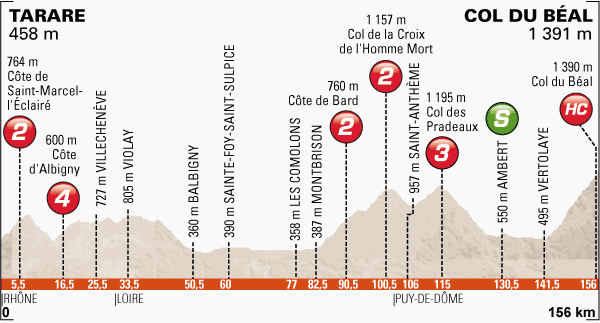
Stage 2: Tarare › Pays d’Olliergues-Col du Béal (156 km) – Things turn mountainous quickly with an HC-rated climb to close out the second stage.
Stage 2 guarantees that none of those riders who got out to an early lead on Day 1 can rest on their laurels: the 156 kilometer journey sets out from Tarare and crests five categorized climbs before one final ascent to the finish atop the Hors Categorie Col du Beal. 13.6 km at 6.6%, it’s not the hardest climb in the world but it’s certain to weed out pretenders before the race even enters its third day.
Stages 3 has some bumps, but with a long flat run in to the finish, it is unlikely to shake up the General Classification. Stage 4 rides on many of the same roads as Stage 16 of last year’s Tour de France (won from the break by Rui Costa). There is a challenging climb crested a little over 10km from the finish that might see GC attacks go clear.
Stage 5 is another hilly affair with a pair of Category 2 ascents in the final 50 km. Stage 6 is mostly flat, but it gets bumpy towards the end of the day, with a vicious little climb in the final few kilometers that could prove challenging for the sprinters.
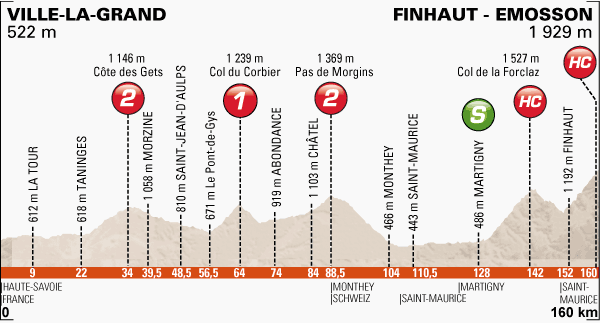
Stage 7: Ville-la-Grand › Finhaut-Emosson (160 km) – There is nowhere to hide on the final climb of the seventh stage, which has sections above 10%.
Stage 7 will pack quite a punch, challenging the riders with the Hors Categorie Col de la Forclaz (12.6 km at an 8.2% average) crested with 18 km to go, and then, after a short descent, another HC-rated climb to finish the day, 10.2 km at an 8% average, with a few extremely steep sections.
Things do not get much easier for Stage 8, which tosses in a pair of Cat. 1s to close out the day, and the Dauphine as a whole. The difficult conclusion ensures that nothing will be decided on GC until the very end of the race.
The overall route does not include any truly grueling ascents, but it is quite hilly, and the many days of ups and downs will certainly wear on the peloton, putting the climbers in the spotlight. Bonus seconds of 10-6-4 at the line will benefit the faster finishers. This year’s race includes far fewer time trial kilometers than recent editions have, which is likely to open things up a bit after recent domination from the chrono-loving Team Sky.
The General Classification Contenders
The startlist is stacked with talent (and it is important to note that it isn’t completely settled as of this writing), but there are two clear favorites for the overall victory. The first is Sky’s Chris Froome. Even with reduced time trial mileage, Froome is likely to excel in this race, as it is a very important part of his and his team’s program. After injury derailed the first few European races of his season, Froome got back on track in a major way at the Tour de Romandie, where he outclimbed almost everyone else and then won the time trial and with it, the General Classification.
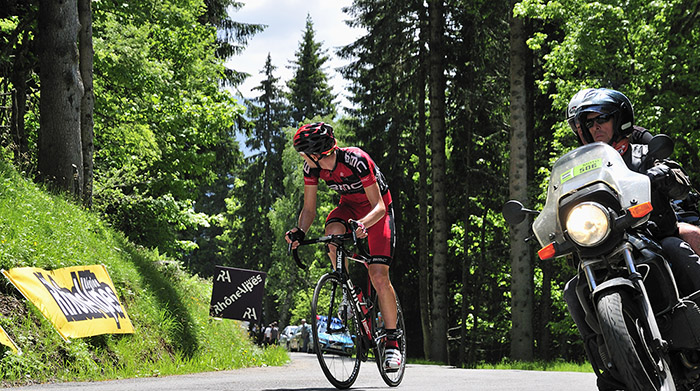
Chris Froome looks to be back in top shape after struggling with injury early in 2014.
The importance of this race to Froome’s 2014 campaign is obvious given the talent his team is sending to back his efforts: constant lieutenant Richie Porte, runner-up in last year’s race, will make the start, an elite talent at all levels who makes a viable second should his team leader suffer misfortune. Porte has had a difficult year as well, but on talent alone he has to be considered a secondary contender for the overall. Geraint Thomas is another all-round talent likely to contribute in a big way (also, watch out for him in the opening ITT). David Lopez and Mikel Nieve are two of Sky’s top mountain domestiques. The British squad is fully committed to winning the Dauphine for the fourth straight time as part of a strong statement in the run-up to Froome’s Tour defense, and with the star finally back from his ailments, it’s hard to see past Sky here.
Alberto Contador of Tinkoff-Saxo is the rider most likely to challenge the Sky juggernaut. Contador has put in some of the finest racing of his life in 2014, winning Tirreno-Adriatico and Pais Vasco and coming in 2nd in Catalunya, climbing at an otherworldly level in every mountain stage. He will have several opportunities to attack on this climber-centric parcours. Few will be able to match him if he has maintained the form he showed at the beginning of the year, though he has not raced for two months, making that a bit of a question mark. Further, in the past, Contador has not focused on this race as heavily as Sky has, and that may be the case again this year; the squad Tinkoff-Saxo sends to support him is not nearly as strong as Chris Froome’s. Chief lieutenant Roman Kreuziger, for instance, will be absent, taking on the Tour de Suisse instead. At Contador’s best and most focused, that might not matter (especially with the very steep Stage 7 on the program), but there are enough concerns that Contador is the second of my two favorites rather than the first.
Astana’s Vincenzo Nibali is third favorite with the bookmakers in this race (just as he is in the upcoming Tour de France), but he enters the Dauphine with a number of question marks. Obviously the aggressive winner of the 2013 Giro (and runner-up of the 2013 Vuelta) is a top climber who will love the profile. He also has an excellent supporting cast. However, he has not had the 2014 that he would have hoped for, starting out very slowly and only really showing flashes of his form in the Tour de Romandie, where he still settled for 5th despite being one of the major favorites. If he has managed to build on his form and has reached that top level he is capable of, he will challenge for the victory, but that is not a given. Astana has the excellent all-rounder Jakob Fuglsang to help in the mountains or to act as an alternative if necessary. He has a knack for finding himself Top 10s even when riding for Nibali.
Katusha’s Simon Spilak has had a very impressive 2014. Always a strong climber, the 27-year-old is coming into his own as a featured rider for his team, soaring to new heights on the slopes but also sporting an improved time trial. He will be the guy for Katusha at the Tour de France, making this an important opportunity for him to make a statement. With the form that won him a stage and 2nd overall in Romandie, Spilak (something of a specialist in these one-week races) is primed to challenge for the victory against the very biggest names in the sport. He’ll also have last year’s 3rd place finisher Daniel Moreno on his side. Though Moreno has just finished a grueling Grand Tour, he can’t be counted out either: Katusha needs to find some results after Purito’s rough exit from the Giro.
Tejay van Garderen was having a very strong 2014 (with a 2nd in the Tour of Oman behind Chris Froome and a stage victory and 3rd overall in Catalunya among his results) before abandoning the Tour de Romandie following a crash. He returned to the USA to recover and is now back in Europe prepping for the Tour, where he will be BMC’s sole leader for the first time. The TvG of years past may have been more of a time trial specialist, which would at first glance make this a less favorable Dauphine than he’s used to, but he was climbing at an elite level early in the year, suggesting a refocused approach. If he’s recovered completely from his crash, he should contend here, especially given recent statements that suggest he is taking this race very seriously.
Fellow American Andrew Talansky has had an okay 2014. He landed in the Top 10 in Catalunya and looked good in Romandie until a dropped chain on a tough climb ruined his chances for a strong result. Like van Garderen, Talansky seems to have focused on improving his climbing this year (possibly even at the expense of his top-notch time trial) which will be crucial in this Dauphine. He tends to perform well in short stage races, even against top talent, and he’ll have recent Giro Top 10 finisher Ryder Hesjedal for support.
AG2R sends a powerful 1-2 punch with Jean-Christophe Peraud and Romain Bardet. Peraud was excellent in the spring, landing a string of great results capped off by a Criterium International victory. He cooled off at Romandie but with some time to return to form he should be able to play a role here. Teammate Romain Bardet is a sharp climbing with an aggressive streak. He’s looked good this year and, unlike many of the other contenders, he won’t be coming in cold, as he has just completed the Bayern Rundfahrt. The strong AG2R duo should be able to land at least one rider in the Top 10.
OPQS wunderkind Michal Kwiatkowski returns to racing after some time off. As usual, it’s hard to know what to expect. He is one of the most versatile riders in the sport and he does not have an off-switch, so it seems likely that he’ll be going 100% on every stage, but the mountains will be a challenge. He will be one of the top contenders for the opening ITT, and bonus seconds favor his fast finish, so he will at least be in the conversation. Jan Bakelants is another all-round talent who could decide to make a bid for the overall.
Movistar’s Beñat Intxausti gets a rare opportunity to ride for his own ambitions, as Tour leader Alejandro Valverde is riding the Route de Sud instead. When given these chances, Intxausti does not usually disappoint, and he was one of the strongest on the slopes in the Tour de Romandie. Igor Anton and John Gadret will offer more options on the climbs. NetApp-Endura’s Leopold Konig has struggled with a knee injury in 2014, but he returned to racing at Bayern Rundfahrt and looked strong there. At his best, he’s a top climber who shouldn’t be underestimated. Maintaining a high level of form for so long is a lot to ask of Belkin’s Wilco Kelderman but he has been nothing if not surprising in 2014, and bonus seconds favor his very fast finish. Lampre’s Damiano Cunego also has some Giro mileage in his legs, but like Kelderman, he’ll enjoy the chance to fight for bonus seconds. OGE’s young Adam Yates will hope to continue his excellent year against this top competition. Europcar’s Tommy Voeckler has not produced the sort of results he tends to aim for, but it’s a good route for him. Lotto Belisol’s Jurgen Van Den Broeck finally returns to racing. It’s been a very rough year for the Belgian, who has been bothered by a knee injury, but this is a very important race for him to prove that he belongs in Lotto’s Tour squad. Cofidis’s Daniel Navarro and Rein Taaramae and Trek’s duo of veteran Haimar Zubeldia and up-and-comer Bob Jungels are other outsiders.
The Stagehunters
While the Tour’s biggest GC names are making the Dauphine start in preparation for July’s big race, many of the top sprinters are conspicuously absent. The parcours may have something to do with it, as there aren’t a lot of sprinting opportunities here. Trek’s Giacomo Nizzolo, coming off his strong Giro, and FDJ’s Arnaud Demare, who has racked up quite a collection of wins this year, headline the list. Both excel on similar terrain, so it will be an interesting battle between the two in the flat finishes. OPQS’s Gianni Meersman, BMC’s Thor Hushovd, OGE’s Leigh Howard, and Giant-Shimano’s Reinardt Janse van Rensburg will hope to challenge them.
The list of versatile, quick finisher types who thrive on the hilly profiles is impressive. OGE’s Simon Gerrans and Daryl Impey, FDJ’s Arthur Vichot, Lampre’s Filippo Pozzato, Lotto’s Tony Gallopin, Europcar’s Cyril Gautier, BMC’s Greg Van Avermaet, and OPQS’s Zdenek Stybar could battle with some of the fast-finishing GC riders (Michael Kwiatkowski especially) for the intermediate days, though they’ll have to keep an eye on solo artists like Trek’s Jens Voigt, Astana’s Lieuwe Westra, Belkin’s Lars Boom, IAM’s Sylvain Chavanel, and Garmin’s Ramunas Navardauskas.
VeloHuman Top 10 GC Favorites
Winner: Chris Froome Podium: Alberto Contador, Simon Spilak Other Top Contenders: Vincenzo Nibali, Tejay van Garderen, Andrew Talansky, Beñat Intxausti, Romain Bardet, Richie Porte, Jakob Fuglsang
I won’t be previewing individual stages, but as usual I’ll have plenty of picks and analysis at the still relatively new @VeloHuman on Twitter! Also, be sure to come back soon, as there are plenty of big things coming at VeloHuman: previews of the Tour de Suisse and every stage of the Tour de France, as well as interviews with some fast-rising young pros! Stay tuned.