Tag: WorldTour

  • Tour Down Under 2016 Preview

    Tour Down Under 2016 Preview

    16527099042_1aa23fcdf9_o

    The 2016 WorldTour kicks off this week in South Australia at the Tour Down Under. The race has delivered several hotly contested GC battles over the past few years (the last two editions were decided by two seconds or less) and a mostly familiar parcours and list of contenders should set up more of the same this year.

    The Route

    This year’s TDU is returning to several “traditional” — insofar as that word can be used to describe a race that has been around for 20 years — Tour Down Under spots, but the opening day covers new ground in the form of a sprinter’s stage to the town of Lyndoch.

    Stage 2 will take the peloton on undulating roads from Unley to Stirling, where a moderately uphill finish could see the GC stars fighting for bonus seconds. The finish at Stirling played a key role in Simon Gerrans’s 2014 victory; nabbing runner-up honors on the day earned him a few bonus seconds, which proved to be just enough for a one-second GC victory when all was said and done.

    Stage 3 sees the return of Corkscrew Hill after its absence from the race in 2015. The short but tough climb is followed by a descent into the finish line, which should set up some exciting racing.

    Stage 4 looks to be a day for the sprinters, though a few bumps near the finish line could make things interesting.

    A double ascent of Old Willunga hill awaits the peloton on Stage 5. It’s only three kilometers in length, but an average gradient over 7% makes gaps inevitable. It’s the last chance for the GC hopefuls to make their mark before a flat sixth and final stage in Adelaide.

    The General Classification Contenders

    Rohan Dennis took the surprise win last year in a tight battle against Richie Porte. This year, Porte joins Dennis at BMC, giving the red and black squad a formidable duo. It’s hard to say who will have the best shot this year—Porte always does well in this race even if he hasn’t won before, but he’s also going to be gunning for a Tour de France victory in 2016 and July is a long way away. Dennis seems more likely to have this race as a season target. In any case, both will be dangerous on home turf.

    But three-time winner Simon Gerrans may be even more dangerous. He’s not the strongest pure climber on the startlist but the short, punchy stuff at the TDU is his bread and butter. He’s also an excellent finisher. If he’s in shape after a tough, injury-riddled 2015, Gerrans will be hard to beat, especially with the likes of Michael Albasini and Daryl Impey lending a hand.

    Sky’s duo of Sergio Henao and Geraint Thomas packs a punch. Thomas was third overall in 2013, and is great on this sort of terrain. Henao doesn’t have much of a track record Down Under, but he’s an explosive climber who could surprise people in the fight for bonus seconds. As always, Sky can’t be overlooked.

    Lampre-Merida also brings a nice one-two punch, with former podium finisher Diego Ulissi (third overall in 2014, when he also won a stage) and new signee Louis Meintjes. Ulissi has the perfect skillset to contend in this race, with an excellent burst of speed on the short uphill drags. Meintjes will be a fine alternative, perhaps on better form than many in attendance with the South African national championships around the corner.

    Rubén Fernández was fifth in 2014 and leads a strong Movistar squad. He’s an exciting young talent with another year of experience under his belt and should be primed to take advantage of a rare chance to ride for himself at the WorldTour level. Katusha’s Rein Taaramae starred in several one-week races last year with Astana and will be keen to show off his talent for his new team. He’s smart racer who excels on a hilly parcours. Rafael Valls is another rider who will be looking to get his year with a new team (Lotto-Soudal) off to a good start.

    Former winner Cam Meyer and his Dimension Data teammate Nathan Haas and climbing specialist Domenico Pozzovivo of Ag2r-La Mondiale are others to watch. So are Ryder Hesjedal, Julián Arredondo, Luis León Sánchez, Patrick Bevin, Jarlinson Pantano, Cyril Gautier, and Moreno Moser.

    The Stagehunters

    Australia’s Caleb Ewan will hope to thrill the home crowd on the flat stages, and I wouldn’t bet against him to pick up at least one stage for Orica-GreenEdge. His main rivals in the sprints will be Trek’s Giacomo Nizzolo, Cannondale’s Wouter Wippert, Movistar’s Juan Jose Lobato, and IAM’s underrated Matteo Pelucchi.

    The always-aggressive Jack Bobridge warrants a special mention as a breakaway specialist worth keeping an eye on—now sporting a green and gold jersey after a brilliant solo ride at the Aussie National Championships last week, Bobridge will almost certainly be on the lookout for opportunities to get clear of the pack and do his own thing up the road, just as he did in 2015 when he took the opening stage of the race.

    VeloHuman Top 10 GC Favorites

    Winner: Simon Gerrans
    Podium: Rohan Dennis, Richie Porte
    Other Top Contenders: Diego Ulissi, Sergio Henao, Geraint Thomas, Rubén Fernández, Rein Taaramae, Rafael Valls, Julián Arredondo

    Be sure to catch the latest Recon Ride for more pre-race thoughts on the 2016 Tour Down Under!

    Photo by Brian Townsley (CC).
  • Il Lombardia 2015 Preview

    Il Lombardia 2015 Preview

    13040039095_3de4dd381a_k

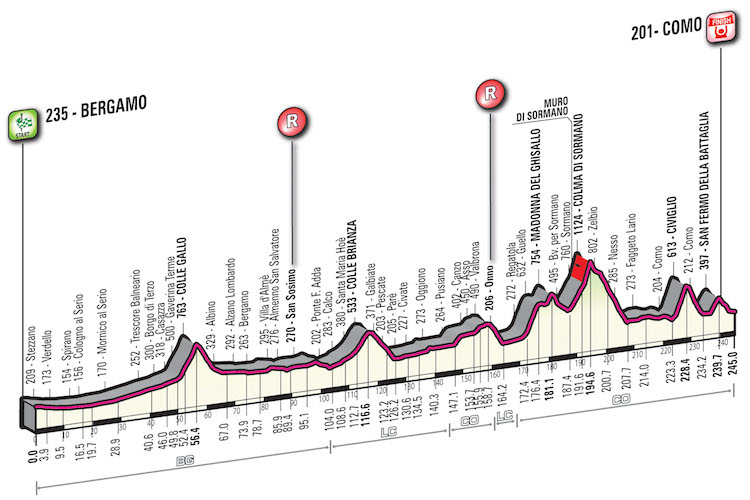
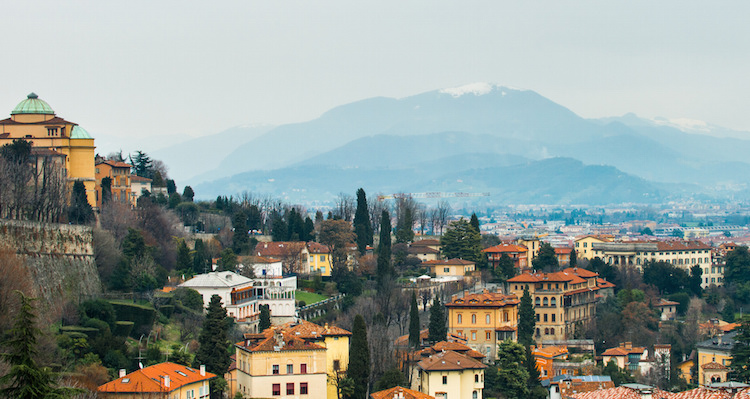
    Il Lombardia, the final race of the 2015 WorldTour, kicks of Sunday in Bergamo, Italy. 245 kilometers of up and down in Italy’s Lombardy region, Il Lombardia (formerly known as the Giro di Lombardia) is the last of the five Monument Classics on the cycling calendar. The organizers have tinkered with the profile over the course of the last few years, but a unique Northern Italian character, incredible lakeside scenery, and thrilling finishes are constant features in Il Lombardia, making it a great event to close out the season in style.

    Be sure to check out the latest Recon Ride powered by VeloNews, with special insight from cycling expert and Lombardy local Gregor Brown, for more on what makes Il Lombardia stand out as a legendary bike race.

    The Route

    Il Lombardia gets progressively harder as the day goes on. After leaving Bergamo, the peloton will enjoy nearly 50km of flat before the road angles upward for the Colle Gallo, 7.4km at 6%. After a descent it’s another mostly flat stretch for nearly 50km once again before the long, low-gradient Colle Brianza. Another downhill leads to another flat stretch before things get a bit lumpier in the run-up to a very difficult pairing of climbs: the Madonna del Ghisallo and the Colma di Sormano.

    The challenging profile of Il Lombardia makes it an excellent opportunity for the climbing specialists to take a big one-day win.
    The challenging profile of Il Lombardia makes it an excellent opportunity for the climbing specialists to take a big one-day win.

    Ghisallo is an irregular climb whose average gradient doesn’t really tell the whole story. All told it’s 8.6km at an average grade of 6.2%, but it’s really a three-part climb, starting out with about 3.5km at around 9%, flattening out (even running downhill for a bit) for 4km or so, and then kicking up again at nearly 10% for the rest of the way to the top. Unfortunately for the riders, there won’t be much of a chance to rest after the climb is crested—a fast descent leads into the foot of the brutal Colma di Sormano (with a particularly challenging stretch known as the Muro di Sormano).

    The climb opens with a little over 5km at 6.6%. Then things suddenly get extremely difficult. The final 1.9km have an average gradient of 15.8%, with one stretch at over 25%, which will undoubtedly see many riders dropped off the back. At least the view is nice.

    As hard as the Ghisallo-Sormano combo is, the race is far from over after the pack crests the latter, as there are still about 50 kilometers left to race. From the top of the Sormano it’s a tricky descent into a flat section of about 15km, where we can expect things to get very cagey as riders jockey for position for the finale.

    With a little over 21km to go the riders will hit the foot of the Civiglio, 4.2km at a vicious 9.7%. It’s consistently steep the whole way up. Then comes a very steep descent that runs into the foot of the final climb of the race, the San Fermo della Battaglia, 2.7km at 7.2%. Expect plenty of action here if the race isn’t blown to pieces already. Once the riders go over the summit, it’s a little over 3km downhill and then just 1.5km of flat to the finish line in Como.

    The Contenders

    This year’s route strongly favors the explosive climbing stars. A fast finish will be useful in case a small group comes to the line together, but the finale will make it very hard for riders to sit in and hold out for a big sprint. The pack will be thinned out after so much climbing, and a pair of steep launching pads in the last 20km will provide the aggressive riders with plenty of space to go on the move. Some technical descents will further favor the attackers. Those descents could get even more technical with a chance of some rain on Sunday—rain is as much a classic feature of Il Lombardia as the scenery along Lake Como, and it figures to at least play a part this year.

    Alejandro Valverde’s combination of elite climbing legs, strong descending skills, Classics grit, and an excellent sprint make him an obvious entrant in the favorites conversation. Although he’s never won the race, he has been the runner-up for two years in a row now. 5th in the World Championship Road Race, he’s still in-shape even at the end of a very long season, and this is a race he’s been trying to win for a little while now. Giovanni Visconti makes for an strong second. For me, the big question mark next to Valverde’s name is whether he will be aggressive enough to take the victory—I don’t think he can take his usual approach (staying in the wheels for a reduced sprint) into this race and expect to win, with a finale so well-tailored to a do-or-die attack.

    One rider who probably won’t hesitate to launch an all-or-nothing strike is Vincenzo Nibali. It’s been a down year for Nibali, and he’s never managed to take the big one-day victory he has long sought (other than Plouay back in 2006), but he’s in great form right now and this course suits him perfectly. Nibali is not a good sprinter, meaning that he’ll need to drop everyone and win this thing solo, but the gradients on the final climbs and the tricky descents that follow should give him plenty of chances to do that. Fabio Aru, Diego Rosa, and Mikel Landa are other strong options for a stacked Astana squad.

    Dan Martin won Il Lombardia in 2014, but he’s only just returned to racing after a shoulder injury knocked him out of the Vuelta, which could hurt his chances of repeating. Still, this course suits him as well as ever (of his six career participations, he’s finished in the Top 10 four times in this race) and an encouraging showing in Milano-Torino (he was 14th) suggests that he’s already back in shape to contend. Tom-Jelte Slagter is a great alternative for Cannondale-Garmin if Dan Martin isn’t at 100%.

    Speaking of past winners, Joaquím Rodríguez won Il Lombardia in 2012 and 2013, but he’s a late scratch this year after hurting his knee in training. Daniel Moreno will attempt to take up the flag for Katusha, and he’s not a rider to be underestimated.

    Philippe Gilbert is certainly not the rider he was back when he took the win here in 2010, but he’s looked pretty strong this year and appears to be in decent late-season form. The finale suits him well, if he can make it all the way over the tough climbs. Samuel Sánchez will be a fine second. Greg Van Avermaet was originally going to ride this race as well, but he withdrew from the startlist upon returning from Richmond a bit jet-lagged.

    Rui Costa was 3rd in 2014 and I expect him to contend for the win this year. He tends to attract less attention than he maybe should given his excellent array of abilities, and I think that could come in particularly handy on this profile. I wouldn’t be surprised if the peloton let him jump clear on one of the final two climbs only to see him hold out all the way to the line. Diego Ulissi is a nice backup option for Lampre-Merida.

    Tim Wellens has had his sights set on improving last season’s 4th place all year long. This profile will really put him to the test, but like Costa and Nibali, he’s not afraid to go all-in on an attack, and he often gets a bit more breathing room than maybe he should (as was the case when his two-man move in the GP Montréal managed to go the distance). Tony Gallopin will also be on the limit on this course but will be a huge threat if he holds out to the finish.

    AG2R sends a powerhouse team to Il Lombardia, with Domenico Pozzovivo, Romain Bardet, and Alexis Vuillermoz all capable of being in the mix. The French outfit isn’t well-known for its one-day prowess but Pozzovivo and Bardet in particular have had a few nice showings in Liège-Bastogne-Liège and this route should be even better for them. On the other side of the French team coin is FDJ, a squad sending only one strong contender this race in Thibaut Pinot, a rider who doesn’t have anything to speak of in the realm one-day results—but who is in good shape right now.

    Rafal Majka was 3rd here back in 2013 and looks to be strong right now. Michal Kwiatkowski is also showing great end-of-year form for Etixx-QuickStep, and he hasn’t done much historically in this race, the profile should suit him. Orica-GreenEdge sends a team full of options: Adam and Simon Yates, Esteban Chaves, Simon Gerrans, and Michael Albasini will all have a chance here. Expect OGE to try to stick a rider in every legitimate move. Trek has Bauke Mollema, Julián Arredondo, and Fränk Schleck. LottoNL-Jumbo’s Robert Gesink and Wilco Kelderman are worth watching. Former three-time winner Damiano Cunego, Sergio Henao, Wout Poels, Davide Rebellin, Rodolfo Torres, Warren Barguil, and Tom Dumoulin are other riders who could be in the mix.

    VeloHuman Top 10 Race Favorites

    Winner: Vincenzo Nibali
    Podium: Alejandro Valverde, Rui Costa
    Other Top Contenders: Dan Martin, Tim Wellens, Rafal Majka, Philippe Gilbert, Domenico Pozzovivo, Thibaut Pinot, Daniel Moreno

    As the last WorldTour race of the season, Il Lombardia is also the last event that VeloHuman will preview in 2015. I hope you’ve enjoyed the year as much as I have! Follow @VeloHuman on Twitter to stay up-to-date with the cycling world through the cold, dark offseason. The Tour Down Under will be here before you know it!

  • The Recon Ride Powered by VeloNews: Il Lombardia 2015 Pre-race Show

    The Recon Ride Powered by VeloNews: Il Lombardia 2015 Pre-race Show

    5040947212_2897bf425c_b

    The Recon Ride joins forces with VeloNews once again, this time to preview the route and the favorites of Il Lombardia — also known as the Giro di Lombardia, the Tour of Lombardy, or even The Race of the Falling Leaves — the final WorldTour event of 2015.

    Give it a listen!

    Photo by Neil Hunt (CC).

  • Grand Prix Cycliste de Montréal 2015 Preview

    Grand Prix Cycliste de Montréal 2015 Preview

    eCS26gb

    After Rigoberto Urán delivered a surprise win in Québec, the racing moves on the Montréal. A slightly hillier course could favor the attackers even more, which will make predicting an already unpredictable race quite a challenge!

    The Route

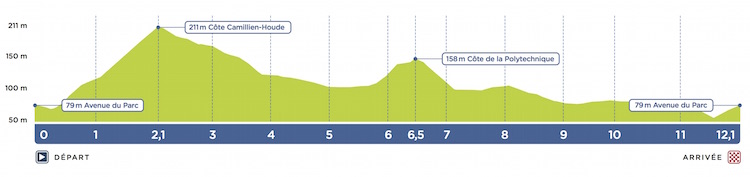
    The Grand Prix Cycliste de Montréal takes on 17 laps of a 12.1km circuit for a total distance of 205.7 kilometers. The race starts along the Avenue du Parc, makes a loop along the slopes of Mount Royal, and then finishes back where it started.

    GPC_MTL_PARCOURS_FR

    There are three uphill sections in each lap. After a short downhill from the starting line, the first and most difficult climb comes almost immediately: the Côte Camillien-Houde, 1.8 kilometers at an 8% average gradient. From the top, there is a fast descent, a brief flat section, and the next uphill test, the short but difficult Côte de la Polytechnique, 780 meters at a 6% average. There is a particularly steep 200m section of about 11% along the way. After another descent, things even out for a bit until the final 1100 meters: the riders will make a right turn heading south and shoot downhill on the Avenue du Parc, and then they will make a 180 degree turn to head right back up the Avenue in the other direction towards the finish. That final run-in is a 560m, 4% climb.

    The Contenders

    While the startlists are the same and many of the top contenders are the same, the Montréal circuit is, on the whole, harder than that of the GP Québec. “The two are different,” Rui Costa told VeloHuman from Québec. “Montreal is a race that I think is harder, and more open.”

    The Côte Camillien-Houde, crested 17 times, will put the heavier riders into serious difficulty and will likely see a smaller group coming into the final few laps than the peloton in Montréal. An attack on the 8% gradients has a decent chance of holding out over the final few up and down kilometers. The finish in Montreal, however, is a fair bit easier, which means that a select group of escapees could find themselves battling it out in a sprint. Orica-GreenEdge kept the race on lockdown last year, allowing a sizable bunch to finish together, but that was rather unusual for this race, and I’d expect a more select group to battle for the win this time around. Whatever the scenario, explosiveness and excellent climbing legs are important.

    It was not a real shocker to see an Etix-QuickStep rider take the win in Québec, given all the firepower they have, though Rigoberto Urán seemed like maybe the fourth best option on his team! In any case, EQS will have another excellent opportunity to nab the win in Montréal. Julian Alaphilippe looked strong in an escape attempt that was ultimately reeled in in Québec, and Michal Kwiatkowski looked particularly impressive chasing down Greg Van Avermaet. Despite Urán’s victory, I still see Alaphilippe and Kwiatkowski as the top EQS riders for Montréal, as Urán won’t be taking anyone by surprise this time; in fact, I’d be just as surprised if he won Montréal now that he’s no longer under the radar. Still, watch out for the Colombian: he’s got all the right skills for these races, and although he’s basically taken a two-year hiatus from contending in the Classics, there was a time when he was a top rider for the Ardennes and in Lombardy—and apparently still has those skills hiding under the hood.

    Rui Costa has won in Montréal in the past and was runner-up in 2014. Without Simon Gerrans around, I like his chances this year. He looks to be in good form. The biggest question is team leadership. Costa made it into the select group that appeared to have their shot at fighting for the Québec win before hesitation allowed the larger pack to catch back up, but then Lampre-Merida backed Diego Ulissi in the final sprint. The Italian could be a strong contender in Montréal as well. Both riders are great climbers with explosive side, and my first instinct is to see Costa as the man for Montréal given his past performances, but Lampre might not see it that way, which makes it harder to view Costa as an out-and-out favorite.

    For most of the day in Québec, BMC looked to be the strongest team in the race, contributing to the chase of the early break and then involving themselves in one attack after another. It didn’t work out in the end, but it showed the team’s strength and that bodes well for Greg Van Avermaet and Philippe Gilbert in Montréal. The selective profile will weed out some of the purer sprinters, but the less difficult finish will provide an excellent opportunity for both riders, who can rely on their impressive uphill speed, with a shot in a reduced sprint. I’m not sure either one is at full strength just yet with Worlds as such a major goal, but they’ll be close to their best. I like Van Avermaet a bit more than Gilbert, as he’s been coming to the GP Montréal for so many years running now, but both are contenders.

    Tony Gallopin, 3rd last year, showed good form with an 8th place in Québec. The way I see it, Montréal suits him better. He’s a excellent tactician who knows how to make an attack, and he has the fast finish to win out of a small group. He appears to be in terrific form as well. He was in the small group that made it up the Côte de la Montagne at the head of the race in Québec, and still managed to come in 8th in the final sprint after that group was swept up (Van Avermaet, also in that small group initially, could only manage 10th despite being near the front in the finale). In a wide-open race, I like Gallopin’s chances to turn last year’s third-place result into a win. If he doesn’t, Tim Wellens, Jurgen Roelandts, and Tiesj Benoot are other options for a loaded Lotto-Soudal.

    Michael Matthews was the runner-up in Québec and he’ll have a shot in Montréal, but I see the parcours as being just a bit too difficult to view him near the top of the favorites (oddsmakers disagree with me on this one). In any case, if Matthews is not able to handle the climbs, it shouldn’t be too much of a problem for OGE, who have Adam Yates (on blazing form at the moment), Simon Yates, and Michael Albasini too.

    Tom-Jelte Slagter is in the best form he’s been in all season. He was 4th in Québec, and although he’s had better results there in the past, I think Montréal suits him well too. He can handle tough climbs without too much trouble. Slagter isn’t going to Worlds, having suddenly found his form after the Dutch team selection, and I therefore expect he’ll be giving it everything he has to pull something off in Montréal. Ramunas Navardauskas and Ryder Hesjedal are other options for Cannondale-Garmin.

    Lars Petter Nordhaug won here in 2012 and count be counted out. Trek’s Bauke Mollema and Fabio Felline make for a great 1-2 punch. The same is true for Giant-Alpecin’s Simon Geschke and Warren Barguil. Europcar has Tommy Voeckler, while FDJ can rely on Arthur Vichot. AG2R is the French squad with the widest array of options: Romain Bardet, Alexis Vuillermoz, and Jan Bakelants are all potential contenders. I was very impressed with LottoNL-Jumbo in Québec, and see Robert Gesink and Wilco Kelderman liking this parcours even more—Sep Vanmarcke is another option for the men in yellow.

    Alexander Kristoff was surprisingly in the mix in Québec but it’s hard to see him holding on over the more challenging GP Montréal parcours. Hesitation at the head of the race late on in Québec helped his chances but I doubt he’ll get that kind of gift again, though obviously he’ll be a favorite if he’s there for a sprint.

    VeloHuman Top 10 Race Favorites

    Winner: Tony Gallopin
    Podium: Rui Costa, Tom-Jelte Slagter
    Other Top Contenders: Greg Van Avermaet, Michal Kwiatkowski, Philippe Gilbert, Julian Alaphilippe, Michael Matthews, Diego Ulissi, Bauke Mollema

    VeloHuman will be at the race so be sure to follow @VeloHuman on Twitter for more analysis!

  • Vuelta a España 2015: Stage 21 Preview

    Vuelta a España 2015: Stage 21 Preview

    PROFIL21

    Stage 21: Alcalá de Henares › Madrid – 98.8km

    On the heels of a thrilling Stage 20 that turned the Vuelta upside-down comes the final stage, very likely to end in a straightforward sprint.

    Less than a hundred kilometers long and without any real climbs, the final stage of the Vuelta won’t be particularly hard. The main challenge will be the urban roads—after about 40km riding through the suburbs, the peloton will ride into a city circuit for 10 5.8km laps, and there are plenty of twists and turns in store.

    Given the profile, a sprint is the likeliest scenario. A few of the quick men have stayed on in the race through the mountains for this opportunity, and they’re likely to put their teams on the front to keep things under control.

    John Degenkolb has endured a long and challenging Vuelta without a stage win, but he should be the clear top dog among the sprinters left in the race. In terms of top speed, he’s the proven name here. However, Degenkolb has not been nearly as dominant as expected against a diminished field here, and while I still see him as the favorite, others will have their shot.

    Danny Van Poppel is probably the strongest potential challenger to Degenkolb. Trek has had a great Vuelta and the team is highly motivated in the battle for stage wins. While Degenkolb has the edge over most riders here on pure speed, Van Poppel actually comes pretty close, and if he can win the battle for position he’s got a shot at a second Vuelta stage win.

    Kristian Sbaragli won a messy Stage 10 to show off his sprinting chops and should be in the mix again on Stage 21. It’s likely to be a pretty hectic finale with all the cornering to be done, and that could help Sbaragli take another win over riders who might be faster in a test of pure speed.

    José Joaquín Rojas, Max Richeze, Daniele Bennati, Tosh Van Der Sande, Tom Van Asbroeck, and Jean-Pierre Drucker are the outsiders with a shot in the likely sprint finish.

    Of course, a late attack by the likes of Adam Hansen or Sylvain Chavanel can’t be ruled out: it’s been a long Vuelta and it’s possible someone could catch the sprinters’ teams off guard on a circuit that is technical enough to make things interesting.

    VeloHuman Stage 21 Favorites

    1. John Degenkolb | 2. Danny Van Poppel | 3. Kristian Sbaragli

    The final stage of the Vuelta marks the 63rd and final Grand Tour stage preview from VeloHuman this season. Hopefully you’ve enjoyed all the action! Be sure to keep an eye out for the next few episodes of the Recon Ride podcast and for pre-race thoughts on the last few events of the season, and follow @VeloHuman for more analysis.

  • Vuelta a España 2015: Stage 20 Preview

    Vuelta a España 2015: Stage 20 Preview

    PROFIL

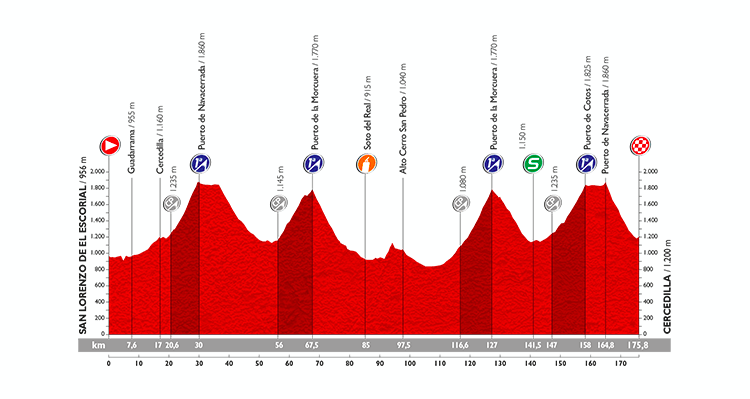
    San Lorenzo de El Escorial › Cercedilla – 175.8km

    Stage 20 will almost certainly be the final stage of the Vuelta with GC implications, and fortunately for anyone hoping for a close fight, the profile should set up a thriller.

    The road from start in San Lorenzo de El Escorial to the finish in Cercedilla won’t be easy, with four Cat. 1s along the way. The road goes upward right from the start, gradually rising into the foot of the Puerto de Navacerrada, 9.4km at 6.6%. Then comes a flat section and then descent to the foot of the Puero de la Morcuera, 11.5km at 5.4%. It’s a grand chance to get acclimated to the climb: from the top, the riders will descend down to a flat stretch before circling back around and going right back up again, albeit on a partially different route for 10.4 total kilometers of climbing at 6.6%. One more downhill leads into the last official climb of the 2015 Vuelta.

    11km at 5.3%, the Puerto de Cotos is challenging by itself but it’s really the incessant nature of the climbing on Stage 20 that will do the most damage. The gradients on the final climb aren’t that steep.

    After the KOM summit, there’s a 7km flat section before a descent to the finish, where the road kicks up again in the final moment for 200 meters at almost 10%.

    As the last mountain stage in the Vuelta, Stage 20 will be a critical opportunity for the GC riders to change their fortunes before Madrid. Even without a summit finish, the motivation should be there for the top riders in the race to make this a challenging day. The up-and-down profile does make for an appealing route for the breakaway, though, and the riders up the road early will at least have some chance at success if the GC favorites hold off on any serious hostilities until late in the day.

    If the GC men are the ones vying for the stage, Alejandro Valverde is the prime pick for the stage victory. His skillset is perfect for Stage 20, where the climbs might not be hard enough to blow up the group of overall favorites before the finish. Valverde is also highly motivated to nab a result now that he’s feeling good again after a few off days.

    Joaquím Rodríguez is an obvious candidate as well with this finish, though Daniel Moreno is also looking strong. Moreno may be an even stronger candidate for victory right now, and Katusha does not appear to be afraid to let Purito’s loyal lieutenant strike out on his own every once in a while.

    Fabio Aru will certainly try to distance Tom Dumoulin on this stage, and while I was under the belief a few days ago that he’d be successful, I’m not so sure after Aru’s crash on Stage 19. He looks to be a bit worse for the wear. What’s more, Tom Dumoulin has a lot of pop and could shine in this finish if he can make it over all the climbs with the leaders. He can’t be counted out for the stage victory.

    Esteban Chaves, Rafal Majka, and Nairo Quintana are all showing strong enough form, and are all far enough behind Dumoulin, that it wouldn’t be all that surprising if any of them launched a stage-winning attack on the final categorized climb.

    For riders who will be candidates for breakaway success, look to the strongest of the riders who have been consistently involved in the battle to make it into the early move. Romain Sicard, Nicolas Roche, Rodolfo Torres, Alessandro De Marchi, Darwin Atapuma, Rubén Plaza, and Giovanni Visconti are all on the long list of potential winners from afar.

    VeloHuman Stage 20 Favorites

    1. Alejandro Valverde | 2. Daniel Moreno | 3. Joaquím Rodríguez

    Don’t miss the Recon Ride’s third and final Vuelta podcast, and be sure to follow @VeloHuman on Twitter for more race analysis. The preview of the next stage will be up after the conclusion of Stage 20.