Tag: WorldTour

  • Janez Brajkovic Happy with Chance to “Start All Over” in New Environment with UnitedHealthcare, Confident in Ability to Contend for GC Results

    Janez Brajkovic Happy with Chance to “Start All Over” in New Environment with UnitedHealthcare, Confident in Ability to Contend for GC Results

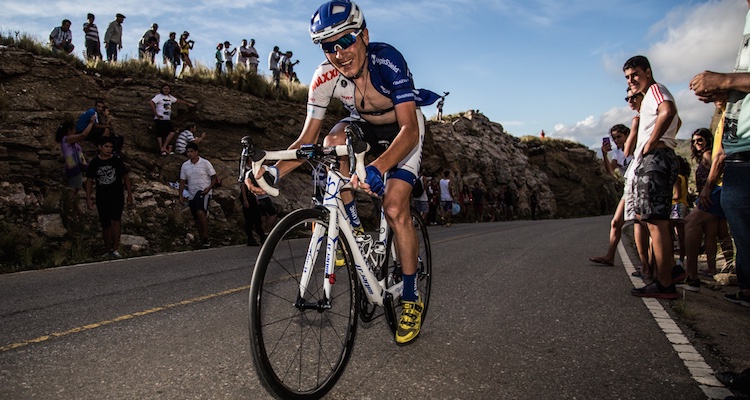
    Janez Brajkovic Tour de San Luis

    Back in 2012, Janez Brajkovič began his second stint at Astana with a bang, nabbing a stage win in the Volta a Catalunya and Top 10s in the Tour de Romandie and Critérium du Dauphiné before picking up an overall win in the Tour de Slovénie and then taking one the biggest results of his career, 9th overall in the Tour de France. It was a big year for the Slovenian all-rounder, 28 years old at the time, but in the two seasons that followed, Brajkovič spent more and more time playing a support role for the Kazakh outfit, as the likes of Vincenzo Nibali and Fabio Aru rose to the fore within the team.

    At the end of the 2014 season, with his Astana contract expiring, Brajkovič found himself back on the open market, but he was not without a plan. Having spent a good part of his career riding for American teams, he was hoping to return to that familiar atmosphere, and, as it turned out, there was an American team looking to add a few major talents with high-level racing experience to its roster. Brajkovič signed a two-year deal with UnitedHealthcare in October, and with the agreement in place, the team suddenly found itself with a veteran GC rider for the stage races on its calendar, and Brajkovič suddenly found himself back in a leadership role. It didn’t take long for him to get comfortable with his new surroundings.

    “I think I settled in already in December,” Brajkovič told VeloHuman. “It’s just the right fit for me. I get along with everybody. The way I think and others think are pretty much the same. We’re a good group of guys, and also the staff and the management, they’re so awesome. I feel really happy to be here. Happy to be here on this team, and I think this team will continue to grow, and I’ll be a part of this team growing, and hopefully in a year or two we’ll be on a higher level, racing ProTour, with the best teams in the world.”

    Currently at the Pro Continental level, UnitedHealthcare made a concerted effort over the offseason to add firepower to the roster, bringing in Brajkovič as well as versatile Italians Marco Canola and Daniele Ratto, from Bardiani-CSF and Cannondale, respectively. For Brajkovič, the opportunity for a fresh start on a team with similar values was a major draw.

    “I know for myself, last year in August, it was pretty clear I was not going to stay at Astana, and what I wanted was to sign for an American team. . . . Actually I wanted to sign with UnitedHealthcare, that was the team I thought would be the best for me, just to go back and start all over again, and I think it was a good choice, and I’m happy here,” Brajkovič said. “I’m happy to be racing again, and that’s one of the most important things for myself because even if you have good condition, coming to the race and being depressed is not going to get you results.”

    An English-language environment played a significant role in giving Brajkovič an immediate morale boost after a few difficult years at Astana.

    “Obviously in Astana there was a language barrier. And this American mentality suits me very well. Spending a lot of time in America is also something I like and so far it’s been great,” he said.

    His preparation for the major goals of 2015 is coming around now, but the offseason wasn’t perfect for Brajkovič.

    “Actually . . . it was a pretty hard offseason. The weather was pretty bad all the time [in Slovenia where he spent time in December]. Training hasn’t been as I would like it to be, but the training I’ve done, I’m pretty happy with the result. I know that there is a lot of reserves still, and once I start training seriously for Tour of California, and also I think Critérium [International] is a pretty important race for us, I think there’s going to be a lot of improvement as well,” he said.

    Decent climbing results in the Tour de San Luis would suggest that his form is trending in the right direction, and Brajkovič is hoping that he’ll be closer to his peak by the time the aforementioned Critérium International and Tour of California arrive. The 2.HC events are major objectives for the American squad this season. Having brought on a few big European names over the winter, there was hope among the team that an invite to this year’s Giro d’Italia might be possible as well, but the race organizers opted to look elsewhere for wildcard invites. While it wasn’t an ideal turn of events, Brajkovič notes that UHC will have their hands full as it is.

    “For UnitedHealthcare it’s pretty important to have a result in the Tour of California as well. And yeah, it would be nice to race the Giro but then for the Giro you have to have a team, and that would leave Tour of California with . . . I wouldn’t say bad riders, but probably not the best possible combination of riders, not the best team. So I think we just have to focus on Tour of California and race well there. I think that’s the goal for now, and hopefully we’ll get a Vuelta invitation,” he explained.

    The USA Pro Challenge and the Tour of Utah are also in Brajkovič’s sights this season, though he is hoping to lead the team in Spain if a wildcard invite to the Vuelta is indeed in the cards, a possibility that will be more likely if the team can deliver results in stage races in the spring and early summer. For the one-week races in particular, podium performances are both the aim and also the expectation for Brajkovič. And although he has only one GC Top 10 result in his palmares over the last two seasons (he was 3rd in the 2014 Vuelta a Burgos), he remains confident that he still possesses the all-rounder skillset necessary to compete as a featured rider at the highest level in the major stage races on the UnitedHealthcare calendar.

    “I still think—actually, I know—that I can race for GC, and that’s the focus. For me, and for the team as well,” he said.

    After spending some time playing a support role with Astana, one might expect Brajkovič to feel a bit nervous about carrying the weight of his own and the team’s hopes for the season, but he isn’t showing any signs of that right now, with the positive outlook from joining a new, more comfortable environment taking some of the stress out of his return to the role of team GC leader.

    “I don’t feel like a team leader,” Brajkovič said. “We’re like a bunch of guys who get along really well. And yeah, they help me a lot, and it’s amazing to see what they do for me, how much energy they spend for me, so I’m really grateful for that. And pretty soon, I think, we’ll start getting those results we need. But I don’t feel any pressure. Of course there’s expectations but I think if I stay healthy and everything goes to plan, we’ll have results as well, so there’s nothing to be worried about.”

    -Dane Cash

    Photo by Maximiliano Blanco.

  • Thomas De Gendt Recalibrating Focus with New Team Lotto Soudal, Aiming for Breakaway and Time Trial Victories over GC Results for Now

    Thomas De Gendt Recalibrating Focus with New Team Lotto Soudal, Aiming for Breakaway and Time Trial Victories over GC Results for Now

    Thomas De Gendt 2015

    Thomas De Gendt is sporting a new kit this season, riding in the red of Lotto Soudal after signing a two-year agreement with the squad at the end of his one-year deal with Omega Pharma-Quick Step last season. Joining a new organization two years in a row (De Gendt started with OPQS after Vacansoleil folded following the 2013 season) is never easy, but De Gendt knew that Lotto Soudal might be a place where he could be able to get comfortable with a new environment quickly. Finding his comfort zone will likely help De Gendt in his mission to return to winning ways after two years with fewer big results than he would have liked, and signing with a team based in and mostly staffed with riders from Belgium, a team that shares his own style, was one way for De Gendt to ensure that he’d be riding in his element this coming season.

    “For a Belgian guy, it’s important to have a team where you can feel at home,” De Gendt told VeloHuman by phone while taking a day off from early-season training. “So for me, it’s nice to be in a team where they speak my own language. It’s not a problem to be in a foreign team, but in a Belgian team it’s nice. It feels more like home. And the team tactics of Lotto Soudal suit me more than the tactics that we had at Quick Step. It’s more of an attacking style that they have, which fits me more than other tactics.”

    An offseason with the team seems to have given De Gendt a chance to settle in and enjoy the atmosphere.

    “A lot of the teammates I have now, we already rode together in other teams in the younger categories, so a lot of guys I knew already from before. So, because we are a young group and we all speak the same language, it’s nice to be together and it feels a little bit like when I went to school, joking around; we are still serious about our job but besides the job we are joking around and sending messages to each other, so we are not only colleagues, we are also friends, and that’s important in a team,” De Gendt said.

    The positive environment should prove beneficial to De Gendt’s continued development, especially as he has begun to recalibrate his own expectations and personal goals for this season and beyond. A talented all-rounder throughout his early years as a pro, in 2012 (at age 25), De Gendt stormed to 3rd overall in the Giro d’Italia, staying within range of the podium through the first two weeks and then nabbing a breakaway stage victory and a Top 5 ITT performance in the final two days of the race to clinch the deal. Such a strong result in one of the sport’s biggest events set him up for a world of GC expectations in the seasons to come, but De Gendt has not been able to replicate that success in the past two years. While he has put in a few nice performances in breakaways and time trials in major races since then, the General Classification results have not materialized. Now 28, De Gendt is adjusting his focus as a rider, tailoring his objectives to the skills in which he feels most confident, and planning accordingly for the future.

    “I’m not going to try to do the GCs anymore for the moment, but it all depends on how you feel in the races. If you start the Giro and you have really good legs in the first week, then it’s stupid to throw it away with a long breakaway, but I know it’s very difficult to even be in the Top 10 after two weeks. It’s not so that I am one of the biggest climbers in the peloton, so maybe it’s better for me to not focus on the GC, but more on the stage wins,” De Gendt explained. “If I have a really good legs in one of the Grand Tours, then maybe I can do the GC again but it’s not in my goals for the moment.”

    Instead, De Gendt has his sights set on finding opportunities to put his formidable solo engine on display.

    “Breakaways, stage wins—if it’s possible to win a mountain stage, I will do my best to try to do it—but breakaways and the time trials are for me the most important thing at this moment. I can’t say what it will be in half a year, so I will try to do my best in training, and then I will see in half a year or next year how I’ve developed again,” he said.

    With stage victories now at the forefront of his list of objectives, De Gendt aimed to improve a variety of skills during the offseason with his new squad and new teammates.

    “We focused on my climbing skills, for as far as we can do it in Belgium. We tried to do the trainings on the climbs—not the same as you can do on the high altitude, but still, we tried. And we also tried to be more explosive. But now we do a lot more hours than the year before, and I think that’s the main thing we focused on, to do more hours,” he said.

    De Gendt’s first race in Lotto Soudal kit was January’s Tour Down Under, where he spent a long day in a breakaway and notched a respectable performance on Willunga Hill as well. He did not land any major results in Australia, but De Gendt was able to find positives coming back from the offseason: “I’ve had worse years than this year in the Tour Down Under. It’s not that I have the super form at this moment but for January it’s okay. I’d hoped it would be a little bit better, but then the stage to Willunga Hill, I was still 19th, so for me that’s a good result generally.”

    De Gendt’s racing calendar for 2015 is still up-in-the-air, with further clarity likely to come as springtime racing gets underway.

    “I think I’ll do Paris-Nice, but then after that it’s difficult to say because we don’t have a big program. They took out some races so I think they’ll wait until Paris-Nice so they can see from the other riders on the team who is the best, and then they’ll send the best riders to the WorldTour races and the other riders to the smaller races,” De Gendt said. “I hope I can do a Grand Tour. For me, I don’t have a favorite, so for me it’s the same, whichever one I can go to.”

    With Lotto Soudal making startlist decisions based on how their riders are performing compared to expectations, De Gendt clarified that for him, the hope is that he can a return to a level of performance and a style of riding that he exhibited earlier in his career.

    “I think they want me to be the same rider as I was in 2011, the more aggressive rider that attacked a lot and took the stage wins in this way. So that’s I think the way they see me riding again, and I hope to do like they expect me to do. Attacking and being aggressive in the races, I think that is the way to race again,” De Gendt said.

    On a new squad and making changes to his approach as a rider, De Gendt is hesitant to set any concrete personal goals for 2015 this early in the season, but picking up a result or two to build his confidence appears to top his list.

    “I will be very happy if I can win a race again. But if I have twenty 2nd places and no victories then I will also be happy after this year. So it’s still difficult to say but I hope I can get a victory, a big victory, and then it’s a good step on the way to being the rider again that I was before,” De Gendt said.

    De Gendt’s chances of finding those results at Paris-Nice, where he is likely to ride next, seem as good as they’ll be at any event all season: he has won two stages there in the past, and this year’s edition will feature a pair of days racing against the clock and multiple stages with the sorts of bumpy profiles friendly to the breakaway specialists. Given his skillset and particular focus on just those types of challenges, Paris-Nice should present a prime opportunity for Thomas De Gendt to get on track for 2015 with his new team.

    -Dane Cash

    Photo by Photo News/Lotto Soudal.

  • Tour Down Under 2015 Post-race Impressions: Australian Youth Movement Takes Charge

    Tour Down Under 2015 Post-race Impressions: Australian Youth Movement Takes Charge

    TourDownUnder

    2015’s first WorldTour race is in the books, with Rohan Dennis emerging as the surprise winner of the Tour Down Under just ahead of a very strong Richie Porte. With plenty of great performances across the six days of racing, especially from up-and-coming talents, the TDU offered a few big takeaways to start the season.

    Rising Stars Lead the Way

    As mentioned in VeloHuman’s various pre-race publications, the Tour Down Under is often a coming-out-party for young and developing talents. This was especially true in 2015. Rohan Dennis was already a well-known rider in the pro peloton in 2014, but his Stage 3 victory in the 2015 TDU marked his first WorldTour win, and his overall victory made this an all-the-more impressive trip home for the 24-year-old Australian. Making Dennis’s emergence even more exciting was the generational battle within his own team: Cadel Evans entered the race as the nominal leader, but with a powerful (and quite surprising) attack in the final kilometer of Stage 3, Dennis muscled his way into the driver’s seat within the BMC ranks, and then held on to the overall lead. With a Tour of California mountain stage victory last year and now this win built on both climbing prowess and and explosive kick, Rohan Dennis has shown serious progression as a more complete rider recently.

    But Dennis was not alone among the younger riders in the race: Steele Von Hoff, Juan Jose Lobato, and Wouter Wippert all beat out big names in the sprints to pick up their first WorldTour-level wins, and Jack Bobridge picked up his second (along the way to the King of the Mountains jersey to boot) by escaping those fast men in the opening stage. There were plenty of familiar faces near the head of affairs in the 2015 Tour Down Under, but the young guns showed up in force and put on the show. Niccolo Bonifazio, Ruben Fernandez, and George Bennett were other members of the up-and-coming crowd to make emphatic statements in this race, while 24-year-old Tom Dumoulin, 4th overall, continued what has been an impressive growth pattern over the past few years, climbing (and sprinting for bonus seconds) at a very high level all week. 3rd in the Worlds ITT last year, Dumoulin is clearly a lot more than just a time trial specialist, and the future is very bright for the Dutch all-rounder.

    Bonus Seconds Decisive Again

    For yet another year, bonus seconds decided the race, for better or worse, depending on your opinion of bonus seconds. For yet another year, the winner on Willunga Hill did not achieve enough of a gap to overcome the time bonuses picked up by a GC rival in prior stages; in fact, that makes two straight years for Richie Porte. Porte came into this race on excellent form and proved it in the final stage, but it was not enough to offset his deficit in the bonus seconds game. For having been in this exact position before, Sky’s tactics were questionable throughout the race: they did a whole lot of work on the front of the pack in the earlier stages, which only made it easier for rivals like Dennis, Evans, and Daryl Impey to get bonus seconds, and then in the queen stage at Willunga Hill, Porte waited until roughly the final kilometer to launch his devastating attack. He blew everyone off his wheel with sheer strength and won the day, but it was clear when Dennis rolled across the line nine seconds later that Porte had left it too late. Expecting to take enough seconds to close the entirety of his gap in the final kilometer of a not-all-that-steep climb proved tactically costly, and Porte paid for it; Dennis even thanked him for going so late in his post-race interview. In short, time bonuses don’t simply add an extra layer of excitement to this race; they have been critical to victory here time and time again, and Dennis showed once more in 2015 that potential race-winners would be wise to build their TDU gameplans with the battle for bonus seconds in mind.

    Australians Dominate the Race

    For the fourth time in five years, the Tour Down Under was won by an Australian rider. For the first time in several years, the podium was swept by Australians. Four of the six stage winners were also Australian, and a fifth rides for an Australian Pro Continental Team. On the one hand, and at first glance, perhaps the proper response is simply to be impressed at the consistent performances of home riders in this race. Plenty of international riders made the start, but Australian veterans and up-and-comers alike rode brilliantly on a variety of terrains to showcase their talents, suggesting that the state of affairs for Australian cycling looks brilliant right now, and that is without Simon Gerrans or Michael Matthews, among the biggest stars Oz has to offer, even on the startlist.

    However, another conclusion to be drawn from all this Australian dominance is that it may just be time to find a way to bring the Tour Down Under a bit closer to the big races of the rest of the season. Domenico Pozzovivo was on the startlist and he rode well (finishing 6th), but if this race were just a bit closer to his main targets of 2015, one has to imagine he might have been in better form to challenge for the climber’s stage at Willunga Hill. Marcel Kittel, Giacomo Nizzolo, and Gianni Meersman were among the best-known fast men in attendance, and none of them cracked a Top 5 in a stage. And beyond these few non-Australian stars and the handful of authors active in this race, the big-name talents from the rest of the world were a bit scarce, with many top riders electing to start their seasons elsewhere. The event itself was a roller coaster ride all week long, but with a few scheduling changes, things might be made even better, with a few more global stars likely to not only make the journey, but to make it in form and ready to challenge for results.

    -Dane Cash

    Photo by Charles Wong.

  • Heinrich Haussler: “I’m Ready to Race.”

    Heinrich Haussler: “I’m Ready to Race.”

    HeinrichHausslerToB

    The past several seasons have not been easy for two-time Monument runner-up and Tour de France stage-winner Heinrich Haussler. After a marquee 2009 campaign in which he racked up those big results and a few others, crashes and injuries slowed him down for a number of the seasons that followed. Haussler recovered from a broken hip and pelvis in 2013 to race a full 2014 schedule, ultimately taking a stage win in Bayern Rundfahrt and a few top tens (including a 2nd place in the Tour de France) on the year, though the results were still not where they used to be.

    But 2015 is a new year for Haussler, and, importantly, he will take on this season with last year’s mileage and an offseason of good training as a solid starting point, rather than having to start from scratch after having his season derailed by injury or surgery.

    Writing for CyclingTips, VeloHuman caught up with Haussler ahead of Sunday’s National Championships Race. You can check out the conversation there or here:

    VH: This will be your first Australian National Champs race and your first Tour Down Under since 2012. What motivated you this year to be in Australia for January?

    HH: I wanted to try something different and also get a lot of good training in my legs. We already came out to Australia in the middle of December just to get used to the heat, and you can train just better here than you can in Europe. Last week for example, the whole of Europe was just covered in snow, it was just freezing, negative temperatures, and no one could train. So that was really the main idea, and second, we were waiting on whether we were going to go Pro Tour or not. So if we were – and we did get the Pro Tour spot – we’d have to do Down Under, and I wanted to do Nationals, Down Under, and Cadel Evans’s race.

    VH: What is it like training here [Haussler and his IAM team have been in the alpine town of Bright over Christmas holidays]? What do you think it’s going to be like racing in front of Australian crowds?

    HH: The way I’ve seen it the last few years, it’s just getting bigger and bigger and bigger, and all of a sudden I notice it when I’m out training, there’s just so many cyclists here, it’s amazing. It’s grown so much in the last decade or so. It’s good for cycling. I’m really looking forward to racing Down Under. I’ve always followed the last few years on TV, and I saw that my form was good so I wanted to try to do something on one or two stages.

    VH: You made it through 2014 relatively unscathed after a tough 2013, and of course before that you’d had some misfortune with crashes and injuries here and there for a few seasons running. Do you feel that a full season on the road and then a full offseason to follow has given you an opportunity to get to your very best for 2015?

    HH: Yeah. I’m not saying now that I’m at my “best” but I was just talking to a few mates about that the other day. This is the first year since 2009 where I’ve gone through a full season of good racing in my legs without having any bad crashes or an operation or breaking a bone or something. It makes a massive difference, getting back on the bike in the winter, getting ready, it just puts you on another level. And also, having a Grand Tour in your legs. So I’m really excited and I’m ready to go for this year and just see where it takes me.

    VH: Do you feel like your offseason training went according to plan?

    HH: Yeah, I mean, the stuff that I’m doing now in training, it’s making me a little bit excited. And I’m ready to race.

    CT: The National Champs circuit looks pretty open this year. It’s never easy taking on a team with greater numbers like GreenEdge in that race, and you’ve said that you’re not necessarily at your very best peak form at this part of the season, but are you expecting to contend for the National Championship race?

    VH: Now that Gerro is out with a broken collarbone it’s just opened it up completely. The way Richie [Porte] rode the time trial yesterday, he’s just super strong, so it’s going to be an interesting race. Either twenty guys go up the road in the first two laps and the right guys are in it and then it’s already game over, or maybe teams like Sky or BMC, they really want to try to keep it together for those last two laps for Richie and Cadel. But without Gerro there, they [Orica-GreenEdge] have the numbers but they’re not really a team that I’m worrying about

    CT: Do you have a strategy in mind for the race?

    VH: There’s no big strategy about it. Either me or [David] Tanner in the group in the beginning, and if it’s a good group – obviously we know who needs to be in the group, if there’s three or four GreenEdge guys, two BMC, and a Sky, and a few of the national teams – then the group is going to the go to the finish. But if it’s only six or seven guys that get up the road, then obviously you can control the race. You know, we’ll see, if twenty guys go up the road, we have to be there. If not, sit tight, wait, wait, save energy and see what we can do in the last two or three laps. The course is that hard that I think there’s nothing else you can do. If one guy goes with six or seven laps to go, you’re just going to burn yourself.

    CT: After Nationals it’s on to the Tour Down Under. With the January start, some riders come into the Tour Down Under with lowered expectations, with big goals that might be a bit later in the season. Would you say that’s the case for you, or are you thinking you might be able to pick up a win or two in the race?

    VH: Yeah, that’d be nice if it would happen! But a lot of people underestimate the Tour Down Under. They think, you know, come out to Australia, first race of the year, the stages are only 140 km. But when I came in 2012, it was just as hard as the Pro Tour races in Europe. . . . It’s still absolute full gas. . . . There’s points up for grabs, they want to show the sponsors, the teams on TV, there’s no mucking around anymore. Everyone comes here 100%. But I’ll be ready to try and do something.

    CT: Have you had a chance to look at the roadbook and pinpoint the days that fit your skillset?

    VH: Well there’s four stages where I could have a go. The other two, with Willunga and the new hilltop finish, they’re not for me. But we’re coming out with a really good team, a strong team. We’ve got a new climbing guy, [Jarlinson] Pantano. We’ll see how he goes, we’ll try to keep him up there on GC. But like I said, it’s hard racing. Even the second stage, in Stirling, what I saw last year, there were a lot of good hill climbers in the final and not so many sprinters left, but I think that could be a stage where I could have a go, I’ll just have to see what happens in the race.

    CT: So Jarlinson Pantano is the GC leader for the team?

    VH: I’d say so. The rest of the guys aren’t really top climbers. Though, even David Tanner, he also came out to Australia, we’ve been training together, you never know what he can do.

    CT: Do you feel that your offseason has gotten you to the level you need to be for the Classics?

    VH: To be honest I don’t think I’ve ever been this strong before.

    CT: For the spring is it all-in for the Classics?

    VH: Definitely. I told the team that I don’t want to do the Tour this year. It’s 100% for the Classics.

    CT: So no Tour de France?

    VH: It’s just too much stress. I’d rather do the one-day races, and afterwards have a little bit of rest for the summer and build towards the next one-day races, Eneco Tour and Hamburg, Plouay, maybe the races in Canada and then build up again for the World Championships. If you do three times building up, it’s really hard to calculate and you’ve got to get things 100% so I’d rather do one big block, have a rest, do another big block of altitude maybe, and then get ready for the second part of the season. The thing is, if you come out of the Tour already cooked and really fatigued, you might still go to races but the season is already over.

    CT: This will be IAM’s first year at the WorldTour level. You are one of the veterans on the squad who have already ridden at a Pro Tour level in the past. How well do you think IAM will be able to contend with that full WorldTour schedule on the horizon, this year and beyond?

    VH: For the future, I hope Michel [Thétaz, team founder and General Manger] hangs around. I’ve never met a guy like him before, it’s amazing, there should be more guys like him in the sport. I have absolutely no worries about the team for this year. We’ve got a lot of good new riders, riders that are very solid, that can work hard, that can do their job. But also, especially for me, new guys for the Classics, like Jonas Van Genechten and Dries Devenyns. We already knew these guys before, I’ve seen them and how well they ride, and I’m absolutely really happy with the team. I think a lot of the people at the end of the season will wonder: where did IAM come from? Why were they so good this year?

    CT: By season’s end, what will it take for you to consider 2015 to have been a success?

    VH: In 2012 I had good racing again in the legs, and then in 2013 I was kind of back, I had top 10s again, in the Classics I could attack, I could actually do stuff and just have that feeling again, to be able to go on the cobbles, to have that sensation where you could stand up and attack. I want to get back to that. I want to have fun racing again. Sometimes it’s really frustrating, because you haven’t had the legs and you see the guys go up the road and you just think, “Fuck, what am I doing here? I can do this!” But I just didn’t have the form. But it’ll come. Just normal stuff, at the training camp, sitting around with your teammates, eating, laughing, joking, the spirit is just different this year. And that will reflect also on our results. It’s a bit of a family feeling. You have to have that, you have to be happy in your own environment. You know what I mean? If you are on a team and you’re not happy, sitting in a bus, guys next you and you don’t talk to them, obviously you’re not going to ride well because you don’t want to be there. I just want to get back to that level where I was, for example, in 2009 or 2013.

    CT: Is there one particular race where you feel like you have unfinished business?

    VH: All the Classics. They’re all open for me. I love these races. I especially love Sanremo. Obviously it’s going to be very, very difficult to win or get a good result there, but it’s still my number one goal to be good in the Classics and get the highest result possible.

    CT: With San Remo being around the corner now, how do you feel about the 2015 San Remo route?

    VH: I think it’s perfect. That is San Remo. That’s the way it should be. They shouldn’t always be trying to make these races harder and changing the tradition of the Classics. I know some organizers just want to change races and make them even harder and harder and harder. That’s the way it’s been for the last couple of years. But I think, yeah, not just me, but a lot of the other guys out there, they’re happy with the way the route it’s, that’s the way it should stay.

    -Dane Cash for CyclingTips

    Photo by Katie Chan.

  • Giant-Shimano’s Lawson Craddock “Learned a Ton” from a Season of Ups and Downs, Targeting More Stage Race Success in 2015

    Giant-Shimano’s Lawson Craddock “Learned a Ton” from a Season of Ups and Downs, Targeting More Stage Race Success in 2015

    Craddock ToC

    After a long season riding at the WorldTour level for the first time in his career, American up-and-coming stage racing star Lawson Craddock is finally enjoying an extended period of time at home in Texas. The all-rounder made a strong debut in the top division this year with Giant-Shimano, highlighted by a 3rd overall (and a second straight Young Riders Classification win) in the Tour of California in May. Craddock also rode in his first WorldTour-level race in June at the Tour de Suisse and then took on his first Grand Tour at the Vuelta in August. Having spent a few weeks at home after the conclusion of his race calendar, he will soon head to Australia to make his first career start in January’s Tour Down Under. VeloHuman caught up with Craddock by phone to hear his thoughts on 2014 and what lies ahead.

    Craddock’s goal for this season, his inaugural WorldTour year, was first and foremost to learn, and now looking back on his first twelve months at the top division, he seems satisfied with his WorldTour education so far: “I learned a ton this season. And it’s more than just what you learn on the bike. You learn a lot about yourself off the bike, about what you can handle and what you can’t handle,” he said. “Overall, it’s been a good year, I’ve had some ups and had some downs, and it was a great learning experience. It sucks being away from family and my girlfriend for so long but it was a great experience. I really enjoyed the year with Giant-Shimano.”

    One “up” among those ups and downs stands out well above the rest: Craddock’s excellent performance in the Tour of California. For Craddock, a spot on the podium and a successful defense of the Best Young Rider title were the welcome return on a serious investment of training. “I came into [the Tour of California] and I’d worked really hard. I went up to Ruidoso with Jasper Stuyven, a former teammate of mine, and really worked hard for three weeks straight and it showed. I was really happy with that and I think it gives me a lot to build on for the future,” he said.

    His success largely came on the back of a strong climbing performance on Mount Diablo in the race’s third stage. Known for his time trialing prowess early in his career, Craddock made it a major focus to improve as a climber, and has worked hard to transform himself into a more complete rider, capable of getting into the mix when the road goes up: in 2013, he took 7th in the USA Pro Challenge and 8th in the Tour of California, and in 2014 he made the step onto the podium in California. A strong, vocal support group has helped him to continually improve. “I’m just riding a lot more. You look back on my junior days and time trialing is my specialty but you look at where the most success comes from on the road and that’s the stage races. I kind of took a step back, I toned down a bit of the intensity and added a whole lot more hours and tried to drop a few pounds,” Craddock explained. “If you’re good at time trialing, chances are you’re good at climbing as well. You know, it took me a while to figure out how to do it the best way, but I had a really good support group behind me: Axel Merckx calling me a fatty pretty much every weekend, guys like Jim Miller really helping me take that next step in my career and change me from a time trialist into more of an all-round GC rider.”

    With the increased versatility, Craddock is hoping to reach a point where he can contend in the big stage races and ultimately the Grand Tours, though he is patient when it comes to expectations about his own development. “I take it step by step at a time; first you’ve got to finish a Grand Tour. I started the Vuelta this year and it didn’t go quite as well as I wanted it to. But you know, you’ve got to take certain steps in your career to progress. We’ll see. Maybe focus on the races like California, the Tour de Suisse and whatnot, and get successful at those before turning attention to something like a Grand Tour,” he said.

    Craddock’s run at the Vuelta, his first career Grand Tour start, ended earlier than he’d hoped, when he pulled out of the race during the 14th stage after a tiring two weeks spent largely on the front, putting in work for team leaders Warren Barguil and John Degenkolb. Craddock knew it was going to be a huge challenge entering the grueling Grand Tour, but that did not make it much easier. “Normally you ride the front for two or three days and then that’s about it. But when you’re doing a Grand Tour you’re on the front for thirteen days into a race and it’s just a whole new ballgame out there. But it was a great experience. And it definitely, although it did not end the year on a bright note, it gave me a lot of motivation to come back next year and improve myself, do what I know I’m capable of doing,” he said.

    Registering a DNF on Stage 14 after battling fatigue for so many long hours of constant work in the peloton was indeed one of the most difficult moments in his career, though the memory seems like it will only help drive him to continue to develop as a rider. “The sport is as tough, or I’d say even tougher mentally than it is physically. You put so much into a goal, and coming into this year my biggest goal was always to be at the Vuelta and finish the damn thing but you know, when you train as hard as you can and really stay focused and then see that things aren’t going as planned, and you’re getting dropped an hour and a half into a stage and you’re just not sure what’s going on, it’s definitely a tough pill to swallow. Especially climbing into the car was a really difficult thing for me to do, since that’s just not my mindset, I’m not a quitter,” Craddock said. “Hands down it was one of the hardest things I had to go through this year. But like I said, it just gives me all that much more motivation to come back next year.”

    With WorldTour and Grand Tour starts and a podium in a major pro stage race now under his belt, Craddock feels confident for 2015 and has noticed a difference in his form. “You do some WorldTour races like the Suisse and two weeks of the Vuelta and it definitely does change your body. What used to be an annoying pace to ride at, the high endurance, it’s now a comfortable pace for you to ride at. And I think, when you’re starting out with that as your base, you can definitely tell that there’s huge difference, you definitely see that you’ve taken a big step up,” he noted.

    Being surrounded by fellow young American talents should be a boon for Craddock as he continues to build that base: Giant-Shimano (Giant-Alpecin in 2015) signed Caleb Fairly and Carter Jones this offseason, bringing the team’s total of American riders aged 27 or younger to four. When asked what has drawn so many young American riders to the squad, Craddock first emphasized a very important detail about a few of his teammates: “First of all, I think Texan talent more than just American talent, because me, Chad [Haga], and Caleb are all Texans. So I think that’s something to be excited about, all three Texans on the WorldTour on the same team!” He then explained that his squad’s focus on and track record with rider development is very appealing. “I think you look at the team, you look at guys like Warren [Barguil] and Tom [Dumoulin], they came in as really strong Under-23 riders and the team has helped progress them into really strong GC riders and so you see that and I think that’s why it has such a high appeal towards the younger guys. You look at the team and you see the success that they’ve had with progressing riders. They’re not just putting riders off the deep-end and giving them too much to handle, they’re doing what they think is best and they’re thinking three, five, ten years down the road for us,” he said.

    Craddock has been in Texas enjoying time with family and friends and the easy access to Chinese and Mexican food while also putting in work with training partners Chad Haga, Carter Jones, Caleb Fairly, Nate Brown, and Gavin Mannion (Craddock noted that they call themselves the “Camp of Champs”), but the 22-year-old will head to Australia soon. Giant-Alpecin is bringing several of its biggest talents, but they know it will be a challenge battling the Australian riders at home. Craddock’s focus will be on putting in the work to position Marcel Kittel for the sprints and team GC leaders Tom Dumoulin and Simon Geschke for the overall. “You know, it’s Down Under, it’s going to be tough to beat the Australians, they’re always ripping on their home turf and especially in January, so it’s definitely going to be hard to beat them, but I think we’re coming with a really strong squad and obviously we’ve got Kittel for the sprints and we’ve got Tom and Geschke for the GC. We’re going to do everything that we can to put them in the best possible situation to get a result. I think it will be a lot of fun. The way things have been going I think we’ll have a lot of success . . . It’s definitely giving me a lot of motivation to train hard this last month and go out on those rainy days. But I’m excited to go. I’ve never been to Australia before. As long as I can go and do everything to help those guys out then I’ll walk away a happy man,” Craddock said.

    After the Tour Down Under, Craddock has his sights set on a few major targets for 2015, with an overall goal of gaining experience in the stage races, with some specific one-weekers in mind already. “I’d love to give the Vuelta another crack, but I think before that I’ll go straight back to Europe after Australia. I won’t do as many of those Belgian spring races as I did this year, kind of focus more on the weeklong stage races. Catalunya and Pais Vasco are in the schedule and obviously California is a really big goal for me. And I think because of this year and how things have been going already, it’s shaping up to be a good 2015,” he said.

    In terms of expectations and objectives, Craddock makes it clear that he still has a lot to learn, but he’s motivated and aiming high in the races that he thinks suit him best. Asked if what he’s learned and the numbers he’s seeing in his offseason training give him confidence that he can contend in more stage races in 2015, Craddock said, “I hope so. Maybe not so much in the bigger races but in the smaller races where I’ll have a chance to succeed. But I’m still really young and I’m still trying to learn as much as I can, racing the big weeklong races like Catalunya and Pais Vasco. I didn’t do those this year so I am not really sure what to expect. . . . We’ll just see and I’ll just take it as it comes.”

    -Dane Cash

    Photo by Naoto Sato.

  • VeloHuman Up-and-comer Q&A Series: BMC’s Dylan Teuns

    VeloHuman Up-and-comer Q&A Series: BMC’s Dylan Teuns

    Dylan Teuns ToB

    22-year-old Dylan Teuns joined the BMC Development Team at the start of the 2014 season and enjoyed a successful first few months of the year, taking 2nd in the U23 Liège-Bastogne-Liège, 2nd overall and a stage in the Tour de Bretagne, and 2nd in the Omloop Het Nieuwsblad Espoirs. His strong early showings led to a stagiare spot with the WorldTour squad starting in August and a pro contract with them for 2015.

    With some security for the near future in place, Teuns rattled off a string of nice results this summer, taking a stage victory in the Giro della Valle d’Aosta in his last race with the Development squad before his stagiare period and then nabbing the Young Rider Jersey in the Tour of Utah, a stage in the Tour de l’Avenir, and 10th overall in the Tour of Britain, among other fine performances.

    The Belgian neo-pro took a break from training at the BMC camp in Spain to chat with VeloHuman for the latest entry of the VH Up-and-comer Q&A Series.

    VH: You raced practically non-stop from March all the way to October, winning a few times and signing a WorldTour-level contract along the way. What’s the first thing you did to unwind after the long season?

    DT: First, I took two weeks off for recovery at home, and then one more week on holiday.

    VH: What’s it like coming back to training camp after some time off? Does it take you extra time to get power back into the legs, or are you ready to go right away?

    DT: After the three weeks of rest, I wanted to start immediately building up to the training camp. But first, I had some problems with my sinus. I had some sinusistis, and I needed to rest one more week because I was sick. So, four weeks, I could start slowly, though not on the level I wanted to be because I needed to be careful in Belgium—from the end of October to the beginning of November the weather was not so good, and it was really cold and rainy sometimes. I needed to start slowly some days on the rollers. After two weeks I started to feel better. Then it was still two more weeks to the training camp and I had two good weeks. And now I feel really okay . . . my condition is not bad. When you go in the high heart rates it’s not like in the season, but that’s normal. In the lows it’s all very good.

    VH: And you feel like now you’re back to being at full health?

    DT: Yeah I’m normal. I feel good. Here you can train so well in good weather. Today it’s such a nice day. It feels like summer. And that’s great for training. Now we go on a holiday for two weeks in Belgium. I hope the weather is not too bad! When it’s cold I have no problem with it but I don’t know if it will rain too much. But we can train in Belgium as well, not so well on the climbs but we can still do some hours on the bike and that’s good. And then we can come back in January and we can go training on some hard climbs, stuff like that, which is perfect.

    VH: Does training camp with BMC feel different than training camps you’ve done in the past?

    DT: It’s quite the same, because last year I trained on a good level to do a good season because I was really motivated for my last year at U23 and I wanted to become a pro rider. And now I’m with the BMC team but still the training is quite the same. The things I did before with my Belgian training, it’s really the same things and I like it the way we do it now. But you can do more hours here in the wheels. And you train in a big group. . . . At home you go alone or with two guys, but here we’re training with the team in a big group. . . . It’s perfect.

    VH: At home you can train with friends; now you can train with Philippe Gilbert, which seems pretty nice!

    DT: It’s great! He’s a friendly guy. I saw him already last year a couple of times but now we are on the same team. Just today was the first time we were in the same group. We train in three groups. Every day it’s changing, the groups. I also trained with Greg [Van Avermaet] and he’s also a great guy. You see everyone, when we need to do workouts . . . everyone does his own thing and it’s not a race to see who is the best. We do our own thing and that’s good to develop for the next season.

    VH: You joined the BMC Development squad for the start of 2014. You’d had plenty of nice results in the past but you took a big step forward in 2014. You’ve credited a lot of that success to [team director] Rik Verbrugghe. What did you learn this season that helped you land so many U23 podiums and a major victory in the Tour de l’Avenir?

    DT: He doesn’t give his riders pressure, and that’s one thing from the beginning that was really good. He tells you things that you need to do, but he doesn’t put pressure on you or say you need to win this race or that race. He has a lot of experience because he spent a lot of years before on the Pro Tour team, and on other Pro Tour teams. He gives a lot of feedback. Like the stage in the Giro della Valle d’Aosta—he won stages in the big Giro and Tour de France which where the same sort of style.

    VH: It was your third and final Tour de l’Avenir. What did it feel like taking a stage win at the top of a Category 1 climb?

    DT: It was a great victory. Like you said, I went there three years in a row. The two years before . . . the first year I was working but then in the middle of the week I got sick and it was going not so good. And then the next year I had a kind of a free role. I was not the real leader but I could kind of do my own thing on the climbs. We did the first mountain stage and I was completely nowhere, and I was really disappointed. For two years in a row I was really disappointed. And I know it was a big race, when you can do something there, it’s so big, every WorldTour team will see that. My two other victories, a stage in the Tour de Bretagne and the Giro della Valle d’Aosta . . . I already had those two, but I still wanted to go to the Tour de l’Avenir with big ambitions and that was my goal, to win a stage. When I was at the line I was so happy and you can see it in the pictures. It was so great. I can’t explain it but it was such a great feeling.

    VH: What was it like moving from the Development Team up to the WorldTour squad?

    DT: After my first half of the season I was really happy I could sign. I knew from the beginning of June that I was going to be a stagiare, and that in July I could sign my ProTour contract. And then you don’t have as much stress anymore. And then I went to Utah and I worked for the team . . . we needed to control the race, that was a good thing for me because I always needed to work the last couple of kilometers for Cadel [Evans] or Ben [Hermans], who was, after Powder Mountain, 2nd in the GC, but I could still do my own results. Not really good ones, but when you see them on the last two days, I was close in the GC for the young riders. And then we talked about it, the evening before the last stage, we had a meeting, and they gave me the opportunity to do my own thing the whole stage; I didn’t need to do anything. The second-to-last stage I’d worked really hard for Ben, and Cadel was in the break, and all was good. And I took one and a half minutes back on GC and then I was about 1:20 back at the end of the second-to-last stage. And then we spoke about it with the team around the table with the director and they gave me a free role to take the jersey.

    VH: Basically, you were playing a support role for a few days and then suddenly found yourself in contention for the young rider’s jersey?

    DT: Yep. And then the Tour of Britain was a great race for me. We didn’t have a real leader there. Some guys were there preparing themselves for the Worlds. I was also there to prepare for the Worlds Under-23, but I knew when I finished l’Avenir I was not tired. I went for a week to my home, I could relax a bit and train easy the whole week and then I went to Britain . . . and there you can see what I can do.

    VH: Were you, or are you, nervous at all about the promotion to the WorldTour level?

    DT: I’m not nervous for next year. Well, maybe a little bit. I want to learn the first two years, I don’t want the big results, I think that’s not for now. I need to learn now from big riders like Gilbert and other guys who can teach me something. I need to learn also how the races are, how they race when the finale starts, things like that. And we’ll see in two or three years how I can do, maybe I can do a podium or something. But not for now.

    VH: Now that you’ve been with the squad for a bit, have you been able to pick up any advice from any of the veterans like Gilbert or Van Avermaet?

    DT: I didn’t race with Gilbert in the end of the season, but I did some races with Greg and he taught me well, some small things, things that are really important to know. When you do U23 races on a big level, like l’Avenir, you knew before that you need to be in front but in pro races, it’s always important to be in the front.

    VH: Have you been surprised by the level of racing with the WorldTour team? Is it harder or maybe even easier than you expected?

    DT: Last year I think the level was quite the same in the biggest Under-23 races, there’s not a lot of difference, but the WorldTour races, I think the level there is higher. We will see. I hope it’s not so high and that I’ll finish those races in the next season. Hopefully I can help Gilbert or someone else to a big victory so that then my season is also good.

    VH: Do you have an idea of your program for 2015 yet?

    DT: I start in Oman. That’s a good race for me I think. A good marker. And I hope to do the Ardennes Classics. I’m really excited about them. That’s the parcours where I raced most of the time last year and did some good results. That’s the kind of race I like.

    In following up his strong performances at the major U23 events with a collection of good results in big races like the Tour of Britain, Teuns has seen mostly consistent progression during his young career. Now that he has taken the step up to the sport’s top division, he will have the opportunity to learn from experienced stars like Philippe Gilbert and Greg Van Avermaet, which could see Teuns ready to compete in the Ardennes and other marquee events in the not-too-distant future.

    -Dane Cash

    Photo by Katie Chan.