Tag: Bauke Mollema

  • The Recon Ride Podcast: Tirreno-Adriatico 2016

    The Recon Ride Podcast: Tirreno-Adriatico 2016

    ta2016vhF

    Episode 33: Tirreno-Adriatico 2016 Pre-race Show

    The podcast takes a closer look at the third WorldTour race of the season, Italy’s Tirreno-Adriatico.

    [powerpress]


    Though some big names are in France for Paris-Nice, plenty of other stars are headed to Italy to kick off their European WorldTour campaigns at Tirreno-Adriatico. The Recon Ride previews the race route and the favorites, and chats with Sam Bennett, who will make the start hoping to nab a stage win in the sprints.

    Photo by Roy Luck (CC).

  • Clásica de San Sebastián 2015 Preview

    Clásica de San Sebastián 2015 Preview

    70144462_e580b584e3_o

    The 2015 Tour de France may be over but the WorldTour rolls on. The Clásica de San Sebastián (or the Donostiako Klasikoa in Basque) is the next race on the docket. It’s a hilly event that has just the right profile to inspire plenty of attacks, in a region mad for cycling, and its position on the calendar makes it a tough race to predict—some of the stars of the Tour de France are in attendance hoping to get just a bit more out of their legs, while a few other big-name riders are returning to racing for the first time and hoping to get back up to speed quickly.

    This strange dynamic is just one of the many topics discussed in the Recon Ride’s San Sebastián pre-race podcast, which you should check out for more analysis.

    The Route

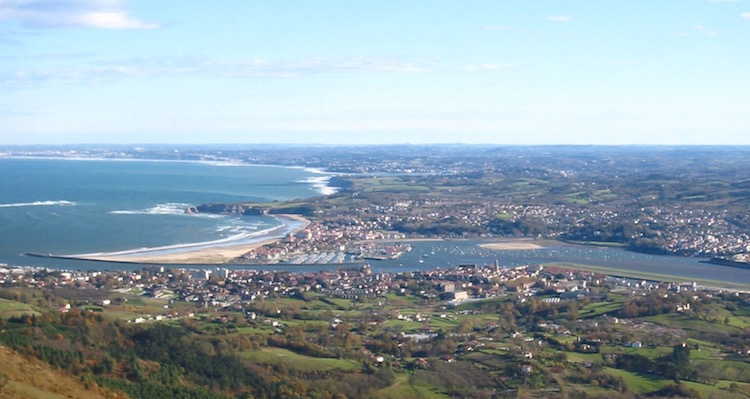
    The San Sebastián organizers made a small but impactful change to the race route last season that led to an exciting finale, and the event returns to that successful parcours for 2015.

    The race starts and finishes in the coastal town of San Sebastián, looping in and around the environs to make for a total race length of 219.2 kilometers.

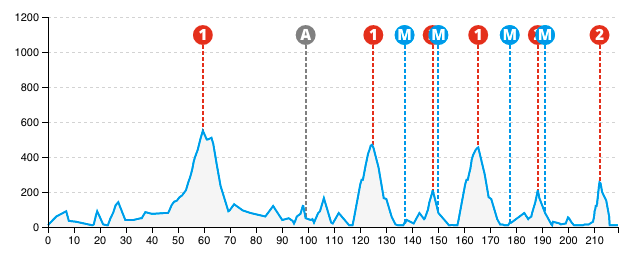
    The harder climbs on San Sebastián profile are categorized as if this were a stage race, and there are six such challenges on the route. The Category 1 Iturburu climb, crested around kilometer 60, is no slouch, but it’s early enough to be more of a leg-softener than anything else.

    Screen Shot 2015-07-31 at 10.56.51 PM
    Once the peloton hits the slopes of the Jaizkibel, the more enterprising riders in the bunch will have one opportunity after another to go on the attack, all the way to the last climb of the day less than 10km from the finish.

    Things get more consistently difficult after the midway point of the route with the first trip up the Jaizkibel, the marquee climb of the race. It’s another Cat. 1 ascent, roughly 8 kilometers in length with an average gradient over 5%. After a descent, it’s not long before the riders reach the Cat. 2 Arkale, a short but steep climb and the third categorized test of the day. From the top of the Arkale, the pack will make a downhill trip right back to the foot of the Jaizkibel, where they’ll take on both the Jaizkibel and then the Arkale a second time.

    After the second descent from the Arkale comes the final run-in to town, but there’s a tough climb along the road to the finish. The Bordako Tontorra climb to Igeldo is a short but steep Cat. 2 crested just over 7 kilometers from the finish. It’s less than 3km in length but with an average gradient nearing 10% and sections in the 20% range, it’s a hard road to the top. After the climb comes a descent into a flat finish.

    The Contenders

    The profile favors strong climbers with a lot of punch. It’s probably possible to attack from the more pure-climber-friendly Jaizkibel or from the Arkale and hold out to the finish, but it’s more likely that the race comes down to the last bump in the road, which is more suited to the Ardennes-style riders than the big stage racing stars.

    That late climb shook up the race last year, providing Alejandro Valverde with a launching pad to go on the attack for the win. Because the parcours is so up-and-down already, the peloton is pretty thinned out by the time it reaches the final 10km—even if attacks on the Jaizkibel and Arkale are reeled in, it’s still very hard to keep things altogether on the last climb. In case it’s a small group that reaches the finish, a strong flatland kick will be important to anyone hoping to win.

    However things play out, Valverde is capable of winning this race in pretty much any scenario, which is probably why he is a two-time champion. Coming off of a Tour de France podium, and in the middle of an excellent season (in which he dominated the hilly spring classics), it’s hard not to see Valverde as the clear favorite. He’s among the best climbers on the starlist who can thrive on pretty much any gradient, and he’s got more punch than most of his rivals. Valverde could win this with another late attack, or he could follow the moves in the finale and hold out for a reduced sprint. Giovanni Visconti is a good alternative for Movistar.

    As good a candidate as Valverde is to win this race, however, the Clásica is still a pretty wide open event. It’s always hard to say how riders’ legs will react coming into the race. Valverde went very deep fighting for a Tour de France podium spot.

    Philippe Gilbert is another former winner who has been on terrific form of late. If the pace is really high over the finale climb, the Philippe Gilbert of 2015 may have just a bit of trouble holding on all the way up, but if the peloton plays the early slopes cautiously, Gilbert will be well-positioned to make a late attack or to look for a sprint win. BMC has some serious firepower behind Gilbert, though—Greg Van Avermaet was in the Top 10 last year and is in great form this year, and Samuel Sánchez has been in the Top 10 several times over his career.

    Joaquim Rodríguez has never won the race but he’s come close several times, and it’s no surprise that he does well here given the punchy-climber-friendly profile. He’ll probably need to launch a late attack if he wants to win, since he’ll have trouble outsprinting some of the other top favorites at the flat finish, but the Igeldo climb is the perfect place to do that. His form was good enough for two stage wins at the Tour, but he didn’t look terrific in the final week; however, he landed on the podium in the 2014 edition of the Clásica despite a lackluster Tour, so I won’t read too much into his not-great few days in the Alps. Daniel Moreno makes for an excellent foil—he’s been a bit quiet this season, but Purito and Moreno always make for a strong 1-2 punch.

    Bauke Mollema was 2nd in this race last year and has been in the Top 10 all three times he’s made the start. Mollema is known as a strong climber but he’s also handy in a sprint. If he can get into a small group at the end of the day he will have a great shot at winning. For whatever reason, his kick is a bit underrated, and that can only help him potentially pull one over the more obvious Ardennes veterans in the finale. Julian Arredondo and Bob Jungels are other great options for Trek.

    Etixx-QuickStep is loaded with talent in the form of Julian Alaphilippe, Rigoberto Urán, and Zdenek Stybar. Alaphilippe is probably best-suited to the profile, but he’s not raced in a little while so the form is a question mark. Urán looked decent in the Tour, and packs a nice sprint—he’s a rider to watch. Stybar will be a good bet as well, coming off of strong Tour de France in which he took a stage victory. He climbs better every year and he was 10th here last year.

    2013 winner Tony Gallopin is not racing, but Lotto Soudal has a few good options in his stead with Tim Wellens and Jelle Vanendert. Both seem like good candidates to try an attack from a little ways out;

    Dan Martin is an obvious candidate for success on the San Sebastián profile but he was not at his best in the last week of the Tour and if he’s feeling a bit rusty, a 200+ kilometer bike race might be tough. Ryder Hesjedal could pick up the slack if Martin isn’t up for it. Roman Kreuziger will lead Tinkoff-Saxo after Alberto Contador decided to back out of the start citing a fever—Kreuziger has a good track record in San Sebastián and will be worth keeping an eye on. Astana’s Luis Leon Sanchez is a two-time winner of the race, but he might not even be the best rider on his team. Mikel Landa has had an excellent season thus far and has the explosive climbing legs to try a move on slopes. He was 6th in this race back in 2013 before he had really even come close to the level at which he’s been racing this year.

    Both of the Yates twins have a shot—Adam was riding well in last year’s edition of the race before crashing out of the lead group in the final few kilometers, and Simon may be even better suited to the profile. AG2R’s Romain Bardet is in good shape and has quietly become a dangerous one-day racer. Teammate Alexis Vuillermoz could look to launch himself on one of the late climbs. Rui Costa was forced to abandon the Tour de France by a variety of ailments, but this is a great parcours for him if he’s back to 100%.

    Jarlinson Pantano, Sylvain Chavanel, Wilco Kelderman, and Thibaut Pinot are others who will hope to be involved with the other race favorites.

    Pello Bilbao of Caja Rural is VeloHuman’s Under-the-radar rider to watch at the Clásica de San Sebastián. Bilbao is a talented all-rounder with the climbing legs to be in the mix as a stage race contender, but who also packs a nice finishing kick. He’s having a great year so far, having won a mountain stage at the Tour of Turkey and the overall at the Tour de Beauce, among other results. Caja Rural in general is having a very nice season, with quite a collection of wins at Continental Tour races; watch out for a long-range dig from Amets Txurruka or David Arroyo as well, and keep an eye on versatile fast finisher Carlos Barbero.

    VeloHuman Top 10 Favorites

    Winner: Alejandro Valverde
    Podium: Philippe Gilbert, Bauke Mollema
    Other Top Contenders: Joaquim Rodríguez, Greg Van Avermaet, Zdenek Stybar, Julian Alaphilippe, Romain Bardet, Dan Martin, Mikel Landa

    Listen to the Recon Ride’s Clásica de San Sebastián pre-race podcast for more analysis, and be sure to follow @VeloHuman on Twitter!

    Photo by Oscar Anton (CC).

  • The Recon Ride Podcast: Clásica de San Sebastián 2015 Pre-race Show

    The Recon Ride Podcast: Clásica de San Sebastián 2015 Pre-race Show

    css2015vh3

    Episode 20: Clásica de San Sebastián 2015 Pre-race Show
    Many of the pro peloton’s top climbers and one-day specialists are headed to Spain this weekend to take on the Clásica de San Sebastián. The Recon Ride previews the action, with some help from cycling journo Dave Everett and race contender Bauke Mollema.
    [podcast]


    In the latest episode of the Recon Ride podcast, Dane Cash of VeloHuman and Cosmo Catalano of Cyclocosm dive into the storylines and discuss the route and the potential favorites of the always exciting Clásica de San Sebastián. Dave Everett provides local insight, while 2014 runner-up Bauke Mollema gives his thoughts on how things might play out this year.

    Photo by Greta Hughson (CC).

  • The Recon Ride Podcast: Tirreno-Adriatico 2015 Pre-race Show

    The Recon Ride Podcast: Tirreno-Adriatico 2015 Pre-race Show

    RR_VH_Art_TA2015_VH

    Episode 3: Tirreno-Adriatico 2015 Pre-race Show
    The Recon Ride talks route, favorites, and more for the Race of the Two Seas, with a guest appearance by Trek’s Bauke Mollema.
    [powerpress]


    While some of the peloton’s big names are in France for Paris-Nice, Grand Tour favorites and top sprinters and classics riders alike will take on Tirreno-Adriatico this week. VeloHuman and Cosmo Catalano of Cyclocosm.com delve into the roadbook, discuss the riders to watch, and even talk to GC contender Bauke Mollema of Trek Factory Racing about what to expect in Italy.

    Update: this show was recorded and published before a flurry of late changes to the race narrative, among them the withdrawals of Chris Froome and Marcel Kittel, and the modification of Stage 1 from a team time trial into an individual time trial. However, the Recon Ride covers so many aspects of this race that there should still be plenty here to get you prepared for Tirreno-Adriatico.

    Photo by Johan Haggi.

  • Criterium du Dauphine 2014 and Tour de Suisse 2014 Post-race Impressions: Final Stage Fireworks as Stars Tune Up for July

    Criterium du Dauphine 2014 and Tour de Suisse 2014 Post-race Impressions: Final Stage Fireworks as Stars Tune Up for July

    Chris Froome, Alberto Contador, and Vincenzo Nibali

    Takeaways from the Criterium du Dauphine

    The Dauphine was supposed to be a showdown between Tour favorites Chris Froome, Alberto Contador, Vincenzo Nibali, but other riders decided to crash the party, offering a chance for a number of stars beyond those big names to show off impressive form. At first, it did not look like any outsiders would have a chance. Chris Froome was impeccable in Stages 1 and 2, delivering a convincing victory in the opening time trial, and nabbing another stage win on the following day. Contador was not far behind in the ITT and just moments behind Froome on the second stage. Things seemed set for a showdown between the two, especially with Nibali showing signs of weakness: Astana’s GC man could not match the constant accelerations of his two rivals on the slopes of Stage 2. The coming days had plenty of surprises in store, however. Froome’s hard crash on Stage 6 raised a cloud of uncertainty over his race, but it was only the beginning of the surprises; Andrew Talanksy shocked the cycling world when his early attack on the final stage survived the immense efforts of a group of strong chasers, giving the American the overall victory ahead of Contador. Jurgen van den Broeck was another winner out of the move, sliding into 3rd overall. Meanwhile, Chris Froome couldn’t handle the pace of the chase and fell out of the Top 10 altogether, forced to be content with his two stage victories and the points jersey.

    Unfortunately, Froome’s crash makes it difficult to draw any clear conclusions about his form coming into the Tour de France. He looked unstoppable on the first two stages, but it’s hard to say whether his vulnerability in the final two days was a result of his inability to match rival Contador, or pain from his injuries. With the way he rode the first mountain test, I have to imagine that his crash had a significant impact on him in the closing stages. Regardless, what could have been a major confidence booster for Froome in what has been an otherwise rough year was instead yet another disappointment. He goes into the Tour with question marks surrounding his campaign, no longer the sterling, heavy favorite he was in 2013.

    Meanwhile, Alberto Contador made a strong statement: he put in a stellar opening time trial and matched Froome in the first climbing stage, even before Froome’s crash. He was by far the strongest climber of the GC riders in the penultimate day of racing. Though he was unable to reel in Talansky’s move on Stage 8, the strength he showed in his attempt was another impressive show of the excellent shape he is in. Even more encouragingly, he was able to deliver such a strong Dauphine despite lacking support from the big names that will support his Tour bid; top lieutenants like Roman Kreuziger and Nicolas Roche did not join him for this race. With the help of Tinkoff-Saxo’s first string, Contador will be an extremely difficult opponent in the Tour de France.

    Vincenzo Nibali‘s 7th place in the final GC was not a bad performance, per se, but at no point in the race did he look the part of a Tour de France top contender. Time is running out for Nibali to find form in 2014 before his main objective.

    Andrew Talanksy made the most emphatic statement of the Dauphine, and it wasn’t only due to his masterful attack in the final stage. He never would have been in contention for the overall had he not delivered strong performances throughout the race: 4th in the opening ITT, 5th in the mountainous 2nd stage, and the GC rider closest to Contador on Stage 7, Talansky was firing on all cylinders all week long, and he looks primed for another strong Tour de France (he was 10th last year). Jurgen van den Broeck can take many of the same positives away from the race: his podium position was the result of a consistent racing from the very first day of the Dauphine. He has been lacking that consistently recently. After a disappointing 2013, van den Broeck made a resounding statement to his team that he deserves another shot at the Tour GC this year.

    Wilco Keldmeran followed up his 7th in the Giro with an excellent 4th at the Dauphine: carrying that level of form this far into June confirms that the 23-year-old is truly the real deal. Romain Bardet‘s 5th should offer a fair bit of consolation for his team; AG2R will be without Carlos Betancur come July’s main event. Adam Yates landed an impressive 6th; his Tour of Turkey victory and his 5th in the Tour of California were nice results, but a Top 10 in this race, one of the biggest one-week events of the year, is an undeniable confirmation of his talent.

    Tejay van Garderen looked like a strong contender for the overall, but after faltering early he revealed that he had sustained a hip fracture in the Tour de Romandie; with that in mind, his 13th overall is not as disappointing. He did seem to get stronger as the race went on. Speaking of injuries and Top 15s, Leopold Konig notched an 11th place, which should give NetApp some hope that his recovery from a knee injury is coming along.

    Among the stagehunters, Giant-Shimano’s Nikias Arndt took an impressive sprint win on a technical finishing circuit in the 3rd stage. It seems the Giant sprint train can do no wrong, no matter who is doing the sprinting (more on that train in the next Up-and-comer Q&A, so be sure to check back Monday). Simon Spilak was seen by many, including VH, as a potential outside contender for the overall victory, but whether due to heat or team leadership decisions, he instead spent the race hunting stage wins, and he secured one with a brave breakaway move on a hilly Stage 5. Teammate Yuri Trofimov, OPQS’s Jan Bakelants, Astana’s Lieuwe Westra, and Sky’s Mikel Nieve were other deserving breakaway victors.

    Takeaways from the Tour de Suisse

    For the second week in a row, the last stage of a major WorldTour race ended with brilliant fireworks to shake up the overall GC; again, an early attack stuck to the very end, overhauling the final leaderboard. Much like the Dauphine, the Tour de Suisse offered lots of insight into the form of some likely Tour de France protagonists, and it did it with plenty of excitement, to boot.
    Costa ahead

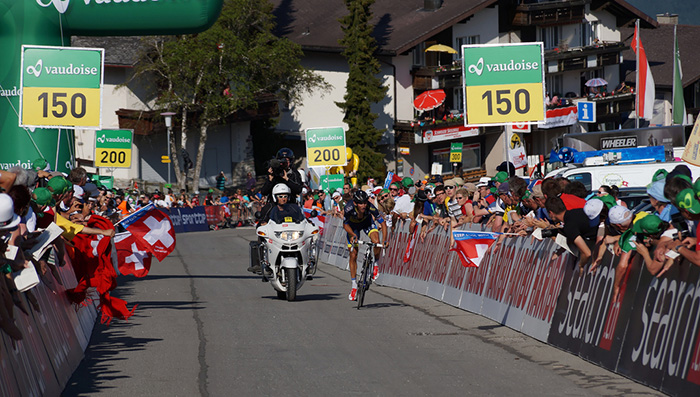
    With his first opportunity as a Grand Tour leader approaching, Rui Costa delivered his third GC victory in the Tour de Suisse in grand style, on the back of some solid time trialing (his 3rd place in the Stage 7 chrono bettered even Fabian Cancellara) and stellar climbing, and with the help of the sharp racing mind for which he is well-known. His escapees held off a mad chase in the race’s final stage and he out-attacked all of them in the closing kilometers to take his first stage win and first overall victory in the rainbow jersey. It’s hard to know how Costa will fare in his inaugural run as his team’s featured GC rider in the Tour de France, but his performance in Switzerland makes a powerful statement about his form and his skillset, which is looking more well-rounded with every race.

    Tony Martin of OPQS saw his chances at an impressive GC win slip through in fingers in the mountainous final stage, but he should still be very pleased with his trip to Switzerland. His ability to land a Top 10 in a very hilly race was impressive, and he won both time trials convincingly. That ITT success may not come as a big surprise, but Martin was not the bookies’ favorite in the first chrono due to its short length. With this form, he should be the favorite for the long time trial in the penultimate stage of the Tour de France, and he’ll also have earned trust from his team as a GC rider in chrono-heavy weeklong races to come.

    Mathias Frank was a strong 2nd overall and, like Costa, his nice result was buoyed by a very impressive (and much improved) time trial skillset. That discipline is not traditionally seen as one of his strengths. This more complete game will serve him nicely in the upcoming Tour. Bauke Mollema, 3rd overall, did not time trial as well as expected in the Suisse, but he did climb at a very high level, an encouraging sign ahead of the Tour, especially after a slow start to his year.

    Giant’s Tom Dumoulin is an established chrono talent who has flashed climbing chops as well, and he made a nice statement in this race; he used his skill against the clock to get ahead early and held on in the mountains for 5th. At just 23, he’s one of quite a number of exciting young up-and-comers for the Dutch team… again, check back Monday for more on Giant-Shimano’s young talent! Davide Formolo of Cannnondale was decidedly the revelation of the race. The 21-year-old was 4th at the Tour of Turkey, but few could have expected him to finish this major event ahead of Roman Kreuziger. He put in a pair of decent time trials and consistently climbed with the top GC riders, good for 7th overall.

    Speaking of Roman Kreuziger, his Suisse was an up-and-down affair, and in the end, he settled for 8th overall. He did not time trial particularly well, and though climbed to a 2nd place finish on Stage 8, he missed the move on Stage 9 and therefore lost a chunk of time to his other rivals. It’s a disappointment for last year’s podium finisher, but it’s nothing to scoff at, and he certainly looks strong enough to play the role of elite domestique again for Alberto Contador.

    Thibaut Pinot‘s 15th overall was a disappointment, but he battled sickness in the race and was unable to give it 100%. He still managed to find himself in the Top 10 on the Stage 7 time trial, which is a strong result in that discipline for him. I don’t think he’ll be too discouraged by his race.

    For many observers, Bradley Wiggins will be seen as the biggest disappointment of the Suisse. He did not crack the Top 10 in the opening ITT, lost time in the following stages, crashed, and then abandoned. Sky reported that he had a chest infection coming into the Suisse, and his crash left him with a knee injury. Whatever the reason, Wiggins was unable to have much of an impact on the event. While Wiggins has already said that he won’t be on Sky’s Tour de France squad, the team has yet to make any official statements; unfortunately his forgettable trip to Switzerland probably won’t help whatever chance he still has. Teammate Sergio Henao was another victim of misfortune, this one more grave: he was hit by a car doing recon for the Stage 7 ITT, and he is out for the foreseeable future with a broken knee.

    Wilco Kelderman may have been able to land a top GC result right after the Giro d’Italia, but Cadel Evans was not up for it; he finished 11th overall in the Tour de Suisse and never seemed to be a strong challenger. Fellow former Tour winner Andy Schleck was not a GC factor but he at least finished the race. Unfortunately his brother Frank crashed hard in Stage 3 and was forced to abandon.
    Sagan ITT

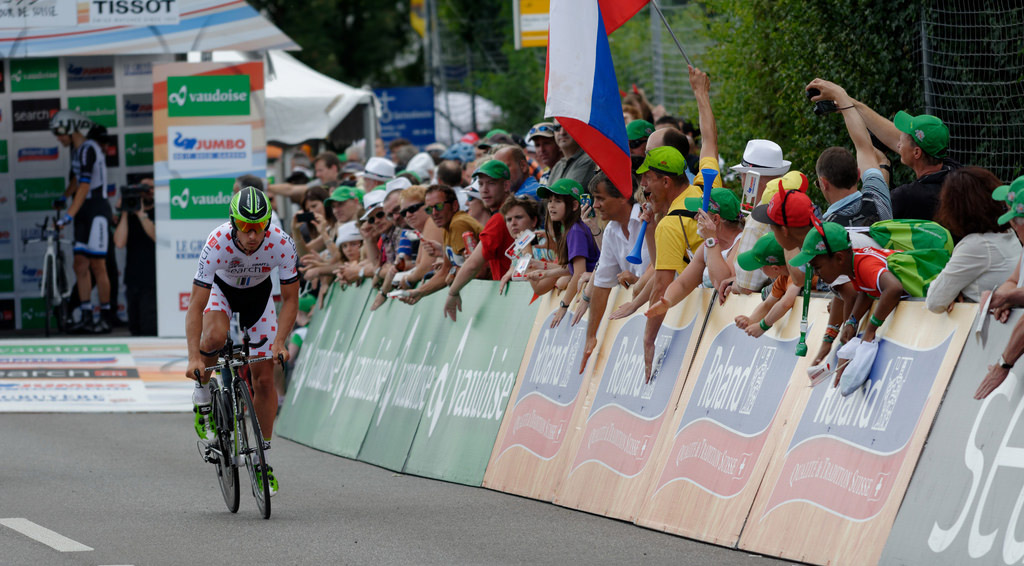
    Peter Sagan easily took his third Tour de Suisse Points jersey. He only came away with one stage victory, but he was consistently stellar over the whole first week, finishing in the Top 6 for six days in a row, and then notching the 15th best ITT in Stage 7. He looks very sharp. Mark Cavendish of OPQS took a convincing victory in Stage 4 to put the pure sprinters on notice that he’s feeling strong as the Tour approaches. Unfortunately, he was unable to contest the following stage: he was one of several riders to hit the deck in a crash in the last few hundred meters. Sacha Modolo survived the carnage to take a victory that day, and I doubt anyone will say that it was purely a lucky break as his rivals crashed behind him: he looked extremely fast in the final moments of the stage, and he’s been close to a victory like this for a while.

    Johan Esteban Chaves deserves a paragraph of his own. Orica-GreenEdge obviously has a collection of brilliant sprinters, puncheurs, and breakaway artists, but they have been looking for a top-flight climber to score victories when the road goes up. Suddenly, they are flush with climbing young talent. Adam Yates has the makings of a star, as he proved in the Dauphine, and 24-year-old Johan Esteban Chaves Rubio, who, like Yates, also flashed brilliance in the Tour of California, made another loud statement this week with a victory on the Verbier climb. To boot, he did it with a late uphill surge from the pack of GC heavyweights, besting uphill stars like Roman Kreuzgier and Bauke Mollema. The future looks bright for OGE and their young climbers.

    La Grande Boucle Awaits

    The Tour de France is now less than two weeks away. In the interim, national championship races will put new riders into national jerseys, and the Tour’s biggest protagonists will get in their final days of preparation before the main event. VeloHuman has plenty in store: check back soon for another entry in the Up-and-comer Q&A Series, and get ready for Tour de France previews!

    -Dane Cash

    Photos by Georges Menager and youkeys.

  • Tour de Suisse 2014 Preview

    Tour de Suisse 2014 Preview

    Tour de Suisse Mountains

    As the Criterium du Dauphine is heading towards its conclusion, the second major Tour de France tuneup race kicks off Saturday: the Tour de Suisse. Much like its French cousin, the Suisse features a diverse array of challenges, with time trials, sprinters’ days, hilly stages, and mountaintop finishes. The good mix of profiles draws an impressive startlist of riders, many of whom are using the nine-day event to perfect their form leading into July’s main event.

    While the biggest GC names of the Tour de France have preferred to use the Dauphine as their warmup of choice in recent years, the Suisse has drawn some major protagonists as well. Current rainbow jersey wearer Rui Costa is the defending champion; he followed up on his 2013 Suisse with a pair of stage wins in the Tour. Meanwhile, Peter Sagan has won the Points Classification of the Tour de Suisse prior to both of his Green Jerseys in the Tour de France. Costa and Sagan are on a long list of returning riders likely to feature again. As a note: most of the big names on the provisional startlist look set to go, but the official startlist is not completely finalized at this point, so keep an eye out for late additions and subtractions.

    The Route

    The 78th Tour de Suisse begins with a 9.4 kilometer time trial. While short, it involves a tough climb and a tricky descent, so it’s not going to be as simple or as speedy as last year’s mostly flat out-and-back prologue. Stage 2 has some tough climbs (two HC-rated mountains and then a Cat. 2) in the middle of the day, followed by a late Category 2, but a downhill and then flat final 21 kilometers could limit GC action. The third stage has some bumps along the way and an uncategorized uphill finish. Stage 4 and Stage 5 are mostly flat days likely for the sprinters.

    Tour de Suisse Stage 9
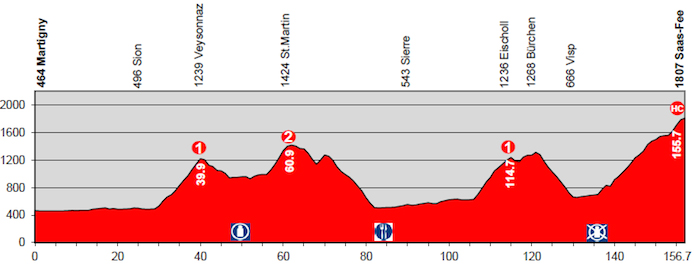
    Stage 9: Martigny › Saas-Fee (156.5 km) – A challenging climb closes out the final stage of the Tour de Suisse, ensuring that the GC battle will go all the way down to the wire.

    Stage 6 has a late climb that could inspire punchy riders to make moves. A 24.7 kilometer time trial on Stage 7 will have major GC implications. It does have a few bumps to offer some consolation to the pure climbers, but it’s a far cry from the hill climb chrono that finished the 2013 TdS. The uphill specialists will look forward to the following two days. A Hors Categorie ascent to Verbier closes out Stage 8. Stage 9 will guarantee an open fight for GC to the final meters of the Tour de Suisse: it’s a short one at 156.5 km, but the profile will challenge the peloton with a Cat. 1, a Cat. 2, another Cat. 1, and then an HC-rated summit finish where the Tour de Suisse will crown its overall victor.

    The General Classification Contenders

    Lampre’s Rui Costa has won the past two editions of the Tour de Suisse. This is a race that he knows how to win, and a stage on which he loves to shine. His very versatile array of skills (climbing legs, a fair bit of punch, and an underrated time trial) are well-suited to varied profiles of the weeklong event. He showed excellent form this year in Switzerland’s other major stage race, the Tour de Romandie, where he was 3rd behind Chris Froome and Simon Spilak. Riding as his team’s main option in the upcoming Tour de France for the first time, Costa will be eager to put his talents on display. He will also be eager to pick up his first win in the rainbow jersey, and this may be his best chance all year.

    Belkin’s Bauke Mollema was runner-up and a stage winner in 2013 and he will be hunting continued success this year. He, too, sports a very strong combination of talents that will keep him comfortable in both the hills and the high mountains of the race. Belkin sends an excellent squad to support his amibitions, with climbing expert Laurens Ten Dam to play the role of second. Mollema has all the tools to contend for the overall victory in the 2014 Tour de Suisse.

    Roman Kreuziger 2013 Tour de Suisse

    Tinkoff-Saxo’s Roman Kreuziger rounded out the 2013 podium (and he actually won this race back in 2008) and he will again have a shot at a good result this year. Kreuziger is Alberto Contador’s top lieutenant in the Tour de France, but at the TdS he has the chance to ride for his own ambitions, and he will be an excellent bet to achieve his goals, given his well-rounded skillset. Kreuziger had a hot start to the year but has not raced in over a month; however, with Tinkoff-Saxo’s main target approaching, he should be getting back up to top form now.

    Sky’s Bradley Wiggins will certainly bring excitement to the race, especially coming off a Tour of California victory, but it’s hard to know what to expect from him. He worked himself down to a GC-oriented weight for his AToC bid, but now that he does not plan on riding in La Grand Boucle, he may refocus his approach to prep himself for time trialing and track goals to come. Obviously, with the motivation and focus, Wiggins is a major contender, but there are enough question marks that I don’t see him as the top favorite he is capable of being. Teammate Dario Cataldo couldn’t quite come away with a victory in the Giro d’Italia but he looked great throughout that race and could feature as a fringe contender with two time trials on the route. It is worth noting that Sky is also sending Sergio Henao to the Tour de Suisse, his first race since an extended break from competition.

    FDJ’s Thibaut Pinot should be able to land himself another good result (he was 4th last year). He has shown an improved time trial this year, outperforming expectations in Pais Vasco and Romandie, and the ability to limit his losses in a discipline that troubled him in the past will be critical with this route. IAM Cycling’s Mathias Frank (5th in 2013) is another rider I expect to see at the very top. He, too, has displayed a more balanced approach in 2014, and he has a knack for success in races that take place in his home nation. He led the 2013 Tour de Suisse into the final day, but ultimately fell several placings with a lackluster performance on the last stage, a hill climb ITT. With that on his mind, and now the sole leader on a new team, Frank is likely to be a major protagonist.

    BMC’s Cadel Evans and AG2R’s Domenico Pozzovivo are both only a few days removed from the Giro d’Italia. Wilco Kelderman has shown in the Dauphine that it’s possible to carry that Grand Tour form even into the middle of June, but it won’t be easy. Evans was fading as the Giro drew to a close, so it will be a big ask for him to continue to perform at a high level here. Pozzovivo battled illness in the Giro’s final week, but he maintained his strong performance through the last days of the race, and he may have more in the tank. Christophe Riblon makes for another excellent option for AG2R. The climbing expert (and Alpe d’Huez winner) showed an improved time trial in last year’s Tour de Pologne, and he’ll be motivated to perform leading into the Tour de France. Carlos Betancur was supposed to ride this race, but recent news suggests that he is skipping the Suisse, and possibly even the Tour de France.

    Movistar’s Ion Izagirre is a vastly underrated GC performer who has flashed strong chrono chops to complement his excellent climbing skills recently. Rarely given the opportunity to ride for his own ambitions, he will have a nice shot at success here. Eros Cappechi is one of a number of strong teammates. Garmin is another very strong all-round squad led by riders who often play lieutenant roles. Rohan Dennis was 2nd only to Bradley Wiggins in the Tour of California. His time trialing prowess is well-known, but he has worked to better himself on the slopes in 2014 and it has really paid off. Teammates Janier Acevedo is a pure climber who will look to light up the late mountain stages, and Tom Danielson may feature in a similar role.

    Giant-Shimano’s trio of Warren Barguil, Lawson Craddock, and Tom Dumoulin pack a particularly strong punch. Barguil has the climbing saavy to survive the late climbs. Craddock and Dumoulin are both excellent all-rounders who will look to jump to an early advantage in the time trial. Tony Martin of OPQS will likely be well-placed after that opening chrono as well, and he has decent climbing legs to boot. It wouldn’t be particularly surprising to see him hunting a GC result. Trek’s Schleck brother duo will hope to pick up a decent result; Frank has had something of a resurgence this year. Lotto Belisol’s Maxime Monfort, strong in the time trial, could put up a nice performance. MTN-Qhubeka’s Louis Meintjes is a fast-rising, versatile rider who is just coming into his own. His team may surprise some—they have a lot of talent for a variety of scenarios, and Meintjes can hang with the big guns when the road goes up (he was 5th at the Giro del Trentino in April). Orica-GreenEdge’s Johan Chaves is another outsider with a chance for success: he delivered a beautiful Tour of California stage win last month and he will look to make a late move up the GC leaderboard on the HC-rated climbs of the last two stages.

    The Stagehunters

    A number of elite stagehungers make the start from Bellinzona. Peter Sagan was brilliant in the 2013 edition, shocking everyone by nabbing a victory after surviving a particularly mountainous Stage 3 that even dropped most of the GC contenders, and he will try to defend his Points title in 2014. It won’t be easy. Giant-Shimano’s John Degenkolb, supported by excellent-sprinter-in-his-own-right Luka Mezgec, is on fire in 2014 and has shown an ability to handle some of the tougher peloton-whittling climbs that Sagan also prefers.

    Unfortunately for both of them, they’ll have to contend with Mark Cavendish and his elite OPQS leadout squad on the flatter days. Tom Boonen is here for Omega Pharma as well: they mean business in this race. Katusha’s Alexander Kristoff is another sprinter hoping to make an impression, and for once, he’ll actually have an entire team dedicated to his ambitions in a stage race. He took a stage last year and will be hungry for more. Sky’s Ben Swift gets another chance to shine this season, and he look for the harder days as opportunities to win from a reduced bunch. Lampre’s Sacha Modolo got off to a hot start in 2014 and could find himself returning to success here. Europcar’s Bryan Coquard is a brilliant young talent who could feature. MTN-Qhubeka’s Gerald Ciolek, Movistar’s JJ Rojas and JJ Lobato, Astana’s Andrea Guardini, Trek’s Danny van Poppel, AG2R’s Davide Appollonio, OGE’s Matt Goss, and Tinkoff-Saxo’s in-form Matti Breschel and Michael Morkov are other likely sprint protagonists.

    For the very hilly days, look out for Garmin’s Tom Jelte-Slagter, Lotto’s Jelle Vanendert, and OGE’s Michael Albasini, who lit up the Tour de Romandie, to try to take on the GC riders for stage supremacy. Don’t be surprised to see classics powerhouses like Belkin’s Sep Vanmarcke, OPQS’s Niki Terpstra and Stijn Vandenbergh, and Trek’s Stijn Devolder and, of course, Fabian Cancellara looking for long distance victories either. Cancellara will also headline (along with Bradley Wiggins and Tony Martin) an elite field of chrono riders for the race’s two stages against the clock. Movistar’s Alex Dowsett and AG2R’s Patrick Gretsch are specialists who will hope to contend with that trio, as well as a number of other aforementioned strong ITT riders, for prestigious wins against elite competition.

    VeloHuman Top 10 GC Favorites

    Winner: Rui Costa
    Podium: Bauke Mollema, Roman Kreuziger
    Other Top Contenders: Thibaut Pinot, Mathias Frank, Ion Izagirre, Bradley Wiggins, Rohan Dennis, Domenico Pozzovivo, Laurens Ten Dam

    I will not be doing daily stage previews here, but follow @VeloHuman on Twitter for stage picks and commentary. And check back soon for some very exciting things to come: Q&As with some of the sport’s up-and-coming young stars and plenty of Tour de France coverage are right around the corner.

    -Dane Cash

    Photos by F. Gopp and youkeys.