Tag: Interview

  • VeloHuman Up-and-comer Q&A Series: BMC’s Dylan Teuns

    VeloHuman Up-and-comer Q&A Series: BMC’s Dylan Teuns

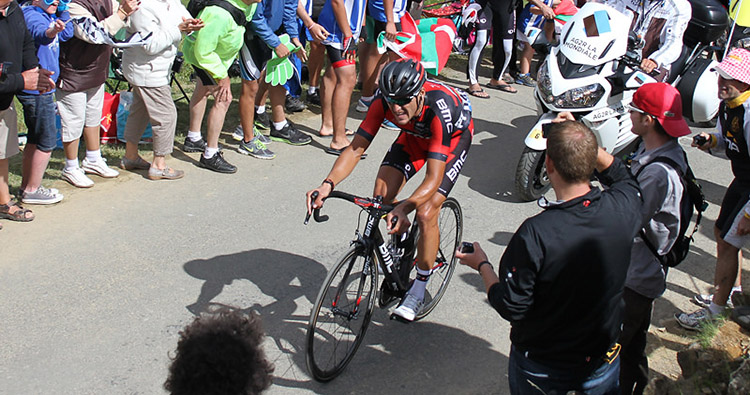
    Dylan Teuns ToB

    22-year-old Dylan Teuns joined the BMC Development Team at the start of the 2014 season and enjoyed a successful first few months of the year, taking 2nd in the U23 Liège-Bastogne-Liège, 2nd overall and a stage in the Tour de Bretagne, and 2nd in the Omloop Het Nieuwsblad Espoirs. His strong early showings led to a stagiare spot with the WorldTour squad starting in August and a pro contract with them for 2015.

    With some security for the near future in place, Teuns rattled off a string of nice results this summer, taking a stage victory in the Giro della Valle d’Aosta in his last race with the Development squad before his stagiare period and then nabbing the Young Rider Jersey in the Tour of Utah, a stage in the Tour de l’Avenir, and 10th overall in the Tour of Britain, among other fine performances.

    The Belgian neo-pro took a break from training at the BMC camp in Spain to chat with VeloHuman for the latest entry of the VH Up-and-comer Q&A Series.

    VH: You raced practically non-stop from March all the way to October, winning a few times and signing a WorldTour-level contract along the way. What’s the first thing you did to unwind after the long season?

    DT: First, I took two weeks off for recovery at home, and then one more week on holiday.

    VH: What’s it like coming back to training camp after some time off? Does it take you extra time to get power back into the legs, or are you ready to go right away?

    DT: After the three weeks of rest, I wanted to start immediately building up to the training camp. But first, I had some problems with my sinus. I had some sinusistis, and I needed to rest one more week because I was sick. So, four weeks, I could start slowly, though not on the level I wanted to be because I needed to be careful in Belgium—from the end of October to the beginning of November the weather was not so good, and it was really cold and rainy sometimes. I needed to start slowly some days on the rollers. After two weeks I started to feel better. Then it was still two more weeks to the training camp and I had two good weeks. And now I feel really okay . . . my condition is not bad. When you go in the high heart rates it’s not like in the season, but that’s normal. In the lows it’s all very good.

    VH: And you feel like now you’re back to being at full health?

    DT: Yeah I’m normal. I feel good. Here you can train so well in good weather. Today it’s such a nice day. It feels like summer. And that’s great for training. Now we go on a holiday for two weeks in Belgium. I hope the weather is not too bad! When it’s cold I have no problem with it but I don’t know if it will rain too much. But we can train in Belgium as well, not so well on the climbs but we can still do some hours on the bike and that’s good. And then we can come back in January and we can go training on some hard climbs, stuff like that, which is perfect.

    VH: Does training camp with BMC feel different than training camps you’ve done in the past?

    DT: It’s quite the same, because last year I trained on a good level to do a good season because I was really motivated for my last year at U23 and I wanted to become a pro rider. And now I’m with the BMC team but still the training is quite the same. The things I did before with my Belgian training, it’s really the same things and I like it the way we do it now. But you can do more hours here in the wheels. And you train in a big group. . . . At home you go alone or with two guys, but here we’re training with the team in a big group. . . . It’s perfect.

    VH: At home you can train with friends; now you can train with Philippe Gilbert, which seems pretty nice!

    DT: It’s great! He’s a friendly guy. I saw him already last year a couple of times but now we are on the same team. Just today was the first time we were in the same group. We train in three groups. Every day it’s changing, the groups. I also trained with Greg [Van Avermaet] and he’s also a great guy. You see everyone, when we need to do workouts . . . everyone does his own thing and it’s not a race to see who is the best. We do our own thing and that’s good to develop for the next season.

    VH: You joined the BMC Development squad for the start of 2014. You’d had plenty of nice results in the past but you took a big step forward in 2014. You’ve credited a lot of that success to [team director] Rik Verbrugghe. What did you learn this season that helped you land so many U23 podiums and a major victory in the Tour de l’Avenir?

    DT: He doesn’t give his riders pressure, and that’s one thing from the beginning that was really good. He tells you things that you need to do, but he doesn’t put pressure on you or say you need to win this race or that race. He has a lot of experience because he spent a lot of years before on the Pro Tour team, and on other Pro Tour teams. He gives a lot of feedback. Like the stage in the Giro della Valle d’Aosta—he won stages in the big Giro and Tour de France which where the same sort of style.

    VH: It was your third and final Tour de l’Avenir. What did it feel like taking a stage win at the top of a Category 1 climb?

    DT: It was a great victory. Like you said, I went there three years in a row. The two years before . . . the first year I was working but then in the middle of the week I got sick and it was going not so good. And then the next year I had a kind of a free role. I was not the real leader but I could kind of do my own thing on the climbs. We did the first mountain stage and I was completely nowhere, and I was really disappointed. For two years in a row I was really disappointed. And I know it was a big race, when you can do something there, it’s so big, every WorldTour team will see that. My two other victories, a stage in the Tour de Bretagne and the Giro della Valle d’Aosta . . . I already had those two, but I still wanted to go to the Tour de l’Avenir with big ambitions and that was my goal, to win a stage. When I was at the line I was so happy and you can see it in the pictures. It was so great. I can’t explain it but it was such a great feeling.

    VH: What was it like moving from the Development Team up to the WorldTour squad?

    DT: After my first half of the season I was really happy I could sign. I knew from the beginning of June that I was going to be a stagiare, and that in July I could sign my ProTour contract. And then you don’t have as much stress anymore. And then I went to Utah and I worked for the team . . . we needed to control the race, that was a good thing for me because I always needed to work the last couple of kilometers for Cadel [Evans] or Ben [Hermans], who was, after Powder Mountain, 2nd in the GC, but I could still do my own results. Not really good ones, but when you see them on the last two days, I was close in the GC for the young riders. And then we talked about it, the evening before the last stage, we had a meeting, and they gave me the opportunity to do my own thing the whole stage; I didn’t need to do anything. The second-to-last stage I’d worked really hard for Ben, and Cadel was in the break, and all was good. And I took one and a half minutes back on GC and then I was about 1:20 back at the end of the second-to-last stage. And then we spoke about it with the team around the table with the director and they gave me a free role to take the jersey.

    VH: Basically, you were playing a support role for a few days and then suddenly found yourself in contention for the young rider’s jersey?

    DT: Yep. And then the Tour of Britain was a great race for me. We didn’t have a real leader there. Some guys were there preparing themselves for the Worlds. I was also there to prepare for the Worlds Under-23, but I knew when I finished l’Avenir I was not tired. I went for a week to my home, I could relax a bit and train easy the whole week and then I went to Britain . . . and there you can see what I can do.

    VH: Were you, or are you, nervous at all about the promotion to the WorldTour level?

    DT: I’m not nervous for next year. Well, maybe a little bit. I want to learn the first two years, I don’t want the big results, I think that’s not for now. I need to learn now from big riders like Gilbert and other guys who can teach me something. I need to learn also how the races are, how they race when the finale starts, things like that. And we’ll see in two or three years how I can do, maybe I can do a podium or something. But not for now.

    VH: Now that you’ve been with the squad for a bit, have you been able to pick up any advice from any of the veterans like Gilbert or Van Avermaet?

    DT: I didn’t race with Gilbert in the end of the season, but I did some races with Greg and he taught me well, some small things, things that are really important to know. When you do U23 races on a big level, like l’Avenir, you knew before that you need to be in front but in pro races, it’s always important to be in the front.

    VH: Have you been surprised by the level of racing with the WorldTour team? Is it harder or maybe even easier than you expected?

    DT: Last year I think the level was quite the same in the biggest Under-23 races, there’s not a lot of difference, but the WorldTour races, I think the level there is higher. We will see. I hope it’s not so high and that I’ll finish those races in the next season. Hopefully I can help Gilbert or someone else to a big victory so that then my season is also good.

    VH: Do you have an idea of your program for 2015 yet?

    DT: I start in Oman. That’s a good race for me I think. A good marker. And I hope to do the Ardennes Classics. I’m really excited about them. That’s the parcours where I raced most of the time last year and did some good results. That’s the kind of race I like.

    In following up his strong performances at the major U23 events with a collection of good results in big races like the Tour of Britain, Teuns has seen mostly consistent progression during his young career. Now that he has taken the step up to the sport’s top division, he will have the opportunity to learn from experienced stars like Philippe Gilbert and Greg Van Avermaet, which could see Teuns ready to compete in the Ardennes and other marquee events in the not-too-distant future.

    -Dane Cash

    Photo by Katie Chan.

  • Mathias Frank Almost Back to Full Strength, Preparing for Another Run at a Tour de France Top 10 and the (Potential) “Big Challenge” of a WorldTour Promotion

    Mathias Frank Almost Back to Full Strength, Preparing for Another Run at a Tour de France Top 10 and the (Potential) “Big Challenge” of a WorldTour Promotion

    Mathias Frank

    After a busy season that left him with a much-improved résumé but also a broken femur and second career Tour de France DNF, Mathias Frank is enjoying some time off. Earlier this year, his first with IAM Cycling, Frank landed in the GC Top 10 of five straight stage races, claiming runner-up honors in the Critérium International, Bayern Rundfahrt, and Tour de Suisse, and also racking up a few stage wins as well during the excellent run of performances from March to late June. The 27-year-old seemed primed for a successful return to the Tour de France, a race he’d abandoned in his 2010 debut due to a broken thumb and torn thigh muscle sustained in a crash in the prologue. However, Frank’s 2014 Tour campaign went awry on Stage 7, when he was one of a hapless bunch of riders who hit the deck hard inside the final kilometer. The crash left him with a broken left femur, an appointment with a surgeon, and another DNF in the world’s biggest race. Frank spent two months away from competition recovering before returning for a few one-day races to close out his 2014 racing program while getting a bit of strength back in his legs. Now one month removed from the season, he is (finally) nearly back to full health.

    “From the femur, I don’t feel anything anymore. I don’t have any pain or anything. There was a little imbalance at the last test I did, so I’m still working with the physio on it, but I’m sure I will be at 100% pretty soon again,” he told VeloHuman in a phone interview this week.

    As he takes those last few steps towards full recovery, Frank is able to look back on his season in a positive light. As frustrating as his Tour de France journey was, he still managed to put together an excellent first half of the year, which Frank acknowledges was “definitely” the best spring in his career. “Normally it always took me a bit longer to get into good shape. This year I was really happy to open the account early in the Critérium [International] and from then on, I did some pretty good racing the whole spring. So it was the best first part of the season for me,” he said.

    Frank joined IAM Cycling this season after several years in the red and black of BMC. Coming off a fine 2013, the Swiss rider was a promising addition to the Swiss team that was making several big improvements at the time, also bringing in star all-rounder Sylvain Chavanel. One might expect the season’s high hopes to have come with high pressure, but Frank says that he did not feel pressured to perform, at least not by anyone other than himself. “It’s something you always put on yourself, the pressure. I don’t feel any pressure from the team, it’s more my expectations that I have. . . . I think the expectations that I have are more than what the team has! The team really doesn’t put any pressure on me,” he said.

    Frank’s own motivation and the low-pressure team atmosphere contributed to a major step forward in results. Frank attributed his early season success to a “combination of different things,” among them, a new role in a new team: “The environment, the role that I have, that I can go for myself. I think I already felt in BMC the last couple of years, 2012 and 2011, I could see that I was always a competitor. I couldn’t really turn that into results but from the numbers from training I knew that I was quite close to being where I was this year. So it wasn’t really a surprise—I think that there were a lot of things coming into place.”

    The multiple podium performances in the spring raised Frank’s expectations even higher for the Tour, but when his run at the main goal of his season came to a sudden end in a heap of riders and mangled bikes near the finish line in Nancy, it was a psychological blow. Still, Frank seems to have already put the frustrating Tour behind him. “For sure, I was super disappointed,” he said. “I had a big chance going for the Tour in the really good shape that I had after the Tour of Switzerland, but at the end . . . that’s how it is. Crashes, they happen. You can’t do anything but get up and try it again next year. What also helped me this year was that I became a father in June, during the Tour de Suisse, so when I was home, there was something else, there was some distraction, with my daughter. I didn’t really think too much about it. I think I just took it as destiny, as a ‘try it next year’ again.”

    After crash-marred races that resulted in DNFs in both of his two career Tour appearances, Frank is hoping (in fact, he seems confident) that the third time will be the charm. “After two bad experiences, the third time it’s really going to work out. I really believe in this and that’s how I see it. That’s two bad crashes in my whole career, and they were at the Tour de France. So for sure, I’d say it’s sad, but it could happen anywhere. I’ll just have to try it again and at one point it will work,” he explained.

    Frank and his squad are currently awaiting word from the UCI License Commission regarding their application to join the WorldTour in 2015, but various sources have reported that the team will likely make the cut. Thanks to strong seasons by Frank and Sylvain Chavanel, IAM Cycling was among the best of the Pro Continental squads in the peloton in terms of results this season, but joining the WorldTour ranks is no small step up. A commitment to a full calendar of top-level races, including all three Grand Tours and all five grueling Monuments, is quite an effort for any squad, and many teams have struggled in their first year at the highest level. Frank acknowledges that if IAM Cycling is, in fact, given a WorldTour bid for the 2015 season, it will not be easy. At the moment, he is realistic about what the promotion might mean, but also hopeful that rider development will pay off. “I think it will be a big challenge for sure. It’s a tough schedule now with all these race days, with three Grand Tours. But I think it was good last year to do two Grand Tours, for the team. We still have a lot of young guys and I think for them, they’re developing and next year if we go WorldTour, the team should be ready for it,” he said. “It’s a big challenge, and maybe it takes another one or two years for some guys to adapt but in general I think we have a good squad with all the new guys that are coming at the end here, and we should be ready, if we move up to the WorldTour, to perform well there.”

    IAM Cycling added a few more “young guys” this transfer season, with up-and-comers Clément Chevrier and Sondre Holst Enger among a list of new arrivals that also includes climber Jarlinson Pantano and time trialing talent Stef Clement. On the other hand, the team lost experienced riders Thomas Löfkvist, Johann Tschopp, and Gustav Larsson. Frank knows that the veteran presence will not be easy to replace, but he likes what he sees in the team’s signings. “We lost some experienced guys . . . some pretty good pros. But I’m positive that the young guys will step up, the guys that we’re going to get. We’ll have to see, but I think in general we’ll be at least as good as this year,” he said.

    Mathias Frank’s own plans for 2015 are not yet set in stone, but he has his sights on the one-week stage races (like the Tours de Romandie and Suisse in which he’s had recent success) and especially the Tour de France, with a third run at cycling’s main event as his central target this upcoming season. “Next year, it will be all about the Tour. I really want to go to France in good shape again and try to get a Top 10, so I think we’re going to build the program around the Tour and start from there, but it’s not really decided yet so I can’t really give details. I think it will be less racing than this year for sure, but focusing on the Tour de France,” Frank said. “The Tour is going to be the biggest goal. . . . At the end it’s the Tour de France that really counts.”

    Frank has plenty of reasons to be optimistic about his major goal for next season, given the way he performed at several WorldTour and 2.HC races in 2014. On the other hand, he wouldn’t have to look very hard to find reasons to be cautious about targeting a race that has given him a broken femur and broken thumb in his two career appearances—but Frank seems to have put those unpleasant experiences behind him. That’s good news for IAM Cycling. With a WorldTour promotion (and its requirement to ride all three Grand Tours) a very real possibility, the Swiss team will be counting on their Swiss GC leader to deliver in 2015.

    -Dane Cash

    Photo by Georges Ménager.

  • Rui Costa “Happy” with Time in Rainbow Jersey and Hoping for Another Strong Year to Follow, Off to a Good Start with Podium Performance in Il Lombardia

    Rui Costa “Happy” with Time in Rainbow Jersey and Hoping for Another Strong Year to Follow, Off to a Good Start with Podium Performance in Il Lombardia

    Costa

    After a year in the rainbow stripes, Rui Costa donned Lampre fuschia in today’s Il Lombardia, having handed over his World Championship title to rising star Michal Kwiatkowski in Ponferrada last weekend. The Tour of Lombardy, taking place on Costa’s 28th birthday, proved an excellent opportunity for him to land a nice result: he sprinted to 3rd in a select group behind the day’s winner, Daniel Martin, yet another good performance for Costa in a season that has been full of them. The Portuguese star may not have taken a lot of outright wins in 2014, but he has been a major protagonist in several big races all year. His two victories came in the Tour de Suisse, where he won a stage and the overall, and he also notched 2nd places in Paris-Nice and in the GP Montréal, his final WorldTour race in the rainbow jersey. He’d hoped for a better result in the Tour de France (he abandoned midway through, suffering from pneumonia) but even in that race, he was riding well prior to his exit.

    Reflecting on his season from Italy today, he told VeloHuman that he was pleased with his time as the World Champ: “I think I did a very good year with the rainbow. Only two victories but many podiums and points so I am happy with my results. I hope next year will be like this one.”

    Costa made the Worlds defense a major priority this season, but repeating his result was a tall order: the parcours in Ponferrada was significantly less climber-friendly than the circuit in Florence that saw him ride into the rainbow stripes in 2013.

    “In this Worlds I was not so good as I wished to be, but I felt okay. This profile was not so good for me as last year. In 2013 it was more difficult and I prefer hard profiles,” Costa said.

    While his 23rd place in Ponferrada was disappointing, Costa, having come to terms with the fact that defending his title was always going to be extremely difficult, seems to be in good spirits even with his year in the rainbow jersey behind him. Plus, handing over that jersey comes with a few positives. For one, he is no longer the focus of quite as much attention, allowing him to concentrate more completely on racing.

    “The rainbow jersey represents a high responsibility and intense scrutiny,” he said. “I think there will be less pressure on me this year. . . . I hope so.”

    Without having to worry about that intense scrutiny, Costa kicked off his time in Lampre-Merida colors in style, nabbing his first ever Monument Classic podium in Il Lombardia. It’s certainly a promising start to his career as a now-former World Champ. Next, he’ll make the long flight to China to take on the year’s final WorldTour race, the Tour of Beijing, where he’s hoping for a good result; he told VeloHuman that he’s currently feeling “okay” in terms of form, which his performance in Italy would seem to confirm.

    After a year full of encouraging results, Costa has high hopes for next season. “I will try to do a Top 10 in the Tour for next year. My calendar for 2015 will be similar to this year. I think that is best for me,” he said.

    With plenty of nice results that he can build on, Costa has reason to feel confident for both his next race, in Beijing, and his next season. With his excellent Tour de Suisse and a collection of high finishes elsewhere, he performed at a high level even under the World Champion’s spotlight, and with a podium placing in his first post-Worlds race, Costa looks primed for continued success in the near future.

    -Dane Cash

  • Sep Vanmarcke Quietly Confident for GPs Québec and Montréal, Hopeful for Worlds Selection

    Sep Vanmarcke Quietly Confident for GPs Québec and Montréal, Hopeful for Worlds Selection

    Sep VanmarckeFresh off a stage win in the Tour of Alberta, Belkin’s Sep Vanmarcke will line up for this weekend’s Grand Prix Cycliste de Québec and Grand Prix Cycliste de Montreal hoping to continue his successful run in North America. He has never ridden the GP Québec or GP Montréal, but he does have an impressive résumé in plenty of other hilly one-day events that reward aggressive racing. VH sat down with Vanmarcke ahead of the GP Québec.

    The Québec parcours makes for a hard-to-predict race, but Vanmarcke feels that he and his team are well-suited to the event. “I like it, it’s different from last year’s, which will make it easier to control the race. I don’t know if that’s good for me or bad,” he told VH. “But we’ll see; it’s a really hard last three or four kilometers. I think I can get really far but we have to see. It’s really important to be in position the last time on the climbs.”

    Belkin will most likely look to Vanmarcke and Bauke Mollema (who packs an underrated sprint) as team leaders in Québec. Vanmarcke’s current form should be an asset; he feels good about his level of fitness right now, noting that this time of year tends to be a good one for him.

    “I’ve always been good in March and April, in the past, especially in the end of March and the beginning of April. End of June I’m always good. Beginning of July is also good. And then halfway through September I’m back,” Vanmarcke said.

    With Worlds participation still up in the air and a strong team history in these races to uphold, Vanmarcke has plenty of motivation to make his first WorldTour events in Canada worth the journey. The upcoming World Championships are definitely in the back of Vanmarkce’s mind, giving him even more inspiration to do well here–especially with so many other big-name Belgians on the startlist also hoping to prove themselves before the team selection is made.

    “Both [races] are important and of course I want to do well. I think it’s important, not for me . . . but for other people to see a result and that I’m ready,” he explained.

    Vanmarcke feels like the strong season he has had already, with big results in the Classics and a very recent victory in the Tour of Alberta, should make enough of a statement about his readiness for Worlds as it is. Still, the Belgian roster for Ponferrada’s World Championship week isn’t completely decided yet, and more success in Québec or Montréal wouldn’t hurt.

    “Last week I was good everywhere . . . and I won. That’s something to show my condition I think. You don’t win if the condition is not good. But yeah, it will be better if I get a good result here,” he said.

    The World Championship Road Race isn’t the only thing on Vanmarcke’s mind, however. He is riding with Igor Decraene, one of Belgium’s most promising young cyclists who died suddenly at the beginning of the month, in his thoughts.

    “All week I was with him in my mind. I made that goal that I really wanted to win for him, because I was really frustrated that I couldn’t be there at the funeral. Especially when his brother asked me if I was going to go there, I felt really bad. I really wanted to try something. I’m happy I won,” Vanmarcke said.

    Mentally, to get a better sense of his form, and emotionally, as a chance to dedicate a major success to Decraene, winning in Alberta was an important result for Vanmarcke. It also gave him an opportunity to enjoy more aggressive riding, which isn’t something he always has a chance to do.

    “It’s always important to win. I don’t win a lot. Classics are really hard to win, but I’m always getting closer. Stage races are sometimes so controlled and everything is going for a sprint, and then it’s a really hard final where I’m not capable of showing myself. . . . If you do something that might be stupid in other races though, there [in Alberta] it can be really good. In Alberta I was attacking all the time, every day,” he explained. “It’s impossible for me in, say, the Eneco Tour to try to be in an early breakaway. In Alberta . . . it’s different. It’s different racing, just full gas racing and there I’m better.”

    Vanmarcke is approaching this weekend’s races in Québec and Montréal with a quiet confidence; he is reluctant to make any predictions about where he’ll end up but he does expect to perform.

    “It’s the first time I’m here so I”m a little bit afraid to put numbers on it, but I think the race suits me and my condition is good, so I want to be there in the final and then it’s hard to say. I want to fight for the best places,” he said.

    One major challenge facing Vanmarcke, and everyone else lining up here, is the strength of the startlist and the unpredictable nature of the profiles of both races.

    “In these races it’s really difficult [to name a favorite]. There are really a lot. It suits riders of Flanders Classics. It suits riders of Ardennes Classics. And also stage race guys are here. I think I’ll have a chance for winning if I’m good, but Rui Costa, a whole different rider, is also thinking the same. It’s a big group of riders that can win, I think. Maybe thirty,” he said.

    Fellow Belgian Greg Van Avermaet, also likely to play a role in the nation’s World Championships squad, is certainly among those favorites, as are a few other top-notch Belgian talents. Many of them have raced here several times before. With recent signs of form giving him a positive outlook, though, Vanmarcke is as ready as he can hope to be to make his debut in the GPs Québec and Montréal. He’ll know very soon just how well these races suit him, and if he does manage to land a good result, with the strong season he’s already had, he’ll have to feel good about his chances for a featured role in Ponferrada.

    -Dane Cash

    Photo by Marc.

  • BMC’s Greg Van Avermaet on Racing the GPs Québec and Montréal with Worlds Looming: “It’s Really Important to be Good Here.”

    BMC’s Greg Van Avermaet on Racing the GPs Québec and Montréal with Worlds Looming: “It’s Really Important to be Good Here.”

    Greg Van Avermaet

    Greg Van Avermaet is one of the top contenders for this weekend’s Canadian classics, having landed on the podium in Québec in back-to-back years and notching a 4th place in Montréal in the 2013 edition. He sat down with VeloHuman before the GP Québec to talk about his form, his expectations for both races, and his preparation for the upcoming World Championships.

    After a strong showing in the Spring Classics, Van Avermaet took on the Tour de France and came close to victory on several occasions, landing two Top 3 performances and several other strong placings on the three-week journey through England and France. Following the Tour, he didn’t have a lot of time to recover from a tough first half of the season, but that didn’t seem to matter much. Van Avermaet’s post-Tour stretch got off to a great start: he landed a Top 10 in a very hilly Clásica de San Sebastián and then took his first win of the year in a stage in the Eneco Tour. That victory was a major morale boost with some big goals coming up.

    “I was chasing victories for a pretty long time, and I was close a few times in the classics and the Tour,” he said. “That [Eneco Tour victory] was a big win for me and for the team. It gives me a lot of confidence for the next races.”

    Van Avermaet acknowledges that it isn’t easy to stay in top racing shape throughout a long season that starts as early as February, but he is feeling confident about his form right now for the Grand Prix Cycliste de Québec and Grand Prix Cycliste de Montréal, and also for the upcoming World Championships.

    “It’s a pretty long season so it’s pretty hard to focus and find a good balance between races and form,” he explained. “My main focus is always on classics, and this year I added the Tour, and my last goal is Worlds. It’s hard to find the form but I still feel pretty good . . . on a good level, performing pretty good.”

    An in-form Greg Van Avermaet, along with talented all-rounders like Tejay van Garderen, make for a dangerous Team BMC in Canada this weekend. Van Avermaet is glad to have the support, and he’s hoping that the strong team will be able to force some selection on the hilly profile in Québec.

    “Last year we had a pretty good race, we tried to make the race hard, to attack pretty early to make it difficult,” he noted. “For me it’s always better if it’s a hard race. It’s nice to see Tejay is interested in this kind of stuff. It’s nice to be the leader of this team but to also have him next to me to take a little bit of pressure off. Riding together, it’s fun because I helped him a little bit at the Tour and it’s nice that he’s coming to the races I like also.”

    Having come so close to victory two years running, Van Avermaet doesn’t see that next step on the podium as being too far off.

    “I’m pretty close to it [winning]. Last year I focused a little bit too much on Sagan for the sprint, and he didn’t sprint, it was a bit strange! Normally he wins the sprints,” Van Avermaet said. “The year before, I was out with Gerrans and he was just a bit stronger and faster. . . . Like last year, I feel like I have the chance to win; just a little bit of luck and the same legs as last year would be really good.”

    Sagan isn’t in attendance in this year’s GP Québec, but there are plenty of dangerous contenders on the startlist. Van Avermaet has identified a few riders as top rivals, and the spectrum of skillsets on that list of potential protagonists is pretty wide, as one might expect from this typically unpredictable race.

    “Simon [Gerrans] will be good. Vichot was good last year. Gallopin, Rui Costa. A few good guys that were here last year. Kristoff, if he can make it over the climb. Plenty of good riders,” Van Avermaet said. “For me, I kind of like it if the field is strong. It makes it easier to win the race when you’re not the only guy who has to make it [the race].”

    Van Avermaet enjoys not only the competition here in Canada, but also the chance to fine tune his form ahead of the World Championships.

    “I really like it here and it’s good for my characteristics. And good preparation also for Worlds. If you don’t do the Vuelta there’s only one way and it’s this one,” he said. “I like to be here. . . . It’s kind of like a small World Championships here, with the local laps, some climbing. It’s good to be here.”

    The World Championships course in Ponferrada looks like it should suit Van Avermaet’s skillset, but he is one of a number of top riders from Belgium who could feature in the quest for the rainbow jersey. At the moment, Van Avermaet sees the composition of the team as still being very much an undecided matter.

    “We have a good team, strong guys, but no one guy coming out who can say, ‘I’m the leader for this year.’ Normally it’s Boonen or Gilbert or a little bit of both, but this year they are not in the best shape,” Van Avermaet explained. “It’s hard to say right now who is going to be the leader, who is going to be protected. It’s a decision for the coach and it’s a hard decision. We will have a strong team like always, we have a lot of strength. . . . With Vanmarcke, Boonen, Gilbert, me, that’s already four and we only can take nine! So that’s lot of leaders. It will be hard to find a good combination to make a good team.”

    The aforementioned Vanmarcke is here in Canada this weekend as well, along with other top Belgian riders like Jelle Vanendert, Tim Wellens, Jan Bakelants, Gianni Meersman, and Jurgen Roelandts. With so many potential Worlds teammates also making the start, Van Avermaet sees the GPs Québec and Montréal as an important opportunity to make a statement about his readiness to take on a featured role at Worlds.

    “It’s pretty important for yourself and for your confidence so that you know that you’re in a good way and on a good level, but also you have to show the world that you’re ready to take a leadership spot in the national team, so it’s really important to be good here,” he said.

    The startlists for both races are loaded with talent, but Van Avermaet certainly seems likely to put in those strong rides he’s hoping for this weekend. In his four Canadian Classics appearances so far, he’s never been outside the Top 15, and he isn’t lacking for motivation to pick up more results this year.

    -Dane Cash

    Photo by Brendan Ryan.

  • VeloHuman Up-and-comer Q&A Series: AG2R La Mondiale’s Hugo Houle

    VeloHuman Up-and-comer Q&A Series: AG2R La Mondiale’s Hugo Houle

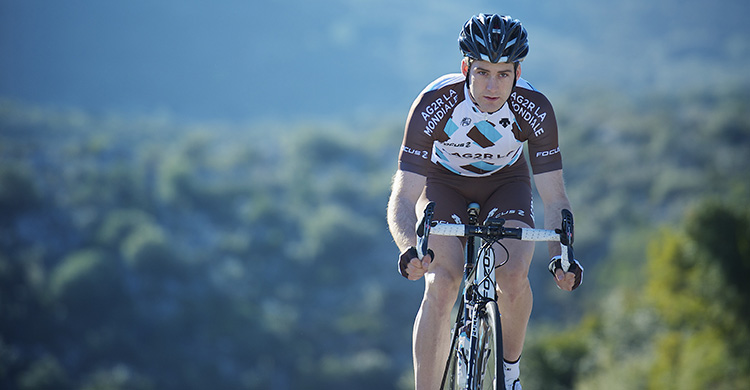
    Hugo Houle - Photo: Kramon

    In a new entry in the Up-and-comer Q&A Series, VeloHuman talked with 23-year-old Hugo Houle, a native of Sainte-Perpétue, Quebec. With the Tour of Alberta underway and the Grand Prix Cycliste de Québec and Grand Prix Cycliste de Montréal around the corner, now is the perfect time to catch up with one of Canada’s fastest-rising young stars.

    In his second year with French team AG2R La Mondiale, Hugo Houle is an all-round talent who made a name for himself at a young age, winning Canada’s Under-23 road race and time trial championships and finishing 4th overall in the U23 World Championship road race. His big results garnered the attention of WorldTour team AG2R La Mondiale, where he signed at the end of 2012 and has been riding since, with a largely classics-oriented race calendar. He recently spoke to VeloHuman about his year so far and his expectations for the rest of the season.

    VH: Hugo, you joined AG2R La Mondiale last year after spending a few years with Pro Continental Squad Spidertech. What was it like at first making that jump from Pro Continental Team up to the WorldTour? How did that transition go compared to your expectations?

    HH: In the end, it was the folding of Spidertech that gave me shot to join AG2R La Mondiale, because at first I had two more years with Spidertech. They folded at the end of 2012, so I found a place at AG2R La Mondiale, and I’m going to ride for them until 2015; I still have one more year on my contract with them. It’s a big step, because when you join a WorldTour Team, the races are longer and they make you ride more races. Sometimes you do two or three stage races in one month, so it takes time to build up to the volume of races. Also, the culture of a French team was new so I had to make some adjustments with that. So those are the big differences. With the volume of racing and the races being longer, you need to train longer, so I had to step up my training.

    VH: You rode plenty of races in your first season, with particular focus on the classics. What would you say were the biggest things that you learned in your first year?

    HH: I learned a lot! The first thing: to get to know a course, like, say, in Belgium . . . it’s hard, so it takes a couple of years to get to know the cobbled sectors and how to approach them and place yourself. So that’s the main thing. Even if you are strong, if you’re not well-placed, you don’t finish in the front, so last year I was more trying to understand the cobbled sectors. Now I’m good and I know them, so it’s easier to be well-placed, with good timing, and know when I have to move up. So that’s one thing. And also learning how to race with the team, the teamwork, and all that stuff. To know a teammate, what they like and what they want me to do, because I’m still pretty young so I have to do a lot of work and understand the races and do the best I can to help them save energy to be there at the end.

    VH: You look to be getting more comfortable in your second season, both in longer races and on the cobbles: last year you started Milano-Sanremo and Paris-Roubaix, but this year you started and finished them. Do you feel that you have continued to develop this year?

    HH: Yeah, for sure. Like I said, in those big races I now have more endurance so I can hold on for longer. So it’s easier to finish a race because I’ve become used to that distance and I know how to be well-placed. . . . So for sure it’s easier in the second year. . . . It’s not easy but I’ve learned a lot and I progress every year so that’s a good thing and the team is happy with the work I do.

    VH: Does AG2R La Mondiale have a specific role that they’re hoping you’ll grow into, maybe for the classics, or as a time trialist, etc.? You have a pretty versatile skillset.

    HH: For now they want me to do the work more than do my own stuff, but I have a good time trial and when I have an opportunity to do good on that, I always go all out. But they always put me in the big races, so to get the wins it’s hard because I’m still young. I do most of the classics, that’s where they want me to do well and support other riders, but they’re not talking about a leadership role, it’s more a support role for now. But I’m more of a punchy rider, so when it’s hills, circuit races like Quebec and Montreal, that’s where I could be good.

    VH: Are there any particular aspects of your skillset that you’ve worked to improve this season?

    HH: Yeah, they want me to lose some weight and be better in the hills. But it also depends on the time of year, because I’m doing classics the beginning of the year, and there we need more power for flat sections . . . and then for the second half of the year you need to be climbing, because I do more stage races, like Wallonie, Pologne, and now Limousin. It’s more hills, so I work more on those and am careful for weight because it makes a huge difference, the ratio of power to weight. . . . And before nationals I was doing more time trials. So I just try to see which races I’m going to do and try to train to be ready for that kind of effort. Let’s say if I do Montreal/Quebec, I try to do three to five minute hills to get ready for that kind of effort when I arrive at the race, so that I’m ready to do that. So all year, it changes.

    VH: Speaking of nationals: you’ve won both the Canadian U23 time trial and road race championships in the past, and you put in good performances this year at the top level with a 2nd place in the ITT and 7th in the road race. Is representing Canada on the international stage important to you?

    HH: Yeah, for sure. It’s important to try to build up the sport more in Canada. The sport is doing well, a lot of people are cycling and getting more interested in it. In Quebec they show more races now, all the classics and the three Grand Tours. Before it was only the Tour de France, so that’s a good development. For me, to be an ambassador for that is important, and to work with national teams and do well at nationals, that’s important for me. Racing in Europe, you bring a lot of experience that you can share with other riders. . . . I was pretty lucky to have Spidertech to make me race in Europe, and I was able to have a good result at the World Championship. That’s what helped me make the jump to a WorldTour team. The hardest thing is to get to a team. After, if you do well, your job and everything else, they keep you on board and you make friends with people. But the hardest part is to make a team in Europe and that’s why it’s hard for Canadians. So if I can help with that, it’s always good, and it’s nice to have more Canadians in the pro field. It’s important to do well and represent the country and get other riders to come to our level and come race with us.

    VH: Do you think a Canadian champs jersey, either for the time trial or the road race, might be a possibility in your future?

    HH: Yeah, that would be a goal. Right now it’s hard in the time trial with Svein Tuft, he’s pretty good at it! But I’m still young and have a couple of years ahead of me, so one day it could happen if I work hard and it’s something I would love to do. To wear the jersey in Europe for a whole year is something special and it gives you good visibility so it’s really important. I hope to do the double, like I did in U23, in the coming years. It would be great, but it’s always hard; Nationals, it’s always a special race because everyone knows the WorldTour guys are stronger and they all look at us to make the race and chase, so it’s always strange, but for time trial, I’ll keep training hard on that and one day maybe I’ll be as strong as Svein Tuft.

    VH: Well he is 37, so you have to think that at some point, maybe . . .

    HH: Yeah. I’m still 23 so I’ve still got a couple of years ahead of me!

    VH: What are your goals for the rest of the season?

    HH: I’d like to put in a result at the Tour of Alberta. It’s a good opportunity for me to race for the national team and I’m going to be a team leader and can do what I want to do, so I hope I can make a result there, and then a great performance in Montréal and Québec would be great for the people there and in front of my family, so I hope for a good result.

    VH: Last question, looking into the future a bit. Is there one particular race that maybe you grew up watching or maybe that you’ve ridden now and enjoyed that stands out as one you’re hoping to target for success in your career?

    HH: I think a lot of the races that I wanted to do, one-day races, I’ve done almost all of them, but now I will try to go for a Grand Tour for next year. Maybe the Giro or the Vuelta, though the Tour de France will be hard. The goal would be to ride the Tour de France before I stop cycling. I was not thinking about it when I started cycling, because it was just for fun, but now in the past few years I’ve seen that become more realistic. So to finish the Tour de France would be a big accomplishment, and racing the Olympics would be good also, so that’s the next step for me and that’s where I want to go.

    Still a few weeks shy of 24, Hugo’s role as a developing rider gaining experience particularly in the one-day races puts him in an interesting position on a team hoping to expand its results beyond the steep mountains, where they have had so much success this year. At the moment, Hugo is focused on landing results in Canada’s collection of major late-summer events, where profiles heavy on the short climbs suit his skillset nicely.

    -Dane Cash

    Photo by Kramon.