Tag: Q&A

  • VeloHuman Up-and-comer Q&A Series: Giant-Shimano’s Chad Haga

    VeloHuman Up-and-comer Q&A Series: Giant-Shimano’s Chad Haga

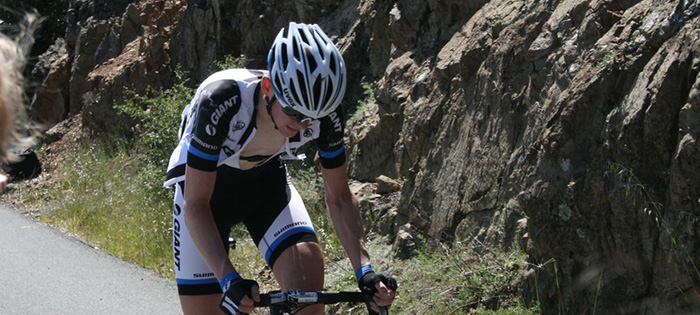
    Chad Haga climbing Mount Diablo at the 2014 Amgen Tour of California | Photo: Naoto Sato

    The WorldTour may be taking a break before the July’s Tour de France, but the VeloHuman Up-and-comer Q&A Series is here to hold you over until the racing picks back up again. In this third installment, VH talks to Giant-Shimano’s Chad Haga, on a brief summer break from competition. Chad joined the Dutch squad after a breakout 2013 in which he took 10th in the Tour of California, 2nd in the Volta ao Alentejo, and a stage at the Tour of Elk Grove. The 25-year-old American is something of a rarity in the peloton: he holds a bachelor’s degree (in mechanical engineering), having graduating from Texas A&M before kicking off his pro career. We talked about adapting to racing on the WorldTour and Giant-Shimano’s world-beating sprint train, among many other things.

    VH: Where are you spending summer break?

    CH: I’m staying in Lucca, Italy [Chad’s home base in Europe].

    VH: How are you settling in? You live with [Garmin-Sharp’s] Ben King, is that right?

    CH: Yep. Settling into Lucca specifically has gone pretty easily. It’s a laid back little town and the apartment is really well located inside the wall. Neither of us has a car and we get along just fine. The Italian lifestyle is great and the roads are terrific. That’s part of why I’m spending my break here. I haven’t spent a lot of time to experiencing the city or exploring, so I’m looking forward to doing that over the next few weeks.

    VH: How do you plan on spending your time off from racing?

    CH: Specifically, I’m not sure yet. I would like to make a trip over to Siena to see their famous horse races in July, Il Palio. I visited Siena last fall and learned about these races and thought that it would be really awesome to go, and now I’ve got the opportunity to do that. But besides that I don’t have any really detailed plans for how I’ll spend my break. So far I’ve just been doing a lot of relaxing and reading and playing the piano.

    VH: You were 10th overall in the 2013 Tour of California so obviously you’ve done big races in the past, and you’ve done well in them. But in March you started in your first WorldTour event, the Volta a Catalunya. You said in your blog that it was much harder than the prior year’s Tour of California. Can you describe what it is that makes racing at the WorldTour level so much more difficult?

    CH: At the WorldTour level, generally every race is longer. I added up all the race kilometers that I had last year compared to this year and divided by the number of race days and on average, every race is 30 kilometers longer, so you’re talking about close to an hour longer every single race, and on top of that it’s a higher level of racing. At the WorldTour races, there’s no Continental teams. Every single WorldTour team is there. It’s just a very high level of racing, it’s very demanding and that takes adjustment.

    VH: At Catalunya you were part of a squad that launched Luka Mezgec to three wins, and then in the Dauphiné you and the rest of Giant-Shimano drilled it on the front in the closing kilometers of the third stage to set up Nikias Arndt for victory. Have you been working a lot on the leadout in your training with the team?

    CH: That’s been a big area of development for me, learning how to do it and the skills and the technique and the mental training required to pull off something like that for a rider like me, who’s not so comfortable with it in the first place.

    VH: Obviously Giant-Shimano is doing something right with the leadouts because you’ve become this sprint powerhouse of the WorldTour. You’re winning stages in Catalunya and the Dauphiné with Mezgec and Arndt, and of course you have huge names like Marcel Kittel and John Degenkolb. Are you able to identify anything that Giant-Shimano is doing differently that is setting up all these guys for so many wins?

    CH: It seems to me that we do a very good job, when things go right and when things go wrong, either way, we always break down the stage in detail and analyze everything we did: what we did right and what we need to change. We just do a very good job of analyzing everything so that we can be even better in the future, and it seems to carry over from race to race and so we continue to get better at it.

    Photo: Giant-Shimano

    VH: What is the skillset that you feel you’ve improved the most since joining the team?

    CH: I guess it would have to be positioning. I still have a lot of work to do with that but I feel that I’ve gotten much better at staying with my teammates when it’s important, and the fight for position in leadouts and into the base of climbs.

    VH: You’re into music; do you listen to anything in particular when you’re on the trainer?

    CH: If I’m warming up for a time trial, it’s very specific music. For the past two years, the only thing I really listen to when I’m warming up for a time trial is a band called Periphery.

    VH: That’s a rock band right?

    CH: Yeah. They’re like . . . tech metal.

    VH: Was there a reason that that became your routine before the time trial?

    CH: I just love their music in the first place, it always gets me pumped up. I think the first time trial I listened to them, I won. It hasn’t always worked out that way since then but it’s my go-to warm up music.

    VH: You’re living in Italy and you’re riding for a Dutch team; are you picking up any languages? What’s the predominant language spoken on the team?

    CH: Well everybody speaks English, which is very good, I can communicate and bond with my teammates. But aside from that, there’s half a dozen other languages spoken on the team around the dinner table, so it’s a lot of different dialects and languages bouncing around.

    VH: Speaking of communicating and bonding, are there any veteran riders on the team that you’ve been able to form a relationship with and learn from so far?

    CH: Roy Curvers and [John] Degenkolb. I’ve done a lot of races with them and we get along well, and both of them have a lot of experience and can do a lot of teaching. I really enjoy racing with them and learning from them.

    VH: Where do you see yourself fitting in as a rider over the next few years? Obviously you have the all-rounder skillset, and you’re excellent in the time trial. What sort of races do you see yourself targeting?

    CH: I . . . (Chad laughs) have not thought that far ahead. I hope to be able to really compete for the GC in weeklong stage races, at the Tour of California level, 2.HC, and hopefully at the WorldTour level. In the meantime I really enjoy the opportunity to go on the attack and get into breakaways.

    VH: After your summer break is over, what is next on the program for 2014?

    CH: Race-wise, I don’t know yet, that’s still up in the air being decided. I go to a three-week altitude training camp in France during mid-July so that’s the most immediate thing on my calendar.

    VH: Do you have any particular goals for the rest of 2014?

    CH: I would really love to win something before the year ends, but I don’t have a target race in mind. I take every race as it comes and look for opportunities. I would love to get selected to race the Vuelta. I know that’s a possibility, so I have high hopes for that, and I’d love to return to the World Championships and race the team time trial.

    VH: Has Giant-Shimano given you an indication of what their expectations or goals are for you in your first year?

    CH: They don’t expect me to get a result in a specific race; there is no real target race in that sense. They just want me to work as hard as I can and learn as much as I can, and use this as a building year in the hope of having a breakout year next year. It helps a lot. There is pressure, of course, to do my job and work as hard as I can, but to not really have any weight on my shoulders makes for a really smooth transition to this level.

    VH: You have a mechanical engineering degree, so obviously you’re comfortable with math. Do you tend to pay a lot of attention to your power data while you’re riding, or do you try to ride according to how you feel and leave the analysis for after the race?

    CH: I have to cover up my data during the race because I will obsess over it to the detriment of my racing. I definitely analyze it very in-depth after the race, and then our team also has our own data guru for further analysis, but I save that for after the race, because otherwise I would never look up from my power meter!

    VH: I’m sure it was a big decision at first, but do you feel you’ve made the right call foregoing an engineering career for now?

    CH: Yeah, at least for now, I’m really glad I did. I’ve got the degree to fall back on, so I’m glad that I finished it, but I think this was the perfect opportunity to really go for it, so I have no regrets.

    VH: Was there a particular race, maybe during your very successful 2013, at which you felt “Hey, I have a future in this”?

    CH: I think that when I first realized that I might be on the cusp of a breakout year was in Portugal last year, at the start of the season. One of our first races, we did the Volta ao Alentejo. I never won anything which was really frustrating, but I was on the podium for multiple stages and on the GC, and was having a great ride. It was after that race where I was first contacted by a Pro Tour team, and I realized that this could actually happen.

    VH: What has been the biggest surprise in your first year?

    CH: Hm. Just that the racing is so much harder! I knew it was going to be harder, everybody told me it would be harder but you still don’t realize it until you get into the races and then you realize, “Hey wait a minute, this is freakin’ hard!”

    While some of his teammates are hunting stages in July’s Tour, Chad will be doing plenty of riding of his own, also in France. After that, there are a number of possibilities for his next race. Chad showed in this year’s Tour of California the toughness required to spend a long day out front in a very high level race, a good sign that the victory he is hunting may not be far off.

    -Dane Cash

  • VeloHuman Up-and-comer Q&A Series: Astana’s Evan Huffman

    VeloHuman Up-and-comer Q&A Series: Astana’s Evan Huffman

    Huffman on the front in Oman
    Evan Huffman on the front at the Tour of Oman. | Photo: Astana Pro Team

    Next up in the VH Q&A Series: 24-year-old Evan Huffman. After making a name for himself with several impressive performances (especially in time trials) in his native USA, he joined Astana last season. Since then, he has made starts in a variety of different races, not just in Europe, but also in Qatar, Oman, Turkey, and China. Now in his second year, he has learned a great deal about adjusting to the pace of WorldTour racing, speaking Italian, and plenty more.

    VH: You’re in Girona now taking a bit of a break from racing, is that right?

    EH: Right.

    VH: What’s the first thing you do when you get back to Girona after you’ve been racing?

    EH: Buy food. And I unpack everything, and just get settled back into the apartment.

    VH: What is your favorite thing to eat when you finally get back home after a hard race?

    EH: I eat a pretty consistent diet all the time. I have cereal for breakfast, and usually just rice and/or chicken, salad, nothing special.

    VH: So that’s pretty much true leading into a race as well?

    EH: I keep it pretty easy: chicken or salmon, something with a lot of rice and then either steamed vegetables or salad.

    VH: Who do you train with when you are home in Girona?

    EH: I train mostly alone, to be honest, but with the handful of other American guys if they’re here: Andrew Talansky, Brent Bookwalter, Ted King, those are a few guys that I’ve ridden with.

    VH: Do you have many Astana teammates in Girona?

    EH: Just one, Tanel Kangert, and I’ve trained with him before. But we have very different programs so he’s often not here when I am, so it’s difficult to get together.

    VH: Going back in time a bit: you gave up college to pursue cycling. Obviously it worked out for you but that must have been a tough call at the time. What motivated you to make that decision? Are you glad you made it?

    EH: Yeah, I’m still looking back happy, I think I made the right decision. It had as much to do with me being unhappy going to school as me wanting to pursue cycling, so it was kind of working both ways. And even if it hadn’t gone so well, I probably still wouldn’t regret it.

    VH: You were putting in some big results in North America, but then you signed with Astana and even in your first year you were pretty busy. You rode Paris-Roubaix, you even went to China for the Tour of Beijing. How do you handle the transition from mostly North American races to suddenly riding all over the world, on one of the biggest teams in the sport?

    EH: It’s really hard. It’s definitely a bit of a shock at first. The amount of traveling is definitely much greater and that makes it difficult to work around with the training and stuff. You’re always losing a day before and after a race. When I was riding a lot of local stuff in California and the West Coast I was just driving, so it was simpler.

    VH: What’s the biggest thing that you have learned your first season?

    EH: If I had to pick one thing, I guess just being flexible and trying not to get frustrated with things that are out of your control . . . because there are a lot of things that are.

    Huffman Solo
    Photo: Astana Pro Team

    VH: Last year, you had a strong first season with a lot of racing. Early this year you had a big day at the Tour of Oman, getting into a small but strong breakaway on Stage 4. Ultimately the move was reeled in, but can you explain what it is like being off the front of the race, the atmosphere of riding in the break, and then the atmosphere when the gap starts to fall?

    EH: It’s really hard to get into the break at first, sometimes more difficult than other times obviously, but it’s rarely easy. But then it’s not so bad for a while. Once you get out there and you have a couple minutes, the peloton kind of lets you go. It’s hard but you’re riding steady. You don’t have to do any real surges or fight for position. So for most of the day, it’s pretty relaxing in a lot of ways, but then once the gap starts to come down, and/or you get closer to the finish, or you start hitting some hills, then it gets much harder obviously. That’s one of the things that I’ve definitely learned more this year, just planning ahead. From the moment you get into the breakaway, thinking about how you’re going to win, not just thinking about trying to stay away as long as possible. It’s all about trying to conserve energy and going hard when you have to but not doing too much.

    VH: Speaking of harder days, you raced Paris-Roubaix for the second time this year. Did it get any easier?

    EH: Hm. A little bit. I think I was a little bit stronger but it’s such a hard race, very different from anything else. So much of it comes down to your experience and positioning more than just plain fitness. So I was a little bit stronger but I don’t know if I really did much better.

    VH: How is your Italian? Astana is a pretty international squad: do you ever have trouble with communicating with other riders?

    EH: All the time. I started to try to learn Italian pretty much immediately once I knew I was going to be on the team, with Rosetta Stone and TV shows and pretty much whatever I could pick up. I’ve learned a lot but I’m definitely not fluent. I kind of struggle to have real conversations with people, but I can understand enough that I can understand what I’m supposed to do during a race at the team meeting. I know all the cycling terminology good enough, but yeah it’s difficult. There’s at least one or two people at every race that can speak English that can translate for me if I need it but there’s still obviously a lot of people that don’t speak English so I just can’t really talk to them very easily, or vice versa, which is not ideal.

    VH: Have there been any particular veteran riders on the team with whom you’ve formed a particular connection or from whom you’ve been able to learn some things?

    EH: That’s one of the things that’s weird being on a team with so many riders, there are a lot of guys that you don’t see all year, except for training camp, because you just have different races, so the guys that I’ve ridden with a lot I’ve gotten in with closest . . . Jacopo Guarnieri, Dimitry Muravyev, Borut Božič, those guys, we did a lot of races in the spring and they speak good English. And they’re not afraid to tell me when I do something wrong, which is good for me.

    VH: What area of your riding have you built on the most since joining Astana?

    EH: I think I’ve gotten a little bit stronger overall. The biggest difference I think with racing at this level is the difference in intensity. Overall the races aren’t super fast sometimes, but when it is fast, it’s really, really fast. And so dealing with the change in pace when you’re already tired is what I’ve gotten better at, and still need to improve. Just that high intensity when you’re already fatigued later in the race.

    VH: What’s next on your program for 2014?

    EH: I have a bit of a break now. I think my next race will be some time in early August, either the Tour of Poland or the Eneco Tour. I’m not sure yet.

    VH: What are your biggest goals for the rest of the year, either in a particular race or just generally?

    EH: For the rest of the year I’m not really sure what my schedule will look like, so it’s hard to pick a race, but I want to really step up a level from where I’m at now and from where I was last year, just try to be even just a little bit better. It’s kind of hard to measure because it’s really subjective some times in races, but I kind of know what that is for me personally. So I just want to improve on where I was last year, keep getting better.

    VH: Have you had a chance to ride or train much with Vincenzo Nibali to get a sense of his abilities and his form for the Tour?

    EH: I’ve done a few races with him over the last couple of years. The last one was the Tour of Oman this year so that was obviously a while ago, so it doesn’t really give any insight into his form for the Tour other than what you’ve seen him do in more recent races like Romandie and the Dauphiné, but my overall impressions of him are that he’s a really nice guy and a good leader, and I think he’ll be ready for the Tour.

    VH: Last question. Is there a race, maybe one you’ve ridden so far, maybe one you’ll be riding in the future, that you’d like to hone in on or hope to win?

    EH: Hard to say. I’d really just want to do more races, to get experience and do everything. I want to do more long stage races, like Romandie or the Suisse, and then the next step would be a Grand Tour, and just see how it goes, and what my capability would be to focus on getting results down the road. I don’t know, I just kind of like to do everything. I’d really like to do a Grand Tour this year or next year if possible.

    As the only American rider on Astana, a team based in Kazakhstan, and competing in events all over the world (not just in Europe and North America), Evan will continue to represent the USA on a very international stage. After a busy spring, Evan will likely return to racing in August.

    -Dane Cash

  • VeloHuman Up-and-comer Q&A Series: NetApp-Endura’s Sam Bennett

    VeloHuman Up-and-comer Q&A Series: NetApp-Endura’s Sam Bennett

    Sam Bennett recons the cobbles at Paris-Roubaix. Photo: BrakeThrough Media
    Sam Bennett rides the cobbles at Paris-Roubaix. | Photo: BrakeThrough Media

    VeloHuman is all about getting the scoop on which riders will be starring in tomorrow’s races, and in that vein, VH is kicking off a Q&A series with some of pro cycling’s most promising up-and-comers. 23-year-old Sam Bennett is one of the sport’s fastest-rising young sprinters. Hailing from Ireland, he recently joined Pro Continental squad NetApp-Endura and he’s already racked up several excellent results in 2014. VeloHuman talked to Sam this week about finding confidence on cycling’s biggest stages, surviving on the cobbles, Tour de France selection, and a lot more!

    VH: Sam, you came over to NetApp-Endura after landing some great results in Ireland, the Tour of Britain, and the Under-23 World Champs, but now you’re racing high profile events pretty much every week. How did you handle that transition at first?

    SB: It’s strange, you come into NetApp-Endura and look at all the guys around you, they’ve been pros for so long. I kind of found it hard to try and settle in. I’m not really used to changing teams because I was with a team for three years, and that team it was full of Irish guys, so it was a bit strange to me at first. And then jumping into races that are a high standard all the time, it was difficult. I was trying to find a medium between respecting guys and getting myself into the right position, not letting myself get too intimidated. The first stage of Qatar, when I had to do a bunch sprint, I felt tired in the end with crashes and that and just beforehand I was having a moment of panic, like, “I can’t do it, I can’t sprint.” Having a team leading me out, I wasn’t really used to having full support. The pressure was weird because I didn’t want to let the guys down, them leading me out and then not finishing up the job, when they could have gone and done it themselves and probably done better—but I stepped up that time and, okay, it didn’t turn out how we wanted [Sam came in 14th on the stage] but we got the young rider’s jersey that day, just for one day. And after that, I had no problem. Also, I’m finding the racing is a lot more controlled, so I’m actually finding it easier than racing in lower ranked races with amateurs. It’s suiting me a lot better because I sit in the bunch and conserve and then I do my thing in the sprint, so in that respect I’m finding it not a lot easier but easier to do the job.

    VH: You had some success in the Tour of Qatar, you were 3rd in the last stage in the Tour of Oman, and then you won the Clasica de Almeria. Did you have any feeling at the beginning of the year that you were going to have that kind of success that early?

    SB: I always set my targets high. I always expect the very best from myself; I put a lot of pressure on myself, so I almost expect myself (in my head) to try and win every race I go into—though obviously that’s not going to happen. I always mean to do the best performance I possibly can, so if it does come along, I kind of feel more relief at times than excitement. I’m always looking to try and get the next result. It’s fantastic to get it, I was really, really happy and delighted to get those results.

    VH: A bit later you raced Gent-Wevelgem, Flanders, Scheldeprijs and even Paris-Roubaix. Do you consider yourself a strong rider for the cobbles? Is that an area that you will continue to focus on in the future?

    SB: In the future, yeah its something I’d love to compete in, though at the moment I find it a bit strange, I can sprint better and position myself better when I come to the final but I don’t see my engine as being as good as at the end of last year; I don’t feel as strong in that respect. If I can get that form back . . . I also don’t want to lose speed by gaining form. I don’t know if that might sound stupid, but I’m afraid that by getting stronger I might lose that speed you need for sprinting. That’s how I get my results, so I’m going to try to keep that. But yeah, sure, if I could try to pull off a result in a classic, it would be absolutely amazing and I’d absolutely love to.

    VH: You finished Paris-Roubaix in your first start. How hard was that?

    SB: It’s strange, I think each section is almost like you’re positioning yourself for a bunch sprint, so I found that once you positioned yourself right, you were sorted for each cobbled section almost. I think for the first hundred km or so, I was going in the first ten or twenty so I was kind of comfortable, but then I hit the deck. I hit the side of the cobble and fell into a field. And then it was full gas because the next section you had to be up, so I just couldn’t get back in. I kind of spent the day riding on my own tempo. It was hard but . . . I don’t know because I didn’t really get dropped trying to hang in until I blew. It was really hard to finish but I got there. I’d love to see how long I could have held on until I blew but I was happy with that. I was delighted that when I got to the velodrome that it wasn’t closed off, and I was able to do my laps. It was a great feeling. That day, I’d say I spent 80% of the time in the gutter and not actually on the cobbles, I don’t know how I didn’t get a puncture.

    Sam Bennett at Bayern-Rundfahrt; he sprinted to victory in the fifth stage. Photo: TNE/Stiehl
    Bennett at Bayern-Rundfahrt; he sprinted to victory in the fifth stage. | Photo: TNE/Stiehl

    VH: You must have recovered quickly: you won Rund um Köln only a few days later. Then, you won a stage at Bayern-Rundfahrt at the beginning of this month. Has there been one particular thing that you’ve learned this year that has contributed to these big results?

    SB: One big thing would be not to get intimidated by bigger riders and just to focus on what you can do. I think that’s the most important thing you can do as a sprinter. You can’t be thinking, “Oh, this guy’s quicker.” For each individual sprinter, I think you do think and I think you have to think that you’re the fastest guy on the whole planet. You don’t go around saying that but you have to believe it even if it’s not true. You have to have that confidence to keep putting yourself in the right place. I try to keep getting up there and keep getting it right; if you keep putting yourself up there in the right place, eventually the result has to come, eventually it will happen.

    VH: Has there been a specific skillset that you’ve been able to improve this year?

    SB: This time last year my biggest problem was getting to the finish. At the end of last year, all I did was three-to-five minute efforts to try and get myself into position to sprint and if I got there fresh I’d be able to sprint better. Getting to the finish, getting into the right place just before the sprint starts . . . There’s two parts of sprinting: there’s getting to the finish and then there is winning the sprint.

    VH: I’m sure you’re being asked this a lot right now, but do you have a sense of your chances of getting selected for the Tour de France squad, or what you can do to make that more likely?

    SB: Yeah (Sam laughs) . . . Really I absolutely have no idea. Everybody keeps asking me and I think there’s a lot of pressure. I personally don’t know how I’d get through three weeks at that standard. Its another level again on the races I’ve been doing. It’d be a very big ask, especially in my first year as a pro, and I think there’s a lot of guys in the team that are a lot stronger and will be capable of finishing and doing a better job for Leo [NetApp-Endura’s GC rider Leopold König]. I don’t know how it will go. I can’t really put a lot of pressure on . . . If it comes around it comes around, I’ll be absolutely delighted, take the bull by the horns and give it everything I’ve got, but I won’t put any pressure on in my first year.

    VH: Whether or not you do end up riding the Tour de France, what are your other goals for 2014?

    SB: I’d love to get really high up in the Europe Tour. I was pretty close there recently, I don’t know if I’ve dropped off in the last week or two, I haven’t looked at it [Sam is currently 4th]. If I could lead the Europe Tour by the end of the year I’d be delighted with that. I’ve always wanted to gain consistency in my performances and in my riding and in my form. I could never get that in other years because of sickness and injuries and all that. I always had a lot of bad luck so I always said consistency is key. This year, I actually have consistency, and you can see that in the Europe Tour, so if I can take that it would mean a lot for me, for my head and for my confidence. Also the Tour of Britain, last year it was a race that kind of got me where I am, I did the business to get a pro contract. It’s a race that means a lot to me so it’d be a race that I’d love to go back and perform in.

    VH: One last question. Is there one race, maybe you grew up watching or that you’ve ridden now, that you hope more than any that you will win at some point in your career?

    SB: It’s a tossup between last stage of the Tour de France, the Champs-Élysées, and the World Championships. Champs-Élysées, I’ve always watched and replayed that sideview of the riders sprinting flat out. I’d love to be able to have that video recording of me winning that last stage of the Tour de France, to see how it is from that angle. It would be absolutely amazing. The World Championship, to be the absolute best in the world, knowing that that day, nobody in the world could beat you, it’s possibly a feeling like no other, and then you get to wear that jersey as a reminder for the next year. That would be unbelievable.

    Sam’s next goal is the Irish National Championship Race, which he acknowledged would be a big challenge against talented riders like Martyn Irvine and four-time champ Matt Brammeier. Whoever wins the jersey, it will be a major accomplishment in this amazing time for Irish cycling, with riders like Bennett, Daniel Martin, Phil Deignan, and Nicolas Roche making headlines (Sam also named Jack Wilson, Ryan Mullen, Michael O’Loughlin, and Sean Hahessy as Irish riders to keep an eye on in the near future). Plenty of eyes will be on Bennett himself as he takes on the second half of the year, gaining confidence and experience with every race.

    -Dane Cash