Tag: Up-and-comer Q&A Series

  • VeloHuman Up-and-comer Q&A Series: Wanty-Groupe Gobert’s Roy Jans

    For the latest installment of the Up-and-comer Q&A Series, VeloHuman talked to Wanty-Groupe Gobert’s Roy Jans. Now in his third year with the Belgian Pro Continental squad, Roy Jans is quickly coming into his own as a fast-finisher and potential contender for the one-day races. Despite being sidelined by mononucleosis early on in 2014 after a strong start to the year, Jans returned to racing midway through last season in the form of his life, picking up a victory in the Gooikse Pijl and nabbing Top 5s in the Belgian National Championship Road Race, Brussels Cycling Classic, and Paris-Tours, among other big races. His 2015 campaign opened with further success at the beginning of February when he took a stage victory in the Étoile de Bessèges. Now he sets his sights on the one-day Classics that are just around the corner, where he hopes to define himself a bit more clearly as a rider. Though still only 24 years old, Jans will have plenty of opportunities to make statements on the Belgian cobblestones and beyond, as Wanty-Groupe Gobert is already making him an integral part of the team plans for the season. Jans talked to VH about his development so far, his program for 2015, and his hopes for the future as a rider.

    VH: You won a stage at the Étoile de Bessèges at the beginning of the month, so things seem to be going pretty well already here in 2015. How was your offseason?

    RJ: The offseason was really good, with a good break and then starting my training, trying to get to good shape before the season, and everything worked well.

    VH: You had a bout with mononucleosis last season. Are you feeling back to full health?

    RJ: Yeah, I think so. When I started back racing last season, it was not 100% gone away, but enough to start racing again. Now, it’s completely out.

    VH: How do you deal with something that difficult as you are trying to develop as a young pro?

    RJ: I realized that it doesn’t need to play in my head. . . . You focus on coming back stronger, and that’s what I did.

    VH: Did the results that you were able to land late last season help you return with confidence?

    RJ: Yeah. After the disease, I came back stronger than before. With a 2nd place in nationals, that was good for that, and then the other good results, like in France where I beat Cavendish in the sprint [Jans notched a 2nd-place finish, ahead of Mark Cavendish in 3rd, in Stage 3 of the Tour du Poitou-Charentes], and then Paris-Tours, and all those other races, they were really good for the confidence and also for the team.

    VH: Given what you were seeing in training during the offseason and the way you rode in Bessèges, do you have confidence in your chances to find further success in the early-season racing to come?

    RJ: In the winter I felt really good, and all the training went well. I wasn’t sick during the winter months. So I really had a good winter and now, to win directly in Étoile de Bessèges, it was a good start for me for the confidence, and also for the team it’s really good to begin the season like that.

    VH: You have a strong finishing kick and you’ve also shown the sort of versatility necessary to get good results in the tougher one-day races. Is there a particular specialization as a rider that you are working towards?

    RJ: For now it’s really to be very good in the final, in the sprints, and also when there is a little climb at the end of the race . . . that’s what I saw in Bessèges already, the stage that Gallopin won [Stage 4] . . . it was really a hard final and I managed 5th place and that was already an improvement in comparison with last season. So I think I think I’ve made a step up and I hope that the other results will follow during the season in some harder races.

    VH: As a younger competitor, who did you look up to in the pro peloton as a rider that you enjoyed watching, or a rider you wanted to emulate?

    RJ: Óscar Freire.

    VH: You’re now in your third year riding at the Pro Continental level. What’s the biggest thing you’ve learned so far as a pro?

    RJ: That you really need to do everything for it. And you need to listen to your body, when you are training, when you are home, you need to listen to your body. And if you can start a race with a fresh head and fresh legs, that’s the most important thing.

    VH: You signed on for two more years with Wanty-Groupe Gobert at the end of last season. What is it about the team that appeals to you and makes you want to stay?

    RJ: I could go to bigger teams but I choose to stay because they give me the opportunity to ride my own races. I can choose my whole program, and also the races that I start, they will ride for me. And that’s important for me, for getting stronger and seeing how far I can come in some races.

    VH: You’ve been one of the most successful riders on the team in the past year. Has Wanty-Groupe Gobert told you that they have any particular expectations for you or the role that you’ll play in the near future?

    RJ: Not yet. Just for me to win stages. That’s what I want and also what the team wants.

    VH: Do you know what your program looks like for the next few months?

    RJ: I know my program until the beginning of April. My first Belgian race [after taking on the Volta ao Algarve, which starts Wednesday] will be Kuurne-Brussels-Kuurne, so that’s already a good race for me I think. I really want to make a good result in that race. And then you have Le Samyn, also a nice race. And then Gent-Wevelgem, also important, and then I don’t ride Flanders this year, because I should be fresh for Scheldeprijs. And then it’s possible that I will ride Roubaix, and then I’ll have a little break and start again in the Tour of Turkey.

    VH: Do you have any personal objectives set for 2015?

    RJ: Last season I didn’t get to do the spring Classics because of the disease. So now is actually the first time that I will do it in good shape. So just seeing how far I can come, and also for the next few years, if there are races that really suit me and if I can get a good result in some of those races, that’s good for the future. Because I’m still very young, and I’m not yet saying, “that race I want to win,” or, “that race I want to do a good result.” It’s every race I start, I want to give the best of me and then we’ll see what will come.

    VH: That said, you’ve ridden in most of the big Classics so far already—which one have you enjoyed the most?

    RJ: For me, and for a rider like me, Gent-Wevelgem is a really nice race. It’s also one of the goals of this year and we’ll do our best to come as far as possible.

    Often coming down to a sprinters’ showdown, Gent-Wevelgem looks like a prime opportunity for Jans to put his finishing kick on display and notch a benchmark result for the future. Enjoying the support of Wanty-Groupe Gobert, who have invested in his development for a few years now, Jans is motivated to prove his ability this season even as he still learns more about his own strengths as a rider, making it all the more likely that he could feature sooner rather than later in the biggest races on the cycling calendar.

    -Dane Cash
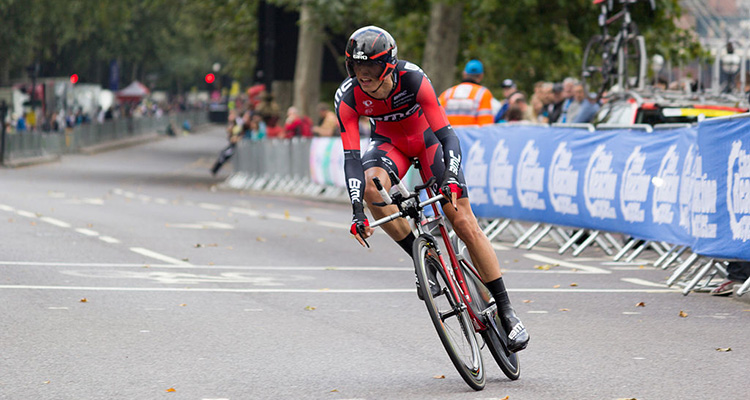
  • VeloHuman Up-and-comer Q&A Series: BMC’s Dylan Teuns

    VeloHuman Up-and-comer Q&A Series: BMC’s Dylan Teuns

    Dylan Teuns ToB

    22-year-old Dylan Teuns joined the BMC Development Team at the start of the 2014 season and enjoyed a successful first few months of the year, taking 2nd in the U23 Liège-Bastogne-Liège, 2nd overall and a stage in the Tour de Bretagne, and 2nd in the Omloop Het Nieuwsblad Espoirs. His strong early showings led to a stagiare spot with the WorldTour squad starting in August and a pro contract with them for 2015.

    With some security for the near future in place, Teuns rattled off a string of nice results this summer, taking a stage victory in the Giro della Valle d’Aosta in his last race with the Development squad before his stagiare period and then nabbing the Young Rider Jersey in the Tour of Utah, a stage in the Tour de l’Avenir, and 10th overall in the Tour of Britain, among other fine performances.

    The Belgian neo-pro took a break from training at the BMC camp in Spain to chat with VeloHuman for the latest entry of the VH Up-and-comer Q&A Series.

    VH: You raced practically non-stop from March all the way to October, winning a few times and signing a WorldTour-level contract along the way. What’s the first thing you did to unwind after the long season?

    DT: First, I took two weeks off for recovery at home, and then one more week on holiday.

    VH: What’s it like coming back to training camp after some time off? Does it take you extra time to get power back into the legs, or are you ready to go right away?

    DT: After the three weeks of rest, I wanted to start immediately building up to the training camp. But first, I had some problems with my sinus. I had some sinusistis, and I needed to rest one more week because I was sick. So, four weeks, I could start slowly, though not on the level I wanted to be because I needed to be careful in Belgium—from the end of October to the beginning of November the weather was not so good, and it was really cold and rainy sometimes. I needed to start slowly some days on the rollers. After two weeks I started to feel better. Then it was still two more weeks to the training camp and I had two good weeks. And now I feel really okay . . . my condition is not bad. When you go in the high heart rates it’s not like in the season, but that’s normal. In the lows it’s all very good.

    VH: And you feel like now you’re back to being at full health?

    DT: Yeah I’m normal. I feel good. Here you can train so well in good weather. Today it’s such a nice day. It feels like summer. And that’s great for training. Now we go on a holiday for two weeks in Belgium. I hope the weather is not too bad! When it’s cold I have no problem with it but I don’t know if it will rain too much. But we can train in Belgium as well, not so well on the climbs but we can still do some hours on the bike and that’s good. And then we can come back in January and we can go training on some hard climbs, stuff like that, which is perfect.

    VH: Does training camp with BMC feel different than training camps you’ve done in the past?

    DT: It’s quite the same, because last year I trained on a good level to do a good season because I was really motivated for my last year at U23 and I wanted to become a pro rider. And now I’m with the BMC team but still the training is quite the same. The things I did before with my Belgian training, it’s really the same things and I like it the way we do it now. But you can do more hours here in the wheels. And you train in a big group. . . . At home you go alone or with two guys, but here we’re training with the team in a big group. . . . It’s perfect.

    VH: At home you can train with friends; now you can train with Philippe Gilbert, which seems pretty nice!

    DT: It’s great! He’s a friendly guy. I saw him already last year a couple of times but now we are on the same team. Just today was the first time we were in the same group. We train in three groups. Every day it’s changing, the groups. I also trained with Greg [Van Avermaet] and he’s also a great guy. You see everyone, when we need to do workouts . . . everyone does his own thing and it’s not a race to see who is the best. We do our own thing and that’s good to develop for the next season.

    VH: You joined the BMC Development squad for the start of 2014. You’d had plenty of nice results in the past but you took a big step forward in 2014. You’ve credited a lot of that success to [team director] Rik Verbrugghe. What did you learn this season that helped you land so many U23 podiums and a major victory in the Tour de l’Avenir?

    DT: He doesn’t give his riders pressure, and that’s one thing from the beginning that was really good. He tells you things that you need to do, but he doesn’t put pressure on you or say you need to win this race or that race. He has a lot of experience because he spent a lot of years before on the Pro Tour team, and on other Pro Tour teams. He gives a lot of feedback. Like the stage in the Giro della Valle d’Aosta—he won stages in the big Giro and Tour de France which where the same sort of style.

    VH: It was your third and final Tour de l’Avenir. What did it feel like taking a stage win at the top of a Category 1 climb?

    DT: It was a great victory. Like you said, I went there three years in a row. The two years before . . . the first year I was working but then in the middle of the week I got sick and it was going not so good. And then the next year I had a kind of a free role. I was not the real leader but I could kind of do my own thing on the climbs. We did the first mountain stage and I was completely nowhere, and I was really disappointed. For two years in a row I was really disappointed. And I know it was a big race, when you can do something there, it’s so big, every WorldTour team will see that. My two other victories, a stage in the Tour de Bretagne and the Giro della Valle d’Aosta . . . I already had those two, but I still wanted to go to the Tour de l’Avenir with big ambitions and that was my goal, to win a stage. When I was at the line I was so happy and you can see it in the pictures. It was so great. I can’t explain it but it was such a great feeling.

    VH: What was it like moving from the Development Team up to the WorldTour squad?

    DT: After my first half of the season I was really happy I could sign. I knew from the beginning of June that I was going to be a stagiare, and that in July I could sign my ProTour contract. And then you don’t have as much stress anymore. And then I went to Utah and I worked for the team . . . we needed to control the race, that was a good thing for me because I always needed to work the last couple of kilometers for Cadel [Evans] or Ben [Hermans], who was, after Powder Mountain, 2nd in the GC, but I could still do my own results. Not really good ones, but when you see them on the last two days, I was close in the GC for the young riders. And then we talked about it, the evening before the last stage, we had a meeting, and they gave me the opportunity to do my own thing the whole stage; I didn’t need to do anything. The second-to-last stage I’d worked really hard for Ben, and Cadel was in the break, and all was good. And I took one and a half minutes back on GC and then I was about 1:20 back at the end of the second-to-last stage. And then we spoke about it with the team around the table with the director and they gave me a free role to take the jersey.

    VH: Basically, you were playing a support role for a few days and then suddenly found yourself in contention for the young rider’s jersey?

    DT: Yep. And then the Tour of Britain was a great race for me. We didn’t have a real leader there. Some guys were there preparing themselves for the Worlds. I was also there to prepare for the Worlds Under-23, but I knew when I finished l’Avenir I was not tired. I went for a week to my home, I could relax a bit and train easy the whole week and then I went to Britain . . . and there you can see what I can do.

    VH: Were you, or are you, nervous at all about the promotion to the WorldTour level?

    DT: I’m not nervous for next year. Well, maybe a little bit. I want to learn the first two years, I don’t want the big results, I think that’s not for now. I need to learn now from big riders like Gilbert and other guys who can teach me something. I need to learn also how the races are, how they race when the finale starts, things like that. And we’ll see in two or three years how I can do, maybe I can do a podium or something. But not for now.

    VH: Now that you’ve been with the squad for a bit, have you been able to pick up any advice from any of the veterans like Gilbert or Van Avermaet?

    DT: I didn’t race with Gilbert in the end of the season, but I did some races with Greg and he taught me well, some small things, things that are really important to know. When you do U23 races on a big level, like l’Avenir, you knew before that you need to be in front but in pro races, it’s always important to be in the front.

    VH: Have you been surprised by the level of racing with the WorldTour team? Is it harder or maybe even easier than you expected?

    DT: Last year I think the level was quite the same in the biggest Under-23 races, there’s not a lot of difference, but the WorldTour races, I think the level there is higher. We will see. I hope it’s not so high and that I’ll finish those races in the next season. Hopefully I can help Gilbert or someone else to a big victory so that then my season is also good.

    VH: Do you have an idea of your program for 2015 yet?

    DT: I start in Oman. That’s a good race for me I think. A good marker. And I hope to do the Ardennes Classics. I’m really excited about them. That’s the parcours where I raced most of the time last year and did some good results. That’s the kind of race I like.

    In following up his strong performances at the major U23 events with a collection of good results in big races like the Tour of Britain, Teuns has seen mostly consistent progression during his young career. Now that he has taken the step up to the sport’s top division, he will have the opportunity to learn from experienced stars like Philippe Gilbert and Greg Van Avermaet, which could see Teuns ready to compete in the Ardennes and other marquee events in the not-too-distant future.

    -Dane Cash

    Photo by Katie Chan.

  • VeloHuman Up-and-comer Q&A Series: AG2R La Mondiale’s Hugo Houle

    VeloHuman Up-and-comer Q&A Series: AG2R La Mondiale’s Hugo Houle

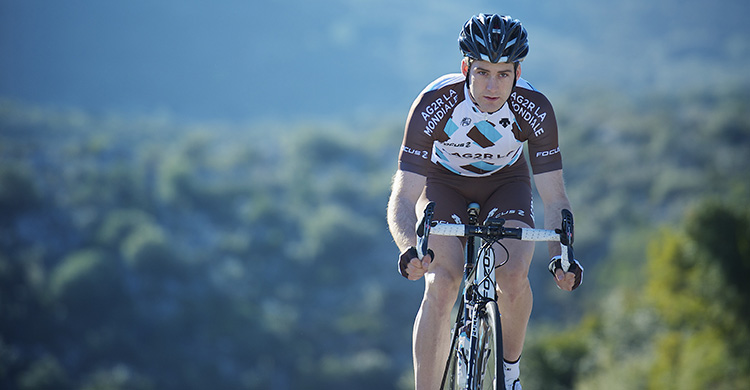
    Hugo Houle - Photo: Kramon

    In a new entry in the Up-and-comer Q&A Series, VeloHuman talked with 23-year-old Hugo Houle, a native of Sainte-Perpétue, Quebec. With the Tour of Alberta underway and the Grand Prix Cycliste de Québec and Grand Prix Cycliste de Montréal around the corner, now is the perfect time to catch up with one of Canada’s fastest-rising young stars.

    In his second year with French team AG2R La Mondiale, Hugo Houle is an all-round talent who made a name for himself at a young age, winning Canada’s Under-23 road race and time trial championships and finishing 4th overall in the U23 World Championship road race. His big results garnered the attention of WorldTour team AG2R La Mondiale, where he signed at the end of 2012 and has been riding since, with a largely classics-oriented race calendar. He recently spoke to VeloHuman about his year so far and his expectations for the rest of the season.

    VH: Hugo, you joined AG2R La Mondiale last year after spending a few years with Pro Continental Squad Spidertech. What was it like at first making that jump from Pro Continental Team up to the WorldTour? How did that transition go compared to your expectations?

    HH: In the end, it was the folding of Spidertech that gave me shot to join AG2R La Mondiale, because at first I had two more years with Spidertech. They folded at the end of 2012, so I found a place at AG2R La Mondiale, and I’m going to ride for them until 2015; I still have one more year on my contract with them. It’s a big step, because when you join a WorldTour Team, the races are longer and they make you ride more races. Sometimes you do two or three stage races in one month, so it takes time to build up to the volume of races. Also, the culture of a French team was new so I had to make some adjustments with that. So those are the big differences. With the volume of racing and the races being longer, you need to train longer, so I had to step up my training.

    VH: You rode plenty of races in your first season, with particular focus on the classics. What would you say were the biggest things that you learned in your first year?

    HH: I learned a lot! The first thing: to get to know a course, like, say, in Belgium . . . it’s hard, so it takes a couple of years to get to know the cobbled sectors and how to approach them and place yourself. So that’s the main thing. Even if you are strong, if you’re not well-placed, you don’t finish in the front, so last year I was more trying to understand the cobbled sectors. Now I’m good and I know them, so it’s easier to be well-placed, with good timing, and know when I have to move up. So that’s one thing. And also learning how to race with the team, the teamwork, and all that stuff. To know a teammate, what they like and what they want me to do, because I’m still pretty young so I have to do a lot of work and understand the races and do the best I can to help them save energy to be there at the end.

    VH: You look to be getting more comfortable in your second season, both in longer races and on the cobbles: last year you started Milano-Sanremo and Paris-Roubaix, but this year you started and finished them. Do you feel that you have continued to develop this year?

    HH: Yeah, for sure. Like I said, in those big races I now have more endurance so I can hold on for longer. So it’s easier to finish a race because I’ve become used to that distance and I know how to be well-placed. . . . So for sure it’s easier in the second year. . . . It’s not easy but I’ve learned a lot and I progress every year so that’s a good thing and the team is happy with the work I do.

    VH: Does AG2R La Mondiale have a specific role that they’re hoping you’ll grow into, maybe for the classics, or as a time trialist, etc.? You have a pretty versatile skillset.

    HH: For now they want me to do the work more than do my own stuff, but I have a good time trial and when I have an opportunity to do good on that, I always go all out. But they always put me in the big races, so to get the wins it’s hard because I’m still young. I do most of the classics, that’s where they want me to do well and support other riders, but they’re not talking about a leadership role, it’s more a support role for now. But I’m more of a punchy rider, so when it’s hills, circuit races like Quebec and Montreal, that’s where I could be good.

    VH: Are there any particular aspects of your skillset that you’ve worked to improve this season?

    HH: Yeah, they want me to lose some weight and be better in the hills. But it also depends on the time of year, because I’m doing classics the beginning of the year, and there we need more power for flat sections . . . and then for the second half of the year you need to be climbing, because I do more stage races, like Wallonie, Pologne, and now Limousin. It’s more hills, so I work more on those and am careful for weight because it makes a huge difference, the ratio of power to weight. . . . And before nationals I was doing more time trials. So I just try to see which races I’m going to do and try to train to be ready for that kind of effort. Let’s say if I do Montreal/Quebec, I try to do three to five minute hills to get ready for that kind of effort when I arrive at the race, so that I’m ready to do that. So all year, it changes.

    VH: Speaking of nationals: you’ve won both the Canadian U23 time trial and road race championships in the past, and you put in good performances this year at the top level with a 2nd place in the ITT and 7th in the road race. Is representing Canada on the international stage important to you?

    HH: Yeah, for sure. It’s important to try to build up the sport more in Canada. The sport is doing well, a lot of people are cycling and getting more interested in it. In Quebec they show more races now, all the classics and the three Grand Tours. Before it was only the Tour de France, so that’s a good development. For me, to be an ambassador for that is important, and to work with national teams and do well at nationals, that’s important for me. Racing in Europe, you bring a lot of experience that you can share with other riders. . . . I was pretty lucky to have Spidertech to make me race in Europe, and I was able to have a good result at the World Championship. That’s what helped me make the jump to a WorldTour team. The hardest thing is to get to a team. After, if you do well, your job and everything else, they keep you on board and you make friends with people. But the hardest part is to make a team in Europe and that’s why it’s hard for Canadians. So if I can help with that, it’s always good, and it’s nice to have more Canadians in the pro field. It’s important to do well and represent the country and get other riders to come to our level and come race with us.

    VH: Do you think a Canadian champs jersey, either for the time trial or the road race, might be a possibility in your future?

    HH: Yeah, that would be a goal. Right now it’s hard in the time trial with Svein Tuft, he’s pretty good at it! But I’m still young and have a couple of years ahead of me, so one day it could happen if I work hard and it’s something I would love to do. To wear the jersey in Europe for a whole year is something special and it gives you good visibility so it’s really important. I hope to do the double, like I did in U23, in the coming years. It would be great, but it’s always hard; Nationals, it’s always a special race because everyone knows the WorldTour guys are stronger and they all look at us to make the race and chase, so it’s always strange, but for time trial, I’ll keep training hard on that and one day maybe I’ll be as strong as Svein Tuft.

    VH: Well he is 37, so you have to think that at some point, maybe . . .

    HH: Yeah. I’m still 23 so I’ve still got a couple of years ahead of me!

    VH: What are your goals for the rest of the season?

    HH: I’d like to put in a result at the Tour of Alberta. It’s a good opportunity for me to race for the national team and I’m going to be a team leader and can do what I want to do, so I hope I can make a result there, and then a great performance in Montréal and Québec would be great for the people there and in front of my family, so I hope for a good result.

    VH: Last question, looking into the future a bit. Is there one particular race that maybe you grew up watching or maybe that you’ve ridden now and enjoyed that stands out as one you’re hoping to target for success in your career?

    HH: I think a lot of the races that I wanted to do, one-day races, I’ve done almost all of them, but now I will try to go for a Grand Tour for next year. Maybe the Giro or the Vuelta, though the Tour de France will be hard. The goal would be to ride the Tour de France before I stop cycling. I was not thinking about it when I started cycling, because it was just for fun, but now in the past few years I’ve seen that become more realistic. So to finish the Tour de France would be a big accomplishment, and racing the Olympics would be good also, so that’s the next step for me and that’s where I want to go.

    Still a few weeks shy of 24, Hugo’s role as a developing rider gaining experience particularly in the one-day races puts him in an interesting position on a team hoping to expand its results beyond the steep mountains, where they have had so much success this year. At the moment, Hugo is focused on landing results in Canada’s collection of major late-summer events, where profiles heavy on the short climbs suit his skillset nicely.

    -Dane Cash

    Photo by Kramon.

  • VeloHuman Up-and-comer Q&A Series: Belkin’s Nick van der Lijke

    VeloHuman Up-and-comer Q&A Series: Belkin’s Nick van der Lijke

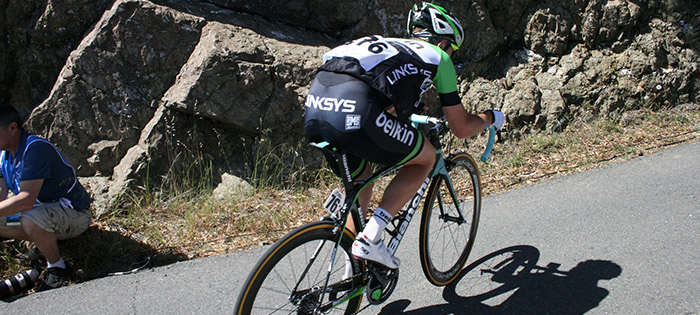
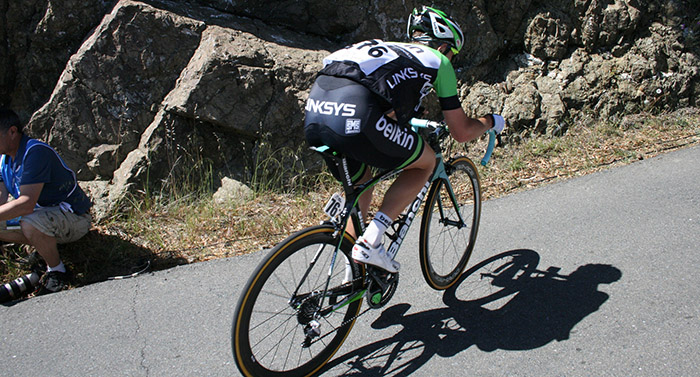
    NvdL AToC

    For the fourth entry in the Up-and-comer Q&A Series, VeloHuman talked to Belkin’s Nick van der Lijke. Nick is only 22 years old, and was just 21 when Belkin offered him a spot on their team after a very successful 2013 campaign that saw him win the Beverbeek Classic and Kreiz Breizh Elites. He started his 2014 campaign at the Vuelta a Andalucía and then raced in a number of one-day events, including the Dwars door Vlaanderen and Scheldeprijs, before a busy May and June with starts in the Tour of Turkey, the Tour of California, the Critérium du Dauphiné (his first WorldTour event), and the World Ports Classic. A day after competing in the Dutch National Championship Road Race, he talked to VH about his season, what he has learned so far, and his goals for the future.

    VH: Nick, I have to start by asking about the Dutch Championship race on Sunday. You attacked very early in the race. I’m wondering: were you just trying to get home as fast as possible to watch the World Cup game against Mexico?

    NvdL: Of course! (Nick laughs). No, no, I thought it was the best chance for me, because we had some big riders waiting until the end, and there were some riders going for the break, and I was one of them, so I tried to get into the break and I succeeded. I think it was a good opportunity, but I hoped that Garmin would also join the breakaway and they didn’t—so it was a little bit too hard to stay until the end.

    VH: You did stay out front for quite a while, though, and it seems that that is a target of yours this season, getting into those breakaways. That was something that Belkin had talked about for the Tour of California earlier this month as well. Now that you’re at the top level, riding against these top teams, how hard it is to get into the breakaways?

    NvdL: It’s much different from last year. . . . It’s harder, everyone can ride the bike very well. It’s much harder than last year. Last year, you just had to be strong at the right moment and then you’re in the breakaway, but this year it’s different. I was really happy that yesterday I succeeded getting into the breakaway. I think it’s nice for the upcoming races.

    VH: Do you enjoy the challenge of getting into the breakaway and then spending a hard day out front?

    NvdL: Yeah. And also you’re getting stronger, being in the breakaway. Sometimes you just have to get stronger and stronger. . . . When you are stronger you can wait till the end, but right now I have to take the chances and be in the breakaway, and maybe with a little bit of luck, stay in the front.

    VH: You had a great 2013 with the Rabobank Development team. You won your first race of the year, the Beverbeek Classic, and notched a collection of other victories and strong results, including Top 10s at the Under 23 versions of Flanders and Paris-Tours. What was your first thought when you realized that you would be making that jump up from a Continental Team to the WorldTour with Belkin?

    NvdL: Well, for a long time it was a little bit hard: I had the results, but in June I hadn’t heard anything from any team, so I was a little bit scared. It was at the time that Euskaltel stopped, and some other teams stopped, so it became harder and harder. So I was really happy when Belkin called, and also, it was after Kreiz Breizh, which I’d won, so I was really happy. But starting was really hard, I did not have the perfect winter. In January, I had to go easy for two weeks with training, so it was a little bit hard at the start of the season. But now after California I’m getting better and better, I think. From now it’s just getting better and better, hopefully without any more problems with the body.

    VH: When you first arrived at Belkin, did the team give you a sense of what your role would be in your first year?

    NvdL: Yeah, just learning and getting stronger. But also, they said they would give me the opportunity to find the specialty for me, because uphill I’m good, and on the flat I’m good, and in the sprint I’m good, and . . . though it’s a little bit hard for me at the moment, I think I have found a little bit of a specialty which I can get better at in the winter, so that could be easier for the next few years.

    VH: You’ve also been doing a fair bit of a leadout work, and that seems to be going well. Theo Bos, Barry Markus, and Moreno Hofland have all gotten some strong results with you involved in the leadout train. Are you getting comfortable with that role as well?

    NvdL: Yeah, it’s a much different role . . . but in the first part of the season I think it was better for me because the races were less hard and because I was not in really good shape. So I think it was better for me to get stronger and get used to the level.

    VH: You rode on the Rabobank Development Team with a number of your current teammates, including Hofland and Markus and Wilco Kelderman. What’s it like being together again at this level? Did you all expect to be here together at some point?

    NvdL: We talked about it when we were Juniors and U23. It’s a little bit funny that we’re riding with each other now. It’s nice, and I know them very well and they know me, so you know what you’ve got with each other.

    VH: The Critérium du Dauphiné in June was your first WorldTour race. Can you talk about how that compared to races you’d done in the past?

    NvdL: The first stage I had some stomach issues. It was much harder than I expected but the first days were really hard. I thought, “Uh . . . what’s this?” But I think the last four days were getting better and better, and the last two days were really good. I could give the best of myself for Wilco.

    VH: What does your racing calendar look like going forward?

    NvdL: I don’t know yet. I think maybe after next week, I’ll have a race program for the next two months. But for now, till July 20th, I have nothing on the program, so first I have a little bit of vacation, and then just easy training and then back to hard training.

    VH: Are you going anywhere for vacation?

    NvdL: Yeah, I’m going with my girlfriend to Germany.

    VH: Great!

    NvdL: Yeah, it’s really nice. I look forward to it.

    VH: Do you have any specific goals for the rest of this season?

    NvdL: I think there will be some one-day races. I hope, and I always thought, that Canada, Quebec and Montreal, that circuit . . . maybe . . . I’ll be good at it. . . . I really like that circuit.

    VH: One of the biggest stories of the past few weeks has been the news of Belkin’s departure from the sponsorship role coming sooner than expected. How are you handling the sponsorship uncertainty?

    NvdL: Yeah, I didn’t expect it. So I thought, “Oh Belkin stopped? I thought they were also in for next year . . .” But then I read the article . . . and I thought “Ugh, another problem.” After last year it was really hard to find a sponsor, and now it’s getting much harder I think, but the team says it’s looking good and that, probably, we will find a sponsor. Otherwise I have to look for other teams. I have different feelings about it. It’s nice to have a two-year contract but you want to be in a team and you want to keep together. You want to ride the next year with them and to get nice results and good team performances.

    VH: One last question. You have a very broad skillset, as you mentioned earlier, good on the hills, good on the flats. You said that the team wanted to give you a chance to find your specialty; now that you’re progressing through the season, have you started to figure out what sorts of races you’re targeting in the future in your career?

    NvdL: Yeah, I think not the Grand Tour races but the six- and seven-day races, like California. Those races are, I think, perfect for me. Hopefully I’m getting stronger uphill also, so maybe in the next few years I could do something also in the GC, that would be really nice of course, but going for stage wins is the first target for me.

    Nick is hoping that the improved form he saw in June continues to translate into better and better results for the rest of the season. While his teammates take on the Tour de France, he will look to perfect that form with some extended training time over the next few weeks. Belkin’s sponsorship status will be of particular importance to the trajectory of his career, as he is one of the few riders on his team signed on for multiple years. However, with the sort of ability that caught Belkin’s eye in the first place and a clear desire to use every race as an opportunity to get stronger, he is well-positioned for success, whatever happens.

    -Dane Cash

    Photo by Naoto Sato.

  • VeloHuman Up-and-comer Q&A Series: Giant-Shimano’s Chad Haga

    VeloHuman Up-and-comer Q&A Series: Giant-Shimano’s Chad Haga

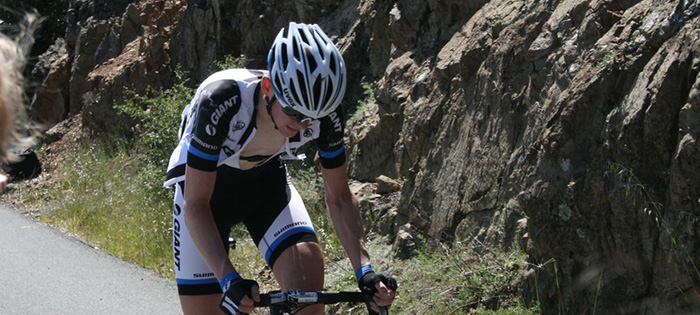
    Chad Haga climbing Mount Diablo at the 2014 Amgen Tour of California | Photo: Naoto Sato

    The WorldTour may be taking a break before the July’s Tour de France, but the VeloHuman Up-and-comer Q&A Series is here to hold you over until the racing picks back up again. In this third installment, VH talks to Giant-Shimano’s Chad Haga, on a brief summer break from competition. Chad joined the Dutch squad after a breakout 2013 in which he took 10th in the Tour of California, 2nd in the Volta ao Alentejo, and a stage at the Tour of Elk Grove. The 25-year-old American is something of a rarity in the peloton: he holds a bachelor’s degree (in mechanical engineering), having graduating from Texas A&M before kicking off his pro career. We talked about adapting to racing on the WorldTour and Giant-Shimano’s world-beating sprint train, among many other things.

    VH: Where are you spending summer break?

    CH: I’m staying in Lucca, Italy [Chad’s home base in Europe].

    VH: How are you settling in? You live with [Garmin-Sharp’s] Ben King, is that right?

    CH: Yep. Settling into Lucca specifically has gone pretty easily. It’s a laid back little town and the apartment is really well located inside the wall. Neither of us has a car and we get along just fine. The Italian lifestyle is great and the roads are terrific. That’s part of why I’m spending my break here. I haven’t spent a lot of time to experiencing the city or exploring, so I’m looking forward to doing that over the next few weeks.

    VH: How do you plan on spending your time off from racing?

    CH: Specifically, I’m not sure yet. I would like to make a trip over to Siena to see their famous horse races in July, Il Palio. I visited Siena last fall and learned about these races and thought that it would be really awesome to go, and now I’ve got the opportunity to do that. But besides that I don’t have any really detailed plans for how I’ll spend my break. So far I’ve just been doing a lot of relaxing and reading and playing the piano.

    VH: You were 10th overall in the 2013 Tour of California so obviously you’ve done big races in the past, and you’ve done well in them. But in March you started in your first WorldTour event, the Volta a Catalunya. You said in your blog that it was much harder than the prior year’s Tour of California. Can you describe what it is that makes racing at the WorldTour level so much more difficult?

    CH: At the WorldTour level, generally every race is longer. I added up all the race kilometers that I had last year compared to this year and divided by the number of race days and on average, every race is 30 kilometers longer, so you’re talking about close to an hour longer every single race, and on top of that it’s a higher level of racing. At the WorldTour races, there’s no Continental teams. Every single WorldTour team is there. It’s just a very high level of racing, it’s very demanding and that takes adjustment.

    VH: At Catalunya you were part of a squad that launched Luka Mezgec to three wins, and then in the Dauphiné you and the rest of Giant-Shimano drilled it on the front in the closing kilometers of the third stage to set up Nikias Arndt for victory. Have you been working a lot on the leadout in your training with the team?

    CH: That’s been a big area of development for me, learning how to do it and the skills and the technique and the mental training required to pull off something like that for a rider like me, who’s not so comfortable with it in the first place.

    VH: Obviously Giant-Shimano is doing something right with the leadouts because you’ve become this sprint powerhouse of the WorldTour. You’re winning stages in Catalunya and the Dauphiné with Mezgec and Arndt, and of course you have huge names like Marcel Kittel and John Degenkolb. Are you able to identify anything that Giant-Shimano is doing differently that is setting up all these guys for so many wins?

    CH: It seems to me that we do a very good job, when things go right and when things go wrong, either way, we always break down the stage in detail and analyze everything we did: what we did right and what we need to change. We just do a very good job of analyzing everything so that we can be even better in the future, and it seems to carry over from race to race and so we continue to get better at it.

    Photo: Giant-Shimano

    VH: What is the skillset that you feel you’ve improved the most since joining the team?

    CH: I guess it would have to be positioning. I still have a lot of work to do with that but I feel that I’ve gotten much better at staying with my teammates when it’s important, and the fight for position in leadouts and into the base of climbs.

    VH: You’re into music; do you listen to anything in particular when you’re on the trainer?

    CH: If I’m warming up for a time trial, it’s very specific music. For the past two years, the only thing I really listen to when I’m warming up for a time trial is a band called Periphery.

    VH: That’s a rock band right?

    CH: Yeah. They’re like . . . tech metal.

    VH: Was there a reason that that became your routine before the time trial?

    CH: I just love their music in the first place, it always gets me pumped up. I think the first time trial I listened to them, I won. It hasn’t always worked out that way since then but it’s my go-to warm up music.

    VH: You’re living in Italy and you’re riding for a Dutch team; are you picking up any languages? What’s the predominant language spoken on the team?

    CH: Well everybody speaks English, which is very good, I can communicate and bond with my teammates. But aside from that, there’s half a dozen other languages spoken on the team around the dinner table, so it’s a lot of different dialects and languages bouncing around.

    VH: Speaking of communicating and bonding, are there any veteran riders on the team that you’ve been able to form a relationship with and learn from so far?

    CH: Roy Curvers and [John] Degenkolb. I’ve done a lot of races with them and we get along well, and both of them have a lot of experience and can do a lot of teaching. I really enjoy racing with them and learning from them.

    VH: Where do you see yourself fitting in as a rider over the next few years? Obviously you have the all-rounder skillset, and you’re excellent in the time trial. What sort of races do you see yourself targeting?

    CH: I . . . (Chad laughs) have not thought that far ahead. I hope to be able to really compete for the GC in weeklong stage races, at the Tour of California level, 2.HC, and hopefully at the WorldTour level. In the meantime I really enjoy the opportunity to go on the attack and get into breakaways.

    VH: After your summer break is over, what is next on the program for 2014?

    CH: Race-wise, I don’t know yet, that’s still up in the air being decided. I go to a three-week altitude training camp in France during mid-July so that’s the most immediate thing on my calendar.

    VH: Do you have any particular goals for the rest of 2014?

    CH: I would really love to win something before the year ends, but I don’t have a target race in mind. I take every race as it comes and look for opportunities. I would love to get selected to race the Vuelta. I know that’s a possibility, so I have high hopes for that, and I’d love to return to the World Championships and race the team time trial.

    VH: Has Giant-Shimano given you an indication of what their expectations or goals are for you in your first year?

    CH: They don’t expect me to get a result in a specific race; there is no real target race in that sense. They just want me to work as hard as I can and learn as much as I can, and use this as a building year in the hope of having a breakout year next year. It helps a lot. There is pressure, of course, to do my job and work as hard as I can, but to not really have any weight on my shoulders makes for a really smooth transition to this level.

    VH: You have a mechanical engineering degree, so obviously you’re comfortable with math. Do you tend to pay a lot of attention to your power data while you’re riding, or do you try to ride according to how you feel and leave the analysis for after the race?

    CH: I have to cover up my data during the race because I will obsess over it to the detriment of my racing. I definitely analyze it very in-depth after the race, and then our team also has our own data guru for further analysis, but I save that for after the race, because otherwise I would never look up from my power meter!

    VH: I’m sure it was a big decision at first, but do you feel you’ve made the right call foregoing an engineering career for now?

    CH: Yeah, at least for now, I’m really glad I did. I’ve got the degree to fall back on, so I’m glad that I finished it, but I think this was the perfect opportunity to really go for it, so I have no regrets.

    VH: Was there a particular race, maybe during your very successful 2013, at which you felt “Hey, I have a future in this”?

    CH: I think that when I first realized that I might be on the cusp of a breakout year was in Portugal last year, at the start of the season. One of our first races, we did the Volta ao Alentejo. I never won anything which was really frustrating, but I was on the podium for multiple stages and on the GC, and was having a great ride. It was after that race where I was first contacted by a Pro Tour team, and I realized that this could actually happen.

    VH: What has been the biggest surprise in your first year?

    CH: Hm. Just that the racing is so much harder! I knew it was going to be harder, everybody told me it would be harder but you still don’t realize it until you get into the races and then you realize, “Hey wait a minute, this is freakin’ hard!”

    While some of his teammates are hunting stages in July’s Tour, Chad will be doing plenty of riding of his own, also in France. After that, there are a number of possibilities for his next race. Chad showed in this year’s Tour of California the toughness required to spend a long day out front in a very high level race, a good sign that the victory he is hunting may not be far off.

    -Dane Cash

  • VeloHuman Up-and-comer Q&A Series: Astana’s Evan Huffman

    VeloHuman Up-and-comer Q&A Series: Astana’s Evan Huffman

    Huffman on the front in Oman
    Evan Huffman on the front at the Tour of Oman. | Photo: Astana Pro Team

    Next up in the VH Q&A Series: 24-year-old Evan Huffman. After making a name for himself with several impressive performances (especially in time trials) in his native USA, he joined Astana last season. Since then, he has made starts in a variety of different races, not just in Europe, but also in Qatar, Oman, Turkey, and China. Now in his second year, he has learned a great deal about adjusting to the pace of WorldTour racing, speaking Italian, and plenty more.

    VH: You’re in Girona now taking a bit of a break from racing, is that right?

    EH: Right.

    VH: What’s the first thing you do when you get back to Girona after you’ve been racing?

    EH: Buy food. And I unpack everything, and just get settled back into the apartment.

    VH: What is your favorite thing to eat when you finally get back home after a hard race?

    EH: I eat a pretty consistent diet all the time. I have cereal for breakfast, and usually just rice and/or chicken, salad, nothing special.

    VH: So that’s pretty much true leading into a race as well?

    EH: I keep it pretty easy: chicken or salmon, something with a lot of rice and then either steamed vegetables or salad.

    VH: Who do you train with when you are home in Girona?

    EH: I train mostly alone, to be honest, but with the handful of other American guys if they’re here: Andrew Talansky, Brent Bookwalter, Ted King, those are a few guys that I’ve ridden with.

    VH: Do you have many Astana teammates in Girona?

    EH: Just one, Tanel Kangert, and I’ve trained with him before. But we have very different programs so he’s often not here when I am, so it’s difficult to get together.

    VH: Going back in time a bit: you gave up college to pursue cycling. Obviously it worked out for you but that must have been a tough call at the time. What motivated you to make that decision? Are you glad you made it?

    EH: Yeah, I’m still looking back happy, I think I made the right decision. It had as much to do with me being unhappy going to school as me wanting to pursue cycling, so it was kind of working both ways. And even if it hadn’t gone so well, I probably still wouldn’t regret it.

    VH: You were putting in some big results in North America, but then you signed with Astana and even in your first year you were pretty busy. You rode Paris-Roubaix, you even went to China for the Tour of Beijing. How do you handle the transition from mostly North American races to suddenly riding all over the world, on one of the biggest teams in the sport?

    EH: It’s really hard. It’s definitely a bit of a shock at first. The amount of traveling is definitely much greater and that makes it difficult to work around with the training and stuff. You’re always losing a day before and after a race. When I was riding a lot of local stuff in California and the West Coast I was just driving, so it was simpler.

    VH: What’s the biggest thing that you have learned your first season?

    EH: If I had to pick one thing, I guess just being flexible and trying not to get frustrated with things that are out of your control . . . because there are a lot of things that are.

    Huffman Solo
    Photo: Astana Pro Team

    VH: Last year, you had a strong first season with a lot of racing. Early this year you had a big day at the Tour of Oman, getting into a small but strong breakaway on Stage 4. Ultimately the move was reeled in, but can you explain what it is like being off the front of the race, the atmosphere of riding in the break, and then the atmosphere when the gap starts to fall?

    EH: It’s really hard to get into the break at first, sometimes more difficult than other times obviously, but it’s rarely easy. But then it’s not so bad for a while. Once you get out there and you have a couple minutes, the peloton kind of lets you go. It’s hard but you’re riding steady. You don’t have to do any real surges or fight for position. So for most of the day, it’s pretty relaxing in a lot of ways, but then once the gap starts to come down, and/or you get closer to the finish, or you start hitting some hills, then it gets much harder obviously. That’s one of the things that I’ve definitely learned more this year, just planning ahead. From the moment you get into the breakaway, thinking about how you’re going to win, not just thinking about trying to stay away as long as possible. It’s all about trying to conserve energy and going hard when you have to but not doing too much.

    VH: Speaking of harder days, you raced Paris-Roubaix for the second time this year. Did it get any easier?

    EH: Hm. A little bit. I think I was a little bit stronger but it’s such a hard race, very different from anything else. So much of it comes down to your experience and positioning more than just plain fitness. So I was a little bit stronger but I don’t know if I really did much better.

    VH: How is your Italian? Astana is a pretty international squad: do you ever have trouble with communicating with other riders?

    EH: All the time. I started to try to learn Italian pretty much immediately once I knew I was going to be on the team, with Rosetta Stone and TV shows and pretty much whatever I could pick up. I’ve learned a lot but I’m definitely not fluent. I kind of struggle to have real conversations with people, but I can understand enough that I can understand what I’m supposed to do during a race at the team meeting. I know all the cycling terminology good enough, but yeah it’s difficult. There’s at least one or two people at every race that can speak English that can translate for me if I need it but there’s still obviously a lot of people that don’t speak English so I just can’t really talk to them very easily, or vice versa, which is not ideal.

    VH: Have there been any particular veteran riders on the team with whom you’ve formed a particular connection or from whom you’ve been able to learn some things?

    EH: That’s one of the things that’s weird being on a team with so many riders, there are a lot of guys that you don’t see all year, except for training camp, because you just have different races, so the guys that I’ve ridden with a lot I’ve gotten in with closest . . . Jacopo Guarnieri, Dimitry Muravyev, Borut Božič, those guys, we did a lot of races in the spring and they speak good English. And they’re not afraid to tell me when I do something wrong, which is good for me.

    VH: What area of your riding have you built on the most since joining Astana?

    EH: I think I’ve gotten a little bit stronger overall. The biggest difference I think with racing at this level is the difference in intensity. Overall the races aren’t super fast sometimes, but when it is fast, it’s really, really fast. And so dealing with the change in pace when you’re already tired is what I’ve gotten better at, and still need to improve. Just that high intensity when you’re already fatigued later in the race.

    VH: What’s next on your program for 2014?

    EH: I have a bit of a break now. I think my next race will be some time in early August, either the Tour of Poland or the Eneco Tour. I’m not sure yet.

    VH: What are your biggest goals for the rest of the year, either in a particular race or just generally?

    EH: For the rest of the year I’m not really sure what my schedule will look like, so it’s hard to pick a race, but I want to really step up a level from where I’m at now and from where I was last year, just try to be even just a little bit better. It’s kind of hard to measure because it’s really subjective some times in races, but I kind of know what that is for me personally. So I just want to improve on where I was last year, keep getting better.

    VH: Have you had a chance to ride or train much with Vincenzo Nibali to get a sense of his abilities and his form for the Tour?

    EH: I’ve done a few races with him over the last couple of years. The last one was the Tour of Oman this year so that was obviously a while ago, so it doesn’t really give any insight into his form for the Tour other than what you’ve seen him do in more recent races like Romandie and the Dauphiné, but my overall impressions of him are that he’s a really nice guy and a good leader, and I think he’ll be ready for the Tour.

    VH: Last question. Is there a race, maybe one you’ve ridden so far, maybe one you’ll be riding in the future, that you’d like to hone in on or hope to win?

    EH: Hard to say. I’d really just want to do more races, to get experience and do everything. I want to do more long stage races, like Romandie or the Suisse, and then the next step would be a Grand Tour, and just see how it goes, and what my capability would be to focus on getting results down the road. I don’t know, I just kind of like to do everything. I’d really like to do a Grand Tour this year or next year if possible.

    As the only American rider on Astana, a team based in Kazakhstan, and competing in events all over the world (not just in Europe and North America), Evan will continue to represent the USA on a very international stage. After a busy spring, Evan will likely return to racing in August.

    -Dane Cash