Now that the dust has settled in the battle for the maglia rosa, it’s time to give some thought to what we learned from the 2014 Giro d’Italia. With several brilliant performances over the course of the three-week tour, the race offered a wealth of insight into which riders are on the rise at the sport’s top level. The dominant theme at this year’s Giro? A new generation of stars has definitely arrived.
Promising Talents Confirmed, Part 1: GC Riders
An amazing seven of the Top 10 riders in the General Classification are age 27 or younger. For every one of them, this Giro was a statement, a confirmation of the ability to take a step forward, whether from promising young all-rounder to Grand Tour Top 10 finisher, or from Grand Tour runner-up to Grand Tour winner. Many of the biggest names in the race are primed to light up the sport’s highest profile events for years to come.
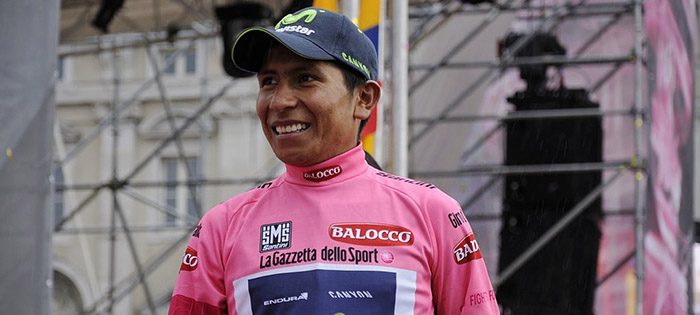
Nairo Quintana did not need to prove to anyone that he was one of the world’s best climbers, but his ability to handle full team leadership and the pressure of being a top favorite for a huge race was something of an unknown. In the 2014 Giro, Quintana was Movistar’s man from Day 1, and the Spanish superteam brought a squad completely dedicated to putting the young Colombian into the pink jersey. He delivered in convincing fashion, proving that a leadership role is something he can handle without any reservations. Famous for his poker face, Quintana did not let a number of early mishaps (a poor TTT performance, crashes, and illness) get to his head or his morale. He also showed improved ability in a non-mountain time trial, and dominant form in a mountainous one, building towards a more well-rounded game that will surely position him for more success moving forward.
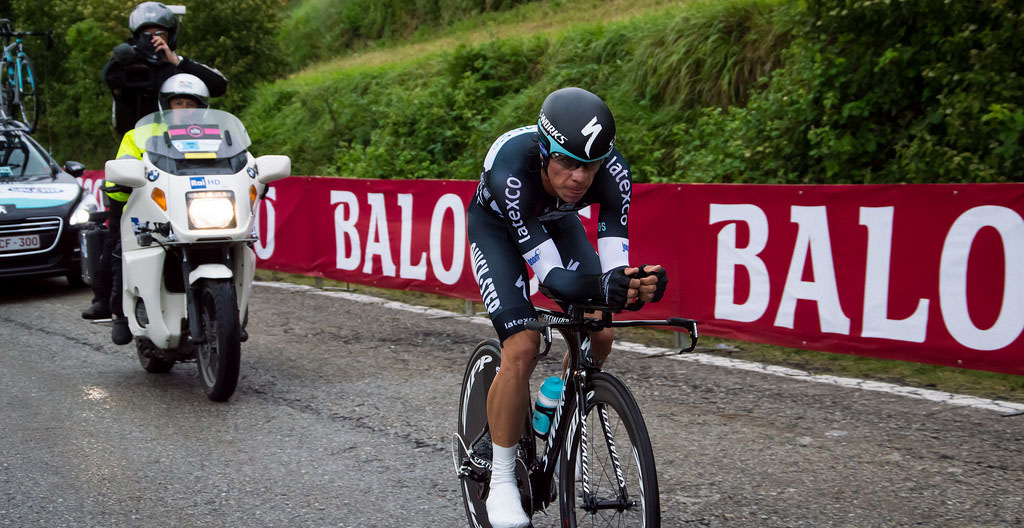
Rigoberto Uran may not have bettered his 2013 result, delivering a second runner-up performance in a row, but he did show a more complete skillset, including a vastly improved ability to ride against the clock. Long considered a pure climber with a decent punch, the 27-year-old blew the doors off a Stage 12 time trial that did not appear to be particularly climber-centric, and continued to show off stellar endurance with his 3rd place performance in the Stage 19 hill climb. His newfound prowess in the chrono may not have been enough to hold onto the pink jersey, but it bodes very well for his future, especially should he decide to shift his focus to the Tour de France, which typically places greater importance on the flat ITTs and the long climbs.
Fabio Aru was undoubtedly the revelation of the race. Flashes of brilliance in his young career had already put him in the spotlight as Italian cycling’s next big thing, but few expected him to deliver in so dazzling a fashion so soon. A pure climber with an aggressive streak, Aru exploded up the Montecampione on Stage 15 to put himself into contention for the podium, and then grabbed hold of it with two hands in the hill climb TT. Despite a lack of experience consistently performing at this level, he did not appear to fatigue in the final week. Just as Michele Scarponi’s career is starting to enter its twilight years, Astana suddenly has a new Grand Tour contender on their hands in Aru, who will surely light up the Giro for years to come.
Pierre Rolland bounced back from a very disappointing 2013 in a major way. After strong Tours de France in 2011 and 2012, he looked set for long-term success, but he failed to notch even a single WorldTour Top 10 in the year to follow. The 27-year-old was consistently climbing with the best in this Giro, suggesting that he is back on track for success moving forward. Rafal Majka did his 2013 performance one better with a 6th overall, despite suffering from stomach issues late in the race. He delivered a very impressive first time trial. With Alberto Contador seemingly locked in for the Tour de France for a while, Majka could shine as Tinkoff-Saxo’s Giro star for years to come.
Wilco Kelderman may not have finished on the podium or won a high profile stage, but he was another major revelation of this race. He put in a handful of Top 10s in shorter stage races in 2013 but he was consistently climbing with the very best in this Giro, and while he did fade a bit towards the end of the race, he limited his losses and still landed 7th overall, ahead of Cadel Evans. He managed all this at just 23 years old, and, in my opinion, without particularly strong team support. He still needs to develop more, but if he can continue his progression he has a very high ceiling. As an added bonus, while it won’t help him much in the Grand Tours, he has shown a newfound ability to finish very fast, as well.
Trek’s Robert Kiserlovski came into the race targeting a Top 10 and delivered on his goal, finishing exactly 10th. He never challenged for the overall victory, but on most of the decisive stages in the race he was able to hang with the top climbers most of the way up. His third WorldTour Top 10 this year, it’s a strong performance to continue a nice run for the Croatian, whose team is sorely in need of rising GC talent.
Sky’s Sebastian Henao may have finished the race much further down the General Classification, but he showed serious promise in this Giro. On several mountain stages, he was able to hang with the leaders for most of the way up the climbs despite generally being alone among his team while Dario Cataldo and Phil Deignan were hunting breakaway victories. Then, in Stage 19 ITT up Monte Grappa, he notched an 8th place, ahead of Cadel Evans and Wilco Kelderman. He’s only 20 years old, and riding for a team famous for their ability to develop young talent: big things are coming from Sergio’s cousin, and they could be coming soon. Wouter Poels of OPQS was another strong performer whose final position in GC did not reflect his performance in the race. He was constantly at the side of team leader Rigoberto Uran even on the tough climbs, riding uphill so impressively that he managed to hang on in the GC Top 10 all the way up through Stage 15. He also landed 6th in the first ITT. It’s been an excellent year for the young Poels, who notched a stage win at Pais Vasco with a brilliant escape from GC rivals on a tough climb in Stage 4 of that race. Poels is establishing himself as yet another all-rounder talent for a team looking to expand on their already dominant position in the one day races and sprints.
Promising Talents Confirmed, Part 2: Stagehunters
Of the six stages that ended in a bunch sprint in the 2014 Giro d’Italia, six were won by riders aged 26 or younger, and it was only Marcel Kittel‘s birthday stage victory that keeps me from saying 25 or younger! The German dominated the first two bunch gallops of the race, delivering an astounding performance on Stage 3 (where he closed a ridiculous gap in the final hundred meters to pip Ben Swift to the line) that will be remembered for a long time. With the Tour on the horizon, the young Kittel has made a major statement that his rivals Mark Cavendish and Andre Greipel will surely have noticed.
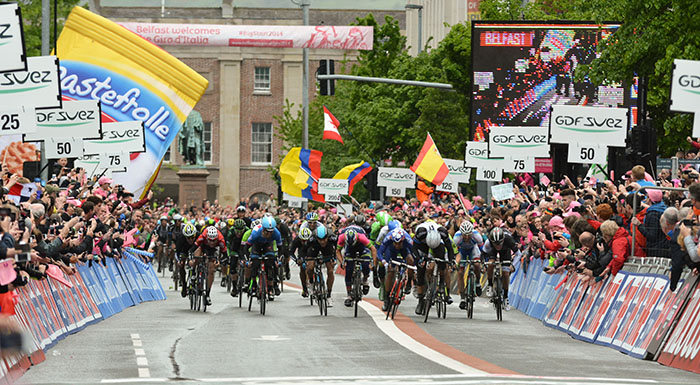
The departure of Marcel Kittel ostensibly left the sprints wide open for the remaining fast men, but 23-year-old Nacer Bouhanni quickly established himself as the one to beat. His scrappy, wheel-surfing style was perfect for the technical finishing circuits of the race, and he showed time and again an ability to put himself into the best position for the final gallop, and then time his jump just right. FDJ’s young sprinter is obviously very fast, but he also displayed the sort of sprinting savvy necessary to actually win races consistently, which has already set up a bit of a controversy within his team, where the presence of fellow young fast man Arnaud Demare leaves things a bit crowded at that position.
Giacomo Nizzolo notched a heart-breaking four 2nd place finishes but he has much to be proud of, and more to be excited about. Nizzolo is a versatile rider who has shown serious potential in flatter one-day races: he has notched podium performances in the GP Ouest France and the Vattenfall Cyclassics. He’ll be disappointed to come away from this Giro without a win, but if he can maintain this level of top speed into the late summer races that favor someone with his array of skills, he can expect continued success there.
Giant-Shimano’s 25-year-old Luka Mezgec picked up a stage win on the final day of the Giro to finish off an admirable job of filling in for Marcel Kittel. Mezgec has been on fire this year, dominating the sprints in the Volta a Catalunya, and he gives his team yet another option in the bunch finishes behind Kittel and John Degenkolb.
Michael Matthews of Orica-GreenEdge showed in last year’s Vuelta a Espana that he deserves to be considered a top-shelf sprinter, but his Giro performance showed the terrific depth to his game. He was already known as a versatile fast finisher, the sort of rider who was particularly dangerous when hills reduced the bunch before a final gallop, but his week in the pink jersey displayed a whole new level of versatility. He capped it off with a stage win atop a Category 2 climb. He was forced to abandon midway through the race, but now looks set to head to the Tour de France, where he will hope to mount a challenge to the likes of Peter Sagan and John Degenkolb on the bumpier days.
Elia Viviani got off to a fine start, with a trio of Top 5s in the first three sprint stages, but he was unable to come up with anything after that. Crashes did not help. As the bookies’ favorite to win the points jersey, Viviani was one of the surprise disappointments of the race, but weather-caused carnage may have played a role, and he’ll hope to prove that that was the case in his next few races.
Stepping away from the bunch sprints, Lampre’s Diego Ulissi was an early star of the race, delivering a powerful uphill assault on his way to victory on Stage 5 and then charging up a steeper gradient to win Stage 8 atop the Category 1 Montecopiolo. After a disappointing Ardennes campaign, Ulissi was head and shoulders above the competition in the fast uphill finishes in this race. In my mind, he’s ascended to the very top echelon of riders in that specialty, and even though he was unable to make much happen in the classics this year, I expect to see him launching himself to success in races like La Fleche Wallonne very soon. The punchy skillset wasn’t the only ability he put on display in this race, however. Ulissi also delivered one of the most shocking performances in the Giro d’Italia on Stage 12, where he notched 2nd place in a long, not particularly hilly time trial. He had picked up strong results here and there in mountain climb chronos in his young career, but this was something new entirely. Ulissi left a number of TT specialists in his wake and was only bested by an otherworldly Rigoberto Uran, suggesting that while his near future may focus on the one-day races and hillier days in stage races, he may have real GC style talent under the hood.
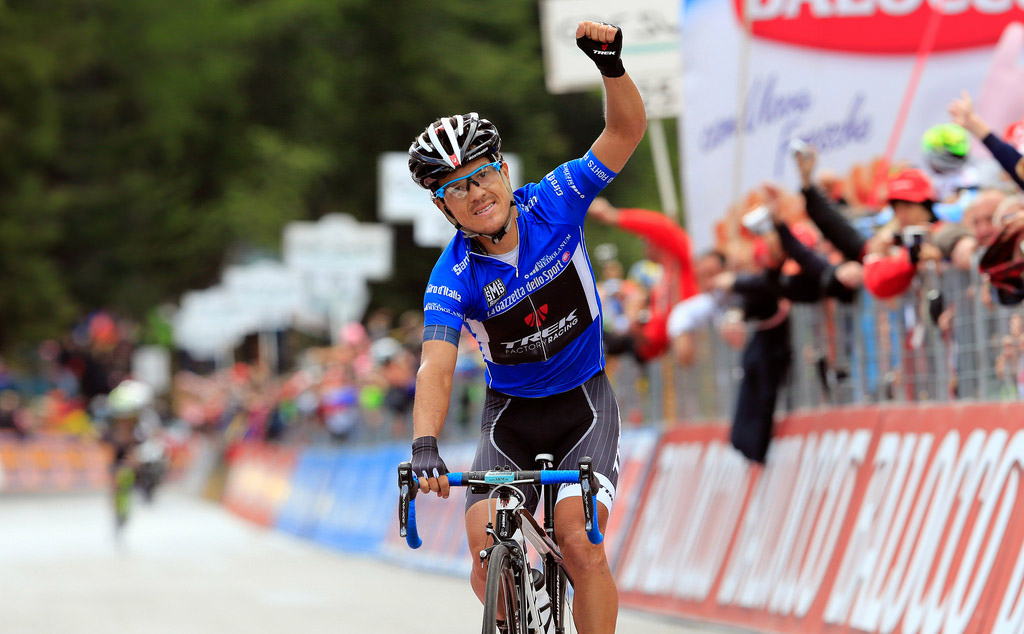
Trek’s Julian Arredondo was the other uphill-charging stagehunter to take a massive step forward in this race. His Tour de Langkawi win in 2013 put him on the map and caught the eye of plenty of observers, but he has come into his own for a WorldTour squad here in 2014. He won a pair of stages in the Tour de San Luis at the beginning of the year, and then climbed his way to 5th at Tirreno-Adriatico, hinting that bigger successes were right around the corner. He did not disappoint in the Giro d’Italia, earning the King of the Mountains jersey and a stage win with his aggressive style and his considerable uphill punch. He was always on the lookout for opportunities to attack, and it served him well. His Stage 18 victory was particularly impressive: he put in a ton of effort racking up KOM points early in the day but still managed to have enough in the tank to outclimb his breakaway companions on the final climb. Now with a top-level team to help him continue to develop as a rider, 25-year-old Arredondo is likely to continue to rise as a climbing star.
Lotto Belisol’s 23-year-old Tim Wellens was another very impressive rider in this race. He was unable to come away with a win, but notched a pair of great 2nd place performances as well as a 9th place in the uphill ITT. He was 3rd in the overall King of the Mountains competition thanks to his aggressive pursuit of breakaway success. He may not have picked up the result he wanted, but he put a ton of ability on display and can no longer be considered “under-the-radar.” Team Colombia’s Fabio Duarte also picked up a pair of 2nd places, upping his total to four in the Giro. He’s an uphill specialist with a sharp eye for opportunities to attack; riding for a Pro Continental squad, he doesn’t get as many chances to shine on the biggest stage as he probably should, but he’s making his mark when he can.
Crashes Cloud the Issue for Others
Even as a sizeable contingent of up-and-coming stars made massive strides, a number of other riders saw their bids for glory fall apart on messy, rain-soaked roads, robbing us of an opportunity to see how they might have fared under more favorable conditions. Dan Martin hoped to deliver his first Grand Tour Top 10 in this Giro, but found himself out of the race on its very first day. He seems to be recovering well and will now refocus his season on the Tour or the Vuelta. He was in excellent shape in the Ardennes before his nasty TTT crash; if he can recapture that form, a return to success this season seems likely.
Joaquim Rodriguez was the biggest name to fall victim to the slippery Italian roads. Caught up in the mess on Stage 6, Purito was forced to abandon before the Giro ever really hit any mountains. This was supposed to be a strong opportunity for him to pick up that elusive Grand Tour victory, but now he, too, will have to shift his focus, apparently to the Vuelta. Though he hasn’t ruled out the Tour de France, he could find himself in an excellent position in Spain if he does: without having the grueling mileage of another Grand Tour in his legs, he would be a strong contender for that race, which has been won by a rider without a previous GT on the year in its last three editions.
Michele Scarponi, Nicolas Roche, and Przemyslaw Niemiec were also caught up in or behind the Stage 6 carnage (along with a number of other non-GC riders) and saw their GC hopes crumble. The first two then realigned their goals rather successfully (Scarponi went into domestique mode for Aru, who finished on the podium; Roche helped Majka achieve a strong GC placing and Michael Rogers notch a pair of stage victories), but it was an unfortunate turn of events for both riders, who harbored GC aspirations. Scarponi will be 35 next year and with Nibali as the team’s big star and Aru on the rise, the future is not particularly promising. Lampre’s Niemiec was coming off a strong performance in Trentino, but did not feature much after his tumble down the General Classification. Though he was excellent in 2013, he, too, will be 35 for next year’s Giro and may see younger talent take a more prominent role.
Gearing Up for Tour Season
With the Giro wrapping up, the cycling world shifts its focus to its biggest event (and the tuneup races that lead into it). The Criterium du Dauphine and Tour de Suisse are around the corner and the Tour de France is only about a month away. A few of the stars of the Giro will make the start in their second Grand Tour, riding against the likes of Chris Froome and Alberto Contador on cycling’s biggest stage. You can expect to see their names and plenty more in the VeloHuman previews to come, so stay tuned!
-Dane Cash
Photos by Maurizio Costanzo, Maurizio Massasso, Sean Rowe, and nuestrociclismo.com.
Leave a Reply